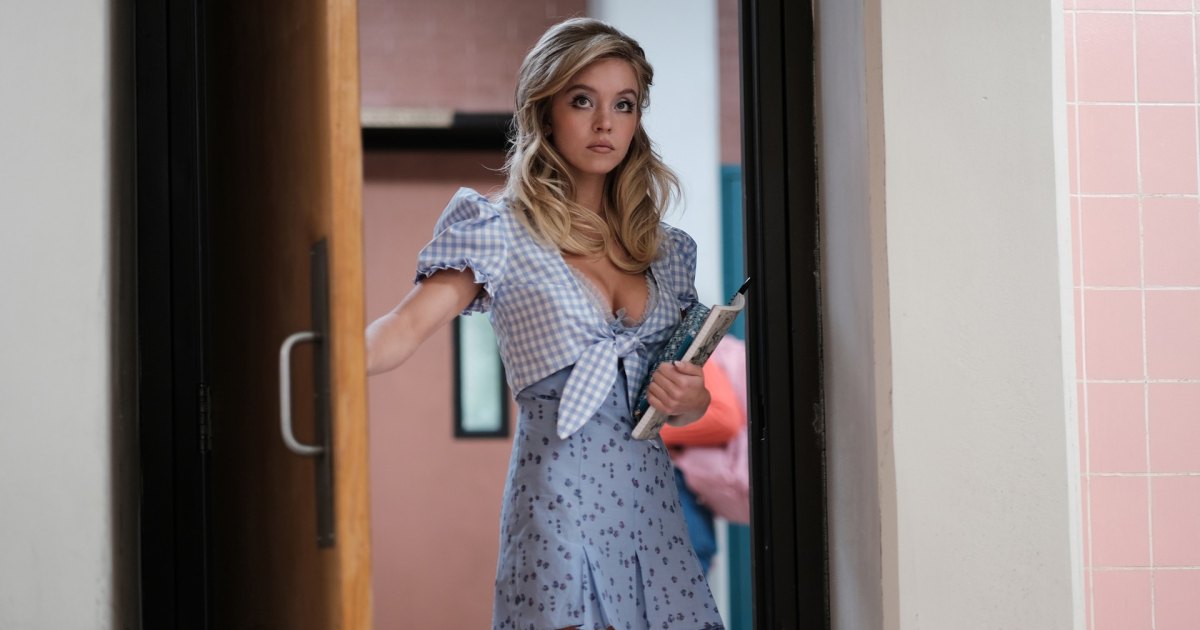
Sydney Sweeney’s Euphoria Nudity Has Entered Its Self-Referential Era
From Sam Levinson’s OnlyFans storyline to Sharon Stone’s lingerie-line punchline, Cassie’s stripping-down saga has become the show’s most revealing conversation about sex, validation and celebrity.
Euphoria has never been subtle about anything—not addiction, not desire, not eyeliner, not the emotional consequences of sending one regrettable photo at 2:13 a.m. But Sydney Sweeney’s nudity on the show has now become its own full-blown subplot, complete with creator commentary, cast banter and a joke from Sharon Stone that somehow manages to connect Cassie Howard’s fictional cam-girl career to Sweeney’s real-life lingerie business.
That is the strange little cultural loop Euphoria has built around Sweeney: Cassie strips down because she needs validation; viewers debate the stripping down; Sweeney discusses the labor and judgment attached to it; and the show’s own collaborators keep circling back to the fact that everybody is watching.
Season 3, which concluded in June 2026, pushed that loop into overdrive. Cassie’s storyline revolved around joining OnlyFans to help support her husband, Nate Jacobs, after his ill-fated construction venture left the couple tangled up with a loan shark. The plot was deliberately messy, financially desperate and emotionally loaded—the exact kind of crisis in which Cassie tends to mistake being wanted for being safe.
Cassie’s business plan was really a validation plan
Sweeney has never treated Cassie’s choices as random chaos. Speaking to Vanity Fair in June 2026, she explained that Cassie “has a need to be validated by other people” and “doesn’t know how to love herself unless someone else loves her.” That is a bleak diagnosis, but it is also the key to understanding why the character’s Season 3 arc became so fixated on being seen.
“She was more excited by the idea of these people loving her and knowing who she is and feeling like her world isn’t small,” Sweeney said. In other words, the money is part of the story, but the attention is the drug. Cassie is not simply selling access; she is trying to buy proof that she matters.
It is a very Euphoria proposition: take a recognizable internet economy, run it through a character with catastrophic attachment issues, then make everyone argue about whether the show is critiquing the system or enjoying the spectacle a little too much.
That tension has followed Sweeney since the series premiered in 2019. She has spoken candidly about the professional downside of appearing nude, including the feeling that some people did not take her seriously because she took her shirt off. The contradiction is almost offensively familiar: an actor is praised for fearlessness, then flattened into the most visually exposed thing she did.
Sam Levinson says the nudity was never automatic
Sam Levinson has offered his own explanation for why Cassie’s Season 3 material went where it did. On Real Time With Bill Maher, he described the storyline as a way to explore the “long-term consequences” of online sex work, particularly for young people raised inside an economy of likes, personal branding and constant self-display.
“You’re told that you’re the product, you’re the brand,” Levinson said, framing Cassie’s decision as part of a larger culture that turns visibility into currency. His argument is that the platform does not merely offer fast cash; it changes how a person understands their own value. The danger, as he put it, is that the individual becomes hollowed out by dependence on external validation.
On the New York Times “Popcast” podcast, Levinson said he initially considered filming the storyline without nudity. Sweeney’s response, according to him, was: “Are you kidding? I’m playing an OnlyFans model.” He added that he always discusses what works best for a character with the actors involved and called Sweeney “a totally fearless actor.”
That exchange is revealing—not because it settles the conversation, but because it shows how much thought the production wanted attached to the exposure. The nudity was not presented as an unavoidable fact of the job. It was part of the character’s language, and Sweeney apparently understood that Cassie’s willingness to perform herself was the point.
Then Sharon Stone made it fashion
Sharon Stone, who worked with Sweeney on the series L.A. Nights, gave the whole saga its most deliciously meta punchline. Speaking to Variety in September 2026, Stone joked that she had tried to convince Sweeney’s character to stop being a cam girl and join the show she was producing.
“And she agreed to stop being a cam girl—which she didn’t do,” Stone said, before adding: “As you can see from Sydney’s new lingerie line [Syrn], it didn’t take.”
It is a joke, but it lands because the boundary between Cassie’s fictional image and Sweeney’s public image has become unusually slippery. Cassie’s storyline is about turning desirability into income. Sweeney’s lingerie line is an actual fashion venture. Stone’s quip does not claim the two are the same; it simply notices that Euphoria has made Sweeney’s relationship to glamour, exposure and being looked at impossible to discuss in only one register.
The show’s other conversations around Sweeney’s nude scenes have added to that strange atmosphere. Homer Gere, discussing an onscreen sex scene with Sweeney, called it “really fun to shoot” and “a funny scene,” while Sweeney has consistently spoken about the work in more psychological terms. The contrast is telling: for one person, the scene is a professional anecdote; for the character, it is a crisis of identity; for the audience, it becomes a debate about the actor herself.
That may be why Cassie’s Season 3 arc has generated such a charged response. The character is not just naked on screen. She is naked in the most literal metaphorical sense: financially cornered, emotionally dependent, desperate to be adored and convinced that attention can rescue her from a small life.
Sweeney said Levinson had been pitching her ideas for Cassie years before production began, including the revelation that Cassie would be married to Nate, living in a suburban neighborhood and “crazier than ever.” It is a hilariously grim evolution for a character who began as the fragile, romanticized blonde of the group and ended up treating public desire like a survival strategy.
The result is less a scandal than a feedback loop. Euphoria wants viewers to question the cost of turning yourself into content, while also making that transformation impossible to stop watching. Sweeney wants Cassie understood as a person rather than reduced to her naked scenes, while the scenes remain central to the way the character is discussed. And Sharon Stone, with one perfectly timed lingerie joke, has pointed out the whole absurdity.
Cassie may still be chasing validation. But at this point, the show itself is doing the same thing—asking everyone to look, then insisting there is a deeper meaning in why they did.
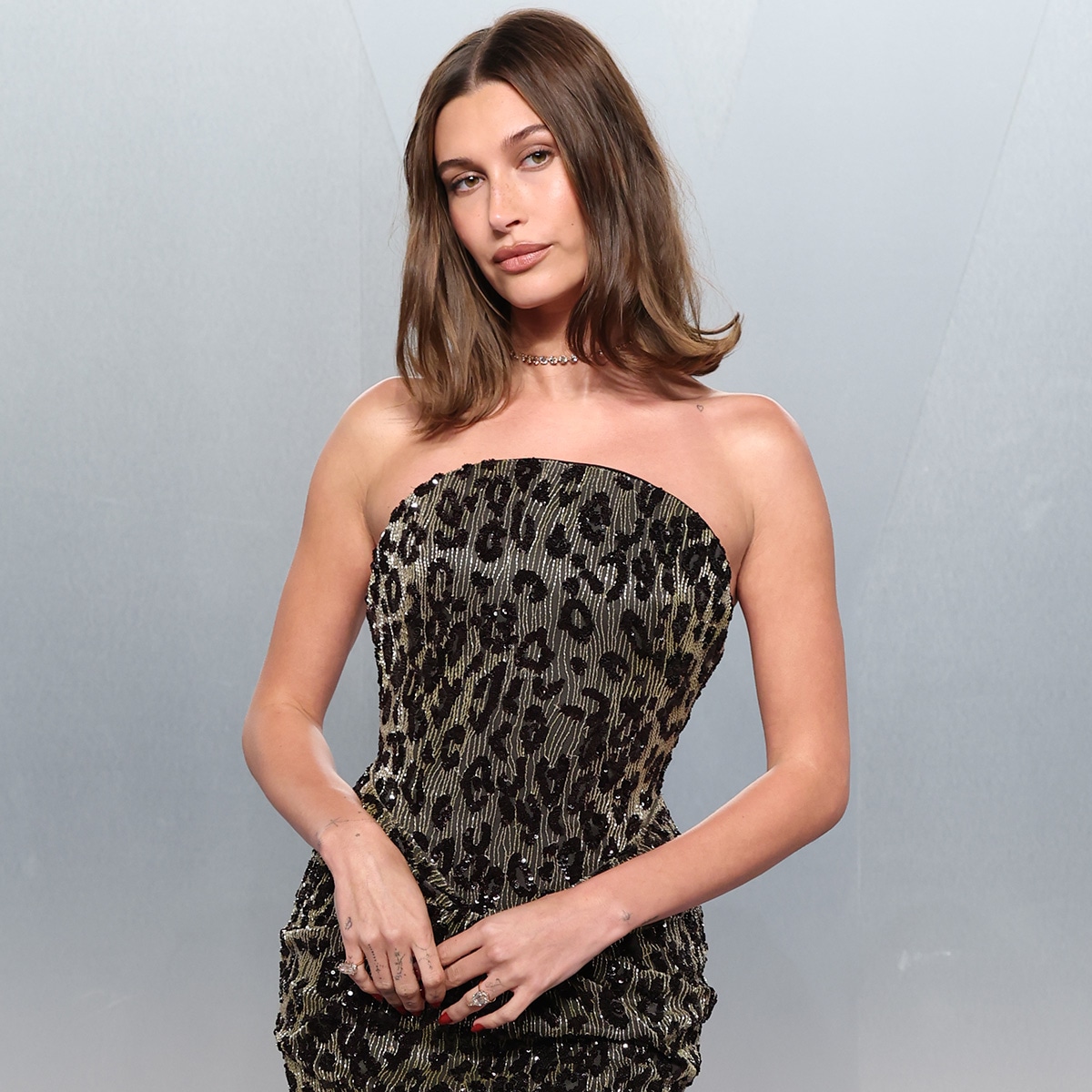
Hailey Bieber Just Swapped Her Rhode-Girl Brunette for Full Chocolate-Vampire Energy
The beauty founder’s darkest hair in a decade has arrived precisely when fall was begging for a little drama.
Hailey Bieber has entered her dark-hair season, and naturally she did it with the kind of glossy, expensive-looking finish that makes everyone else’s bathroom dye job feel suddenly very personal.
In a September 19 Instagram post from hairstylist Irinel de León, Bieber showed off a deep chocolate shade that is being described as her darkest hair color in more than ten years. The 29-year-old model and Rhode founder posed for the camera with a glossy pout, fresh cut and polished styling, while celebrity colorist Matt Rez handled the transformation from highlighted brunette to something considerably moodier.
It is not black, exactly. It is richer than her familiar caramel-brown palette, warmer than a flat espresso and dark enough to make the whole look feel less “clean-girl founder on a coffee run” and more “she knows something about the after-party.” Fall did not ask politely for this hair. Fall simply got its way.
The brunette has gone dramatically brunette
Bieber’s beauty identity has spent years orbiting a very specific shade of low-maintenance luxury: light brown, softly highlighted, glossy without looking overworked. Her hair usually lives in that California middle ground where the color appears effortless but clearly required a team of professionals and several strategic lighting choices.
This new version moves the dial. The deep chocolate color gives her signature beauty look a sharper outline, particularly against the barely-there makeup and high-shine lip she wore for the reveal. The effect is sleek without being severe, vampy without tipping into costume. In other words, it is exactly the sort of change that can dominate a group chat without requiring a dramatic haircut, a breakup announcement or a cryptic caption.
And that is the Bieber method at its most effective: change one highly visible detail, keep everything else controlled, and let the internet do the emotional labor.
Her hair history is a study in strategic chaos
This is hardly Bieber’s first attempt to make a beauty switch feel like a cultural event. In March, she shocked fans with an icy blonde bob, a major departure from the caramel tones she had been wearing. The transformation appeared to involve a wig, which is perhaps the wisest possible approach when your audience includes millions of people waiting to diagnose every inch of your hair.
Before that, her most memorable super-dark moment came in 2015, when she stepped out at the Met Gala in a blue mini dress with deep brunette hair anchoring the look. That was a different Bieber era entirely: pre-Rhode, pre-motherhood, pre-viral beauty philosophy. Bringing the shade back now gives the new color a faint sense of déjà vu, but the styling is more polished and intentionally pared back this time.
There was also last year’s lighter-hair chapter, which arrived a month after she gave birth to her and Justin Bieber’s first child, Jack Blues Bieber. The timing mattered because Bieber had previously told a fellow new mom on TikTok not to make any major post-partum hair decisions too quickly. “Personally giving myself at least a year!” she wrote, encouraging a little patience before reaching for the scissors or bleach.
Apparently, the year is up. The scissors and colorist have been summoned.
The Rhode effect is still doing its thing
Bieber’s hair transformations rarely exist in isolation. They tend to arrive as part of a complete visual language: glossy skin, restrained makeup, softly sensual styling and one detail pushed just far enough to become the headline. With Rhode, she helped turn that formula into a beauty-business universe, but the original appeal was always the same. Her looks feel attainable for approximately three seconds, until you remember the salon appointment, the color maintenance and the fact that “barely there” makeup is often the most labor-intensive makeup of all.
Her own philosophy has been relatively consistent. In 2022, she told People, “less is definitely more,” while acknowledging that her approach could evolve over time. The chocolate hair is a neat example of that evolution. The look is not maximalist, but it is more deliberate. The contrast does the work. A darker shade can make a simple lip look glossier, a neutral outfit look more intentional and a familiar face look newly editorial without any obvious overhaul.
That is why hair-color reveals remain such reliable celebrity content. They offer transformation without requiring explanation. No statement, no elaborate rollout, no suspiciously timed yacht carousel. Just a different shade and the immediate sense that someone has entered a new chapter, whether or not anyone has actually announced one.
Welcome to the chocolate brunette autumn
The timing is almost comically perfect. Fall beauty is perpetually waiting for permission to become deeper, warmer and a little more dramatic. Suddenly, every brunette can consider going richer, every blonde can contemplate a cooler gloss, and every person who has ever said “I want something subtle” can point to Bieber and request “that, but believable for my lifestyle.”
The shade also lands in the sweet spot between trend and longevity. It nods to the current appetite for dark, glossy hair while remaining classic enough to survive beyond one season. Unlike a neon experiment or a drastic chop, chocolate brunette can be softened, warmed or gradually highlighted later. It is a commitment, but one with an exit strategy.
For Bieber, the appeal is obvious: the color is new enough to spark conversation and familiar enough to remain completely hers. She has not abandoned the polished Rhode aesthetic. She has simply dimmed the lights.
And if the glossy pout, the autumn timing and the decade-long gap are any indication, this is not a random salon detour. It is a mood shift with excellent lighting. The blonde bob was a plot twist. The chocolate brunette is the season premiere.
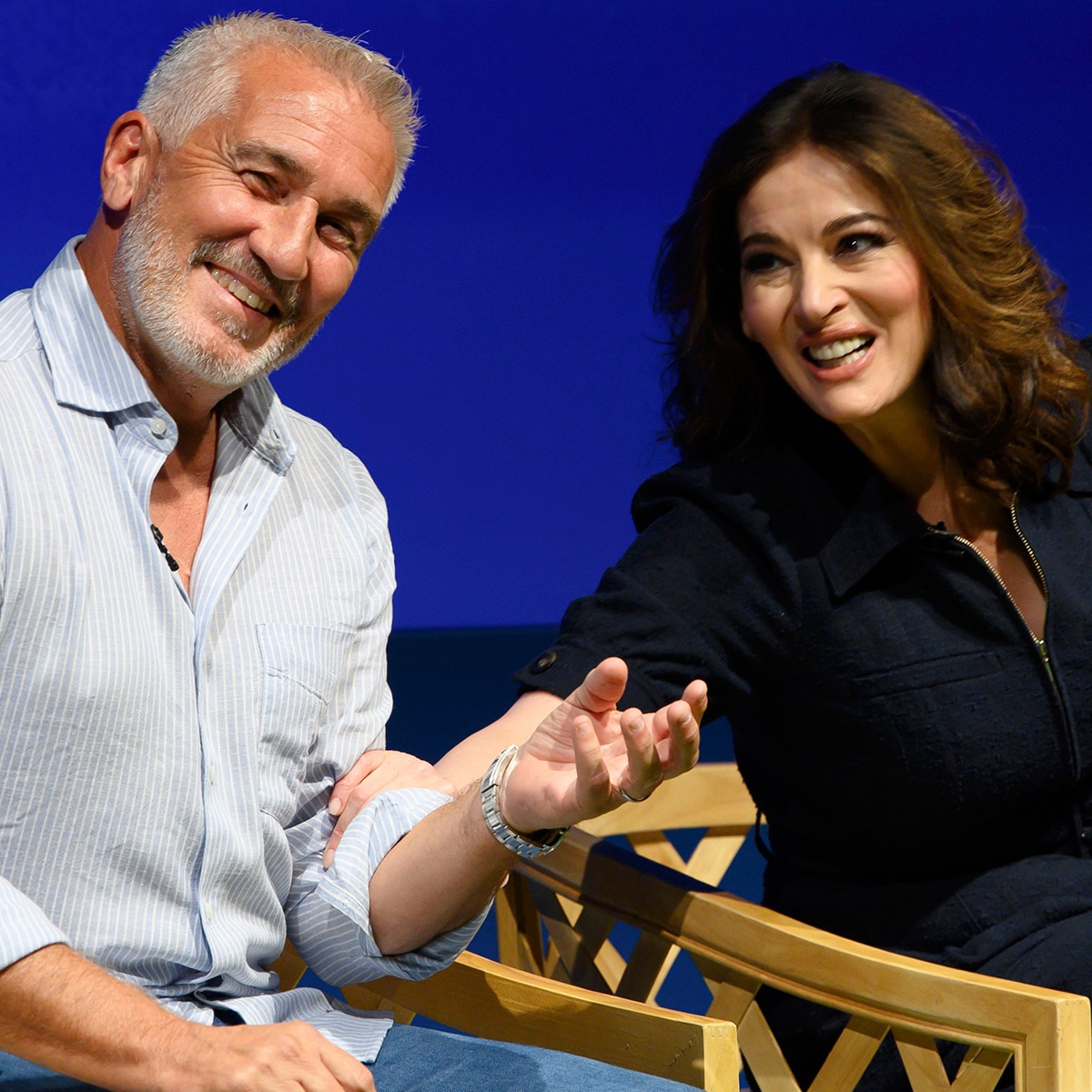
Nigella Lawson Invited Paul Hollywood for Drinks—Then Refused to Bake for Him
The new Great British Bake Off judge has addressed those online feud whispers with a pre-show peace summit, a teasing nickname and one very firm boundary: no homemade cake for Paul.
There are many ways to enter the Great British Bake Off tent. You can arrive with a signature sponge, a technical challenge strategy or the kind of pastry confidence that makes viewers at home suddenly believe they, too, could laminate dough before lunch. Nigella Lawson chose a different route: she invited Paul Hollywood over for drinks and made absolutely sure she would not be baking for him.
That, apparently, was the diplomatic summit required to quiet online speculation that the two new judging-room colleagues had already whisked up some bad blood. Lawson, who is joining Bake Off for season 17 after Prue Leith’s departure, told The Guardian that she and Hollywood hit it off almost immediately. “We chatted for 10 minutes and had a great time,” she said. “I knew instantly it was going to work.”
Her follow-up was even more Nigella: “It was lucky that we did get on. Can you imagine if we didn’t? I bet Paul would have said so!”
The pre-tent drinks were a very deliberate move
Lawson explained that she wanted to meet everyone properly before filming began, rather than let their first real interaction happen beneath the lights, cameras and intimidatingly precise gaze of a baking competition. So she invited Hollywood over for drinks to break the ice.
That is a smart bit of Bake Off diplomacy. The show’s magic depends on warmth, teasing and the sense that the people judging your soggy bottom are also capable of having a normal human conversation. A new judge arriving with a carefully established dynamic matters almost as much as the technical knowledge. Lawson clearly understood the assignment.
She also understood that hosting Paul Hollywood comes with a certain amount of pressure. “I wasn’t going to bake for him,” she told The Guardian. “That would be madness.”
Honestly, this may be the most important piece of information in the entire transition. Inviting a professional baker into your home and then presenting him with your own cake is not hospitality; it is an unsolicited audition. Lawson declined to turn cocktails into a surprise judging round, and for that we salute her.
Paul’s laser stare has apparently been softened by teasing
On television, Hollywood has perfected the role of the straight-shooting judge: blue-eyed scrutiny, exacting standards and the kind of silence that can make a contestant question every decision they have made since buying flour. Lawson says the version viewers see is only part of the story.
“One of the many lovely things about Paul is that he’s good at being teased,” she said. Lawson nicknamed him “Professor Precision,” he teased her back, and the atmosphere loosened. In her telling, Hollywood is “much more playful than he looks on camera.”
That sounds less like a feud and more like the beginnings of a television double act. Hollywood gets straight to the point; Lawson admits she is a “witterer” who loves talking about food and sometimes cannot stop. The contrast is obvious, but so is the potential. His laser stare, her lyrical detours. His precision, her sensual food vocabulary. One measures the crumb; the other wants to discuss what the crumb means.
“We complement each other,” Lawson said, which is the sort of phrase that can sound suspiciously polished when a new television pairing is being introduced—except she followed it by describing their actual working rhythm. Hollywood plays “bad cop,” she said, but he is also himself, and that encourages other people to be themselves too.
Replacing Prue Leith is not exactly a casual little gig
Lawson’s appointment comes after Leith announced in January that she was stepping away following nine years as a Bake Off judge. Leith, who had previously joined the series after Mary Berry’s departure, said she was ready to spend more time in her garden and noted, with characteristic bluntness, that she was 86.
She also said she would miss working with Hollywood, along with hosts Alison Hammond and Noel Fielding. That is a considerable amount of Bake Off chemistry for Lawson to inherit, and she has admitted she was apprehensive about filling Leith’s shoes.
“I wasn’t sure whether I was even qualified,” Lawson said, adding that she knew the move was a risk for both her and the show. Her concern was not that she could not talk about food—it is Nigella Lawson, so that part seems covered—but that the producers might be expecting a scientist, technician or professional baker.
Apparently, the answer was: leave that to Paul.
Lawson said she told producers, “These are the things I can’t do.” Their response, according to her, was that those were the things Hollywood did. Her own contribution would be taste, texture and the ability to articulate why a dish works—or does not.
The Bake Off tent is getting a new flavor of chaos
That division of labor could be exactly what the series needs as it moves into its next era. Leith brought years of judging authority and a famously dry sense of humor. Lawson brings a different kind of culinary celebrity: intimate, expressive, slightly theatrical and very good at making food sound like a flirtation.
Hollywood, meanwhile, remains the precision instrument. The man who can deliver a laser stare now has a colleague who will call him “Professor Precision” to his face and then keep talking about the emotional life of a tart.
Season 17 premieres on the U.K.’s Channel 4 on Sept. 22 and arrives on Netflix in the U.S. on Sept. 25. Until then, the pre-show storyline is not a scorched-earth judge feud but something arguably more entertaining: two famous food personalities negotiating their chemistry over drinks, jokes and a firm refusal to produce a cake on demand.
If the internet was hoping for frost between Lawson and Hollywood, it may have to settle for icing. And possibly a very pointed lack of it.