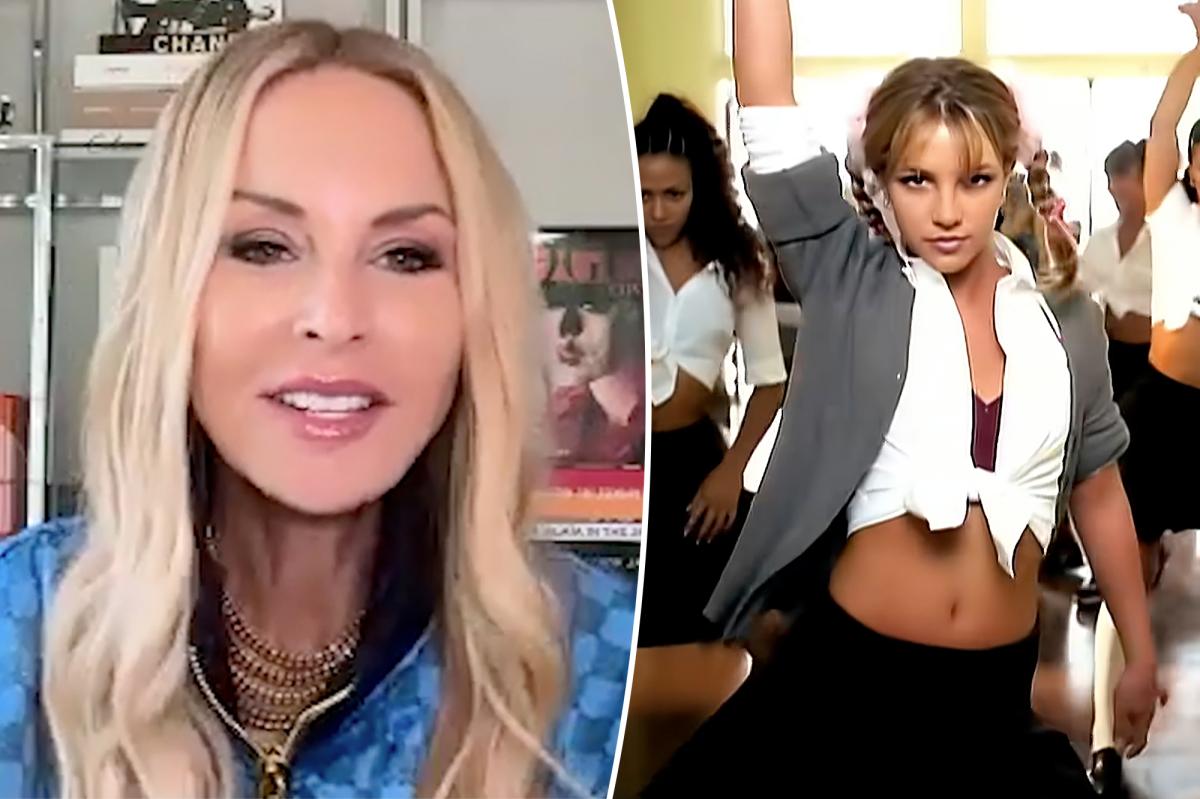
Before Rachel Zoe Became Rachel Zoe, She Helped Dress Britney for Pop’s Most Iconic Schoolgirl Video
The stylist’s first freelance job was an accidental detour into the “…Baby One More Time” universe — and yes, the budget was reportedly very Kmart.
Rachel Zoe’s origin story does not begin with a Hollywood client list, a velvet-rope dressing suite or a perfectly timed reality-TV entrance. It begins at YM magazine, a freelance favor and Britney Spears standing at the center of the late-’90s pop-culture detonation.
Zoe revealed to Page Six’s “Virtual Reali-Tea” that her first-ever freelance styling job was working on Spears’ 1998 music video for “…Baby One More Time.” That is not merely a nice piece of fashion trivia. It is the kind of career footnote that makes the entire celebrity-style ecosystem feel like a tiny, chaotic group chat: before Zoe was dressing major stars, she was helping pull together the wardrobe for one of the most instantly recognizable music videos ever made.
The video premiered in November 1998, when Spears was 16 and still being introduced to the world as pop’s newest breakout star. Its school-uniform-inspired look became inseparable from the song’s visual identity, a very specific collision of teen-magazine gloss, rebellious styling and music-video theatricality. Decades later, the outfit remains one of those images people can identify before the first note even plays.
The career break that arrived as a favor
At the time, Zoe was working at YM, the teen magazine that gave her a front-row seat to the era’s aggressively photogenic pop explosion. She told Page Six that she had styled artists including Gwen Stefani while at the magazine, along with other pop stars and actors who passed through the publication’s orbit.
Her entry into freelance styling was less grand launch and more “can you cover this?” A colleague who regularly took freelance jobs could not work on the Spears shoot, so she asked Zoe to step in for one of the filming days. Zoe agreed, and, in the kind of career plot twist that sounds obvious only after it happens, a stylist was born.
“My first-ever freelance job was working on [Britney Spears’ 1998 music video for] ‘…Baby One More Time,’” Zoe said.
There is something deliciously unglamorous about the beginning of that sentence. Not “I was discovered by a legendary designer.” Not “I had a vision.” A colleague needed coverage. Zoe had the magazine experience. The rest became fashion history by accident.
The outfit was iconic. The budget was not.
When Page Six asked Zoe about the wardrobe, she admitted she does not remember every sourcing detail. That may sound like a shocking gap in the memory bank until you remember what music-video styling actually involved: multiple performers, extras, quick changes and a production clock that did not care whether a garment was destined to become an eternal pop-culture reference.
The schoolgirl ensemble has often been described as coming from Kmart, reportedly reflecting the video’s shoestring budget. Zoe could not recall exactly where each piece came from, but she did remember the broader reality of the job.
“There were so many extras in these music videos that we were doing at the time that we would source … from everywhere,” she explained.
From everywhere is sometimes where the best fashion stories begin. The look did not need to arrive with a luxury label or a precious archive number to become iconic. It needed to read instantly on camera, fit the world of the video and help establish Spears as a new kind of pop star: polished enough for the teen-magazine pages, mischievous enough to feel like she might skip class, and visually memorable enough to survive three decades of cultural recycling.
Zoe also credited that period with shaping her love of vintage. She recalled collecting vintage T-shirts and other pieces while working on music videos, an approach that sounds much less accidental now that we know where her career eventually went. The future stylist who would become synonymous with high-glamour celebrity dressing was learning the fundamentals in the least precious way possible: hunting, improvising and making whatever was available look intentional.
Britney, the early-2000s pop universe and the Zoe timeline
After the Spears project, Zoe continued working with her for a while and went on to style a remarkably concentrated list of late-’90s and early-2000s pop royalty, including the Backstreet Boys, Enrique Iglesias, Jessica Simpson and Ashlee Simpson.
That list is a time capsule with a pulse. These were the artists who turned music videos into appointment television and red carpets into weekly fashion arguments. Before social media made every celebrity outfit instantly searchable, styling happened inside a faster, messier loop of magazines, videos, television appearances and fan speculation. A memorable top could become a signature. A hair accessory could become an era. A schoolgirl-inspired look could follow a song around the world.
Zoe’s Britney connection also puts her career in a particularly fun light. She was not simply arriving later to dress established stars; she was present near the beginning of a pop phenomenon that would define the visual language of an entire generation. The fact that she remembers the job as an unexpected cover assignment only makes the story better. Fashion history, apparently, is sometimes made because somebody’s colleague had a scheduling problem.
And while the old video’s styling is now discussed with the reverence usually reserved for archival couture, Zoe’s recollection keeps it grounded. There were extras to dress. There were garments to find. There was a budget. There was no guarantee that anyone involved knew they were creating a permanent reference point for pop fashion.
From music-video scramble to wearable health message
Zoe spoke with “Virtual Reali-Tea” while promoting her partnership with Aflac’s Check for Cancer campaign, a very different kind of styling project from a 1998 pop video. Together, they created a limited-edition jacket in a custom checkered print with a QR code embedded into the design.
Scanning the code takes users to CheckForCancerNow.com, where people can use Aflac’s Cancer Screening Assessment Tool to learn more about recommended screenings based on factors including age and personal history. Zoe said the goal was to make the message wearable, unisex and easy to engage with rather than burying it in a pamphlet nobody wants to read.
It is a neat bookend to the Britney anecdote. In one chapter, Zoe was sourcing clothing from wherever she could find it for a video that would become a permanent part of pop mythology. In another, she is using a fashion object to direct people toward health information. Same basic instinct, different stakes: make the look memorable, make it functional and make sure people actually notice.
Still, the headline remains the Britney revelation. Rachel Zoe’s first freelance styling gig was not just any music-video job. It was the visual birth of one of pop’s most enduring stars — assembled, at least in part, by a young magazine stylist who got the call because someone else could not make it.
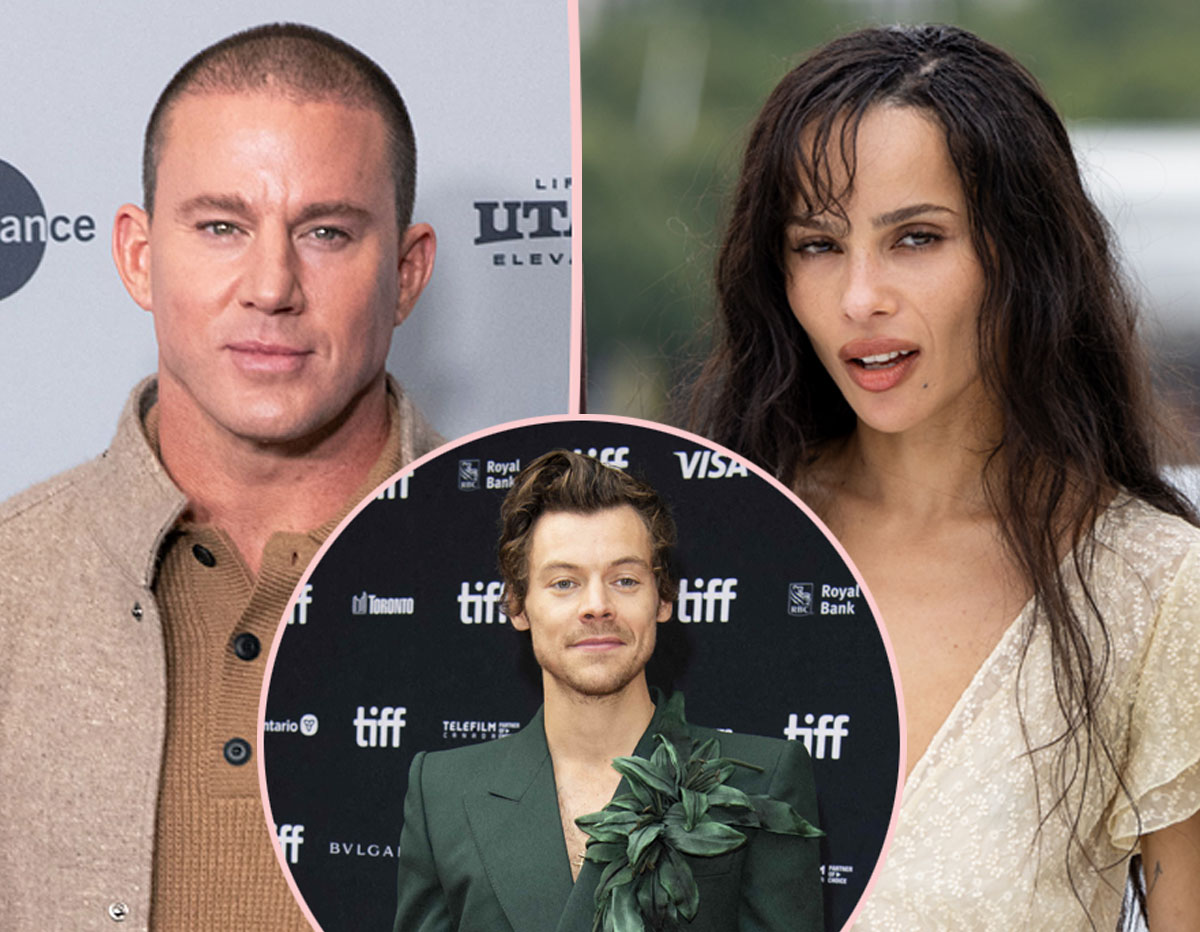
Channing Tatum Had One Question About That Zoe Kravitz–Harry Styles Hate Account: Why Would He Follow It?
The internet briefly cast Channing Tatum as the anonymous commentator lurking beneath posts about his ex-fiancée and her new fiancé. He has now entered the chat — loudly.
Channing Tatum would like everyone to know that he is not spending his free time running a secret Instagram account dedicated to hating on Zoë Kravitz and Harry Styles. Which is, frankly, a relief. The man has enough going on without moonlighting as the comment section’s most emotionally invested ex.
Over the weekend, an alleged finsta began attracting attention for leaving pointed comments beneath posts about Kravitz and Styles, whose relationship has become one of those celebrity pairings that seems to generate its own weather system. The account reportedly praised Tatum while taking swipes at his former fiancée and her new fiancé, a combination that made the internet immediately suspicious of the obvious suspect.
Then came the part that made the whole thing feel less like a random burner and more like a messy little digital soap opera: the account appeared to be following Tatum. That detail was enough to send speculation into overdrive. Why would a secret account linked to a celebrity be following that celebrity? Why would anyone trying to remain anonymous make the most conspicuous possible choice? And why, in the year of our increasingly searchable internet, are people still attempting anonymous celebrity commentary with the subtlety of a billboard?
The alleged finsta was not exactly keeping things classy
According to the comments reported by Perez Hilton, the account was not merely dropping vague hints and letting followers connect the dots. One comment read, “Just here for the hate,” accompanied by a sipping emoji. Another took aim at the way Kravitz’s former relationship with Tatum had been discussed, including his past description of her as “the most intentional person” he knew. The commenter repurposed “intentional” as a possible synonym for “calculated,” turning a flattering phrase into a tiny, highly specific dart.
A separate comment appeared to defend Tatum while framing Kravitz as someone who was never going to settle down, contrasting her with Styles, described by the account as “an adult.” It was the kind of over-written Instagram snark that sounds less like casual fandom and more like somebody has been composing grievances in the Notes app.
That is what made the alleged account such irresistible gossip bait. The comments were not generic “she’s fake” nonsense. They referenced the history of Tatum and Kravitz’s engagement, the timing of Kravitz’s romance with Styles, and the shifting public narrative around all three stars. Even when the account was trying to sound detached, it was working very hard to sound informed.
Channing’s denial came with a very fair question
On Monday afternoon, Tatum addressed the rumor directly via Instagram Stories, and his response had the exhausted energy of a man discovering that strangers have assigned him a secret hobby.
“Yo i truly can’t believe yall think this is what I’m doing with my free time. Fuckin hilarious,” he wrote. “Also why would I follow a burner account if I didn’t want people to connect me to it? Wtf come on.” He then made the point as plainly as possible: “But if I really need to say it, I only have one IG account @channingtatum.”
It is difficult to argue with the central question. A burner account is supposed to be covert. Following the person you are supposedly impersonating is not covert; it is the social-media equivalent of wearing a name tag to a masquerade ball. The account has since appeared to be deactivated, adding one final flicker of internet drama to a story that already had all the necessary ingredients: a famous ex, a famous new couple, suspicious timing, and a comment section behaving like a private investigator with unlimited screen time.
The timing made the rumor especially combustible
Tatum’s denial arrives amid renewed attention on Kravitz and Styles. The pair’s engagement has been a major point of conversation, while Tatum and Kravitz’s own former engagement remains part of the public backstory people bring to every new development. That is the unfortunate tax of being famous, attractive, and previously photographed in love: the internet keeps the relationship file open long after the couple has moved on.
The result is a very particular kind of celebrity narrative, where one person’s new chapter is constantly read through the emotional footnotes of another. Kravitz and Styles appear in a post, and suddenly the conversation is about Tatum. Tatum posts a denial, and the conversation swings back to Kravitz and Styles. Nobody has to invite the triangle; the algorithm seems perfectly capable of setting the table.
There is also something revealing about the alleged account’s tone. It did not simply celebrate Tatum. It tried to construct a whole emotional theory around him: the wronged former fiancé, the woman who allegedly could not settle down, the new man positioned as more mature. That is classic celebrity gossip architecture, but with the odd intimacy of someone pretending to speak from inside the breakup.
Tatum, for his part, did not offer a sprawling explanation or attempt to litigate every comment. He denied the account, mocked the idea that this was how he spent his spare time, and pointed people toward his only stated Instagram account. It was brisk, profane, and notably less dramatic than the rumor itself — which may be the most convincing detail in the entire episode.
Celebrity breakups now come with imaginary social-media alter egos
The strangest part of this saga is not that people suspected Tatum. Celebrity audiences have always tried to decode the feelings hiding behind a public breakup. It is that a random Instagram account can now become a full character in the story within hours. Give it a few oddly specific comments, a suspicious follow, and a vanished profile, and suddenly everyone is writing dialogue for the person behind the screen.
That is the modern breakup economy: the couple separates, the internet creates a supporting cast, and every anonymous account is treated like it might be a deleted scene. In this case, the alleged burner was apparently cheering for Tatum while attacking Kravitz and Styles, making it perfectly designed to trigger the exact audience most likely to investigate it.
But Tatum’s message cuts through the fantasy with one practical objection: if he wanted to hide, why would he make the account so easy to connect to him? Neither Kravitz nor Styles is cited as having commented on the situation, and the alleged account is no longer active. For now, the loudest person in this mini-drama is the one insisting he had nothing to do with it.
Which leaves us with an unusual celebrity plot twist: the ex-fiancé is not secretly typing in the shadows. He is publicly asking why everyone thinks he has that kind of time. The internet may continue to speculate, but Tatum has made his position clear — one Instagram account, zero interest in anonymous commentary, and apparently no patience for a burner with terrible disguise skills.
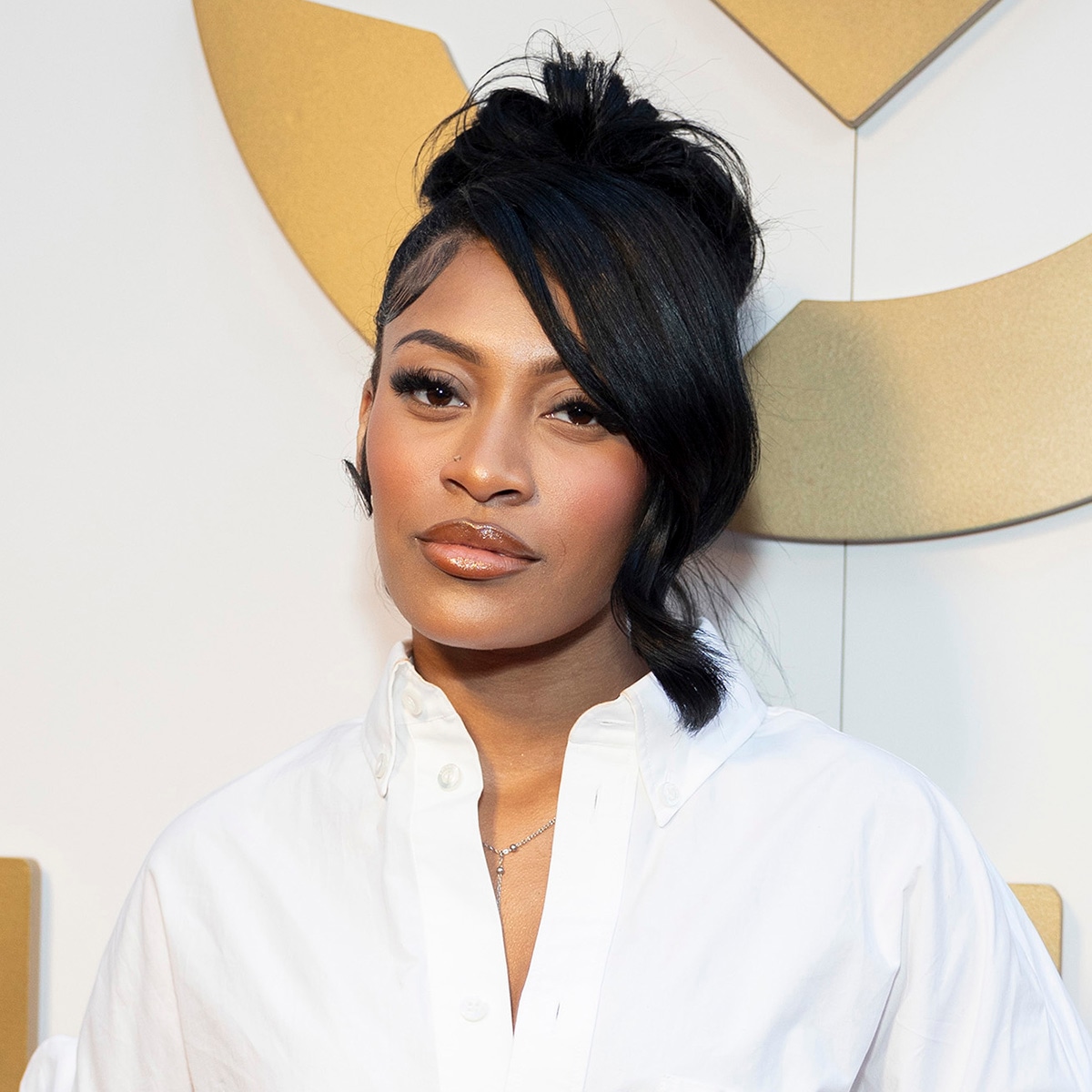
Love Island USA’s Clarke Carraway Says Taylor Williams’ “Friendly” Energy Was the Breakup Trigger
The season seven couple’s split was surrounded by cheating rumors—but Clarke says the real problem was a relationship rule Taylor never learned to follow.
Love Island relationships are built under fluorescent lighting, edited into emotional cliffhangers and then released into the wild, where every woman in a background video becomes a potential plot twist. Clarke Carraway and Taylor Williams made it out of the villa together. They did not, apparently, make it out with the same definition of “moving differently.”
The season seven couple confirmed their breakup in July, after becoming one of the show’s more talked-about pairings. Now Clarke is explaining what pushed the relationship past its expiration date—and her version is less “one dramatic betrayal” than “you are simply too friendly for my operating system.”
“One of the things that I was asking him to fix: Taylor is super nice, super friendly,” Clarke said during the Sept. 20 episode of Kaylor Martin’s Kaylor’s Crash Outs. “In a relationship, I run a strict program. I don’t play that.”
Clarke’s relationship rule is apparently a full lifestyle
Clarke, a behavioral specialist, did not describe herself as casually uncomfortable. She described a policy. If a group of men approaches her, she said, she pretends she is being filmed at all times—even if she is not—and asks herself how she would want Taylor to behave in the same situation.
That is a very Love Island way to approach romance: every interaction is both an ordinary social moment and a possible unseen-camera incident. Clarke said her standard was simple. Taylor should make her the priority, and his behavior around other women should reflect that priority without needing a courtroom-style conversation afterward.
“Where he had an opportunity to move a little differently, he just stayed true to himself, right?” she told Kaylor. “All respect to you, but just the way that I move in a relationship, like I told you, ‘You’re the priority. I think about you in every second.’”
That mismatch became more difficult once rumors started circulating that Taylor had been unfaithful. Clarke said she initially received direct messages about him allegedly being out with another woman and chose not to spiral over them. A DM, after all, is the digital equivalent of someone rushing into the villa yelling that they heard something by the fire pit: potentially important, potentially nonsense, and never arriving at a convenient time.
Then the video entered the chat
Clarke said she asked Taylor about the situation and accepted his explanation at first. But her reaction changed when a video began circulating that showed him speaking to another woman in close proximity.
“I ignored the DMs. I asked him about it. ‘It’s cool, whatever,’” she recalled. “But to see the video come out, I’m here seeing it for the first time with everyone else.”
Taylor later explained that the woman was a platonic mutual friend. Clarke did not say the video proved he cheated. Her point was that the clip intensified a problem that already existed: Taylor’s instinct to be warm and sociable did not match the boundaries she expected from a partner.
That distinction matters because the breakup conversation is not really about whether every internet theory was true. It is about how quickly a relationship can become unlivable when one person sees harmless friendliness and the other sees a failure to protect the relationship. In Clarke’s telling, she did not need Taylor to become a different person. She needed him to understand that being in a relationship meant adjusting his behavior when the situation called for it.
“If there’s any questioning in any sort of relationship, whether that’s platonic or romantic,” she said, “I don’t think that God would send someone my way, whether it’s a friend or someone I’m talking to, that I would question.”
They went from Casa Amor plot twist to public breakup
The tension feels especially pointed because Clarke and Taylor’s romance began with the exact kind of turn that makes Love Island addictive. Taylor first explored a connection with Olandria Carthen, then Clarke turned his head during Casa Amor. At a recoupling, he chose Clarke, sending their storyline into its next chapter while Olandria later coupled up with Nic Vansteenberghe.
Clarke and Taylor eventually finished as the season’s fifth runners-up. Amaya Espinal and Bryan Arenales won the season, though that relationship later ended, leaving the finale’s rankings looking less like a prediction of romantic longevity and more like a temporary snapshot taken under extreme conditions.
Taylor and Clarke still seemed to leave the villa feeling good about what they had built. Taylor told TODAY.com that everything happened for a reason and that he could not be completely mad because the experience had happened at all. Then came the post-villa complication: the audience, no longer distracted by challenges, recouplings and Casa Amor bombshells, could focus on every blurry clip and suspicious interaction.
Before the breakup was announced, Clarke appeared to address the online noise with a series of solo Instagram photos captioned, “Intuition is my fave accessory.” Taylor, meanwhile, pushed back in a since-expired Snapchat Story, writing that he had “better things to do” than respond to speculation he said was not real, according to Cosmopolitan.
Neither post settled the conversation. If anything, they gave the internet two different breakup trailers: Clarke leaning into intuition, Taylor rejecting the premise entirely. By July, the couple had confirmed they were no longer together. Clarke’s new explanation makes the split sound less like one explosive incident and more like the accumulated friction of two people with incompatible ideas about what loyalty looks like in public.
There is a particular kind of reality-TV heartbreak in that. The couple did not implode because one person was obviously a villain and the other was obviously a saint. They ran into the much less satisfying, much more familiar problem of different relationship etiquette. Taylor’s friendly nature may have been genuine. Clarke’s expectations may have been genuine too. But when one person wants every social interaction handled like a loyalty test and the other wants to remain exactly as naturally outgoing as before, somebody is eventually going to start watching the videos frame by frame.
For now, Clarke is single, Taylor is back to life outside the villa and the season seven audience has one more Love Island lesson to absorb: sometimes Casa Amor is not the thing that breaks a couple. Sometimes it is the person who keeps acting like the villa never ended.