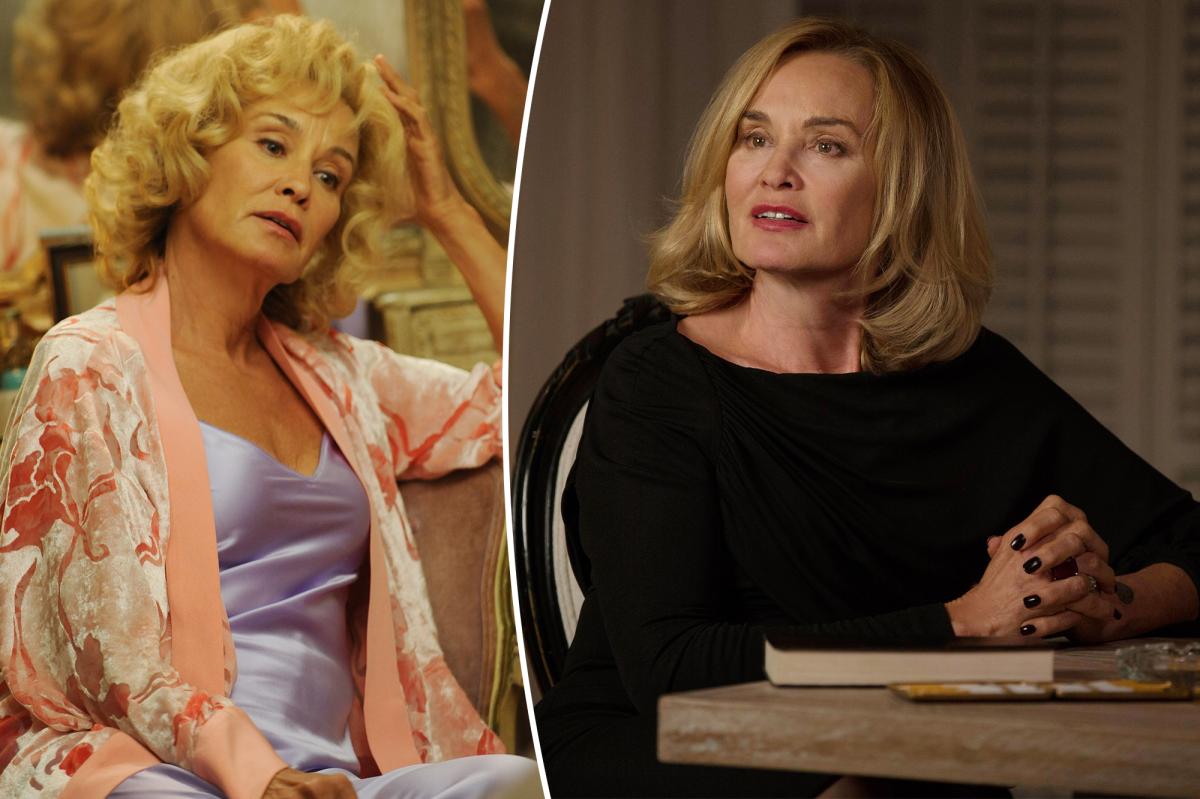
Jessica Lange Is Bringing the Entire AHS Cinematic Universe With Her
The horror anthology’s original grande dame agreed to return for Season 13 on one gloriously demanding condition: let her play all four of her old characters — plus a mysterious fifth.
Jessica Lange is not returning to American Horror Story for a polite little cameo, a melancholy hallway appearance or one of those Ryan Murphy moments where a beloved former star materializes long enough to make the internet yell and then disappears into the fog.
She is apparently bringing the whole department store.
Lange revealed on Live with Kelly and Mark that she agreed to return for Season 13 only after securing the right to reprise all four of the characters she has played across the anthology series. Not one. Not two. All four. And, because apparently four Jessicas are not enough Jessica, she also teased a fifth “mystery character.”
That is less a comeback than a hostile takeover of the AHS universe — and honestly, the show has been waiting for someone with the authority to do it.
The condition was very Jessica Lange
According to Lange, Murphy initially approached her about returning as Constance Langdon, the poisonous, perfectly coiffed mother at the center of Season 1’s Murder House. Constance was Lange’s first major AHS role and remains one of the series’ most indelible creations: part Southern gothic monster, part grieving mother, part woman who could turn a conversation into a hostage situation without raising her voice.
“Ryan Murphy talked me into coming back,” Lange said, explaining that she told him, “I’ll come back if I can [play] all four characters.”
It is a spectacularly on-brand demand. Lange has never treated American Horror Story as a standard television job where an actor clocks in, learns a new name and moves on. Her characters have always arrived with their own weather systems. Constance had venom. Sister Jude had repression, fury and a habit. Fiona Goode had supreme-witch arrogance and the kind of wardrobe that made immortality look like a reasonable career goal. Elsa Mars had glamour, ambition and a German accent wrapped around a carnival full of trauma.
Why choose between them when you can have the deluxe package?
Yes, Sister Jude is involved — but leave the habit at home
Mark Consuelos, who appeared in Season 2’s Asylum as patient Spivey, immediately asked the question any longtime viewer would have asked: What about Sister Jude?
Lange confirmed that the former nun is part of the return, but not in the way viewers may remember her. Sister Jude appears later in the season as a patient at the institution, after having institutionalized herself. Lange also clarified that she would not be wearing the habit.
That detail matters because Sister Jude’s habit was never just a costume. It was armor, status symbol and visual shorthand for a woman trying to control every room she entered. Seeing her outside it — stripped of the authority she once wielded — gives the character a particularly sharp kind of AHS afterlife. The show loves a fall from power, especially when it can dress the fall in period clothes and fluorescent institutional lighting.
Consuelos’ presence makes the exchange even more delightfully circular. He was there in Asylum, Lange is returning to Sister Jude, and the two were able to talk about that season from opposite sides of its grim psychiatric-hospital ecosystem. It is the kind of reunion that feels designed to make the audience pause the television and start naming everyone who might walk through the next door.
From Constance to Fiona to Elsa: the Lange hall of fame
Lange first played Constance in “Murder House,” then returned to the role in a guest appearance during Season 8’s “Apocalypse.” In Season 3, she transformed into Fiona Goode, the Supreme witch whose power was matched only by her appetite for luxury, revenge and being the most interesting person in the room.
Season 4 gave her Elsa Mars, a German expatriate and freak-show manager whose grand dreams and ugly compromises made Freak Show feel like a particularly bruising backstage musical. Those three characters alone represent the strange flexibility of the anthology format: Lange could be a suburban nightmare in one season, a supernatural diva in another and a doomed impresario in the next.
Sister Jude completed the quartet, and the roles remain distinct enough that the prospect of Lange playing all of them at once sounds less like stunt casting than a one-woman repertory company. The real question is not whether she can disappear into each character. She already has. It is how the season will let them coexist without turning into a haunted version of a Lange family reunion.
Lange said her experience returning was “great,” adding that she liked all four characters and found it fun to play them again. That may be the most persuasive reason for the comeback. This is not just Murphy excavating an old favorite because Season 13 needs a recognizable face. Lange sounds like she actually wanted the creative challenge of revisiting the women who helped define the show’s first era.
And then Murphy added a musical number
Murphy previously offered another piece of the bargain in August, revealing that Lange’s condition for returning included a musical number. His pitch was a “greatest hits season” built around the horror symbolism of the number 13, and he said he knew he could only do it with Lange.
She said yes — as long as she got the number.
Of course she did. Lange’s AHS characters have always been theatrical, even when the series was being at its most grotesque. Constance delivered her cruelty like a monologue. Fiona treated witchcraft as a lifestyle brand. Elsa literally built her life around performance. A musical number is not a detour from the Lange mythology; it is the logical next room in the mansion.
The bigger tease is the fifth character, which Lange described as “kind of a mystery character.” When Kelly Ripa asked whether the surprise might point toward a Season 14 return, Lange shut that down with a simple “No!”
So the current shape of Season 13 is clear enough to be tantalizing: familiar faces, four returning Lange creations, one unknown Lange creation and at least one musical number. The anthology is calling it a season, but Lange appears to be treating it as a takeover bid.
And if American Horror Story wants to make its thirteenth season feel like a greatest-hits album, there is no more glamorous way to do it than letting Jessica Lange sing, scheme, haunt, hex and emotionally devastate her way through the entire catalog.
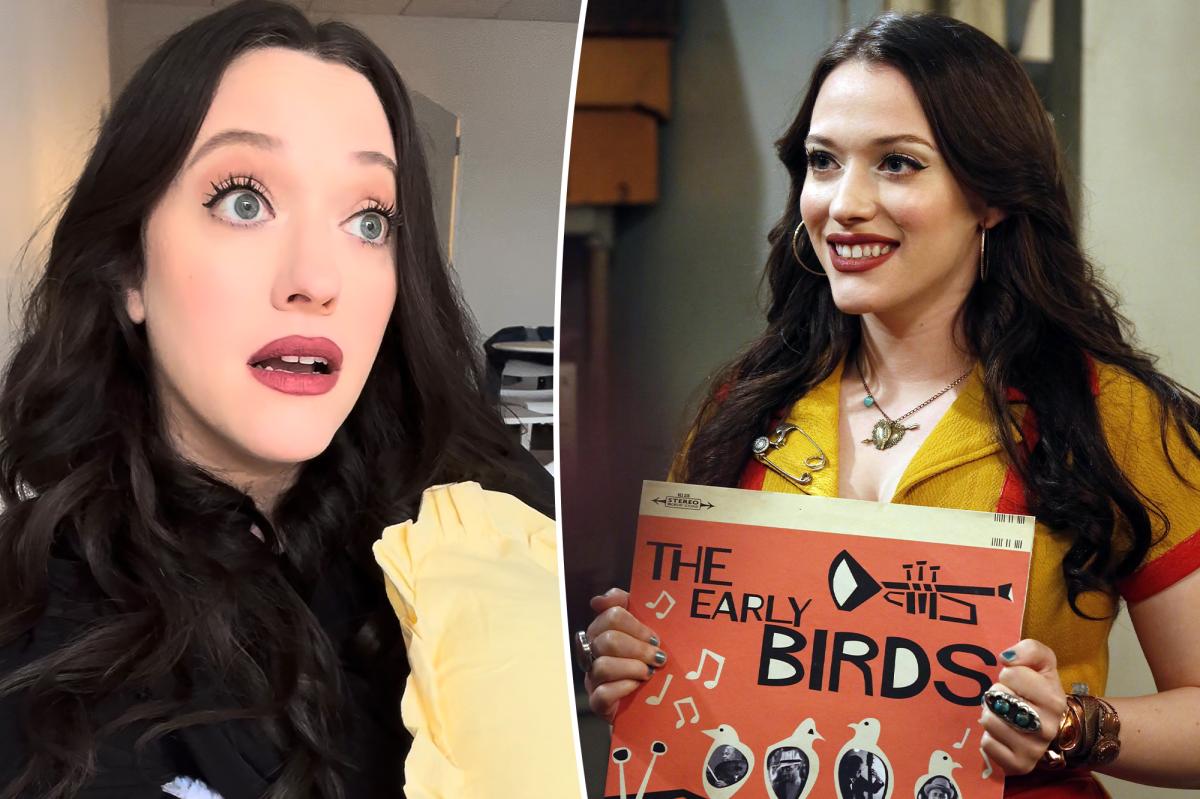
Kat Dennings Had One Brilliant Condition for a ‘2 Broke Girls’ Bra Scene: Pay Me More
Fifteen years after the sitcom premiered, Dennings is revisiting the moment she told Michael Patrick King that a scene of her and Beth Behrs in bras was not worth the money.
Kat Dennings has finally explained why one very specific 2 Broke Girls scene never made it to the screen — and honestly, the negotiation was more compelling than anything that could have happened in those bras.
In a TikTok revisiting her time on the CBS sitcom with co-star Beth Behrs, Dennings recalled a scene from the show’s first or second season in which Max and Caroline were supposed to be “just wearing bras” while running around their apartment. The actress remembered sitting through the table read, considering the assignment, and deciding that the costume was not giving what the paycheck needed to give.
So she went to showrunner Michael Patrick King with a request: remove the scene or put the characters in clothes. According to Dennings, King told her, “No I mean, this is the scene.” Her answer was immediate and devastatingly practical: “You don’t pay me enough for a bra scene.”
The scene was subsequently removed. Somewhere, a network standards department is still staring into the middle distance.
The sitcom scene that met its match
Dennings’ story lands because it is not really about a bra scene. It is about the strange math of early-career Hollywood, when an actor can be famous enough to carry a hit show but still feel too replaceable to say no. She said she did not have “a lot of pull” at the time and felt young and lucky to be on a successful series.
That combination — visible, valuable and still expected to be grateful — defined a lot of television in the 2010s. 2 Broke Girls was a genuine ratings machine when it premiered in 2011, pulling in nearly 20 million viewers. Dennings and Behrs played two Brooklyn roommates working at a diner while attempting to build a cupcake business, with Max’s deadpan sexual humor and Caroline’s polished disaster energy driving the show.
It was also a series built around the visual contrast between its stars: Max’s hard-edged, black-clad cynicism against Caroline’s wealthy-girl-turned-waitress aesthetic. That made the proposed underwear scene feel less like a random wardrobe choice and more like one of those familiar television moments where women’s bodies are treated as an automatic punchline, accessory or ratings strategy.
Dennings did not present the anecdote as a grand Hollywood rebellion. In fact, she undercut it herself, saying, “Never underestimate yourself, is the moral of the story,” before adding, “And they weren’t paying me enough, although I don’t think anyone could.” That last line is the real star: funny, blunt and just self-aware enough to make the entire exchange feel like a sitcom scene that wrote itself.
Fifteen years later, the joke has a different afterlife
The timing is doing plenty of work here. 2 Broke Girls premiered 15 years ago, and Dennings recently marked the anniversary on Instagram with a caption that read, “Beth and I both left with PTSD but also money so that’s nice!” It is a very Kat Dennings way to revisit a beloved but complicated chapter: toss a grenade, add a cash joke, keep walking.
The show aired for six seasons and more than 130 episodes, making Max and Caroline fixtures of the early-2010s sitcom landscape. For fans, the anniversary has reopened the familiar question of what it was actually like to make a comedy whose humor was often broad, raunchy and aggressively committed to the bit.
Dennings’ bra-scene story adds a new wrinkle to that nostalgia. The episode apparently survived without the gag, the show survived without the gag, and television history remained tragically free of one more scene involving sitcom characters sprinting through an apartment in their underwear. The absence is now the punchline.
It also fits with the way Dennings has spoken about Hollywood since then. In a 2025 interview with People, she recalled asking her manager how an audition had gone and being told that the casting team thought she was not pretty enough and was fat. That memory makes her old “you don’t pay me enough” line feel less like a one-off quip and more like a boundary emerging in real time.
There is a particular kind of celebrity anecdote that gets better with age because the star has gained enough distance to say what they could not say in the room. Dennings was not the highest-paid actor in the industry when she made that request. She was not claiming total control. She was simply identifying one thing she did not want to do and naming the price she believed would make it worth doing.
Max Black would have approved
That is why the anecdote feels so perfectly tailored to Dennings’ 2 Broke Girls persona. Max Black’s entire worldview was built on refusing to be impressed by the system, the rich people, the bad dates or the indignities of service work. Off camera, Dennings appears to have brought a similarly clean line to a scene that asked her to perform exposure without enough compensation attached.
And, crucially, she told the story with Beth Behrs in the frame — the co-star who would have been in the scene with her and who remains part of the show’s emotional shorthand. This is not a solo rewrite of history. It is two former sitcom roommates opening the vault and finding one missing pair of outfits.
The moment has the satisfying shape of a celebrity story people actually want to send to a friend: a recognizable star, a famous show, a behind-the-scenes detail, and one sentence that doubles as a punchline and a labor negotiation. “You don’t pay me enough for a bra scene” is not just a refusal. It is a complete compensation philosophy.
Fifteen years on, 2 Broke Girls is still being remembered for its jokes, its diner uniforms and its aggressively chaotic friendship. But Dennings’ deleted scene may be the most revealing one of all. It never aired, yet it says plenty about who got to decide what women were asked to wear, how much their discomfort was worth and what happened when an actress decided the answer was: absolutely not for that number.
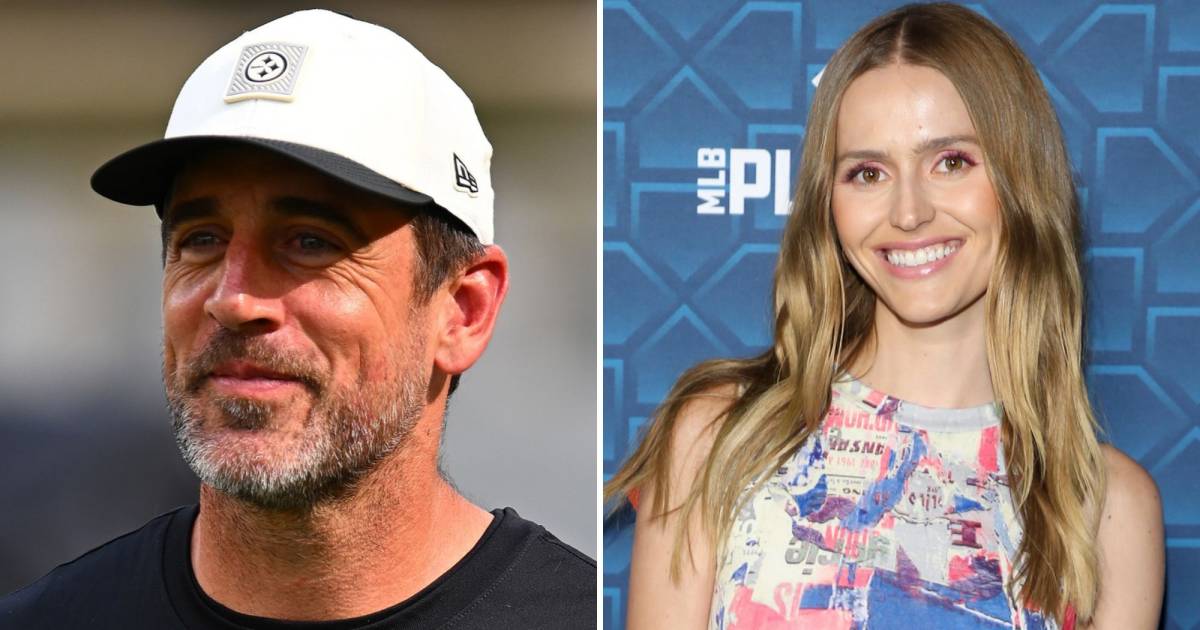
Aaron Rodgers Took a Tour of His Emotional Unavailability. Mallory Edens Brought a Movie Trailer.
The quarterback’s retrospective on the women he dated after meeting his future wife has collided with his ex’s extremely well-timed press tour — and her caption is doing several jobs at once.
Aaron Rodgers has apparently entered his memoir era, except the memoir is arriving in podcast clips, wedding-band lore and one spectacularly timed Instagram caption from an ex.
On September 10, the Pittsburgh Steelers quarterback appeared on the Not Just Football podcast and offered an unusually sweeping explanation for his romantic history after 2017. Rodgers said he met his now-wife, Brittani, that year, fell deeply in love, lost the timing, and then spent the next several years being — in his own words — “emotionally unavailable.”
That retrospective included a familiar celebrity roll call: Danica Patrick, Shailene Woodley and Mallory Edens. It also landed in the middle of Edens’s own press cycle for Charlie Harper, a romantic drama she coproduced and which stars Nick Robinson. So when Edens posted a series of photos on Instagram with a caption about an ex discussing how little he loved anyone after 2017, the timing was not subtle. It was more “red carpet flashbulbs” than “cryptic quote on a beige background.”
The caption arrived wearing a tiny little press badge
“My ex is currently on a press tour talking about how he never loved anyone he dated after 2017,” Edens wrote. “Unfortunately for him, I am also on a press tour for a movie inspired by how down bad I was.”
Then came the kicker: “Really exciting time for competing narratives!! ❤️”
There is a lot happening in those two sentences. Edens does not name Rodgers, which gives the post just enough plausible deniability to remain technically elegant. She also does not pretend the timing is accidental. Her movie promotion and his podcast interview are placed side by side like dueling billboards on the same stretch of highway: one says cinema, the other says emotional damage.
The result is a rare celebrity-ex relationship moment in which the clapback is not merely a clapback. It is also marketing, self-awareness and a reminder that Hollywood’s favorite genre is still “two people telling adjacent versions of the same story while promoting something.”
Rodgers’s romantic timeline just got a director’s commentary
Rodgers has been linked to some of the most recognizable women in sports and entertainment. His relationship with Patrick put two high-profile athletes together; his romance and engagement with Woodley became a full pop-culture subplot; and his connection with Edens, the model, actress and producer whose father is Milwaukee Bucks co-owner Wes Edens, was comparatively brief but still memorable enough to make the retrospective cut.
Now Rodgers is framing that entire post-2017 period through the lens of the woman he says he ultimately married. According to his podcast comments, he met Brittani in 2017 while she was preparing to leave the United States for Europe. He said he regretted not asking her to stay or proposing immediately, and that the separation sent him into what he described as a “tailspin” about the kind of partner he could be.
He said they stayed in touch, that she later became engaged to someone else, and that he poured himself into football while believing he was supposed to be with her. “I was emotionally unavailable, I think, for those seven or eight years,” Rodgers said, because he had already met the person who changed his life.
It is a very Rodgers formulation: romantic, philosophical and slightly engineered to make an entire dating history feel like an extended layover on the way to one destined destination.
Meanwhile, the mystery wife remains the biggest character offscreen
Rodgers revealed in June 2025 that he had married Brittani, saying the wedding had taken place “a couple months ago.” He did so while wearing a wedding band during a Steelers minicamp media appearance, which is perhaps the most Aaron Rodgers way possible to announce a marriage: no glossy couple portrait, no magazine spread, just a ring appearing during football obligations and a sentence that detonates across the internet.
Brittani has not been publicly seen with Rodgers, and her absence has fueled speculation about whether she exists. During the podcast appearance, Rodgers pushed back with an emphatic lack of concern, saying he did not care about the chatter.
That privacy has made the relationship feel less like a conventional celebrity marriage and more like a plotline whose leading woman has been deliberately kept behind a curtain. It also gives every new comment about the couple extra voltage. Rodgers is not simply talking about his wife; he is explaining an unseen relationship that now sits at the center of his public mythology.
Edens’s post lands in that strange vacuum. She is visible, active and promoting a movie that she says was inspired by how “down bad” she once was. Rodgers’s wife is largely absent from the public frame. The contrast practically writes its own caption.
Two narratives, one very crowded press week
The delicious awkwardness here is that neither side needs to openly litigate the past for the subtext to do its work. Rodgers is talking about what he felt — or did not feel — during relationships that followed his first meeting with Brittani. Edens is talking about a film inspired by her own romantic low point. Then the two storylines collide on Instagram, where a heart emoji can make a sentence feel either sweeter or substantially more dangerous.
Edens’s post does not establish exactly what Rodgers said about her specifically, and Rodgers did not name her while discussing his past. But the overlap is obvious enough that the internet is treating it as a response, and the caption’s “competing narratives” language practically invites that reading.
There is also something very 2025 about the whole exchange: a quarterback revisits his exes on a podcast, an actress-producer answers through movie promotion, and everyone involved gets to maintain a little distance from the mess while benefiting from its visibility. The old-fashioned breakup interview has been replaced by coordinated-but-not-coordinated content ecosystems.
And honestly? Edens may have found the perfect tone. She did not write a manifesto. She did not drag Rodgers by name. She simply appeared on her own press tour, reminded everyone that her film is about romantic desperation, and suggested that her ex’s version of the past is not the only one currently in circulation.
Competing narratives, indeed. One comes with a podcast microphone. The other comes with a movie poster and a red heart. Let the promotional cycle begin.