
Gypsy Rose Blanchard and Ken Urker Had Quietly Split Before His Death
The former couple were living apart, co-parenting their daughter and still checking in on each other when Urker died at 34.
Gypsy Rose Blanchard and Ken Urker had already stepped back from their relationship before the story became a tragedy.
The former couple officially broke up about a month before Urker died, according to a source close to them who spoke to Page Six. They had reportedly been living apart for roughly two months, spending part of that time trying to figure out whether the relationship could be repaired. In the end, the split was described as mutual, amicable and painfully ordinary: two people deciding to give each other space while continuing to care for their young daughter.
Then, on Thursday — Urker’s 34th birthday — he was found dead at his Louisiana home.
The timing turns what might otherwise have been a quiet celebrity breakup into something far more devastating. Blanchard, 35, was not mourning a current partner in the neat, tabloid-approved sense of the word. She was grieving someone she still loved, still spoke to and still considered part of her family.
They were apart, but not disconnected
“They officially broke up about a month ago, but then they were living apart for about two months,” the source told Page Six. The pair had apparently reached a point where trying harder was no longer fixing the relationship, but neither was interested in turning the ending into a scorched-earth spectacle.
“It was nothing nasty,” the insider said, characterizing the split as a mutual decision to leave things where they were, take some space and see what happened next.
That arrangement centered on Aurora, their daughter, who was born in December 2024. Blanchard cared for Aurora during the week, while Urker was expected to spend time with her every other weekend. The source called him the “best” father and said the exes continued communicating every few days about their child, including through FaceTime.
In other words, this was not a dramatic unfollow-and-block breakup. It was the kind of separation that keeps the group chat alive, the parenting calendar updated and the emotional door technically unlocked — even when the romance itself has stopped working.
The source said Blanchard missed Urker and hoped he would eventually return to the relationship, but also described him as struggling with his mental health. The couple’s breakup reportedly came amid those difficulties, with Blanchard hoping he would get therapy and find a more stable place.
According to Page Six, the insider had checked in with Urker two weeks before his death. He responded that he loved them “to bits” and was “surviving right now.” That exchange now lands with the awful weight of hindsight: a routine message between people trying to stay connected became one of the last known windows into how he was doing.
A relationship with a long, complicated history
Blanchard and Urker first met in 2017, while she was serving her prison sentence for the murder of her mother, Clauddine “Dee Dee” Blanchard. Their relationship began through letters and developed into an engagement in October 2018 before the two eventually split.
Blanchard later married Ryan Scott Anderson in June 2022. That marriage ended two years later, and Urker reentered her life soon afterward. Their reunion played out in the very public way that has followed Blanchard since her release from prison: airport sightings, hand-holding, theme-park dates and social-media glimpses of a couple trying to build a recognizable version of normal life.
By 2025, the pair had become a familiar presence in celebrity news cycles. They were photographed together at Universal Studios, seen holding hands at LAX and pictured at Catch LA. The images had the glossy shorthand of a comeback romance — a former fiancé returning at the exact moment Blanchard was rebuilding her life in public.
But the real story appears to have been less polished. Behind the photos was a relationship navigating parenthood, mental-health struggles, old history and the relentless attention attached to Blanchard’s name. Their split was quiet because their connection had not simply disappeared. They were still family, even after they stopped being a couple.
Blanchard’s grief is now tangled with the internet
After Urker’s death, Blanchard said in a statement shared with People that she was in disbelief and had screamed until her throat burned. She described Urker as an amazing father and a man deeply loved, writing that he would remain her “soulmate” and “red string” — a connection she believed time, distance and even death could not erase.
She also addressed the online scrutiny Urker had faced, saying he endured relentless cyberbullying across platforms including TikTok and Reddit. That detail adds another grim layer to a relationship that was already being watched from every angle. Blanchard’s life has been treated as public property for years, but the attention surrounding her inevitably reached the people closest to her, too.
Authorities said Urker was found dead upon arrival and that the death investigation was continuing, with no evidence of foul play reported at the time. A police report obtained by Page Six described drug paraphernalia and a handgun at the scene. Blanchard said she believed he died from a suspected overdose, but the investigation was ongoing.
The details are stark. The emotional reality is more complicated: Urker had died after the couple separated, but before either of them had truly vanished from the other’s life. They were still talking about Aurora. They were still checking in. They were still, in some unfinished way, trying to look out for each other.
Celebrity breakups usually arrive packaged as clean exits — a statement, a polite “remain friends,” a suspiciously coordinated vacation post from two different locations. This one was messier and sadder because the relationship did not end with indifference. It ended with distance, concern and the hope that there would be time to figure out what came next.
There wasn’t.
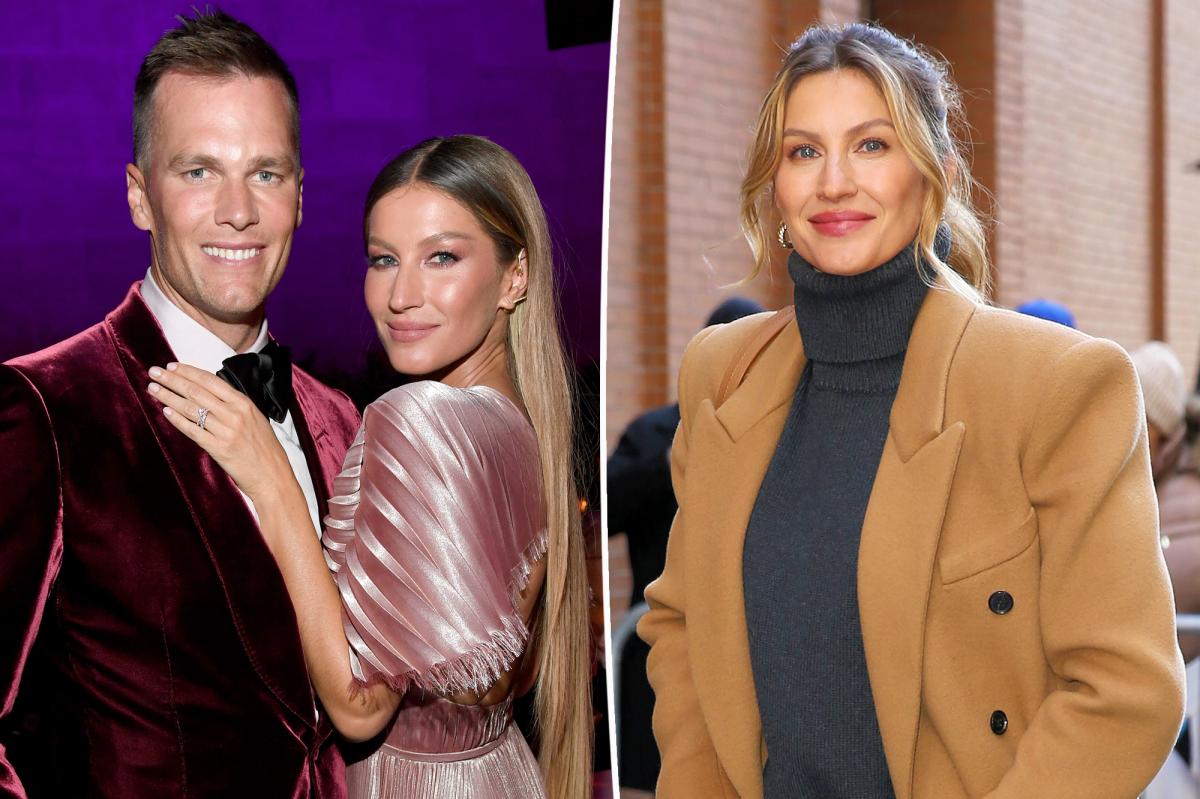
Gisele Bündchen Has Entered Her “The Universe Had Another Plan” Era
Four years after her split from Tom Brady, the supermodel is said to be looking back without bitterness — and with a very different life already in motion.
Gisele Bündchen is not looking back at her marriage to Tom Brady with a grudge. She is looking back with the spiritual equivalent of a beautifully lit candle, a deep breath and the phrase “the universe had another plan.”
Four years after the couple’s divorce, a source told People that Bündchen is “not bitter” about the end of the relationship and feels “grateful” for the years they spent together. That is a notably serene update for a split that once seemed to contain every ingredient in the celebrity-marriage stress test: football, fame, children, conflicting schedules, retirement drama and two extremely famous people trying to fit their lives around each other.
“She always thought she would be married to Tom for the rest of her life,” the source said, adding that the divorce was “very upsetting” and that Bündchen struggled to understand it at the time. But the current mood, at least according to the insider, is less “why did this happen?” and more “perhaps the plot was always headed somewhere else.”
The marriage that became a lifestyle brand
Bündchen and Brady dated for two years before marrying, then built the kind of celebrity family image that could have been designed by a luxury campaign creative director: the world’s most recognizable quarterback, the world’s most recognizable supermodel and a growing family moving between football seasons, fashion obligations and glossy vacation photos.
Bündchen also became stepmother to Brady’s son Jack, whom he welcomed with Bridget Moynahan in 2007. She and Brady later had two children together, son Benjamin and daughter Vivian. In public, the family story was one of blended-family warmth and high-performance domesticity. In private, according to accounts that have emerged since the split, the machinery of that life was considerably less smooth.
The couple announced their divorce in October 2022 after 13 years of marriage, saying their focus was their children. Around the announcement, Bündchen described the relationship as one in which they had simply “grown apart.” It was a clean phrase for a messy-feeling moment — the sort of language celebrities use when the real story is too layered to fit inside a joint statement.
The timing also kept the internet busy. Brady had announced his retirement from the NFL, then reversed course roughly a month later. The quarterback returned to football; the marriage did not. That sequence turned an already emotional breakup into a full-scale pop-culture narrative about priorities, sacrifice and whether anyone can really retire when millions of people still want to watch them throw a football.
Then came the handwritten-note lore
A new book, Brady: An American Story and the Price of Greatness by Lars Anderson, adds another layer to the split. According to claims described in the Page Six report, Bündchen made repeated attempts to save the marriage, including writing Brady a serious handwritten note about what she needed from him.
The book also claims that Bündchen eventually told Brady, “We’re not compatible.” A former teammate alleged that she was tired of living on Brady’s schedule and feeling somewhat in his shadow during football season. Another source questioned the balance between their careers, asking how often Brady supported Bündchen’s professional life in the same way she supported his.
It is a familiar celebrity-couple tension, except magnified to stadium size. Brady’s work came with a fixed public calendar, weekly performance and a culture that treats football as both occupation and identity. Bündchen’s career was equally enormous, but its demands were often folded into the assumption that she could make room for everyone else’s. The issue was not simply who had the bigger career. It was whose career became the household’s organizing principle.
That is why “we grew apart” has remained such a durable line. It sounds gentle, but it can contain years of renegotiating the same question: Whose schedule wins? Who gets to change their mind? Who is asked to wait? And what happens when the person who has been accommodating the most decides they are done accommodating?
Gisele’s post-Brady life is not exactly a quiet epilogue
Bündchen’s calm retrospective arrives after a major rewrite of her personal life. The model has since married jujitsu instructor Joaquim Valente, and the couple are parents to a 1-year-old son whose name has not been publicly revealed, according to the report.
That means the post-Brady chapter is no longer just about healing from a famous divorce or rediscovering independence. It is a new marriage, a new baby and a new family rhythm — one that exists outside the old NFL-centered orbit. The language of gratitude lands differently when the person saying it is not merely moving on, but visibly building another entire life.
Bündchen has also remained linked to the public imagination as the woman who once stood beside Brady through the most demanding years of his career. Brady, meanwhile, has been linked to model Irina Shayk and internet personality Alix Earle since the divorce. The former couple’s romantic lives have continued to generate headlines, but the newer details make the split feel less like an unfinished celebrity mystery and more like a marriage that reached its final season.
There is still a faintly cinematic quality to the whole timeline: the supermodel who thought she would stay married forever, the football icon who could not quite stay retired, the handwritten note, the phrase “not compatible,” the divorce announcement and, now, the spiritual reframe. The story has moved from public unraveling to private meaning-making.
And Bündchen’s reported attitude is the part people will text about because it is both gracious and a little devastating. “Not bitter” does not mean the ending was painless. “Grateful” does not mean the marriage worked forever. It means the past can be honored without being reopened — a polished, emotionally evolved way of saying the relationship mattered, the children matter more, and the next chapter is already very much underway.

Drew Campbell Got Evicted One Move Before a Win — and ‘Big Brother’ Is Suddenly Feeling Personal
The third-place finalist says the jury told him he likely would have beaten Taylor Brown, while Rick Devens took the $750,000 after cutting his self-described ‘Big Brother dad.’
There is no crueler sentence in reality television than “you would have won.” It arrives after the cameras stop rolling, after the confetti falls, after somebody else has collected the giant check — and it turns an almost-win into a personalized haunting.
That is the emotional aftershock Drew Campbell is carrying out of Big Brother 28. The 22-year-old surgical dental assistant finished in third place, only to learn at the live finale that the jury believed he might have beaten Taylor Brown in the final two. Campbell told Page Six that the six jurors he spoke with indicated things “might have gone well for me” against Brown.
“Which is kind of heartbreaking that I was that close,” he said.
Heartbreaking is doing a lot of work there. In the Big Brother economy, being close is not a consolation prize. It is a private screening of the ending you were supposed to have.
The finale’s nastiest little hypothetical
Campbell’s path to the finale had looked unusually promising. Both Brown and Rick Devens apparently intended to take him to the final two. Then Devens won the last Head of Household competition, made a deal with Brown and pulled the game’s sharpest trapdoor: Campbell was evicted in third place, while Brown went on to face Devens.
Devens, a 42-year-old Survivor alum, ultimately won the season with six of the seven jury votes. Campbell cast one of those votes for him.
That is what makes the post-finale conversation so deliciously painful. Campbell was not blindsided by the winner’s identity. He was not nursing a bitter jury vote or rewriting the season around personal revenge. He thought Devens played the best game — even after Devens cut him at the exact moment when loyalty would have been most valuable.
Campbell’s regret is aimed less at Devens than at himself. “That’s kind of where my strategy went wrong. I should have just won it,” he admitted. “Then maybe I would have won the whole thing.”
It is the purest possible Big Brother lesson: alliances are adorable, promises are decorative and the final Head of Household is the only friend who matters.
‘My Big Brother dad just cut me’
Campbell did not pretend the eviction was painless. Devens’ decision “definitely hurt in the moment,” particularly because Campbell had formed a close bond with him in the house. He described Devens as his “‘Big Brother’ dad,” which makes the late-game betrayal sound less like a strategic maneuver and more like getting dumped by someone who still expects to be invited to Thanksgiving.
Still, Campbell’s account of the aftermath is strikingly warm. After Devens won the $750,000 grand prize, the two men hugged amid the confetti. According to Campbell, Devens said he was sorry and that he loved him. Campbell said he loved Devens, too.
“No hard feelings, honestly,” he told Page Six.
That does not erase the knife twist. It just gives the knife a family nickname.
Campbell also said he has not had a chance to speak with Devens since the finale beyond that brief post-win exchange. He is, however, looking forward to reconnecting with Devens’ family — Miss Becca, Jack and Juju — and said he feels like he is part of the family now. The sentiment is sweet, slightly surreal and very on-brand for a show where strangers spend three months forming intense bonds before publicly ruining one another’s weekends.
The loyalty vote that says everything
Campbell was clear that Brown was never getting his jury vote over Devens. Even if he had been the person to cut Devens, Campbell said he still believed Devens deserved to win.
“Devens played the best game,” he explained. “If I cut him, I still think he was the best player and he should have won the game. So he was getting my vote no matter what.”
Then came the line that neatly separates strategy from affection: “And it’s not even because I love him, it’s just because he played a really good game. I can’t even be mad.”
That is an almost aggressively mature attitude for a man who had just been informed he may have beaten the runner-up sitting beside the winner. Campbell is not claiming the jury owed him anything. He is not suggesting Brown was undeserving. He is simply confronting the special agony of discovering that the version of the finale he feared was not the version that would have hurt most.
Had Devens taken Campbell to the end, Campbell says the jury feedback suggested he might have beaten Brown. Instead, Brown became the runner-up and Devens left with the money, the title and the kind of résumé that makes future reality-TV casting departments start circling.
He got the full experience — just not the ending
Campbell’s consolation is that he played for 87 days and made it all the way to the finale. “I got to be there the whole time,” he said. “I got the full experience. Mentally, I’m just glad to be a part of it.”
That is a lovely thought, but Big Brother is not designed to let anyone leave with only lovely thoughts. The show turns emotional intimacy into strategy, strategy into betrayal and betrayal into a reunion segment. Campbell now has to live with two endings: the one that happened, where Devens beat Brown, and the one the jury accidentally handed him, where he may have beaten Brown himself.
The most brutal part is that none of this requires a villain. Devens made the move he needed to make. Campbell failed to win the competition he needed to win. Brown accepted the path to the finale. The jury rewarded the player it thought played best. Everyone can be right, and Campbell can still be heartbroken.
That is the reality-TV magic trick: the game ends, but the alternate universe keeps airing in your head.