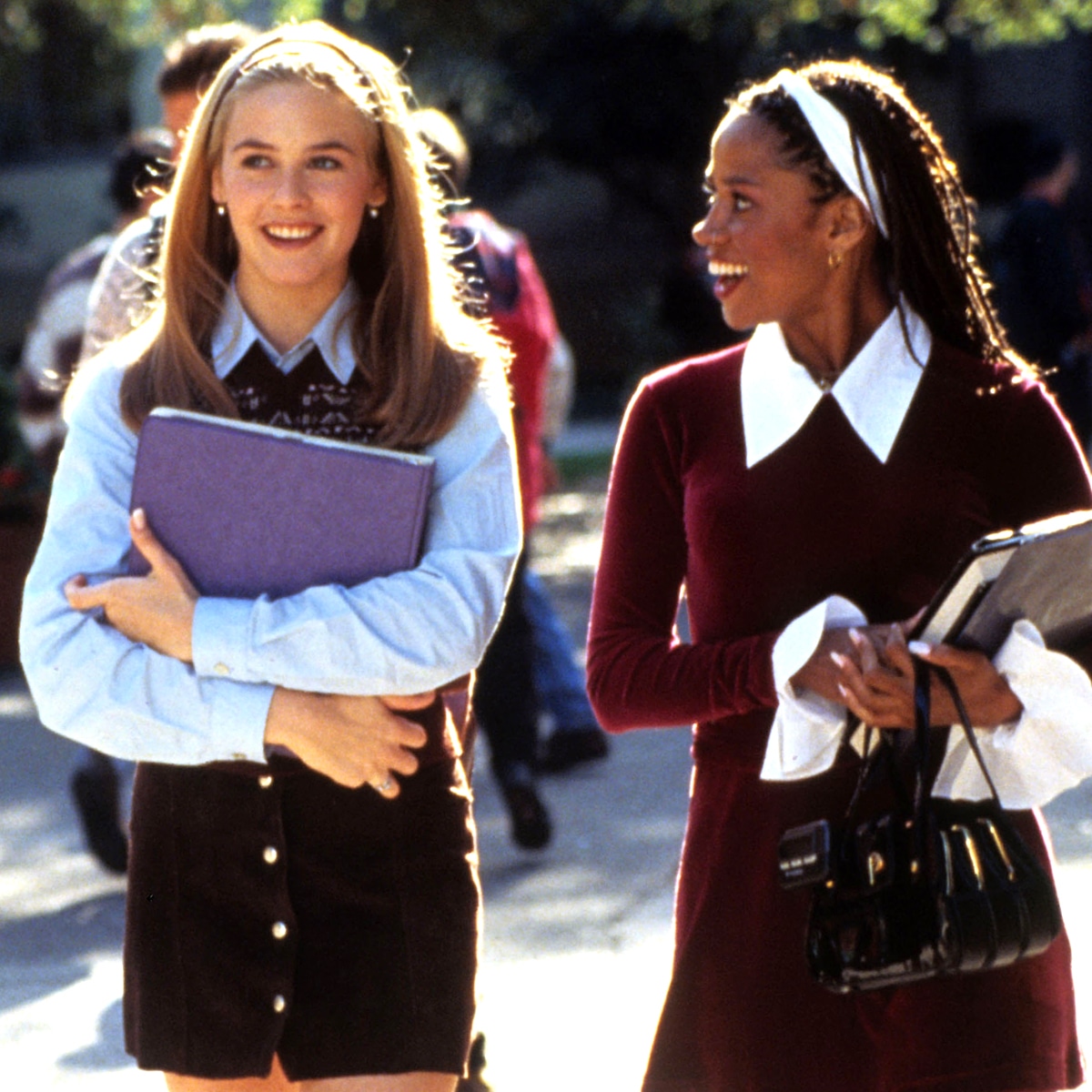
Clueless Is Still the Only Movie Where Paul Rudd Gets Older and Everyone Else Gets More Iconic
Thirty years later, Cher Horowitz’s plaid, slang and computer closet remain undefeated—and the behind-the-scenes stories are almost as good as the movie.
There are movies you remember, and then there are movies that permanently alter the way you speak, dress and judge a bad outfit. Clueless belongs firmly in the second category.
Thirty years after Alicia Silverstone first floated through Beverly Hills as Cher Horowitz, the film remains a cultural object with suspiciously good posture. It gave us “As if!”, “full-on Monet,” “Betty,” “Barney,” knee socks, plaid suits, a computer-operated wardrobe and Paul Rudd’s apparently supernatural refusal to age. It also gave generations of viewers a heroine who could be spoiled, shallow and spectacularly wrong while still becoming the smartest person in the room.
That is a lot of legacy for a film that began as a television pitch about “the cool kids in high school.” But writer-director Amy Heckerling knew she had found something more interesting than another teen movie about outsiders trying to storm the popular table. She wanted to follow the girls already sitting there.
Cher Wasn’t Supposed to Be This Smart
Heckerling’s inspiration was Jane Austen’s Emma, translated from the English countryside into the manicured ecosystem of Beverly Hills. Cher is a matchmaking meddler with a limitless wardrobe and a questionable grasp of geography, but her optimism is not fake. She genuinely believes she can improve the lives of the people around her, even when her methods involve makeovers, romantic interference and an alarming amount of confidence.
That combination was revolutionary in its own low-rise, thigh-high way. Cher does not become worthy by abandoning fashion, popularity or her love of a good ensemble. She becomes better at using the intelligence she already has. Her debate speech about immigration may be hilariously misinformed, but her instinct to help is sincere. The movie lets her be funny without making her femininity the punchline.
Heckerling reportedly built Cher’s language by listening closely to young people and collecting slang. “As if!” was already floating around gay culture in the early ’90s before the filmmaker gave it a Beverly Hills makeover. “Betty” came from Betty Rubble. “Barney” was the obvious question: How did he get her? This is how Clueless became more than a teen comedy. It made a dialect out of social observation.
And then there was the wardrobe. Silverstone has said she was more of a jeans-and-T-shirt tomboy when she played Cher, sometimes struggling to connect with a character who treated clothing like a civic responsibility. Cher, by contrast, cycles through roughly 64 looks in a 100-minute movie. Dionne’s costumes required days of fittings, with Stacey Dash remembering racks and racks of clothes and singling out the plaid hat ensemble that looked like “a pretty little cake.”
The Casting Almost Gave Us a Completely Different Movie
The alternate-universe versions of Clueless are almost distracting enough to make you miss the point. Gwyneth Paltrow, Reese Witherspoon, Keri Russell, Tiffani Thiessen and Alicia Witt were all considered for Cher at various stages. Sarah Michelle Gellar was offered Amber, but All My Children would not release her for the shoot. Ben Affleck and Jeremy Renner were among the actors considered for Josh. Lauryn Hill read for Dionne.
Still, Silverstone was the one Heckerling kept seeing. The director had noticed her in Aerosmith videos, while her casting director friend was urging her to watch The Crush. Eventually they realized they were talking about the same girl. Silverstone sealed the deal at dinner, where she reportedly leaned across the table to sip a drink through a straw rather than bringing the glass to her face. It was such a Cher move that the movie was essentially cast over a beverage.
Paul Rudd, meanwhile, had to work his way into Josh. The role nearly went elsewhere before the production returned to him, and he went through multiple auditions before landing the part. He initially misunderstood Murray, thinking the character was a white guy trying to appropriate Black culture, before realizing the role was actually Donald Faison’s. A useful reminder that even the most effortless movie boyfriend can arrive through a surprisingly chaotic casting process.
Rudd’s Josh works because he is not presented as some polished fantasy prince. He is Cher’s annoying, older, ex-stepsibling-adjacent intellectual sparring partner—the person who sees through her performance before she does. The film’s romance has inspired plenty of modern side-eye, especially around the family setup, but Silverstone herself once dismissed the awkwardness by pointing out that Josh was not raised as Cher’s sibling. Her larger point was even more Cher-like: she had barely thought about it until everyone else started asking.
The Set Was a Sleepover, Except Alicia Silverstone Had to Carry the Whole Thing
The supporting cast remembers the winter 1994 shoot as a kind of movie-making summer camp, despite the weather. Breckin Meyer, who played Travis, has recalled a difficult career stretch before the film: living above a garage without heat or hot water, skating to Seth Green’s house to shower and do laundry. After landing the movie, he, Rudd and Faison grew close enough that they bunked together at Meyer’s place and watched Corey Haim and Corey Feldman movies at night.
Faison and Meyer reportedly spent downtime hanging out in their shared trailer, while the younger cast members formed the sort of instant friendship that makes a teen ensemble feel believable. The mood was loose, social and a little scruffy. The movie’s polished Beverly Hills surface was being assembled by people who were, in real life, napping between scenes and trying to book their next jobs.
Silverstone experienced the same production very differently. Cher is in nearly every scene, and the young actor has said that while everyone else seemed to be having a ball, she was working exhausting hours. That contrast matters. Clueless looks breezy because Silverstone made the effort disappear.
Even the famous party game required troubleshooting. The cast struggled to make “Suck and Blow” work with a real credit card, so the prop department created a cardboard version and used layers of ChapStick to make it more cooperative. Murray’s shaved head was softened with a small fringe of hair at the sides so it would peek out under his hat. In other words, some of the movie’s most indelible images were held together by craft glue, lip balm and pure commitment.
The Legacy Is Bigger Than the Plaid
Clueless became a sleeper hit, earning about $55 million and helping launch or elevate a remarkable group of careers: Silverstone, Rudd, Faison, Dash, Brittany Murphy, Elisa Donovan and Meyer among them. But its staying power has less to do with box-office math than with recognition. Every generation finds something new to claim.
Fashion people see a blueprint. Comedy fans see dialogue engineered to survive quotation. Austen devotees see Emma in a micro-mini skirt. Social media gets an endless supply of scenes to recreate, and Silverstone has periodically returned to Cher’s outfits and mannerisms because, as she put it, people love the movie.
They do. They love the fantasy closet, the soundtrack, the romantic confusion and the idea that being kind can be its own kind of status. They love that Cher can be a “virgin who can’t drive” and still command the entire movie. Most of all, they love that she does not have to become less Cher to grow up.
That is why the film keeps circling back into the conversation. Trends fade. Slang mutates. Paul Rudd remains apparently exempt from time. But Cher Horowitz still knows exactly what she is doing—even when she absolutely does not.

North West Wants the Spotlight Now. Kim Kardashian Is Trying to Put a Dimmer Switch on It
At 13, North already has an EP, a Dazed cover and a sold-out solo concert. Her mother says the harder part is deciding which doors to keep closed.
North West is not exactly waiting for permission to become famous. At 13, she has released an EP, landed a major fashion magazine cover, experimented with blue hair and faux piercings, and performed her first solo concert in front of a sold-out Chicago crowd. The only person seemingly trying to slow the rollout is her mother, Kim Kardashian.
In a new interview with the Sunday Times, Kardashian said North loves the camera more than her three younger siblings and wants to take every “forward-facing” opportunity that lands in her inbox. The problem, from Kardashian’s perspective, is not whether North can handle attention. It is whether a child should have to handle all of it at once.
“All she wants to do is forward-facing projects,” Kardashian said. “And so it’s like us really kind of trying to savor those moments and not doing everything that comes her way, so we can really make sure that we manage it the right way.”
That is a very Kardashian sentence: polished, strategic and quietly revealing. North is already in motion. Her mother is attempting to install guardrails while the machine is moving.
North is building a career before most teenagers build a résumé
North’s public ambitions have become increasingly difficult to treat as a cute celebrity-kid side quest. In May, she released her EP, “N0rth4evr.” She appeared on the cover of Dazed for its September issue. Last month, she performed her first solo concert at Chicago’s Vic Theatre, where Kardashian and Kanye West both showed up to support her.
The exes reportedly sat in different sections of the venue, which feels less like a family seating plan and more like the latest episode in the long-running Kardashian-West logistics saga. Whatever the arrangement, both parents were there for North’s moment. Kardashian later shared video of the sold-out crowd waiting shoulder to shoulder for the performance.
There was also a slightly less tidy chapter this summer. North canceled a planned 14-stop tour with rapper Molly Santana in July, only days before the first show was scheduled to begin. No grand explanation is offered in the Page Six report, and Kardashian did not turn the cancellation into a public family drama. North simply kept moving, eventually taking the stage on her own.
That pivot matters. A canceled tour can make a young performer look like a work in progress, which is exactly what a 13-year-old should be. But North’s other projects have made her look unusually determined. In her Dazed interview, she pushed back on advice to wait before starting a music career.
“It’s like, nah, this is my hobby, this is what I like to do, this is what I wanna do with my life,” she said.
For a child raised inside one of the most documented families on earth, that insistence is both understandable and complicated. North has watched her parents turn identity, style and personal milestones into public language. Now she appears eager to speak in her own.
Kim’s new role: less stage mother, more traffic controller
Kardashian has never pretended that fame is harmless. She told the Sunday Times that she worries about exposing her children to the intensity of her own celebrity, even as she allows them different levels of access to the family’s cameras.
“Each kid does what they’re comfortable with,” she said, explaining that the younger children may appear while she is filming but do not really have storylines. North, by contrast, “loves it a little bit more than the rest.”
That distinction is crucial. The question is not simply whether North likes performing. She clearly does. The question is how much of her childhood becomes content, branding or professional obligation before she has had time to change her mind.
Kardashian described herself as an “intermediate-strict parent,” an amusingly corporate label for a mother trying to balance boundaries with a daughter who has already discovered the intoxicating power of an audience. She also emphasized the softer side of home life, saying she is patient and loving, still lets a child sleep in her bed when they want and reads books with them every night.
It is a familiar Kardashian contradiction, but not necessarily an insincere one: a family that lives at enormous volume trying to preserve a private domestic rhythm underneath it. North may want the stage, while Kardashian wants the bedtime story to remain the bigger event.
The blue hair is not the scandal. The speed is.
North’s style has attracted its own round of commentary, including bright blue hair, faux piercings and face tattoos. In Dazed, she defended the choices with the bluntness of someone who has already become tired of being treated like a public relations problem.
“Everyone’s in love with boys, vaping and doing all kinds of bad stuff,” she said. “All I want is blue hair and piercings.”
That line lands because it makes the styling debate look almost quaint. The hair is temporary. The faux piercings are temporary. The digital footprint, the professional expectations and the public appetite for a famous teenager’s next move are much harder to remove.
North’s appeal is partly that she does not seem interested in presenting herself as a miniature version of her mother. She is not simply wearing the Kardashian uniform or repeating a family-approved script. Her music, styling and insistence on starting now suggest a teenager trying to carve out a lane that is visibly hers, even while the family name guarantees that every experiment will be watched.
That is the tension Kardashian is trying to manage. If she blocks too much, North may feel controlled by the same fame apparatus she is trying to escape. If she says yes to everything, North’s childhood risks becoming an endless audition.
And because this is the Kardashian universe, the debate is happening in public whether the family schedules it or not. Every appearance becomes a clue. Every look becomes a headline. Every pause invites theories about who is guiding the next move. Kardashian and West may be aligned on what North takes on, but the public has already learned to watch their co-parenting arrangements for drama, even when the actual story is simply two parents attending their daughter’s concert from separate sections.
North, meanwhile, appears to have the most straightforward agenda of anyone involved: make music, wear what she likes and start before somebody convinces her to wait. Kim Kardashian’s instinct is to slow the pace. North’s is to press play.
The interesting part is not whether North will become famous. That happened at birth. It is whether she can become a performer on her own terms while growing up inside a fame economy that rarely knows when to stop asking for more.
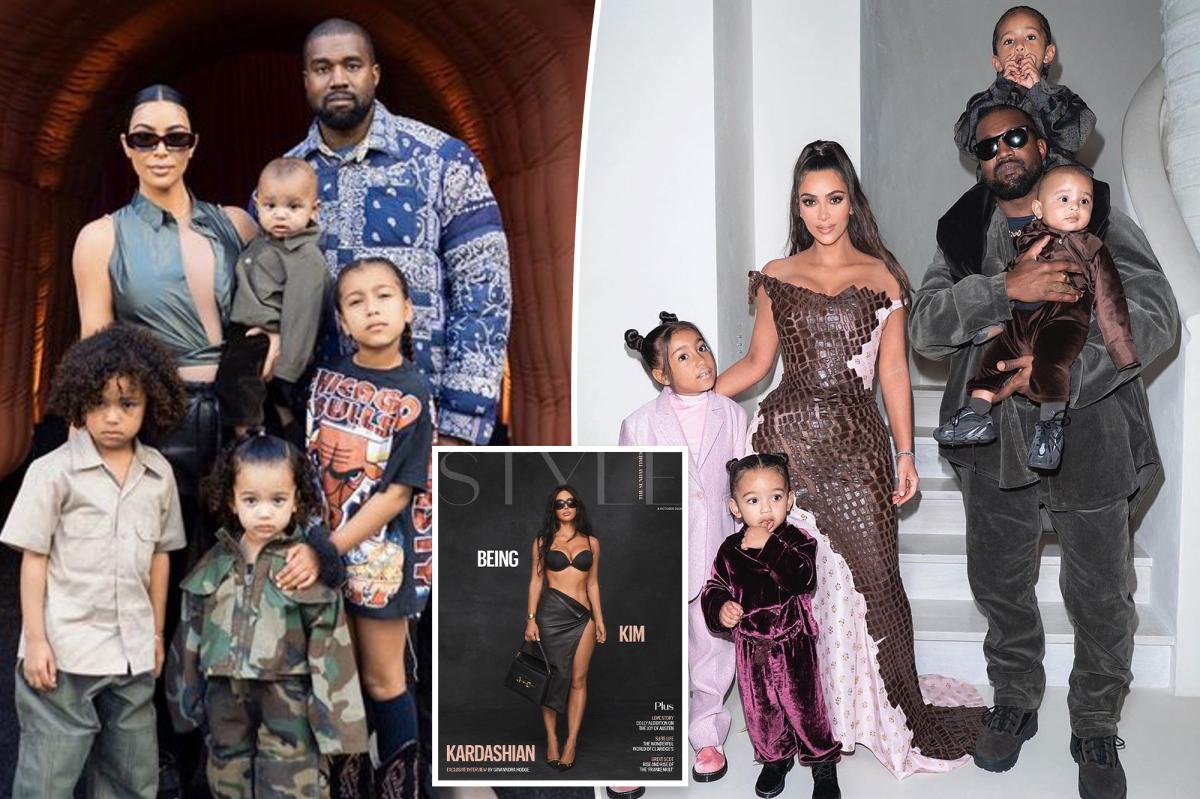
Kim Kardashian Has Five Nannies—and Still Says She’s Raising Four Kids Alone
The Skims mogul’s latest parenting confession puts celebrity help, co-parenting with Kanye West and the eternal question of who gets to say they’re exhausted back in the group chat.
Kim Kardashian has five nannies. She also takes her four children to and from school, eats dinner with them every night and still describes herself as feeling, at times, like she is raising them alone.
That is the very Kim Kardashian tension: the life of an ultra-resourced billionaire businesswoman, narrated with the emotional texture of a woman who is nevertheless answering the midnight call. In a new profile with the Sunday Times’ Style Magazine, Kardashian revealed that her nannies rotate so there is always one helping when North, Saint, Chicago and Psalm are with her. The number immediately has the kind of group-chat energy usually reserved for a suspicious soft launch or a celebrity airport outfit: five nannies for four children is not a staffing detail so much as a headline with its own lighting.
But Kardashian’s point was less “look at my childcare empire” than “look at the amount of logistical chaos happening behind the beige walls.” Her children are now 13, 10, 8 and 7, and she remains one of the most aggressively booked people in pop culture. She is filming, producing, running Skims, appearing on The Kardashians, pursuing acting and navigating a relationship with Lewis Hamilton, while still insisting that the ordinary parental rituals belong to her.
The five-nanny detail is shocking. The school run is the flex.
Kardashian told the outlet that she makes sure she is the one taking the children to and from school. She also said she sits down for family dinner every night and reads books with them before bed. “I still have a kid sleep in my bed when they want,” she said, adding that she considers herself an “intermediate-strict parent” who is “extremely patient and loving.”
It is a carefully drawn portrait of hands-on motherhood, but not the Instagram version where the whole operation is disguised as effortless. Kardashian is openly describing the infrastructure. Five nannies are not a failure to parent; they are the workforce required to keep four children, a global company, television production and an intensely public life moving at once. The fascinating part is how quickly the existence of help can become an argument against exhaustion—as if a nanny can be present for the schedule without being present for the particular ache of a child waking up at 2 a.m.
Kardashian already addressed that contradiction in 2024 on the What’s in the Winkler podcast, where she said she felt “alone” in raising her children despite having “great support systems.” She described the middle-of-the-night reality of children sleeping in her bed, kicking and crying. The quote landed because it was not a denial of her resources. It was a complaint about the strange emotional math of motherhood: plenty of assistance can make the work more manageable without making the responsibility feel any less personal.
She also said she does not talk about those struggles often because she expects people to judge her. That judgment arrived preloaded years ago, when she described herself as her children’s “main provider” and Kanye West pushed back publicly. In Kardashian’s world, even a sentence about school pickups can become a co-parenting subplot.
Co-parenting with Kanye is apparently at its most functional around North
Kardashian did not comment on her current relationship with West, her ex-husband and the father of all four children. The pair were married from 2014 until their divorce was finalized in 2022, and their co-parenting dynamic has played out under the glare of social media, public disputes and competing accounts of family life.
What she did offer was a glimpse of where communication is working: North’s career. Kardashian said she and West have “better communication” when it comes to their daughter’s projects, particularly as North begins pursuing music on her own. “We make sure we’re aligned and that she’s in projects that we both approve,” she said.
That sentence is doing more work than it appears to. Kardashian and West may disagree loudly in public, but their daughter’s ambitions have created a narrow lane where both parents are apparently trying to stay coordinated. North, who is 13, is already moving toward the kind of spotlight both of her parents know intimately. Kardashian has previously said she worries about holding her back from certain opportunities, which makes this parental alignment feel less like a celebrity-management detail and more like an attempt to keep a child’s fame from outrunning her childhood.
There is also an unavoidable layer of family-business irony here. North is not entering an anonymous industry; she is stepping into the combined gravitational field of reality television, fashion, music and one of the internet’s most scrutinized families. Her father is Ye, a major recording artist whose public life has repeatedly collided with the Kardashian machine. Her mother is Kardashian, who turned domestic visibility into a business empire. The two of them agreeing on what North can do may be one of the few areas where the co-parenting conversation has a clear shared objective.
Kim’s exhausted-mom era now has a production schedule
The nanny revelation arrives as Kardashian’s professional plate is already bordering on parody. She has been building Skims since launching the shapewear company in 2019, starring on reality television since 2007 and studying law through California’s Law Office Study Program, which required 18 hours of work per week. She is still working toward the bar exam after several failed attempts, although Page Six reported in May that she was taking a break from studying to focus on filming and production.
She has also expanded into scripted acting, playing Allura Grant in Ryan Murphy’s All’s Fair and recently wrapping Season 2, according to the report. Then there is Hamilton, the Formula 1 driver she is dating, adding a fresh romantic storyline to a life that already has enough plotlines to fill a streaming slate.
Against all that, the five nannies are less a punchline than a glimpse at the machinery required to sustain the Kardashian schedule. The real surprise is that she is still trying to claim the unglamorous bits: the school traffic, the bedtime books, the child in the bed, the family dinner that presumably happens whether or not a camera crew is nearby.
Of course, the internet is likely to remain divided between “five nannies is excessive” and “please understand that childcare is still childcare.” Both reactions miss the more interesting point. Kardashian is not presenting motherhood as a perfectly balanced lifestyle. She is presenting it as a constant negotiation between delegation and presence, money and guilt, public help and private responsibility.
Five nannies can keep the calendar from collapsing. They cannot stop a teenager from growing up in public, settle every co-parenting dispute or make a mother immune to the feeling that she is missing something. Kardashian’s latest confession is compelling because it does not erase the privilege. It puts the privilege directly next to the exhaustion and asks us to look at both.