Kelsey Parker’s Rainbow-Baby Moment Is Hopeful, Heartbreaking and Completely Unfiltered
The widow of The Wanted’s Tom Parker returned to Good Morning Britain with baby River in her arms—and made one thing clear: new joy does not cancel old grief.
There are celebrity announcements designed to make the group chat explode, and then there are the ones that quietly stop it in its tracks. Kelsey Parker’s latest Instagram post belongs to the second category: a tiny baby, a television studio, a rainbow emoji—and a reminder that grief does not disappear just because life keeps moving.
The widow of The Wanted’s Tom Parker shared a clip from her return to Good Morning Britain, this time with her and partner Will Lindsay’s newborn daughter, River, in her arms. The baby’s TV debut was sweet on its face. But the meaning underneath it was far heavier. The last time Kelsey sat on that sofa, she was speaking publicly about the stillbirth of her son Phoenix, who was “born sleeping” earlier in 2025.
“A full-circle moment I’ll never forget. 🌈🤍,” Kelsey wrote alongside the video, describing River’s appearance as a moment that felt radically different from her previous visit. It is the kind of caption that sounds simple until you understand the emotional weather behind it: one television appearance marked by devastating loss, another marked by a living baby and the complicated hope that can arrive afterward.
River’s debut comes with a story no parent should have to carry
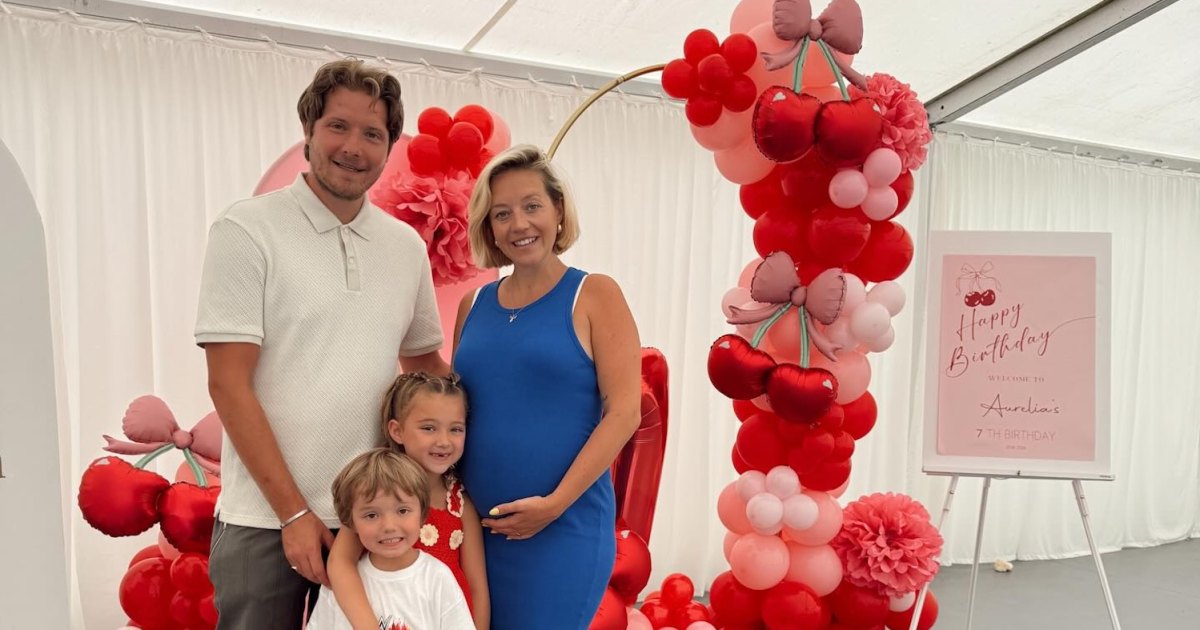
Kelsey has been open about Phoenix’s death, including the way baby loss reshaped her family’s daily life. She and Tom were already parents to Aurelia and Bodhi before Tom died in 2022. She later welcomed Phoenix with Lindsay, then announced in January that she was expecting again. River arrived in September.
That sequence could easily be flattened into a neat celebrity-life headline: heartbreak, pregnancy, rainbow baby, happy ending. Kelsey is refusing that tidy edit. On Good Morning Britain, she said returning to the show felt completely different because her earlier appearance had been about “one of the most heartbreaking parts of our story.” This time, she walked into the studio with River, while still carrying the reality of Phoenix’s absence.
“She doesn’t take away the pain or replace what we’ve lost,” Kelsey said in the clip. “Phoenix will always be a part of our family.” That distinction is the emotional center of her message. River is not being asked to stand in for a child who died. She is being welcomed as herself—a new person, a new chapter, and a source of hope who does not erase the history that came before her.
The phrase “rainbow baby” can sound prettier than the reality
Celebrity culture loves a redemption arc. The rainbow baby arrives, the clouds part, everyone smiles for the camera, and the sad chapter is treated like something the family has finally graduated from. Real grief is much messier—and Kelsey’s words acknowledge that mess without turning it into a performance of permanent sadness.
She has described River as “another little gift from heaven,” but she has also been explicit that hope and pain are now living side by side. That is not the glossy version of motherhood usually served through Instagram. It is more honest, and considerably more difficult to package.
In her caption, Kelsey wrote that she would never stop talking about baby loss or saying Phoenix’s name because “he existed, he matters and he will always be part of our family.” It is a powerful refusal of the pressure to move on in the way other people find comfortable. The arrival of a healthy baby often brings congratulations, but it can also bring an unspoken expectation that the family should now feel only gratitude. Kelsey is making room for both gratitude and grief.
That may be why the post lands with such force. It is not a dramatic reveal or a suspicious soft launch. It is a public figure showing the emotional contradiction that many families know privately: a new baby can bring joy without making the loss less real.
A TV appearance becomes a way to keep Phoenix present
Kelsey connected the post to Baby Loss Awareness Week, which begins October 9, a period that has particular significance for her. She thanked Good Morning Britain for giving her space to talk about Phoenix and baby loss, saying that keeping his name and story alive might help other families feel less alone.
That mission has become part of the way she speaks publicly—not as a celebrity trying to turn tragedy into a brand, but as a mother determined not to let an absent child become an invisible one. Her language is direct: Phoenix mattered, Phoenix is remembered, and River’s existence does not alter that.
There is also something striking about the setting. A morning-show sofa is usually where celebrities promote books, reality shows, beauty launches or the latest phase of a carefully managed public image. Kelsey is using the same space for something more vulnerable: telling people that baby loss remains part of her family’s story, even during a moment that looks joyful from the outside.
River’s appearance, then, is not a replacement narrative. It is a continuation. Kelsey can hold her daughter and remember her son. She can celebrate a new beginning while acknowledging that the old wound is still there. She can say that life has moved forward without pretending that it has moved on.
“My little River, already making her TV debut,” Kelsey wrote, calling her a “tiny girl carrying so much hope.” It is a lovely line, but the post’s real power is that the hope is not presented as a cure. It is something carried alongside memory, alongside love, alongside the name Phoenix.
In a celebrity ecosystem built around perfect timing and polished announcements, Kelsey’s message is compelling precisely because it refuses to be polished into a happy ending. River is her own beautiful little person. Phoenix remains part of the family. Both things are true, and Kelsey is letting the public see what that truth looks like.
Clueless Is Still the Only Movie Where Paul Rudd Gets Older and Everyone Else Gets More Iconic
Thirty years later, Cher Horowitz’s plaid, slang and computer closet remain undefeated—and the behind-the-scenes stories are almost as good as the movie.
There are movies you remember, and then there are movies that permanently alter the way you speak, dress and judge a bad outfit. Clueless belongs firmly in the second category.
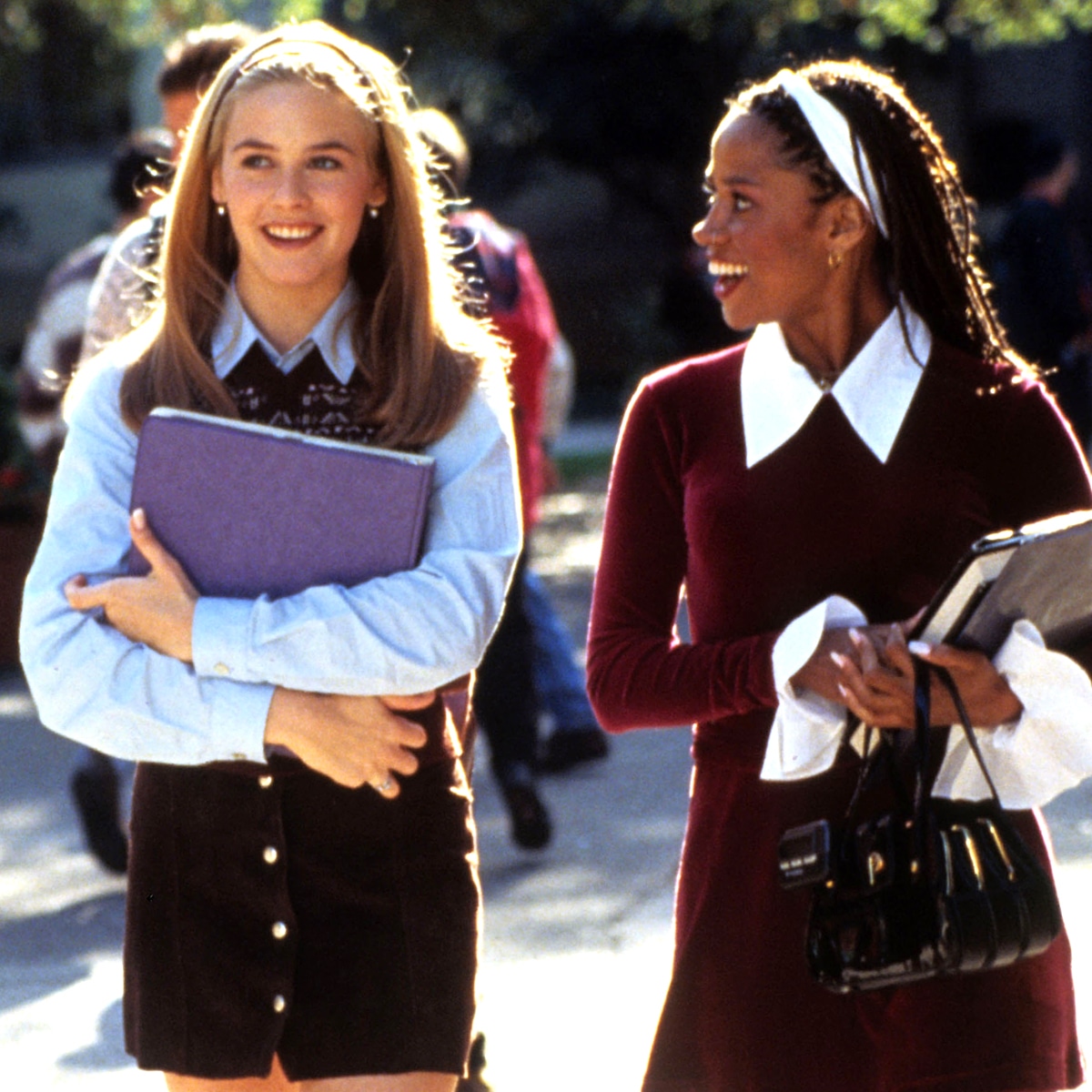
Thirty years after Alicia Silverstone first floated through Beverly Hills as Cher Horowitz, the film remains a cultural object with suspiciously good posture. It gave us “As if!”, “full-on Monet,” “Betty,” “Barney,” knee socks, plaid suits, a computer-operated wardrobe and Paul Rudd’s apparently supernatural refusal to age. It also gave generations of viewers a heroine who could be spoiled, shallow and spectacularly wrong while still becoming the smartest person in the room.
That is a lot of legacy for a film that began as a television pitch about “the cool kids in high school.” But writer-director Amy Heckerling knew she had found something more interesting than another teen movie about outsiders trying to storm the popular table. She wanted to follow the girls already sitting there.
Cher Wasn’t Supposed to Be This Smart
Heckerling’s inspiration was Jane Austen’s Emma, translated from the English countryside into the manicured ecosystem of Beverly Hills. Cher is a matchmaking meddler with a limitless wardrobe and a questionable grasp of geography, but her optimism is not fake. She genuinely believes she can improve the lives of the people around her, even when her methods involve makeovers, romantic interference and an alarming amount of confidence.
That combination was revolutionary in its own low-rise, thigh-high way. Cher does not become worthy by abandoning fashion, popularity or her love of a good ensemble. She becomes better at using the intelligence she already has. Her debate speech about immigration may be hilariously misinformed, but her instinct to help is sincere. The movie lets her be funny without making her femininity the punchline.
Heckerling reportedly built Cher’s language by listening closely to young people and collecting slang. “As if!” was already floating around gay culture in the early ’90s before the filmmaker gave it a Beverly Hills makeover. “Betty” came from Betty Rubble. “Barney” was the obvious question: How did he get her? This is how Clueless became more than a teen comedy. It made a dialect out of social observation.
And then there was the wardrobe. Silverstone has said she was more of a jeans-and-T-shirt tomboy when she played Cher, sometimes struggling to connect with a character who treated clothing like a civic responsibility. Cher, by contrast, cycles through roughly 64 looks in a 100-minute movie. Dionne’s costumes required days of fittings, with Stacey Dash remembering racks and racks of clothes and singling out the plaid hat ensemble that looked like “a pretty little cake.”
The Casting Almost Gave Us a Completely Different Movie
The alternate-universe versions of Clueless are almost distracting enough to make you miss the point. Gwyneth Paltrow, Reese Witherspoon, Keri Russell, Tiffani Thiessen and Alicia Witt were all considered for Cher at various stages. Sarah Michelle Gellar was offered Amber, but All My Children would not release her for the shoot. Ben Affleck and Jeremy Renner were among the actors considered for Josh. Lauryn Hill read for Dionne.
Still, Silverstone was the one Heckerling kept seeing. The director had noticed her in Aerosmith videos, while her casting director friend was urging her to watch The Crush. Eventually they realized they were talking about the same girl. Silverstone sealed the deal at dinner, where she reportedly leaned across the table to sip a drink through a straw rather than bringing the glass to her face. It was such a Cher move that the movie was essentially cast over a beverage.
Paul Rudd, meanwhile, had to work his way into Josh. The role nearly went elsewhere before the production returned to him, and he went through multiple auditions before landing the part. He initially misunderstood Murray, thinking the character was a white guy trying to appropriate Black culture, before realizing the role was actually Donald Faison’s. A useful reminder that even the most effortless movie boyfriend can arrive through a surprisingly chaotic casting process.
Rudd’s Josh works because he is not presented as some polished fantasy prince. He is Cher’s annoying, older, ex-stepsibling-adjacent intellectual sparring partner—the person who sees through her performance before she does. The film’s romance has inspired plenty of modern side-eye, especially around the family setup, but Silverstone herself once dismissed the awkwardness by pointing out that Josh was not raised as Cher’s sibling. Her larger point was even more Cher-like: she had barely thought about it until everyone else started asking.
The Set Was a Sleepover, Except Alicia Silverstone Had to Carry the Whole Thing
The supporting cast remembers the winter 1994 shoot as a kind of movie-making summer camp, despite the weather. Breckin Meyer, who played Travis, has recalled a difficult career stretch before the film: living above a garage without heat or hot water, skating to Seth Green’s house to shower and do laundry. After landing the movie, he, Rudd and Faison grew close enough that they bunked together at Meyer’s place and watched Corey Haim and Corey Feldman movies at night.
Faison and Meyer reportedly spent downtime hanging out in their shared trailer, while the younger cast members formed the sort of instant friendship that makes a teen ensemble feel believable. The mood was loose, social and a little scruffy. The movie’s polished Beverly Hills surface was being assembled by people who were, in real life, napping between scenes and trying to book their next jobs.
Silverstone experienced the same production very differently. Cher is in nearly every scene, and the young actor has said that while everyone else seemed to be having a ball, she was working exhausting hours. That contrast matters. Clueless looks breezy because Silverstone made the effort disappear.
Even the famous party game required troubleshooting. The cast struggled to make “Suck and Blow” work with a real credit card, so the prop department created a cardboard version and used layers of ChapStick to make it more cooperative. Murray’s shaved head was softened with a small fringe of hair at the sides so it would peek out under his hat. In other words, some of the movie’s most indelible images were held together by craft glue, lip balm and pure commitment.
The Legacy Is Bigger Than the Plaid
Clueless became a sleeper hit, earning about $55 million and helping launch or elevate a remarkable group of careers: Silverstone, Rudd, Faison, Dash, Brittany Murphy, Elisa Donovan and Meyer among them. But its staying power has less to do with box-office math than with recognition. Every generation finds something new to claim.
Fashion people see a blueprint. Comedy fans see dialogue engineered to survive quotation. Austen devotees see Emma in a micro-mini skirt. Social media gets an endless supply of scenes to recreate, and Silverstone has periodically returned to Cher’s outfits and mannerisms because, as she put it, people love the movie.
They do. They love the fantasy closet, the soundtrack, the romantic confusion and the idea that being kind can be its own kind of status. They love that Cher can be a “virgin who can’t drive” and still command the entire movie. Most of all, they love that she does not have to become less Cher to grow up.
That is why the film keeps circling back into the conversation. Trends fade. Slang mutates. Paul Rudd remains apparently exempt from time. But Cher Horowitz still knows exactly what she is doing—even when she absolutely does not.
North West Wants the Spotlight Now. Kim Kardashian Is Trying to Put a Dimmer Switch on It
At 13, North already has an EP, a Dazed cover and a sold-out solo concert. Her mother says the harder part is deciding which doors to keep closed.
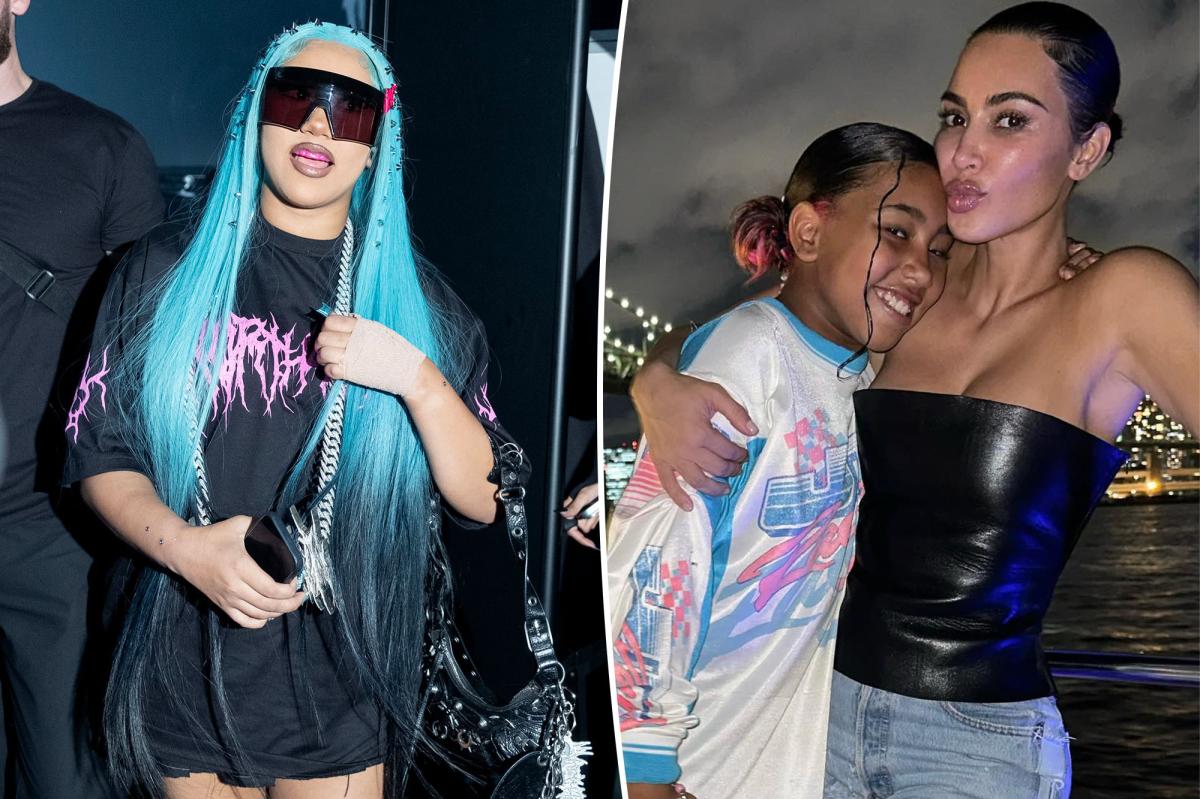
North West is not exactly waiting for permission to become famous. At 13, she has released an EP, landed a major fashion magazine cover, experimented with blue hair and faux piercings, and performed her first solo concert in front of a sold-out Chicago crowd. The only person seemingly trying to slow the rollout is her mother, Kim Kardashian.
In a new interview with the Sunday Times, Kardashian said North loves the camera more than her three younger siblings and wants to take every “forward-facing” opportunity that lands in her inbox. The problem, from Kardashian’s perspective, is not whether North can handle attention. It is whether a child should have to handle all of it at once.
“All she wants to do is forward-facing projects,” Kardashian said. “And so it’s like us really kind of trying to savor those moments and not doing everything that comes her way, so we can really make sure that we manage it the right way.”
That is a very Kardashian sentence: polished, strategic and quietly revealing. North is already in motion. Her mother is attempting to install guardrails while the machine is moving.
North is building a career before most teenagers build a résumé
North’s public ambitions have become increasingly difficult to treat as a cute celebrity-kid side quest. In May, she released her EP, “N0rth4evr.” She appeared on the cover of Dazed for its September issue. Last month, she performed her first solo concert at Chicago’s Vic Theatre, where Kardashian and Kanye West both showed up to support her.
The exes reportedly sat in different sections of the venue, which feels less like a family seating plan and more like the latest episode in the long-running Kardashian-West logistics saga. Whatever the arrangement, both parents were there for North’s moment. Kardashian later shared video of the sold-out crowd waiting shoulder to shoulder for the performance.
There was also a slightly less tidy chapter this summer. North canceled a planned 14-stop tour with rapper Molly Santana in July, only days before the first show was scheduled to begin. No grand explanation is offered in the Page Six report, and Kardashian did not turn the cancellation into a public family drama. North simply kept moving, eventually taking the stage on her own.
That pivot matters. A canceled tour can make a young performer look like a work in progress, which is exactly what a 13-year-old should be. But North’s other projects have made her look unusually determined. In her Dazed interview, she pushed back on advice to wait before starting a music career.
“It’s like, nah, this is my hobby, this is what I like to do, this is what I wanna do with my life,” she said.
For a child raised inside one of the most documented families on earth, that insistence is both understandable and complicated. North has watched her parents turn identity, style and personal milestones into public language. Now she appears eager to speak in her own.
Kim’s new role: less stage mother, more traffic controller
Kardashian has never pretended that fame is harmless. She told the Sunday Times that she worries about exposing her children to the intensity of her own celebrity, even as she allows them different levels of access to the family’s cameras.
“Each kid does what they’re comfortable with,” she said, explaining that the younger children may appear while she is filming but do not really have storylines. North, by contrast, “loves it a little bit more than the rest.”
That distinction is crucial. The question is not simply whether North likes performing. She clearly does. The question is how much of her childhood becomes content, branding or professional obligation before she has had time to change her mind.
Kardashian described herself as an “intermediate-strict parent,” an amusingly corporate label for a mother trying to balance boundaries with a daughter who has already discovered the intoxicating power of an audience. She also emphasized the softer side of home life, saying she is patient and loving, still lets a child sleep in her bed when they want and reads books with them every night.
It is a familiar Kardashian contradiction, but not necessarily an insincere one: a family that lives at enormous volume trying to preserve a private domestic rhythm underneath it. North may want the stage, while Kardashian wants the bedtime story to remain the bigger event.
The blue hair is not the scandal. The speed is.
North’s style has attracted its own round of commentary, including bright blue hair, faux piercings and face tattoos. In Dazed, she defended the choices with the bluntness of someone who has already become tired of being treated like a public relations problem.
“Everyone’s in love with boys, vaping and doing all kinds of bad stuff,” she said. “All I want is blue hair and piercings.”
That line lands because it makes the styling debate look almost quaint. The hair is temporary. The faux piercings are temporary. The digital footprint, the professional expectations and the public appetite for a famous teenager’s next move are much harder to remove.
North’s appeal is partly that she does not seem interested in presenting herself as a miniature version of her mother. She is not simply wearing the Kardashian uniform or repeating a family-approved script. Her music, styling and insistence on starting now suggest a teenager trying to carve out a lane that is visibly hers, even while the family name guarantees that every experiment will be watched.
That is the tension Kardashian is trying to manage. If she blocks too much, North may feel controlled by the same fame apparatus she is trying to escape. If she says yes to everything, North’s childhood risks becoming an endless audition.
And because this is the Kardashian universe, the debate is happening in public whether the family schedules it or not. Every appearance becomes a clue. Every look becomes a headline. Every pause invites theories about who is guiding the next move. Kardashian and West may be aligned on what North takes on, but the public has already learned to watch their co-parenting arrangements for drama, even when the actual story is simply two parents attending their daughter’s concert from separate sections.
North, meanwhile, appears to have the most straightforward agenda of anyone involved: make music, wear what she likes and start before somebody convinces her to wait. Kim Kardashian’s instinct is to slow the pace. North’s is to press play.
The interesting part is not whether North will become famous. That happened at birth. It is whether she can become a performer on her own terms while growing up inside a fame economy that rarely knows when to stop asking for more.