
Constance Zimmer Went From Hospital Gowns to Emmy Glamour While Quietly Fighting Breast Cancer
The Love Story actress has opened up about a private diagnosis, three surgeries, radiation and the surreal pressure of keeping it together during a very public career moment.
Constance Zimmer has always understood the choreography of a public life: show up polished, hit the press line, answer the questions, keep the machinery moving. This year, while promoting FX’s Love Story and celebrating an Emmy nomination, she was performing that familiar celebrity ritual with a secret nobody in the room could see.
On Instagram, Zimmer revealed that she had been privately navigating breast cancer, beginning with a diagnosis delivered over Zoom on March 13. “You have DCIS, also referred to as Stage 0 breast cancer,” her doctor told her, according to the actress. “The silence was deafening.”
That sentence lands because it captures the strange split-screen quality of celebrity life: the glamorous version is happening in public while the frightening, deeply personal version is unfolding somewhere off-camera. Zimmer, 55, was doing interviews and appearing at industry events while processing the diagnosis, consulting doctors and figuring out what treatment would mean for her body and her future.
The secret behind the press tour
Zimmer said she first had to get home and tell her husband, Russ Lamoureux, and their daughter, Colette, in person. Then came what she described as an overwhelming mental toll and a parade of medical appointments. The most immediate question was also the most personal: how much of her body would she have to give up to get through this?
According to Zimmer, several doctors initially presented a mastectomy as the quickest way to remove the mass. But that was not what she wanted. She wanted to try to save her breast, a preference she said was not being meaningfully centered until she spoke with breast surgeon Dr. Kristi Funk.
“I think we can try a lumpectomy, I feel confident I can get it out,” Zimmer quoted Funk as saying. The actress wrote that Funk was the first doctor who made her feel that what she wanted mattered, a moment that moved her to tears.
The route was not simple. Zimmer said she underwent three surgeries over three consecutive weeks, followed by radiation. She described the experience as seven months of “pure shock and fear alongside pure joy and gratitude,” a phrase that sounds less like a tidy inspirational caption than an honest description of how messy recovery can be.
Hospital gowns, Emmy glamour, same woman
Zimmer accompanied the announcement with images from the hospital as well as photographs of herself fully glammed up. That contrast is the visual hook of the post, but it is not a transformation story in the usual celebrity sense. There is no before-and-after fantasy here, no suggestion that the red carpet erases the hard part. The hospital gown and the polished event look belong to the same timeline, and to the same person.
She also shared a video marking the completion of one week of radiation. In it, she called the moment “super surreal” and said she was breathing through it, literally and figuratively. It is an unusually unvarnished glimpse from someone who had spent months maintaining a professional schedule while privately managing fear, procedures and recovery.
Zimmer’s timing is especially striking because Love Story placed her inside one of the most scrutinized romantic stories in American culture. She plays Ann Marie Messina, the mother of Carolyn Bessette-Kennedy, in FX’s series about John F. Kennedy Jr. and Bessette-Kennedy. The role arrived with built-in attention, nostalgia and the kind of press cycle that demands endless conversation about appearances, performances and the public mythology surrounding a famous couple.
While the show was being discussed, Zimmer was also undergoing treatment. The publicity machine kept moving. So did her life. She said she followed her surgeries with radiation while celebrating her Emmy nomination, a juxtaposition that feels almost too on-the-nose for Hollywood: one day hospital logistics, the next day professional glamour, with no clean break between them.
Why she is talking now
Zimmer’s decision to share the story during Breast Cancer Awareness Month was not simply a celebrity announcement. She said she wanted to remind women not to wait until they have symptoms to get checked, and planned to discuss the experience in full on her podcast, Talk Fifty to Me, with her breast surgeon.
That choice gives the post a purpose beyond the familiar celebrity cycle of reveal, sympathy and disappearance. Zimmer is using the attention around her diagnosis to talk about screening, medical choice and the emotional cost of being told that the fastest option may not be the option that feels right for you. She is also being candid about the exhaustion of making those decisions while continuing to appear normal in public.
The internet tends to flatten celebrity health stories into one of two moods: inspirational triumph or devastating tragedy. Zimmer’s post resists both. She is grateful to be cancer-free, but she does not pretend the road there was graceful. She writes about fear, shock, difficult choices and the relief of finding a doctor willing to listen. The glamour is present, but so is the panic underneath it.
And then there is that final image: Zimmer celebrating what her body got her through. Not punishing it for changing. Not hiding the evidence of the months she spent in treatment. Just allowing the public version of herself to exist alongside the private one at last.
For an actress who has spent much of her career playing women with immaculate composure—from Entourage to UnREAL and now Love Story—the most affecting performance here may be the refusal to pretend composure was the whole story. Zimmer had a press tour to finish, an Emmy nomination to celebrate and a family to protect. She also had three surgeries, radiation and a diagnosis she was not ready to share until she was ready.
Now she is sharing it on her own terms: hospital gowns included, Emmy glamour intact, and with a reminder that sometimes the most revealing celebrity image is not the red-carpet shot. It is the one that shows what happened before anyone started taking pictures.

Janelle Brown’s Final Word on Kody’s Apology Tour? “So, F–k Him.”
The Sister Wives ex is not interested in a redemption arc—especially one that ends with her being blamed for the Coyote Pass chaos.
Kody Brown wanted a farewell tour. Janelle Brown wanted the microphone back.
As Sister Wives opened its 21st season, Janelle delivered the kind of line that does not require a dramatic score, a slow zoom or a producer asking, “How does that make you feel?” Reflecting on Kody’s season 20 apology tour, she said she believed he was trying to redeem himself—but not necessarily because he had found religion, accountability or even a particularly convincing relationship with the truth.
“I don’t think it was necessarily that sincere, because there’s been no contact since,” Janelle said in the episode’s opening minutes.
Then she got to the part that still clearly irritates her: Kody’s public claims about her role in the sale of the family’s Coyote Pass property in Arizona. “He very publicly torpedoed my character,” Janelle said. “So, f–k him.”
The apology tour has officially left the building
For years, Kody’s preferred mode of communication has been television: explain the family on television, defend the family on television, process the family’s collapse on television. Now that he and Robyn Brown have officially exited the series after 20 seasons, Janelle is making it clear that the cameras did not magically turn his version of events into a shared reality.
Her issue is not simply that Kody said she had engineered some kind of “backdoor deal” designed to keep Meri Brown from receiving her share of the Coyote Pass sale. It is that the accusation landed publicly, lingered publicly and apparently found an audience among people who were ready to believe it.
“It would be one thing if he just said it, but everybody’s believing him and Meri’s even like, ‘I don’t know,’” Janelle explained while speaking with former sister wife Christine Brown.
That is the particular sting of a reality-TV breakup: the argument does not stay in the house. It gets edited, broadcast, debated and absorbed by viewers who may know the family’s history better than they know their own group chat. A private disagreement becomes a character reference written in prime time.
Coyote Pass, explained with maximum family-chaos energy
Janelle’s account of the property dispute is less “mastermind plot” and more “please can everyone just finish the paperwork.” She said the only conversation she had about the sale was repeatedly pushing to get things moving. “Let’s get this going,” was, in her telling, the entire strategy.
Her response to the idea that she had been quietly scheming was blunt: “Trust me, if I had been scheming, you would not have known.” It is a very Janelle line—dry, practical and devastatingly unimpressed by the notion that she would need an elaborate secret operation when a direct conversation would do.
She also disputed the idea that Kody was simply protecting Meri’s financial interests. According to Janelle, Kody had discussed going to a lawyer and hearing that he could sell the property without necessarily giving the other women anything, since his name was on the title. She said he also talked about holding money for Meri in reserve and releasing it when she did what he wanted.
That detail is doing a lot of work in the episode. Janelle is not presenting herself as the person who controlled every dollar or document. She is describing a family business arrangement already soaked in distrust, shifting leverage and old emotional debts. The Coyote Pass argument is not just about land. It is the financial afterparty of a plural marriage that has been breaking up in installments for years.
Meri is the person Janelle says hurts most
There is a twist in Janelle’s frustration: she seems less upset that Kody accused her than that Meri gave the accusation room to breathe.
Janelle and Meri spent decades as sister wives in a family structure that asked them to share a husband, a home life and, at various points, an entire public identity. Their relationship has never been portrayed as effortlessly close. But the Coyote Pass dispute forces them into a strange new alliance, one in which the ex-wives are left comparing notes after the marriage—and the television franchise—has moved into its next era.
Janelle said Meri “believed him,” or at least “sort of believed him.” That hesitation appears to be the real betrayal in her eyes. Kody’s accusation is expected; Meri’s uncertainty is personal.
It also gives the season an immediate hook. Kody and Robyn may be gone, but the emotional debris is still producing episodes. The show’s original premise was an unconventional family trying to make plural marriage work. Its current appeal is much more recognizable: exes untangling money, loyalty and the stories they were told about one another.
The Brown family has entered its post-Kody era
Janelle is now settled in North Carolina near her eldest daughter, Madison Brush, while Christine remains part of the on-camera family orbit. Meri is also navigating life after Kody, and the younger Browns continue to exist as the generation that grew up inside the franchise’s most dramatic storyline.
That shift matters. When Sister Wives premiered in 2010, the family’s story was framed around expansion: more wives, more children, more logistics, more optimism that everyone could find a place in the arrangement. Season 21 begins from the opposite direction. The family is still enormous, but the central marriage is over, Kody and Robyn have left the series, and the women who once had to negotiate around him are now telling their own versions of what happened.
Janelle’s “So, f–k him” is not just a spicy sound bite, though it is certainly that. It is a declaration that Kody does not get the final edit simply because he spent years narrating the family’s story. His apology tour can exist. His explanation can exist. His version of Coyote Pass can exist. Janelle’s refusal to accept it exists too.
And, naturally, it is all happening on television—because in this family, closure is less a private conversation than a season premiere.
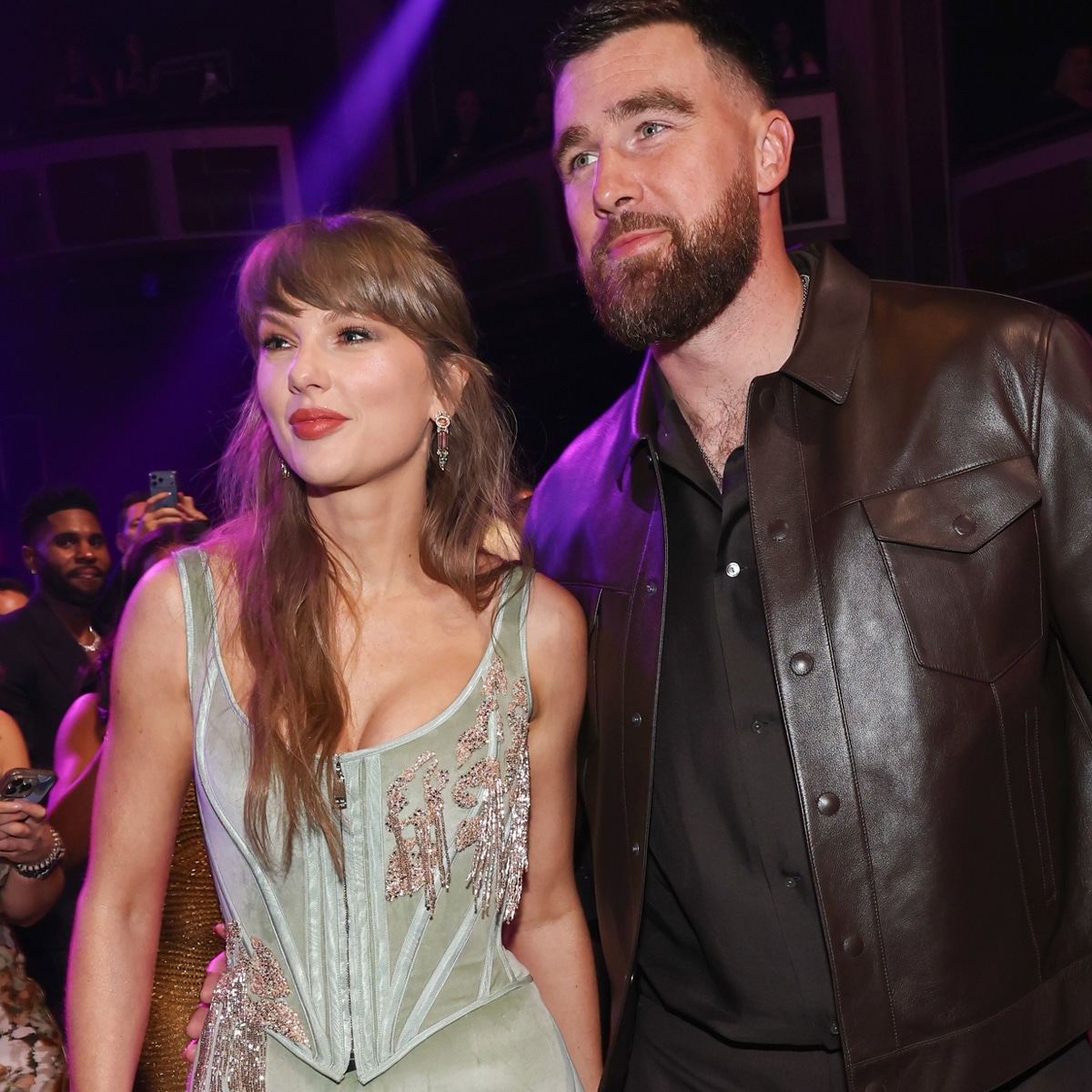
Taylor Swift and Travis Kelce Are Married—and Their Love Story Was Always a Two-Person Pep Rally
From a friendship bracelet that never made it backstage to Madison Square Garden vows, pop’s biggest power couple turned mutual hype into a full-time lifestyle.
There are celebrity couples who date quietly, couples who date loudly, and then there are Taylor Swift and Travis Kelce, who somehow transformed a friendship bracelet, a football suite and one spectacularly public touchdown cheer into a three-year master class in mutual promotion.
Now they are newlyweds. According to E! News, Swift and Kelce cemented their relationship with July 3 vows at Madison Square Garden, in front of a highly attended celebrity crowd. Which feels less like a wedding and more like the final, glittering episode of a television season that began with a missed backstage meeting and somehow became the most commercially powerful romantic subplot in modern pop culture.
Their appeal has never been that they are opposites. It is that they are both extremely good at being themselves in public—and unusually enthusiastic about being fans of each other.
The bracelet was a failed mission, not a failed flirtation
The origin story remains almost aggressively on-brand. In July 2023, Kelce went to Swift’s Eras Tour stop in Kansas City with a friendship bracelet bearing his number and a plan to hand it to her. He had apparently imagined that knowing the elevator operator might provide a direct line to the pop star’s dressing room. Swift, meanwhile, had a pre-show ritual that involved protecting her voice before singing 44 songs, not casually chatting with football players in the service corridor.
“He really was just like, ‘I know a guy. I can figure this out,’” Swift later recalled on the New Heights podcast.
He did not get the bracelet to her. He did, however, get the story onto his podcast, where Swift eventually heard it. The failed attempt was bold enough to become a public invitation and self-deprecating enough not to feel like a campaign. In her telling to TIME, she found the move “metal as hell,” and the two started spending time together soon after.
That sequence matters because the romance did not begin with a choreographed red-carpet debut. It began with Kelce shooting his shot, Swift noticing, and both of them keeping the early part to themselves. Swift told TIME they had “a significant amount of time that no one knew,” adding that they would never be “psychotic enough to hard launch a first date.”
Then came September 24, 2023, when Swift appeared in Kelce’s suite at Arrowhead Stadium alongside his mother, Donna. The internet got its close-up. Kelce got a cheering, screaming Swift. The Kansas City Chiefs got an entirely new audience demographic. And the phrase “hard launch” acquired the kind of cultural mileage usually reserved for a song lyric.
They did not become public. They became each other’s beat reporters
The genius of this relationship, from a celebrity-publicity standpoint, is that neither person had to pretend the other’s world was a side quest. Swift showed up at games. Kelce showed up at Eras Tour performances. She learned football terminology. He became visibly awed by the logistics of the biggest touring phenomenon on the planet.
Kelce has attended 14 of Swift’s shows, according to E!, and even appeared onstage during her June 2024 London date. Swift, for her part, went from casually observing football to knowing injury reports, special situations and “third and short.” Kelce told GQ that she is now “the most engulfed fan,” because she naturally wants to understand the work he does.
That exchange is more revealing than the matching headlines. Swift has spent her adult life being expected to understand every detail of her career while strangers debate whether she is too visible, too strategic or too much. Kelce is one of the few people in her orbit who can meet that level of professional intensity from his own experience. He knows what it means to have a body, a schedule and a public identity consumed as entertainment.
“I’ve seen what she goes through,” Kelce told GQ. “I’ve seen the amount of work that she puts on her body, and it’s mind-blowing.”
Swift has made a similar point about football, even if she delivers it with more jokes. She once admitted asking Kelce what it was like to see his brother Jason across the line of scrimmage during the Super Bowl—an understandable question only if one does not yet know that both brothers played offense. Kelce corrected her without making her feel ridiculous, and Swift now describes the question as an “insane” one she has learned from.
That may be the actual fantasy here: not perfection, but enthusiastic tutoring without condescension. She can be the person who knows every lyric and still ask a football question that makes the Kelce family blink. He can be a three-time Super Bowl champion and still marvel at how many people fit inside an Eras Tour audience.
Their great talent is making attention look like affection
Swift and Kelce have been photographed holding hands, appearing at events and sharing the kind of public joy that usually makes celebrity publicists reach for a fainting couch. They have also talked about the relationship in ways that establish boundaries without pretending the attention does not exist.
Kelce initially said he wanted to keep his personal life out of the weekly podcast play-by-play. “What’s real is that it is my personal life and I want to respect both of our lives,” he said in 2023. But restraint has never meant silence. He has called Swift “amazing,” defended her when she was booed at a game, and admitted that being around her has been “f–king mind-blowing.”
Swift, meanwhile, has embraced the stadium spectacle rather than hiding from it. She joked to TIME about having no idea whether her appearances were irritating “a few dads, Brads, and Chads,” but her larger point was serious: she wanted to show up for someone she was proud of. “The opposite of that is you have to go to an extreme amount of effort to make sure no one knows that you’re seeing someone,” she said. “And we’re just proud of each other.”
That is why the relationship has survived the microscope. The public is not being asked to believe that the cameras are absent. The couple is simply refusing to behave as though visibility automatically makes the feeling fake.
Now the football star and the pop star have moved from public girlfriend-boyfriend theater into married life, with the vows arriving roughly nine months after Kelce spoke with Swift’s father and proposed in a garden she rated “10 out of 10.” Even the ring had a delayed-payoff quality: Swift had shown him a video of the hand-engraved gold design about a year and a half earlier, and he remembered it.
There is an invisible string in that detail, but also a very practical lesson. Kelce listens. Swift notices. They attend each other’s biggest moments, learn each other’s languages and cheer loudly enough that nobody has to wonder whose side they are on.
After three years of games, concerts, podcasts, cameos, family suites and enough public hand-holding to keep the internet employed, Taylor Swift and Travis Kelce have reached the logical conclusion: not a mysterious romance, not a secretive power pact, but a marriage built like a winning season. Lots of preparation. A few bizarre questions. Excellent team chemistry. And two people who seem genuinely delighted to be in the stands for each other.