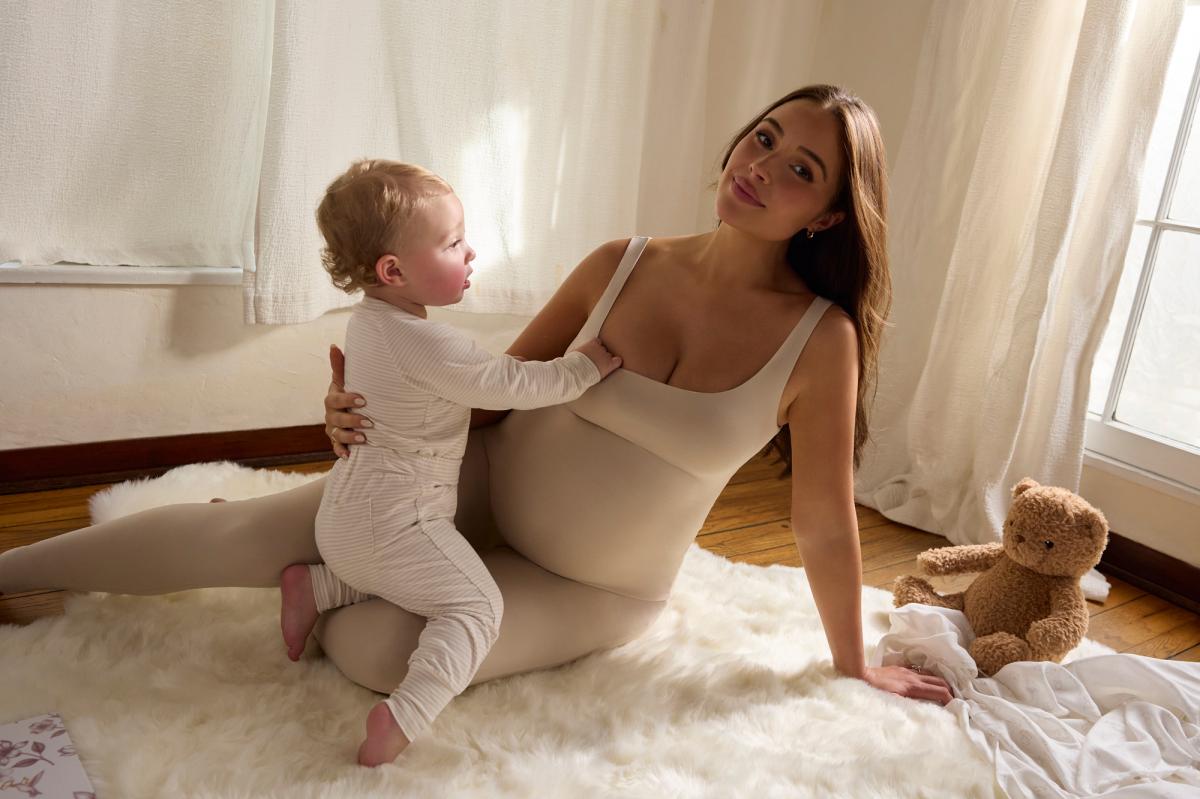
Olivia Culpo Is Bringing the Flameless Candles Back to the Delivery Room
The model’s famously overpacked hospital bag is getting a sequel — because apparently childbirth still needs mood lighting, comfort objects and a little WAG-level production design.
Olivia Culpo is about to give birth again, and she is refusing to leave the flameless candles behind.
The model, 34, is expecting her second child with husband Christian McCaffrey in the next few weeks, and she has already made one crucial decision: the hospital bag that went viral during her first pregnancy is coming back in full. Same comfort-first philosophy. Same over-the-top packing energy. Same tiny battery-powered flickering flames, apparently still ready for their close-up.
“I don’t think I’ll change too much because I actually used everything I brought last time,” Culpo told Page Six Style. “Yes, this means I’ll be bringing back the flameless flickering candles!”
Some people bring a phone charger. Olivia Culpo brings ambiance.
The hospital bag has entered its sequel era
Culpo’s first hospital bag became a minor pop-culture event last year because it looked less like a last-minute grab before labor and more like a luxury wellness retreat with a birth plan. Among the essentials were flameless candles, which sparked controversy and gave the internet one of those irresistible celebrity debates: Is this wildly unnecessary, or is everyone else simply under-accessorizing childbirth?
Culpo’s answer is clear. She used the things she packed, loved having them there and sees no reason to reinvent the experience just because there is another baby on the way. “I’m such a creature of comfort,” she said, adding that she “really did love having every single thing” she brought for her last delivery.
It is a very Olivia Culpo approach to maternity: practical in theory, highly curated in execution. There is no shame in wanting comfort during labor, but Culpo’s version comes with a visual identity. Even the hospital bag has a mood board.
And, honestly, the return of the candles is the kind of detail celebrity pregnancy coverage was made for. It is specific, slightly absurd, easy to picture and just divisive enough to make people text a friend. The internet can debate epidurals, birth plans and hospital snacks forever. The real question is whether the delivery room needs the lighting to be “cozy.”
Her maternity wardrobe is also refusing to phone it in
Culpo is not treating her second pregnancy as a reason to disappear into oversized sweats, either. She has teamed up with Bumpsuit on a collection of maternity and postpartum pieces that includes a unitard, a long-sleeved catsuit and a strapless gown.
Her philosophy is less “hide the bump” and more “dress the bump like it has somewhere to be.” Culpo said she has always loved embracing her pregnancy and wants her clothes to reflect pride in what her body can do. The pieces are designed to be comfortable and easy while still making the wearer feel pulled together, she explained.
That is the eternal maternity-style assignment: remain comfortable, retain a personality and somehow look like you meant to leave the house. Culpo’s answer is sleek, body-skimming and polished enough to suggest that pregnancy dressing does not have to mean surrendering your entire closet to elastic waistbands.
She also told Page Six Style that she has picked up “a few more tips and tricks” this time around, though her overall style has stayed consistent across both pregnancies. Translation: the second baby gets experience, but not necessarily a less coordinated wardrobe.
Welcome to the Culpo-McCaffrey family brand
Culpo’s pregnancy style push arrives alongside Picolette by Olivia Culpo, her Target-exclusive baby collection inspired by her 1-year-old daughter, Colette, whom she welcomed with McCaffrey last July.
The line includes blankets, toys, floral details and plenty of football-themed items — a nod to McCaffrey’s NFL career. There is even merchandise inspired by the family’s toy Goldendoodle, Oliver Sprinkles, a name so aggressively adorable it sounds like it was generated by a celebrity pet focus group.
Culpo said the collection grew out of her own experience as a mother and the things she wanted for her children. She also acknowledged that working while pregnant and raising a toddler “can definitely be a lot,” though she sees the brand and motherhood as closely connected.
That is the larger Culpo-McCaffrey picture right now: a model with a maternity line, a football star husband, a toddler, a dog with a better name than most human influencers and a hospital bag that has already achieved its own little celebrity status. The family’s public image is polished, but the details are just eccentric enough to keep it from feeling like one long sponsored beige nursery reveal.
The candle discourse is not over — and Culpo knows it
The appeal of Culpo’s hospital bag is not that it is relatable in the traditional sense. Most people are not packing a delivery-room atmosphere kit, and most hospitals are not being transformed into a boutique hotel suite for the arrival of Baby No. 2.
The appeal is that she is unapologetically specific. She knows what makes her feel comfortable, she has tested the system once and she is bringing the successful formula back. In a culture that treats every celebrity pregnancy as a new aesthetic era, Culpo’s commitment to the same flameless candles is almost refreshingly un-chaotic.
There will be no dramatic hospital-bag rebrand. No minimalist reset. No “this time I’m doing things completely differently” press tour. Just a pregnant woman who liked her little fake flames and intends to enjoy them again.
As Culpo prepares to become a mother of two, she is also selling the fantasy that the transition can include softness, style and a few deliberately chosen comforts. The fantasy may come with a $145 unitard, a $225 satin gown and battery-operated candles, but at least it knows exactly what it is.
Baby No. 2 has not arrived yet, but the nursery-to-hospital pipeline is already fully branded. Somewhere, a flameless candle is flickering bravely in anticipation.
The ‘Two and a Half Men’ Finale Was Apparently a Full-Scale Charlie Sheen Stress Test
Chuck Lorre’s new memoir revisits the last days of the sitcom’s original run — and the moment Melanie Lynskey was reportedly left “terrified” on set.
Before celebrity chaos became a 24-hour livestream, there was Charlie Sheen on Two and a Half Men: a sitcom star, a ratings machine and, increasingly, the human equivalent of a blinking warning light.
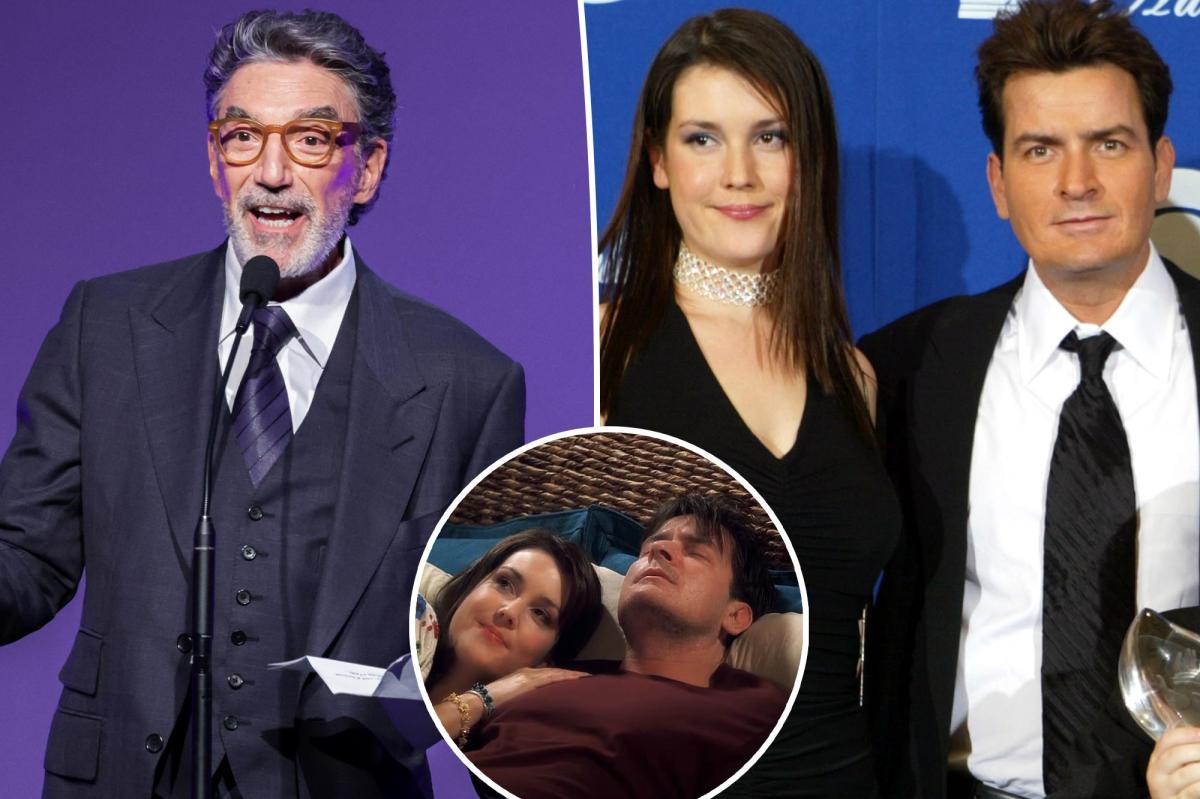
Now Chuck Lorre, the show’s creator, is reopening that particularly glossy chapter of television history with a claim that lands somewhere between Hollywood memoir and behind-the-scenes horror story. In an excerpt from his upcoming book Sitcom, featured by Vanity Fair and reported by Page Six, Lorre says Melanie Lynskey became “terrified” while filming the last episode of the show’s original run with Sheen.
The scene was meant to be business as usual: Sheen playing womanizing, perpetually intoxicated bachelor Charlie Harper, Lynskey playing his neighbor Rose, the cheerfully unhinged romantic presence who had spent years orbiting his life. Instead, Lorre writes that Sheen could not remember his lines and had to use the furniture to stay upright.
“Melanie was terrified,” Lorre wrote, adding that it was clear to everyone that Sheen was in trouble. He says he ultimately had no choice but to shut down the show.
The sitcom machine finally hit the panic button
That image is jarring precisely because Two and a Half Men was built to make dysfunction look effortless. For eight seasons, Sheen’s Charlie Harper was allowed to turn hangovers, bad decisions and serial romantic misconduct into a dependable punchline. The series’ engine was repetition: Charlie misbehaves, Alan suffers, the women react, the audience laughs, and the furniture — presumably — stays where it is.
But Lorre’s account describes the moment when the performance apparently stopped reading as a comic persona and started alarming the people around him. According to the memoir excerpt, the cast and crew spent the show’s final season in a “constant state of anxiety,” filming Friday night episodes and worrying about what might happen before Sheen returned to work the following Tuesday.
There was an especially grim rhythm to the production calendar. Lorre wrote that every two weeks the cast had a full week off, creating a ten-day stretch in which, as he put it, Sheen’s life and the lives of those around him felt at risk. The contrast is almost absurdly Hollywood: a hit sitcom with a four-day workweek, and an entire production quietly counting the days until its leading man came back intact.
Reps for Sheen and Lynskey did not immediately respond to Page Six’s requests for comment. Lorre’s description is his account of what happened on set, presented in a memoir arriving after the fact. Still, the detail about Lynskey is the kind of sentence that instantly changes how viewers remember the show’s old rhythm. Rose was supposed to be the unpredictable one. Suddenly, the unpredictable force in the room was the man she was chasing.
Sheen’s public implosion became television history
Sheen’s exit from Two and a Half Men in 2011 was not a normal sitcom recasting. It was a pop-culture detonation. The actor had become a tabloid fixture amid reports of erratic public behavior and substance abuse, including the widely publicized 2010 incident at New York’s Plaza Hotel. Then came the spectacular public collapse of his relationship with Lorre, complete with insults aimed at the producer and Sheen’s now-famous “winning” era.
The show was put on hiatus and never returned with Sheen. Ashton Kutcher eventually joined the cast, taking over the series after the original star’s departure, but the chemistry — and the cultural weather — had changed. The original version of Two and a Half Men had been sold as a polished network comedy about a messy man. By the end, viewers were watching a real-life mess leak through the sitcom’s walls.
That is why Lorre’s memoir timing feels so potent. This is not merely another story about a difficult production or a famous actor missing his marks. It is a return to the exact point where the early-2010s celebrity machine stopped being able to package Sheen’s behavior as just another chapter in the Charlie Harper brand.
The show had already made his lifestyle part of the product. Sheen’s off-screen spiral made the joke feel less like fiction and more like a troubling extension of the marketing strategy. The line between character and star, always blurry in celebrity culture, practically disappeared.
And then, somehow, came the reunion
The strangest twist is that Lorre and Sheen eventually found their way back to the same professional universe. In a 2023 interview with Variety, Lorre said he had repaired the relationship and cast Sheen in his Max comedy series Bookie.
Lorre said he was nervous when they began speaking again, but that the friendship they once had returned almost immediately. He described the reconciliation as healing and said Sheen was willing to make fun of himself. At the table read, Lorre recalled, the two men hugged.
That reunion gives the memoir excerpt an extra layer of uncomfortable nostalgia. Lorre is not writing from the position of someone who simply cut Sheen out of his life and moved on. He worked with him for 170 episodes, later welcomed him back, and has publicly acknowledged both the damage and the affection threaded through their history.
It is a very modern celebrity contradiction: someone can be a beloved collaborator, a ratings phenomenon, a source of genuine fear and, years later, a person you decide is worth trying to understand again. Hollywood loves a comeback, but it loves a complicated comeback even more.
For Lynskey, the story lands differently. Her Rose was one of the show’s most memorable recurring characters, a deceptively sunny oddball whose fixation on Charlie made her part of the sitcom’s comic architecture. Lorre’s account places her in a scene where the joke apparently evaporated — and where the actor playing the eccentric neighbor was the person reacting like the only adult in the room.
Years after the show’s finale, that may be the detail people text each other: not that Charlie Harper was chaotic — everyone knew that — but that the production eventually reached a point where even the sitcom’s scripted chaos could no longer contain the real thing.
JoJo Fletcher Says Bachelor-Nation Gossip “Wrecked” Her and Jordan Rodgers — Then They Did the Most Un-Reality-TV Thing Possible
Ten years, two postponed weddings, one new baby and a famous-family media storm later, the former Bachelorette couple says their survival strategy was simple: leave the bubble.
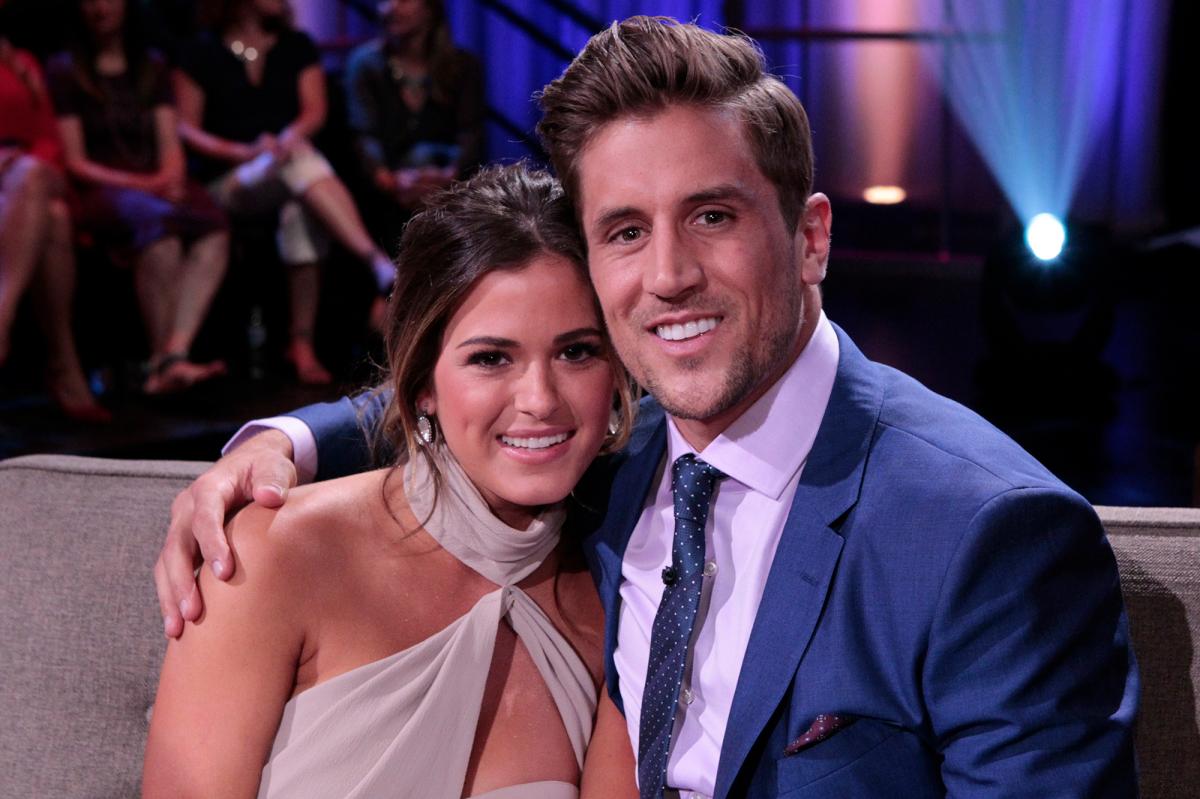
JoJo Fletcher and Jordan Rodgers were supposed to be a fairy tale. Instead, they got the full Bachelor Nation experience: a televised proposal, a relationship immediately placed under a microscope, headlines Fletcher says were “so far from the truth,” and a famous-family subplot involving one of the most recognizable surnames in football.
Now, nearly a decade after their season of The Bachelorette ended, Fletcher is looking back at the part of the love story that did not make for a particularly dreamy montage. The scrutiny, she told Page Six, “wrecked” the couple during the early days of their relationship — a surprisingly candid admission from a pair whose entire public identity was built around making it out of reality TV together.
“We were like, ‘Why are they saying this and this?’” Fletcher said. “I think part of that contributed to some of the stresses that we had as a new couple and a new relationship trying to figure out life together.”
The engagement came with a side of chaos
Fletcher and Rodgers met in 2016, when she was the lead on Season 12 of The Bachelorette. He proposed during the finale, delivering the kind of glossy, emotionally engineered ending the franchise has perfected. But the moment the cameras stopped rolling, the couple had to figure out how to become an actual couple while the audience continued treating them like a season-long plot twist.
That transition was especially noisy because their romance arrived at a moment when social media was becoming an even more aggressive second screen for reality television. Fletcher said the media was “obsessed with the show” when they came off the series, and the couple found themselves reacting to coverage while still trying to learn basic things about one another outside a mansion, a rose ceremony and a production schedule.
“We had a pretty tough year,” Fletcher said. She has been open about that period before, but the new comments sharpen the picture: the fairy tale was not necessarily falling apart because of one dramatic betrayal or a single explosive fight. It was being strained by the weird pressure cooker of becoming a real couple in public, with strangers confidently narrating the relationship in real time.
That is the less glamorous sequel to a reality-TV proposal. Everyone else gets to debate whether the couple is genuine; the couple has to decide who is doing the dishes, how to handle work, and whether the person they met on television still fits into the life waiting outside it.
Then came the Rodgers family subplot
Jordan’s last name also guaranteed that the couple’s story would never be only about Jordan and JoJo. During Fletcher’s season, his family became a major storyline when he introduced her to his parents and his brother Luke in Chico, California — while addressing his strained relationship with his famous older brother, NFL quarterback Aaron Rodgers.
Luke spoke openly on the show about the pain of the estrangement. “It pains both of us,” he said at the time. “We miss our brother.” The family conflict created a media frenzy that followed the couple beyond the finale, adding another layer of public drama to an already exposed relationship. Aaron has since said the family is working on rebuilding its relationship, but for Fletcher and Jordan, the old storyline remains part of the archive of their very public beginning.
It is hard to imagine a more chaotic launch package for a new engagement: get engaged on national television, absorb a wave of romantic speculation, and become adjacent to a family story involving one of the most discussed quarterbacks in the country. All while trying to work out whether your relationship can survive the trip home.
Their anti-Bachelor strategy was almost aggressively normal
Fletcher says the move that helped them most was also the least dramatic one. They got out of the franchise bubble as quickly as possible.
“We went straight back to our normal lives,” she said. “We were straight back to work. We didn’t stay and we didn’t do all this and that event and that party.”
In a universe powered by reunion specials, sponsored appearances and increasingly elaborate reality-TV crossover events, that sounds almost radical. The couple did not try to stretch the finale into a permanent lifestyle. They stepped away from the pageant of being a Bachelor Nation success story and dealt with the untelevised version of their relationship instead.
Fletcher said that was important because, after a show ends, couples are suddenly expected to navigate “real problems and real life obligations and responsibilities” while everyone else assumes they have already reached the happily-ever-after. The real work, she suggested, began after the cameras stopped rewarding them for being romantic.
“We’ve always kept choosing each other and we kept choosing to work through it,” she said.
Ten years later, the plot twist is that it worked
Fletcher and Rodgers married in May 2022, after postponing their wedding twice because of the COVID-19 pandemic. On Dec. 23, 2025, they welcomed their first child, a daughter named Romy Blair Rodgers, following an emergency C-section.
That timeline gives the couple’s early chaos a very different afterlife. The headlines that once felt catastrophic now look, in Fletcher’s words, “so silly.” A decade after they met, they have a marriage, a baby and enough distance from the franchise to laugh at the melodrama that once seemed capable of swallowing them whole.
“He really is my best friend,” Fletcher said of Rodgers. She also described meeting him through the show as “a really funny story to tell,” which may be the most emotionally healthy possible ending for a relationship that began under studio lights and public suspicion.
Fletcher was speaking to Page Six while discussing her partnership with Mucinex 12HR Cold & Fever Multi-Symptom, and motherhood has given her a new perspective on the importance of looking after herself. “When you become a mom, you don’t get to feel sick,” she said, adding that the product helped her get through the day.
But the bigger message from her retrospective is not that Bachelor couples can magically escape the machinery that made them famous. It is that Fletcher and Rodgers eventually stopped performing the machinery’s idea of a perfect relationship. They left the parties, went back to work, endured the noise and kept making private decisions inside a very public story.
That is not the fantasy the franchise sells. It is messier, less photogenic and considerably more convincing: the proposal was televised, the pressure was real, and the happily-ever-after had to be built somewhere the cameras could not follow.