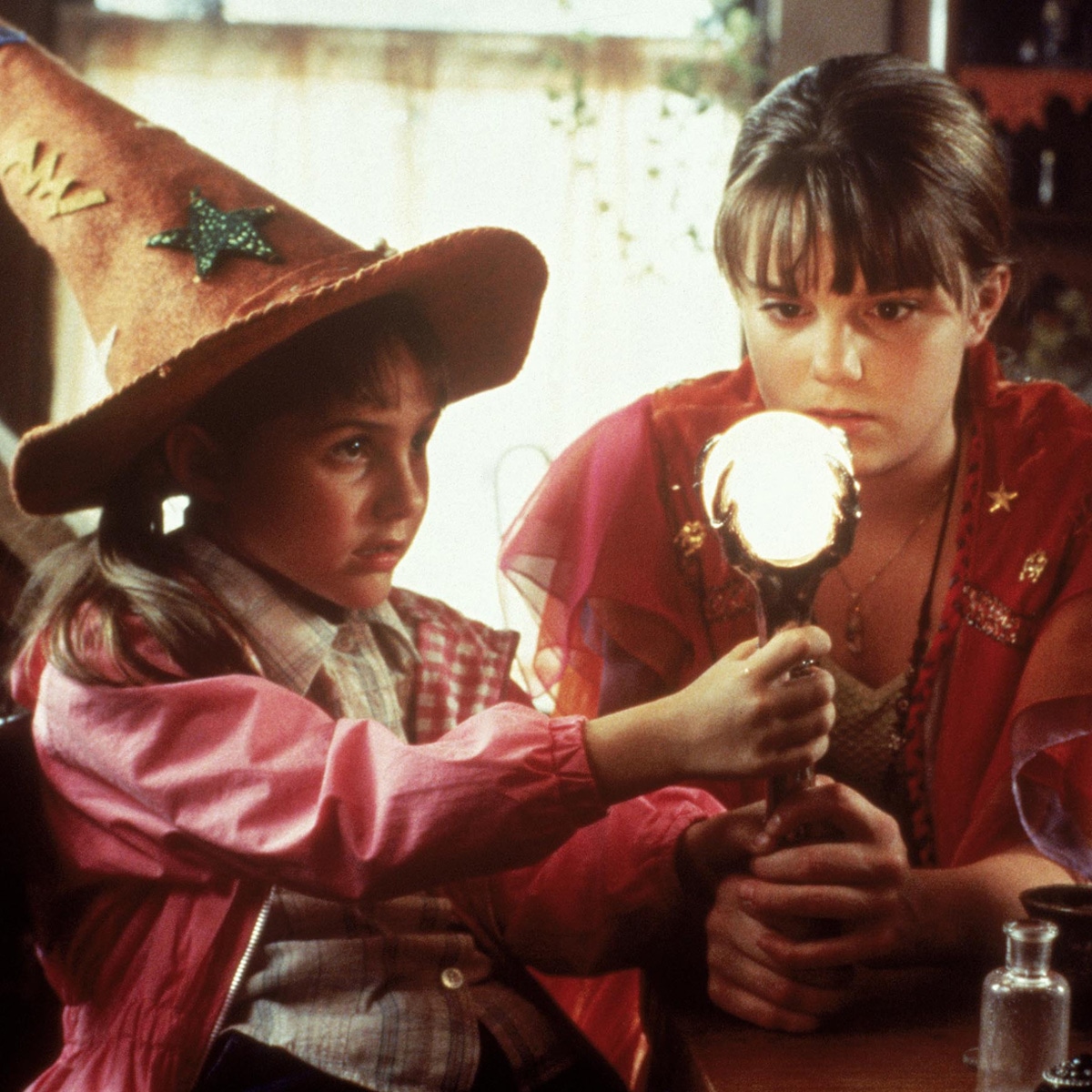
The Halloweentown Enemies-to-Spouses Plot Twist Still Has Better Timing Than Most Rom-Coms
Kimberly J. Brown and Daniel Kountz went from magical rivals in a Disney Channel classic to married improv partners — and the internet is still delighted by the upgrade.
There are celebrity relationships that arrive with a soft launch, a blurry dinner photo and three weeks of internet numerology. Then there is Kimberly J. Brown and Daniel Kountz, who quietly turned a Disney Channel Halloween rivalry into an actual marriage and gave an entire generation the kind of plot twist it would have written in fan fiction.
Brown played Marnie Piper, the determined young witch at the center of Halloweentown, the 1998 Disney Channel original movie that became an annual appointment for spooky-season children and the adults they grew into. Kountz entered the franchise in the sequel, Halloweentown II: Kalabar’s Revenge, as Kal, a teenage warlock and Marnie’s adversary.
On screen, they were very much on opposite sides of the magical family business. Off screen, their story took the scenic route: years apart, a reunion in 2016, collaborative improv sketches, fan disbelief, and finally a wedding in 2024. The pairing is so perfectly DCOM-coded that it feels less like a celebrity surprise than a secret bonus ending Disney forgot to put after the credits.
From magical nemeses to the internet’s favorite Halloween couple
Brown and Kountz did not emerge from the original film as a famous couple. The romance came later, after the franchise had already settled into its second life as a Halloween tradition. According to Brown’s interview with E! News, the two reconnected in 2016 to work on improv sketches together.
That detail is charmingly low-stakes: no dramatic airport reunion, no grand industry party, just two former costars finding their way back into each other’s orbit through comedy. Somewhere between the sketches and the fans’ reactions, the old Halloweentown chemistry acquired a new context. The villainous warlock was no longer merely Marnie’s supernatural problem. He was, apparently, husband material.
Brown told E! that the response from fans amused both of them. “It cracks us up,” she said of watching people react to the relationship over the years. It is easy to understand why. For viewers who met these actors as teenagers on a Disney Channel set, the pairing collapses several timelines at once: childhood nostalgia, adult romance and the strange cultural experience of watching fictional crushes become real people with mortgages, wedding photos and Halloween traditions.
The couple married in 2024, completing the sort of enemies-to-lovers arc that streaming platforms would stretch across eight episodes and a reunion special. They even displayed a still of Marnie and Kal beside an engagement photo, creating a side-by-side timeline of fictional teens becoming real-life partners. Brown described it as a progression, which is both sweet and almost aggressively satisfying.
The franchise was already built for a comeback
The romance works because Halloweentown has never behaved like a movie people simply watched once. The first installment premiered on Disney Channel on Oct. 17, 1998, and introduced viewers to a parallel world populated by witches, monsters and warlocks who apparently had plenty to do after Halloween ended. The concept itself came from creator Sheri Singer’s stepdaughter asking where all the Halloween creatures went for the rest of the year.
That question became a four-film franchise, a seasonal comfort watch and a small-town tourism engine. St. Helens, Ore., where the production created the film’s Halloween-ready setting, has celebrated the movie throughout October since 1998. E! reported that the town drew roughly 40,000 to 50,000 visitors in 2017, which means the franchise’s afterlife is not limited to nostalgic adults posting screenshots in October. People are still physically traveling to Halloweentown.
The cast reunion culture began long before Brown and Kountz’s marriage supplied the ultimate headline. The original Piper-Cromwell cast reunited at the town’s 2017 festival, where Brown spoke about returning to honor Debbie Reynolds, who played the glamorous, mischievous grandmother Aggie. Reynolds’ presence gave the original film an extra jolt of star power; according to Singer, she was the first actor cast and the production never looked elsewhere once her name was on the list.
Brown has also carried the character into real life in a particularly wholesome piece of Halloween lore. Reynolds used to answer the door for trick-or-treaters in Aggie’s purple dress and cape, and Brown began occasionally wearing Marnie’s costume to hand out candy too. It is difficult to imagine a more potent nostalgia image: your childhood witch grandmother passes down not jewelry or a recipe, but the family tradition of dressing like your Disney Channel character for trick-or-treaters.
And yes, fans still have one casting grievance
For all the cozy reunion energy, the franchise has one enduring sore spot: Marnie was recast for the fourth and final movie, 2006’s Return to Halloweentown, with Sara Paxton taking over the role from Brown. Brown said she was disappointed, while Singer acknowledged that the production had been unable to reach a deal that felt fair.
That decision remains part of the franchise’s mythology, especially because Brown’s Marnie is so closely tied to the films’ original identity. The recasting did not erase the series, but it did create the sort of fandom fault line that resurfaces whenever a beloved franchise reunion is discussed. Give people a magical town, a legacy cast and one controversial replacement, and they will keep the conversation alive for decades.
There have been no official plans for a fifth film in the material E! published, though Singer said she would like to continue the story if Disney Channel came on board. Her ideas included a musical and a prequel, both of which sound exactly like the kind of escalation a franchise this committed to purple capes deserves.
For now, Brown and Kountz’s real-life continuation is more satisfying than another sequel announcement. The films gave fans Marnie and Kal. Time gave them Kimberly and Daniel. Their relationship does not need a dark spell, a glowing pumpkin or a suspiciously underused portal to another dimension. It already has the strongest possible Halloween ending: the former enemies got married, the fans got emotional, and somewhere in St. Helens, October is still doing the most.

SoulCycle’s Founding Story Just Got a Very Un-Soulful Plot Twist
Ruth Zukerman says she helped build the boutique-fitness empire, introduced its other founders and then got pushed out of the partnership — a story she is finally telling in the documentary “Spin Wars.”
For years, SoulCycle sold more than a workout. It sold a mood: candlelight, loud music, emotional breakthroughs and the seductive idea that your 6:15 a.m. class was somehow a glamorous group therapy session. Celebrities rode. Editors rode. Socialites rode. The rest of us tried to understand why everyone was talking about their instructors as if they were rock stars.
Now the company’s origin story has its own dramatic third act — and it is less “find your inner strength” than “read the partnership agreement before you build a fitness empire.”
Ruth Zukerman, the cycling instructor who helped create SoulCycle and later founded rival Flywheel, says she was forced out of the company by business partners Elizabeth Cutler and Julie Rice roughly a year and a half after SoulCycle launched in 2006. In the new documentary “Spin Wars,” Zukerman describes being blindsided when she was told in a meeting that she was no longer a partner.
That is a particularly brutal twist in a business story built around intimacy. Zukerman says she brought her loyal following from a Reebok Club cycling class to SoulCycle, taught as many as 21 classes a week and helped develop the workout method that would turn the brand into a boutique-fitness phenomenon. She also says she had introduced Cutler and Rice to each other.
And, according to the Page Six report on the documentary, she had never signed any paperwork.
The founder who says she disappeared from her own origin story
The awkwardness did not end with the meeting. Zukerman says Cutler allegedly offered her the option to stay on as an instructor after telling her she was no longer part of the partnership. The company’s public version of events was considerably tidier.
In 2010, The New York Times reported that Zukerman had left SoulCycle under circumstances she said she was legally restricted from discussing. The paper also noted that the company’s website did not mention her, even as Cutler and Rice became the public faces of the brand’s founding story.
“Ruth worked with us for a time. We decided to part ways. We wish her the best,” Cutler and Rice told the Times at the time.
That line has the polished chill of a corporate email sent five minutes after someone changes the locks. Zukerman, meanwhile, went on to launch Flywheel, creating a full-scale rivalry among the fast-growing indoor cycling brands. “Spin Wars,” which also features Peloton co-founder Marion Roaman, explores the competition between SoulCycle, Flywheel and Peloton — three companies that helped turn stationary bikes into status symbols, confession booths and, for a while, the hottest seats in town.
By SoulCycle’s peak, the company had roughly 99 studios and had attracted a celebrity clientele that included Madonna, Oprah Winfrey, Ashley Olsen, Harry Styles, Kelly Ripa, Jake Gyllenhaal and Charlize Theron. David Beckham was photographed leaving a Los Angeles studio, while Ripa appeared at a charity ride. The brand’s most famous classes became appointment viewing for people who did not necessarily need the exercise but absolutely needed to know who was in the room.
A source previously joked to Page Six that getting a spot in one of the buzzy early-morning classes was like needing Michelle Obama’s cellphone number. That was SoulCycle at its most powerful: It made access to a workout feel like access to a social universe.
Why Zukerman is talking now
Zukerman has discussed the split before, including in her book “Riding High: How I Kissed SoulCycle Goodbye, Co-Founded Flywheel, and Built the Life I Always Wanted.” But she says “Spin Wars” gave her a reason to finally tell the story in greater detail.
At a screening of the documentary during the Hamptons International Film Festival, Zukerman said she had kept the experience private for years. “I’m 68. I literally had a thought at one point two years ago . . . ‘Why am I not talking about this?’” she said.
She also said she had signed an agreement after her departure, though she described the language as “a bit loose.” Her decision to speak now, she explained, came from not wanting to regret keeping the story secret. “It’s been very cathartic, obviously, to finally tell the story,” she said.
The timing gives the documentary an extra layer of cultural archaeology. SoulCycle is no longer the unstoppable lifestyle machine it once appeared to be. After the COVID-19 pandemic, the company closed roughly 20 studios in 2022 as part of a broader restructuring effort, and more locations closed this summer. Instructor pay was also reduced.
Meanwhile, the founders’ business story took a very lucrative turn. Cutler and Rice sold their remaining interest to Equinox Fitness in 2016, reportedly making $90 million each. Zukerman’s version asks an uncomfortable question that is bigger than one cycling studio: Who gets remembered as the visionary when a creative idea becomes a corporation?
The vulnerability business
Zukerman believes the quality that made her magnetic on a bike may have left her vulnerable off it. SoulCycle’s signature was emotional openness — instructors shared personal moments, riders were encouraged to push through discomfort, and the dim rooms made sweating in public feel almost cinematic.
“I kept it close to the vest, and as time went on, you know, we get older, and we start to look at life a little differently,” she said during the screening. “Why am I not talking about this?”
She has also said that being vulnerable was central to her success as an instructor but did not serve her well in the business relationship. “It didn’t really serve me well with what happened with Julie and Elizabeth. I mean, look what happened,” she said. “And at the same time, it was a learning lesson for me, but I never gave up who I really was and I remained true to myself.”
That is the most revealing tension in the story. SoulCycle made a fortune by turning sincerity into a product, but Zukerman’s account suggests that sincerity may not have been the language spoken in the boardroom. The classes promised community; the company still had partners, ownership and paperwork — or, in her telling, a conspicuous lack of it.
Documentary director Philip Byron is not being subtle about his view. “What happened to Ruth is completely f–ked up and everyone needs to talk about it,” he said, adding that he hoped the story would resonate with anyone who has felt screwed over.
Whether viewers come away seeing Zukerman as the erased architect of SoulCycle or as one part of a more complicated founding history, “Spin Wars” is reviving a very specific kind of celebrity-adjacent nostalgia: the era when a candlelit cycling class could determine your social calendar, your personality and possibly your entire origin story.
The bike may be stationary. The grudges, apparently, are still doing laps.

Matt Bellamy’s New Romance Is a Bakery Soft Launch With Divorce Papers in the Background
The Muse frontman has gone public with AnneMarie Morin in the most unexpectedly charming way possible: a Chicago cookie shop, a mirror selfie and one very cheeky caption.
Matt Bellamy has entered his bakery era, which is not a sentence anyone had on their celebrity-breakup bingo card.
On Thursday, October 15, the Muse frontman went public with his relationship with AnneMarie Morin by posting a carousel from Cloud Cookie, the Chicago bakery she owns. The photos include Morin taking a mirror selfie, the pair sharing a kiss and Bellamy looking fully committed to the role of supportive boyfriend-slash-part-time bakery employee.
“New part time job, boss is a tough cookie,” Bellamy captioned the post.
It is a small caption with a surprisingly large amount of information packed inside it. There is the relationship announcement, the location tag in spirit, the flirtatious workplace joke and the unmistakable message that Bellamy is not merely being photographed near Morin. He is apparently on the payroll now.
The soft launch has officially become a hard launch
Celebrity couples have perfected the art of the soft launch: a cropped shoulder, a suspiciously familiar hand, two wine glasses placed a little too close together. Bellamy skipped the coyness. A kiss in a mirror selfie is not a cryptic hint. It is a relationship announcement with decent lighting.
Morin, 34, appears throughout the carousel at her own business, while Bellamy, 48, plays along with the bakery branding. The setting makes the debut feel less like a glossy red-carpet reveal and more like a very specific kind of modern celebrity romance: one person has a famous band and a complicated public history; the other has a cookie shop and the power to put him to work.
Neither Bellamy nor Morin has added further details about the relationship. For now, the Instagram post is doing the talking, and it is saying enough. The couple are together, comfortable being seen together and apparently happy to let the public meet them somewhere between the ovens and the mirror.
The timing is doing plenty of talking too
The post arrives while Bellamy is in the middle of divorce proceedings from Elle Evans, his wife of seven years. Bellamy filed for divorce in August 2026, citing irreconcilable differences, and requested sole custody of their two children, Lovella, 6, and George, 2.
That context gives the bakery photos their unavoidable extra layer. This is not a new romance appearing in a vacuum; it is arriving during a very public transition in Bellamy’s family life. Neither Bellamy nor Morin has said when their relationship began, and the post does not explain the timeline. It simply places Morin in the frame now, smiling, kissing him and presiding over the cookie counter like a boss who has already assigned him the closing shift.
Bellamy had already spoken publicly about the split from Evans earlier this year. In an interview with The i Paper in June, after confirming their separation, he described it as a situation involving “really unexpected circumstances” and said he had been focused on looking after the children and creating stability at home.
That comment now sits beside a very different image: Bellamy in a new relationship, joking about a new job and appearing in a decidedly domestic setting. The contrast is striking without requiring anyone to manufacture a storyline around it. One moment in the public narrative is about family upheaval; the next is about cookies, kisses and a caption that knows exactly what it is doing.
Matt Bellamy’s dating history is already a small Hollywood timeline
This is not Bellamy’s first time becoming part of a celebrity relationship storyline. Before Evans, he dated Kate Hudson from 2010 to 2014. The pair were previously engaged and share a son, Bingham, who is now 15.
That relationship placed Bellamy in the center of a very recognizable Hollywood constellation: an internationally successful musician, one of the film world’s most famous actors and a child whose family tree includes several A-list branches. His marriage to Evans was a quieter chapter by comparison, though the divorce has now brought his personal life back into the headlines.
The AnneMarie Morin debut feels different from a standard celebrity-couple photo op because it is so pointedly personal. There is no red carpet, no coordinated fashion moment and no magazine-cover polish. Instead, there is a local business, a mirror and a joke that turns Morin’s professional authority into a flirtation. It gives the relationship a little texture before either of them has offered a formal introduction.
And honestly, “my girlfriend owns a bakery” is an extremely strong public debut. It has built-in charm, a setting and a clear supporting character: the tough-cookie boss.
Welcome to the bakery boyfriend industrial complex
There is something deliciously familiar about the celebrity partner who suddenly appears to have taken on an unpaid job at the other person’s business. It is the relationship equivalent of being handed an apron and told to start learning the register. The gesture says affection, but it also says access. Bellamy is not just posing with Morin; he is stepping into her world, or at least letting followers see him there.
That distinction matters. A glamorous couple’s dinner can be staged anywhere. A bakery carousel has a little more personality. It tells us where Morin spends her time and gives Bellamy a role that is playful rather than grandiose. He is not arriving as a rock star. He is arriving as the guy whose boss is a tough cookie.
The post also neatly avoids the overproduced language that often surrounds celebrity relationship announcements. There is no lengthy declaration, no dramatic caption and no attempt to narrate the entire romance. Just a few snapshots, one kiss and a joke. The result is casual enough to feel spontaneous while still being clear enough to close the door on ambiguity.
For Bellamy, the next chapter is now unfolding in public on two tracks: divorce proceedings involving his former marriage and a new relationship that has made its first appearance in a Chicago bakery. For Morin, the introduction comes with a very memorable title: girlfriend, business owner and apparently the person in charge of Bellamy’s part-time employment.
Whether he can actually handle the job remains unknown. But the launch itself? Perfectly baked.