The Victoria’s Secret After-Party Turned West Hollywood Into One Giant Celebrity Group Chat
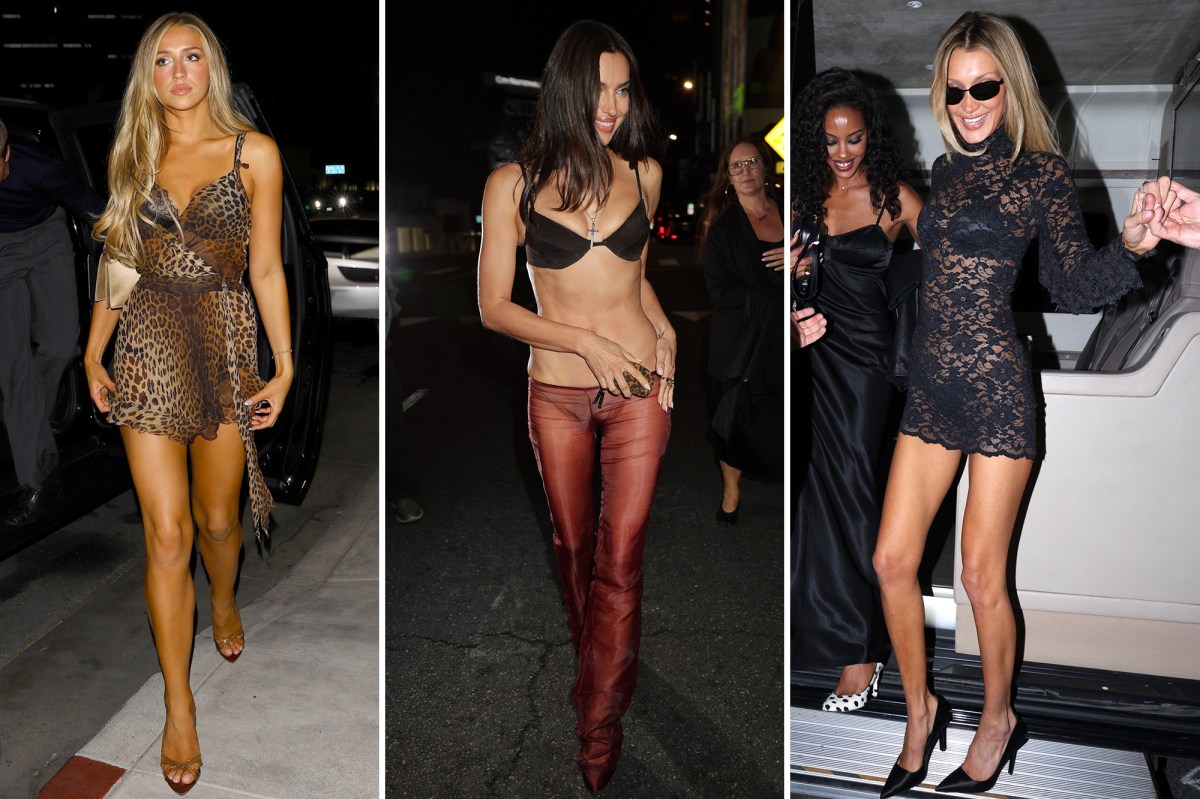
Bella Hadid, Tate McRae, Irina Shayk, Alix Earle, Behati Prinsloo and a full supporting cast took the runway energy to The Bird Streets Club.
The Victoria’s Secret Fashion Show may have ended when the last model left the runway, but Los Angeles was clearly not ready to turn the lights on. After the 2026 spectacle, the angels and their extended celebrity orbit relocated to The Bird Streets Club in West Hollywood, where the guest list became less fashion week seating chart and more “who did everyone text after the show?”
Bella Hadid was there. So were Irina Shayk, Behati Prinsloo, Vittoria Ceretti, Ashley Graham, Cindy Bruna and Alex Consani. Tate McRae, who performed during the lingerie spectacular, joined the after-hours migration alongside Alix Earle, Livvy Dunne, Amelia Gray Hamlin, Delilah Belle Hamlin, Landon Barker, Tyga, Diplo and plenty more familiar faces.
In other words: one runway, several generations of celebrity, a handful of internet-native stars and enough model-off-duty energy to make a normal Los Angeles night feel aggressively underdressed.
The runway was only the opening act
There is a particular kind of celebrity event where the party afterward becomes more culturally legible than the main event. The runway gives everyone a shared backdrop: lights, music, lingerie, choreographed entrances and the official gloss of a major fashion production. The after-party is where the categories blur.
That is exactly what happened here. Models who had just walked the show ended up in the same late-night frame as singers, creators, athletes, DJs and reality-adjacent social stars. McRae moved from performer to party guest. Earle and Quenlin Blackwell represented the creator economy’s front row-to-after-hours pipeline. Livvy Dunne brought sports-world visibility into the mix. Tyga, Diplo and Landon Barker supplied the music-industry connective tissue.
It is not simply a guest list. It is a map of how celebrity works now: runway names, pop names, social names and people famous for being adjacent to other famous people all sharing the same flashbulbs. The old velvet rope has become less of a barrier than a networking diagram.
And because the event took place at The Bird Streets Club, the setting did some of the storytelling before anyone even appeared in a photograph. West Hollywood after midnight is practically its own genre. Add a Victoria’s Secret production, a room full of models and several people whose outfits are likely to be screenshotted before breakfast, and the whole thing starts to feel less like an after-party than a live update from the celebrity ecosystem.
Bella, Irina and Behati brought the headline names
Bella Hadid and Irina Shayk are the sort of names that make a fashion gallery feel instantly major. Their presence gives the night its supermodel voltage, while Behati Prinsloo adds another layer of Victoria’s Secret history to the room. Ashley Graham, Cindy Bruna and Vittoria Ceretti keep the fashion credentials firmly in place, and Alex Consani brings the kind of contemporary star power that makes a traditional model lineup feel newly plugged into the internet.
The appeal is not just that these women are recognizable. It is that each one arrives with a different version of fashion celebrity attached. Hadid is a perennial headline generator. Shayk carries old-school supermodel glamour without looking trapped in it. Prinsloo is directly connected to the brand’s legacy. Graham has long occupied a broader mainstream fashion lane. Consani belongs to a faster, more online era, where personality is part of the runway package.
Put them in the same after-party gallery and the result is a useful reminder that “model off duty” is no longer one uniform look or one narrow kind of fame. It can mean polished, chaotic, glamorous, playful, highly styled or apparently effortless, sometimes within the same camera flash.
The gallery’s structure makes that mix especially fun. It moves from Bella to McRae to Shayk to Ceretti, then through Earle, Graham, Consani and Blackwell before circling back to Prinsloo and a long list of recognizable partygoers. The sequencing feels like a scroll through several different corners of the culture, all landing at the same door.
Then came the internet’s favorite kind of crossover
Alix Earle and Livvy Dunne appearing in the same post-show orbit is the kind of detail that instantly changes the temperature of a celebrity roundup. Both have built enormous visibility through social platforms, but their public lanes are distinct enough that seeing them in a fashion-night setting feels like a crossover episode.
There is also Amelia Gray Hamlin and Nicolai Marciano, listed together in the gallery, plus Kailyn Shepherd and Jonathan “Foodgod” Cheban. The source does not turn either appearance into a romance storyline, and neither should we. Sometimes a shared frame is simply a shared frame. Still, in the modern celebrity industrial complex, even a pairing in a photo caption can make people pause, zoom in and start constructing a group-chat theory.
That is the peculiar pressure of these events: everyone is dressed for attention, and every entrance can be interpreted as a social signal. A night out becomes a soft launch only if the people watching decide it is one. A familiar pairing becomes a talking point because the audience already knows how to read the room—or believes it does.
The lineup also includes Anastasia Karanikolaou, Olivia Ponton, Sabrina Zada, Daiane Sodre, Abby Chamberlain, Trinity Tatum and Kailyn Shepherd, names that keep the party from feeling like a museum of established fame. The atmosphere is not purely legacy fashion, and it is not purely influencer culture. It is the messy middle where both now live.
The real dress code was being seen
Every major fashion event eventually produces a best-dressed conversation, but an after-party gallery offers something more revealing: the social hierarchy of visibility. Who is placed near whom? Which names recur in the caption? Who gets photographed arriving, who gets photographed leaving and who appears as part of the night’s wider cast?
Here, the answer is almost comically expansive. There are angels, supermodels, pop performers, creators, athletes, DJs, actors’ children, musicians and nightlife fixtures. Tyga and Diplo appear alongside the fashion crowd. AE is included in the lineup. Foodgod is there. The party is not trying to preserve the clean boundaries of the runway; it is showing what happens once the show becomes a social event.
That is why these photographs tend to travel. They offer the fantasy of access without requiring anyone to understand the seating plan. You do not need to know who was on the guest list committee. You only need to recognize enough names to feel that something happened, and then notice a few pairings you were not expecting.
The 2026 Victoria’s Secret after-party had all the necessary ingredients: a famous fashion brand, a glamorous Los Angeles venue, models with serious runway history, a performer fresh offstage and a rotating cast of people who dominate different corners of the public imagination. The outfits are the visible story, but the guest list is the real plot.
By the time the party finally wound down in the wee hours, the runway had done its job. It delivered the spectacle. The after-party delivered the crossover. And somewhere between Bella Hadid, Tate McRae, Alix Earle, Behati Prinsloo and Tyga, Victoria’s Secret accidentally staged a very stylish family reunion for the entire celebrity internet.
Taylor Swift Was Watching the Game. One Fan Forgot the Assignment.
A woman kept filming Swift from below her VIP suite at Arrowhead Stadium — even after the pop star told her to stop. The internet, for once, found the boundary.
There are two kinds of people at a football game: the ones watching the football, and the ones watching the famous people watching the football. On Sunday at Arrowhead Stadium, one fan made a very public commitment to the second category — and Taylor Swift was not feeling generous.
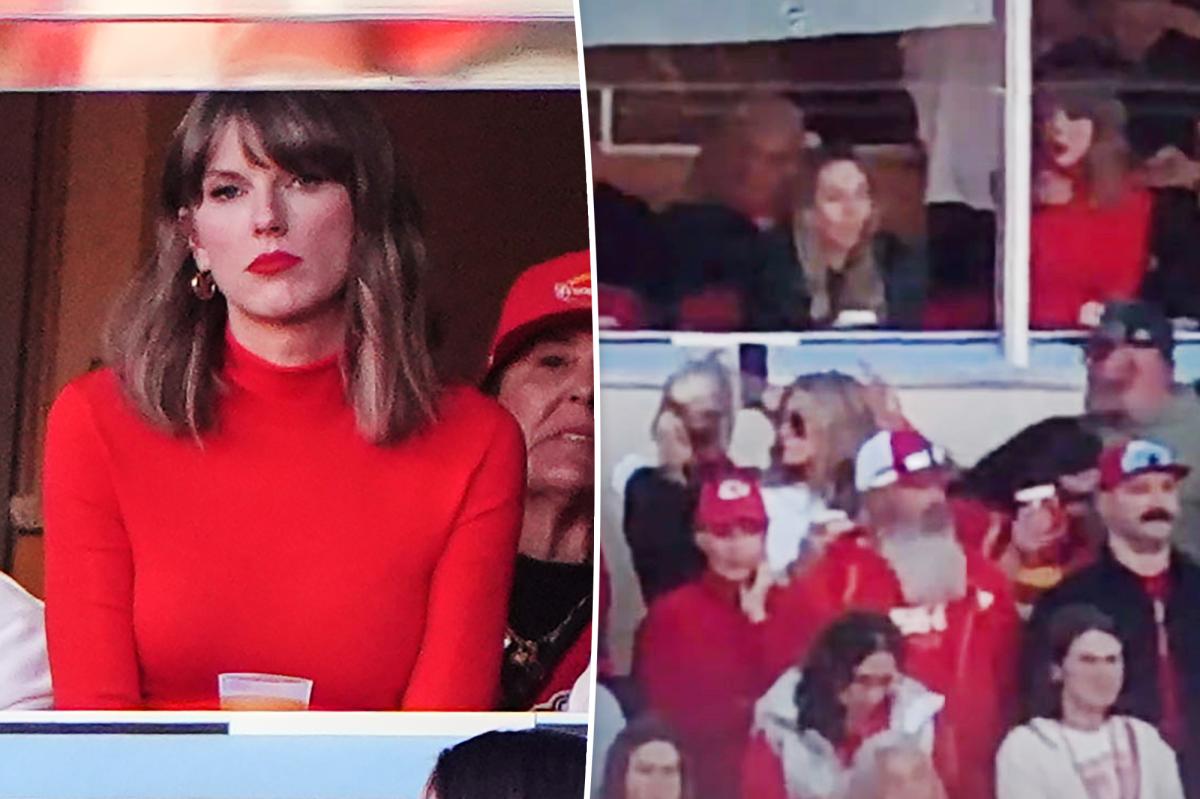
Swift was in a VIP suite in Kansas City, focused on the Chiefs’ game against the Los Angeles Chargers and supporting her husband, Travis Kelce, when a woman standing below the suite appeared to point her phone directly at the singer. Not a quick, discreet snap from the general direction of the box. The kind of filming that makes the subject look up, notice, and communicate a very clear: please stop.
According to video filmed by a football fan and shared on TikTok, the woman continued recording even after Swift gestured for her to knock it off. Swift’s security then told the fan to stop, while another person seated in the row below approached and signaled for her to return to her seat. She eventually did, leaving behind the sort of awkward stadium theater that makes an ordinary game suddenly feel like a live episode of Entitled Behavior: The Home Game.
The VIP suite is not a petting zoo
The clip landed in a particularly rich corner of the internet: the place where people can debate Taylor Swift’s outfits, friendships, football allegiance and facial expressions frame by frame, but still understand that she is technically a person trying to watch a game.
That distinction mattered here. Swift was not photographed arriving, posing for cameras or waving to the crowd. She was already settled into the suite, watching the action with Caitlin Clark and Este Haim, when the fan appeared to direct her phone into the private area. The moment was brief, but the boundary was unmistakable. Swift noticed. She objected. Security backed her up.
Fans in the comments largely sided with the singer, criticizing the woman for continuing to film after being asked to stop. “I do not understand how people think this is OK even after she told you to stop you continue on until her bodyguard has to tell you to go,” one commenter wrote. Another called the interaction “insane” and said the fan should have left Swift alone to watch the game.
It is an unusually clean internet consensus: no sprawling celebrity feud, no cryptic caption, no publicist chess. Just a famous woman indicating that a stranger should stop filming her, and the public responding, yes, obviously.
Taylor’s football era keeps producing side plots
Swift’s presence at Chiefs games has become its own recurring broadcast. Since her relationship with Kelce moved from private speculation to very public romance, every appearance in the suite has generated a secondary game built from outfit analysis, celebrity cameos and reaction shots.
Sunday’s guest list was especially buzzy. Swift attended with Clark, the basketball star, and Haim musician Este Haim, forming a trio that looked less like a conventional sports box and more like the most photographed group project in America. Swift wore bright red in support of the Chiefs, while the women watched the game from the suite. The visual was already tailor-made for social media before the filming incident turned it into a tiny lesson in stadium etiquette.
That is the strange tax of being Taylor Swift in public: even a concentrated football face can become content. A red outfit becomes a headline. A friendship becomes a slideshow. A glance toward the field becomes a theory. The singer has spent years navigating that level of attention, but Sunday’s video showed the difference between being seen and being intruded upon.
There is also a particular absurdity to interrupting someone who has crossed the country to watch her husband play football. Swift had jetted to Kansas City after attending the 2026 Academy Museum Gala in Los Angeles on Saturday night, where she wore a pale blue Dior dress before changing into a dark blue Ralph Lauren gown to perform songs including “The Fate of Ophelia.” The next day, she was in team colors, in a suite, trying to watch the game. The itinerary was glamorous; the desired activity was extremely simple.
One night, two Taylor Swift outfits, zero patience for the camera
The contrast between the gala and the stadium was part of the appeal. On Saturday, Swift was in full awards-season spectacle: Dior, Ralph Lauren, stage lights and a room built for admiring famous people. On Sunday, she was in red, surrounded by friends, tracking the Chiefs and apparently expecting the basic privacy that comes with sitting inside a luxury box rather than on the field.
That does not mean she was invisible. Swift has become an unofficial character in the NFL’s television universe, and her appearances are routinely folded into the game-day experience. Cameras look for her. Fans look toward her. Broadcasters know the shot will travel. But the attention still has limits, especially when someone moves from watching the broadcast to becoming the broadcast.
The woman’s phone seemed to cross that line. Swift’s reaction was not dramatic enough to become a spectacle of its own — no shouting, no scene, no theatrical exit — which may be exactly why the clip resonated. She simply saw what was happening and asked for it to stop. Her security reinforced the request. A fellow spectator helped close the loop.
In a culture that often treats celebrity access as a reward for persistence, the moment felt almost radical in its plainness. A person can be famous, photographed constantly and sitting in a public stadium, and still say no to one particular camera. A VIP suite can be visible without being open for business.
Swift, meanwhile, got back to the game. The Chiefs kept playing. Clark and Haim remained beside her. The fan retreated to her seat. And the internet did what it does best: turned a few seconds of stadium awkwardness into a full cultural referendum on whether anyone has ever heard the phrase “read the room.”
For once, the answer was gratifyingly clear. Watch the football. Leave the woman in the suite alone.
Selena Gomez Says Vaping Changed Her Voice — Then Posts the Prettiest Possible Quit-Nicotine Update
After months of fans noticing a shift in her sound, Gomez addressed her nicotine addiction in an unusually candid Instagram Story: “It’s just not worth it.”
Selena Gomez has spent years being watched for every tiny change: a different face shape, a different outfit, a different tone of voice, a different level of emotional availability to the internet. Now she is talking about one of those changes herself — and doing it with the kind of blunt, slightly chaotic honesty that makes a celebrity confession feel less like a statement and more like a voice note from a friend who has finally decided to tell you what has really been going on.
In a candid Instagram Story video shared Sunday, October 18, Gomez said her history of vaping nicotine has altered her voice. “I’m not going to be able to change my voice,” she said, before explaining, “I vaped nicotine a lot and just so everyone knows, that’s somewhat … vaped.” The phrasing was very Selena: conversational, self-aware and just awkward enough to sound like she was processing the confession in real time.
Then she made the point she clearly wanted people to hear. “Nicotine is so hard to quit and I think I just wanted to say, if you’re going through it or even if you’re trying to vape, it’s just not worth it,” Gomez said. “It’s so stupid and it’s changed my voice so if you guys don’t like listening to my voice, that’s totally understandable. I don’t mind, just don’t listen.”
The voice conversation had already been happening without her
Gomez did not introduce the subject out of nowhere. According to Us Weekly, fans had been commenting on apparent changes in her voice for months, turning a subtle vocal shift into yet another online inspection of a woman who has been famous since childhood.
During an Instagram Live session in December 2025, she acknowledged that audience members had flagged the difference. “There’s no excuse, I don’t really care,” she said at the time. “I think my point is that sometimes things happen. I get weird [or] my throat swells from the inside sometimes, that’s all.” She also said she appreciated viewers being direct with her.
That earlier explanation and this newer admission create a revealing timeline: Gomez was aware people were listening closely, but she was not initially offering a neat, single-cause answer. Now she has connected at least part of the change to her former nicotine use, while still speaking about the subject in her own loose, imperfect language rather than delivering a polished health lecture.
There is something distinctly modern about the whole exchange. A famous woman’s voice changes, the audience notices, the audience speculates, and eventually the famous woman appears on Instagram to explain that yes, she noticed too — and yes, there is a reason. The celebrity-to-fan pipeline has become so immediate that even a vocal texture can become a public subplot.
Gomez’s vape has been part of the background for years
The disclosure also lands because vaping has occasionally appeared in Gomez’s public orbit before. Us Weekly notes that she has been photographed with a vape several times over the years, including while walking in Rome in August 2018. The device was also reportedly visible as she prepared for her wedding to Benny Blanco and during an outing with Taylor Swift last year.
That detail makes the confession feel less like a sudden rebrand and more like a decision to name something that had already been hiding in plain sight. The vape was not a secret character in the Selena Gomez cinematic universe; it was more like background styling, one of those objects fans notice but rarely expect a star to discuss directly.
Her language was not glamorous. She called quitting hard. She called the habit stupid. She said it “sucks.” There was no aspirational wellness packaging, no perfectly lit product-free kitchen, no promise that she had transformed into a new person overnight. Instead, Gomez said she had stopped and hoped she could keep it up.
“It’s really hard, but I know if you are going through something, you can get through it too,” she said.
The follow-up selfie was pure Selena damage control — in the best way
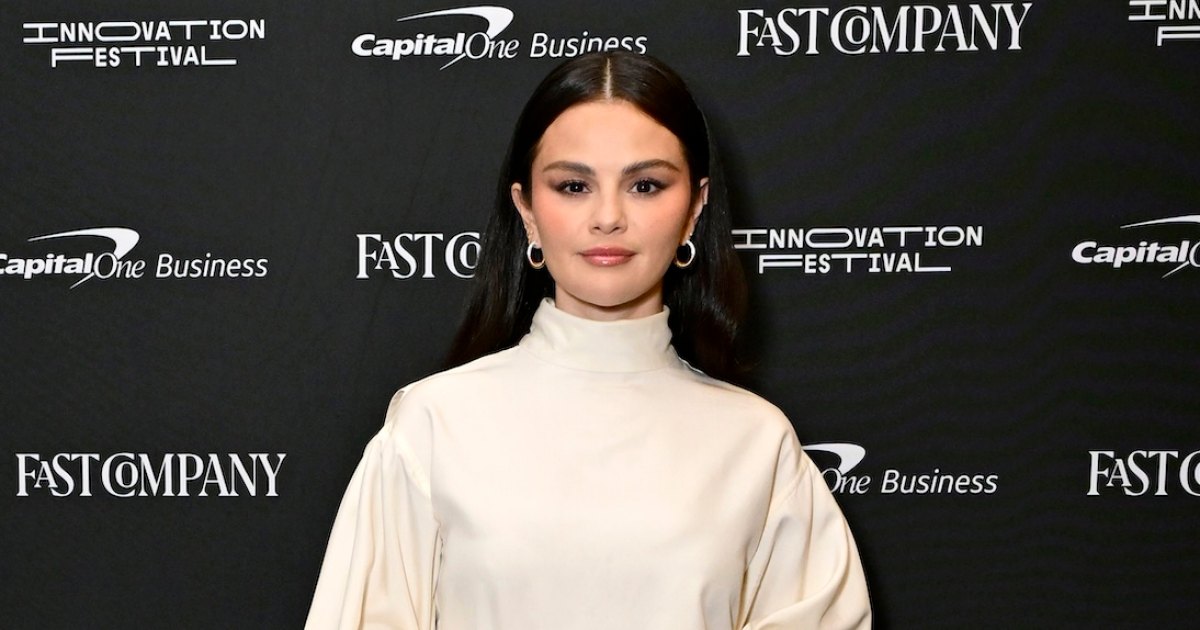
After the nicotine admission, Gomez followed the video with a cute mirror selfie in tortoiseshell spectacles. Additional Stories included a fresh-faced outdoor selfie and fan videos praising Rare Beauty. In other words: emotional disclosure, pretty glasses, glowing skin, beauty-brand love. The full Gomez social-media rhythm.
It was not exactly a carefully controlled “new era” rollout. It was more like she said something vulnerable, then remembered the internet was watching and returned to the familiar comforts of selfies, makeup and a little visual reassurance. Business as usual, but with a slightly different soundtrack.
That combination is part of why Gomez remains so compelling online. She can discuss a habit that has affected her voice, acknowledge the discomfort of being scrutinized and then post a charming selfie without pretending the two things are incompatible. The message is not “I have everything figured out.” It is closer to: I am dealing with this, I am trying to stop, and I am still going to put on glasses and take a photo.
It also fits with the way Gomez has spoken publicly about getting older and watching her appearance change. In a September 16 interview with People, she said aging does not frighten her. “Getting older has been so fun,” she said. “I’m not scared at all. I love getting older. Things are going to change and things are going to sag, but you’re alive. Age is just a number in many ways.”
That philosophy is doing a lot of work here. Gomez is not presenting her altered voice as a tragedy or asking anyone to pretend they cannot hear a difference. She is naming the change, admitting that nicotine played a role in her experience and encouraging people who are trying to quit. For someone whose public image has often been shaped by other people’s theories about her body, face, health and choices, there is power in simply saying: yes, something changed; here is what I am doing now.
A very Selena kind of public reset
Gomez’s career has always existed at the intersection of polished pop stardom and startling candor. She has spoken openly about mental-health treatment, anxiety, panic attacks and depression after being diagnosed with lupus. She has also pushed back when online commentary about her appearance becomes invasive, including responding to cosmetic-surgery speculation with a request to be left alone.
So this latest confession sits inside a much larger pattern. Gomez will give the audience a real glimpse, but she will not hand over the entire house. She will explain the voice, but not perform shame. She will say quitting is difficult, but not turn the struggle into a melodramatic identity crisis.
And then she will post a selfie in excellent glasses.
The internet may continue listening for changes in her voice. That is what happens when millions of people feel familiar with a celebrity they have watched grow up. But Gomez has now made her own contribution to the conversation: nicotine was hard to quit, she believes it affected her voice, and she is trying to stay away from it. The rest — the spectacles, the Rare Beauty praise, the fresh-faced follow-up — was simply the social-media version of walking back into the room after saying something serious and asking whether anyone wants to see a cute picture.