
Amanda Seyfried’s Post-Split Rule Is Extremely Un-Hollywood: Keep the Ex, Kids and Entire Life in the Same Neighborhood
After nine years of marriage, Seyfried and Thomas Sadoski are building a co-parenting arrangement around proximity, routine and as little family chaos as possible.
Hollywood loves a dramatic breakup. There is the statement with the phrase “irreconcilable differences,” the suspiciously timed solo red carpet, the newly liberated wardrobe, the vacation photo dump that suddenly feels like a soft launch for a new era. Amanda Seyfried and Thomas Sadoski, however, appear to be choosing the least glamorous option available: staying close enough to make family life work.
In a new interview with WWD, Seyfried offered her first real glimpse at how she and Sadoski are handling life after their marriage. Her strategy is practical, deeply unshowy and, frankly, almost radical for two working actors: take the jobs that allow the family to remain geographically close.
“If it’s shooting in Spain, we’re not going to do it because right now, the kids are a specific age, and my ex-husband’s working,” Seyfried said. The point, she explained, is for everyone to be “within the neighborhood of each other” so their children can feel “safe and cozy.”
The anti-Hollywood custody flex
That sentence contains none of the usual celebrity-divorce theater. No thinly veiled jab. No “I’m focusing on myself” monologue. No dramatic reinvention packaged as empowerment content. Just a mother saying that a project in Spain is not worth turning two children’s lives into an international logistics operation.
It is also a revealing look at the choices that come with being the more visibly busy parent. Seyfried, 40, has continued working across film, television and theater, while Sadoski, 50, has his own career. According to Page Six, Seyfried said her local-project rule has “definitely, definitely filter[ed] out a lot” of possible work. That is the quiet price of making proximity the family priority: some jobs simply become impossible, no matter how shiny the offer.
Her language is striking because it frames co-parenting not as a temporary crisis to survive, but as a permanent structure to design. The goal is not to make the breakup invisible. It is to keep the children’s daily world recognizable while the adults’ relationship changes shape.
A very civil breakup, with a little Hollywood sadness around the edges
Seyfried and Sadoski announced their split in September after nine years together. In a joint statement to People, they said they had “been separated for a while” and that the decision had proved right for “us and our family unit.” They added, “We’ve got each other forever — and it’s GOOD.” The capital letters did some emotional heavy lifting, but the broader message was clear: this was being presented as a restructuring, not a public war.
The couple began dating in early 2016, married in March 2017 and welcomed daughter Nina shortly afterward. Their son, Thomas, was born in September 2020. That timeline matters. Their marriage unfolded alongside the particular pressure-cooker years of young children, demanding careers and a family life built under public observation. A breakup after that much shared history is not just a romance ending; it is a household being redesigned in real time.
A source quoted by the Daily Mail said the pair’s “dynamic shifted” as Sadoski worked less and Seyfried became the family’s “worker bee.” The same report described him as having become “isolated” at home, while emphasizing that the exes remained friends and had kept things civil for the children. Those details are not Seyfried’s own account, but they help explain why her new comments land less like a celebrity confession and more like a carefully chosen boundary around what she is willing to discuss.
She did not elaborate on the divorce in the WWD conversation. That restraint may be the most interesting part. Seyfried is giving the public the architecture of the arrangement, not the private autopsy of the marriage.
“Safe and cozy” is the new power phrase
There is something almost aggressively wholesome about Seyfried’s wording. “Safe and cozy” sounds less like a celebrity custody strategy than the slogan for a very tasteful children’s bookstore. But it captures what many famous families spend years trying to preserve: familiar streets, nearby parents, predictable handoffs and a sense that nobody has disappeared just because the adults stopped being married.
It also cuts against the fantasy that successful actors should be able to do everything, everywhere, all at once. Seyfried has the kind of career that could easily pull her across continents. She is an Oscar-nominated performer, a Golden Globe winner and an Emmy winner, with the professional freedom to chase high-profile work wherever it appears. Instead, she is saying the location of a job can be more important than the job itself.
That is not exactly a small sacrifice. In entertainment, momentum is treated like oxygen. An actor is expected to follow the role, the director, the prestige project, the awards-season calendar. Seyfried’s equation is different: if accepting the role means uprooting the family system or making co-parenting impossible, the role may not make the cut.
She has also been candid about entering an “interesting” stage of life. Speaking with the Hollywood Reporter recently, she said, “I think everything that’s happening is meant to happen [and] everything, everyone that’s in your life is meant to be in your life.” It is a polished line, but next to her WWD comments, it reads less like vague spiritual acceptance and more like a woman trying to make meaning out of a major transition without turning it into content.
The breakup story nobody can easily make messy
That may be why this split has a different texture from the usual celebrity uncoupling. There is no obvious villain in the public version. There is no social-media subtweet war. There is no suspicious vacation boyfriend waiting in the wings. There are two adults who fell in love quickly, built a family and now appear determined to remain in one another’s orbit without pretending the marriage is still intact.
Fans may always want the messier version. Celebrity culture trains us to look for the hidden betrayal, the coded caption, the person who “won” the breakup. Seyfried is offering something much less bingeable and considerably more mature: a schedule, a radius and an agreement that the children should not have to feel the full blast of an adult decision.
It is not a glamorous answer. It is better than one. In a business built on leaving town for the next big thing, Amanda Seyfried is making a surprisingly bold declaration: sometimes the most important role is the one that keeps everybody close.
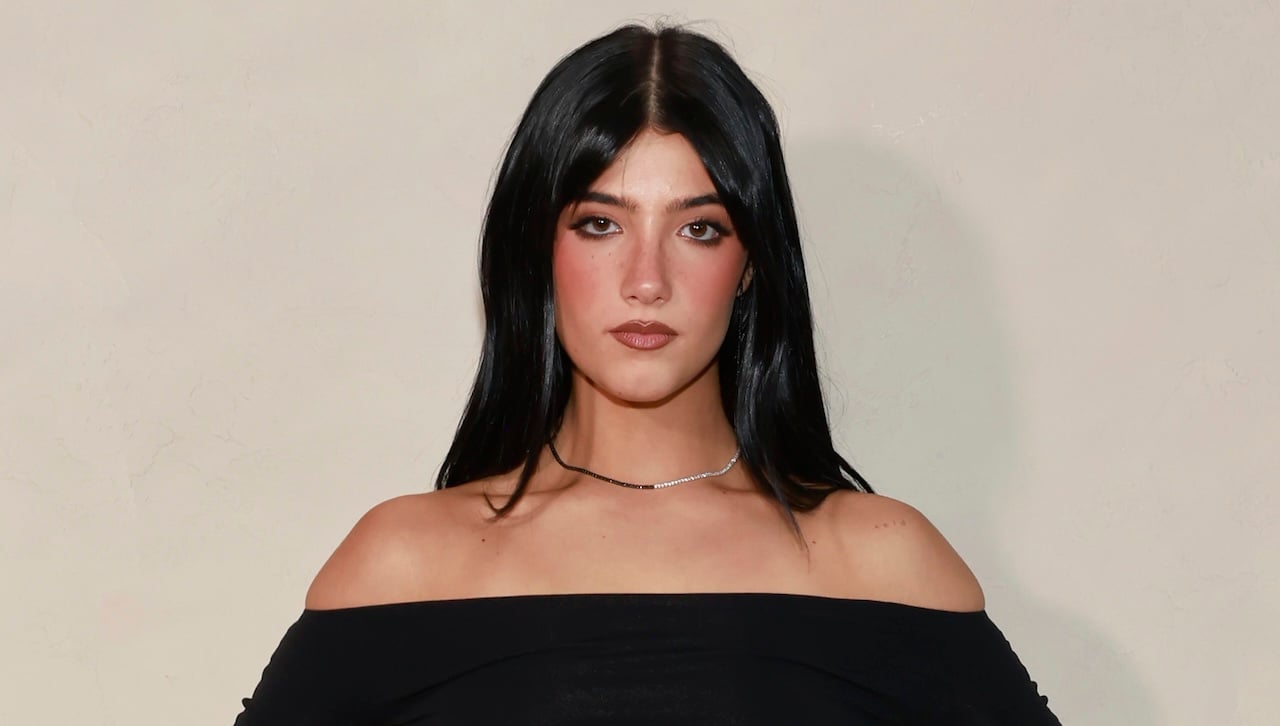
Charli D’Amelio Just Fired Her Family From the Family Business
The TikTok superstar says the money-stealing claims are untrue—but she is still taking control of her finances, career and life after a year of conspicuous distance from the D’Amelio clan.
Charli D’Amelio has spent most of her career being presented as the smiling center of a family enterprise: one sister, one famous TikTok account, a reality show, brand deals, public appearances and parents who helped turn teenage internet fame into a full-scale business. Now the 22-year-old is making a very different kind of family announcement. She is out.
In a revealing new interview with The Hollywood Reporter, D’Amelio says she has separated herself professionally and financially from her parents, Marc and Heidi D’Amelio, and is now overseeing her own money and career decisions. The move arrives after months of whispers about a family rift, unverified allegations from DeuxMoi involving millions of dollars and an increasingly noticeable absence of the D’Amelios from one another’s public orbit.
It is the kind of celebrity reset that sounds tidy in a press release but feels much messier in real life: the former family brand is still recognizable, yet the person at its center is finally insisting on being treated like the boss.
She says the money allegations are not true. The distance is real.
D’Amelio directly rejected the most explosive claim in the saga: that her parents mishandled or stole money connected to her career. “No, they’re not true,” she told THR when asked whether her parents had mishandled her money. She added, “I wouldn’t say that they stole my money.”
That is a clear denial, but it is not a glossy reunion moment. The interview describes D’Amelio pausing before explaining that she and her family had done many things together over the years. She also says she did not really begin learning about or participating in decisions involving her finances until she was around 21—despite having started working full-time at 15.
That gap is the uncomfortable heart of the story. The allegations may be untrue, but D’Amelio is still saying she wanted a better understanding of what years of work had produced. In other words: no, she says, her parents did not steal her money. But yes, she is now taking the keys, changing the passwords and reading the paperwork herself.
Her father, Marc, previously denied the allegations in June and claimed that his daughter was being manipulated by people around her. According to THR, he now communicates with Charli through her lawyer. Neither development exactly screams family group chat.
The D’Amelio family brand has entered its separate-ways era
For years, the D’Amelios were one of the internet’s most efficient celebrity units. Charli became a TikTok phenomenon; Dixie built her own music and television profile; Marc and Heidi became familiar faces in their daughters’ world; and the family’s Hulu reality series turned their private adjustment to fame into shared entertainment.
That arrangement now appears to be over, at least professionally. D’Amelio says she has separated herself from the family business, moved into her own California home earlier this year and is handling her own finances. She has also been without a manager since parting ways with longtime manager Greg Goodfried in December 2025.
“I like it. I’m in charge. Now I say what I’m doing and not doing,” she told THR. It is a particularly pointed sentence from someone whose public image was built around being discovered, directed and packaged while still a teenager. The girl who once seemed to be everywhere because the machine said so is now saying she gets to decide where she goes.
The social-media details have made the split impossible for fans to ignore. Charli and her parents have unfollowed one another on Instagram, and she has reportedly not been seen publicly with them or her sister for about a year. In celebrity family language, an unfollow is rarely just an unfollow; it is a tiny blue-and-white flare fired over the Hollywood Hills.
Her relationship with Dixie is complicated—but not erased
The sister question was always going to be the emotional land mine. Charli and Dixie came up together, became famous together and were marketed as a sibling double act even as their careers moved in different directions. A total break would have been cleaner, but D’Amelio did not describe one.
Asked about Dixie, Charli said, “I mean, that’s my sister. I’m going to love her till the day I die. But there are times where you’re figuring stuff out.”
It is a remarkably restrained answer for a family story that has been running on implication. She did not offer a dramatic accusation or a perfectly reconciled ending. She offered the most believable description of sibling tension: love remains, closeness changes, and sometimes a family has to stop pretending that shared history automatically means shared business.
That distinction matters. D’Amelio is not announcing that she has become a lone wolf with no ties to her past. She is separating affection from access, and family from management. In the influencer era, where a last name can become a company before anyone has had time to grow up, that may be the most radical boundary of all.
Charli is rebuilding after the fame machine finally caught up with her
The interview also puts the family upheaval in the larger context of D’Amelio’s mental health and professional exhaustion. After finishing her run in the Broadway musical & Juliet in September 2025, she says she became severely depressed, rarely left her apartment and did not see another person for months. She stepped away from social media and began reconsidering what she wanted her life and career to look like.
D’Amelio says she lived with anxiety from childhood but went much of her life without mental health treatment. She was diagnosed with ADHD at 18 and later received diagnoses of OCD and trichotillomania, a hair-pulling disorder. She now sees a therapist and credits Broadway with helping her rediscover a love of performing.
That makes her current independence feel less like a rebrand and more like a recovery project. The central question is no longer simply whether Charli D’Amelio can remain famous. She has already answered that. The question is whether she can build a life that does not feel like an extension of the first viral thing that happened to her.
She says a major, personally meaningful project is coming in November and describes this period as a “second chance” to do things her way. The timing is neat, almost suspiciously neat: after a year of family silence, professional separation and emotional fallout, Charli is stepping forward with a new chapter that does not appear to require a family logo.
The D’Amelio empire made Charli famous. Now she is trying to become the person who owns the next version of herself. And if that means the family group project is officially canceled, well—welcome to the solo era.

Holland Taylor and Sarah Paulson Have the Most Hollywood Living Arrangement Imaginable
Nearly 12 years in, the couple shares an apartment in New York, two houses in Los Angeles and a schedule that apparently treats geography as a third wheel.
Holland Taylor and Sarah Paulson are not breaking up. They are not secretly estranged. They are not staging some elaborate celebrity version of “we need space.” They simply do not live together in the conventional, one-front-door, whose-turn-is-it-to-buy-milk sense of the word.
And honestly? It may be the most convincing arrangement in Hollywood.
Taylor recently explained on The Drew Barrymore Show that she and Paulson, who have been dating for nearly 12 years, maintain separate homes in Los Angeles while sharing an apartment in New York. Their setup is less “domestic bliss under one roof” and more “two glamorous professionals coordinating a very affectionate interstate residency.”
“We do as much time as we possibly can because work takes us apart constantly,” Taylor said, describing a relationship shaped by demanding careers and even more demanding geography. “We’re together as much as geography and our jobs let us.”
New York is the couple’s shared-home era
The arrangement is not quite as separate as the headline makes it sound. Taylor has an apartment in New York, and Paulson stays there when she is in the city. “We stay together here when we’re both here,” Taylor explained, which is both deeply romantic and exactly the kind of sentence that makes Manhattan real estate feel like a supporting character.
Los Angeles, however, is where things get delightfully complicated. Taylor has her own house, while Paulson has a newer one that she has not yet moved into—almost a year after acquiring it. In the meantime, Paulson has been staying at Taylor’s Los Angeles home instead of her own.
So, to recap without making this feel like a real-estate spreadsheet: New York gives them one shared apartment. Los Angeles gives them two separate houses, one of which is apparently still waiting for its leading lady to make an entrance. Paulson is currently staying at Taylor’s place in L.A., meaning the couple has technically preserved separate homes while also, for the moment, living together in one of them.
It is an impressively elegant loophole. Cohabitation, but with options. Commitment, but nobody has to surrender a favorite bathroom. Love, with an escape hatch for when one person’s work schedule requires a plane and the other person’s requires a different plane.
The romance started long before the shared keys
Taylor and Paulson first met at a party in 2005, years before their relationship became romantic. That detail gives their current arrangement a little more texture: this was not an instant celebrity whirlwind that demanded matching addresses and a joint kitchen renovation. Their connection had time to exist, change shape and eventually become a long-running relationship that neither seems interested in packaging according to anyone else’s domestic rulebook.
They have also managed to become one of those couples whose public image is defined less by constant couple-content than by the occasional glimpse of unmistakable devotion. Their rare date night at an Oscars party made its way into the celebrity conversation, as did Taylor’s appearance at the Hollywood Walk of Fame ceremony honoring Paulson, where she offered a public tribute to her partner.
Now Taylor’s latest comments provide an unusually candid look at the machinery behind the romance. Not the red-carpet version, where everyone is perfectly styled and standing close enough for photographers to read the relationship in their posture. The logistical version: Who stays where? Which house is actually being used? How do two actors maintain a life together when work keeps pulling them in different directions?
The answer, apparently, is to keep multiple homes in play and refuse to confuse physical proximity with emotional certainty.
Separate homes, very joined-up feelings
Taylor was especially generous when discussing Paulson’s devotion to the people she loves. She called her partner “a really amazing friend” and praised the time Paulson spends on the people who matter to her. Taylor described Paulson as someone who gives herself fully and has “a number of seriously important, devoted friends.”
That may be the real headline hiding inside the housing arrangement. Paulson’s life is not being presented as a perfectly sealed couple bubble. Taylor’s description leaves room for friendships, work, separate routines and the kind of emotional network that makes a relationship feel sturdy rather than claustrophobic.
There is a particular kind of celebrity romance fantasy built around total merger: the matching homes, the shared closets, the airport photos, the implication that love means doing absolutely everything together. Taylor and Paulson offer a more interesting fantasy. They are together because they choose to be, not because a lease requires it.
It also helps that both women understand the strange demands of a career that can turn a city into a temporary backdrop. Taylor, known for The Practice and Romancing the Stone, and Paulson, a star of American Horror Story and Bird Box, have spent years moving through the professional ecosystem of film, television, theater and awards-season appearances. Their relationship has had to survive calendars that are not designed for ordinary domesticity.
Instead of pretending that the distance does not exist, they appear to have built around it. When they are in New York, they share Taylor’s apartment. When they are in Los Angeles, Paulson can stay at Taylor’s house—even while her own house waits patiently for her move-in day. The system is imperfect, slightly chaotic and probably dependent on a truly heroic amount of calendar management. It is also very clearly theirs.
In a culture that treats separate bedrooms as a crisis and separate residences as a relationship diagnosis, Taylor and Paulson are making a surprisingly persuasive case for the glamour of not overcorrecting. Nearly 12 years in, the couple is still together as much as “geography and their jobs” allow—and apparently has enough homes to make the whole thing work.