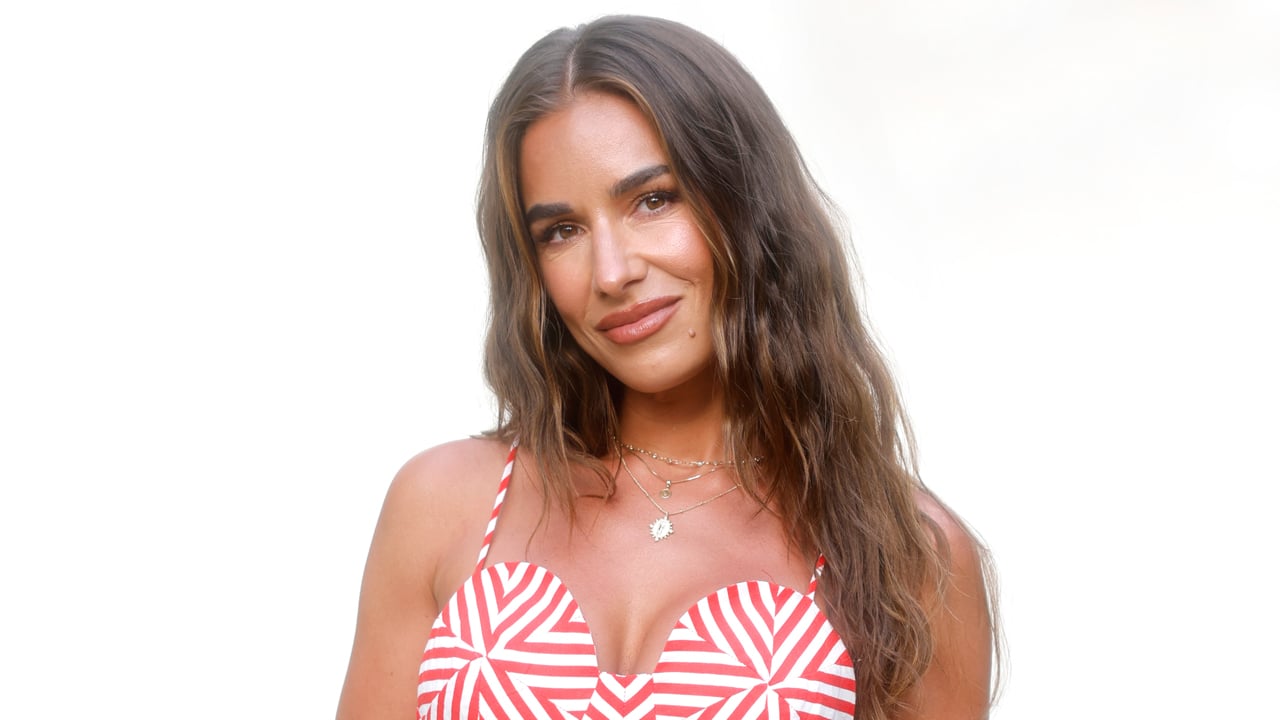
Jessie James Decker Just Got the Nashville Housewives Bait — and She Didn’t Exactly Slam the Door
A cookbook plug, an Andy Cohen tease and one very careful answer have suddenly turned Jessie James Decker into the woman Nashville is casting in its imagination.
Andy Cohen knows exactly what he is doing with a compliment. Give him a glossy cookbook cover, a country star with reality-TV history and a city that already comes with rhinestones, rivalries and enough polished family drama to fill a Bravo dinner party, and suddenly everyone is asking the same question: is Jessie James Decker about to become a Housewife?
That was the aftershock of Decker’s recent appearance on Watch What Happens Live, where she stopped by as the bartender while promoting her new cookbook, The Secret Sauce. Cohen praised the cover and joked that it looked like “a potential audition for The Real Housewives of Nashville.” It was a tease, not a casting announcement. But in Bravo-world, a joke from Andy can travel with the velocity of a production memo.
Decker told Us Weekly that friends have been asking whether she is doing Real Housewives of Nashville. The question has now escaped the studio and entered the more dangerous realm of group-chat speculation: the place where a single wink becomes a three-season arc and a cookbook cover becomes a soft launch.
The cover was giving more than cookbook
Decker is not a random celebrity wandering into the Bravo universe. She already understands the basic mechanics of letting cameras into a carefully managed life. She starred with her husband, Eric Decker, in the E! reality series Eric & Jessie: Game On, which ran from 2013 to 2014, and later competed on Dancing with the Stars.
That history matters because Decker has already done the part many reality newcomers find hardest: turning a recognizable public persona into an ongoing television character without seeming like she is trying too hard. She has the country-music career, the family brand, the lifestyle polish and the kind of friendly-but-specific celebrity identity that makes a Bravo audience wonder what happens when the cameras stop being polite.
Then came the WWHL appearance. A bartender slot on Cohen’s show is not a contract, but it is a particularly efficient way to place a celebrity in the Bravo atmosphere. Decker was there to sell a cookbook; Cohen supplied the Housewives fantasy. The result was a tiny piece of television that immediately made the hypothetical feel oddly legible.
She says family privacy comes first — with one Housewives-sized asterisk
Decker’s first answer was cautious in a way that sounded less like a hard no than a woman who knows exactly what reality TV can do to a family.
She said she is grateful for her previous show and credited it with giving her major opportunities. But she also said she loves the “little bubble” she has with her family and wants to keep the privacy of her children and family “sacred.” Her concern was not that reality television is inherently abnormal; it was that it puts a magnifying glass over ordinary life.
That is a familiar tension for celebrities who built their careers by sharing just enough. Decker has already lived through the era when relationship, home and family footage were part of the product. Now, according to her own comments, the boundaries are more deliberate. She wants to give what she wants to give, on her own terms.
And then came the line that kept the fantasy alive.
Decker pointed out that Real Housewives can be different because the focus is on the Housewives themselves. The cameras do not necessarily have to follow them into every corner of their homes or place their children at the center of the story. “You never really know what can happen out there,” she said, adding that the format does not automatically mean cameras would be in her house with her kids.
That is not a yes. It is, however, a much more interesting answer than a clean rejection. In the language of celebrity interviews, “I’ll say that” is the sound of a door being left open precisely wide enough for Andy Cohen to walk through.
Nashville already has the ingredients for a Bravo fever dream
A Nashville Housewives series has been discussed before, according to the report, but there is currently no known franchise expansion in the works. That means Decker is not announcing a show, joining a cast or confirming that Bravo has begun assembling a Southern social battlefield.
Still, the city makes obvious reality-TV sense. Nashville offers country royalty, music-industry ambition, designer boots, old friendships, new money and the sort of professional overlap that can turn a charity lunch into a season-long grievance. It is a place where everyone seems to know someone who dated someone who owns a restaurant, writes a hit or has a suspiciously well-lit kitchen.
Decker would arrive with a built-in storyline that does not require producers to invent one: former reality star, country singer, cookbook author and mother deciding whether the exposure she once embraced still fits the life she has now. That is not just a casting bio. That is a season-one question.
It also gives her a distinct position within the Housewives ecosystem. She would not be entering as an unknown socialite hoping the show will explain her to viewers. She would be entering as someone who already knows the value of a personal brand and has publicly stated that she is protective of the parts of her life that do not belong to the audience.
The most Bravo thing about this is that nothing has happened yet
For now, the entire Nashville fantasy rests on an exchange from WWHL, a cookbook cover Cohen found Housewives-coded and Decker’s carefully calibrated response afterward. There is no announced Real Housewives of Nashville franchise in the report, and Decker has not said she is joining one.
But Bravo has always been unusually good at making possibility feel like programming. A bartender appearance becomes a temperature check. A joke becomes a casting conversation. A celebrity who says she wants privacy explains the one circumstance under which she might reconsider. Suddenly, the absence of a show is the least interesting part of the story.
Decker may simply be enjoying the attention around a fun TV moment while continuing to protect the family life she says is working beautifully. Or she may have discovered that there is a version of reality television she would actually consider: less family documentary, more adult social theater, with the spotlight on the women and the drama kept safely on the other side of the front door.
Either way, the Nashville Housewives rumor has acquired its ideal first scene: a cookbook, a bartender shift and Andy Cohen tossing a match into a room full of hairspray. Now everyone is waiting to see whether Jessie James Decker brings the lighter.
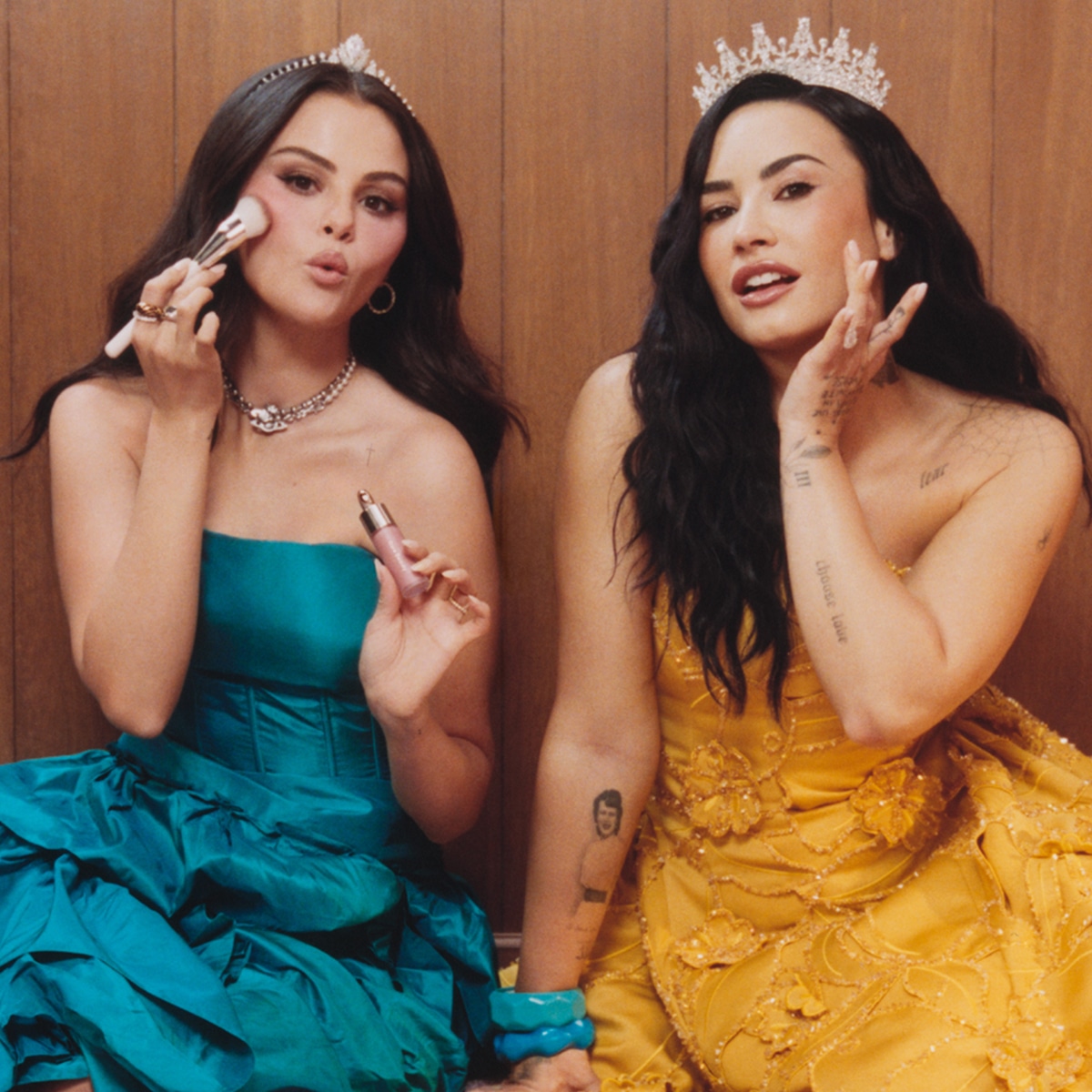
Selena Gomez and Demi Lovato Just Turned ‘Princess Protection Program’ Nostalgia Into a Beauty Event
The former Disney besties are back in matching movie-poster glamour for Rare Beauty’s ‘Still Making Each Other Blush’ campaign—and the internet is getting the reunion it has been waiting years for.
There are celebrity reunions, and then there are reunions that arrive carrying an entire childhood in a tiny makeup bag. Selena Gomez and Demi Lovato have just reunited for Rare Beauty, and the result is a glossy, extremely well-calculated blast of Disney-era nostalgia: Princess Rosalinda and Carter Mason are back, only now they are trading royal gowns for liquid blush.
For Rare Beauty’s new “Still Making Each Other Blush” campaign, Gomez enlisted Lovato to help curate the Delena: The Soft Pinch Liquid Blush Bundle. The set includes Gomez’s nude-mauve Hope shade, Lovato’s peachy-beige Virtue, and the Soft Pinch Blush Brush. In other words, it is a beauty launch with the emotional architecture of a sleepover, a reunion special and the scene in a teen movie where everyone finally admits they missed each other.
The campaign is also a direct wink to the 2009 Disney Channel movie Princess Protection Program, in which Gomez and Lovato played unlikely friends thrown together under royal circumstances. The new images recreate that particular brand of made-for-TV glamour: Lovato wears a gold-colored dress reminiscent of Princess Rosalinda, while Gomez appears in a turquoise gown echoing Carter’s movie-poster look. They are not merely selling blush. They are selling the memory of being 13, watching two former child stars discover that friendship is apparently the most powerful form of diplomatic immunity.
The Disney girls are back in their friendship era
Gomez and Lovato’s shared history goes even further back than their royal makeover movie. Lovato recently explained that the two first knew each other from Barney & Friends, before they both became Disney Channel fixtures. That early connection gave them a built-in sense of familiarity when they entered the Disney ecosystem—an important detail in the mythology of two young stars growing up inside the same very shiny machine.
They went on to become parallel fixtures of the late-2000s teen-pop universe. Gomez led Wizards of Waverly Place and built a pop career alongside it; Lovato starred in Camp Rock, fronted her own sitcom Sonny with a Chance and launched a music career defined by a huge voice and a candid public life. Their paths were close enough to invite constant comparison, but distinct enough to make their friendship feel like a small pocket of shared history rather than a permanent double act.
That is what makes this campaign land. The visual language is nostalgic, but the women in it are not being asked to pretend they are still Disney teenagers. They are adults with major careers, enormous audiences and brands of their own. Gomez is the founder of Rare Beauty, one of the most recognizable celebrity beauty lines in the market. Lovato arrives as a touring recording artist with a catalog and public identity far beyond her early Disney roles. The campaign lets them revisit the past without being trapped inside it.
A decade of distance, then a very public thaw
For years, Gomez and Lovato’s friendship was one of those celebrity bonds that existed mostly in the cultural rearview mirror. They had not crossed paths publicly since 2017, a gap long enough for fans to start treating every possible interaction like an archaeological discovery. Rumors of ups and downs circulated, though Lovato has said the distance was not rooted in hard feelings.
Then came April, when Gomez attended opening night of Lovato’s It’s Not That Deep Tour in Florida. Gomez shared her excitement afterward, praising the show and Lovato’s vocals, and later posted a backstage image of the pair hugging. Lovato reshared the moment with a simple thank-you. It was not a dramatic reconciliation staged beneath falling confetti. It was warmer, more believable and somehow more potent: two former besties seeing each other again, with one of them showing up to support the other at work.
That public reunion changed the temperature around the friendship. Suddenly, the years of silence looked less like a final chapter and more like an interval. Now Rare Beauty has given the reunion a full campaign, a movie reference and a product bundle that practically dares fans to place it beside their old Princess Protection Program DVDs.
Rare Beauty understands the assignment
Celebrity beauty launches can sometimes feel like famous people attaching their names to a color and asking the internet to clap. This one has a stronger hook because the product is doing several jobs at once. It is a functioning Rare Beauty bundle, a reunion image, a Disney callback and a small piece of pop-culture time travel.
The title—“Still Making Each Other Blush”—does most of the heavy lifting without trying too hard. It nods to the product, the friendship and the slightly embarrassing sweetness of seeing two people from your adolescence suddenly grown, glamorous and apparently on good enough terms to coordinate a campaign. The whole thing has the energy of a soft launch, except the relationship being relaunched is not romantic. It is the friendship itself.
There is also something smart about the pairing of Hope and Virtue. Gomez’s shade is the softer nude mauve; Lovato’s is the peachy beige. Together, they turn the campaign into a visual duet rather than a competition. The message is not “which former Disney star wore it better?” It is “these two have different shades, different careers and the same extremely marketable history.”
Fans can now buy the bundle, but the real product is the feeling attached to it: the rare pleasure of a public friendship that does not need a feud, a scandal or a dramatic explanation to become interesting again. Gomez and Lovato simply spent years apart, found their way back into the same frame and made the reunion look good in turquoise, gold and a perfectly blended flush.
Somewhere, Carter Mason and Princess Rosalinda are probably proud. Or at least they would absolutely approve of the brush.

Jennifer Lawrence Wasn’t About to Let a Nude Scene Become a Free-for-All
On Call Her Daddy, the Oscar winner revealed that unauthorized crew members were allowed on set during a nude scene — and explained why she made sure the people in charge understood exactly how unacceptable that was.
Jennifer Lawrence has never been especially interested in performing celebrity serenity for the cameras. Give her a podcast microphone, however, and the polished Hollywood surface starts peeling off almost immediately.
During the Oct. 28 episode of Call Her Daddy, Lawrence described an incident on a film set in which crew members who had not been approved to watch her nude scenes were allowed to be there anyway. She did not identify the project or name the people involved, but she made clear that the situation did not pass quietly.
“I came down hard on it,” Lawrence said.
That is the kind of sentence that lands differently coming from someone who has spent more than a decade being trained, by the machinery of fame, to be agreeable. Lawrence has played the chaotic best friend, the lethal spy, the glamorous disaster and the woman who can make a late-night couch feel like a group chat. But underneath the self-deprecating jokes is a very sharp understanding of who gets asked to absorb discomfort — and who gets to call it part of the job.
The problem wasn’t nudity. It was the audience nobody invited.
Film sets have rules around intimate scenes for a reason. The fewer people present, the more control an actor has over an inherently exposed moment. Lawrence’s complaint was not that she had agreed to perform nudity. It was that people who were not authorized to be there were permitted to see it anyway.
That distinction matters, especially in an industry where “professionalism” has historically been used as a one-way demand. Actors are expected to be calm, flexible and endlessly game, even when the conditions around them shift without warning. Lawrence pointed to the pressure built into that expectation: If an 18-year-old arrives on a set and notices unapproved people watching, does she object and risk being branded difficult? Or does she stay quiet while strangers see her naked?
“If she shows up and there’s people that aren’t approved, she’s going to be in a position like, do I say something and get a reputation for being difficult?” Lawrence said. “Or do I just let these people that I’m not comfortable seeing me naked see me naked?”
Her answer was not subtle. She said it was important to explain to the people in charge why the situation was “not OK,” framing the confrontation as a matter of principle rather than personal preference. The point, in Lawrence’s telling, was not simply to protect herself in one uncomfortable moment. It was to make sure the next young actor would not have to choose between a boundary and a reputation.
Jennifer Lawrence knows what it means to lose control of the image
The context around Lawrence’s comments is impossible to ignore. In 2014, nude photos of the actress were stolen from hacked iCloud accounts and circulated online, along with images of other public figures including Kate Upton. Lawrence later described the experience as “so unbelievably violating” and said it felt as if the entire planet had suddenly gained access to intimate photos that were never meant to be public.
That history gives her latest comments an extra layer without requiring any dramatic embellishment. Lawrence has already lived through the nightmare of private images being taken out of her control. On a movie set, the expectation is supposed to be the opposite: clear consent, controlled access and a shared understanding that the actor is not public property simply because a camera is present.
Her first nude scene came years later, in 2018’s Red Sparrow, a film that required her to play Dominika Egorova, a ballerina-turned-Russian operative navigating a world built on surveillance, manipulation and weaponized sexuality. Lawrence has spoken about the vulnerability of filming that material before, including the practical discomfort of performing intimate scenes after the global exposure of her stolen photos.
So when she talks about unauthorized crew members watching her work, she is not describing a minor lapse in etiquette. She is talking about control — who has it, who loses it and how quickly an actor can be expected to surrender it in the name of keeping the production moving.
The most revealing part was who Lawrence was thinking about
The sharpest part of the conversation was not Lawrence’s anger. It was the reason she gave for showing it.
She could have left the incident as a familiar celebrity complaint: an unpleasant day at work, an overstuffed set, a boundary crossed. Instead, she turned her attention toward the hypothetical young actor who might not yet have the status, experience or confidence to object. That is where the story stops being only about Jennifer Lawrence and becomes about the quiet social training that tells women to be grateful, easygoing and low-maintenance — even when the room is violating the agreement.
Lawrence’s public persona has always made room for a little friction. She talks fast, laughs at herself and has never seemed interested in pretending that fame turned her into a perfectly managed human. But this was not a spontaneous rant about Hollywood absurdity. It was a deliberate explanation of why she refused to let an unacceptable practice become normal.
There is a particularly ugly phrase lurking behind situations like this: “That’s just how sets are.” Lawrence’s entire point was that this is how standards disappear. One unauthorized person becomes a shrug. The shrug becomes precedent. Then the youngest person in the room is left wondering whether protecting her own privacy will cost her the job.
She did not say which movie was involved, and neither the production nor the crew members referenced in the conversation were identified. But the larger message was unmistakable: consent is not a vibe, nudity is not an open invitation and a closed set only works if everyone respects what “closed” means.
Jennifer Lawrence did not make the moment glamorous. She made it uncomfortable, specific and impossible to wave away as ordinary set chaos. In Hollywood, that may be the more useful kind of star power.