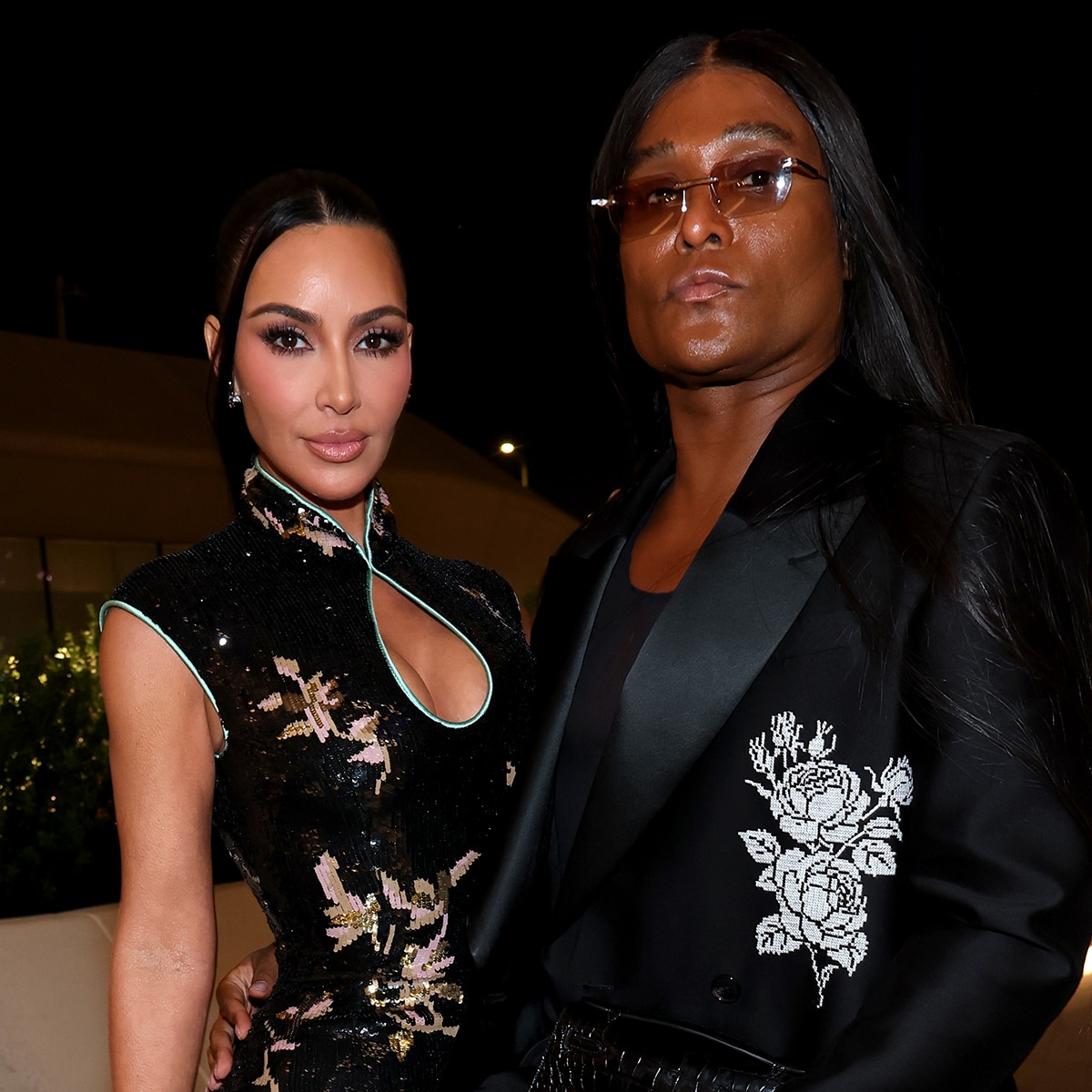
Kim Kardashian’s Birthday Gift Was Elizabeth Taylor’s $6.5 Million Necklace, Because Cake Is Apparently Too Casual
Law Roach took Kim Kardashian into Bulgari’s vault in Rome for a private fitting with one of Hollywood’s most legendary jewels — and yes, the emeralds came with serious Elizabeth energy.
Most people receive birthday flowers, a nice dinner or perhaps the kind of handbag that arrives in a box large enough to suggest emotional commitment. Kim Kardashian received Elizabeth Taylor’s necklace.
Not a necklace inspired by Elizabeth Taylor. Not a lookalike. The actual emerald-and-diamond spectacular once owned by the woman who understood that jewelry should enter a room several seconds before you do. Kardashian revealed the extraordinary gift in an Instagram video filmed in Rome, where stylist Law Roach arranged for her to visit Bulgari and try on the piece.
“This is the best birthday present ever,” Kardashian said in the video, which is an objectively difficult sentence to top. She also described the moment as a chance to begin her year with “Elizabeth energy,” a phrase that feels less like a birthday wish and more like a personal campaign platform.
The gift was not jewelry. It was a whole Hollywood inheritance.
The necklace is valued at $6.5 million and was originally gifted to Taylor by Richard Burton, her fifth and sixth husband. That detail alone gives the piece a cinematic backstory: romance, marriage, divorce, remarriage, extravagant presents and enough emotional weather to fill several seasons of prestige television.
According to Christie’s, the necklace features 16 emeralds set in platinum and surrounded by circular-cut diamonds. The stones are connected by diamond quatrefoils, while the centerpiece is a detachable pendant containing a 23.46-carat emerald. It is not subtle, but subtlety was never really the point of Elizabeth Taylor jewelry.
The Bulgari staffer in Kardashian’s video explained that bringing Taylor’s collection out of the vault is not something the jeweler regularly does. Kardashian, naturally, interpreted the exception correctly: as a major fashion moment and an opportunity to stare into a piece of history while wearing it herself.
“I don’t know how you did this,” she told Roach over the phone. His answer, in spirit, was that he is simply operating at a higher birthday-gift altitude than the rest of us. “I think I give the best birthday presents,” the stylist said. “This is unprecedented. Nobody’s ever done this before.”
Kim and Elizabeth already had a strange little fashion connection
The necklace was not Kardashian’s first brush with Taylor’s jewelry legacy. Kardashian said she was lucky enough to speak with Taylor by phone before the actress died in 2011. She also recalled being brought into Taylor’s home after her death and shown the safe containing her jewelry before the collection was cleared out.
“I know that sounds insane,” Kardashian said, describing the visit to Taylor’s purple closet. In Kardashian’s world, it does sound insane — and also entirely plausible. There are very few celebrity stories in which a purple closet, a private vault and a $6.5 million emerald necklace can all appear in the same paragraph without anyone blinking.
That history gives the birthday fitting a little more weight than a standard luxury-brand try-on. Kardashian was not simply borrowing a famous necklace for a photo opportunity. She was revisiting an object she had already encountered through Taylor’s personal world, then wearing it in Rome under the watchful eye of Bulgari, the house associated with so much of Taylor’s maximalist glamour.
It is also a particularly Kardashian kind of fashion fantasy: part archival access, part personal mythology, part “you can look, but please understand this came from a vault.”
Law Roach understood the assignment — and then found the vault
Roach’s role here is more than stylistic. The stylist, who also works with Zendaya, gave Kardashian a birthday experience with an actual narrative arc. First, there is the trip to Rome. Then the Bulgari invitation. Then the vault. Then the necklace. Then the historical connection to Taylor and Burton. By the time Kardashian put on the emeralds, the gift had become a fully produced fashion event.
That is the difference between giving someone something expensive and giving them a story they can tell forever. A diamond bracelet says, “I care.” A legendary Elizabeth Taylor necklace says, “I have arranged for you to briefly become the most glamorous woman in a 1960s melodrama.”
Kardashian’s own fashion evolution has always been built around that kind of visual escalation. Her public style has moved from the highly recognizable reality-TV wardrobe of the mid-2000s toward increasingly controlled, archival and high-concept dressing. This necklace fits neatly into the later chapter: less “look at my new accessory,” more “I am entering the lineage of women who made jewelry part of the plot.”
And because this is Kim Kardashian, the setting matters. Rome is not just a backdrop; it is the correct city for a Bulgari jewel with a movie-star past. The vault is not just storage; it is a stage. The birthday is not just a birthday; it is an excuse to summon Elizabeth Taylor’s energy and put it on camera.
“Elizabeth energy” is the new birthday mood board
Kardashian said she wanted to start her year with Taylor’s “unapologetic personality,” along with the actress’s caring for people and giving back. The reference is revealing: the necklace is spectacular, but Kardashian is framing the gift around Taylor’s character as much as her glamour.
Still, the emeralds are doing plenty of talking. They bring with them Burton’s grand romantic gesture, Taylor’s legendary jewelry collection and the long-running celebrity tradition of turning personal adornment into public mythology. Kardashian understands that a historic jewel is never only a historic jewel. It is a mood, a memory, a headline and, in the right lighting, an entire era.
Somewhere, a normal birthday necklace is feeling deeply inadequate. Meanwhile, Kim Kardashian has started her year with 23.46 carats of emerald center-stage, Law Roach on the phone and Elizabeth Taylor’s jewelry legacy draped across her chest. As birthday presents go, the bar is now somewhere near the ceiling of Bulgari’s vault.
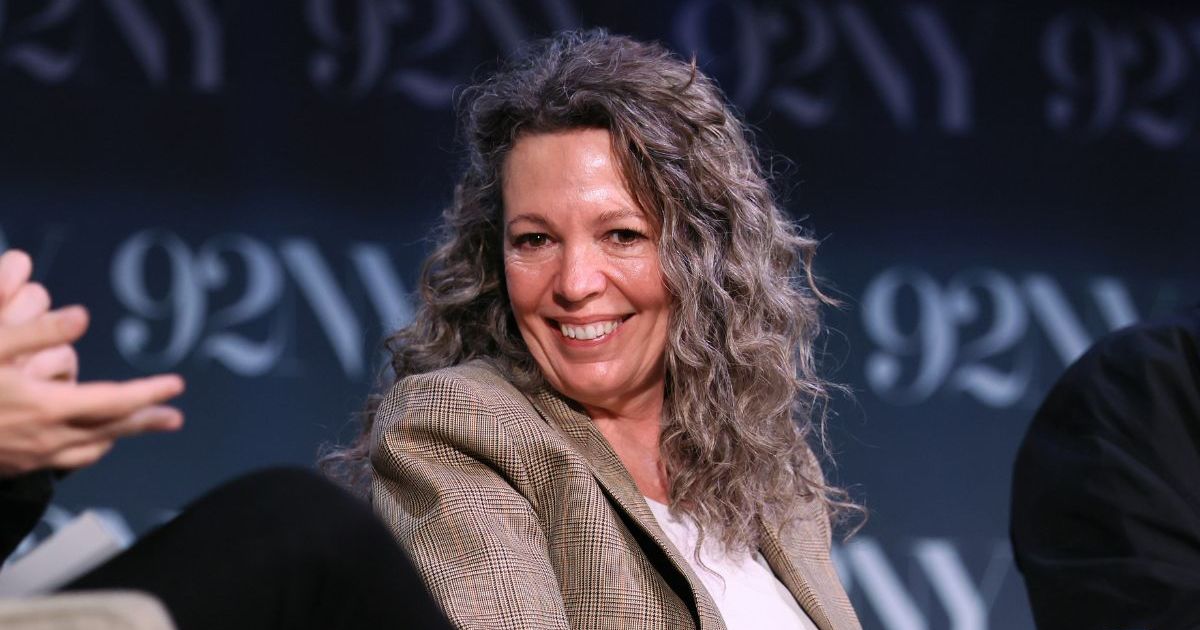
Olivia Colman’s Marriage Advice Is Almost Annoyingly Sensible — and Somehow Very Hot
After 25 years with Ed Sinclair, the Oscar winner says their secret is less fireworks, more “that thing on Tuesday, can we talk about that?” Plus, the internet is revisiting her wonderfully unbothered comments about feeling “sort of nonbinary.”
Olivia Colman has offered the internet something rarer than a celebrity marriage revelation: a relationship strategy that sounds both emotionally intelligent and extremely British.
While promoting her new film Wicker, the actor was asked by TikTok couple Benedict and Hannah Townsend how she and her husband, Ed Sinclair, have kept their marriage going for 25 years. Colman’s answer was not a grand romantic gesture, a private island, or a suspiciously coordinated linen shoot. It was communication, delivered with the gentle panic of someone who has just remembered she may be oversharing.
“Be kind to each other,” she said, before explaining that she and Sinclair have learned not to let uncomfortable moments disappear entirely. Her preferred approach is to wait for the right time, then calmly say something along the lines of: “That thing on Tuesday, can we talk about that?”
It is not exactly the kind of quote that arrives with its own fragrance campaign. And yet, somehow, it feels more intimate than most celebrity couple content currently clogging the feed.
The Colman-Sinclair method: park the argument, don’t bury it
Colman acknowledged that neither she nor Sinclair is naturally drawn to conflict. The couple, who met in the 1990s while working on a Cambridge Footlights production of Alan Ayckbourn’s Table Manners, married in August 2001. Their relationship has therefore survived not just the usual quarter-century of life, but the particular endurance test of two creative people building a life together while one of them became one of the most acclaimed actors of her generation.
Her advice is notably less theatrical than the way celebrity relationships are usually packaged. There is no “we never go to bed angry” slogan, no insistence that arguments are secretly proof of passion, and no implication that a good marriage means never annoying each other. Instead, Colman describes a process: notice the hurt, wait until the emotional weather has improved, and then bring it up without turning the conversation into a courtroom drama.
“I’m not a conflict person, nor is my husband,” she said, explaining that a delayed conversation often works better for them than an immediate confrontation. Sometimes, she added, they have forgotten the incident entirely. If one of them is still hurt, though, they make a point of talking it through.
This may be the most relatable thing a famous person has said about marriage all week. Not because it is glamorous, but because it captures the strange domestic afterlife of a minor disagreement: the original offense becomes hazy, the emotional residue remains, and eventually someone has to say, “Do you remember when you were weird on Tuesday?”
Then came the line the internet was always going to isolate
Colman’s marriage advice arrives months after comments about gender identity that gave social media an entirely different sentence to discuss. In an interview with Them, she said that throughout her life she had often felt “sort of nonbinary,” while immediately cautioning, “Don’t make that a big sort of title!”
She also said she had “never felt massively feminine in my being female” and had described herself to Sinclair as “a gay man.” According to Colman, his response was simple: “Yeah, I get that.”
It is an unmistakably Colman formulation: candid, funny, self-aware and allergic to turning an internal feeling into a polished public brand statement. The quote is not presented as a formal announcement or a neat identity label. It is a personal description, offered in the loose, exploratory language people often use when talking about themselves in real life — before the internet turns a sentence into a headline, a discourse cycle and at least three competing interpretations.
That is also why the two conversations have collided so neatly online. One is about the practical mechanics of staying married; the other is about the messiness of describing the self. Both are, in their own ways, Colman refusing to perform certainty for an audience.
Olivia Colman remains the anti-influencer influencer
Colman’s appeal has never depended on behaving like a conventional celebrity. She can move from prestige drama to broad comedy without treating either as a downgrade, and she has a gift for making extraordinary things sound like mildly inconvenient developments. Even her relationship advice comes with a built-in escape hatch: she quotes a person who had been married for about 50 years, repeats the wisdom, then immediately admits that not everyone will agree with it.
That hesitation is the charm. Celebrity culture tends to reward declarations: forever, soulmate, never fight, always communicate, total authenticity. Colman offers something less polished and more useful. Sometimes you do not know how to discuss the problem. Sometimes you need a minute. Sometimes you remember the issue only because the other person is still visibly wounded. And sometimes the best marital technique is simply choosing a calm moment instead of launching into emotional combat while one of you is hungry, tired or already mentally composing the apology.
Fans may have arrived expecting a “secret” behind a long marriage and left with a reminder that there probably is no secret — just a collection of small decisions repeated over many years. Be kind. Say the thing. Do not say it at the worst possible moment. Accept that your partner may understand a part of you that you are still trying to put into words.
It is almost aggressively reasonable. Which, in the current celebrity ecosystem, makes it feel radical.
And if the internet wants to turn Olivia Colman’s marriage into a masterclass, fine. Just remember the lesson is not that conflict disappears. It is that, eventually, somebody has to bring up Tuesday.

Jessie James Decker Just Got the Nashville Housewives Bait — and She Didn’t Exactly Slam the Door
A cookbook plug, an Andy Cohen tease and one very careful answer have suddenly turned Jessie James Decker into the woman Nashville is casting in its imagination.
Andy Cohen knows exactly what he is doing with a compliment. Give him a glossy cookbook cover, a country star with reality-TV history and a city that already comes with rhinestones, rivalries and enough polished family drama to fill a Bravo dinner party, and suddenly everyone is asking the same question: is Jessie James Decker about to become a Housewife?
That was the aftershock of Decker’s recent appearance on Watch What Happens Live, where she stopped by as the bartender while promoting her new cookbook, The Secret Sauce. Cohen praised the cover and joked that it looked like “a potential audition for The Real Housewives of Nashville.” It was a tease, not a casting announcement. But in Bravo-world, a joke from Andy can travel with the velocity of a production memo.
Decker told Us Weekly that friends have been asking whether she is doing Real Housewives of Nashville. The question has now escaped the studio and entered the more dangerous realm of group-chat speculation: the place where a single wink becomes a three-season arc and a cookbook cover becomes a soft launch.
The cover was giving more than cookbook
Decker is not a random celebrity wandering into the Bravo universe. She already understands the basic mechanics of letting cameras into a carefully managed life. She starred with her husband, Eric Decker, in the E! reality series Eric & Jessie: Game On, which ran from 2013 to 2014, and later competed on Dancing with the Stars.
That history matters because Decker has already done the part many reality newcomers find hardest: turning a recognizable public persona into an ongoing television character without seeming like she is trying too hard. She has the country-music career, the family brand, the lifestyle polish and the kind of friendly-but-specific celebrity identity that makes a Bravo audience wonder what happens when the cameras stop being polite.
Then came the WWHL appearance. A bartender slot on Cohen’s show is not a contract, but it is a particularly efficient way to place a celebrity in the Bravo atmosphere. Decker was there to sell a cookbook; Cohen supplied the Housewives fantasy. The result was a tiny piece of television that immediately made the hypothetical feel oddly legible.
She says family privacy comes first — with one Housewives-sized asterisk
Decker’s first answer was cautious in a way that sounded less like a hard no than a woman who knows exactly what reality TV can do to a family.
She said she is grateful for her previous show and credited it with giving her major opportunities. But she also said she loves the “little bubble” she has with her family and wants to keep the privacy of her children and family “sacred.” Her concern was not that reality television is inherently abnormal; it was that it puts a magnifying glass over ordinary life.
That is a familiar tension for celebrities who built their careers by sharing just enough. Decker has already lived through the era when relationship, home and family footage were part of the product. Now, according to her own comments, the boundaries are more deliberate. She wants to give what she wants to give, on her own terms.
And then came the line that kept the fantasy alive.
Decker pointed out that Real Housewives can be different because the focus is on the Housewives themselves. The cameras do not necessarily have to follow them into every corner of their homes or place their children at the center of the story. “You never really know what can happen out there,” she said, adding that the format does not automatically mean cameras would be in her house with her kids.
That is not a yes. It is, however, a much more interesting answer than a clean rejection. In the language of celebrity interviews, “I’ll say that” is the sound of a door being left open precisely wide enough for Andy Cohen to walk through.
Nashville already has the ingredients for a Bravo fever dream
A Nashville Housewives series has been discussed before, according to the report, but there is currently no known franchise expansion in the works. That means Decker is not announcing a show, joining a cast or confirming that Bravo has begun assembling a Southern social battlefield.
Still, the city makes obvious reality-TV sense. Nashville offers country royalty, music-industry ambition, designer boots, old friendships, new money and the sort of professional overlap that can turn a charity lunch into a season-long grievance. It is a place where everyone seems to know someone who dated someone who owns a restaurant, writes a hit or has a suspiciously well-lit kitchen.
Decker would arrive with a built-in storyline that does not require producers to invent one: former reality star, country singer, cookbook author and mother deciding whether the exposure she once embraced still fits the life she has now. That is not just a casting bio. That is a season-one question.
It also gives her a distinct position within the Housewives ecosystem. She would not be entering as an unknown socialite hoping the show will explain her to viewers. She would be entering as someone who already knows the value of a personal brand and has publicly stated that she is protective of the parts of her life that do not belong to the audience.
The most Bravo thing about this is that nothing has happened yet
For now, the entire Nashville fantasy rests on an exchange from WWHL, a cookbook cover Cohen found Housewives-coded and Decker’s carefully calibrated response afterward. There is no announced Real Housewives of Nashville franchise in the report, and Decker has not said she is joining one.
But Bravo has always been unusually good at making possibility feel like programming. A bartender appearance becomes a temperature check. A joke becomes a casting conversation. A celebrity who says she wants privacy explains the one circumstance under which she might reconsider. Suddenly, the absence of a show is the least interesting part of the story.
Decker may simply be enjoying the attention around a fun TV moment while continuing to protect the family life she says is working beautifully. Or she may have discovered that there is a version of reality television she would actually consider: less family documentary, more adult social theater, with the spotlight on the women and the drama kept safely on the other side of the front door.
Either way, the Nashville Housewives rumor has acquired its ideal first scene: a cookbook, a bartender shift and Andy Cohen tossing a match into a room full of hairspray. Now everyone is waiting to see whether Jessie James Decker brings the lighter.