The Goonies 2 Has Entered Its Grim ‘Nothing’ Era
Martha Plimpton just delivered the most brutally honest update yet on Hollywood’s long-rumored sequel — and it is not exactly giving treasure map.
Goonies say never die. Movie sequels, apparently, can spend decades haunting the entertainment industry before quietly evaporating into the mist.
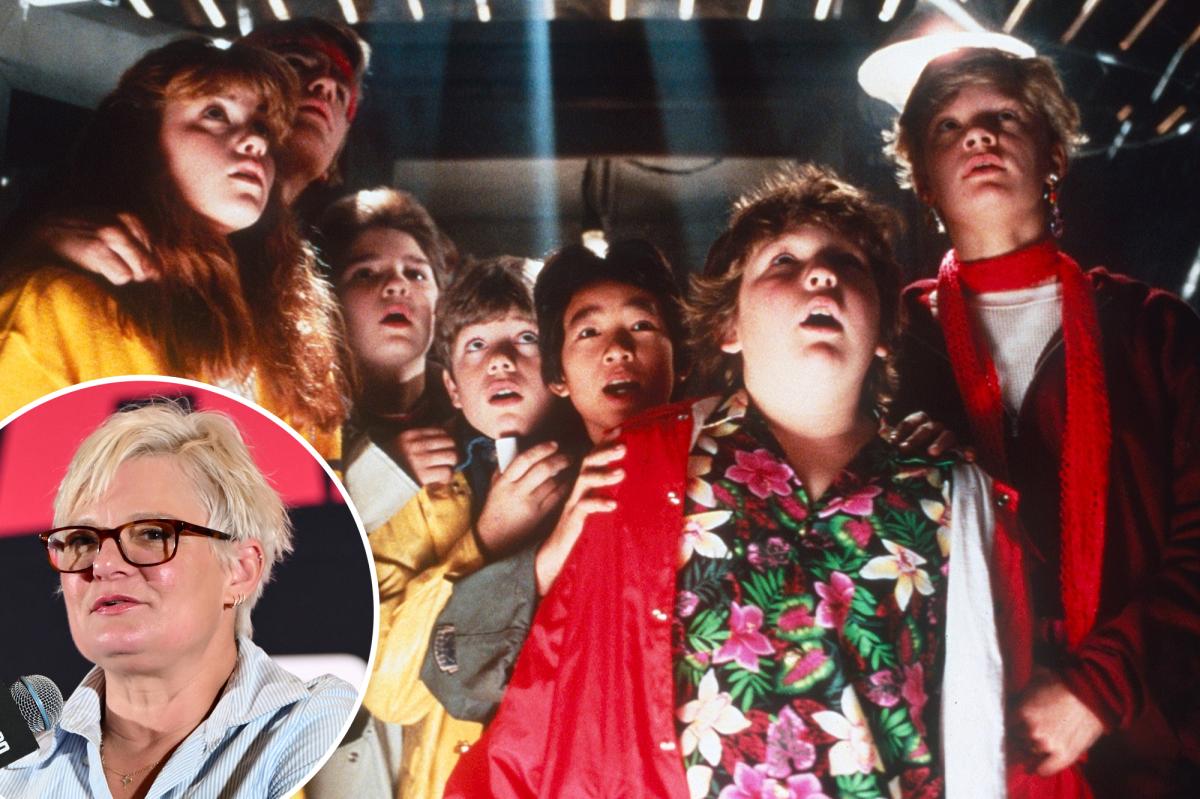
Martha Plimpton, who played sharp-tongued Stef Steinbrenner in 1985’s The Goonies, has now given the beloved adventure movie’s long-rumored follow-up the kind of update that instantly kills a group chat: “The Goonies 2” is “never gonna happen.”
Plimpton made the declaration to Page Six while promoting Season 2 of FX’s The Lowdown, and her explanation was almost more devastating than the headline. “I hear something, and then nothing,” she said. “And then every single person wants to know, and I hear the same answer. It’s nothing.”
That is not a glamorous Hollywood non-answer. That is the sound of a sequel being trapped in an endless email thread with no one willing to hit send.
The sequel rumor has been doing a full pirate-ship loop
The idea of returning to Astoria, Oregon, with the grown-up Goonies has been floating around for years. The original film, based on a story by Steven Spielberg, followed a group of kids searching for hidden treasure while trying to save their homes from foreclosure. It arrived in 1985 with Plimpton, Sean Astin, Josh Brolin, Corey Feldman, Ke Huy Quan, Kerri Green and Jeff Cohen in the ensemble — a cast that has since become a particularly potent piece of Gen X and millennial emotional infrastructure.
In 2020, during a virtual reunion hosted by Josh Gad, Spielberg said there had been “a lot of conversations” about a follow-up. But he also explained why the project kept getting stuck in the mud: every few years, the team came up with an idea, only to decide it “doesn’t hold water.” The original had set a difficult standard for the genre, Spielberg said, and the creative challenge was finding anything better than the movie they made in the ’80s.
That sounded less like a closed door than a very Spielberg-shaped crack of light. Hollywood heard “maybe.” Fans heard “start making the T-shirts.”
Then, in February 2025, Variety reported that a sequel was in the works, with Spielberg producing. Later that year, writer Potsy Ponciroli told fans at the Venice Film Festival that he had submitted a “well-received” first draft and that the project was moving in the right direction.
For a brief, shining moment, the Goonies rumor machine had a map.
Ke Huy Quan was ready. Josh Brolin was cautiously sentimental.
Ke Huy Quan, whose Data remains one of the most beloved gadget geniuses in movie history, told Variety that he would “love” for a sequel to happen. Corey Feldman was similarly enthusiastic, arguing that the cast should get back together while everyone was still looking good — and alive. His phrasing was playful, but it captured the slightly surreal reality of the situation: the children from the original movie are now adults with decades of careers, families, awards, reinventions and Hollywood history between them.
Brolin was more emotionally complicated about the idea. In August 2025, he told Entertainment Tonight that he hoped the project would happen because the filming experience had been so great and because the movie had been embraced “generation after generation.” That is exactly the kind of affectionate, legacy-minded sentiment that sends a studio into development mode.
But Brolin also admitted he had “trepidation” because he did not want a sequel to taint his memory of the original. Then he joked that a late-in-life follow-up might involve the Goonies showing up with walkers, only to fall off a cliff because they could not see very well.
It was a very Josh Brolin way to describe the central sequel problem: nostalgia is gorgeous until somebody tries to put it under fluorescent lighting.
Hollywood loves a legacy sequel. The Goonies may be too beloved to risk.
The pressure around The Goonies 2 has never been simply “can they make another adventure?” It is “can they recreate the emotional weather of a movie that became a childhood landmark for multiple generations?” Those are wildly different assignments.
A legacy sequel can bring back the faces people remember, but it cannot recreate the age at which audiences first saw them. The original Goonies were kids with bikes, walkie-talkies and the absolute conviction that a treasure map could save the day. Their world felt huge because they were small. A new installment would have to decide whether to follow the original characters as adults, center their children, or attempt some delicate combination of both.
Each option comes with its own danger. Adult Goonies could feel like a corporate reunion special. A younger cast could make the originals feel like ceremonial cameos in their own movie. And a direct remake of the original’s scrappy adventure energy would invite comparisons no filmmaker could control.
Spielberg’s earlier comments suggested that the creative problem was not a lack of affection. Everyone involved clearly understands why people want to go back. The problem is that “people want to go back” is not, by itself, a plot.
Plimpton’s update lands hard because it cuts through years of hopeful language: conversations, ideas, drafts, momentum, hopes, trepidation. After all that, she says the answer she keeps hearing is still “nothing.”
Neither the studio nor the other cast members has publicly announced that the sequel is officially dead in the water in the source of this report. But Plimpton’s blunt assessment is the least treasure-hunt-coded update the project has received yet. No mysterious cavern. No booby trap. No last-second key. Just a beloved movie star saying that the rumor keeps resurfacing and then disappearing again.
Maybe that is where The Goonies 2 belongs: not in theaters, but in the permanent Hollywood afterlife of projects that are forever “moving in the right direction.” The original can remain exactly where it is — full of danger, friendship, pirate gold and kids who had no idea they were making a movie people would still be begging to revisit forty years later.
Goonies never say die. But according to Martha Plimpton, their sequel may want to stop talking about it.
Amy Yasbeck Still Talks to John Ritter Every Day — and the Way His Family Keeps Him in the Room Is Unexpectedly Beautiful
Twenty-three years after the beloved comic actor’s death, Yasbeck says she, Ritter’s children and their shared sense of humor still make space for him.
Some celebrity love stories end with a breakup interview, a suspicious unfollow or one last paparazzi walk designed to communicate “we are absolutely fine.” Amy Yasbeck’s has taken a quieter, stranger and far more moving route: she still talks to John Ritter every day.
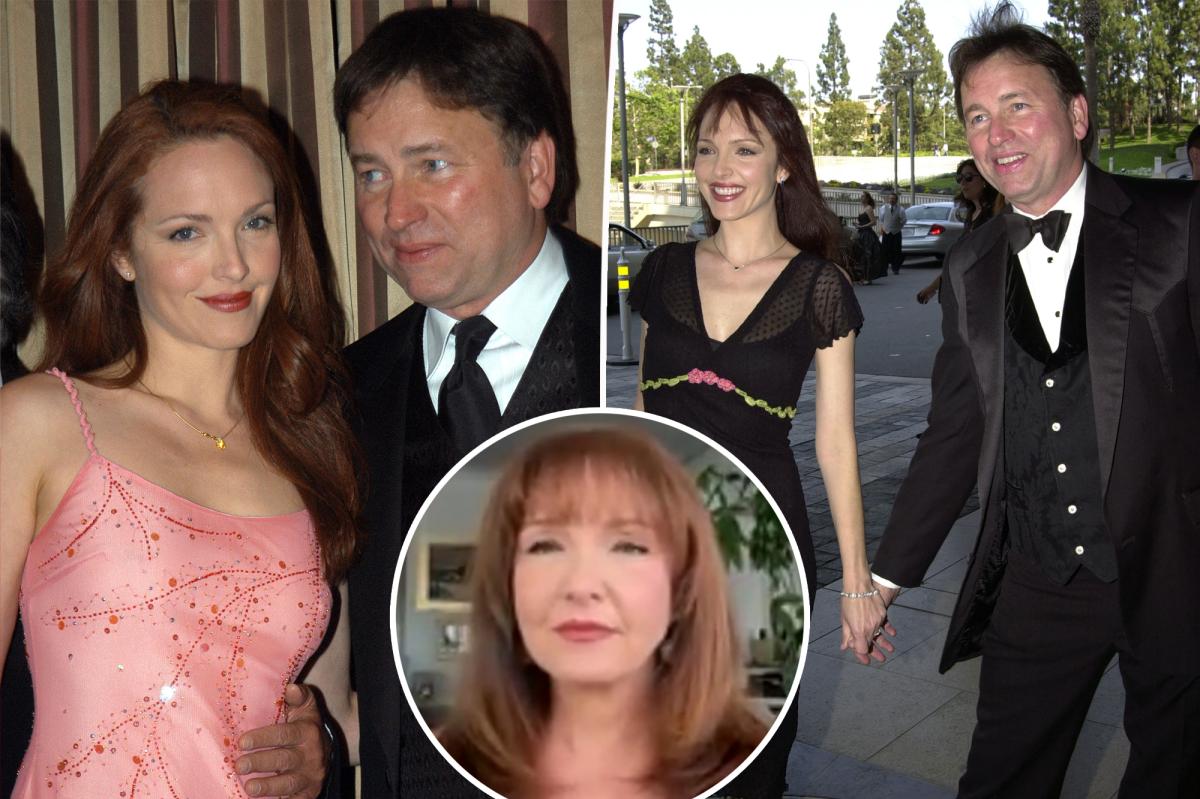
“I still talk to John,” Yasbeck told Page Six in an exclusive interview. “I check in all the time. … I talk to him every day.” Ritter died in September 2003, but in Yasbeck’s telling, he has not disappeared from the family’s emotional group chat. He remains part of the running commentary, the private jokes and the small moments when something funny happens and everyone knows exactly who would have loved it.
That is an especially affecting way to remember a man whose entire public identity was built around making people feel accompanied. Ritter was the elastic, big-hearted comic presence of Three’s Company, the kind of performer who could turn a doorway, a pratfall or a look of mild panic into an event. Yasbeck’s memories suggest that the same generosity that made him a star also made him an unusually vivid husband and father.
John Ritter Is Still Part of the Family Audience
Yasbeck said she and Ritter’s three children from his previous marriage — Jason, Carly and Tyler — often bond over things they believe he would have enjoyed. A new comic appears. Someone delivers a particularly good bit of physical comedy. A movie or show lands just right. Suddenly, the family is not simply remembering Ritter; they are imagining his reaction in real time.
“A new comic comes on the scene, or there’s physical comedy,” Yasbeck explained. Those moments make them feel “like John is with us or beside us when we’re watching something entertaining.”
“John was such a good audience,” she added. “He loved being on stage. He loved to be in an audience.”
There is something almost perfectly Ritter about being remembered not only as the person doing the comedy, but as the person delighted to receive it. His gift was never just performance. It was enthusiasm — the sense that a joke, a ridiculous entrance or a perfectly timed reaction could make the entire room more alive.
Yasbeck, 64, met Ritter during a read-through for their 1990 film Problem Child. They welcomed their child, Noah, in 1998 and married the following year. Ritter died at 54 after experiencing chest pains while rehearsing his sitcom 8 Simple Rules for Dating My Teenage Daughter. He was initially treated for a heart attack, but the cause was later determined to be an aortic dissection.
What Yasbeck Misses Most Is “Him as a Father”
Asked what she misses most, Yasbeck did not isolate one glamorous memory or reach for a standard Hollywood tribute. She went straight to Ritter as a parent.
“That encompasses everything,” the actress said, describing his humanity, comedy, empathy and frustration with the world. Yasbeck remembered him as a “very fair-minded, progressive guy” who became especially upset when children or other people were treated unfairly.
“It would piss him off,” she said. “I mean, for the world, but also for his kids. Like, what are we doing?”
“So him as a father encompassed everything about him,” she added.
That description quietly blows up the polished image of the eternally lovable sitcom star. The public remembers Ritter’s warmth because it came through the screen. Yasbeck remembers the harder edge beneath it: the man who could be funny and tender, but who also had a moral temper. The clown was not detached from the world. He was paying attention to it, and sometimes the world annoyed him.
Hardly a day has passed since Ritter’s death without someone approaching Yasbeck to tell her what he meant to them, she said. That kind of public memory can be its own peculiar form of celebrity afterlife. For most stars, fans remember the roles. For Ritter, people seem to remember the feeling of watching him — the sense that he was fully present, even when he was being spectacularly ridiculous.
The Anniversary Celebration Will Bring His Old Comedy World Back
Yasbeck has also made sure Ritter’s legacy is about more than nostalgia. In the weeks after his death, she established the John Ritter Foundation for Aortic Health to raise awareness about aortic dissection and help prevent other families from enduring a similar loss.
She emphasized to Page Six that the condition is highly genetic, framing the foundation’s work as a response to a preventable tragedy rather than simply a monument to a beloved actor.
“You can remember John, everybody remembers John,” Yasbeck said. “It’s not about that. It’s [about] losing somebody in your family to something that was preventable.”
That distinction matters. Ritter’s death has remained one of those Hollywood losses that feels frozen in time — a beloved performer gone suddenly, in the middle of working. But Yasbeck has spent the years since turning grief into public health advocacy while keeping the personal version of him alive at home.
On Nov. 2, she and Ritter’s former Three’s Company co-star Joyce DeWitt will host a 50th anniversary celebration of the sitcom at Joe’s Pub in New York City. The event will feature a celebrity staged reading with Jason Biggs, Christine Taylor, Richard Kind, Susie Essman and Richard Kline.
It is an appropriately theatrical way to honor Ritter: not a solemn marble statue, but a room full of people reading, performing and giving an old comedy another chance to breathe. The timing also gives Yasbeck’s comments an extra emotional charge. As the show’s anniversary pulls Ritter back into the cultural conversation, she is offering something more intimate than a career retrospective.
She is describing the version of John Ritter who still gets invited into the living room — the husband she checks in with, the father his children still picture laughing, and the beloved comic who remains, somehow, the best audience in the room.

Crystal Hefner Says the Playboy Mansion Wasn’t a Fantasy — It Was a “Humiliation Ritual”
Nearly a decade after Hugh Hefner’s death, his widow is revisiting the rules, pressure and private archive she says were hidden behind the silk pajamas and champagne mythology.
For years, the Playboy Mansion sold a very specific fantasy: silk pajamas, endless parties, famous guests and a revolving cast of beautiful women smiling beneath the chandeliers. Crystal Hefner now says the dream house looked very different from the inside.
In a new interview with Page Six, Crystal, 40, described her nearly five-year marriage to Hugh Hefner as a period marked by manipulation, pressure and what she called a “humiliation ritual.” The Playboy founder died in 2017 at 91, but Crystal says the emotional fallout of their relationship — and the fate of intimate images connected to his private archive — is still very much alive.
“I had to have sex with strangers I didn’t even know,” she told Page Six. “It was humiliating. It was embarrassing.”
That is a jarring sentence to attach to one of the most aggressively glamorized homes in pop culture. But Crystal’s larger point is that the mansion’s public image depended on keeping its private power structure looking playful.
The mansion fantasy had rules
Crystal was 26 when she married Hefner in 2012. She had been a model and Playboy Playmate, and she remained his wife until his death. Looking back, she says the relationship was shaped by the imbalance between a much older media mogul and the women he brought into his orbit.
She recalled a strict curfew during her mansion years and said Hefner sought out women he believed he could manipulate. Crystal connected that dynamic to her own childhood, telling Page Six, “I came from a broken home. I didn’t have a father.”
She also described Hefner as collecting women with what she called “broken wings,” a phrase she said was echoed by Mary, his longtime secretary. According to Crystal, Mary told her Hefner “chooses the broken ones.”
In Crystal’s telling, sex was not simply part of the mansion lifestyle; it was the organizing principle around which the women were expected to perform loyalty, availability and gratitude. “He should have been getting us all a therapist instead of a one-way ticket to his bedroom,” she said.
That account echoes criticisms made by several women who spent time with Hefner, though their memories have not all been identical. Holly Madison’s 2015 memoir, Down the Rabbit Hole, portrayed Hefner as manipulative and described him pitting women against one another. Bridget Marquardt later recalled feeling pressure around her first sexual encounter with him, while also saying that much of her mansion experience was positive. Kendra Wilkinson has described Playboy as something that “messed my whole life up,” while also speaking about complicated feelings toward that chapter.
The archive is now part of the story
Crystal’s latest comments arrive as a dispute over Hefner’s personal archive adds a darker sequel to the mansion mythology. In February, her attorney Gloria Allred announced regulatory complaints in California and Illinois involving the Hugh M. Hefner Foundation’s handling of private materials, including approximately 3,000 scrapbooks allegedly containing intimate photographs.
Crystal says some images were taken without consent and has raised concerns about the possibility of images involving minors. Hefner’s sons Cooper and Marston, whose mother is Kimberley Conrad, disputed that implication. Crystal says she wants women entrusted with the material and wants intimate or nonconsensual images destroyed.
She believes Hefner kept the photographs as trophies. She described scrapbooks in which women were identified by days of the week and alleged that he maintained a black book logging his sexual partners. The allegations are part of a broader effort, she says, to stop the private archive from preserving the same power dynamic she experienced during her marriage.
There is something especially bleak about the image of a supposedly liberated lifestyle ending in filing systems: Monday, Wednesday, a nameless woman, a photograph tucked away for later. Playboy’s entire brand was built on turning intimacy into a collectible object. Crystal is arguing that the objects did not stop having consequences when the party ended.
The old Playboy guest list is getting a new edit
Crystal has also been revisiting the famous men who passed through the mansion. On the “Lisa Guerrero Unleashed” podcast, she called comedian Jon Lovitz one of the mansion’s “biggest pervs” and described him as a frequent guest whose eyes scanned the women at parties.
Lovitz’s representative did not respond to Page Six’s request for comment. In a video obtained by the outlet, Lovitz said he took the “No. 1 customer” description as a compliment and called Hefner one of the nicest and most generous people he knew.
That exchange lands in a very different cultural climate from the one that made mansion access feel like a celebrity credential. Hefner’s parties were once treated as a kind of adult Disneyland, a place where actors, comedians, models and reality stars could mingle under the Playboy logo. Now, former insiders are forcing the guest list and the house rules into the same frame.
Crystal also criticized Hefner’s relationships with twin sisters while he was involved with her, referring to the situation as “incest” in an Oct. 14 episode of the podcast “Consider Before Consuming.” She alleged that Hefner treated women as sexual conquests and was interested in sleeping with both a Playmate and her daughter. Those claims were presented as part of her account of his behavior, not as a new chapter in the mansion’s party lore.
When the brand stopped looking invincible
Hefner spent his final years insisting that the Playboy lifestyle was exactly what it appeared to be. In a 2010 CNN interview, he said, “What you see is the real deal,” describing his life as one of “tremendous satisfaction.” But outside the mansion, the empire was losing its cultural grip.
Playboy’s circulation fell from roughly 5.6 million in 1975 to about 800,000 by 2015, according to ABC News. The magazine dropped nudity in 2016, then reversed course the following year. The mansion sold for $100 million in 2016 — half its original asking price — in a deal that allowed Hefner to continue living there until his death.
Inside, Crystal has previously described a property that had become rundown, dusty and moldy beneath the famous glamour. The mansion was still a symbol, but increasingly it looked like a symbol in need of maintenance.
Crystal says she regrets marrying Hefner and thinks about the relationship every day. She has also spoken about the pain of watching alleged abusers remain idolized, saying she shares a therapist with one of Michael Jackson’s accusers. Her message is blunt: a glossy public image can survive long after the people harmed inside it begin speaking.
“I just hope that in 2026, we do not glamorize predators,” she told Page Six.
That may be the real afterlife of the Playboy Mansion: not the parties, not the pajamas, not the famous guest list, but the uncomfortable question of how long a fantasy can keep its shine once the women who lived inside it start describing the cost.