Kim Kardashian Has a New Bar Exam Strategy: Wait Until Her Life Stops Looking Like a Group Chat
The reality star still wants to become a lawyer, but her next California bar attempt is being delayed until she can find the rarest thing in Kardashian-world: uninterrupted study time.
Kim Kardashian is still chasing the bar exam, which means the longest-running plot twist in her career remains alive, well and apparently waiting for a gap in her calendar.
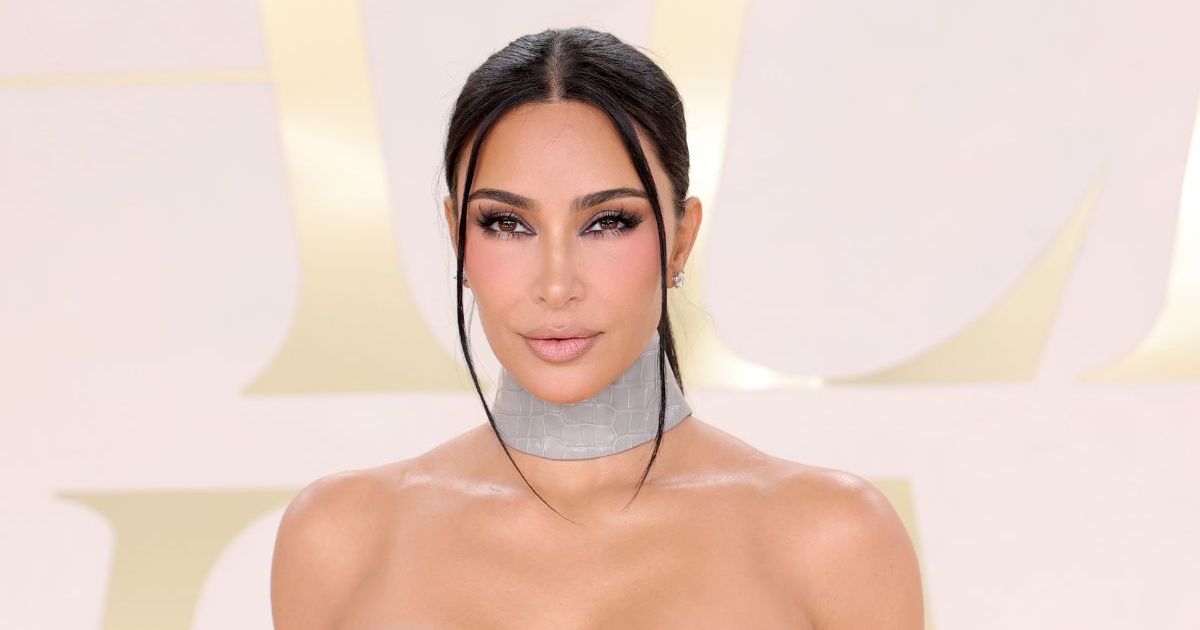
At the November 2 New York premiere of All’s Fair Season 2, Kardashian said she is “always thinking about the bar” and plans to retake it “when the moment is right.” That moment, she explained, will arrive when she has enough free time to focus properly. In other words: the dream is not dead. It is simply being held hostage by the kind of schedule that includes television premieres, fashion-world obligations, a major shapewear empire and playing a glamorous divorce attorney on Hulu.
There is something almost aggressively on-brand about Kardashian’s legal career existing in two timelines at once. In real life, she is still studying toward the qualification she has pursued since 2019. On screen, she is already striding into court-adjacent drama as Allura Grant, the attorney at the center of Ryan Murphy’s glossy, scandal-heavy series. The show’s second season premieres November 4, making this a particularly convenient week for the law dream to re-enter the conversation.
The bar exam has become a Kardashian subplot
Kardashian’s legal ambitions began as more than a celebrity side quest. She chose California’s Law Office Study Program, a route that allows aspiring lawyers to train without attending a traditional law school, and has repeatedly described the process as a serious personal goal. In July 2025, she sat for the California bar exam. By November of that year, she announced that she had not passed.
Her response was emotional but notably un-Kardashian in the most polished, victory-lap sense. She wrote that the result was disappointing, but “not the end,” adding that the dream meant too much for her to walk away. The message turned the exam into one of her more relatable storylines: the famously controlled celebrity brand meeting a test that does not care about fame, followers or whether your outfit is custom.
Now the next attempt is waiting for a less chaotic window. Kardashian did not give a new test date at the premiere, and she did not suggest that she had abandoned the goal. She simply said she wants the time to focus. That distinction matters, especially because the internet has a tendency to treat every delayed celebrity project as a secret cancellation, a rebrand or the beginning of a feud.
Here, the explanation is considerably less mysterious: she has not found enough room in her schedule yet.
Meanwhile, she is playing a lawyer on TV
The timing is deliciously symmetrical. Just as Kardashian is pressing pause on the real-world exam, All’s Fair is giving her another chance to inhabit the role of a lawyer in full television fantasy mode. Her character, Allura Grant, operates in the heightened universe of Ryan Murphy drama, where professional rivalries, romantic complications and perfectly lit confrontations are presumably easier to manage than California’s legal rules.
Season 2 brings back the main cast and adds guest stars including Real Housewives of New York alum Dorinda Medley and Denise Richards. The show’s promotional orbit has also leaned into Kardashian’s real-life exam struggles: a trailer reportedly pokes fun at her bar challenges, turning a very real disappointment into part of the series’ publicity machinery.
That is the Kardashian content engine at its most efficient. A personal obstacle becomes a headline; the headline folds into a television plot; the television plot sends everyone back to the original personal obstacle. The loop is so neat it practically comes with a branded robe.
Her co-star Sarah Paulson also offered a vote of confidence at the premiere, saying Kardashian would be “a great lawyer” and adding, “She will.” It is warm, supportive and just theatrical enough to sound like a line delivered moments before a dramatic courtroom entrance.
Kim’s schedule is the real antagonist
There is a reason this particular update lands differently from a standard celebrity career announcement. Kardashian’s legal pursuit has always carried a little more narrative tension than another product launch or a new series renewal because it asks her to be bad at something in public before she can become good at it.
That is an unusual position for someone whose career has been built around control, presentation and the ability to turn visibility into an asset. The bar exam does not offer a glamorous shortcut. It requires studying, repetition and the unphotogenic discipline of sitting with material until it sticks. It also requires time, which may be the one luxury Kardashian cannot simply purchase, delegate or schedule around.
Her latest comments suggest that she is unwilling to treat the next attempt like a casual celebrity challenge. She could have announced a date for the sake of momentum, but instead she is waiting until she can concentrate. For all the spectacle around her, that is a surprisingly sensible move.
Of course, Kardashian’s legal identity has already become part of the public imagination. She has used her platform to discuss criminal justice reform and became closely associated with advocacy around clemency cases, which helped give the law dream stakes beyond a personal achievement. But the exam remains the gatekeeper. Until she passes, she is an aspiring lawyer in real life and a fully operational television lawyer in the fantasy universe.
The Kardashian cinematic universe now has two courtrooms
So for the moment, there are two Kim Kardashians in legal mode. One is memorizing enough law to return to the California bar when her schedule finally loosens. The other is showing up on Hulu as Allura Grant, where the drama is scripted, the lighting is excellent and no one can make her wait months for a score.
Neither version is going away. Kardashian said she still intends to try again, while All’s Fair is preparing to give viewers another season of high-gloss legal melodrama. The result is a very Kardashian contradiction: she is postponing the real courtroom dream while promoting the fictional one at the exact same time.
Fans may have to wait for the next exam date, but the storyline remains remarkably active. Kim Kardashian is not quitting law. She is simply asking the calendar to stop behaving like it has a personal vendetta.
Hailey Bieber Says the Post-Baby Chapter Came With PMDD—and a Very Lonely Kind of Silence
The Rhode founder is opening up about the condition she says disrupted her work, relationships and social life after welcoming son Jack Blues.
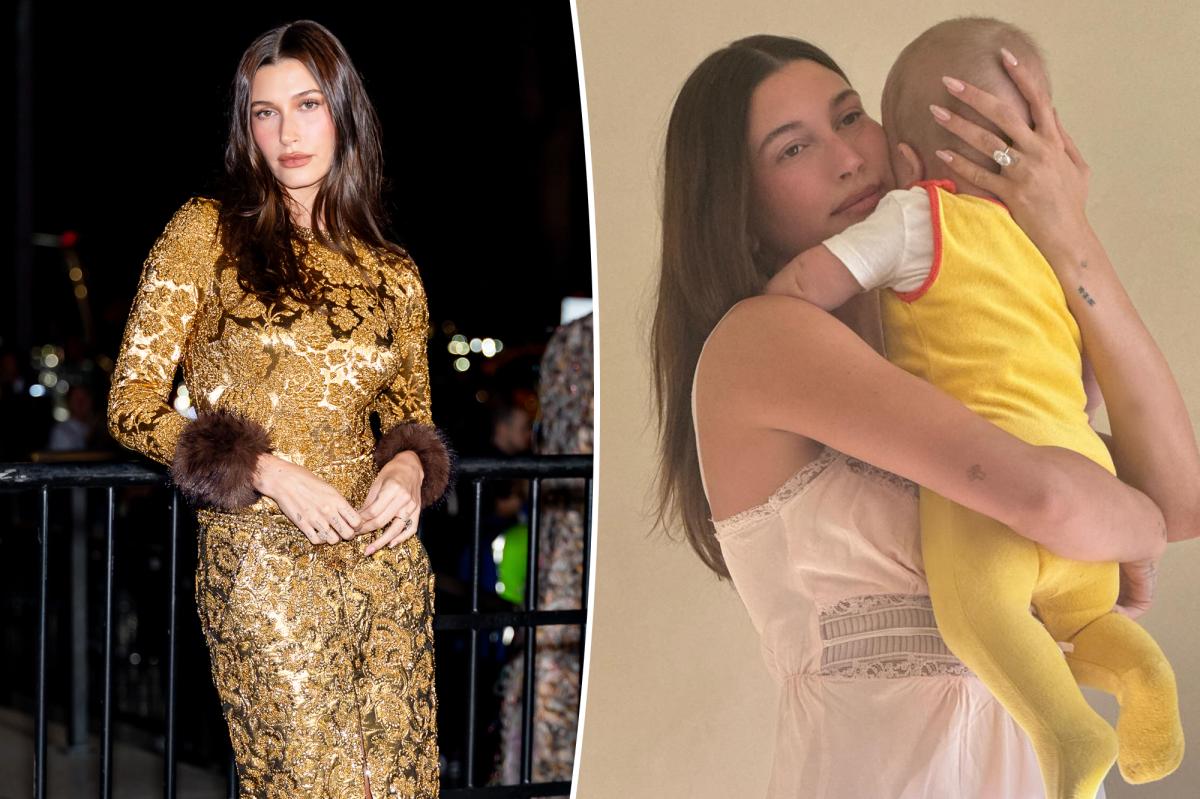
Hailey Bieber’s latest personal reveal is not a glossy little motherhood update, not a beige “finding balance” caption and not another celebrity wellness confession polished until it says nothing. She is talking about premenstrual dysphoric disorder, or PMDD, and the lonely stretch that followed the birth of her son, Jack Blues.
In a recent interview with Women’s Wear Daily, Bieber said she struggled with PMDD after having Jack, describing the experience as isolating in part because there is still so little conversation and research around the condition. “Conversation, for me personally, makes me feel less alone,” she said.
That sentence is doing a lot of work. Bieber, 29, lives inside one of the most photographed marriages and recognizable beauty brands in the world. She has the Rhode empire, the celebrity husband, the carefully observed street-style moments and the kind of Instagram presence that can turn a lip treatment into a cultural event. But PMDD, she is saying, made her feel less like a perfectly lit public figure and more like a person trying to understand why her own mind and body had suddenly become so difficult to navigate.
The diagnosis arrived after Jack
Bieber and Justin Bieber welcomed Jack in August 2024. She has now connected the period after his birth with her experience of PMDD, a severe form of premenstrual syndrome that can bring extreme mood changes, anxiety, irritability, anger, sadness and hopelessness.
She first spoke publicly about the condition during an appearance on the SHE MD Podcast in May. At the time, Bieber explained that the week before her period did not feel like ordinary PMS. It felt, in her words, extreme and mentally overwhelming, as if her entire life were collapsing. She also said PMDD had affected her work, relationships and social life.
That is the part that tends to get flattened when celebrities talk about women’s health: the symptoms become a lifestyle headline, while the actual disruption disappears underneath it. Bieber is describing something that did not simply make her feel “off” for a few days. She said it interfered with the basic architecture of her life—how she worked, connected with people and moved through the world.
“It sucks,” she said on the podcast, adding that it can be dangerous and should be taken seriously.
A very polished life, with a very unpolished problem
There is a particular tension in Hailey Bieber discussing PMDD. Her public image is built around control: clean beauty, minimalist luxury, slick hair, Rhode products lined up like tiny objects of desire. Even her most casual social content tends to arrive with the visual grammar of a campaign.
PMDD is the opposite of a controlled aesthetic. It is cyclical, disruptive and difficult to explain to anyone who has not experienced it. The timing can make people dismiss it as ordinary PMS, while the severity can make the person living through it feel frightened by the scale of their own emotions. Bieber’s point is not that she discovered an elegant new wellness routine. It is that naming what was happening gave her a framework—and speaking about it gave her company.
That matters especially in the post-baby period, when every physical and emotional change can be interpreted through the giant cultural pressure to be grateful, glowing and effortlessly transformed. Bieber called pregnancy and childbirth an “intense and special journey,” but she also emphasized how much happens during that process and how little is discussed openly. The glossy version of new motherhood leaves plenty of room for matching pajamas. It leaves much less room for saying: something about my mental health feels frightening, and I do not know why.
She is joining a growing celebrity conversation
Bieber is not the first high-profile woman to put PMDD into the public conversation. Riverdale actor Lili Reinhart has spoken about experiencing what she called “horrible PMDD.” Singer Zara Larsson has also discussed having the disorder, while Dixie D’Amelio addressed how severely it affected her mental health and relationships on The D’Amelio Show.
D’Amelio’s comments were blunt: she pushed back against the idea that PMDD is simply something everybody experiences before a period. She described symptoms that affected sleep, anxiety and her will to live. Reinhart later discussed her own experience on Monica Lewinsky’s Reclaiming podcast, saying she recognized the severity of her symptoms after stopping antidepressants and birth control.
The celebrity disclosures are different in tone, but they are building a useful pattern. PMDD is not one dramatic story with one universal solution. It can look different from person to person, and it can be difficult to identify when the surrounding culture has trained women to regard pain, mood swings and exhaustion as standard operating procedure.
Having famous women say the words out loud does not magically fix the research gap Bieber is frustrated by. It does, however, make the condition harder to dismiss as a private failure or an overreaction. The phrase “less alone” is doing more than emotional work here. It is also a quiet criticism of how little language many people are given for what they are experiencing.
The most revealing part is not the diagnosis—it is the silence
Bieber’s disclosure lands because it punctures the fantasy that a new baby, a successful business and a beautiful life automatically create emotional clarity. She is not presenting herself as broken, and she is not turning PMDD into a dramatic plot twist in the Bieber marriage. She is describing a health condition that arrived during a major life transition and made an already intense chapter feel lonelier.
That distinction is important. There is no need to manufacture relationship drama around a story that is really about the absence of conversation. Justin Bieber is part of the public context—he is Jack’s father and Hailey’s husband—but Hailey’s account is her own. The focus is what she experienced and what helped: identifying the condition, talking about it and finding language that made the symptoms feel less mysterious.
For a celebrity whose image is often treated as a mood board, this is a more meaningful kind of personal branding. It is not aspirational in the usual Rhode-girl way. It is useful. And in a culture that can discuss a celebrity’s lip tint for three consecutive news cycles while treating women’s health as a niche subject, useful may be the most radical thing Hailey Bieber could put her name on.
Britney Spears Says She’ll “Find a New Family” in a Brutal Instagram Blast at Jamie Lynn and Kevin Federline
The pop star’s latest post revives old wounds involving her sister, her ex-husband and the family fallout that never really left the group chat.
Britney Spears has once again turned Instagram into the family living room—and this time, she threw the furniture.
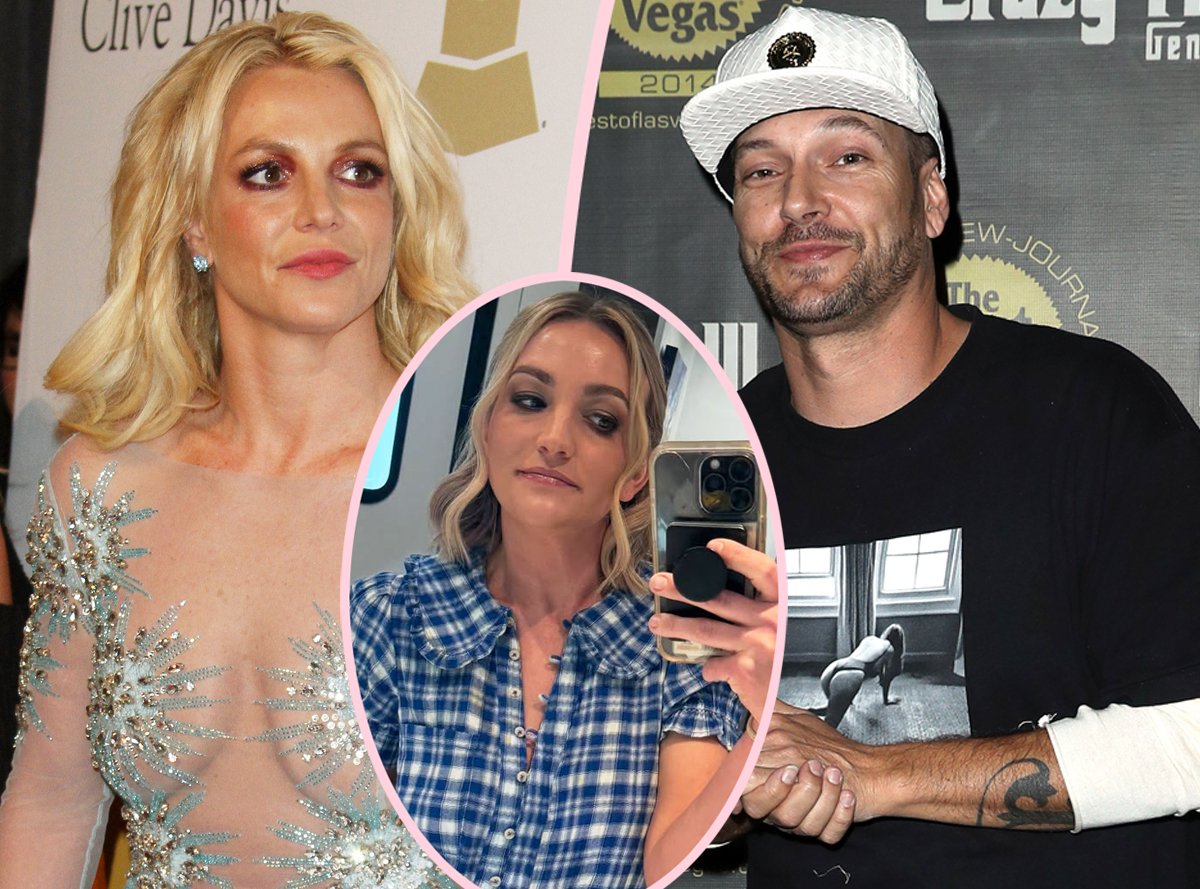
On Sunday, the pop star shared a still of Dakota Fanning’s character from Uptown Girls giving the middle finger, then paired the image with a caption that was far more painful than playful. Spears accused her younger sister, Jamie Lynn Spears, and ex-husband Kevin Federline of treating her cruelly during visits with family, writing that she would “find a new family.”
It is the kind of sentence that lands with a thud because Britney’s family story has never been ordinary celebrity sibling drama. It is a decades-long saga involving fame, control, a conservatorship, estrangement, reconciliation rumors and the particular misery of being surrounded by people who know exactly where the emotional bodies are buried.
The post was short. The history behind it is not.
In the Instagram caption, Spears claimed that during extended trips to Louisiana amid the COVID-19 pandemic, Jamie Lynn would not let her hold her young daughter, Ivy. Spears also alleged that Federline would not allow her to use the bathroom when she arrived at his home to pick up their children.
“They made me feel like a slave,” Spears wrote, adding that family members had “secret things” happening behind her back. She connected that pain to the years she spent working for her father, Jamie Spears, whose conservatorship over her personal and financial life lasted from 2008 until 2021.
Those are Spears’s allegations, and neither Jamie Lynn nor Federline is quoted responding in the source material. But the emotional architecture is familiar: Britney describing herself as the person who worked, performed and financially carried the family, while feeling denied ordinary intimacy in return. The bathroom line is especially stark because it is so mundane. No red-carpet betrayal, no courtroom bombshell—just a person saying she was made to feel unwelcome at the most basic level.
That is often how celebrity family wars become so gripping. The famous part is enormous, but the details are painfully domestic.
Jamie Lynn and Britney have been circling the same wound for years
Britney has spoken publicly about feeling abandoned and controlled during the conservatorship, which placed her father at the center of decisions about her life for more than a decade. When the arrangement ended in 2021, the cultural conversation around Spears shifted from “pop star meltdown” to a much more complicated question: what happens when the people presented as a celebrity’s support system are also part of the machinery surrounding her?
Her relationship with Jamie Lynn has been a particularly combustible part of that conversation. In her 2023 memoir, The Woman in Me, Britney criticized her sister while also making clear that love and anger could exist at the same time. That is less tidy than the usual celebrity reconciliation cycle, where one soft-focus photo is supposed to erase years of pain. The Spears sisters have never offered that kind of clean ending.
There had been signs of movement in the other direction. Last September, according to claims cited by Perez Hilton, the sisters were communicating again and considering meeting in person. For a moment, it appeared possible that the family might be inching toward a less hostile chapter—quietly, cautiously, without a staged sisters’ brunch for the cameras.
Britney’s latest post makes that possibility look much less settled. It does not necessarily explain what happened between those reported conversations and Sunday’s outburst, but it does suggest that whatever fragile peace existed was not the same thing as resolution. In Britney’s world, “we’re speaking again” and “I feel safe with you” are clearly not interchangeable.
Kevin Federline is still part of the emotional blast radius
Federline’s name carries a different charge in Britney’s story. He is not her sibling, but he is tied to her through their two sons and the custody battles that followed their 2007 divorce. That history has kept him in the public conversation even as Spears has tried to build a life outside the most invasive years of her fame.
Her latest allegation about being unable to use the bathroom while picking up her children turns a co-parenting interaction into a symbol of humiliation. Spears’s caption does not lay out a full timeline, and it does not explain what Federline’s side of the exchange might be. It does, however, show how she remembers the atmosphere: not as a neutral handoff between adults, but as another moment when she felt powerless in a family system she believed had already taken too much from her.
That is why this post is likely to travel far beyond the usual Instagram celebrity cycle. It is not a glamorous vacation carousel or a suspiciously timed soft launch. It is Britney using a meme image to say that the people around her made her feel like an outsider—and that she would rather invent a new family than keep begging the old one to make room.
The “new family” line is the one the internet will remember
“I will find a new family” is melodramatic, wounded and instantly legible. It sounds like a pop lyric, a diary entry and the final text sent after a holiday argument when everyone is still typing. That is precisely why it hits.
Fans have spent years watching Spears attempt to reclaim control of her own narrative, sometimes through carefully framed public statements and sometimes through posts that feel like emotional weather reports. The latest message belongs firmly to the second category. It is not polished. It is not diplomatic. It is not interested in giving the family a flattering group portrait.
There is also something revealing about the chosen image. The Uptown Girls still supplies a familiar pop-culture shorthand for irritation, but Spears’s words pull the post out of meme territory. The middle finger is almost the easy part. The real message is the loneliness underneath it: I showed up, I worked, I came back, and I still did not feel wanted.
That does not make every accusation independently established, and social media is a notoriously incomplete stage for family disputes. But it does make the post impossible to dismiss as random celebrity oversharing. Britney is revisiting the same central grievance that has shaped her public life since the conservatorship era: the feeling that family loyalty was demanded from her while basic tenderness was withheld.
Whether this is another temporary rupture or the latest sign that reconciliation remains out of reach, the Spears family has once again become a story about more than famous people behaving badly. It is about what happens after the headlines fade, the court orders end and everyone is expected to hug it out.
Britney, for now, is saying she would rather start over.