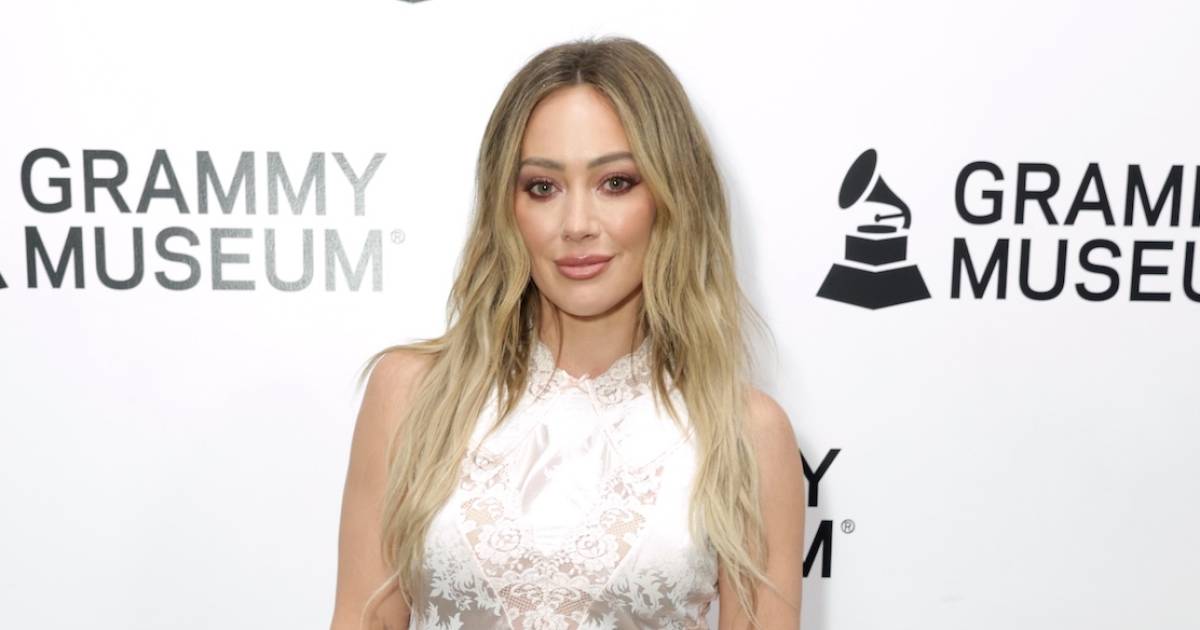
Hilary Duff’s Revenge Era Involved Canned Wieners, Tuna and a Very Bad Boy
Before the kids, the luxury jungle vacations and the mom-group headlines, Duff says her “spicy nights” included a gloriously low-budget act of friendship.
Hilary Duff has spent the past year orbiting a very specific kind of celebrity conversation: the glamorous mom-friend ecosystem, where a group chat can become a headline, a vacation carousel can feel like a diplomatic summit and somebody’s carefully worded essay can send the internet into full detective mode.
But long before the jungle resort, the mahjong tables and the public debate over who was—or was not—in the inner circle, Duff had a simpler method for dealing with people who treated her friends badly: buy the cheapest canned food available and redecorate their front lawn.
In an interview with Billboard published Tuesday, November 3, Duff recalled one particularly “spicy” night from her late teens. A guy, she said, was “doing my friend real dirty.” Duff and her friend had been drinking, decided the situation required action and went shopping for “the cheapest, grossest can of wieners and tuna.” Then they headed to his house and had “a little field day on his front lawn.”
It is not revenge in the grand cinematic tradition. There was no dramatic confrontation, no shattered windshield, no expensive floral arrangement spelling out a threat. It was more like Lady Vengeance directed by two teenagers with access to a discount aisle. And honestly? The commitment to making the prank both personal and deeply unpleasant is art.
Hilary Duff’s “spicy” nights were apparently not for beginners
“I’m, like, spicy, so my spicy nights [are] kind of evil,” Duff explained, adding that the incident happened during her “late teen-hood.” The line lands because Duff’s public image has always carried a curious double exposure: wholesome Disney-era nostalgia on one side, quietly feral best-friend energy on the other.
She was once the clean-cut teenage icon of Lizzie McGuire and “Come Clean,” a star whose cultural footprint was built on relatable chaos with a glossy finish. The canned-wiener story gives that image a mischievous little crack. Duff was not just the girl next door. She was the girl next door who might help you process a romantic betrayal by turning somebody’s lawn into a tuna-scented crime scene.
There is also something satisfyingly old-school about the story. Teen revenge now arrives through subtweets, private stories, suspiciously timed TikToks and a mutual friend’s oddly specific podcast appearance. Duff’s method was tactile, cheap and impossible to mistake for a carefully managed publicity strategy. Nobody was screenshotting a cryptic caption. Somebody was presumably stepping outside and wondering why their property smelled like a gas-station snack aisle.
To be clear, Duff did not identify the guy or the friend involved, so the anecdote stays in the realm of celebrity folklore rather than reopening a specific ancient feud. The fun is in the picture she did provide: two young women, a bad situation, a bottle or two, and a grocery run that took a sharp turn toward culinary warfare.
From front-lawn chaos to the celebrity mom-group group chat
The story arrives with particularly funny timing because Duff’s adult social life has recently become a much more scrutinized subject. In October, she captioned an Instagram carousel from a trip to Mexico, “The group chat made it to the jungle.” The getaway included Mandy Moore, author and food personality Gaby Dalkin, makeup artist Kelsey Deenihan Fisher, skincare professional Whitney Wagner Hartley, artist Amanda Lillywhite, Better Babies founder Janice Gott and influencer Haylee Christine.
The setting was the One&Only Mandarina resort in Mexico’s Riviera Nayarit, where the group lounged in a coastal rainforest paradise that sounds less like a girls’ trip and more like the opening scene of a very expensive streaming dramedy. Duff appeared in a high-cut yellow one-piece, sipped coconuts by the water and played mahjong with friends. The overall message was clear: the group chat was not merely alive; it had frequent-flyer status.
That vacation also carried a layer of celebrity-social intrigue. It came less than a year after Ashley Tisdale French published an essay for New York Magazine’s The Cut titled “Breaking Up With My Toxic Mom Group.” Tisdale French did not name anyone in the essay, but social media users speculated that Duff and Moore were among the women she was describing after she wrote about feeling frozen out and excluded from multiple get-togethers.
The resulting conversation transformed a familiar celebrity image—the polished group vacation—into a kind of social Rorschach test. To some, Duff’s Mexico carousel was simply a glamorous reset with friends. To others, the phrase “the group chat made it to the jungle” sounded like a pointed reminder that the group chat had survived the discourse. Duff later addressed the situation on the Call Her Daddy podcast, saying it was painful to read something she believed was untrue and that she felt sad on behalf of the six women involved.
She has always understood the power of a tight inner circle
That same instinct—to defend the people she loves, even when the optics get messy—runs through both stories. In the teen revenge anecdote, Duff’s loyalty came with canned meat. In the mom-group drama, it came with a public explanation that emphasized how upsetting the situation was for the wider circle, not just for her.
She has also joked about the architecture of friendship herself. During a Harper’s Bazaar “Burning Questions” video, Duff was asked which early-2000s trend should stay in the past. Her answer: “MySpace Top 8.” It was a very Duff response—funny, nostalgic and quietly aware that friendship rankings have always been a public-facing performance, whether they appeared on a profile page or in a resort carousel.
Now Duff shares three daughters—Banks, Mae and Townes—with husband Matthew Koma, along with son Luca, whom she shares with ex Mike Comrie. Her life is no longer built around late-teen “spicy nights,” at least not according to anything she has publicly shared. These days, the revenge fantasy is less likely to involve a front lawn and more likely to involve a group chat, a vacation and a caption that makes everybody else wonder what happened before the photo was taken.
Still, the canned wieners and tuna remain the perfect origin story for Duff’s particular brand of loyalty. She may now be serving luxury resort, yellow swimsuit and celebrity-mom serenity, but somewhere beneath the polished carousel is the same girl who heard that a friend was being treated badly and thought: absolutely not—hand me the grossest thing in aisle seven.
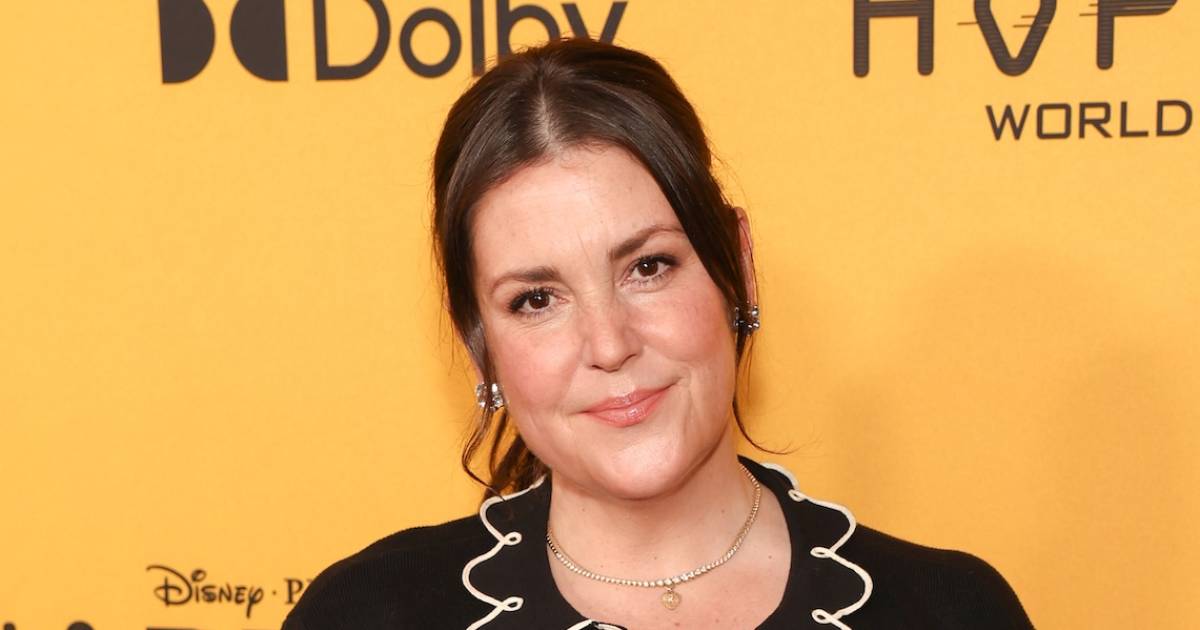
Melanie Lynskey Just Ruined the Internet’s Favorite ‘Two and a Half Men’ Salary Fantasy
The Yellowjackets star says the viral claim that she made $200,000 to $300,000 per episode is wildly wrong — and explains what her Rose paycheck actually looked like.
There is a very specific kind of internet fantasy built around old sitcoms: if a show was enormous, everyone on it must have been paid like a minor head of state. The set had a laugh track, a hit theme song and enough syndication money to power a small nation, so surely every recognizable face walked away with millions.
Melanie Lynskey has now entered the chat to say: absolutely not.
The Yellowjackets star, who played the unsettlingly devoted Rose on Two and a Half Men, pushed back on an Instagram comment claiming she made between $200,000 and $300,000 per episode. Her response was unusually specific, lightly amused and devastating to the fantasy economy surrounding a 2000s network sitcom.
“Sorry, but this insane number is floating around on the internet and I must tell you how wrong it is,” Lynskey wrote.
The number floating around was not even close
Lynskey said she appeared in 63 episodes of Two and a Half Men, which ran for 12 seasons and 262 episodes between 2003 and 2015. She did not arrive as the star of the series. That distinction matters in a sitcom universe where the top-billed men could become the subject of very public, very enormous salary negotiations while everyone else’s compensation was treated like a mysterious side quest.
According to Lynskey, she started at $20,000 per episode and believes she received a 5 percent raise each season. More than half of her appearances came during the first two seasons, when Rose was still a recurring character orbiting Charlie Harper’s Malibu house rather than a regular engine of the show.
Her highest paycheck, she said, was approximately $43,000 for one episode in the final season.
That is a long way from $200,000 to $300,000. It is also a useful reminder that “appeared on a hugely successful sitcom” and “was paid like the person whose name is in the opening credits” are two very different sentences.
Lynskey’s tone was not bitter about the money itself. The correction was aimed at the mythology. She said the paycheck had been life-changing for her at the time, while making clear that it was not the kind of windfall social media had assigned to her retroactively.
Holland Taylor opened the salary door
The conversation began with a social media post from the Alchemy With Anthony Mason podcast featuring Lynskey’s former costar Holland Taylor. In the interview, Taylor said Two and a Half Men never paid her “very well,” despite receiving four Emmy nominations for her work on the show. She also said she never got a raise.
That apparently gave Lynskey the opening she needed.
“If Holland’s talking about it I’ll talk about it too 😂,” she wrote, before laying out her own experience. The contrast is striking: Taylor was already an established, acclaimed actor playing Evelyn Harper, the kind of role that helped give the show its sharpest adult bite, yet she described the financial arrangement as underwhelming. Lynskey, meanwhile, was 25 when she got the job and was still building the career that would eventually take her from indie films to prestige television.
The internet, as it tends to do, had compressed all those distinctions into a single shiny number. Someone claimed Lynskey made hundreds of thousands per episode. Someone else attached a $75,000-per-episode figure to Taylor, though Taylor herself did not mention a specific amount in the interview. Lynskey decided that if the salary conversation was already happening, she might as well correct the most extravagant version of it.
There is something wonderfully old-fashioned about a celebrity personally appearing in the comments to fix a bad number. Not through a carefully polished statement. Not via a representative. Just a direct, “Sorry, no,” followed by the math.
Her version of success is much less glamorous — and much more real
Lynskey also explained what those paychecks meant in her actual life. She said the money allowed her to pay a small mortgage and bills, and gave her room to continue working in independent movies while building a career. A couple of years into the job, she was able to put a down payment on a house.
“That money was huge for me!!” she wrote, emphasizing that gratitude and irritation can exist in the same paragraph.
Then came the less glamorous accounting. The quoted figures were before commissions for agents, managers and business managers, as well as taxes. Lynskey said actors take home around half of what they are paid, which turns a headline number into something considerably less cinematic by the time it reaches a bank account.
She was careful not to perform hardship where she did not feel it. She said she was extremely grateful for the job and the money, and that she always thinks about how lucky she was compared with the vast majority of actors struggling to make a living. Her complaint was not, “I was cheated out of a fortune.” It was, essentially, “Please stop pretending I was paid a fortune I never saw.”
That distinction makes the whole exchange land harder. Celebrity salary stories usually arrive wrapped in either envy or outrage, with every paycheck treated as a morality play. Lynskey’s correction was more grounded: yes, the money was meaningful; no, it was not remotely the number people were tossing around; and yes, the career math behind a long-running show can be much messier than the glossy rerun aura suggests.
She ended by praising Taylor as “a legend” and “a queen” who deserved many raises. Which is both a generous tribute and, given the subject of the conversation, an extremely pointed final word.
The fantasy of Two and a Half Men remains intact in one sense: the show was massive, lasted more than a decade and made its leading men extremely wealthy. But Lynskey’s comment peeled back the sitcom’s shiny surface for everyone else — the recurring actors, acclaimed women, working performers and familiar faces who helped make a television hit feel fully populated.
Sometimes the most interesting celebrity confession is not a scandal. Sometimes it is a number, posted beneath a podcast clip, quietly demolishing the version of Hollywood arithmetic that strangers have been repeating for years.
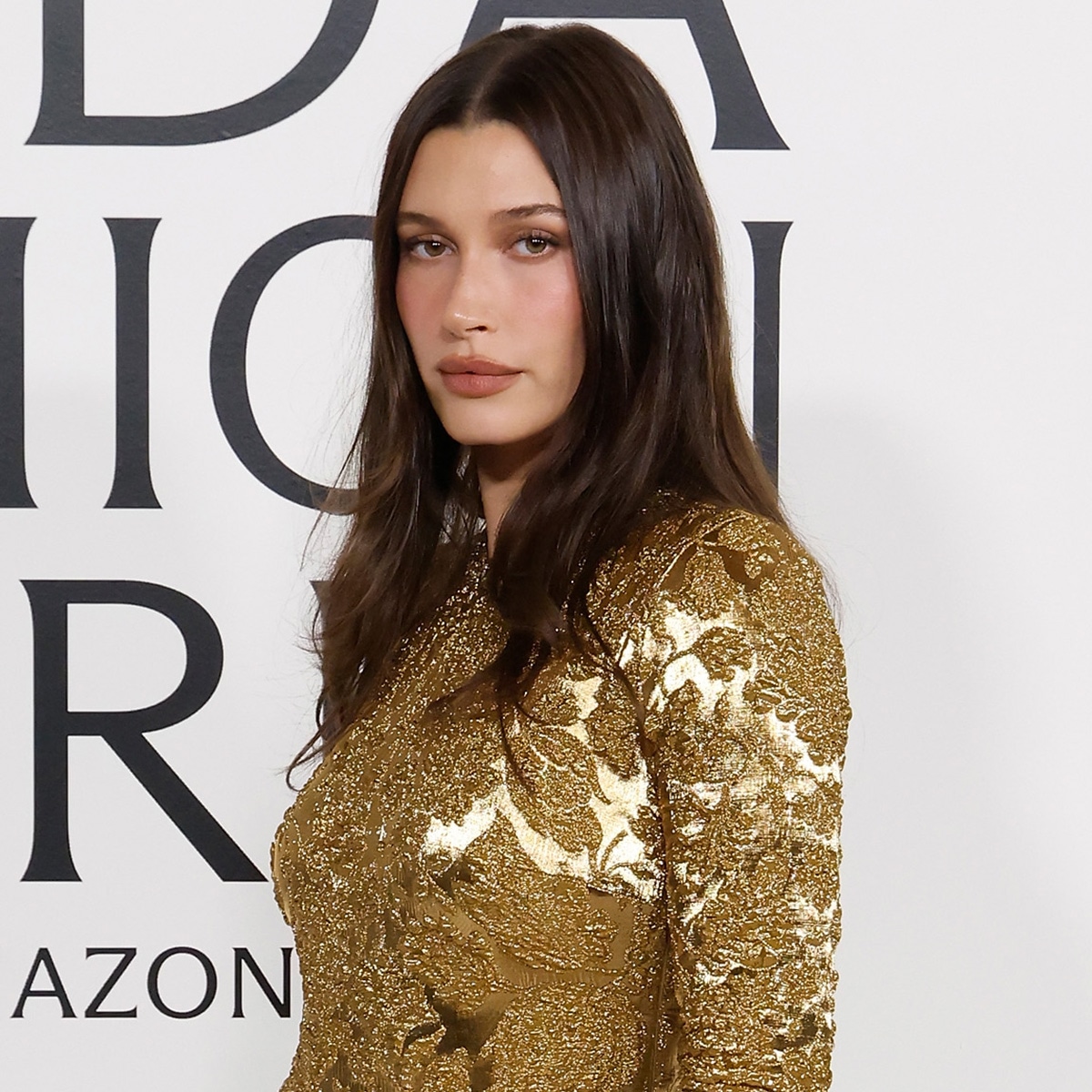
Hailey Bieber Is Done Making Postpartum PMDD the Quiet Part
The Rhode founder opened up about the lonely reality of PMDD after welcoming son Jack—and why talking about women’s health feels like its own kind of recovery.
Hailey Bieber has spent years being photographed in outfits that look effortless, carrying beauty products that sell out before lunch and existing in the general vicinity of Justin Bieber’s extremely famous face. Now she is talking about something much less glossy: the way her body and mind changed after becoming a mother.
In a new interview with Women’s Wear Daily, Hailey described struggling with premenstrual dysphoric disorder, or PMDD, after welcoming her son, Jack Blues Bieber, with Justin. The condition is related to PMS but can be significantly more intense, with symptoms that may include severe depression, irritability and tension in the weeks before a menstrual cycle.
Her point was not that motherhood delivered a tidy, inspirational transformation. It was that pregnancy, childbirth and the postpartum period can leave women navigating a maze of physical and emotional changes while the public conversation remains weirdly underlit. For someone whose life is followed through paparazzi photos, beauty launches and carefully framed glimpses of family life, the admission landed with unusual intimacy.
The glamorous life, interrupted by a very unglamorous reality
“I feel really drawn to women’s health,” Hailey told WWD. “As a woman, I feel frustrated by the lack of research, the lack of awareness, the lack of certain conversation around it.”
That frustration is the real headline. Celebrity wellness talk can often sound like a fog of supplements, green juice and expensive serenity. Hailey’s version was more direct: there are parts of women’s health that remain poorly understood, under-discussed and easy to dismiss, even as women are expected to carry on looking fine.
“Especially after having my own child,” she continued, “that was just a really intense and special journey that I had. There’s so much that happens when you are pregnant, during childbirth. There’s so many things that happen leading up to having a child.”
Then came the sentence that gave the conversation its emotional center: “After I had my son, I struggled with that a bit,” she said of PMDD. “There’s just not a lot of conversation or research around it.”
It is a very Hailey kind of disclosure: polished, measured and still capable of making the internet pause mid-scroll. She did not turn the experience into a dramatic spectacle. She simply named a problem that many people recognize and far fewer people discuss without whispering.
Her “rhode to recovery” is less secret cure, more actual conversation
Hailey’s beauty brand, Rhode, is committing $5 million and entering a three-year partnership with the Foundation for Women’s Health. The initiative gives her personal comments a larger frame: this is not only a celebrity describing a difficult stretch, but a public-facing effort to push women’s health further into the mainstream.
For Hailey, the first step was language. “Conversation, for me personally, makes me feel less alone,” she said. “When we can identify with each other and have conversations relating to each other and talking about the things we’re dealing with and struggling with, I do think it makes it feel like less of a lonely journey.”
That may sound simple, but it is precisely why the disclosure has traction. Hailey has a particularly visible version of the modern celebrity life: a young family, a global pop-star husband, a beauty company and an audience trained to inspect every Instagram Story for clues about how everyone is really doing. Yet PMDD is not a red-carpet issue. It is cyclical, private and often difficult to explain to people who have never experienced it.
Her comments also push back on the idea that postpartum life can be reduced to a baby announcement followed by adorable family photos. The Biebers have shared plenty of the sweet version: holiday snapshots, beach days, father-son moments and Hailey’s emotional note about Jack approaching his first birthday. Behind that public scrapbook, she was also trying to understand her own health.
Before Jack, there was already a pregnancy story nobody saw coming
Hailey has previously spoken about how unexpectedly she became pregnant. On the SHE MD podcast in March, she said she had a septum in her uterus and had been advised to monitor it before becoming pregnant because it could potentially create complications.
“I was like, ‘Okay. Well, I’m not thinking about getting pregnant right now, so we’ll just cross that bridge when we get there,’” she recalled. “And then I magically got pregnant.”
Her description adds another layer to the family story the public usually receives in neat, celebratory packaging. Jack’s arrival was joyful, but Hailey has also been candid about the uncertainty surrounding conception and pregnancy. Her comments about PMDD continue that pattern: motherhood is something she loves, and it has also asked her body and mind to absorb a lot.
That complexity matters because Hailey has not framed herself as choosing between being grateful and being honest. She can say motherhood is “so fun” and that she loves being a mom while also acknowledging that the journey came with difficult symptoms and unanswered questions. The two ideas are not enemies, no matter how much social media prefers a clean narrative.
And yes, the Bieber baby conversation is still alive
Hailey has also said that she and Justin plan to have more than one child. Speaking on the In Your Dreams podcast, she said, “It’s so fun, I love being a mom,” adding that she had always envisioned having children.
That does not make a second pregnancy imminent, and neither the new interview nor the comments supplied a timeline. But it does explain why every glimpse of the family continues to generate outsized interest. The Biebers have moved from years of marriage speculation and relationship scrutiny into a new era where the audience is watching the shape of their family life change in real time.
For now, Hailey’s most compelling update is not a soft launch, a matching outfit or a suspiciously timed vacation photo. It is the decision to make a difficult, deeply personal health experience part of the conversation while using the machinery of celebrity to fund more of that conversation. In a culture that loves to package motherhood as glowing and effortless, that kind of honesty is its own form of disruption.