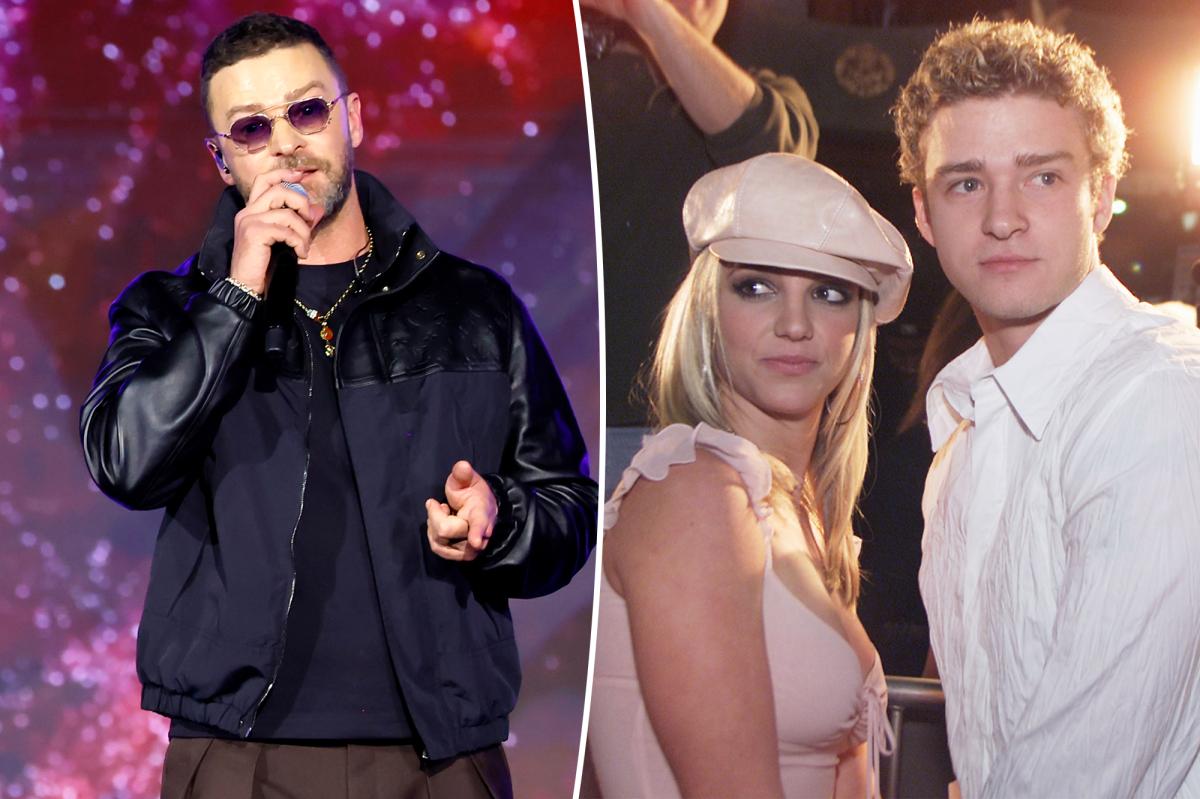
Justin Timberlake Finally Breaks His Biggest Britney Spears Song Myth
Twenty years after fans turned “What Goes Around… Comes Around” into a pop-culture revenge anthem, Timberlake says the song was never about Britney Spears. The more complicated answer may be hiding in “Cry Me a River.”
For nearly two decades, “What Goes Around… Comes Around” has lived in the public imagination as Justin Timberlake’s deluxe edition of emotional payback: sleek production, cinematic betrayal, a 10-minute music video and the unmistakable feeling that somebody’s bad behavior had finally boomeranged back into their face.
And because Timberlake and Britney Spears had already endured one of the most intensely scrutinized celebrity breakups of the early-2000s, the internet did what it does best. It connected the dots, sharpened the heartbreak into a storyline and decided the 2006 hit was about Spears.
Now Timberlake is asking everyone to put the red string away.
During an appearance on Complex’s “Re-Rank” YouTube series, the singer said “What Goes Around… Comes Around” was not a personal story about his former girlfriend. “Maybe I should dispel a rumor at this point, which has gone around forever,” he said. “It’s not a personal story from mine.”
Instead, Timberlake said the song came from a friend’s breakup. The friend told him what had happened, Timberlake asked permission to write about it, and one particularly memorable line provided the spark: “Yeah, torch that bitch. What goes around comes around.” Timberlake said he wrote the song in “damn near 20 minutes.”
The song arrived with perfect Britney-era timing
It is easy to understand why the Spears theory stuck. Timberlake and Spears had been linked since their days on “The All-New Mickey Mouse Club,” began dating in 1999 and split in 2002, when both were still at the center of the pop-culture universe.
Then came the symbolism. “What Goes Around… Comes Around” appeared on Timberlake’s 2006 album “FutureSex/LoveSounds,” around the time Spears’ marriage to Kevin Federline was unraveling. The song’s story of infidelity, consequences and a woman who will eventually get what is coming to her landed in a culture already watching Spears’ personal life with an invasive level of fascination.
The video only made the theory more combustible. Scarlett Johansson starred opposite Timberlake in a glossy, tragic mini-movie involving secrecy, betrayal and a fatal car crash. It was not a direct Spears portrait, but it carried the kind of high-drama emotional architecture that made listeners think they were being handed a coded message.
There was also the title. “What Goes Around… Comes Around” sounds less like a neutral observation than a line delivered by someone who has been waiting patiently for the universe to handle things. Once fans placed Timberlake and Spears inside that narrative, every dramatic pause became subtext.
But “Cry Me a River” is still sitting right there
Timberlake’s clarification does not exactly close the Britney chapter. It simply moves the conversation to a different track.
“Cry Me a River,” released on Timberlake’s 2002 debut album “Justified,” has long been associated with the breakup. Its video featured a Spears look-alike portrayed as having cheated on Timberlake, making the connection feel considerably less mysterious than the one attached to “What Goes Around.” Fans have speculated for years that the song was about Spears, and the visual casting did not exactly discourage that reading.
In her 2023 memoir, “The Woman in Me,” Spears wrote about the fallout from the video and the media storm that followed. She said it made her look like a “harlot who’d broken the heart of America’s golden boy,” while she was, in her words, “comatose in Louisiana” and Timberlake was “happily running around Hollywood.” Spears also wrote that Timberlake had cheated on her several times, though she did not identify anyone in particular.
That history gives “Cry Me a River” a very different cultural afterlife from “What Goes Around… Comes Around.” One song was built from a friend’s breakup, according to Timberlake. The other was released immediately after Timberlake and Spears split and included a character who looked conspicuously like her. If fans have been assigning the wrong emotional invoice, they may have at least been looking in the right album section.
The pop breakup that became a permanent group chat topic
The Timberlake-Spears relationship has survived far beyond the relationship itself because it was never just a celebrity romance. It was a collision between teen-pop fame, carefully managed images and a media culture that loved a simple hero-and-villain arrangement.
Timberlake emerged from the breakup as the polished solo star with the wounded-man hit. Spears was pushed into the role of the reckless ex-girlfriend, a framing that her memoir challenged years later. The public was encouraged to read songs, videos and red-carpet appearances as chapters in one long breakup story, even when the artists were making separate work and living separate lives.
That is why Timberlake’s new explanation is both amusing and oddly revealing. A song can become autobiographical by popular consensus, especially when it arrives at the exact moment audiences want a familiar narrative. “What Goes Around…” did not need to be about Spears to feel like it was about Spears. The timing, the title and the emotional weather did enough heavy lifting.
Timberlake ranked the song as “one or two” in his own discography during the Complex conversation, which is a charmingly evasive way to place it near the top without having to pick a favorite. He also described the 10-minute video as part of why the song “hit on all cylinders.” In other words, the track’s power was not necessarily its backstory. It was the full package: the soaring revenge-ballad structure, the expensive-looking melodrama and the sense that consequences were waiting just offscreen.
And then Spears complicated the ending again
The public history between the two stars has not stayed frozen in 2002. In a since-deleted Instagram post from January 2024, Spears apologized for some of the things she wrote in her memoir, saying she was sorry if she offended people she genuinely cared about. She also wrote that she was “in love” with Timberlake’s then-new song “Selfish,” praising it as “soo good” and joking about how much she laughs when she sees Timberlake and Jimmy Fallon together.
It was a strange, generous and very Britney-style turn in a saga that had spent years being narrated as a clean revenge story. The apology did not erase the history, and Timberlake’s new comments do not rewrite it. They do, however, expose how much of celebrity mythology is built from songs that listeners adopt as personal evidence.
So, no: according to Timberlake, “What Goes Around… Comes Around” was not his musical dispatch to Spears. It was a friend’s heartbreak, transformed at speed into a song that became a global soundtrack for karmic justice.
But if anyone still wants a Timberlake-Spears breakup anthem, “Cry Me a River” remains available for streaming, analysis and at least another twenty years of group-chat debate.
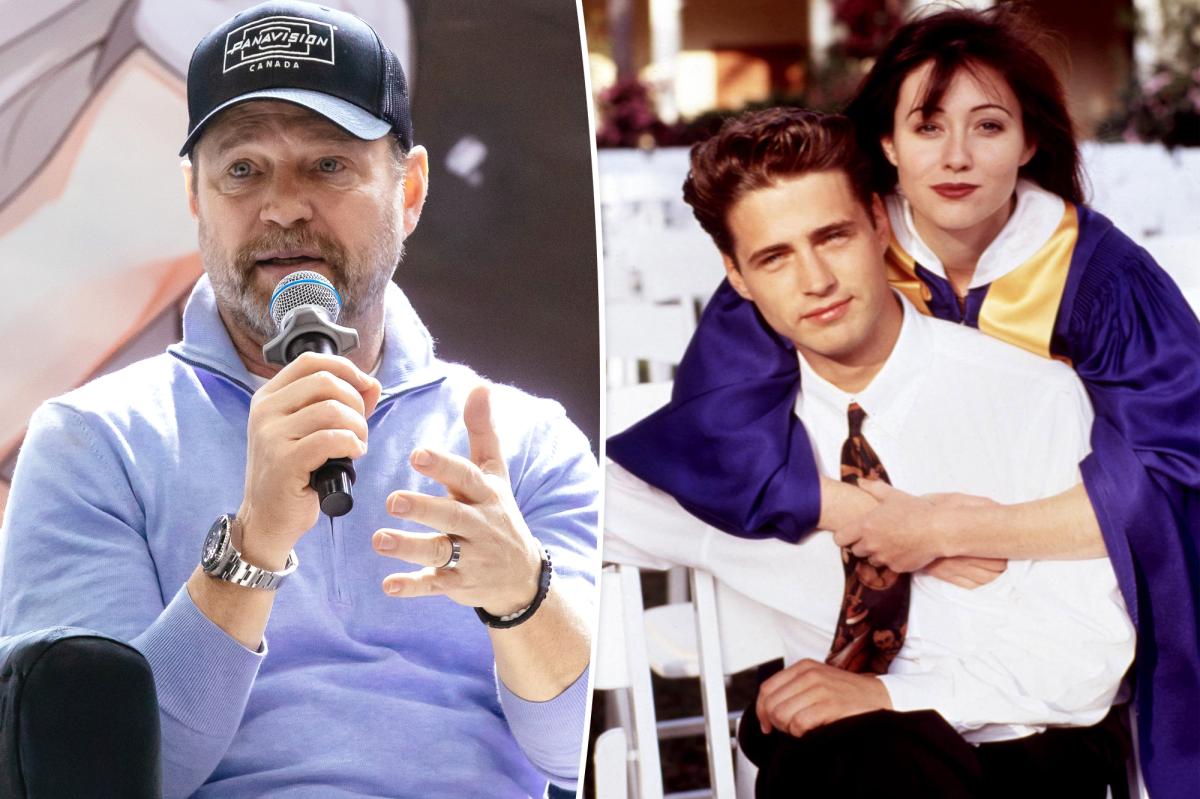
Jason Priestley Just Reopened the Shannen Doherty Exit Debate — and Added One Brutal “What If?”
The “Beverly Hills, 90210” star says Doherty’s firing might have gone differently if the cast and producers had understood what she was facing off-camera.
There is a very specific kind of Hollywood memory that never stays buried: the beloved show, the iconic star, the behind-the-scenes implosion everyone thought they understood at the time. Now Jason Priestley has walked back into one of television’s most enduringly messy exit stories and given it a painful new complication.
Speaking on Pete Ferriero’s “The Slice of Life Show” podcast during an appearance published Nov. 5, Priestley reflected on Shannen Doherty’s departure from “Beverly Hills, 90210” after Season 4. His version is not a clean defense of the decision, and it is not a dramatic revelation that he and Doherty secretly hated each other. It is something more uncomfortable: the suggestion that the firing may have looked different if the people around her had understood what was happening in her life.
“There was never an issue between her and I specifically,” Priestley said. “I loved Shannen. I loved working with her. She was a great actress. She was a great scene partner. I only have fond memories of working with her on the show.”
Then came the sentence that turns a familiar Hollywood anecdote into a genuine what-if: “Had Shannen been more forthcoming about what was happening with her in her life at that point in time, I think we could have made a different choice.”
The “90210” firing was never just about being late
For years, Doherty’s exit was filed under the bluntest possible category: difficult star, troubled set, inevitable firing. She played Brenda Walsh, the fiercely emotional twin at the center of the teen drama, while Priestley played her brother Brandon. Together, they were the glossy California fantasy’s family heart — the Walsh twins who arrived in Beverly Hills and immediately made the zip code everyone’s problem.
But the real-life story was always more complicated than the old “bad behavior” shorthand allowed. On the podcast, Priestley described Doherty’s conduct as “disruptive,” while also making clear that her departure was frightening for the cast and not treated as an easy solution.
“She was part of the secret sauce that made the show successful,” he said. “We were going to lose that.”
That phrasing matters. Doherty was not some disposable supporting player whose exit could be disguised with a new haircut and a new love interest. Brenda was central to the show’s chemistry, and everyone involved understood that removing her would change the series itself. They also understood, Priestley said, that the decision would affect Doherty’s life and career. The choice was “not one that was taken lightly.”
In other words: the show could decide she had become impossible to manage, but it could not pretend she was replaceable.
Doherty had already explained the crisis behind the scenes
The eerie part of Priestley’s reflection is that Doherty later supplied the missing context herself. During a 2024 episode of her “Let’s Be Clear with Shannen Doherty” podcast, she discussed the circumstances around her final season and acknowledged that she could have been more transparent.
She said she was in a “really horrible marriage” to Ashley Hamilton, and that problems in the relationship made it difficult for her to consistently arrive at work on time. She also described her father as “super sick” and said Hamilton’s struggles with drug addiction had become all-consuming. At one point, Doherty recalled not wanting to leave the house because she was afraid Hamilton would go get drugs.
That is not a glamorous behind-the-scenes scandal. It is a person in crisis trying to keep a high-pressure job afloat while her personal life is collapsing around her. Doherty said she wished someone had sat her down and told her to “get your s–t together” before firing her, but she also admitted she should have been more open about what was happening.
Priestley’s new comments fit painfully alongside that earlier admission. Neither account erases the other. Doherty was responsible for her behavior, and the people running a hugely expensive television production had legitimate concerns about reliability and disruption. But the distance between “unprofessional” and “overwhelmed” can look very different once the context arrives — especially decades later, when the woman at the center of the story is no longer here to keep explaining herself.
A reunion conversation now feels like the real ending
Priestley appeared on Doherty’s podcast in 2024, before her death that July at age 53 following a lengthy battle with stage 4 cancer. He later remembered her as “a force of nature,” writing on Instagram that he was shocked and saddened by her passing and would miss her.
That history gives his latest comments a different temperature. This is not a former co-star using a convenient anniversary to drag Doherty back into the tabloid version of her own life. It sounds more like someone revisiting a decision made when the cast was young, the show was enormous and nobody had the language — or perhaps the permission — to ask what was really going on.
There is also a generational sting to the story. In the 1990s, a female star’s distress could be packaged as attitude, lateness or instability long before anyone asked whether she needed help. “90210” was built on the fantasy that beautiful young people in Beverly Hills could survive anything with enough money, drama and good lighting. Behind the scenes, the adults were still making very old-fashioned calculations about who was worth accommodating and who had become too difficult.
Doherty’s Brenda was written as intense, principled and occasionally explosive. Doherty herself was often discussed through the same vocabulary, as if the character’s emotional force had somehow leaked into the workplace. The distinction between performance and personality blurred, and the resulting narrative followed her for years.
Priestley is not rewriting the history into a perfect rescue that never happened. He is saying the outcome might have changed if the people around Doherty had known more. That is a much sharper kind of regret because it does not offer anyone an easy villain or a satisfying fix.
And Priestley knows what it means to leave a hit too late
The timing is especially rich because Priestley has recently been revisiting his own complicated relationship with “90210.” On Jennie Garth’s “9021OMG” podcast, he recalled begging executive producer Aaron Spelling to end the series while it was still “on top.” By Season 8, he said, the show had started to feel “daytime-y in a way.”
Spelling, according to Priestley, had no interest in ending television’s most reliable California cash machine. Priestley eventually left at the beginning of Season 9, before the show wrapped its 10-season run in 2000.
So here he is, years later, considering two different kinds of exit: the one Doherty did not control, and the one he ultimately chose for himself. Both were shaped by a show that had become bigger than the people who made it. Both raise the same uncomfortable question: when does protecting the machine become easier than protecting the person?
There is no clean answer waiting at the end of this story. Just Priestley’s fond memories, Doherty’s later honesty and the knowledge that Brenda Walsh’s departure changed “90210” forever. The show survived for six more seasons. The myth around the firing survived even longer.
But the newest version is less about a “difficult” actress being removed from a hit series. It is about a young woman carrying a private disaster into a very public workplace — and a group of people who may have made a different choice if they had known how much she was carrying.
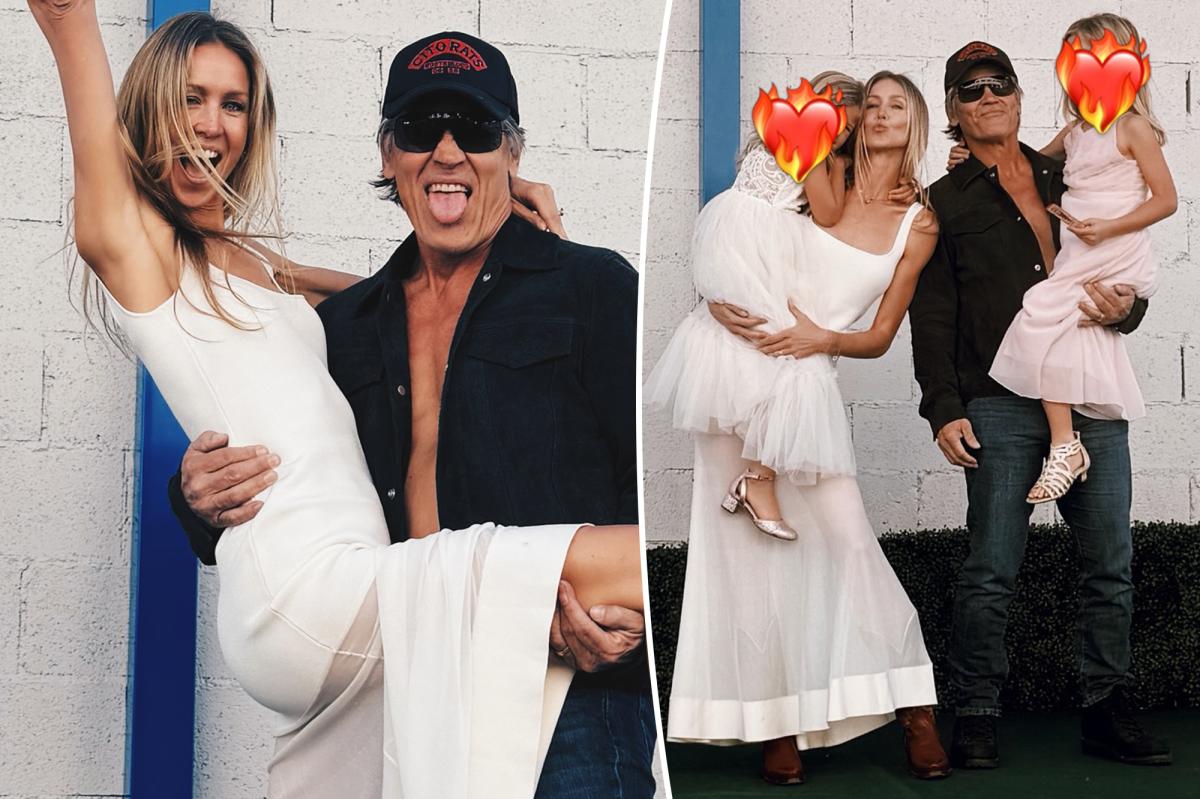
Josh Brolin Renewed His Vegas Vows in an Unbuttoned Shirt, Because Romance Needed More Chest
The actor and Kathryn Brolin marked a decade of marriage with an Elvis chapel, a Metallica detour and the kind of social carousel that makes a vow renewal feel unexpectedly cool.
Josh Brolin and Kathryn Brolin have renewed their vows in Las Vegas, and the couple apparently agreed that a quiet anniversary weekend would be far too subtle.
Instead, there was an Elvis impersonator, a chapel altar, a family photo shoot, a Metallica reference and Josh wearing a black shirt so aggressively unbuttoned it became less of an outfit and more of a declaration. Ten years into their marriage, the couple has delivered a vow renewal with the energy of a stylish Vegas after-party — sentimental, slightly chaotic and very committed to the bit.
Kathryn shared the celebration in a joint social media upload Saturday, with photos showing the pair exchanging vows at a Las Vegas chapel. Josh wore the open black long-sleeved shirt with jeans and a baseball cap, while Kathryn chose a white minidress with a longer sheer overlay. The look was part bridal, part nightlife, and exactly right for a ceremony that came with an Elvis impersonator watching from the altar.
The shirt had its own supporting role
There is a traditional anniversary-renewal formula: soft lighting, tasteful tailoring, perhaps a tasteful tear. The Brolins went another way. Josh’s shirt was completely open, exposing the physique that fans immediately noticed in the comments — and that the photo carousel made very difficult to ignore.
One commenter requested “MORE OPENED SHIRT PHOTOS,” adding heart and fire emojis. Another praised the couple for “SERVING,” while others called them “the coolest” and “two legends.” In other words, the audience understood the assignment: this was not merely a marriage milestone. It was a social drop.
The actor captioned the snapshots, “Vegas, Vows and Metallicaaaaa baby,” a reference to Metallica’s Las Vegas residency at the Sphere. That detail turns the whole outing from conventional vow renewal into a very specific Brolin date night: reaffirm the marriage, pose with friends and then go hear vintage metal in one of the world’s most aggressively futuristic venues.
It is also a reminder that celebrity romance does not always need a dramatic plot twist to become entertaining. Sometimes the story is simply two famous adults still having fun together, with one of them dressed like he might be heading directly from the chapel to a rock show.
A decade, four kids and one scrappy dog
The Vegas ceremony arrived shortly after the couple’s 10th wedding anniversary in September. On Sept. 25, Kathryn posted wedding photos and reflected on the life they have built since marrying in 2016.
“10 Years of Us. Four kids between us, one scrappy dog, three major moves, travel all over, and more love than I could’ve imagined for one lifetime,” she wrote. Her caption also nodded to their blended family: Josh’s two grown children from his previous marriage to Alice Brolin, Trevor and Eden, alongside the two daughters he shares with Kathryn.
Kathryn, 39, finished with a simple declaration: “I love you so much. It keeps getting better.” She signed off with “JBKBStuckTogether” and their wedding date, 9/24/16 — a little hashtag, a little archive label, a little reminder that the couple has been documenting this particular partnership in its own language for years.
Josh posted separately, describing marriage as finding “a playmate” to share “the sandpit of this life.” His anniversary message was less polished toast and more affectionate fever dream, comparing the pair to “young, stupid puppies out on a beach walk chasing birds.” He called Kathryn his “romping partner” and added, “till death do us part.”
It is an unusually playful way to talk about a decade together, which may be why it lands. There is no glossy promise that the relationship is effortless. There is a picture of two people still enjoying the same joke, still willing to be embarrassingly earnest in public and still apparently comfortable with the word “romping.”
Vegas made the family album
The renewal photos also brought the family into the spotlight, though the couple kept their two younger daughters’ faces covered with heart emojis in the shots. Kathryn and Josh posed with the girls outside the venue, then shared altar photos, a kiss and a casual selfie in which they snuggled together.
Other images showed the pair with members of their inner circle, giving the post the feeling of a wedding weekend compressed into one glamorous carousel: ceremony, family portrait, friends, newlywed-style kiss and the inevitable candid-looking couple selfie.
There is something especially charming about the contrast between the occasion’s emotional language and its visual styling. Kathryn is in white. Josh is in jeans and a cap. The chapel is classic Vegas. The soundtrack, at least by caption, is Metallica. The family is present. The shirt is open. It is not trying to look like a perfectly coordinated luxury wedding, and that is precisely why it feels more personal.
The couple’s public history has largely been defined by that mix of affection and informality. Their anniversary posts were deeply romantic, but neither sounded like a corporate statement about enduring love. They sounded like two people who have accumulated children, moves, travel, pets and private jokes — then decided the best way to celebrate was to get dressed up, go to a chapel and make the whole thing a little ridiculous.
The Brolins are still in their “best friends at the reception” era
Josh, 58, said in an October interview with the Telegraph that his marriage “just gets better after 10 years” and that his family is everything to him. The Vegas photos gave that sentiment a visual translation: a kiss at the altar, a cluster of loved ones, two daughters protected from the camera and a wife who appears entirely willing to let her husband’s torso become part of the anniversary content.
That is the appeal of this particular celebrity couple moment. It is romantic without being precious, glamorous without pretending the glamour is the point and just thirst-trappy enough to keep the comments section alive. The Brolins did not need a breakup rumor, a mysterious unfollow or a suspiciously timed airport photo to command attention. They simply renewed their vows in Vegas and let Josh’s shirt do some of the talking.
Ten years after their wedding, the message is clear: the relationship is still intact, the family is still central and the couple still knows how to stage a social moment. Add an Elvis impersonator and Metallica, and suddenly “happy anniversary” has a dress code.