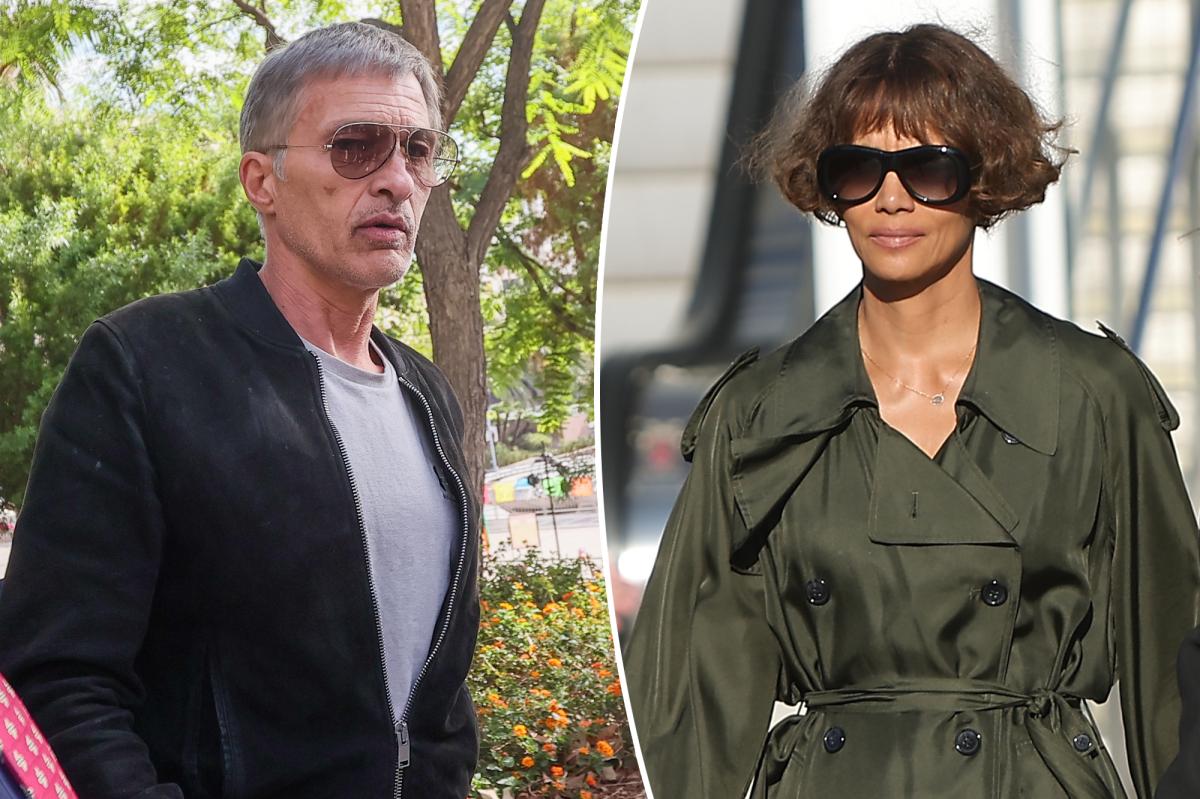
Olivier Martinez Wants Halle Berry to Pay More Child Support as Their Custody War Takes Another Turn
After a courtroom fight over allegations involving their 13-year-old son, Martinez is asking to modify the former couple’s support arrangement — and pointing to Berry’s Hollywood income.
Halle Berry and Olivier Martinez’s divorce has entered its most Hollywood chapter yet: the custody fight is now circling back to money.
Martinez has filed paperwork in Los Angeles Superior Court asking for a modification of the child-support order he and Berry agreed to when their divorce was finalized in August 2023. The request arrives just weeks after a bruising courtroom battle over allegations involving the former couple’s 13-year-old son, Maceo — a dispute that briefly put Berry under temporary restrictions and turned an already complicated co-parenting arrangement into headline fuel.
According to the filing, Berry previously agreed to pay Martinez $8,000 a month in child support, plus 4.3% of any income she earns above $2 million. Martinez now argues that the arrangement needs to be recalculated because his share of physical custody has changed.
The custody math is suddenly the main character
When Berry and Martinez finalized their divorce, their agreement reflected a 50-50 physical-custody arrangement. Martinez claims in the new filing that after a temporary restraining order was granted against Berry on Oct. 1, her “timeshare” with their son dropped to approximately 18%.
That number is doing a lot of work in this latest legal move. Child-support calculations can shift when custody time changes, and Martinez is asking the court to revisit the monthly amount while discovery is pending. He says he cannot calculate the guideline support yet because Berry has not filed a current income-and-expense declaration, and he says he does not have updated information about her earnings.
He does, however, point to her recent and upcoming work. The filing references Berry’s appearance in Crime 101, released in 2026, as well as two additional projects: Fleur, on which she is also a producer, and Red Card.
Martinez says his own average monthly expenses are nearly $18,000, while his income is less than $800 a month in residual payments. His argument is built around a familiar but always combustible idea in celebrity family court: a child should share in the lifestyle made possible by both parents’ wealth, not simply have their basic needs covered.
In the filing, he argues that “the ‘needs’ of a child of extraordinarily wealthy parents will exceed the bare necessities of life.” It is the kind of sentence that sounds less like a co-parenting conversation and more like a line from a very expensive legal drama.
This comes after a nine-day courtroom showdown
The support request follows Martinez’s earlier attempt to secure a domestic-violence restraining order against Berry. He accused the Oscar winner of physically abusing their son, including allegedly choking him during an altercation in September. Berry has vehemently denied the allegations.
After a nine-day court battle, a judge lifted the temporary restrictions imposed on Berry and rejected Martinez’s request for a domestic-violence restraining order. The court did not simply send the family back to the old 50-50 setup, though. At an Oct. 29 hearing, Martinez retained the physical-custody arrangement that had been in place when the temporary order was granted, while he and Berry continued to share legal custody.
That custody arrangement is expected to be discussed again at a hearing next month, meaning the family’s schedule — and the financial calculations attached to it — remain in motion.
The timing makes this feel like more than a routine request to update a support figure. Martinez is seeking a financial adjustment while the larger custody dispute is still unresolved, and he is using the alleged reduction in Berry’s parenting time as the central reason for the change.
A very public ending to a very private war
Berry and Martinez were married in July 2013 and separated two years later. They were declared legally single in December 2016, but their relationship has continued to surface in court through the practical business of raising a child together.
The former couple has kept parts of that co-parenting conflict out of public view, but the current dispute has unfolded alongside an unusually visible period in Berry’s life. She has been photographed with her fiancé, Van Hunt, who Page Six previously reported has been “incredibly supportive” during the custody battle. Berry was also seen with her attorney during the October hearings, while Martinez has appeared in court amid the escalating legal fight.
That public backdrop matters because celebrity custody battles are never just about the paperwork. Every court appearance becomes a red-carpet-adjacent sighting; every filing introduces a new phrase for the internet to dissect; every change in custody time can carry a dollar figure that feels startlingly large to anyone outside the Hollywood economy.
Here, the numbers are especially eye-catching: $8,000 a month, an additional percentage of income above $2 million, and Martinez’s claim that his expenses approach $18,000 monthly despite minimal residual income. But the real tension is the overlap between two separate questions: what custody arrangement is currently in place, and what financial arrangement should follow from it?
The next hearing could reshape the whole arrangement
For now, Martinez is asking the court to modify support while he seeks more information about Berry’s current income and the couple’s custody schedule. Berry has not been reported as responding publicly to this latest filing.
The bigger fight is still about the structure of their parenting arrangement. The restraining-order request was rejected after Berry denied the abuse allegations, but the court’s temporary custody structure remains part of the conversation. Until the next hearing, neither the schedule nor the support calculation appears entirely settled.
And that is how this ex-couple’s latest chapter lands: not with a clean Hollywood breakup, but with a court calendar, a changing custody percentage and a request for more money attached to every hour spent parenting. The marriage ended nearly a decade ago. The paperwork, apparently, is still dating them.

Kendall Jenner’s ‘Naked’ 818 Ad Is a Very Kendall Bait-and-Switch
The supermodel strolls through a lush LA garden looking gloriously unclothed—until a tiny off-the-shoulder dress and one perfectly timed punchline change the whole pour.
Kendall Jenner knows exactly how long to let the internet wonder if she’s naked.
In 818 Tequila’s new campaign, titled “Nothing Extra,” the model and brand founder wanders through the gardens of Los Angeles’ Flamingo Estate with the serene confidence of someone who has never once had to check whether a dress is technically clothing. She picks pomegranates. She carries flowers. She moves through the greenery while strategically placed leaves and vines do the heavy lifting of a very committed wardrobe department.
For several seconds, the ad appears to be selling tequila via the oldest luxury-marketing formula in the book: beautiful person, expensive-looking nature, absolutely no visible fabric. Then the campaign pulls the glass away from the viewer’s face.
Jenner steps out from behind the foliage wearing an itty-bitty, off-the-shoulder LPA minidress. “Not naked at all,” she says, puncturing the fantasy with the kind of dry little aside that makes the whole thing feel less like a perfume commercial and more like a Kardashian-Jenner family group chat got hold of a tequila budget.
“It’s the tequila,” she adds. “The tequila’s naked.”
The dress was hiding in plain sight
The campaign’s trick is not that Jenner actually stripped down. It’s that the ad understands the social-media reflex perfectly: show just enough skin, greenery and mystery to make everyone pause before revealing the punchline. The visual language says “tasteful countryside escape.” The edit says “wait, is Kendall Jenner completely nude?” The payoff says “you fell for a tequila joke.”
That is the whole “Nothing Extra” concept in miniature. The voice-over describes things that are better in their natural state, then applies the idea to 818 Tequila: no added flavors, no added sweeteners, nothing artificial. The copy keeps building toward the phrase “practically naked,” allowing the campaign to flirt with a far thirstier interpretation before Jenner herself pulls the curtain back.
And the setting is doing plenty of seduction. Flamingo Estate gives the spot an abundant, slightly enchanted garden atmosphere, with pomegranates and flowers replacing the usual nightclub bottles and nightclub lighting. It’s an extremely 818 version of rustic: earth, fruit, botanical luxury and a celebrity who looks as if she has wandered into a very expensive farmers market while dressed for a yacht.
The joke works because Jenner has real experience with the art of strategic undress. She has previously appeared wearing little more than Christmas tree lights for Jacquemus, gone shirtless for Calvin Klein and posed nude for an i-D magazine spread. So when an 818 clip begins with her body obscured by vegetation, the audience has a reason to believe the ad might actually be going there.
Kendall’s favorite fashion move: make the reveal do the talking
Jenner’s public image has always lived in the space between polished and apparently effortless. She can be styled within an inch of her life and still project the cool-girl illusion that she simply woke up looking like a campaign. This ad leans into that contradiction. The setting is lush and cinematic, the minidress is tiny and carefully chosen, and yet the central gag depends on her acting as if the whole nude-looking setup is a little silly.
That self-awareness matters. The ad is flirtatious without pretending the audience has discovered some forbidden glimpse. The foliage is not an accident; it is the punchline’s first prop. The dress is not a last-second rescue; it is the campaign’s magic trick. Jenner appears to be offering maximum exposure, then reminds viewers that the real product is the tequila—and that everyone may be taking the bait a bit too seriously.
There is also something very current about the way the spot packages a near-nude visual without fully delivering one. Celebrity campaigns now arrive pre-built for screenshots, reposts and group-chat commentary. A single frame of Jenner disappearing behind leaves is enough to generate the question. The reveal is designed to travel with it. Even the campaign title, “Nothing Extra,” feels like a wink at the entire attention economy: the ad gives viewers exactly enough to speculate, then adds one more layer for the joke.
Page Six described Jenner as “practically naked” in the campaign, a phrase that captures the visual tease while leaving room for the actual punchline. The model, in other words, is not nude. She is wearing a dress that has been asked to perform the duties of several strategically placed plants.
818 is selling a mood as much as a pour
Jenner launched 818 in 2021, and the brand has steadily built its identity around her particular blend of celebrity polish and California ease. This is not a campaign trying to make tequila feel rowdy or macho. It wants the bottle to live among flowers, fruit and barely-there fashion, where the drink is less a shot than an accessory to a sun-drenched lifestyle.
The “Nothing Extra” spot pushes that idea further by making simplicity look highly produced. There is supposedly nothing artificial going on, but there is a great deal of art direction: the garden, the voice-over, the minidress, the carefully delayed reveal and Jenner’s perfectly placed interruption. Minimalism, as usual, requires a suspicious amount of work.
That may be the most Kendall detail of all. The campaign wants to say the tequila is stripped down, but it knows the fantasy has to be dressed up first. It gives us a supermodel in a garden, a near-naked silhouette, a basket of botanicals and a line that lands just before the internet can fully spiral.
Then Jenner walks away wearing the tiny dress, leaving the viewer with the only question the ad really needed to answer: was it the tequila that was naked, or was it our willingness to believe the most obvious Kendall Jenner headline imaginable?
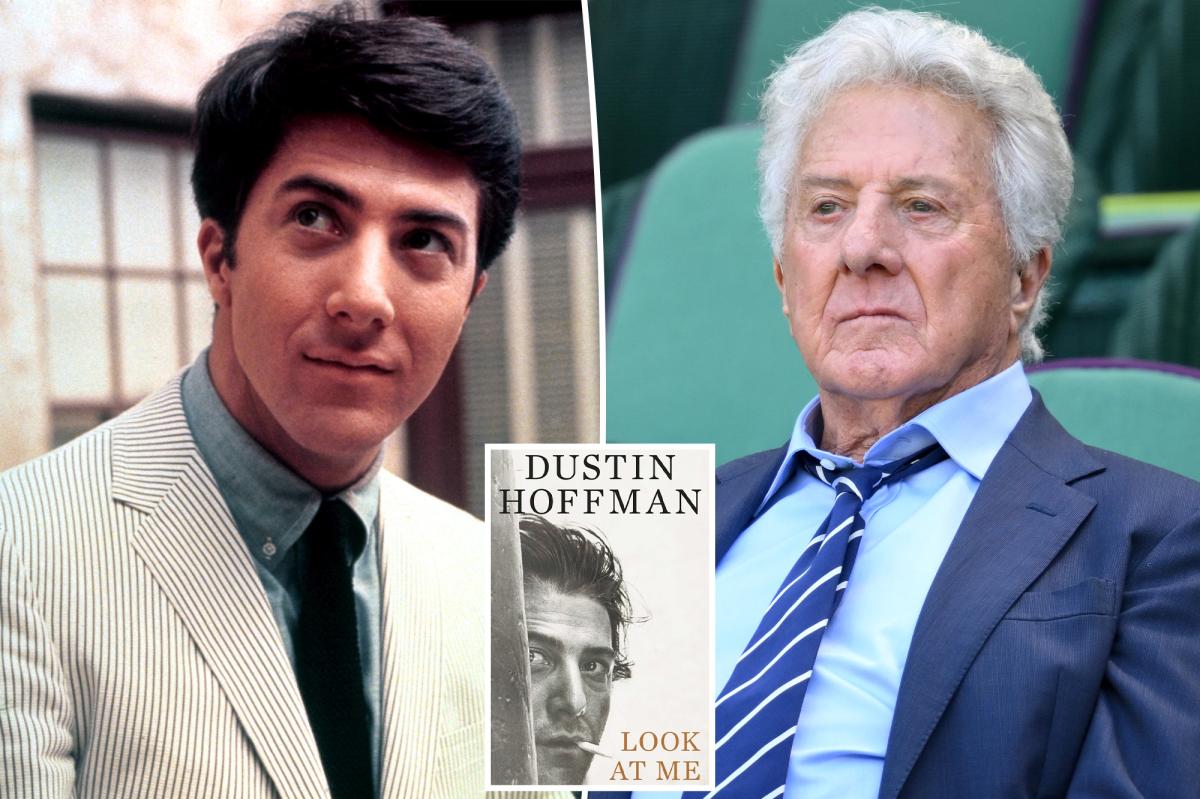
Dustin Hoffman Was Famous, Broke and Too Embarrassed for the Unemployment Line After ‘The Graduate’
The movie made him a star. His paycheck left him with $3,000, a one-way trip to Los Angeles and a deeply uncomfortable photo in Life magazine.
There is a very specific kind of Hollywood nightmare in Dustin Hoffman’s story about The Graduate: becoming famous before you become solvent.
Today, the 1967 classic is treated like a cultural monument. Benjamin Braddock’s blank stare, Mrs. Robinson’s stockings, Simon & Garfunkel on the soundtrack — the whole thing has been preserved in amber as one of the defining films of its era. But in the version Hoffman tells in his memoir, Look At Me, the movie’s afterglow came with a remarkably unglamorous financial reality.
He was suddenly recognizable everywhere. People stopped him in the street. They wanted autographs. They wanted to touch him. And, according to Hoffman, he was “still basically broke.”
The blockbuster paycheck that vanished almost instantly
Hoffman, now 89, writes that he took home just $3,000 after expenses. He also had to pay his own way from New York to Los Angeles for the shoot, which is not exactly the private-jet origin story one expects from a future Oscar winner.
When the money ran out, he went on unemployment. Then a photograph of him at the unemployment office appeared in Life magazine. The image turned an already humiliating situation into a public spectacle: Hoffman said he could not bring himself to return because of the dirty looks from people in line who genuinely needed the money and assumed he did not.
It is a brutally clean snapshot of an older Hollywood economy, before every breakout performer had a team of lawyers, a backend deal and a luxury-brand contract waiting in the wings. Hoffman was not yet “Dustin Hoffman” in the business sense. He was an unknown actor who had landed a major role in a major movie — and apparently had not been paid like the cultural event he was helping create.
The irony is almost too perfect. Benjamin Braddock spends The Graduate drifting through a wealthy California family’s empty rooms, visibly unsure what his future is supposed to look like. Behind the camera, Hoffman says he was navigating a much less cinematic problem: how to pay for his life after starring in a film everyone suddenly wanted to talk about.
Then there was Mike Nichols
The money story would be enough to make the memoir anecdote irresistible. Hoffman adds another layer by describing the shoot itself as “terrible,” largely because of director Mike Nichols.
Hoffman recalls feeling that Nichols was angry with him, either because he was doing something wrong or because the director had decided he had cast the wrong actor. The mood, Hoffman writes, could shift dramatically. After one take, Nichols allegedly delivered the kind of line that could haunt an actor for decades: “What were you doing? … Do the opposite of that.”
That is a particularly vicious note to receive when you are young, broke and carrying the lead role in a film that could either change your life or confirm everyone’s doubts about you. Hoffman has said he felt Nichols had realized what “everybody else already knew” — that he had miscast the part.
It is also the kind of creative tension that looks very different in retrospect. Nichols was not some anonymous filmmaker taking a gamble on a nobody; he was already a celebrated director, and The Graduate would become one of the defining credits of his career. Hoffman, meanwhile, was an unconventional choice for a romantic lead, especially in an industry that had long preferred its young men polished, traditionally handsome and immediately legible as stars.
Benjamin’s unease is central to the movie. Hoffman’s version of the production suggests that some of that discomfort was not entirely acting.
The strange grace note in the memoir
For all the bitterness in Hoffman’s recollection, there is no neat Hollywood revenge ending. Nichols did not simply remain the villain in the story. Hoffman also includes a note the director sent him on Aug. 21, 1967, praising his work and assuring him: “You worked very hard and very well and I think it’s all going to be alright.”
That small contradiction makes the story more interesting than a standard “famous director was mean to young actor” anecdote. Nichols could be cutting and Hoffman could feel attacked, yet the director also recognized what the performance was becoming. The same movie that left Hoffman feeling miscast would earn him an acting nomination. Nichols won the Oscar for best director, while Hoffman and Anne Bancroft were both nominated for their performances.
And the film itself did, in fact, turn Hoffman into a star — just not one who had the bank balance to match the attention. The public saw a once-in-a-generation screen presence. Hoffman saw strangers reaching for him on the street while he was still counting what remained after expenses.
That gap between image and reality is the real celebrity shocker here. Fame did not arrive as a soft landing. It arrived as noise, scrutiny and a photo in a magazine that made it impossible to quietly ask for help. The world had decided Dustin Hoffman was important before Hollywood had decided to pay him that way.
In the end, Hoffman writes that without Nichols casting him in The Graduate, he would have had a completely different life. That is the most Hollywood sentence imaginable: the director who made you feel like a mistake may also be the person who handed you the role that remade you.
One of the most famous movie stars of his generation began that transformation with $3,000, an unemployment line and a director telling him to do the opposite. Somehow, the chaos became a classic.