Beyoncé and Jay-Z’s Wedding Was the Ultimate Celebrity Fake-Out
Nearly 20 years later, Beyoncé has revealed that most of the guests thought they were attending a party — not a secret wedding at Jay-Z’s penthouse.
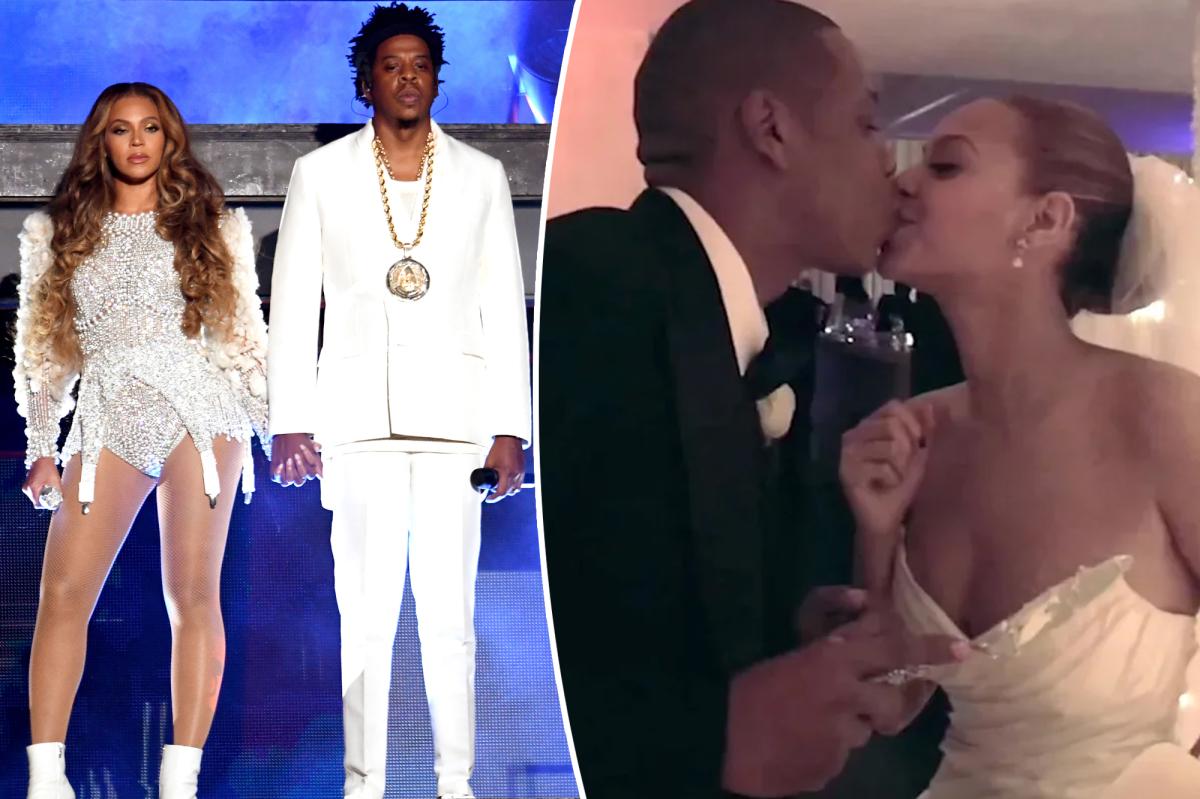
For a couple who have spent nearly two decades turning privacy into an art form, Beyoncé and Jay-Z’s wedding story is almost aggressively on-brand: tell everyone there’s a party, invite roughly 40 people to a New York City penthouse, and quietly get married before the guest list realizes it has wandered into a ceremony.
In a new interview with i-D, Beyoncé shared rare details about the couple’s April 4, 2008, wedding, including the deliciously low-key trick that kept most of the guests in the dark. “We told the guests we were having a party, and no one knew they were coming to our wedding but our parents and a few friends,” she said.
That is not merely an intimate wedding. That is a celebrity wedding with the security settings turned all the way up. No sprawling destination spectacle. No red-carpet arrival. No opportunity for a guest to accidentally leak the seating chart while posting a blurry mirror selfie. Just a party, a penthouse and one of the most famous couples on earth making a life-changing announcement in the least announcement-like way possible.
The guest list was tiny, but the names were very Beyoncé
The ceremony took place at Jay-Z’s New York City penthouse, with around 40 guests, according to People. The event was small enough to feel personal and starry enough to qualify as a private awards-season after-party. Reportedly invited were Kelly Rowland, Gwyneth Paltrow, Chris Martin and Michelle Williams — a guest list that sounds less like a traditional wedding party and more like the most discreet table at a particularly glamorous dinner.
Beyoncé and Jay-Z had been connected for years by the time they married. They started dating in 2001, got engaged on Jay-Z’s birthday, Dec. 4, 2007, and married four months later. The speed of the engagement-to-wedding timeline makes the fake-party strategy even more impressive: the public had just enough information to know something major was happening, but not enough to know when, where or how the couple planned to pull it off.
They had also known each other for eight years before getting married, a meaningful stretch of time in any relationship and practically an entire era in celebrity culture. Their romance began before Beyoncé became the solo force behind Dangerously in Love, before Jay-Z’s marriage became a subject of his own music, and before the two transformed their relationship into one of pop culture’s most scrutinized partnerships.
The dress was less about the label than the love story
The other revelation is about the dress — and, naturally, it is not a story about chasing the biggest designer name in the room. Beyoncé said her favorite dress designed by her mother, Tina Knowles, was her wedding gown.
“My favorite dress my mother designed was my wedding dress—it was gorgeously simple and made with her love,” she told i-D. “Wearing a dress she designed was very important to me, and more important than any designer dress.”
The gown featured a strapless sweetheart neckline, ruching at the waist and large floral detailing. It was romantic without being fussy, polished without looking like it had been assembled for an audience. The choice also fits the larger shape of Beyoncé’s public image: maximalist onstage, highly controlled in public, but often drawn to the emotional power of family and personal history when she does decide to open the door.
There is a particularly Beyoncé quality to calling the dress “gorgeously simple” while describing a gown with dramatic floral details. The phrase does two jobs at once. It gives us a glimpse of the bride, but it also makes clear that the point was never the fashion-world hierarchy of the dress. It was Tina’s hands, Tina’s design and the meaning attached to wearing it.
A very private marriage that has never been a simple one
The couple have largely kept their relationship out of the spotlight, although their marriage has not been untouched by public scrutiny. In 2017, Jay-Z admitted to infidelity in an interview with The New York Times. Beyoncé addressed the emotional fallout through her art, most notably on Lemonade, while Jay-Z explored his own accountability on 4:44. Neither record treated the marriage as a glossy fairy tale, and together they made the relationship feel less like a celebrity brand than an ongoing, complicated conversation.
That history gives Beyoncé’s new comments a little extra weight. She is not offering a grand anniversary speech or reopening every chapter of the marriage. She is talking about a dress, a guest list and a party that became a wedding. But those details land differently because the couple’s privacy has always been part of the story. When Beyoncé speaks about her personal life, even a small detail arrives with the force of a rare sighting.
In a 2021 interview with Harper’s Bazaar, she said her 30s were about starting her family and making her life “more than my career.” She also said she had worked to “heal generational trauma” and turn her broken heart into art that could move culture forward. She has described maintaining boundaries between her stage persona and her personal life, noting that family and friends can forget the “beast in stilettos” exists until they watch her perform.
That boundary is the real headline here. Beyoncé is willing to share the outline, but she keeps the inner room hers. We get the fake party, the penthouse, the family-designed dress and the tiny guest list. We do not get a staged recreation of the day or a sudden flood of intimate wedding content nearly two decades later. The reveal is carefully chosen: enough to make the internet lean closer, not enough to make the marriage feel public property.
The couple now share three children — daughter Blue Ivy and twins Rumi and Sir — and have remained married through the highs, bruises and mythology of their public lives. Their relationship has survived the kind of scrutiny that turns ordinary tension into international discourse. Yet the origin story Beyoncé is offering now is strikingly domestic: a home, a mother’s dress, a few trusted people and a roomful of guests who thought they were simply showing up to a party.
It is almost quaint, except the bride was Beyoncé and the groom was Jay-Z. For everyone else, it was a surprise wedding. For them, it was a carefully protected beginning to a marriage that would eventually become one of the biggest, messiest and most enduring stories in modern pop culture.
Olivia Wilde Just Gave the Least Glossy Update on Her Jason Sudeikis Era
The former couple’s co-parenting peace comes with a very un-Hollywood disclaimer: it is healthy, functional and extremely hard.
Olivia Wilde is offering a refreshingly unvarnished update on the Jason Sudeikis chapter of her life, and it does not involve a matching family photo, a suspiciously cheerful vacation caption or anyone pretending the breakup was a wellness journey with excellent lighting.
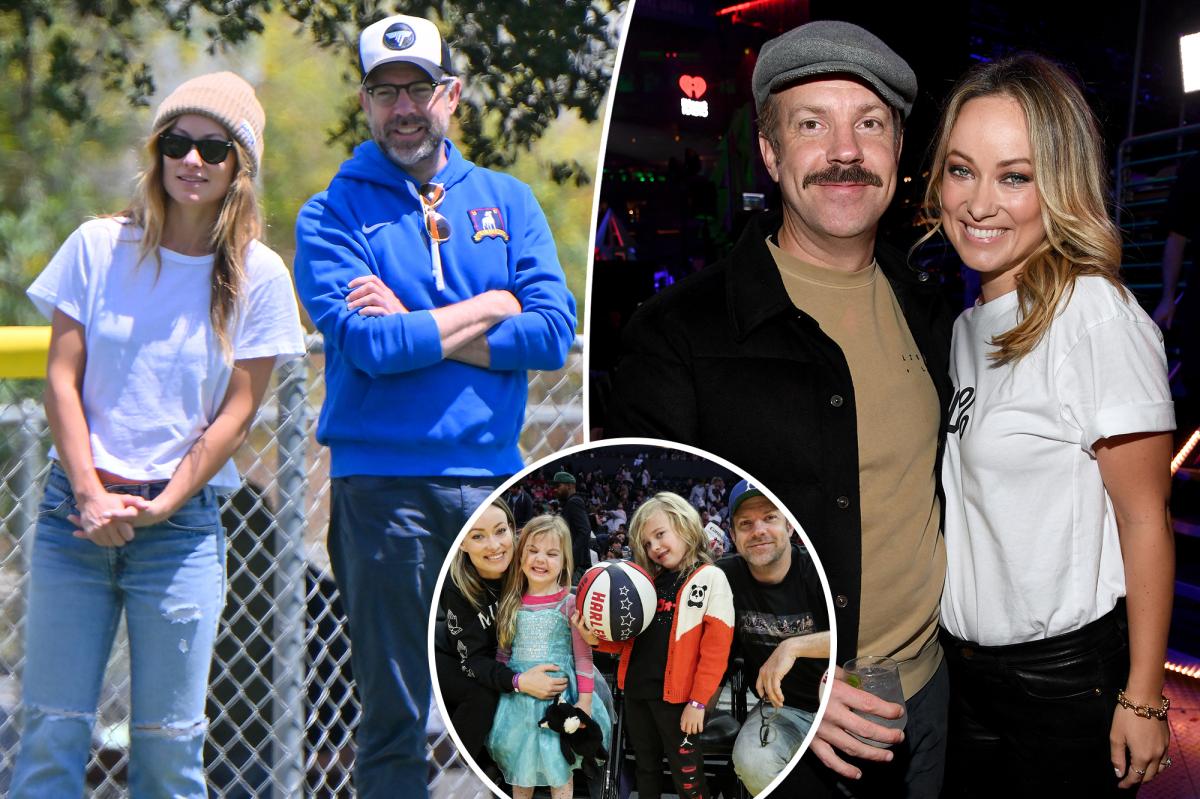
In a new interview with The New York Times, Wilde said she takes pride in how well she and Sudeikis co-parent their two children, Otis Alexander, 12, and Daisy Josephine, 10. Then she immediately added the part that makes the whole thing feel human: “It’s so hard.”
“I really take pride in how good we are at co-parenting our kids in my family. We have reached this healthy equilibrium. It’s so hard,” Wilde said.
That sentence is doing a lot of work. It acknowledges that the former couple have arrived at something stable while refusing to package that stability as effortless. In celebrity-land, where even emotional devastation can come with a neutral-toned carousel and a caption about choosing peace, Wilde’s version is more recognizable: the family works, the adults show up, and nobody is claiming the road there was serene.
The “conscious uncoupling” fantasy gets a hard eye-roll
Wilde, 42, and Sudeikis, 51, were together for nearly a decade, engaged for seven years and never married. They split in 2020 after welcoming their son and daughter, and their post-breakup life became one of the most publicly uncomfortable celebrity custody sagas of recent years.
The relationship’s ending was not exactly a clean, minimalist exit. In April 2022, Wilde was famously served custody papers while onstage at CinemaCon as she presented her film Don’t Worry Darling. The moment instantly became one of those bizarre Hollywood scenes that feels too scripted to have happened in real life, except the people involved were standing under conference lighting and trying to continue with a presentation.
A contentious custody dispute followed before the former couple settled their legal battle in 2023. Sudeikis agreed to pay Wilde $27,500 per month in child support. That history gives her new comments some needed texture: this is not a story about two exes floating effortlessly into an enlightened co-parenting arrangement. It is a story about two people who had to find a workable family rhythm after a very public rupture.
“Anyone who pretends it’s easy — like, ‘Oh, you just consciously uncouple, and then you find a way’ — that’s BS,” Wilde told the Times.
Thank you, Olivia, for saying what every divorced parent, separated parent and person who has ever attempted to share a calendar with an ex already knows. “Conscious uncoupling” may be a lovely phrase, but it has never accounted for school schedules, old resentments, public narratives, legal documents or the uncanny experience of seeing someone you once knew intimately become a person you coordinate with through logistics.
Kids notice the family performance
Wilde said she believes children are far more perceptive than adults often give them credit for, particularly when the grown-ups are trying to conceal tension.
“When you’re trying to hide it from your kids, they sense it,” she said. “They’re the most intuitive people in the house. And then people start to feel, like, What is real? Because I can tell that something’s being performed for me. I wouldn’t wish that on anyone.”
It is a pointed observation, especially from someone whose relationship was forced into the public eye during its collapse. Wilde’s idea of an “authentic” family life does not mean everyone is constantly delighted to be in the same room. It means the children are not being asked to live inside a glossy fiction while the adults quietly combust off-camera.
She also described the breakup as a failure before reframing it as a painful act of parental responsibility. “It feels like a failure when you can’t make a relationship work, particularly if it’s with the person you have children with,” Wilde said. She called ending the relationship one of the most difficult decisions of her life, adding that it was not better for the children to remain in a home where their parents were “not aligned.”
That is the emotionally complicated bit celebrities usually sand down before speaking publicly. There is no triumphant breakup branding here, no implication that leaving was instantly liberating or that everyone involved came out with perfect boundaries and matching emotional maturity. Wilde is describing the split as both necessary and painful — a decision that may have been right while still feeling terrible.
The birthday-party story explains the fracture
Earlier this summer, Wilde gave a more intimate glimpse into the relationship’s final stretch during an appearance on the Call Her Daddy podcast. She said the pair had gradually grown apart, but remembered one moment that made the distance impossible to ignore: driving home from a birthday party her friends had thrown for her.
Wilde asked Sudeikis whether he had gotten her a present. His response, as she recalled it, was devastatingly blunt: “What would I get you, Olivia? I don’t know you.”
“And he wasn’t wrong. We didn’t know each other anymore,” she said.
There is something almost painfully ordinary about that exchange. No grand betrayal is required when a relationship has become unfamiliar from the inside. Sometimes the clearest sign that a partnership is over is not a dramatic exit but the realization that the person beside you no longer knows what would make you happy — and may be telling the truth.
Wilde said that was when they understood the relationship was finished. “It was f****** tough,” she recalled. “It brought us to the place of, like, ‘OK, this is done. We’re going to end this.’”
Since then, the former couple have continued to appear together at important moments for their children, including sporting events and family occasions. The public glimpses are usually brief, which is probably the point. Their current arrangement is less about performing friendship than making sure Otis and Daisy can have two parents who are present, even when the adults’ shared history remains complicated.
Wilde is currently dating British art dealer Caspar Jopling, while Sudeikis remains best known for Ted Lasso and his work as a performer and writer. But the most revealing relationship update here is not a new romance or a soft launch. It is Wilde’s admission that a “healthy equilibrium” can still be exhausting, awkward and hard-won.
In other words: the family is functioning. The past is not magically painless. And nobody is pretending otherwise.
Russell Brand’s ‘Alice’ Steps Into the Light — and Reopens the Question He Thought Was Settled
Mia Latter has waived her anonymity after years of speaking about her alleged relationship with Brand as a pseudonym. Now, following his conviction and 10½-year sentence, she is telling her story in her own name — and campaigning to change the law.
For years, she was “Alice”: a silhouette in a documentary, a name in the Sunday Times’ 2023 investigation, one of the women whose account sat inside the widening storm around Russell Brand. Now Mia Latter has decided that anonymity no longer belongs to the story.
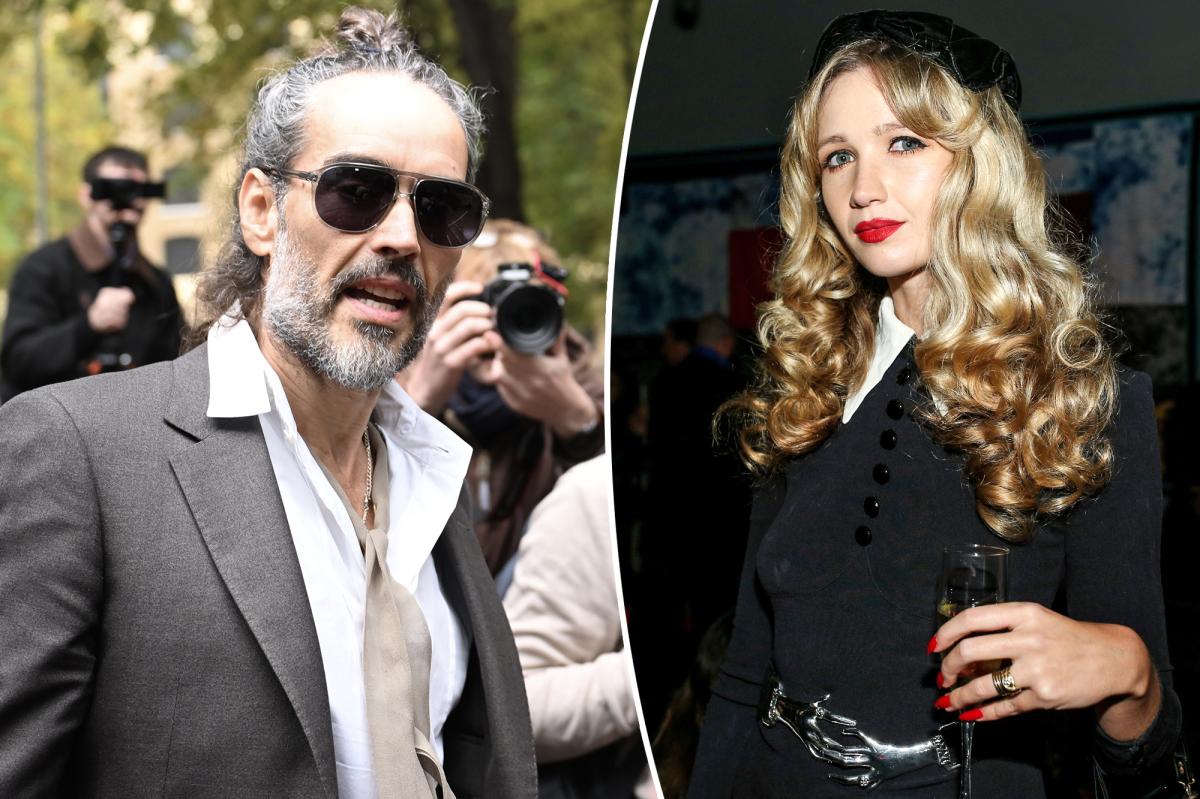
Latter, now 37, has identified herself publicly for the first time in an interview with the Sunday Times, detailing what she describes as a three-month relationship with Brand when she was 16 and he was 30. Her decision arrives days after Brand was sentenced to 10½ years in prison following his conviction on multiple sexual offenses, according to Page Six.
That timing gives her disclosure a particularly stark shape. This is not a celebrity ex making a late bid for the spotlight or a familiar Hollywood breakup being repackaged for another news cycle. Latter is revisiting an experience she says derailed her education, damaged her mental health and left her carrying shame for years — while the man at the center of it continued building a career around his own mythology.
She was a teenager. He was already famous.
Latter told the Sunday Times that she first met Brand in London’s Leicester Square while she was returning from shopping and he was working for MTV. She said he approached her, looked through her shopping bag and selected a dress he wanted her to wear on a date. After she gave him her phone number, she said she expected him to lose interest when she explained that she was 16.
Instead, she said, he asked whether she still wanted to meet for dinner.
According to Latter, Brand’s attitude was not that of a confused older teenager or a man unaware of the implications. She recalled him allegedly saying, “I don’t give a f—k how old you are. I just need to know where I stand legally.” Brand has previously characterized the relationship as “immoral” but not illegal, a framing Latter now forcefully rejects.
“He was a homeowner who was hosting TV shows, hosting radio shows,” she told the outlet. “He wasn’t living at home [or] some schoolboy who was lost. He was a very successful man who had a lot of power and sway in the industry.”
That contrast is central to her account: Brand had an established public profile, money, access and professional influence. Latter was studying for her AS-level exams. She said her school attendance fell to 30 percent because she was sneaking away to see him, and that she eventually left school without even learning her results.
“I felt like this is his fetish,” she said, describing her belief that Brand was interested in her because she was 16 and inexperienced. “I could’ve been any other 16-year-old.”
The story she says stayed hidden on her side
Latter described a relationship in which secrecy ran in one direction. She alleged that Brand referred to her as “the child” around members of his team, while telling her not to discuss their involvement with friends at school. She also said her parents attempted to stop the relationship, but that Brand continued sending cars to collect her.
She recalled being taken to a restaurant for their first date, where Brand and another man had already begun eating. Because she was underage, she was offered a Diet Coke rather than alcohol. Latter said Brand then took her to his apartment, where she initially resisted going inside and asked him to call a cab. She alleges that he sexually assaulted her during that visit despite her attempts to push him away.
Her most serious allegation concerns an encounter toward the end of the relationship, when she says Brand forced a sexual act on her as she cried and tried to stop him. She described the experience as degrading and said she eventually struck him in the stomach to make him get off her. She further alleged that he pinned her down and subjected her to another humiliating act.
These are Latter’s allegations, and Brand has denied allegations of sexual wrongdoing. A legal representative for Brand did not immediately respond to Page Six’s request for comment, according to the outlet.
Latter said the relationship ended after she arrived at Brand’s home and was prevented from entering his bedroom. She claimed she discovered another woman there and encountered a third woman while leaving. The women, she said, compared their experiences and realized Brand had sent them similar, highly personal messages.
It is a detail that now lands differently in the context of Brand’s wider scandal: the private script, the poetic seduction, the sense that intimacy might have been less spontaneous than carefully repeated. Latter says she spent years waiting for somebody to expose him.
From “Alice” to advocate
Latter previously spoke to police, but prosecutors did not include her case in the trial that led to Brand’s conviction. She had also appeared in a documentary in silhouette, still protected by the pseudonym that first brought public attention to her account.
Now she is married, has a daughter and is campaigning for what she calls a “staggered” age of consent — a legal change that would prohibit sexual relationships between significantly older adults and 16- or 17-year-olds. Her argument is blunt: a law that technically permits an older adult to pursue a teenager does not erase the imbalance in age, experience or power.
“If you’re in your thirties, forties and fifties and you’re trying to have a relationship with someone under the age of 18, it [should be] a criminal offense,” she said.
Latter acknowledged that publicly attaching her name to the story made her nervous. But she also said she no longer felt the shame belonged to her. “It’s not my burden to carry anymore,” she told the Sunday Times.
She credited the women who testified in Brand’s trial, saying their evidence helped bring about the conviction even though not every woman received a guilty verdict on every allegation. “It was definitely a team effort,” she said.
The celebrity culture around Brand once depended on his ability to turn every room into a stage: the outrageous jokes, the theatrical sexuality, the cultivated chaos, the sense that consequences were for less interesting people. Latter’s decision to use her own name punctures that performance in a way a pseudonym never could. Not because one woman’s public identity resolves every question surrounding a criminal case, but because she is reclaiming authorship of a story that she says Brand controlled when she was too young to understand the terms.
“I’d waited since I was 16 thinking, ‘It’s gonna happen soon — somebody’s gonna out him,’” she said. “I feel like justice has been served.”