Kylie Jenner Took Vintage Cavalli to the Governors Awards—Then Edited Out the Most Scandalous Part
The reality star skipped the carpet but still made a fashion entrance beside Timothée Chalamet, choosing a 2006 Roberto Cavalli slip dress with a noticeably more discreet back.
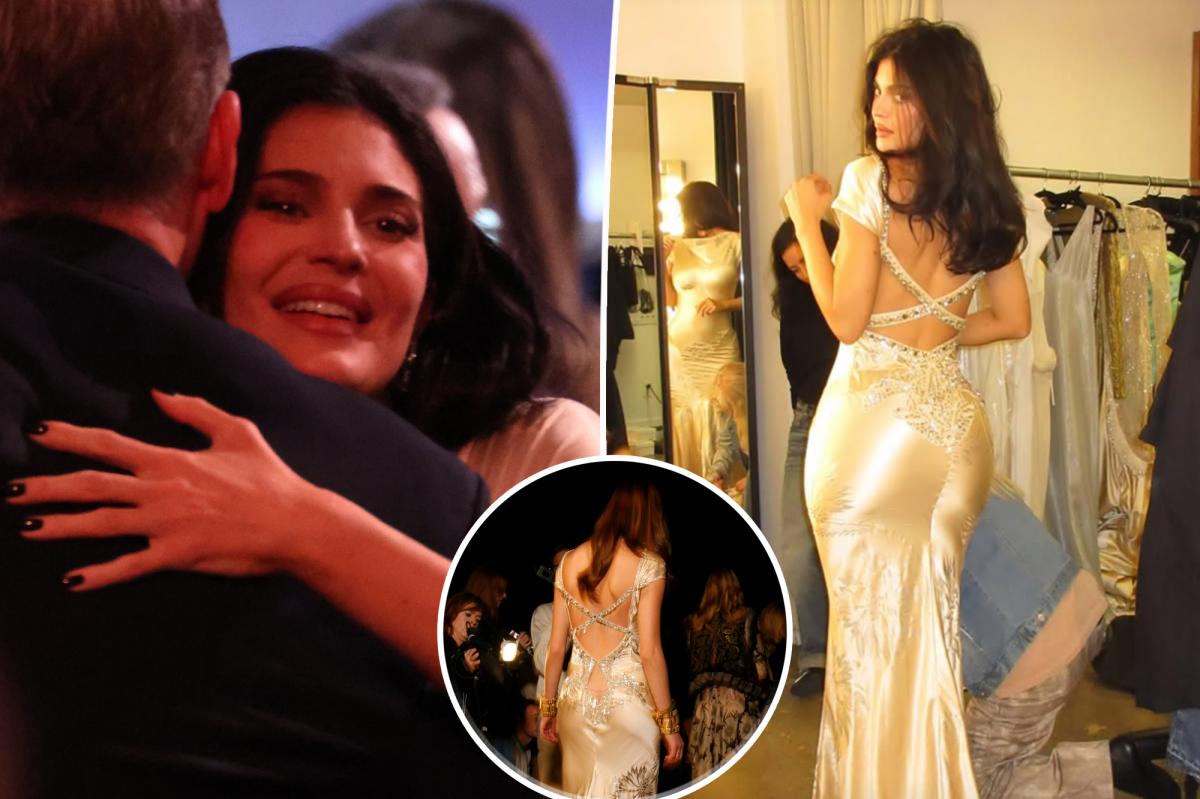
Kylie Jenner did not need a red-carpet turn to make the Governors Awards feel like a Kylie Jenner event. The 29-year-old reality star and makeup mogul skipped the photographers, joined boyfriend Timothée Chalamet inside, and gave Instagram just enough of her vintage Roberto Cavalli gown to send fashion people into archival-mode overdrive.
The look came from Roberto Cavalli’s fall/winter 2006 collection, sourced through Resurrection Vintage: an embellished silk slip dress with a high cowl neck, cap sleeves and a low crisscrossed back. But Jenner’s version was not quite the same dress that walked the runway. The original featured a keyhole cutout on the lower back, revealing the model’s G-string. Jenner wore a more conservative iteration, with that attention-grabbing flash of skin apparently edited out.
In other words: Kylie found a vintage Cavalli dress famous for being extremely Cavalli, then turned the volume down one click. Not off. Never off. Just enough to make the silhouette feel polished rather than full early-aughts after-party.
The dress had a very specific kind of history
There is a difference between wearing “vintage” and wearing something that still carries the original era in its seams. This Cavalli number belongs to the house’s high-glamour, high-exposure period, when a dress could be embellished, liquid-looking and cut open in several directions without anyone asking whether it was appropriate for a formal awards-season event.
The runway version’s lower-back keyhole was the sort of detail designed to create a second look after the model had already passed the photographers. From the front, it read as an elegant cowl-neck slip. From behind, it became a full fashion ambush. Jenner’s adjustment kept the cowl, the shimmer and the archival pedigree while making the dress easier to wear at an event where the person accompanying her was the one expected to be on display.
That was Timothée Chalamet, who wore a Giorgio Armani tuxedo on the Governors Awards red carpet. Jenner appeared to be playing the role she has increasingly perfected during his awards-season orbit: present, glamorous and not necessarily interested in competing with the official nominee-adjacent machinery. He did the carpet. She brought the vintage Cavalli mythology indoors.
Kylie’s archival wardrobe is becoming its own awards-season subplot
This was not a random one-night flirtation with the past. Jenner has developed a clear taste for major archival fashion moments, particularly from the Versace and Cavalli universe of sleek tailoring, liquid embellishment and strategic cutouts.
At last year’s Golden Globes, she chose a silver sequined Atelier Versace gown from 1999. She followed that with a black Versace look from 1996 at the Critics Choice Awards in January. Both appearances were made with Chalamet, turning the couple’s formal outings into something more visually specific than a standard celebrity date-night rotation.
Then came the Cavalli-inspired gown she wore to Jordyn Woods and Karl-Anthony Towns’ wedding in August, based on a daring spring 2004 ready-to-wear style. The pattern is obvious without being boring: Jenner is not simply shopping for expensive gowns. She is shopping for fashion references, preferably from the period when “subtle” was not yet the dominant luxury mood.
That makes the Governors Awards dress especially fun. The styling did not erase Cavalli’s original attitude; it refined it. The gown still had the house’s signature sense of drama, but the modified back made the look feel less like a direct runway reenactment and more like Jenner’s own version of the archive.
Her Instagram strategy remains deliciously low-effort
Jenner shared only a peek at the dress on her Instagram Story rather than making the gown the centerpiece of a formal carpet reveal. That choice fits her current fashion language: let the image circulate, let everyone zoom in, and never overexplain the outfit while the internet is still deciding whether the back is daring, demure or both.
Fans praised the look on social media, including Justin Bieber, who commented “Insane!” Kris Jenner also left a “STUNNING!” in the comments. The family approval is practically part of the styling package at this point, but the enthusiasm makes sense. This is the kind of celebrity fashion moment built for instant group-chat debate: Is the dress better with the runway cutout? Was the edit more elegant? Why does a 2006 Cavalli slip suddenly look like the answer to every current red-carpet problem?
The answer may be that Jenner understands the appeal of a recognizable fashion past without treating it like a costume. The early-aughts archive is back in circulation, but not every revival needs to arrive at full intensity. Sometimes the most modern move is taking the loudest detail away and leaving the mood intact.
Next stop: the Dune: Part Three fashion circuit
The timing also gives the dress a little extra narrative sparkle. Promotion for Dune: Part Three is beginning this month, ahead of the film’s December 18 release, and Jenner is likely to be near Chalamet throughout the next awards-season stretch. That means more premieres, more formal dressing and, if her recent run is any indication, more opportunities to excavate fashion history.
She has already established the formula: Chalamet handles the public-facing film-business assignment, while Jenner arrives in something that sends a separate conversation spinning. It is a smart division of labor. He gets the tuxedo analysis. She gets the vintage detective work.
And if the Governors Awards look is any preview, Jenner’s next archival choice may not be the most obvious piece from a collection. It may be the one with a famous scandalous detail carefully softened, polished and made newly hers. In Kylie’s wardrobe, even covering up can look like a plot twist.

Danny Kilby Went to Fiji to Win $1 Million and Came Home to Find His Entire Life Had Been Auctioned Off
The ‘Survivor 51’ contestant forgot to update his debit card before filming. By the time he got back from the island, his storage unit — including Pokémon cards and a military-general cheetah portrait — was gone.
There are bad ways to lose on Survivor. You can get blindsided by your alliance, misplay an advantage, or become the person everyone suddenly agrees is too irritating to keep around. Danny Kilby managed something more ambitious: he left Fiji having lost the game, his belongings and, by his own telling, possibly the title of “smartest person alive.”
The “Survivor 51” contestant revealed in a TikTok video that while he was filming the CBS competition series, every possession he had placed in storage was sold at auction. Not one treasured item. Not the furniture he could live without. Everything.
“All my belongings got sold at auction while I was playing ‘Survivor,’” Kilby said. “So if you are a future ‘Survivor’ player, don’t be like me. I might be the dumbest person to ever play.”
The plan was financially sensible — right up until it absolutely wasn’t
Kilby’s original strategy was easy to understand. Before leaving to film in Fiji in April, he moved out of his apartment and put his things into a storage unit. Why keep paying rent while living on an island with a shot at a $1 million prize?
“I thought, ‘Hey, I’m going out to Fiji, I might win $1 million. I don’t want to pay rent while I’m on the island,’” he explained.
That is the kind of sentence that sounds like responsible adult planning for approximately 48 hours. Then Kilby lost his wallet, got a new debit card and failed to update the storage company with the new payment information. While he was flying toward a remote filming location — where contestants are cut off from normal life — his monthly bill was apparently still attempting to charge a card that no longer worked.
He realized the problem while on the way to Fiji and tried to contact the storage business. Unfortunately, it was the weekend. Customer service would not be available until Monday, by which point Kilby would already be entering the extremely low-connectivity, extremely high-stakes world of Survivor.
So he did what any person facing the possible loss of every material object they own might do when about to compete in a televised endurance game: he rolled the dice and hoped it worked out.
Meanwhile, his stuff was living through its own elimination ceremony
It did not work out.
When Kilby returned from filming, he found an email from the storage company saying they had tried to reach him and that his items would be auctioned unless he paid $2,000 in storage fees. Kilby said he could not afford the $2,000 and decided to participate in the auction himself, hoping to buy his belongings back for a starting bid of $400 — all the money he had available.
This is where the story becomes pure Survivor theater. Kilby had made it through the show’s social politics, challenges and island deprivation, only to face an auction-room blindside at home. The opposing bidder had one objective: acquire a mystery storage unit. Kilby had a much more emotional one: recover the contents of his former life for four hundred dollars.
He lost the bid.
Among the items that disappeared were old Pokémon cards and a portrait of a cheetah dressed as a military general. The cheetah is an especially devastating detail because it is both deeply specific and impossible to replace with a quick online shopping trip. You can buy new socks. You can replace a lamp. But a military-general cheetah portrait has the unmistakable energy of an object that found you once and will never find you again.
“They got a banger deal, not going to lie,” Kilby said. “Basically, I’m the biggest dummy ever.”
The real lesson of ‘Survivor 51’ is apparently: automate your bills
Kilby’s public-service announcement for future contestants was concise: handle every bill before flying away to compete for a million dollars, or prepare to rebuild your household one auction listing at a time.
“Make sure you deal with all your bills before you fly out, or you might have to rebuy everything you own,” he warned.
It is not the conventional takeaway from a reality-show elimination. Usually, a player leaves Survivor with a new perspective, a bruised ego and perhaps a few thousand dollars in appearance-related compensation. Kilby left with a story that makes the show’s famous “million-dollar prize” feel almost beside the point. Even if he had won, he would have been spending some of that money replacing the possessions he gambled away by forgetting one updated debit card.
Kilby filmed alongside 20 other cast members on Fiji’s Mamanuca Islands from April to May. His time in the competition ended during the eighth episode, released Nov. 11. That means his storage-unit disaster unfolded off-camera while viewers were watching him navigate the official game — a parallel season in which the villain was an expired payment method and the final immunity challenge was having access to $400.
The story also captures the particular chaos of modern reality television: contestants are expected to disappear from ordinary life for weeks, but their ordinary obligations do not disappear with them. Rent, subscriptions, bills and storage fees remain stubbornly committed to the plot. A player can be stranded on an island with no food, no comfort and no contact with home, but somewhere back in civilization, an automated email is still waiting to ruin everything.
Kilby may not have won Survivor 51. He did, however, return with the season’s most brutally efficient life lesson: before you abandon your apartment to chase a million dollars in Fiji, make sure your replacement debit card has met your storage unit. Otherwise, your belongings may get voted out before you do.
John Travolta Is Open to Love Again—But His Kids Came First
Six years after Kelly Preston’s death, the Grease star gave a rare, quietly moving answer about dating, family and what it means to keep moving forward.
John Travolta is not launching a dating era. He is simply leaving the door unlocked.
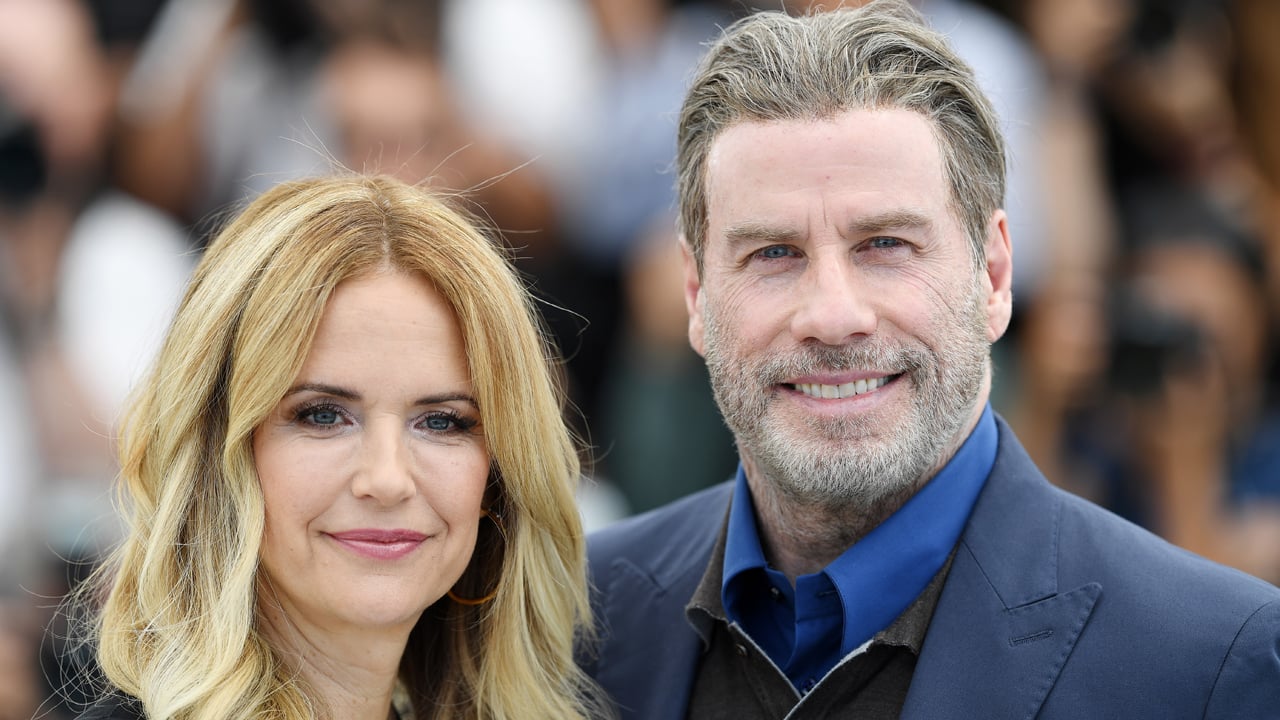
During an appearance on NBC’s Today while promoting his upcoming movie November 1963, the 72-year-old actor was asked by Craig Melvin whether he was still open to love and dating six years after the death of his wife, Kelly Preston. His answer was short, warm and notably free of celebrity-media theater: “Well, love is everything… is part of my personality, so am I open to it? Yes.”
That is the entire headline, really. Not a mystery woman. Not a suspiciously timed vacation carousel. Not a soft launch in linen. Just Travolta, speaking plainly about the possibility of love after a life-changing loss.
The answer was yes. The timing was his own.
Travolta and Preston were married for nearly 30 years before she died in July 2020 at age 57, following a two-year battle with breast cancer. They had met while working on the 1989 film The Experts and married in 1991, building a family that included their children Ella Bleu, now 26, and Benjamin, now 15, as well as their eldest son, Jett, who died in 2009 at age 16.
So when Travolta talked about dating again, he was not describing a clean slate or a glamorous reinvention. He was talking from inside a family history marked by enormous love and equally enormous grief. His response landed less like a celebrity announcement than a small admission: he can imagine companionship again, even if he has not said that anyone specific is waiting in the wings.
Travolta did not reveal whether he is currently dating anyone. He did not tease a new relationship, hint at a private romance or turn the conversation into a promotional breadcrumb trail. For a culture that can turn one dinner reservation into a full relationship timeline, the lack of details is almost radical.
For six years, his children were the priority
The more revealing part of the interview came after the dating question. Travolta explained that his main focus since Preston’s death has been helping their children feel secure, particularly Benjamin, who was only nine when his mother died.
“So to me, I wanted to get them squared away and all, sort of, settled out about their future and what happened,” he said.
It is a very parental formulation: practical, protective and a little emotionally untidy. There is no polished language about “finding himself” or “starting over.” There is the work of making sure two children, at very different stages of life, understand what happened and feel steady enough to continue into the future.
Travolta also described the strange, exhausting reality of parenting alone after losing a spouse. “You’re both a mother and father when one of the parents leave,” he said, describing the effort he has made to help his family move forward.
That line gives his answer about dating its actual context. He was not saying that grief is finished, or that a new relationship would replace what he had with Preston. He was acknowledging that love remains part of his character while also making clear that his first responsibility after her death was at home.
Kelly Preston is still part of the family story
Travolta has continued to honor Preston publicly, including sharing a tribute on what would have been her 64th birthday in October 2026. His family life has also remained intertwined with his professional one.
That same month, he celebrated daughter Ella’s appearance at Paris Fashion Week with a video, expressing how proud he believed Kelly would have been of her. It was a distinctly Travolta family moment: a father cheering on his daughter while keeping the absent mother present in the emotional frame.
Earlier this year, Travolta made his feature directorial debut with Propeller One-Way Night Coach, which features Ella in the cast. The movie is dedicated in part to Kelly and Jett, linking his creative work to the two people whose absence has shaped his life most visibly.
That context matters because Travolta’s comments about dating did not arrive as a glossy “new chapter” campaign. They came alongside an ongoing pattern of remembrance, family collaboration and public acknowledgment. In his world, moving forward and looking back are not opposites. They seem to occupy the same room.
There is no rush—and no romance to decode yet
Celebrity culture loves a comeback narrative, especially when it involves a famous man, a late-life dating question and the possibility of a fresh romantic storyline. But Travolta’s answer resists the tidy version. He is open to love. He has not said he is in love. Those are two very different headlines.
And honestly, the distinction makes the moment more interesting. After decades of marriage, the loss of a spouse and years spent raising children through the aftermath, Travolta does not appear interested in performing certainty for an audience. “Yes” is enough. The rest, if there is a rest, belongs to him.
For now, the actor’s public life seems to be balancing several roles at once: longtime movie star, father, director, keeper of family memories and a man willing to admit that companionship may still matter to him. That is not a hard launch. It is barely a soft opening.
But after six years of being defined largely by loss, even that small opening feels significant. Travolta is saying that love remains part of who he is—and that his future does not have to erase his past to make room for it.