
Cara Delevingne Just Gave Girlfriend Minke the Ultimate A-List Relationship Shoutout
After an endometriosis procedure, Delevingne says musician Minke has been by her side — and she is already talking about building a family together.
Cara Delevingne has never been especially interested in making romance look tidy. Her love life has unfolded in the full glare of fashion weeks, festival fields, red carpets and the internet’s extremely active group chat. But her latest update on girlfriend Minke is almost disarmingly straightforward: the musician is there, Delevingne loves her, and the relationship has become the place where the model and actor feels most fully herself.
Speaking to Us Weekly at the L’Oréal Paris Women of Worth Celebration, Delevingne opened up about recovering from a recent procedure for endometriosis. She said the surgery took place 10 days earlier and that Minke — whose real name is Leah Mason — had been looking after her while she healed.
“She’s there, and she’s by my side, and she loves me, and I love her,” Delevingne said.
That is not exactly a cryptic soft launch. It is a full-volume declaration, delivered with the kind of emotional clarity that makes the rest of celebrity dating culture look like a series of blurry restaurant photos and suspiciously coordinated denim.
This is more than a cute-caregiver moment
Delevingne described Minke as her “biggest support system in this era of life,” “biggest supporter” and “biggest champion.” She also said, “I think I’ve never been able to be the most me until I’ve been with her,” which is the sort of sentence that immediately gets escorted into the celebrity-couple hall of fame.
The timing matters. Delevingne said she had been working so much that she was not recovering properly after the procedure. She described her hormones as having been “everywhere” and said the condition “sucks,” while also making clear that she was feeling okay. Minke, meanwhile, was the person helping her through the less glamorous part of getting better — the exhaustion, the discomfort and the reality of having to slow down.
There is a particular kind of public romance that thrives on spectacle: matching outfits, yacht decks, paparazzi kisses and captions that sound like they were workshopped by a luxury fragrance campaign. Delevingne’s comments land differently because they are about care rather than display. The grand gesture is not a beach vacation or a hard-launch carousel. It is someone staying close when the celebrity machinery has to stop.
Delevingne even admitted she feels bad for Minke sometimes, saying her girlfriend has “had to put up with a lot.” Whatever that “lot” includes, she did not spell it out, and she did not need to. The point was clear enough: this relationship has weathered real life, not just the photogenic portions of it.
From boarding school to Glastonbury PDA
The couple’s story has a pleasingly cinematic backstory. Delevingne and Minke first knew each other as teenagers at boarding school, then reconnected more than a decade later at an Alanis Morissette concert. They went public with their romance in 2022, turning a long-running acquaintance into one of the more watched relationships in the fashion-and-music orbit.
By the time they were photographed at Glastonbury, subtlety was no longer on the schedule. The pair were seen hugging, kissing and cuddling during the festival, including while watching Shania Twain’s headlining set. It was the kind of setting built for a celebrity romance to become a whole visual language: muddy fields, huge music, famous friends and two women looking very uninterested in pretending they are merely sharing a weather system.
In June 2024, Delevingne marked two years together with an Instagram tribute celebrating “so many pictures of us kissing in front of things.” The caption described the period as full of “life,” “change,” “growth” and “pain,” but most importantly, “LOVE.” She called herself lucky to have found the “perfect person to ride life’s ups and downs with.”
That phrase now feels less like anniversary-caption poetry and more like a preview of the relationship’s current chapter. The ups and downs are no longer just a glamorous montage. They include health struggles, recovery and the unflashy work of making someone feel safe while they are not at their best.
And then came the family comment
Delevingne did not stop at praising Minke’s bedside manner. She said, “I can’t wait to have a family with her,” adding that she feels very lucky to have her in her life.
Celebrity couples mention forever all the time. “My person,” “my best friend,” “my forever” — the language is practically available in a dropdown menu. Talking about a family is different. It moves the romance out of the current press cycle and into a future tense, even if no timeline or plan was offered.
There is no need to turn that one sentence into a scheduled life event. Delevingne did not announce an engagement, a wedding or a pregnancy. She shared a hope. But it is a revealing one, especially from someone whose public image has long been associated with speed, mischief and beautiful chaos. The message is not merely that Minke is the girlfriend currently appearing beside her. It is that Delevingne sees her as part of the life ahead.
That evolution also sits alongside Delevingne’s recent public conversations about sobriety, self-worth and taking better care of herself. She has spoken about entering a 12-step program and encouraging others to seek support. At the L’Oréal event, she framed confidence as something that has to come from within — or be helped along by friends when you cannot access it yourself.
“You’re not alone,” she has said in discussing recovery. Her description of Minke offers the romantic version of the same idea: you do not have to muscle through every hard season by yourself.
The new celebrity-couple flex is emotional competence
There is something refreshingly unbranded about Delevingne’s praise, even though it arrived at an event built around the slogan “You’re worth it.” The evening was about celebrating women doing meaningful work, with this year’s honorees receiving grants through L’Oréal Paris and Points of Light. Delevingne’s own remarks about worth centered on getting out of her head and back into her body through dancing, laughter, crying or anything that allows a feeling to move.
It is a very Cara philosophy: self-worth does not have to be polished, pretty or perfectly inspirational. Sometimes it is real and ugly. Sometimes it looks like recovering from surgery while your girlfriend brings you comfort. Sometimes it is admitting that the person beside you has seen every version of you and stayed.
For a couple who first attracted attention through festival PDA and kissing-in-front-of-things energy, the latest update is unexpectedly grown-up. Minke is not just the cool musician in Delevingne’s glam orbit. She is the person Delevingne credits with helping her feel seen “in and through everything.”
That is the sort of relationship update people actually text a friend about — not because it is scandalous, but because it is rare for a famous person to sound this certain without sounding rehearsed. The couple may still serve the occasional glamorous kiss, but the real hard launch is quieter: care, patience and a future Delevingne is already willing to say out loud.
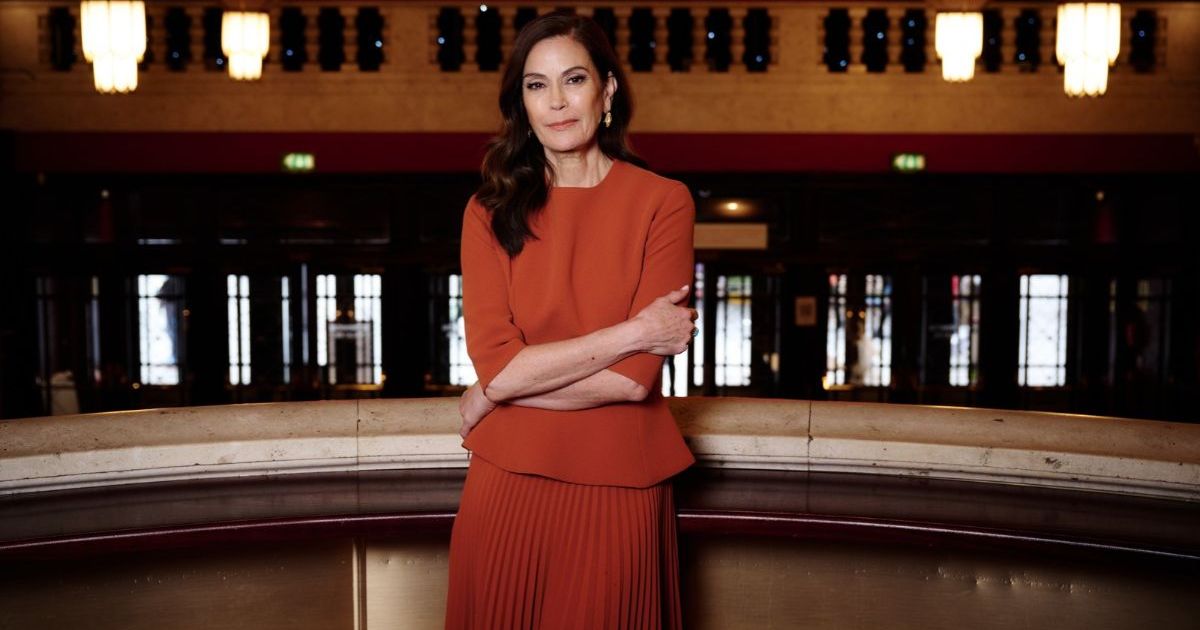
Teri Hatcher’s Most Un-Hollywood Role Is the One She Can’t Simply Walk Away From
The Desperate Housewives star opened up about her father’s dementia, her mother’s heartbreak and the impossible math of building a life while caring for the people who built yours.
There is no glamorous way to do the math of caring for aging parents. The numbers are emotional, not logistical: one father who can no longer manage the basics, one mother struggling to understand why the man she knows keeps forgetting, one daughter trying to remain a daughter while quietly becoming a coordinator, advocate and emergency plan.
That is the reality Teri Hatcher described in an emotional conversation with the Alzheimer’s Society, where the Desperate Housewives star spoke about her 91-year-old father, Owen, and the dementia that has steadily taken away his independence. Hatcher, 61, fought back tears as she explained that he can sometimes forget where he lives, how to use a phone or whether he has taken his medication.
“He can’t take care of himself,” she said. It is a blunt sentence, and that is exactly why it lands. Celebrity interviews usually arrive polished, media-trained and ready for the caption carousel. This one was about the unphotogenic repetition of care: answering the same question again, checking the same medication again, explaining the same diagnosis again.
The part nobody can make look glamorous
Hatcher also spoke about what dementia has done to her mother, Esther, who is the same age as Owen. Esther sometimes questions why her husband cannot remember things and becomes frustrated with the changes she is witnessing. Hatcher’s point was not to scold that frustration, but to make room for it. Dementia does not only alter the person diagnosed; it rearranges the emotional weather of the entire family.
“You sort of have to develop a level of patience,” Hatcher explained. That sounds simple until you imagine the daily grind behind it. Patience is not a personality trait you summon once and keep forever. It is something families have to rebuild in the middle of exhaustion, confusion and grief for a person who is still physically present but increasingly changed by the disease.
She emphasized that people living with dementia are not deliberately being difficult. That distinction matters, especially in a culture that loves to reduce difficult family moments to a neat inspirational quote. Hatcher was describing something messier: the slow disappearance of ordinary independence and the painful process of learning how to respond without treating a symptom as a personal slight.
It is a very different kind of celebrity disclosure from the usual “I’m entering my new era” announcement. There is no product launch here, no strategically placed candle, no suspiciously timed vacation carousel. Just a famous woman acknowledging that a parent’s decline can make even the most basic decisions feel enormous.
Then came London, and the impossible choice
Hatcher had already discussed the pressure in a September interview with HELLO!, revealing that she had moved her parents into a house near her Los Angeles home. The arrangement gave her family more proximity and support, but it also complicated a major professional opportunity: relocating to London to play Miranda Priestly in the West End production of The Devil Wears Prada: The Musical.
That is the kind of decision that looks straightforward from the outside. A prestigious role in London, an established career and a chance to inhabit one of fashion culture’s most deliciously severe characters: say yes and go. But Hatcher was not choosing between a regular work trip and a regular home life. She was weighing a career move against the needs of two 91-year-olds, one of whom could no longer reliably manage daily tasks.
She arranged professional caregiving support and said friends could also help while she was away. Still, the support system did not erase the guilt. “I can’t stop living my life because I have to take care of my parents, but it’s hard,” she told HELLO!.
That sentence may be the most honest line in the entire conversation. It refuses both familiar scripts. Hatcher is not presenting herself as a saint who has abandoned every personal ambition for caregiving, and she is not pretending that professional help makes the emotional conflict disappear. She is saying the thing many adult children discover too late: love does not eliminate resentment, fear or the need to keep living. It simply makes every choice heavier.
From Wisteria Lane to real-life responsibility
Hatcher became globally recognizable as Susan Mayer on Desperate Housewives, a character whose romantic disasters and suburban chaos helped define the glossy, scandal-hungry television of the mid-2000s. Susan could turn a tumble down the stairs into a full social event. Hatcher’s current reality is far less theatrical and much harder to resolve by the end of an episode.
That contrast is part of what makes her comments feel so affecting. The woman once associated with Wisteria Lane’s comic calamities is talking about the quiet crisis that millions of families navigate away from cameras: the parent who cannot remember a phone, the spouse who cannot accept what is happening, the adult child who is expected to be everywhere at once.
Hatcher has also previously shared a photo with her father during a trip to Kenya, where they posed near giraffes. In the context of her recent comments, that image carries a different weight—not as a glossy proof of a perfect family moment, but as a glimpse of a relationship that exists beyond the diagnosis. Dementia can dominate the conversation around a loved one, yet it is not the entirety of who that person has been.
The internet is often eager to turn celebrity vulnerability into a quick emotional cycle: clip, reaction, empathy, move on. Hatcher’s disclosure deserves a little more room than that. Her story is not a tidy lesson about strength, nor a request for applause. It is a candid look at the exhausting middle ground between responsibility and self-preservation.
There is no clean ending to offer here. Hatcher still has a career. Her parents still need care. Her mother is still adjusting. Her father’s condition is still changing. The only thing that seems clear is that the old fantasy—that love can make every sacrifice feel noble and easy—does not survive contact with real life.
Sometimes the bravest celebrity statement is not a reinvention, a comeback or a red-carpet reveal. Sometimes it is admitting that the person everyone expects to hold it together is also standing in the kitchen, answering the same question for the fifth time, trying not to cry.
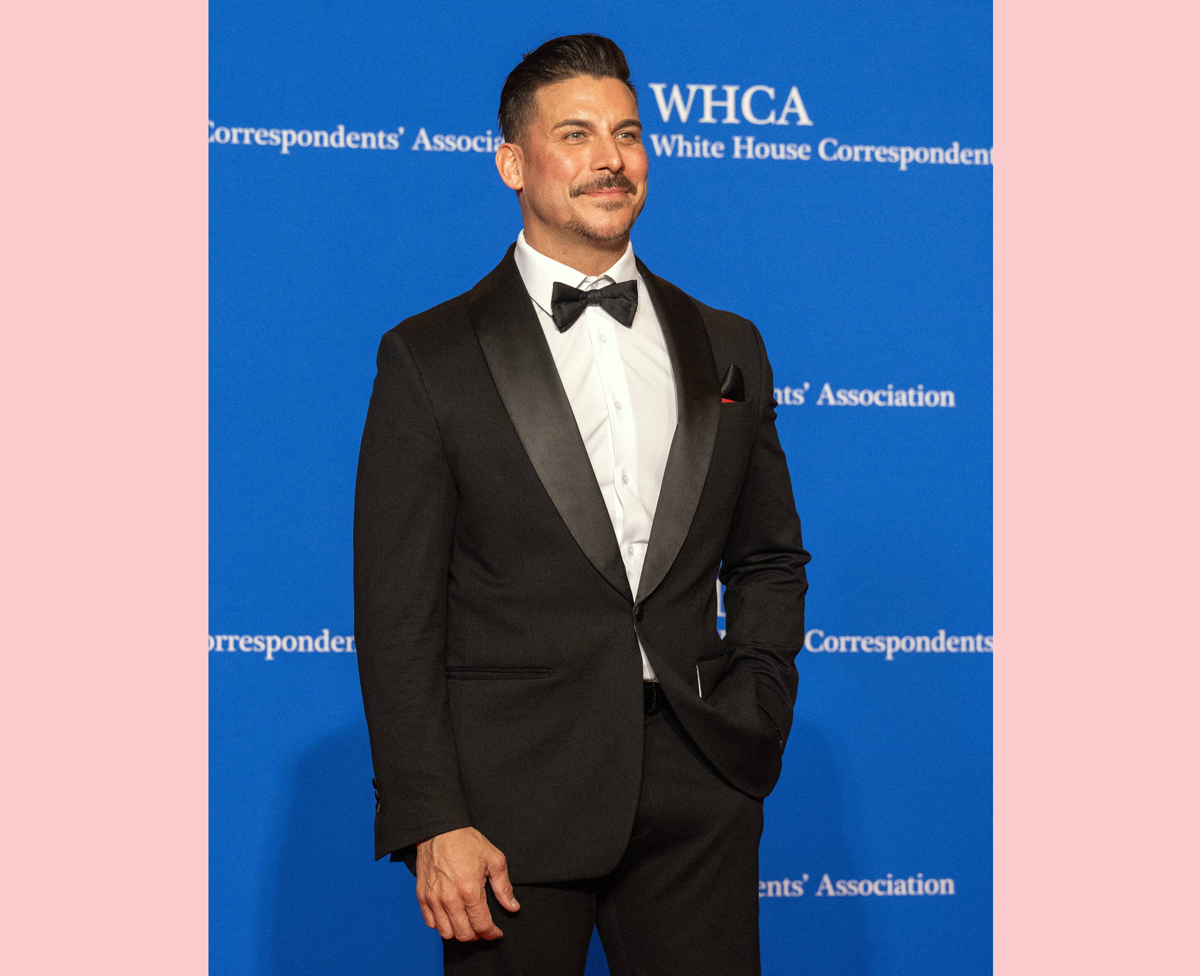
Jax Taylor’s Scariest Plot Twist Wasn’t on Reality TV: A Kidney Tumor, a New Love and a Life Recalculation
The Vanderpump Rules alum says doctors discovered cancer after a kidney-stone scare — and credits girlfriend Lori Krebs, his sobriety and his son Cruz with changing what matters now.
Jax Taylor has spent years making a career out of emotional whiplash. On reality television, he was the human equivalent of a group chat at 2 a.m.: chaotic, defensive, occasionally sincere, and almost always one bad decision away from a new headline. But the news he shared this week was not a reality-TV cliffhanger. It was a cancer diagnosis.
The Vanderpump Rules alum revealed that doctors found a tumor on his left kidney after he went to the hospital with what he believed was a kidney stone. The discovery came earlier this year, after he woke up in severe pain and underwent a CT scan. In an Instagram post, Taylor said the scan showed something he “never imagined” and that subsequent testing confirmed it was cancer.
He kept the diagnosis private for several months, describing the period as one of the scariest times of his life. Then, after a five-hour surgery, he shared that the tumor had been removed — though it was larger than doctors initially expected and he was still waiting for pathology results to determine whether everything had been taken out.
That is a very different kind of Jax update: no bar-fight energy, no reunion-stage theatrics, no suspiciously timed Instagram flex. Just a 47-year-old father trying to process the word “cancer” after losing his own father to the disease.
The kidney-stone scare that changed everything
Taylor said the tumor might have gone undiscovered if the kidney-stone pain had not sent him to the hospital. That detail is central to his post, not because he is turning the diagnosis into a neat inspirational lesson, but because it captures the strange, brutal randomness of a health scare: the symptom you think is one thing becomes the doorway to something far more serious.
“The hardest part was the waiting,” he wrote, describing the experience of knowing a tumor was growing inside him while trying to move through ordinary life as if everything was normal. Anyone who has ever smiled through a terrifying appointment schedule will recognize the particular horror of that sentence. The public version of life keeps moving. Your mind does not.
Taylor also connected the moment to his late father, who died in 2017 from throat and esophageal cancer. He said he likes to think his dad had a part in getting him to the hospital when he did. It is a tender thought, especially coming from someone whose public persona has often been built around bravado. The post’s emotional center was not celebrity, nightlife or even the old Vanderpump mythology. It was mortality, family and the sudden understanding that a body can rewrite the schedule.
Lori Krebs gets the most important Jax shout-out yet
The other major thread in Taylor’s announcement was Lori Krebs, the publicist he calls his girlfriend. Krebs previously worked with Taylor and his ex-wife Brittany Cartwright, a detail that gives the relationship an unmistakable connection to his recent public history without needing any extra reality-TV garnish.
Taylor was emphatic about her role during the health crisis. He called Krebs his “rock,” saying she was not just his partner but his best friend, and credited her with helping him get through the experience. In an emotional follow-up interview with People, he again praised her, saying he could not ask for a better partner.
That is a notable shift in the Taylor cinematic universe. His relationships have historically been discussed through conflict, breakups, makeups and the exhausting emotional weather system surrounding his split from Cartwright. Here, the language is strikingly unshowy. No grand hard launch. No carefully staged vacation carousel. Just a public acknowledgment that when things became genuinely frightening, Krebs was there.
It also gives the relationship a different kind of visibility. This is not a soft launch designed to make fans zoom in on a hand in the corner of a photo. It is Taylor naming the person who stood beside him while he faced surgery and waited for answers. For a reality star whose romantic life has supplied years of content, that is perhaps the most intimate relationship update he could offer without turning the hospital room into a set.
The milestone he is carrying into recovery
Taylor’s cancer diagnosis arrives just before another personal milestone: two years of sobriety on November 28. He said the past few years have forced him to rethink his health and the way he treats it, adding that he is proud of how far he has come.
The sobriety anniversary and the diagnosis are not being presented as a tidy before-and-after transformation. Taylor acknowledged that he had taken his health for granted for many years, but the bigger point of his message was brutally simple: priorities become obvious when the stakes change. He named his health, his son and the people who show up when life gets difficult.
His son, five-year-old Cruz, is now the clearest reason Taylor says he wants to stay on top of his health. In his People interview, he said that more than anything, he wants to be healthy and be there to watch Cruz grow up. That line lands harder than any reality-TV redemption arc because it is not about becoming likable. It is about being present.
There is also an unavoidable contrast between the Jax Taylor viewers remember and the person speaking now. Reality television rewards escalation. Health scares punish it. The old instinct is to perform confidence, keep the machinery moving and make the crisis somebody else’s problem. Taylor’s post instead admitted fear, uncertainty and the fact that even after surgery, he was still waiting for final pathology results.
For now, the story is recovery — not a comeback
Taylor said he is taking things one day at a time while he heals. The pathology results will determine what comes next, and neither his Instagram post nor the account in People offered a larger medical update beyond the tumor’s removal and his surgeon’s hope that everything was taken out.
That uncertainty matters. The internet loves a comeback narrative, especially when the star has spent years in the public eye and has already survived multiple reputational reinventions. But this is not the moment for a polished third-act trailer. Taylor is waiting for answers, recovering from a complicated surgery and trying to remain focused on his child, his sobriety and the people closest to him.
For once, the most revealing Jax Taylor detail is not what he did next. It is what he says matters now: health, Cruz and the people who show up. The reality-TV noise can wait.