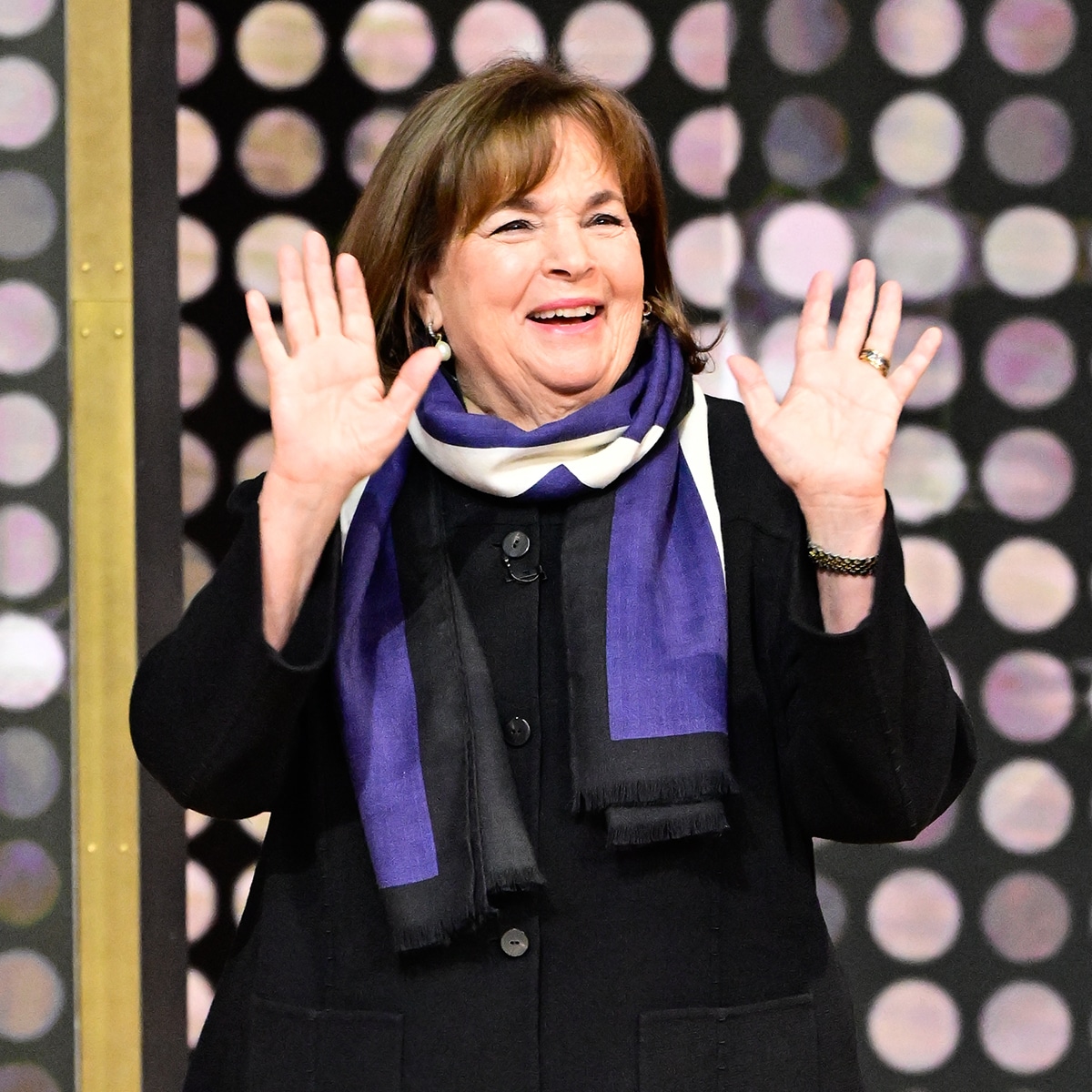
Ina Garten Looked at DWTS and Said, Absolutely Not
The Barefoot Contessa has plenty of opinions—and a very specific nightmare scenario involving sequins, ballroom shoes and national television.
Ina Garten has spent decades making domestic life look serene. Her kitchens are immaculate, her cocktails arrive at the right moment, and even the phrase “store-bought is fine” sounds less like a shortcut than a philosophy of emotional wellness. But ask the Barefoot Contessa to perform a Viennese waltz under hot studio lights, and suddenly the woman who can calmly feed a dinner party of 20 has a hard no.
Garten revealed on the Nov. 18 episode of her Happy Hour podcast that she was once asked to join Dancing With the Stars. Her response was not a coy “maybe next season,” a strategic “let me check my schedule” or the classic celebrity maneuver of pretending the offer never happened.
“Nobody needs to see that,” she said. “That’s not happening.”
Honestly? It is one of the most Ina Garten answers imaginable. No elaborate excuse. No inspirational montage waiting to happen. Just a clean, beautifully plated refusal.
The ballroom met its match in a woman with boundaries
Garten did not turn down DWTS because she was too busy being glamorous, too booked to rehearse or too concerned that the costumes might not come in a tasteful neutral. She said the prospect made her nervous enough to imagine the anxiety building as the premiere approached.
“The closer I got to the day when I had to do it, the more I would have nightmares,” she explained.
That is the part that makes the story land. Reality competition shows are built around celebrities saying yes to the thing they are least prepared to do, then discovering a hidden reserve of grit during week three. DWTS wants the wobble, the panic, the inspirational rehearsal package and the eventual triumphant lift. Garten, meanwhile, has looked directly at that entire emotional economy and decided she would prefer a quiet drink.
Her fear is also a funny contrast with the persona she has cultivated since Barefoot Contessa became a lifestyle institution. Garten can make a complicated dinner feel achievable, explain a technique without making anyone feel stupid and glide through a cookbook with the authority of someone who has already anticipated every possible kitchen emergency. But ballroom dancing is a different kind of performance: memorized steps, public judgment, physical vulnerability and a live audience waiting for the mistake.
There is no “How easy is that?” at the end of a cha-cha if you never agreed to do the cha-cha in the first place.
Giada danced. Ina declined. The chef-off nobody ordered
The timing made the refusal even more delicious. Garten’s fellow Food Network star Giada De Laurentiis competed on the most recent season of Dancing With the Stars with professional partner Alan Bersten. De Laurentiis was eliminated in week two, meaning the chef contingent did not exactly dominate the ballroom.
Still, the comparison is irresistible. Giada took the sequins, the choreography and the elimination-night suspense. Ina took one look at the whole production and stayed home. One chef brought the pasta; the other declined to bring the jazz hands.
Garten’s non-participation also leaves DWTS without the fantasy pairing viewers would immediately understand: Ina in an elegant, probably restrained ballroom costume, delivering a waltz with the same calm authority she brings to a roast chicken. The show has featured actors, athletes, reality stars, musicians and television personalities, but Garten would have arrived with something different—a fan base trained to believe that any crisis can be solved with good ingredients, a decent playlist and enough time.
Unfortunately for the producers, ballroom nerves do not respond to “use the best quality vanilla you can find.”
Ina has never been shy about choosing the life she actually wants
The DWTS admission fits into a larger pattern of Garten being unusually direct about the choices behind her polished public image. She has also spoken candidly about not having children during her nearly 60-year marriage to Jeffrey Garten, saying the decision was made when she was young and that Jeffrey was supportive of it.
“I just can’t imagine my life any other way I’ve done it,” she said on the Good Hang with Amy Poehler podcast in November 2025. “I’ve done what I wanted to do. I’ve had just a wonderful time.”
That line could double as her explanation for turning down Dancing With the Stars. Garten’s public life has never been about accepting every available version of success. She built a career around her own rhythm, from running a specialty food store to becoming a television host and cookbook author, and she has been open about the strain that work once placed on her marriage.
In her 2024 memoir, Be Ready When the Luck Happens, she wrote that her growing career left little room to think of herself as a wife. She and Jeffrey eventually went to couples counseling, and Garten described the work of rebuilding their relationship as learning to hear each other and move forward as equals who cared for one another.
That history gives her latest refusal a little more shape. Garten is not allergic to growth; she is allergic to performing growth for an audience when the premise does not feel like her. She will discuss a difficult period in her marriage, revisit a life-changing career decision and talk frankly about choosing not to have children. But ask her to dance for America and she would rather preserve the peace.
There is something quietly radical about a celebrity refusing the mandatory spectacle. In an era when famous people are expected to turn every fear into content, Garten simply named hers and opted out. No redemption arc, no rhinestones, no week-two elimination. Just Ina, protecting her sleep and leaving the ballroom to people who enjoy counting “five, six, seven, eight.”
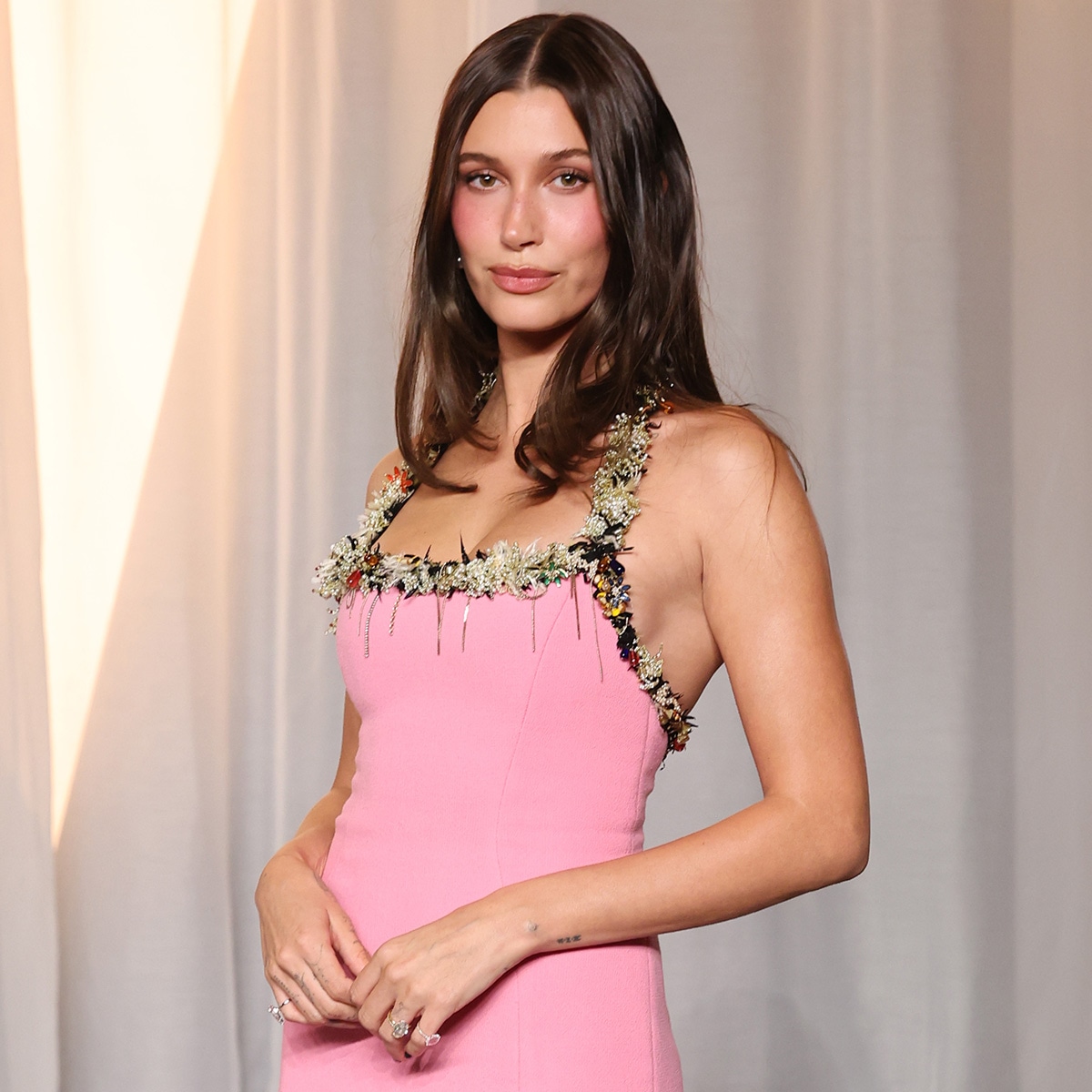
Hailey Bieber Invented a Word, Sold Rhode for $1 Billion, and Then Arrived With the Dictionary
The Rhode founder’s “optimistical delusion” comment sparked a tiny language war. Her response was beautifully brief: a dictionary screenshot and “anyways….”
Hailey Bieber has entered her dictionary era, which is a glamorous place to be when you have already sold a beauty company for $1 billion and the internet is still hung up on one adjective.
The Rhode founder drew attention after describing the mindset behind the brand’s success as “optimistical delusion” during a Nov. 18 appearance at The New York Times’ DealBook Summit in New York City. The phrase was instantly clipped, reposted and picked apart online—not because anyone was confused about what she meant, but because the word “optimistical” became the main character.
Some users treated it like a linguistic emergency. “‘Optimistical’ my eye is twitching,” one person wrote on X, while another asked why Bieber thought it was a word. The internet, as ever, was prepared to litigate an entire business philosophy through the narrowest possible doorway: one slightly unusual word.
Bieber’s answer arrived on Instagram Stories Nov. 20, according to E! News. She shared a screenshot of the dictionary definition of “optimistical,” described there as “a version of optimistic,” and added the only caption the moment really needed: “anyways….”
The Word Was Weird. The Timing Was Perfect.
There is something especially satisfying about a celebrity responding to a pile-on with a dictionary page instead of a paragraph. No lengthy explanation. No Notes app confession. No attempt to turn a stray vocabulary choice into a TED Talk. Just the definition, sitting there in black and white, while the rest of the internet was left to process the fact that the allegedly nonexistent word had, in fact, shown up to work.
It also gave Bieber the kind of social-media moment that feels tailor-made for her public persona: polished, dry and just a little bit smug. The “anyways….” does a lot of work. It says she saw the criticism, understood the assignment and had no intention of letting a grammar debate distract from the more interesting part of the conversation—that Rhode became valuable enough to command a billion-dollar price tag.
At the DealBook Summit, Bieber said she had personally decided that $1 billion was the minimum figure for which she would sell the company. “That felt crazy,” she said, describing the number as “shooting for the stars, stars, stars, stars.” She credited a particular kind of ambition—or, in her preferred formulation, “optimistical delusion”—with helping make the goal possible.
That phrasing may have been mocked, but the business outcome is not exactly easy to meme away. Rhode launched in 2022 with a deliberately edited assortment of skincare products and quickly became a social-media phenomenon. The brand’s minimalist packaging, dewy-skin vocabulary and highly photographed Peptide Lip Treatment helped turn a small product lineup into a full-blown celebrity beauty universe. In May 2025, Bieber sold Rhode to e.l.f. Beauty for $1 billion.
Rhode’s Real Product Was Never Just Lip Treatment
The joke about “optimistical” works because the word sounds like the sort of phrase assembled in the middle of a motivational speech, somewhere between “manifest it” and “trust the process.” But Bieber’s larger point was less mystical than it sounded. Celebrity beauty is powered by belief—belief that a face, a mood, a bathroom shelf and a carefully repeated phrase can become a lifestyle.
Rhode understood that formula unusually well. The brand did not arrive with an enormous catalog or an elaborate origin story. It arrived with a clean visual identity, a tightly controlled product world and Bieber herself as the permanent campaign. Her glazed-doughnut-skin aesthetic was already circulating before Rhode launched, but the company gave that look a checkout button.
It also benefited from the particular internet appetite for products that feel both aspirational and attainable. Rhode’s packaging looked expensive without behaving like a museum object. The products were easy to photograph, easy to name-drop and easy to fold into the endless social ritual of showing what is in your bag, on your vanity or beside your coffee. That is not accidental magic. It is brand strategy wearing a tiny, glossy lip case.
So yes, “optimistical delusion” is an odd phrase. It is also completely legible as celebrity-entrepreneur dialect: dream bigger than the room, act like the number is possible, and keep moving before anyone has time to ask whether the sentence made grammatical sense.
She Is Not Pretending the Noise Doesn’t Get to Her
Bieber has been candid that ignoring criticism does not come naturally to her. At the summit, she spoke about developing resilience after years of intense public scrutiny and said she is still working on how she regulates herself around social media.
“I’m just someone who pays attention,” she said. “I’m not that girl that can be like, ‘Yeah, I’m just gonna ignore it.’ I don’t work that way. I’m too sensitive and I care too much to try to be that person that it doesn’t bother me.”
That admission makes the dictionary post more interesting, not less. The story is not that Bieber is somehow above the internet. She has openly said she notices it. The story is that she has learned to choose which parts deserve an answer—and that occasionally, the answer can be a screenshot with the emotional temperature of a raised eyebrow.
Her approach also fits the strange economy of modern celebrity criticism, where a person can be discussed simultaneously as a wife, a mother, a founder, a beauty authority and a supposedly offending English speaker. Bieber shares two-year-old son Jack with husband Justin Bieber, but this particular online skirmish had nothing to do with her family or marriage. It was about a word, a company and the expectations placed on women who turn personal visibility into commercial power.
When a celebrity founder talks about ambition, the internet often wants the fantasy and resents the confidence required to maintain it. Bieber’s comment offered both: the “delusion” sounded playful enough to become a meme, while the billion-dollar sale made it difficult to dismiss as empty manifesting. The result was a tiny but revealing culture-war battlefield, with dictionary definitions standing in for the larger question of whether a famous woman is allowed to sound pleased with her own success.
The “Anyways” Heard Around Beauty TikTok
There is no indication Bieber plans to retire “optimistical” from her vocabulary. In fact, the dictionary screenshot may have done the opposite of what the critics wanted: it turned a questionable-sounding phrase into a piece of her brand mythology.
Because the funniest part is that the word did not need to be the star of the story. Bieber was talking about betting on an unlikely outcome and building a company that eventually sold for a staggering sum. The internet chose the spelling bee. She chose the dictionary. And somewhere between the two, “optimistical delusion” became the kind of celebrity phrase people will keep repeating long after they have forgotten the original interview.
Call it delusion if you want. Call it optimism with a little extra packaging. Hailey Bieber has now supplied the footnote, the pronunciation guide and the billion-dollar punchline. Anyways.
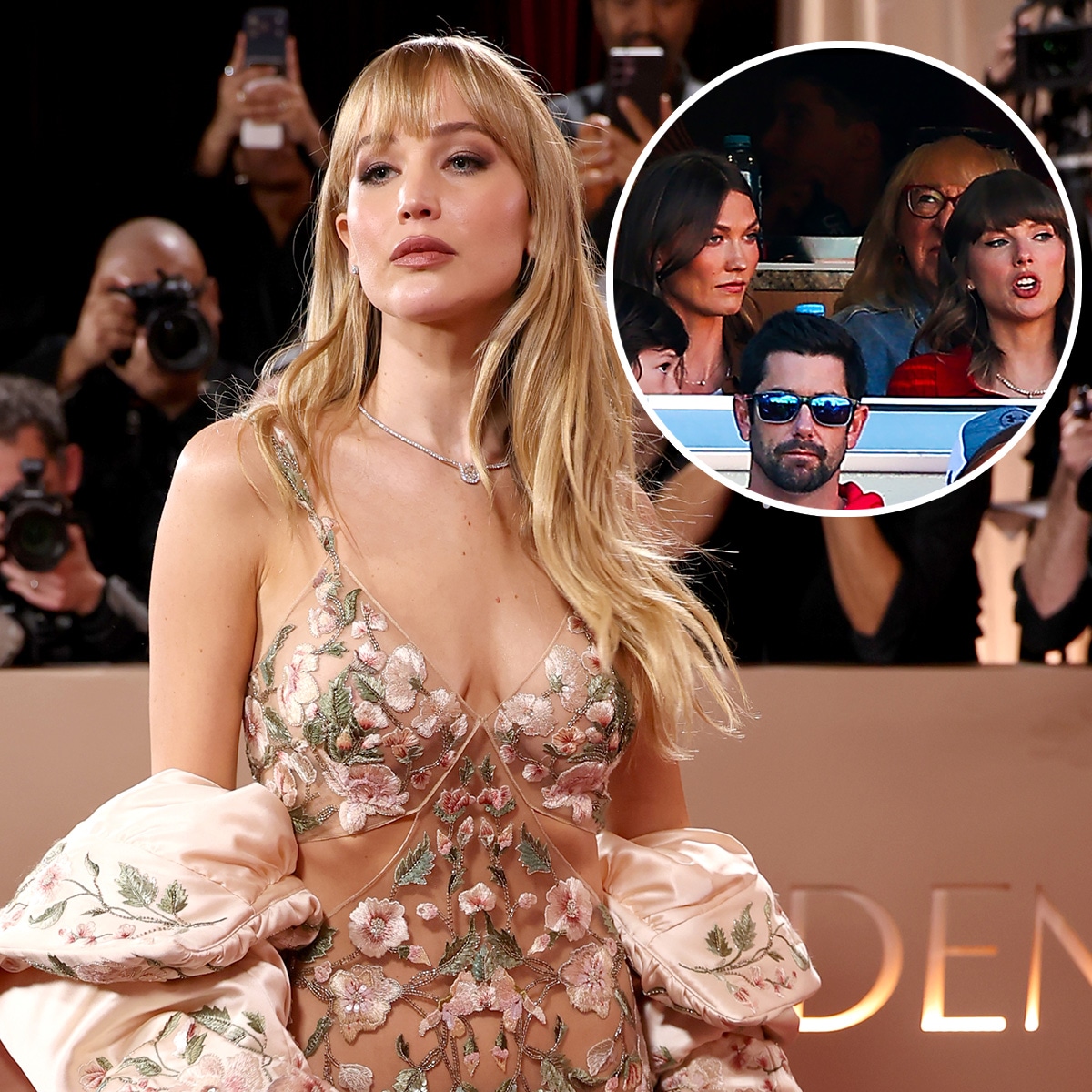
Jennifer Lawrence Has One Extremely JLaw Theory About Taylor Swift and Karlie Kloss Making Up
The actor has been spiritually trapped in the Taylor-Karlie friendship saga since 2018—and now she thinks age, not diplomacy, ended the drama.
Jennifer Lawrence has finally addressed the question that has apparently been haunting her for years: what, exactly, happened between Taylor Swift and Karlie Kloss?
Her answer is both deeply unserious and weirdly plausible. “That’s what happens when you get old,” Lawrence told Andy Cohen during her Nov. 19 appearance on Watch What Happens Live, reacting to Swift and Kloss being spotted together at the Kansas City Chiefs game earlier this month. “The things that you fought about, like it just seem silly.”
Then she took the theory somewhere only Jennifer Lawrence would take it: “It just seems like elder abuse to me.”
And there it is. Not a carefully worded statement. Not a diplomatic “I’m happy for them.” Not a vague Instagram caption about healing. Just Lawrence, longtime friendship detective, looking at two famously glamorous women apparently back in each other’s orbit and deciding that they got older, got tired and stopped caring about whatever the fight was.
The reunion that revived the friendship-industrial complex
Swift and Kloss reunited while cheering on Travis Kelce and the Chiefs against the New York Jets at Arrowhead Stadium on Nov. 8. The sighting instantly revived the long-running conversation around a friendship that once looked inseparable, then became one of pop culture’s favorite unresolved mysteries.
For years, Swift and Kloss were the kind of best friends celebrities are expected to be in the fantasy version of celebrity friendship: tall, blond, famous, photographed together, and seemingly fluent in the same private language. Kloss appeared to be part of Swift’s inner circle during the singer’s peak “girl squad” era. Then the vibe shifted, or at least became less visible, and the internet began treating every omission, appearance and seating chart like a coded message.
The most enduring clue was a 2017 moment in Swift’s “Look What You Made Me Do” music video. The singer wore a shirt listing names associated with her famous friend group, but Kloss’s name was noticeably absent. That tiny piece of wardrobe became a full-blown friendship weather report. Fans thought it meant bad blood. The absence became louder than any public explanation.
Kloss later tried to cool down the speculation by sharing a photo with Swift backstage during the Reputation tour in 2018. But the friendship still seemed to have entered its quiet era, especially after Swift did not attend Kloss’s wedding to Joshua Kushner a few months later. Neither woman has publicly laid out the alleged history in detail, which left the internet with the only thing it loves more than a celebrity feud: an empty space to fill.
Jennifer Lawrence has been waiting for this moment
Lawrence was never a neutral observer. In 2018, she told The New York Times, “I’d like to know what’s going on with Karlie Kloss and Taylor Swift, that’s the honest to God truth.” Then came the part that made her less like a casual fan and more like the patron saint of celebrity overthinking: “Is nobody else curious? It’s keeping me up at night. What happened?”
So when Swift and Kloss appeared together at a football game, Lawrence was not discovering the story. She was receiving a long-awaited update in a saga she had personally subscribed to.
There is something perfect about Lawrence being the one to comment. She has always had a gift for treating celebrity culture as both a glamorous spectacle and a group chat emergency. She once crashed Swift’s 2014 Golden Globes interview and joked that she had planned to push the singer down the stairs because Swift would find it funny. She has been openly obsessed with the Kardashians, created a Vanderpump Rules-style intro with friends at Lisa Vanderpump’s former restaurant Pump, and sent drunken emails to Woody Allen about how badly she wanted to meet Bill Murray.
Lawrence doesn’t observe fame from a safe distance. She lunges at it. She fangirls, overshares, makes the joke before anyone else can and somehow turns a red carpet into a sleepover. Her interest in Swift and Kloss was never really about proving a feud. It was about the irresistible spectacle of two people who once looked extremely close becoming mysterious to the public.
Maybe the “feud” was just a friendship growing up
Lawrence’s “elder abuse” line is funny because it reduces years of internet theorizing to the most ordinary explanation imaginable: people change, arguments cool off, and sometimes an old friendship becomes less dramatic simply because everyone involved has moved on.
That does not mean the public suddenly knows what happened between Swift and Kloss. It does mean the story has changed shape. Kloss being present for the latest chapter of Swift and Kelce’s relationship suggests a level of warmth that is difficult to square with the idea that the friendship is permanently frozen in some glossy celebrity ice age.
Kloss has also spoken warmly about Swift and Kelce, calling them “an amazing couple” and saying she was “so happy for them” during a July appearance on Today. She declined to discuss the private details of the wedding, which is probably wise. The woman has spent years living inside other people’s speculation; she clearly knows better than to feed the machine.
Still, her presence mattered. So did the Chiefs game. Celebrity friendships do not need a joint statement to change the narrative. Sometimes they just need to occupy the same luxury box, clap at the same touchdown and allow the internet to collectively exhale.
The real winner is Jennifer Lawrence’s curiosity
Swift and Kloss may be back in a friendlier chapter, but Lawrence is the one getting her long-awaited payoff. She asked what happened in 2018, watched the story remain unresolved for years and then got to deliver the most Lawrence explanation possible once the two women resurfaced together.
Her theory may be a joke, but it lands because it understands something celebrity culture tends to forget: not every strained friendship needs a cinematic betrayal. Sometimes people stop talking as much. Sometimes life gets crowded. Sometimes a fight that felt enormous at 28 looks ridiculous at 34. And sometimes two extremely famous women can stand next to each other at a football game without explaining themselves to anyone.
Of course, the internet will continue studying the seating arrangements, the smiles and the precise angle of every reunion photo. That is the natural habitat of the Swift-Kloss friendship saga. But for now, Lawrence has offered the only interpretation anyone really needs: grow up, get over it and maybe stop letting a 2017 T-shirt run your life.