Alba Rohrwacher’s New Drama Finds Trouble in Silence
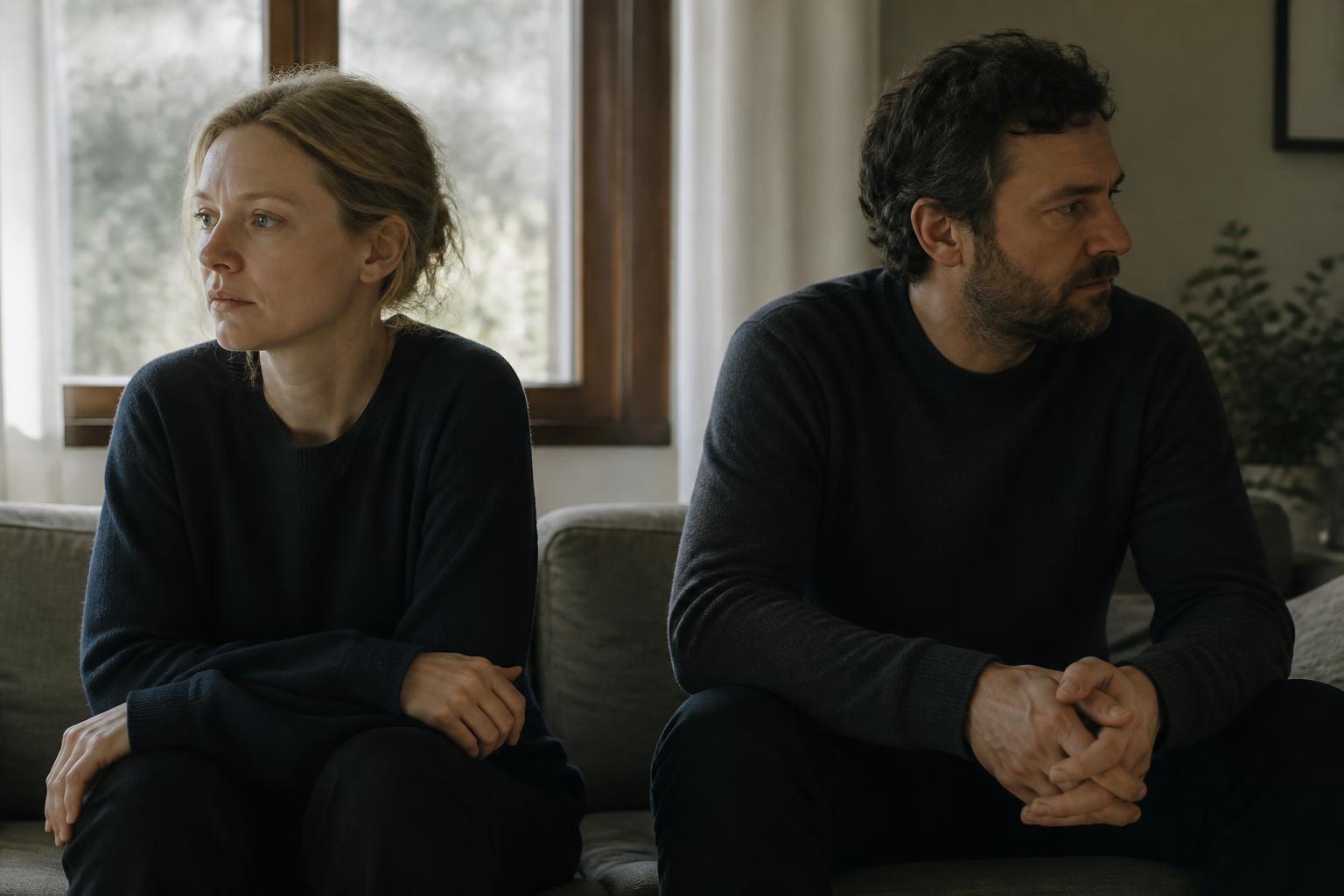
Most movie couples fight on cue. They raise their voices, hurl the line that changes everything and eventually arrive at a finale that feels more contractually required than emotionally earned. A Common Story takes the more uncomfortable route: its central couple cannot quite say what is happening to them, and the silence becomes the real antagonist.
That restraint is the calling card of Anna Foglietta’s first feature behind the camera. The Italian actor-turned-director appears to understand the physical business of a scene—the hesitation, the failed attempt to speak, the look that replaces an explanation—in a way that gives the film its pulse. Variety’s Jay Weissberg praised the movie as a standout from Venice’s Orizzonti sidebar, with the drama built less around verbal combat than the spaces separating one sentence from the next.
Alba Rohrwacher and Guido Caprino play the couple at the center, and the review singles out both performances as exceptional. That matters because this kind of story can become dramatically airless if the actors do not make every pause legible. Here, the appeal is not watching two people deliver increasingly polished arguments; it is watching them fail to translate private feeling into language, even when the relationship appears to depend on it.
The premise also gives A Common Story a useful edge over the standard relationship tear-down. There is no promise of a grand cinematic showdown to tidy up the emotional mess. Instead, Foglietta treats miscommunication as an accumulation of small absences: what goes unsaid, what arrives too late and what each person may assume the other already understands.
That makes the film sound quieter than a conventional breakup drama, but not necessarily gentler. Silence can protect people from cruelty; it can also keep them trapped inside the same misunderstanding. Based on Variety’s review, A Common Story earns its impact by making that trap feel intimate rather than theatrical—a strong launch for Foglietta and a showcase for two actors working at full emotional precision.

Phuttiphong Aroonpheng’s New Film Gets Lost in Its Own Fog
Nearly a decade after Manta Ray won the Orizzonti prize, Thai filmmaker Phuttiphong Aroonpheng returns with The Burning Giants—a murky dystopian mystery that appears more interested in atmosphere than answers. Variety’s review describes the director’s third feature as an elliptical fable about the violent removal of an indigenous community from its ancestral land and the pressure to erase its identity.
The movie’s visual language is doing serious work. Cinematographer Emo Weemhoff frames fog-heavy forests and unnaturally purple skies in a feverish, hallucinatory style, making the landscape feel less like a setting than a warning system. That dream logic places Aroonpheng near the post-Apichatpong Weerasethakul school of cryptic Thai cinema, a comparison Variety says is understandable—even if it risks making the film feel more familiar than mysterious.
That tension is the real hook. The Burning Giants reportedly scatters its clues across a story about violent eviction and forced assimilation, asking viewers to assemble the larger picture rather than handing over a clean explanation. For some audiences, that can make the film feel richly layered. For others, the obscurity may read as a deliberate barrier, especially when the central ideas are already weighty.
Variety’s assessment lands in that uneasy middle: the film is admired for its ambition and visual control but criticized as strangely one-note. In other words, this is not being sold as an easy thriller with a tidy reveal. It is a politically charged art-film mystery whose most memorable elements may be its color, weather and sense of menace.
That makes Aroonpheng’s return worth watching for cinephiles who prefer their narratives slippery and symbolic. The warning label is equally clear: The Burning Giants may leave viewers contemplating its images long after the plot has vanished into the fog.
Nick Offerman Answers Ben Shapiro’s Critique of His Gay Role
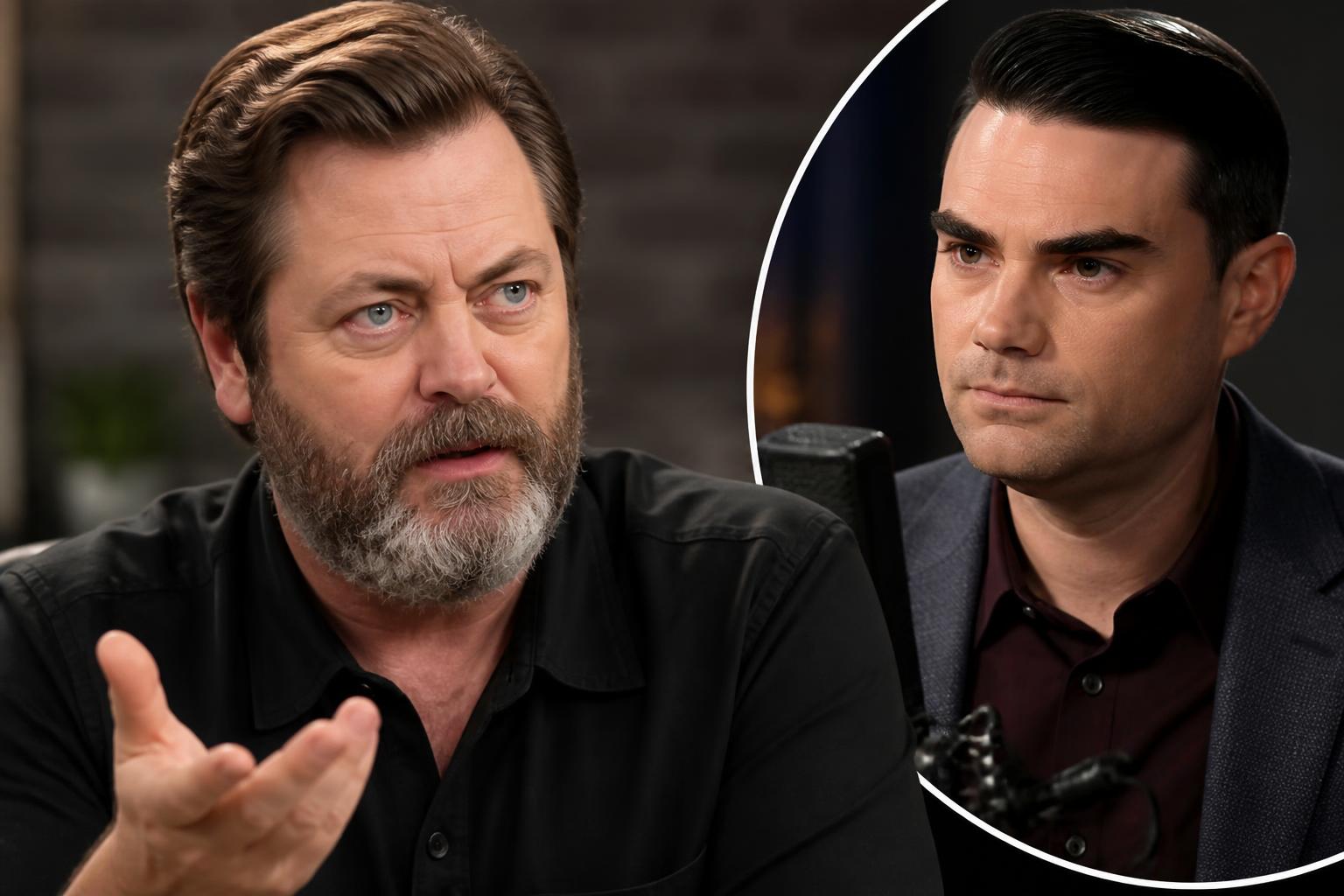
Nick Offerman is pushing back on Ben Shapiro after the political commentator took aim at Offerman’s role as Bill in HBO’s The Last of Us. According to The Hollywood Reporter, Offerman responded during an appearance on Sam Fragoso’s Talk Easy podcast, where Fragoso played him a clip from Shapiro’s commentary.
Shapiro’s complaint centered on the idea that Bill is essentially Offerman’s Parks and Recreation character, Ron Swanson, rewritten as a gay man. During The Ben Shapiro Show, he described the character in deliberately crude terms while recapping the apocalyptic storyline: a government-skeptical prepper, isolated behind defenses, who eventually forms a relationship with another man.
That comparison is the entire fuse here. Ron Swanson is one of Offerman’s most recognizable roles, but Bill is not simply a reskinned version of him. Shapiro’s framing turns a character comparison into the joke itself, reducing Bill’s sexuality and relationship to the punchline rather than engaging with the role as a separate performance.
Offerman labeled Shapiro’s comments “rampant homophobia,” as reported by The Hollywood Reporter. That is Offerman’s characterization of the remarks, not an independently established finding in the supplied coverage. What is documented is the chain of events: Shapiro criticized the role on his show, Fragoso showed Offerman the clip, and Offerman answered publicly on the podcast.
The dispute also lands because Bill connects Offerman to a very different kind of screen conversation than the one that made him famous. The argument is not really about whether Bill shares a few surface traits with Swanson; it is about whether those similarities justify treating a gay character’s story as a gag. Shapiro made the comparison. Offerman rejected the framing. For now, that is the whole combustible package—and it is plenty.