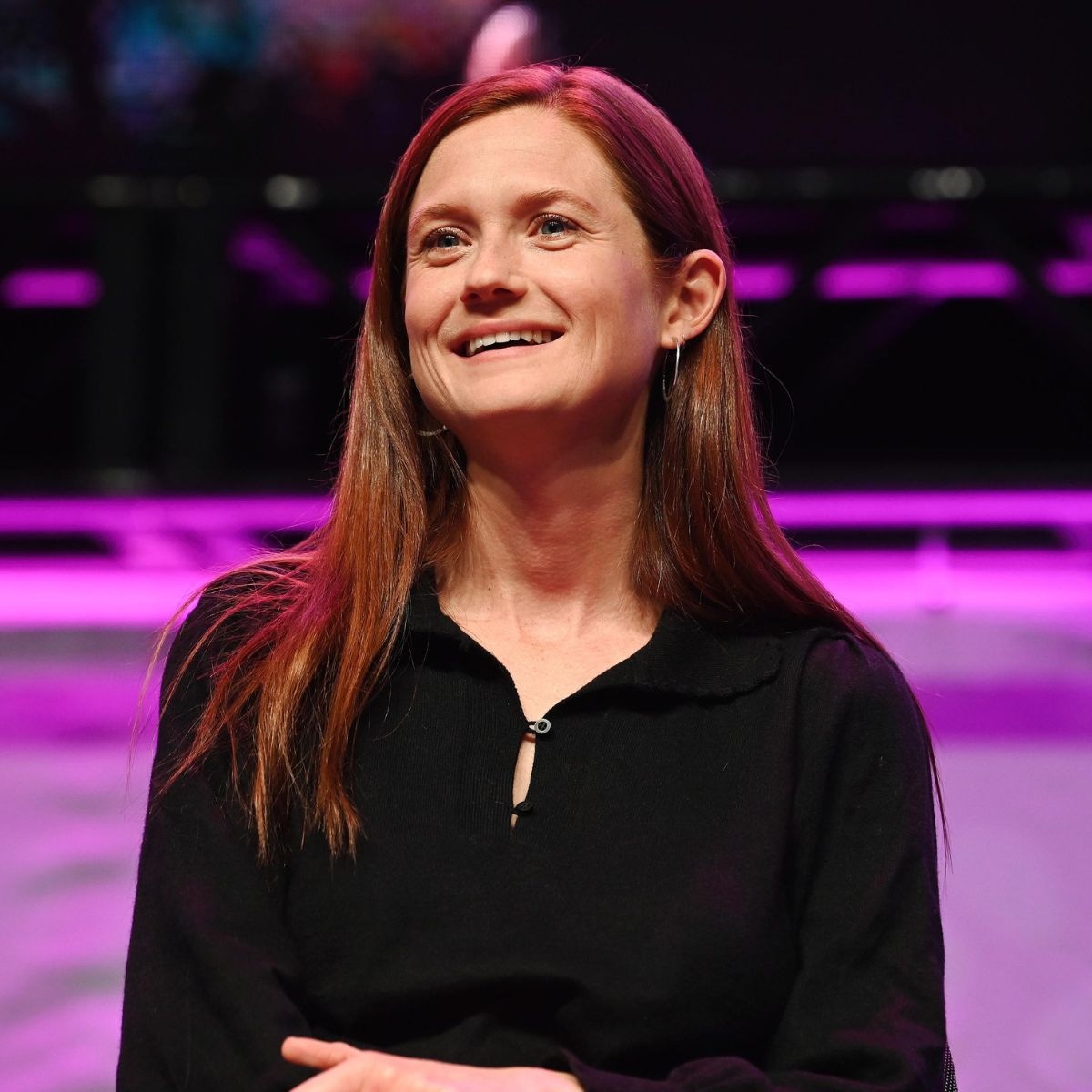
Bonnie Wright’s New Baby Has a Name So Magical It Sounds Like a Lost Harry Potter Character
The former Ginny Weasley star and husband Andrew Lococo have welcomed a second son—and named him Aster Sky, because apparently the family was never going to choose Kevin.
Bonnie Wright has returned from the maternity ward with a newborn, a three-year-old big brother and a baby name that sounds like it was pulled from the most exclusive corner of the Wizarding World.
The Harry Potter alum and husband Andrew Lococo have welcomed their second child, a son named Aster Sky Wright Lococo. Wright announced the news on Instagram Oct. 17, sharing photos of the baby and writing: “Say hello to our son Aster Sky Wright Lococo born at home on the 28th September named after the star-shaped flower.”
There is a lot happening in that sentence. The baby arrived at home. His name contains both a flower and the entire sky. And somewhere, probably, a casting director is realizing that “Aster Sky Wright” would have been a perfectly plausible Hogwarts student who shows up in book six, says one cryptic thing near the lake and disappears forever.
Meet the newest member of the Wright-Lococo constellation
Aster joins Wright and Lococo’s first child, son Elio Ocean, who was born in September 2023. Wright’s family naming style has now established a clear theme: earth, sky, flowers, oceans, stars—basically, the baby is being raised inside an exceptionally well-curated nature documentary.
The actress also shared that Aster has already been “showered in love” by his big brother Elio, adding, “Thank you universe for my loving bundle of boys!” It is a very Bonnie Wright caption: soft-focus, cosmic, outdoorsy and just a little bit enchanted without needing to mention a wand.
Wright has made motherhood and the natural world a visible part of her public life. She runs Earthling, a family-oriented outdoors club, and has frequently posted about spending time in nature with Elio. In a January post referenced by E! News, she described days spent getting closer to the land, watching Elio and Andrew sift compost and play in the garden, while also building trains and puzzles with her son.
That makes Aster Sky feel less like a celebrity baby name chosen during a branding meeting and more like the next entry in a very specific family mythology. Elio Ocean. Aster Sky. Compost. Gardens. The occasional train set. Somewhere, a linen-clad mood board is glowing.
From Ginny Weasley to a very different kind of magic
Wright was only 10 when she first appeared as Ginny Weasley, Ron’s younger sister and the initially overlooked redhead who eventually became Harry Potter’s love interest. Over the course of the films, Ginny went from background sibling to Quidditch player to full romantic lead—a promotion familiar to anyone who has ever watched a franchise quietly realize that its “little sister” character has grown up.
But Wright’s adult life has moved far away from the franchise machinery. She graduated from the London College of Communication, formed a production company, wrote and directed short films, and released her 2021 book Go Gently, which focused on ways readers could engage with the climate movement. Her public-facing interests now lean much more toward sustainability, creativity and family life than red carpets or franchise nostalgia.
That does not mean the Potter connection has vanished. Wright has remained part of the extended Hogwarts family, including a 2019 reunion photo with Emma Watson, Tom Felton, Matthew Lewis and Evanna Lynch. She captioned that image “Time turning,” a phrase that now feels almost aggressively on brand for someone whose children’s names sound like celestial objects.
Wright’s romantic history also has a small piece of Potter lore attached. She was previously engaged to actor Jamie Campbell Bower, who played young Gellert Grindelwald in Harry Potter and the Deathly Hallows – Part 1; the engagement ended in 2012. She later dated Simon Hammerstein before meeting Lococo in 2020. Wright and Lococo married in March 2022, two years after their relationship first sparked public interest.
The home-birth announcement was intimate, but not overly precious
When Wright announced Elio’s birth, she wrote that she and Lococo were “all healthy and happy” and described the experience as “wild,” while thanking her birth team and calling Lococo her rock. The tone was open without becoming a lifestyle manifesto: gratitude, exhaustion, tenderness and a clear sense that childbirth had rearranged her entire universe.
The arrival of Aster comes with the same warm, grounded energy. Wright did not turn the announcement into a glossy celebrity rollout. Instead, she offered a few newborn photos, a name with botanical origins and a glimpse at the older sibling already being folded into the moment.
And while the internet will inevitably treat every unusual celebrity baby name like a competitive sport, Aster is hardly random. The name comes from the star-shaped flower, according to Wright, making it an especially neat bridge between the botanical and celestial worlds. “Sky” completes the picture. This is not a child named after a luxury resort or a password. It is a tiny person named after the night above a garden.
Of course, the Potter fandom will have its own reaction. Wright’s original character was part of one of the most recognizable fictional families in pop culture, and the announcement arrives with the kind of full-circle charm fans love: Ginny Weasley now has a real-life family that sounds like it belongs in a gentler, greener version of the books.
There is no scandal, suspicious timing or celebrity-couple plot twist here. Just Bonnie Wright, 35, welcoming another son with her husband, an older brother apparently delighted by the new arrival and a name so committed to the natural world that it practically comes with its own soundtrack.
Welcome to Earth, Aster Sky. Your family has already given you a flower, a star and a slightly unfair amount of narrative pressure.
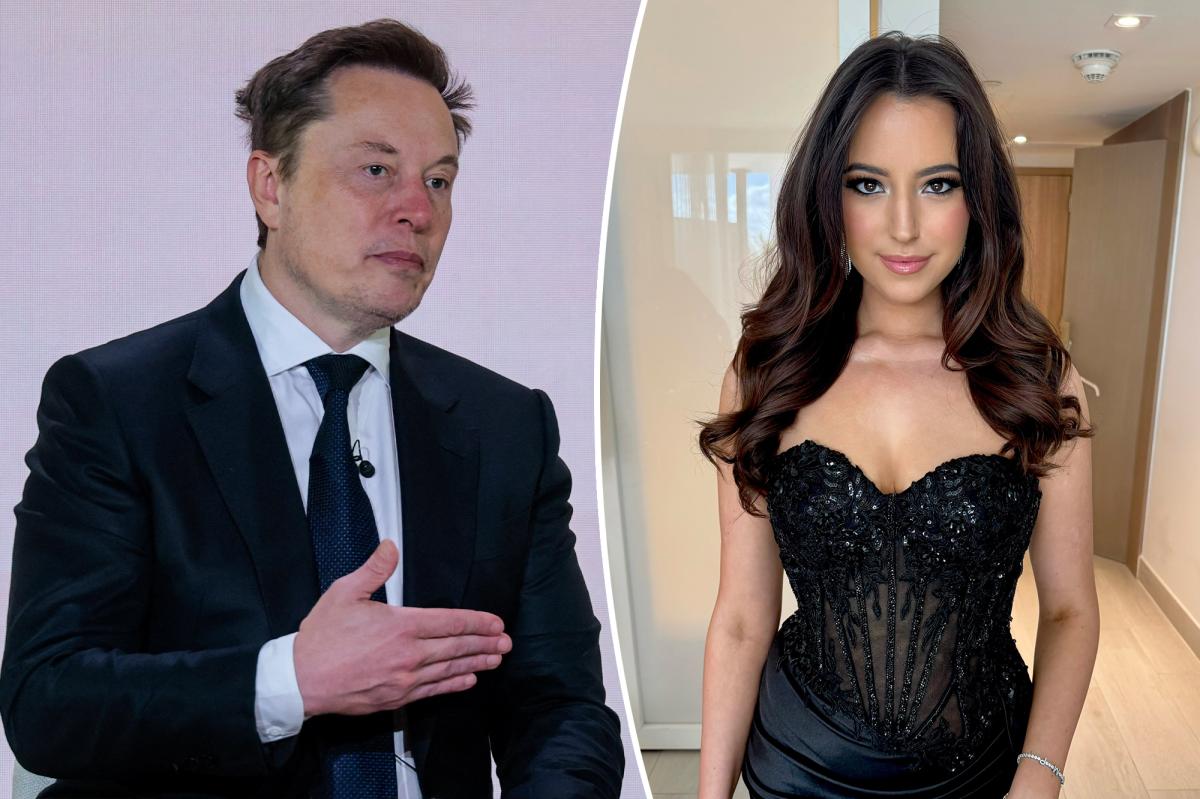
Ashley St. Clair Says Elon Musk Cut Her Support by $80,000 After She Made Their Son Public
In the new documentary “Musk,” St. Clair describes an NDA offer, a secret baby and a relationship that went from X DMs to an explosive custody fight.
Elon Musk’s sprawling family tree has acquired a new plot twist: Ashley St. Clair says the billionaire reduced her monthly child support by $80,000 after she refused to keep their son a secret.
That claim comes from the new documentary Musk, where St. Clair describes a relationship that began with X interactions, moved into private conversations and ended up in the most Musk-shaped place imaginable: a secret child, an alleged nondisclosure agreement and a custody dispute playing out in public.
St. Clair, 28, says she was offered $15 million and $100,000 a month in child support if she signed an NDA concealing her relationship with Musk, now 55. She says she declined because she could not, in her words, let her son grow up feeling “like he’s a secret.”
According to the documentary account, the monthly support was later reduced to $40,000 after she rejected the agreement, then to $20,000 after she publicly revealed in February 2025 that she had given birth to Musk’s 13th child, Romulus. St. Clair’s legal team has alleged that the financial changes left her facing eviction amid their custody battle.
The secret-baby soft launch that became a hard collision
St. Clair says the relationship started in 2023, when Musk began frequently responding to her posts on X, formerly Twitter. The opening line, as she tells it, was not exactly subtle. After Musk responded to one of her Mother’s Day posts, she says he suggested she should have more children — eventually telling her, “We should have a kid. You should have so many more kids. You should have 10 kids.”
It is a very 2020s origin story: flirting in the replies, family planning by direct message and an internet audience waiting somewhere nearby with screenshots open. St. Clair says Musk presented himself as a good father and appeared to have amicable relationships with the mothers of his children. She says that image helped shape her understanding of what a relationship and co-parenting arrangement with him might look like.
Instead, she says, things became strange once she was pregnant. St. Clair had previously said in a TikTok video that “things started getting weird” during the pregnancy. In Musk, she says he was kind until Romulus was born, adding, “It was almost as if he didn’t show a certain side of himself until after I had our baby.”
The contrast is the part people are likely to keep circling: the glossy promise of a giant, unconventional family versus the far less glamorous mechanics of money, privacy and access after the baby arrives.
From $100,000 a month to $20,000
St. Clair’s account centers on the alleged NDA and the dramatic change in support she says followed her decision not to sign it. She says the original offer included $15 million and $100,000 per month, with the secrecy agreement attached. After she declined, she claims the payments dropped to $40,000 a month. After she announced Romulus publicly, she says they fell again, to $20,000.
That is the financial detail turning this from a familiar celebrity paternity story into a much sharper power story. The issue is not merely whether a famously private billionaire wanted privacy; St. Clair says the price of that privacy was built into the arrangement, and that the cost of breaking it was later reflected in the support she received.
Musk, for his part, previously claimed he had paid St. Clair $2.5 million and said he was “not against finding out” whether he was the child’s father. A representative for Musk did not immediately respond to Page Six’s request for comment on the documentary’s claims.
Neither the alleged offer nor the changes in support are presented here as settled fact beyond St. Clair’s account and the claims described in the documentary. But the narrative has already landed because it slots neatly into the public pattern surrounding Musk: enormous declarations about civilization and the future, followed by deeply personal family drama conducted through posts, interviews and legal filings.
The Musk family expansion is now its own cinematic universe
St. Clair’s story arrives as Musk’s public family saga continues to expand. The documentary says he recently welcomed his 14th child, Seldon Lycurgus, with Neuralink executive Shivon Zilis. Zilis recently said Musk ended their relationship “with no warning,” adding another abrupt breakup to a family structure that already seems to require a flowchart.
St. Clair also claims she was contacted by other women who said Musk had been messaging them and allegedly offering them children. She says one woman in Japan wanted what was essentially a sperm donation and that Musk “obliged.” Her description of the situation — “a Gatling gun of sperm in his DMs” — is the sort of line that sounds designed for a documentary trailer, but it also captures the bizarre scale of the public conversation around his reproductive ambitions.
She further claims Musk texted her before Romulus was born that he wanted a “legion of children before the civil war.” Again, it is an extraordinary statement, and one St. Clair attributes to a private message rather than a public post. Its inclusion in the film turns the custody dispute into part of a much larger argument about Musk’s stated desire for more children and the reality of being one of the mothers raising them.
St. Clair’s son is now 2. Musk has publicly acknowledged the broader dispute in limited terms, while St. Clair has continued to describe the relationship and its aftermath through social media, court-related claims and now a feature documentary. The result is less a conventional breakup story than a digital-age family drama with a billionaire, a secret birth and a monthly payment that allegedly changed every time the secret got harder to keep.
There is no soft landing here. The relationship began with a reply, the family began in secrecy and the fallout arrived as a public argument over money. In the Musk universe, even a private family matter apparently comes with a premiere date.
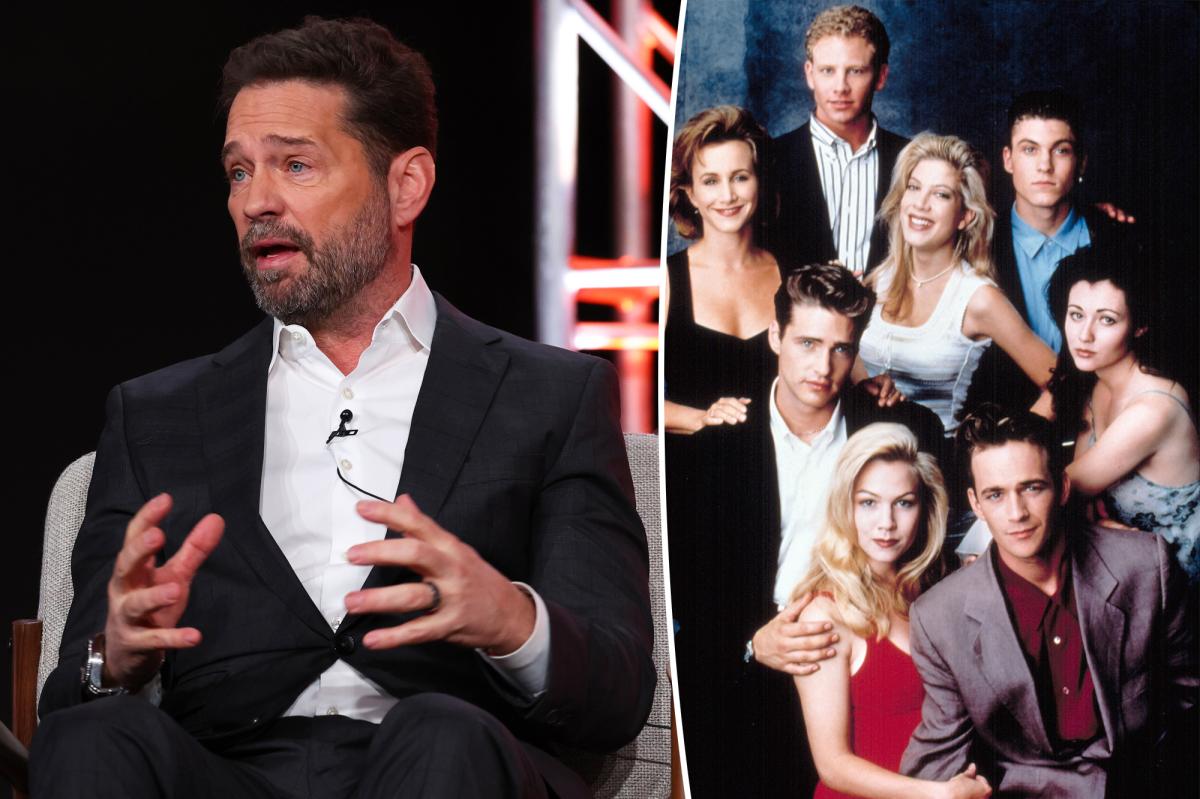
Jason Priestley Wanted to Pull the Plug on ‘90210’—Then Aaron Spelling Made Him Choose Between Brandon Walsh and His Sanity
The original teen soap had comas, surprise siblings and one very over-it star. Now Priestley says he begged Aaron Spelling to end the show before walking away—and accidentally torpedoing Brandon and Kelly’s wedding.
Brandon Walsh was supposed to be the sensible one. The guy with the moral compass, the journalism career and the permanently concerned expression of a teenager who had somehow become the only adult in Beverly Hills.
But behind the scenes, Jason Priestley was apparently looking at Beverly Hills, 90210 and thinking: enough with the comas.
During Friday’s episode of Jennie Garth’s 9021OMG podcast, Priestley revealed that he wanted the Fox hit to end before it completed its ten-season run. The problem, as he saw it, was not that the show had stopped being successful. It was that the storylines had started drifting into full daytime-soap territory—and he could no longer see a graceful exit.
“There was lots of crazy stuff that happened in that eighth season,” the actor recalled. In particular, he pointed to plots involving comas and surprise appearances by characters’ siblings, saying the series had begun to feel “very daytime-y.” That is an extremely polite way to describe the era when a show about wealthy California teenagers started behaving like it had been possessed by three afternoon soaps and a network executive with a deadline.
Brandon Walsh had entered his ‘please let me leave’ era
Priestley had played Brandon since the series premiered in 1990, when he and twin sister Brenda arrived in Beverly Hills from Minnesota and immediately became the moral center of West Beverly High. Over the years, Brandon survived teenage drama, romantic drama, family drama and the particular kind of emotional weather that only exists in a show where every school dance can become a life-altering event.
By Season 8, though, the original shape of 90210 had been stretched almost beyond recognition. Shannen Doherty had already left after Season 4, taking Brenda—and one of the show’s most combustible personalities—with her. The cast still included Priestley, Garth, Luke Perry, Ian Ziering, Tori Spelling, Brian Austin Green and Gabrielle Carteris, but the center of gravity was shifting.
Priestley said he approached the late producer Aaron Spelling with a simple pitch: let’s stop while the show is still on top.
“Aaron, man, let’s end this. Let’s go out on top,” Priestley remembered telling him.
Spelling, according to Priestley, was having none of it. “They’re going to pull me off this set in a body bag,” he allegedly told the actor, making it clear that the show was not ending on his watch. Spelling insisted he was “never ending the show,” leaving Priestley with the most 1990s television dilemma imaginable: remain loyal to a hit series that no longer felt creatively satisfying, or leave while the brand still had enough heat to follow him out the door.
So Brandon left Beverly Hills for Washington
Priestley chose the exit. He said he wanted to pursue other things “with my career and in my life,” and walked away early in Season 9 in 1998. Brandon’s departure was written as a move to Washington, D.C., where he would pursue journalism—an ending that at least honored the character’s long-running identity as the earnest reporter in a zip code full of chaos.
It was also, in retrospect, a slightly awkward moment to discover that the show had nearly reached the finish line. The original 90210 ended only a year and a half later, on May 17, 2000.
“If I’d have known the show was only going to go for another year and a half after I left, I would have stayed,” Priestley admitted.
That is the kind of career confession that makes television history feel suddenly personal. Priestley did not leave an obscure series limping through syndication. He left one of the defining teen dramas of its era, only to watch it wrap up not long afterward. The timing was bad enough. The romantic fallout was worse.
Brandon and Kelly’s wedding was apparently the plan
Priestley’s exit also derailed plans for Brandon and Kelly Taylor to marry. On the podcast, he said he believed that was “the overall plan,” confirming the obvious thing the show had been circling for years: Brandon and Kelly were not just another pairing. They were the endgame-shaped shadow hanging over every other relationship.
Kelly, played by Garth, had already been through enough romantic turbulence to qualify for her own emotional insurance policy. She had been part of the show’s central love triangle with Brandon and Dylan McKay, played by Luke Perry, and the question of which Walsh twin-adjacent romance would ultimately prevail had been baked into the series mythology for years.
Instead, Brandon disappeared to Washington, Kelly remained in Beverly Hills, and the wedding became one more alternate-universe 90210 storyline. The show carried on, but Garth told Priestley that his absence changed the chemistry in a fundamental way.
“You were so missed with your presence, because, you know, we didn’t have Brenda or Brandon anymore,” she said.
That sentence neatly explains why the original series could continue without ever quite replacing its original center. Brenda and Brandon were not simply two characters who could be swapped out when the cast evolved. They were the show’s organizing principle: the twins who arrived as outsiders, narrated the rules of Beverly Hills and gave the audience a way into its glossy, ridiculous universe.
The soap opera was the point—until it wasn’t
There is a delicious irony in Priestley’s complaint. The outrageousness he found exhausting is also what made 90210 so enduring. The show began as a relatively polished teen drama about class, friendship and adolescence, then gradually embraced the melodrama that helped turn it into a cultural event. The bigger the hair, the messier the romances and the more improbable the plot twist, the more the series became the thing people remembered.
But there is a difference between enjoying the chaos from the couch and having to deliver it with a straight face for ten seasons. Priestley’s frustration sounds less like contempt for the show than exhaustion with its inability to recognize that a story can end before the audience starts asking whether everyone has secretly been replaced by an identical cousin.
Spelling saw a television institution that still had life in it. Priestley saw a beloved character approaching the point of no return. Both instincts turned out to be understandable. 90210 did keep going, and it did end only a year and a half after Brandon left. But Priestley’s timing also gave the show one final piece of mythology: the star who asked for a clean ending, was denied it, and walked away just before the finale came into view.
In the end, Brandon never got his wedding, Priestley never got his tidy wrap-up, and Aaron Spelling never got pulled from the set in a body bag. For a show that once made every school hallway feel like a national emergency, it is a perfectly on-brand ending.