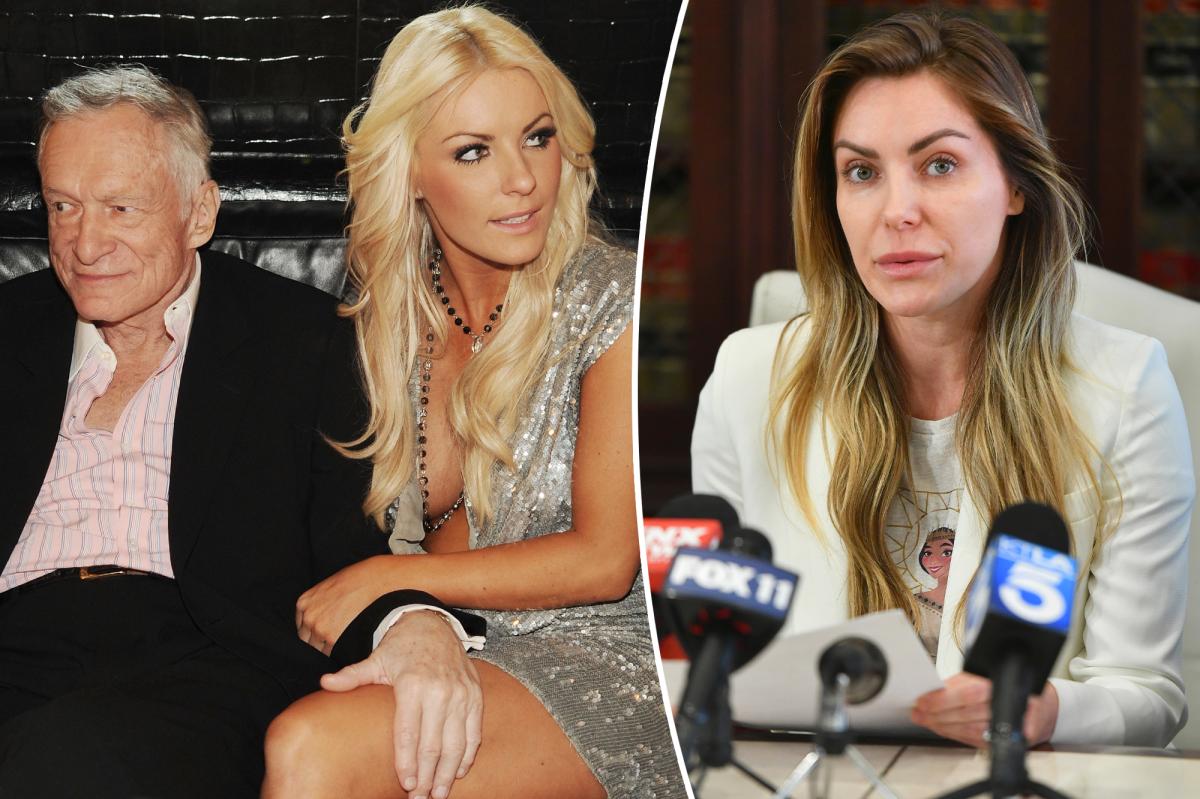
Crystal Hefner Wants the Hefner Name Out of Her Life — and She’s Not Softening the Exit
The former Playboy bride says she regrets marrying Hugh Hefner, changed her name back to Crystal Harris and is revisiting the mansion years with a much darker lens.
Crystal Hefner is done carrying Hugh Hefner’s name — and, increasingly, she is done carrying the polished version of their marriage that the Playboy empire spent decades selling.
In a new interview with Page Six, Crystal said she asks herself every day why she ever married the late Playboy founder. Her answer is brutally simple: if she could go back, she would not do it. Not the wedding, not the mansion, not the famous surname, not the life staged under chandeliers and camera flashes.
“If I could go back, I absolutely wouldn’t have [married Hugh],” she told the outlet.
That is a striking reversal for a woman who once appeared to be the final, glossy chapter in Hefner’s mythology. Crystal met Hugh at a Halloween party at the Playboy Mansion in 2008, moved into the estate, became one of his girlfriends and appeared as Playboy’s Playmate of the Month in December 2009. In 2012, she married him. They remained together until his death at 91 in 2017.
Now the marriage is being retold not as a glamorous capstone, but as a relationship shaped by an enormous imbalance of age, money, fame and control.
The surname was the last piece of the fantasy
Crystal, 40, told Page Six that she believed Hugh deliberately chose partners he could manipulate, arguing that women from “broken homes and broken backgrounds” were easier for him to control. She said she came from a broken home herself and did not have a father, adding that she now views those parts of her history differently.
Her most cutting question is also the one that punctures the entire Hefner brand: why would a supposedly brilliant, powerful man want partners who were not his intellectual equals?
Crystal’s answer is that people who can challenge you are harder to control. It is an interpretation of the marriage, not a tidy post-breakup sound bite — and it gives her regret a larger target than one ill-advised ceremony. She is describing a system in which the mansion, the surname and the fantasy all worked together.
She legally changed her name back to Crystal Harris in 2025 after weighing whether to keep “Hefner” and use its cultural power for what she described as good work for women. Ultimately, she chose a clean break. That decision reads less like a rebrand than an exorcism: the famous name was useful, recognizable and impossible to separate from the man who made it famous.
Crystal has since married marine biologist James Ward, but the emotional story she is telling now is not a tidy “moving on” announcement. It is a woman publicly revisiting the price of being absorbed into someone else’s world.
From mansion mythology to a much uglier memory
Crystal has also been speaking about what she says she witnessed inside the Playboy Mansion. During an appearance on Lisa Guerrero’s podcast, she described bedroom situations that made her uncomfortable and alleged that Hugh pressured women into sexual acts they did not want to perform.
Among the claims she made was that he tried to push twins Kristina and Karissa Shannon into sexual contact with each other. Those are Crystal’s allegations about events she says she witnessed. The Shannons’ own accounts of their time in the Playboy world have also been part of the broader public conversation around the mansion.
Crystal’s comments arrive years after Hugh’s death, but they land in a culture that has become far less willing to treat the Playboy Mansion as harmless adult escapism. The old imagery — silk robes, champagne, famous guests and beautiful women arranged around one powerful man — has not disappeared. It has simply acquired a second soundtrack, one about coercion, humiliation and the cost of access.
Crystal also criticized the high-profile men who visited the mansion, naming Jon Lovitz and Jack Nicholson among the celebrity regulars she discussed. She referred to Lovitz as the mansion’s “No. 1 customer,” a characterization he later mocked. She claimed Nicholson visited so often that the house jokingly functioned as his personal “drive-thru.”
Those celebrity cameos matter because Playboy was never only a private relationship story. The mansion was a social machine. Famous men walking through the door helped make Hefner look untouchable, while the women around him became part of the scenery. Crystal’s argument is that the celebrity traffic helped protect the brand from scrutiny.
The Hefner halo is losing its shine
Crystal told Page Six that the media wanted Hugh “in their pocket” and therefore avoided reporting negative stories about him. She described him as misogynistic, narcissistic and a pornographer who hurt the world, while also pointing to the powerful men who surrounded him.
That is the uncomfortable part of the Hefner legacy: the same cultural machinery that made him seem rebellious also made criticism feel like bad manners. Playboy sold itself as liberation, but the mansion’s mythology depended on a very specific hierarchy — one man at the center, women made visible by proximity to him, and celebrity men treated as proof that the party mattered.
Crystal’s public reckoning is not the first challenge to that mythology, but it is unusually personal. She was not a distant critic looking back at old magazine covers. She was Mrs. Hugh Hefner, a Playmate, a resident of the mansion and the person standing beside him in the final years of his life.
That proximity gives her story its particular sting. She is not merely saying the fantasy was fake. She is saying she lived inside it long enough to understand exactly how convincing it could be.
The most revealing detail may be the simplest one: Crystal says she thinks about the marriage every day and wishes it had never happened. The Hefner name once functioned like a golden ticket. Now she has gone to court to give it back.

Brielle Biermann’s Wedding Guest List Has One Brutal Omission: Her Adoptive Dad, Kroy
The reality-TV family fracture has reportedly reached the aisle, with Kroy Biermann allegedly left off Brielle’s November wedding guest list as his divorce from Kim Zolciak keeps getting uglier.
There are wedding snubs, and then there are wedding snubs that arrive with an entire reality-TV backstory attached. Brielle Biermann is preparing to marry Billy Seidl in November, and according to TMZ sources cited by Perez Hilton, one extremely significant name will apparently not be making the guest list: Kroy Biermann.
Not Kroy as in “the guy who used to be married to Mom.” Kroy legally adopted Brielle and her sister, Ariana, in 2013, after marrying their mother, Kim Zolciak. So if the report is accurate, this is not a casual omission or a plus-one logistics issue. It is the kind of absence that would sit at the center of the room even if nobody says his name.
The reported wedding exclusion lands in the middle of the Biermann-Zolciak family’s very public collapse, where divorce proceedings, custody developments and fractured parent-child relationships have turned what was once glossy Bravo family television into something far more painful and personal.
A Wedding, a Former Family and a Very Loud Empty Chair
Brielle and Seidl’s engagement has been a bright spot in a family storyline that has spent years getting darker. But the joy of a daughter’s wedding is now tangled up with the question of who gets invited — and who does not.
TMZ’s sources reportedly told the outlet that Kroy was not invited. Perez Hilton also noted that Kroy did not respond after being contacted for comment. That leaves the central detail hanging in the way celebrity-family news often does: the guest list may be private, but the meaning attached to it is enormous.
Brielle has previously said she had not heard from Kroy in some time and was unsure whether he would attend her wedding. She also expressed concerns about his behavior toward her mother. Those comments make the reported snub feel less like a sudden plot twist and more like the latest chapter in a relationship that has been deteriorating in public.
Meanwhile, Ariana has said she is no longer speaking with Kroy either. She previously explained that she and Brielle tried to preserve relationships with him separately from the divorce between their parents, but ultimately were unable to make that arrangement work.
The Zolciak-Biermann Divorce Keeps Rewriting the Family Roles
Kim and Kroy’s divorce has already made ordinary family labels feel unstable. They were once presented as a blended household with a familiar reality-TV rhythm: Kim’s daughters from previous relationships, Kroy’s role as stepfather and the younger children they shared together. Over time, Kroy became legally connected to Brielle and Ariana, not merely attached to them through marriage.
That history is why the reported wedding decision carries so much emotional voltage. Kroy may be separated from Kim, but his relationship with the older daughters was built over years and formalized through adoption. The family structure that viewers watched evolve did not disappear just because the marriage did.
At the same time, the younger children remain part of a separate custody reality. Kroy recently received temporary primary physical custody of the four younger children he shares with Kim, adding another layer to an already complicated family arrangement. One household can contain several versions of the same split: legal, emotional, logistical and, now, apparently ceremonial.
The wedding invitation is therefore doing more than deciding who gets chicken or fish. It is drawing a boundary around who Brielle considers part of her next chapter — and who belongs to the history she is trying to move beyond.
Reality TV’s Most Uncomfortable Kind of Drama
The Biermanns have never had the luxury of a quiet family crisis. Their lives were documented, discussed and dissected long before the divorce became a headline. Kim’s years on The Real Housewives of Atlanta and the family’s later spinoff made their dynamics recognizable to viewers who watched Kroy enter the picture, build a life with Kim and become a parent figure to her older daughters.
That public history is what makes this story so sticky. A celebrity wedding guest list is usually gossip-friendly on its own, but this one comes with a built-in timeline: the marriage, the adoption, the children, the divorce and the apparent breakdown between Kroy and the daughters he helped raise. It is a family milestone carrying years of unresolved television-era baggage.
And while the internet loves to turn a missing invitation into a clean villain-and-victim story, the people involved have given enough indications to suggest this is not a simple case of someone forgetting to mail an envelope. Brielle’s past comments, Ariana’s estrangement from Kroy and the continuing hostility around Kim and Kroy’s divorce all point to a family trying to redraw its boundaries under a microscope.
Neither Kroy nor Brielle has publicly explained the reported guest-list decision in the source material, so the exact reasoning remains theirs to share — if they choose to share it at all. But the emotional message is hard to miss. If Kroy really is absent when Brielle walks down the aisle, the empty seat will say more than any carefully posed family photo could.
For a family once built around big personalities, big entrances and even bigger arguments, the most dramatic wedding moment may be the person who never shows up.
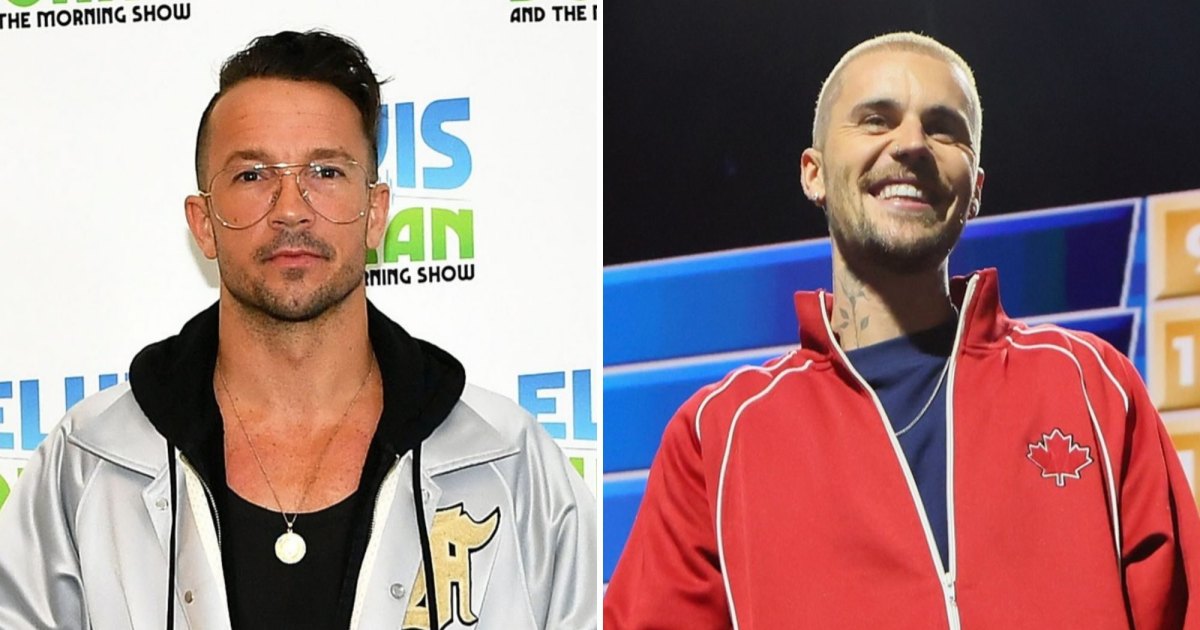
Justin Bieber’s Former Pastor Says His Infidelity Scandal Blew Up Their Friendship — and Even Sent Him Packing
Carl Lentz says the fallout from his affair dragged Justin and Hailey Bieber into a “publicity nightmare” and ended one of pop’s most unusually intimate celebrity friendships.
There are celebrity friendships, and then there are celebrity friendships involving a baptism in an NBA star’s bathtub, a spiritual crisis, a New York City apartment and a pastor whose personal scandal suddenly made the whole arrangement look like a prestige-drama subplot.
Justin Bieber’s former spiritual adviser, Carl Lentz, is now describing the collapse of their relationship in unusually personal terms. In his and wife Laura Lentz’s new book, Overcoming Infidelity: 10 Conversations to Help Heal the Hurt, Carl says his cheating scandal “exploded” his longtime friendship with Justin and pulled Justin’s wife, Hailey Bieber, into fallout neither of them had asked for.
“Our public relationship tied [Justin’s] faith journey to mine,” Carl writes, according to Us Weekly. “As the media stories about my infidelity unmasked me as a fraud, it dragged him and [his wife Hailey Bieber] into a publicity nightmare they never asked for.”
That is a lot to place inside the phrase “former pastor.” Before the friendship fell apart, Lentz was not just someone Justin occasionally saw at church. He was presented as a trusted guide during a formative, chaotic stretch of the singer’s life — a man close enough to baptize him in a bathtub and close enough for the Biebers to let his family live in their New York City apartment.
The friendship was unusually close — and unusually public
Lentz became a recognizable figure through Hillsong, the celebrity-friendly megachurch that attracted a high-profile congregation and a steady stream of famous faces. Justin leaned on him as a spiritual adviser, and their bond became part of the singer’s public narrative as he tried to move through a difficult period and reshape the way the world saw him.
In 2014, Lentz performed Justin’s baptism in the bathtub of former NBA star Tyler Chandler. The setting was intimate, almost absurdly so: not a cavernous church, not a grand celebrity event, but a private home and a very famous young singer making a highly personal declaration. The image helped define the relationship as something more emotionally involved than a standard pastor-and-parishioner connection.
Lentz also spoke about Justin with the confidence of someone who believed he understood the machinery behind the pop star’s transformation. In a 2017 interview with Us, he credited Justin’s own faith and effort rather than claiming responsibility for the singer’s progress.
“I think Justin has a really deep, mature relationship with Jesus,” Lentz said at the time, adding that his own teaching had not made “even remotely as big of an impact” as Justin’s personal desire and passion. He described Justin as someone who had worked hard to become “the best Justin he can be.”
That old interview now reads less like a spiritual victory lap and more like a snapshot from before the friendship became collateral damage. Lentz’s public role had been woven into Justin’s story, which meant the pastor’s own collapse did not stay neatly contained inside his marriage or his church.
Then the scandal made everything radioactive
In November 2020, Hillsong announced that Lentz had been fired as its New York City pastor because of “leadership issues and breaches of trust, plus a recent revelation of moral failures.” Laura’s employment with the church was also terminated, although Us notes that she was not implicated in her husband’s improprieties.
Carl later acknowledged that the infidelity was “not an isolated incident” in his marriage. The public scandal transformed him from a charismatic celebrity pastor into a symbol of the gap between a polished public persona and a private life that did not match it. For Justin and Hailey, the problem was not simply that a friend had behaved badly. Their names, faith journey and public image had all been linked to his.
“As the media stories implied, if I wasn’t who I’d seemed to be, then maybe my notable friends weren’t either,” Carl writes.
That sentence captures the peculiar danger of celebrity proximity. Famous people do not merely have friends; their friendships become narrative infrastructure. A pastor standing beside Justin can be read as evidence of Justin’s growth. A scandal engulfing that pastor can make the entire inspirational storyline feel unstable, even when the celebrity at the center did nothing wrong.
According to Lentz’s account, Justin’s representatives eventually called and asked the Lentz family to leave the apartment. Carl says he understood that the request came from Justin, and describes it as another painful blow for his family. He also concedes that he deserved to be “kicked to the curb,” while feeling that Laura and the children were being punished for his actions.
The apartment detail gives the breakup its sharpest edge. This was not a vague social unfollow or an awkward encounter at a benefit. The Biebers had opened their home to the Lentz family, and after the scandal, that hospitality was withdrawn. Carl says the apartment was near the woman he had been cheating with, as well as the church community he believed had turned against him. He ultimately came to see Justin’s request as a form of divine intervention, even while describing the moment as devastating.
Justin and Hailey were dragged into a story they did not choose
For Hailey, the episode was another reminder that marrying into a global pop-star narrative means inheriting its supporting cast — and sometimes its wreckage. Lentz specifically names her in the book, saying the scandal pulled both Biebers into a “publicity nightmare.” Neither Justin nor Hailey has publicly responded to the account in the Us Weekly report, and Us says it reached out to Justin’s representative for comment.
The timing makes the story especially striking now, as Justin is being framed in the source material as entering a new public chapter. Us recently described him as being in his comeback era after headlining the 2026 Coachella Valley Music and Arts Festival, where he shouted out Hailey and their son, Jack, during his performance. That image — Justin onstage, wife and baby in the emotional foreground — belongs to a very different version of his life than the one Lentz helped narrate a decade ago.
Back then, the story was spiritual rehabilitation: the troubled young star, the pastor who helped guide him, the private baptism and the public declarations about faith. Now the story is about boundaries. Justin’s relationship with Lentz appears to have ended not with a dramatic public confrontation, but with a phone call from representatives and a demand to leave the apartment. The celebrity friendship did not need a screaming match to become a closed door.
That may be the most revealing part of Lentz’s account. The scandal did not only expose a pastor’s private failures; it forced Justin and Hailey to decide how much of that failure they were willing to let remain attached to their own public lives. In celebrity culture, proximity can look like proof of character — until it becomes a liability. Then even the most intimate friendship can turn into an address change.