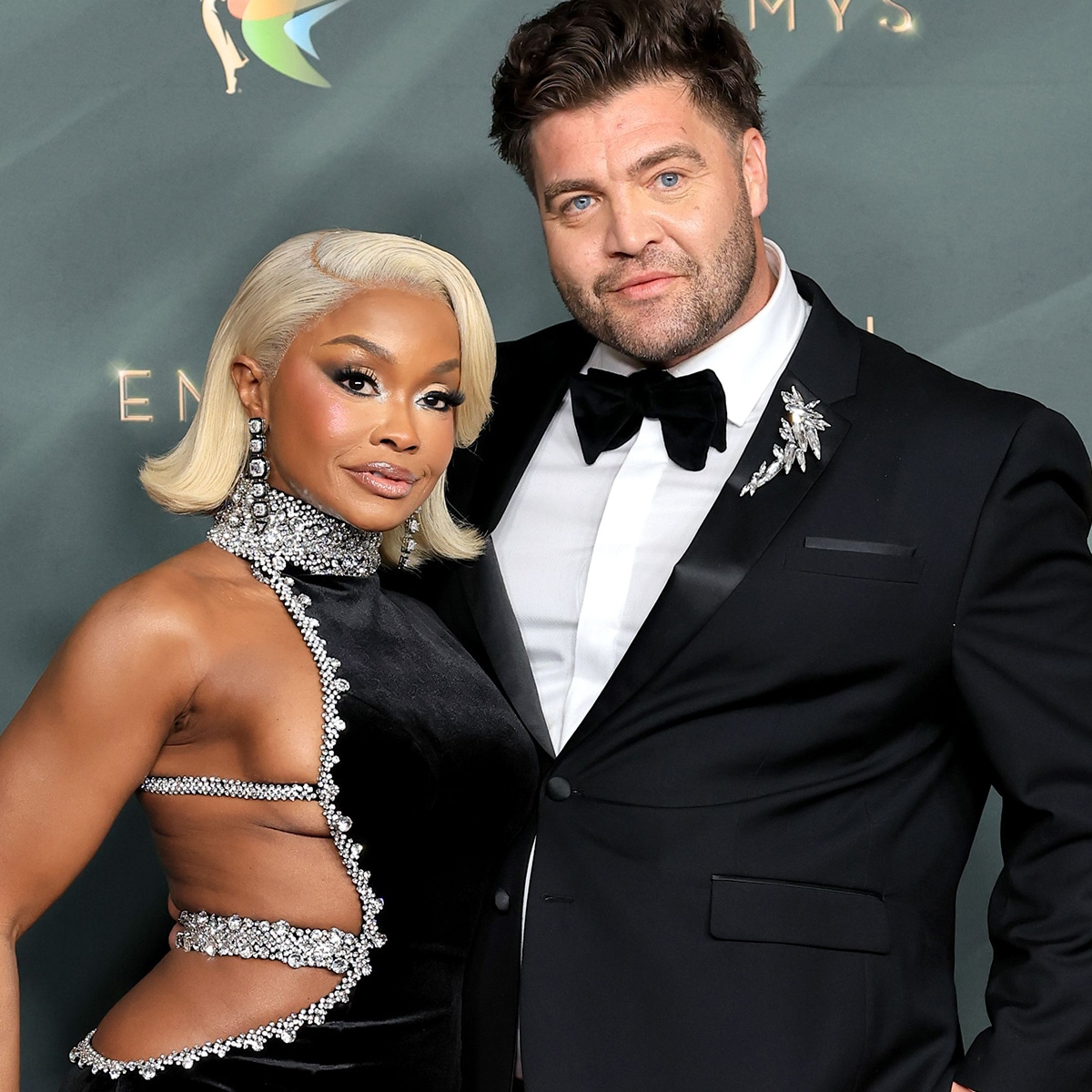
CT Tamburello and Phaedra Parks Went From “Just Friends” to Reality TV’s Most Unexpected Soft Launch
The Traitors costars are now talking peace, opposites attracting and a red-carpet debut—after CT once insisted the romance was fans’ “wishful thinking.”
Reality television has given us many things: lifelong feuds, suspiciously coordinated vacations and at least one wedding where everyone involved appeared to be wearing a microphone. But CT Tamburello and Phaedra Parks quietly becoming a couple? That is the kind of plot twist that makes you put your phone down and say, “Wait. Them?”
Two weeks after Parks confirmed that she and her The Traitors costar were in a relationship, Tamburello offered his own characteristically careful update. “I’ll say—I don’t want to jinx it—but I’ll say we’re in a good place,” he told Us Weekly in an interview published Sept. 20. Then came the line that turned a reality-TV romance into a full cultural mood board: “With her, she just brings peace. It’s easy to just stay calm around her.”
Peace is not necessarily the first word associated with either half of this pairing. Parks built her legend on the verbal precision of a woman who can turn a dinner-party argument into a closing statement. Tamburello, meanwhile, is a longtime Challenge competitor whose résumé includes physical eliminations, emotional turmoil and enough reality-show history to qualify as its own cinematic universe.
And yet, somehow, the pairing makes sense. She is polished, funny and courtroom-sharp. He is blunt, self-deprecating and apparently aware that his natural setting is not always “serene.” The internet did not invent the chemistry. It simply noticed it before they were ready to name it.
The Traitors did what the pods, beaches and villas could not
Tamburello and Parks first met while filming season two of The Traitors in 2023. The show was designed to make everyone suspicious of everyone else, which is not usually the ideal environment for a budding romance. You are either banishing people, lying to your friends or staring across a castle at someone who may be secretly plotting your elimination.
Still, the connection lingered. When fans began shipping them, Tamburello initially waved it away. “I think that’s more wishful thinking,” he told E! News, adding that they had shared laughs and fun but were, at the time, only friends. It was a sensible answer, if not a particularly convincing one to viewers who had already decided the two had a certain something.
Now the story has changed. Parks confirmed the relationship, and Tamburello is describing a bond that feels less like a reality-show stunt and more like an unexpectedly calming detour. He said they balance each other well and joked, “I know I’m crazy in my own right. It’s probably for the best if I’m not around her every day, to be honest.”
That is not exactly a hard launch with matching captions and a sunset yacht photo. It is more interesting: a soft launch with emotional specificity. He is not merely saying she is amazing. He is saying she brings peace, and that being around her feels easy. In celebrity relationship language, that is practically a sonnet.
Enter Paula Abdul, stage left
To explain the dynamic, Tamburello reached for Paula Abdul’s “Opposites Attract,” the 1989 pop hit whose video paired Abdul with the animated MC Skat Kat. “You remember that old video?” he asked. “That’s us.”
It is an inspired comparison for several reasons. First, it is charmingly old-school. Second, it acknowledges that the pairing looks improbable from the outside. Third, it gives the relationship a built-in choreography: two people moving in different directions, occasionally colliding, somehow making it work.
Tamburello even extended the metaphor, saying they sometimes take “two steps forward and two steps back.” That sounds less like a promise that everything is perfectly settled and more like an honest description of two adults navigating a new relationship while the public watches, comments and turns every glance into a slideshow.
He also hinted that he has learned to keep some things private. “Contrary to popular belief, I do learn,” he teased, before adding that some things are better left unsaid and that oversharing can be a bad thing. For a man whose personal life has unfolded across multiple reality franchises, this may be the most mature plot development of all.
From “wishful thinking” to the Emmy carpet
The timing makes the romance especially satisfying for reality-TV spectators. Their connection began in the pressure cooker of The Traitors, survived the period when both parties publicly framed it as platonic and then arrived in the real world with enough momentum for a red-carpet debut.
Tamburello and Parks made that debut together at the 2026 Creative Primetime Emmys on Sept. 5. A red carpet does not automatically transform a relationship into a forever commitment, but it does move a couple out of the “maybe they’re just friends” zone and into the “yes, people are going to examine every inch of this interaction” zone.
It also gives their romance a particularly delicious reality-TV symmetry. Parks has spent years navigating the social theater of The Real Housewives of Atlanta and the strategic chaos of The Traitors. Tamburello has made a career out of surviving alliances, betrayals and challenges that appear to have been designed by someone with a personal grudge against knees. They met in a game built on deception and now seem to be trying something much simpler: seeing whether the calm lasts when nobody is voting.
For Tamburello, this relationship arrives after a period he previously described as a reset—focusing on himself, work, his son and getting his head right. He has also been publicly associated with the end of his marriage to Catalina White in 2024. Parks, 52, brings her own long public history, including her years on reality television and her previous marriage to Apollo Nida. Neither has presented this new relationship as a finished fairy tale, and Tamburello’s “good place” language leaves room for the fact that they are still figuring it out.
That unfinished quality is part of the appeal. Celebrity couples are often introduced to us at maximum volume: coordinated outfits, matching declarations, a vacation carousel and a caption about choosing each other every day. CT and Phaedra are offering something more entertainingly restrained. A little peace. A little teasing. A Paula Abdul reference. One red carpet. And the delicious knowledge that the couple everyone was told not to see may have been standing right there the whole time.
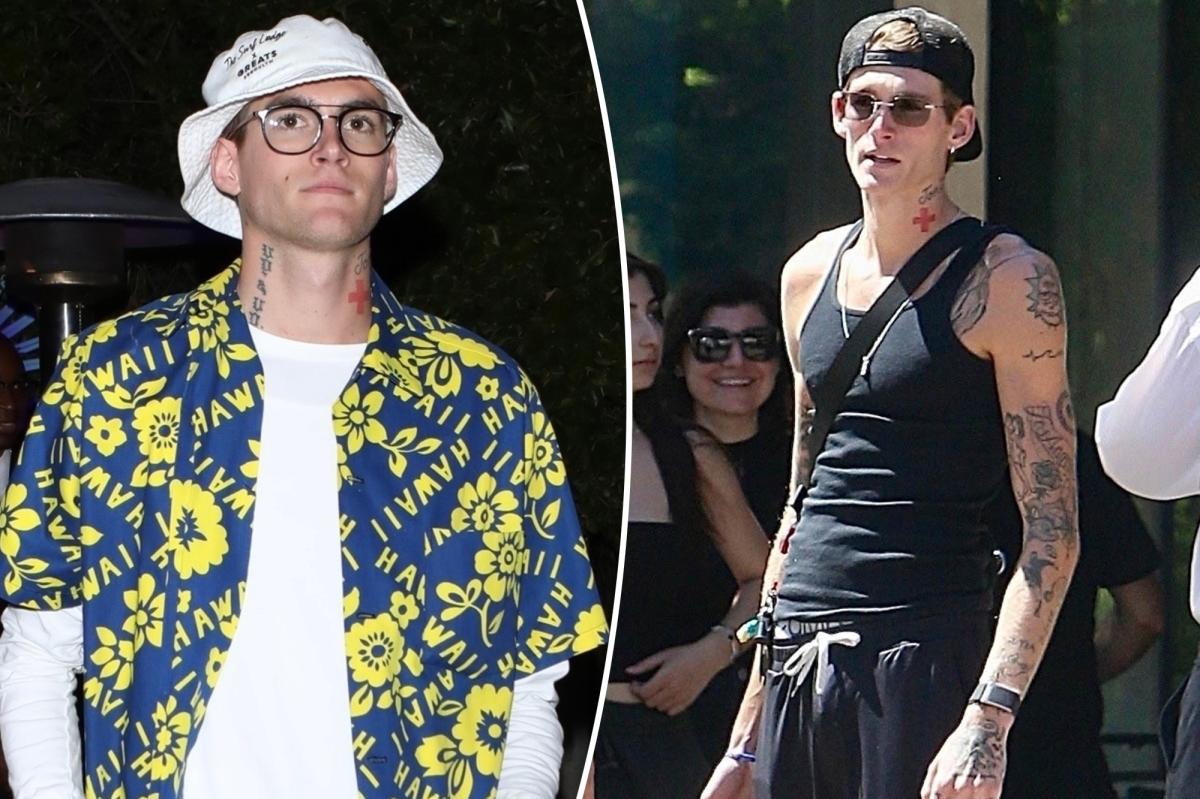
Presley Gerber’s Death at 27 Brings a Family’s Private Crisis Into Public View
A 911 dispatch audio recording obtained by Page Six adds new detail to the model’s death at a California rehab facility, where an automated call referenced cardiac arrest and overdose.
Presley Gerber’s death has already landed with the particular shock reserved for people who seemed to have been born inside the camera flash. He was the son of supermodel Cindy Crawford and businessman Rande Gerber, the younger brother of model Kaia Gerber, and a model in his own right. He was 27.
Now, a 911 dispatch recording obtained by Page Six is bringing more detail — and more discomfort — to a story the family had asked the public to treat with privacy. In the audio, an automated voice can be heard saying “cardiac arrest” and “overdose.” The address given on the call matches the California rehab facility where Gerber was staying.
According to Page Six, an operator is then heard apparently upgrading the call. A source on the scene told the outlet that police, ambulance crews and firefighters responded, with authorities remaining there for roughly three hours. The dispatch audio does not provide a complete account of what happened, but it makes the setting of Gerber’s final hours painfully clear: not a nightclub, not a red carpet, not some glossy Hollywood after-party — a recovery facility in the Los Angeles area.
The kind of news that changes a family’s public image overnight
Gerber’s death was first reported as a suspected overdose at the rehab facility on Sept. 20. Page Six said he had been living with several people in a sober house on the grounds of the center. His family later confirmed his death in a joint statement that asked for privacy during what they described as a “very difficult and painful time.”
That request carries a different weight when the family is as recognizable as this one. Crawford and Rande Gerber have spent decades moving through public life with an unusually polished ease: fashion campaigns, business launches, celebrity friendships and the kind of family photographs that made their Los Angeles household feel both impossibly glamorous and, at times, deliberately normal.
Presley was never simply “a celebrity child,” though the label followed him. He worked as a model, appearing in fashion campaigns and stepping into the same visual universe that made his mother one of the most famous faces of the supermodel era. His sister Kaia, now 25, followed Crawford into modeling and acting. Together, the siblings became a familiar shorthand for inherited fashion-world cool — a second-generation dynasty with excellent bone structure and an even better family photo.
That image can make grief feel strangely public. The audience recognizes the family mythology long before it knows anything about the private pain inside it. Suddenly, old appearances and final photographs are being reconsidered, not because they reveal a secret, but because celebrity culture trains people to search backward once a life has ended.
A dispatch call turns a headline into a human emergency
There is a grimly bureaucratic quality to emergency audio. The language is clipped, automated and stripped of all the things a family would know about a person: his jokes, his habits, his complicated history, the people who loved him. “Cardiac arrest” and “overdose” arrive as dispatch terms, not a biography.
That contrast is part of what makes the recording so jarring. Gerber’s name carries fashion gloss, but the call itself is about an emergency unfolding behind the walls of a treatment center. The responders’ presence, the apparent escalation of the call and the hours authorities spent at the scene suggest the seriousness of the crisis without offering the public a neat explanation for it.
And there is no neat explanation here. Addiction and overdose are not plot twists that can be decoded from one recording. A rehab facility is not a punchline or a scandalous location; it is a place people go when they are trying to survive something. The fact that Gerber was there makes his death especially heartbreaking, because it places him inside an effort to get better — without pretending that seeking help guarantees a simple or immediate ending.
The wording around his death also matters. Page Six described the overdose as suspected, while the dispatch audio includes the word “overdose.” Those details belong to the developing account of the incident, not a full public explanation of the circumstances. Authorities have not, in the material provided here, released a complete account.
The last public image is never the whole story
Page Six previously reported that Gerber had embraced his parents in a final public appearance. That image will now be read as a farewell, even though it was not necessarily made with that meaning in mind. This is one of celebrity culture’s cruelest habits: turning ordinary moments into symbolic ones after the fact.
A hug becomes a clue. A family outing becomes “the last time.” A recent photograph acquires a cinematic sadness it may never have carried in real time. The people in it are asked to perform an ending they could not have known was coming.
For Crawford, Rande Gerber and Kaia, the public history is unavoidable, but the private loss is theirs. The family’s statement did not offer a polished narrative, a grand tribute or an explanation designed for public consumption. It asked for space. That is a rare thing in an ecosystem built on access, especially when the person at the center came from one of fashion and entertainment’s most visible families.
Gerber’s death is now being discussed through the language of dispatch calls, rehab facilities and suspected overdose. But before the headline, he was a son, a brother and a young man whose life extended far beyond the most searchable facts about him. The audio may add detail to the emergency response. It cannot tell us who he was to the people waiting for him to come home.
In a culture that loves a glamorous family story until it suddenly wants the darkest chapter, that distinction is worth holding onto.
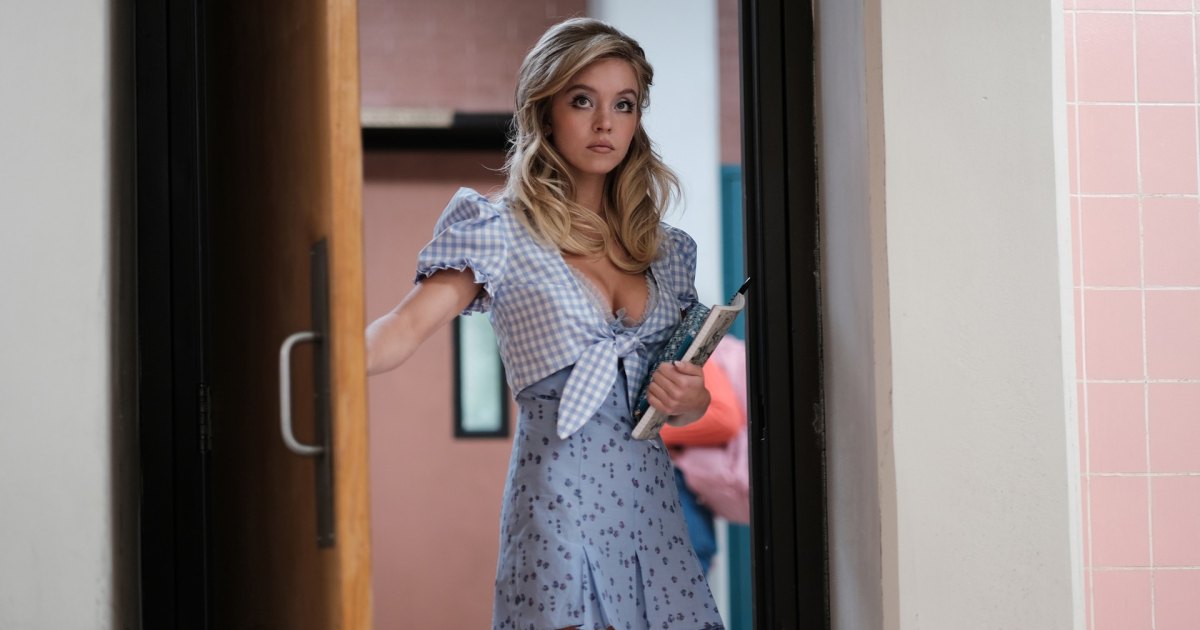
Sydney Sweeney’s Euphoria Nudity Has Entered Its Self-Referential Era
From Sam Levinson’s OnlyFans storyline to Sharon Stone’s lingerie-line punchline, Cassie’s stripping-down saga has become the show’s most revealing conversation about sex, validation and celebrity.
Euphoria has never been subtle about anything—not addiction, not desire, not eyeliner, not the emotional consequences of sending one regrettable photo at 2:13 a.m. But Sydney Sweeney’s nudity on the show has now become its own full-blown subplot, complete with creator commentary, cast banter and a joke from Sharon Stone that somehow manages to connect Cassie Howard’s fictional cam-girl career to Sweeney’s real-life lingerie business.
That is the strange little cultural loop Euphoria has built around Sweeney: Cassie strips down because she needs validation; viewers debate the stripping down; Sweeney discusses the labor and judgment attached to it; and the show’s own collaborators keep circling back to the fact that everybody is watching.
Season 3, which concluded in June 2026, pushed that loop into overdrive. Cassie’s storyline revolved around joining OnlyFans to help support her husband, Nate Jacobs, after his ill-fated construction venture left the couple tangled up with a loan shark. The plot was deliberately messy, financially desperate and emotionally loaded—the exact kind of crisis in which Cassie tends to mistake being wanted for being safe.
Cassie’s business plan was really a validation plan
Sweeney has never treated Cassie’s choices as random chaos. Speaking to Vanity Fair in June 2026, she explained that Cassie “has a need to be validated by other people” and “doesn’t know how to love herself unless someone else loves her.” That is a bleak diagnosis, but it is also the key to understanding why the character’s Season 3 arc became so fixated on being seen.
“She was more excited by the idea of these people loving her and knowing who she is and feeling like her world isn’t small,” Sweeney said. In other words, the money is part of the story, but the attention is the drug. Cassie is not simply selling access; she is trying to buy proof that she matters.
It is a very Euphoria proposition: take a recognizable internet economy, run it through a character with catastrophic attachment issues, then make everyone argue about whether the show is critiquing the system or enjoying the spectacle a little too much.
That tension has followed Sweeney since the series premiered in 2019. She has spoken candidly about the professional downside of appearing nude, including the feeling that some people did not take her seriously because she took her shirt off. The contradiction is almost offensively familiar: an actor is praised for fearlessness, then flattened into the most visually exposed thing she did.
Sam Levinson says the nudity was never automatic
Sam Levinson has offered his own explanation for why Cassie’s Season 3 material went where it did. On Real Time With Bill Maher, he described the storyline as a way to explore the “long-term consequences” of online sex work, particularly for young people raised inside an economy of likes, personal branding and constant self-display.
“You’re told that you’re the product, you’re the brand,” Levinson said, framing Cassie’s decision as part of a larger culture that turns visibility into currency. His argument is that the platform does not merely offer fast cash; it changes how a person understands their own value. The danger, as he put it, is that the individual becomes hollowed out by dependence on external validation.
On the New York Times “Popcast” podcast, Levinson said he initially considered filming the storyline without nudity. Sweeney’s response, according to him, was: “Are you kidding? I’m playing an OnlyFans model.” He added that he always discusses what works best for a character with the actors involved and called Sweeney “a totally fearless actor.”
That exchange is revealing—not because it settles the conversation, but because it shows how much thought the production wanted attached to the exposure. The nudity was not presented as an unavoidable fact of the job. It was part of the character’s language, and Sweeney apparently understood that Cassie’s willingness to perform herself was the point.
Then Sharon Stone made it fashion
Sharon Stone, who worked with Sweeney on the series L.A. Nights, gave the whole saga its most deliciously meta punchline. Speaking to Variety in September 2026, Stone joked that she had tried to convince Sweeney’s character to stop being a cam girl and join the show she was producing.
“And she agreed to stop being a cam girl—which she didn’t do,” Stone said, before adding: “As you can see from Sydney’s new lingerie line [Syrn], it didn’t take.”
It is a joke, but it lands because the boundary between Cassie’s fictional image and Sweeney’s public image has become unusually slippery. Cassie’s storyline is about turning desirability into income. Sweeney’s lingerie line is an actual fashion venture. Stone’s quip does not claim the two are the same; it simply notices that Euphoria has made Sweeney’s relationship to glamour, exposure and being looked at impossible to discuss in only one register.
The show’s other conversations around Sweeney’s nude scenes have added to that strange atmosphere. Homer Gere, discussing an onscreen sex scene with Sweeney, called it “really fun to shoot” and “a funny scene,” while Sweeney has consistently spoken about the work in more psychological terms. The contrast is telling: for one person, the scene is a professional anecdote; for the character, it is a crisis of identity; for the audience, it becomes a debate about the actor herself.
That may be why Cassie’s Season 3 arc has generated such a charged response. The character is not just naked on screen. She is naked in the most literal metaphorical sense: financially cornered, emotionally dependent, desperate to be adored and convinced that attention can rescue her from a small life.
Sweeney said Levinson had been pitching her ideas for Cassie years before production began, including the revelation that Cassie would be married to Nate, living in a suburban neighborhood and “crazier than ever.” It is a hilariously grim evolution for a character who began as the fragile, romanticized blonde of the group and ended up treating public desire like a survival strategy.
The result is less a scandal than a feedback loop. Euphoria wants viewers to question the cost of turning yourself into content, while also making that transformation impossible to stop watching. Sweeney wants Cassie understood as a person rather than reduced to her naked scenes, while the scenes remain central to the way the character is discussed. And Sharon Stone, with one perfectly timed lingerie joke, has pointed out the whole absurdity.
Cassie may still be chasing validation. But at this point, the show itself is doing the same thing—asking everyone to look, then insisting there is a deeper meaning in why they did.