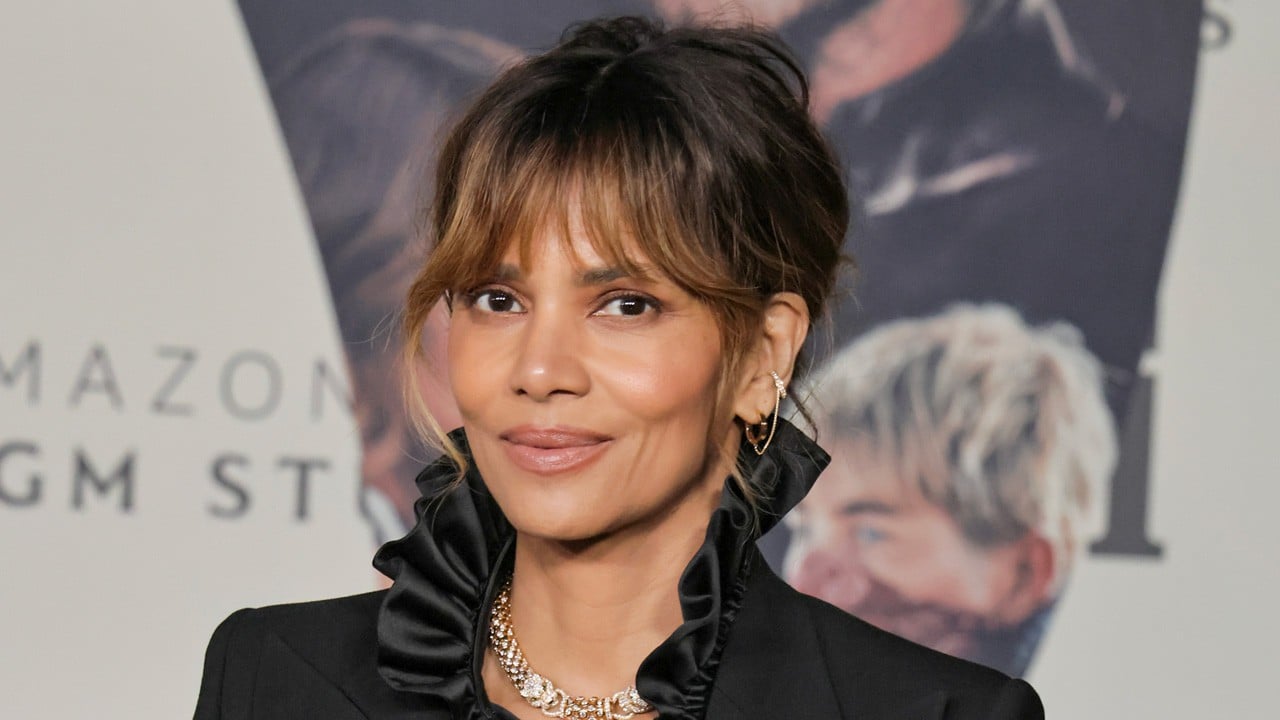
Halle Berry’s 18-Year-Old Daughter Steps Into the Family-Court Fight — and Says She’s “Shocked” by the Claims
Nahla Aubry submitted a declaration defending her mother after Olivier Martinez sought a temporary restraining order involving their 13-year-old son, Maceo.
Halle Berry’s family drama has moved from the courthouse into the voice of the daughter who has lived inside its complicated co-parenting history for most of her life.
Nahla Aubry, Berry’s 18-year-old daughter with ex-partner Gabriel Aubry, submitted a declaration in Los Angeles Superior Court defending her mother after Olivier Martinez sought a temporary restraining order involving their 13-year-old son, Maceo. According to Just Jared, Nahla said she was “shocked, very sad, and very upset” when she learned of Martinez’s allegations against Berry.
That is a striking escalation in an already intensely personal dispute: not just one ex-spouse accusing another, but an adult daughter stepping into a legal fight involving her younger brother, her mother and both sides of the family’s long-running custody history.
Nahla’s defense is personal, detailed and very much about the home she says she knows
Martinez, 60, alleged in his filing that Maceo told him Berry had physically attacked him and placed him in a chokehold. Berry has denied the allegations. A judge nevertheless granted Martinez’s request for a temporary restraining order, meaning the filing has already produced an immediate court response without resolving the underlying claims.
In her declaration, Nahla described Berry as a “loving and devoted parent” who is “warm, supportive, and deeply involved,” while also acknowledging that her mother can be strict and expects her children to follow rules. Nahla said she has never seen Berry hit, slap, choke, grab or physically abuse Maceo, and specifically denied witnessing conduct resembling the allegations made against her.
She also pushed back on the idea that ordinary physical play between a parent and child could be read as something darker. Nahla said she had seen Berry and Maceo playfully wrestle, tickle each other and roll around laughing, but said she had never seen Maceo become hurt or distressed afterward. Those details are now part of a legal declaration, which gives the family’s everyday life an unnervingly public afterlife.
The tone of Nahla’s statement is less celebrity daughter issuing a polished defense and more older sibling trying to describe the household she says she has actually experienced. She wrote that she has lived with Maceo for most of his life and believes he loves Berry and shares a close bond with her. She also described occasions when Maceo was disrespectful, aggressive or unwilling to follow rules at home.
The family history makes every sentence heavier
Berry and Martinez married in 2013, separated in 2015 and share Maceo. Berry shares Nahla with Aubry, and Nahla said her mother coordinated the children’s schedules after the separation so the siblings could spend time together. She portrayed Berry as a parent who attended games, drove Maceo to practices and tournaments, and advocated for his education, medical treatment and therapy.
She further claimed that Berry never spoke negatively about either of her children’s fathers and encouraged them to maintain loving relationships with both men. That assertion matters because the current dispute is not happening in a vacuum; it is unfolding inside a blended family whose custody arrangements and old resentments have been publicly scrutinized for years.
Nahla also made a separate allegation about Aubry, saying she remembers Martinez beating up her father in a driveway when she was a child. That claim, included in her declaration, adds another volatile layer to a family history already shaped by legal conflict. It is also the kind of detail that can turn a present-day custody dispute into a retrospective accounting of every fracture the adults thought they had left behind.
Neither Berry nor Martinez’s filing, as described by Just Jared, settles the competing accounts. Nahla is offering her own perspective as someone who says she was frequently present in the home, while Martinez’s allegations concern an incident involving Maceo and remain contested by Berry. The court proceedings will determine how those claims are handled; social media, predictably, is already treating the family’s private history like a season finale.
The most painful detail is that Nahla says she cannot reach her brother
Nahla said she spoke with Berry and Maceo on the same phone call two days after the alleged incident on September 29, and that Maceo did not seem upset. She also said she has not spoken with him since Martinez filed the allegations because she is unsure what is legally permitted.
That separation appears to be weighing on her as much as the accusations themselves. Nahla wrote that Maceo is her brother, that she cares deeply about him and that she is concerned about the impact of the proceedings on his relationship with Berry. Her statement frames the case not only as a battle between former partners, but as a rupture between siblings who are suddenly being forced to navigate court rules around one another.
She said she felt like “an afterthought” in Martinez’s effort to destroy her mother, a deeply emotional characterization that shows how directly the dispute has reached her. It also explains why her declaration has landed with such force: Nahla is not merely defending Berry’s public image. She is describing what she believes is happening to the family around her.
For Berry, the legal stakes are immediate and the public stakes are familiar. She has spent years being discussed through the lens of her relationships, custody battles and intensely visible private life. Now her daughter’s testimony has pulled the family dynamic into sharper view, with Nahla presenting Berry as a present, demanding and protective parent rather than the person described in Martinez’s allegations.
The case will continue in court, where the adults’ claims and Maceo’s welfare—not the internet’s preferred storyline—are supposed to be the focus. But the image that lingers is painfully simple: an 18-year-old trying to defend her mother while worrying about the younger brother she says she cannot currently speak to. Celebrity family drama is usually packaged as spectacle. This one has a teenager’s life at its center, and that makes every headline feel heavier than usual.

Travis Barker’s Hospital Selfie Had One Very Kardashian Detail: Kourtney Was Right Beside Him
The drummer shared two intimate hospital photos with daughter Alabama and wife Kourtney Kardashian, but offered no explanation for why he was there.
Travis Barker has turned a hospital stay into a tiny family photo album, which is either deeply sweet or the most Travis Barker way imaginable to say, “Something is happening, but you’re not getting the full briefing.”
On Tuesday, October 6, the Blink-182 drummer shared a photo of himself in a hospital gown and surgical cap alongside his daughter Alabama Barker. The image appeared on his Instagram Story with the caption, “My baby girl came with me ?” He followed it with a second photo featuring his wife, Kourtney Kardashian, adding, “And my beautiful wife by my side ?”
And that was it. No explanation for why he was hospitalized, no update on whether he remained there, and no dramatic caption designed to send the internet into a full-scale medical detective spiral. Just Travis, Alabama, Kourtney, two heart emojis, and a conspicuously blank space where the important information would normally go.
The family check-in was the whole message
The photos were soft in a way Barker’s public image often isn’t. He is, after all, the heavily tattooed punk-rock drummer whose romantic history with Kardashian became one of the biggest celebrity storylines of 2021, complete with palm-tree kisses, red-carpet PDA and a courthouse wedding in Las Vegas before the couple officially married in 2022.
But these images weren’t a thirst trap, a wedding flashback or a glamorous vacation carousel. They were stripped down and domestic: a father with his daughter, then a husband with his wife, both apparently making the hospital room feel a little less clinical.
Alabama is Barker’s daughter with his ex-wife, Shanna Moakler. The family structure around the couple has long been part of their public story: Barker is also dad to son Landon and stepdad to Atiana De La Hoya, while Kardashian’s children with ex Scott Disick — Mason, Penelope and Reign — are part of the blended family as well.
That makes the captions feel deliberate even if they were written in the moment. Barker didn’t simply post a mysterious hospital selfie. He showed the two people who were with him, and in doing so made the update less about spectacle than support.
Kourtney’s appearance says plenty — and not everything
Kardashian appearing beside him will naturally draw the most attention. The couple has built a highly visible relationship out of grand gestures and shameless affection, from their early PDA-heavy romance to their marriage and the arrival of their son, Rocky. Yet this particular photo has a quieter energy. Kourtney is not posing for a red carpet or performing coupledom for a glossy campaign. She is simply there.
That distinction matters because celebrity hospital posts usually arrive in one of two forms: the carefully worded update, where every phrase has been polished by a team, or the startlingly casual image that prompts everyone else to start filling in the blanks. Barker chose the second option, even if unintentionally.
Neither the post nor the report about it explains what happened. The lack of detail means there is no medical story here beyond the fact that Barker revealed he was in the hospital. Everything else would be guesswork, and the internet has never exactly struggled to manufacture a plot from a surgical cap.
For now, the most telling part of the post may be its emotional economy. “My baby girl came with me” is not a public-relations statement. “And my beautiful wife by my side” is not a press release. They are small acknowledgments from someone who wanted to show he wasn’t alone without opening the door to a larger conversation.
The Barker-Kardashian family photo, hospital edition
There is also something distinctly modern about the update: the hospital reveal arrives not through an interview or an official statement, but through two disappearing Story slides. The format is intimate, temporary and just vague enough to keep everyone watching for the next post.
That suspense is doing a lot of work here. Barker has not said whether he is recovering, whether the hospital visit was planned, or whether he is still there. He has not offered a timeline or asked for concern. The only clear message is that Alabama and Kourtney were with him.
It is a surprisingly tender glimpse of the family’s blended orbit. Alabama gets the first frame; Kourtney gets the second. The sequence quietly places Barker’s daughter and wife in the same emotional sentence, without turning either relationship into a performance. In a celebrity ecosystem that can make even a grocery run look like a campaign launch, the simplicity stands out.
Of course, fans will want the missing chapter. What happened? Is he okay? Why share the photos but not the reason? Those questions are unavoidable, especially when the person posting is famous, the setting is a hospital and the spouse is Kourtney Kardashian, a woman whose family has made the art of the partial reveal practically hereditary.
But until Barker says more, the story is exactly what he posted: a hospital visit, a daughter who came along, and a wife by his side. The rest is the internet trying to turn two heart emojis into a medical bulletin.
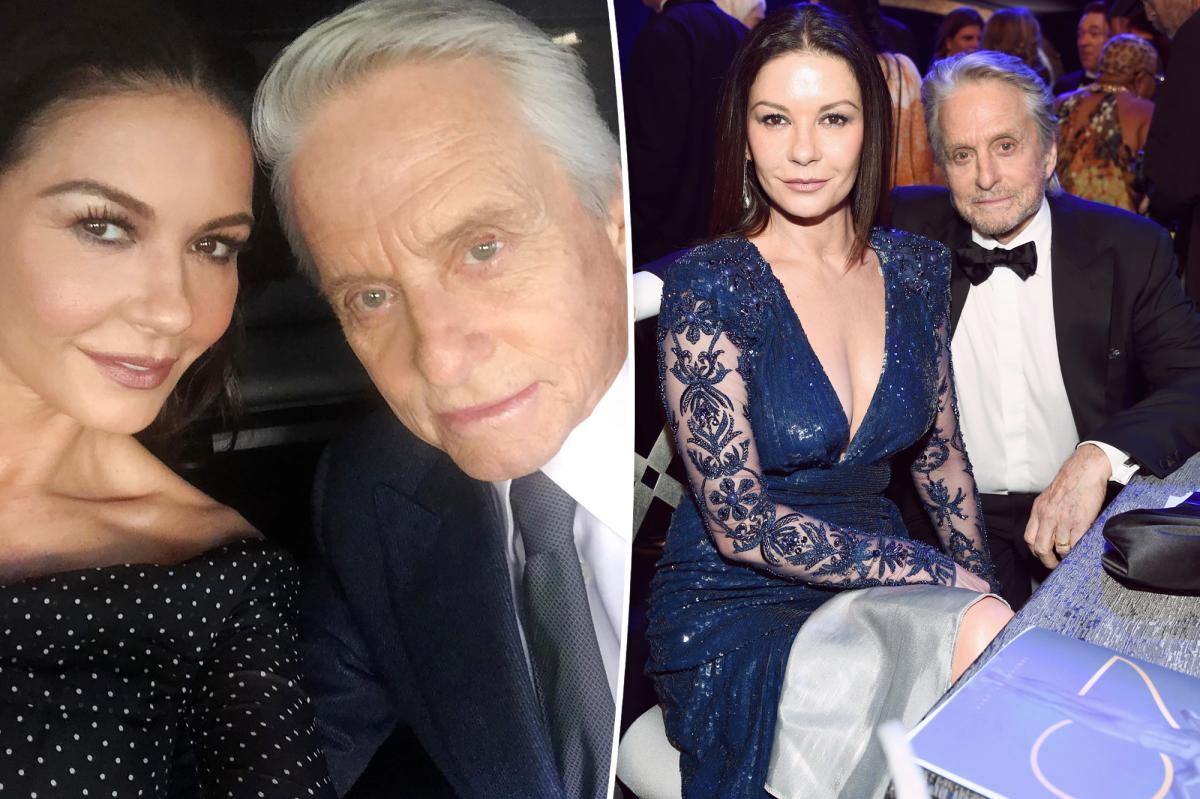
Michael Douglas’ Marriage Advice Is Basically: Don’t Say “Always,” Do Say “I Love Golf”
While promoting his new memoir, the actor revisited the 2013 separation that briefly put his Catherine Zeta-Jones marriage on pause — and the oddly charming origin story that started it all.
Michael Douglas has offered the world a marriage survival guide, and it is less about grand romantic gestures than avoiding the two most dangerous words in any argument: “always” and “never.”
While promoting his new memoir, One Helluva Ride, the actor spoke to People about his long marriage to Catherine Zeta-Jones, the one that has survived Hollywood pressure, a very public year apart and enough famous-family history to fill several prestige miniseries. His advice? Keep talking, keep laughing and, apparently, be open to a well-timed golf-related flirtation.
“A good sense of humor doesn’t hurt, number one,” Douglas said. “And talking things out. Never using the words ‘never’ or ‘always’ when you get angry with each other.”
It is practical, almost aggressively unglamorous advice from a couple whose first chapter involved an Oscar-winning actor, a rising Welsh star and a meeting arranged over drinks at a film festival. But that may be why it lands. Douglas is not selling a fantasy of effortless celebrity romance. He is describing a marriage that hit a very real pause, then found its way back into the room.
The separation is part of the story — not the whole story
Douglas and Zeta-Jones married on Nov. 18, 2000, the same year Douglas finalized his divorce from his first wife, Diandra Luker. They went on to have two children, Dylan and Carys, who are both actors. For years, the couple occupied a familiar celebrity-marriage lane: glamorous premieres, family photos and a striking age-gap conversation that has followed them since the beginning.
Then, in 2013, they separated.
The split lasted about a year, according to Page Six, before they reunited. Douglas now describes the decision as mutual and says the pair had “problems,” but maintains that they never lost their love for one another. He also says he “never gave up hope” that they would reconcile.
That distinction matters. The headline version of a famous marriage is often either fairytale or disaster, with no room for the awkward middle: two people who are still connected, still dealing with problems and temporarily unable to make the relationship work in the shape it has taken. Douglas’ retelling is less “Hollywood couple miraculously survives” than “Hollywood couple stopped pretending communication could wait.”
“Communication, talking,” he told People when asked what he learned from the time apart. “It’s an English trait — I know my mother had it — where you don’t talk about things that are uncomfortable.”
He added that sometimes people avoid questions because they do not know the answers, which makes the marriage advice feel less like a slogan and more like an admission. The difficult conversation is usually difficult precisely because nobody knows where it will go.
Before the vows, there was golf
The romance began with Douglas seeing Zeta-Jones in an early screening of the 1998 film The Mask of Zorro. A few weeks later, the two happened to be attending the Deauville American Film Festival in France. Douglas asked his publicist to arrange a meeting over drinks.
In his memoir, he describes Zeta-Jones as smart, funny, unpretentious and “breathtakingly beautiful,” while also emphasizing her confidence and self-possession. Two years after that first encounter, they were married.
And then there is the line that makes this entire origin story feel almost suspiciously efficient.
“When I first met her, I said, ‘Do you like golf?’ She said, ‘I love golf.’ Well, I melted,” Douglas recalled.
That is not quite a meet-cute; it is a meet-cute written by someone who has already had a tee time canceled. Still, it is charming in its simplicity. Before the memoir, before the famous marriage and before the separation that would later become part of their public history, there was one actor testing the waters with a question about golf and one actress giving the exact answer he wanted.
Whether she genuinely loved golf or simply understood the assignment is now unknowable. Either way, the line worked.
The celebrity marriage advice nobody can turn into a candle
Douglas’ other key instruction is to put yourself in the other person’s position before making a value judgment. He says that learning to talk through uncomfortable subjects has made it easier for the couple to understand each other.
There is no grand trick here, no “five rules” formula and no suggestion that the couple floated above ordinary relationship problems because they were beautiful and famous. In fact, the most revealing part of his comments is how deliberately ordinary they are. Humor. Communication. Perspective. Fun. The basic ingredients, delivered by a man whose romantic history includes some of Hollywood’s most recognizable leading women and whose current marriage began in an era when celebrity couples were still expected to project polished permanence.
Douglas also revisits romances with actresses including Kathleen Turner and Jeanne Tripplehorn in the memoir, but the Catherine Zeta-Jones chapter is clearly the one with the most staying power. He first saw her on screen, pursued an introduction in France, married her two years later, separated from her in 2013 and reunited by the following year.
That chronology has more drama than the advice does. The advice is the point: do not weaponize “always” and “never,” talk before silence becomes a lifestyle and remember that the person across from you may be carrying a version of the story you have not bothered to hear.
And, if all else fails, ask whether they like golf.