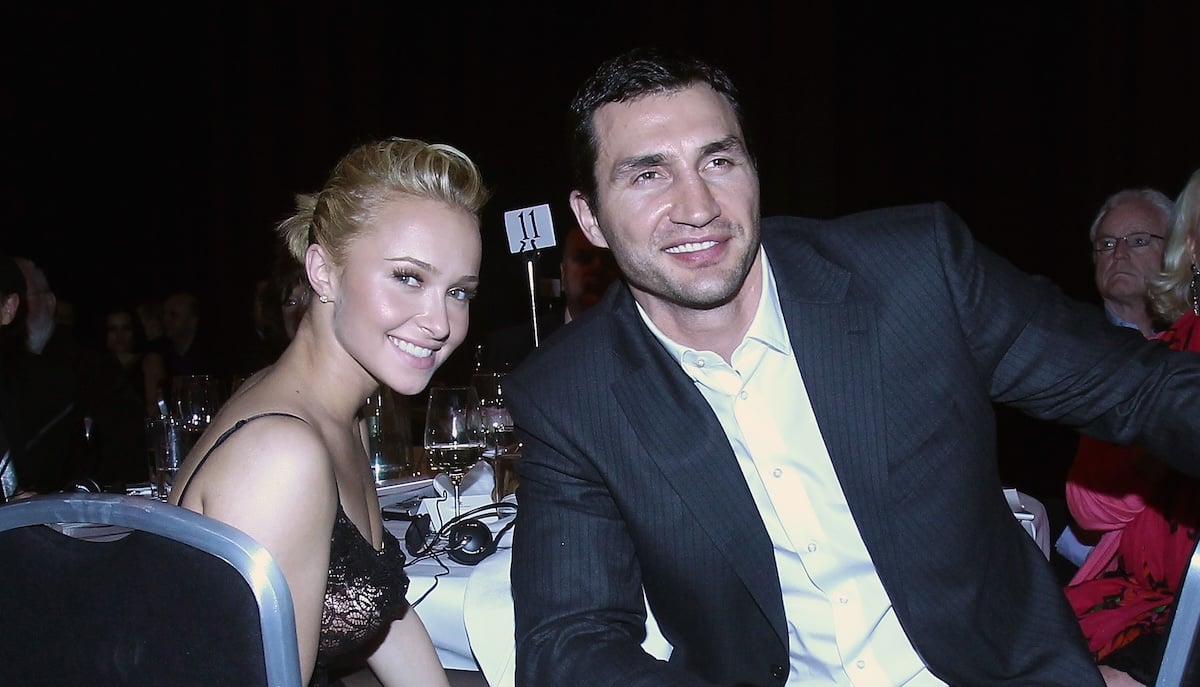
Hayden Panettiere’s Missing Jewelry Is Now Part of a Very Complicated Family-Court Drama
Wladimir Klitschko says a non-family member may have pawned some of his late ex-fiancée’s belongings—and he wants the court to let him involve law enforcement.
Hayden Panettiere’s jewelry has wandered into the kind of celebrity saga that begins with a court filing and ends with everyone staring at the timeline like it is a crime thriller. Her former fiancé, Ukrainian boxing champion Wladimir Klitschko, says he believes someone connected to Panettiere may have taken some of her belongings to a pawn shop, possibly including jewelry. Now he wants the legal authority to help investigate what happened.
According to court documents obtained by TMZ and described by Just Jared, Klitschko says a “non-family member” who had previously been connected to Panettiere may have pawned some of her property. He reportedly believes jewelry was among the items. The pawn shop allegedly would not provide information without police involvement, and Klitschko expressed concern that the belongings could be sold before anyone could recover them.
It is a strange, grimly glamorous detail in an already emotional legal situation: a former heavyweight champion, a Hollywood actress, a missing jewelry trail and a pawn shop holding the possible key. But beneath the tabloid-ready setup is a more consequential question about who has the authority to protect Panettiere’s property and handle matters involving her daughter.
The Jewelry Question Is Tied to Kaya’s Inheritance
Klitschko’s claims appear in paperwork connected to his request to be named legal guardian for the couple’s daughter, Kaya. He already has sole custody, according to the report, but he says he needs to be formally appointed guardian in order to assist with Kaya’s inheritance and manage certain issues connected to Panettiere’s estate.
That is why the missing-property allegations are not being presented as a random dispute over sentimental possessions. Klitschko says recovering Panettiere’s belongings could directly affect what ultimately belongs to Kaya. He is asking for the guardianship appointment to include the power to request and authorize a law-enforcement investigation into property he believes may have been misappropriated.
The court has not yet made a decision. And, importantly, the filing reflects Klitschko’s belief about what may have happened—not a court finding that anyone pawned Panettiere’s jewelry or took her property.
Just Jared reports that Klitschko had already raised concerns in an earlier guardianship petition. Those concerns reportedly included missing jewelry, property that may have been held by police or seized by federal agents, and emails that he said had been accessed and destroyed. He also said Panettiere had hired a security company before her death after a documented concern involving someone who allegedly gained unauthorized access to her home.
That collection of details gives the story its unnerving shape. The pawn-shop claim is not standing alone; it is part of a broader effort to untangle Panettiere’s possessions, digital accounts and home-security history while Klitschko seeks a formal role in protecting their daughter’s interests.
From Hollywood Engagement to Co-Parenting Across Continents
Panettiere and Klitschko first met in 2009, beginning a relationship that quickly became one of those celebrity pairings nobody could resist discussing: the petite television star and the famously towering world-champion boxer. They dated for roughly two years, split, then reunited in 2013 and became engaged.
In 2014, the couple welcomed Kaya. Their relationship ended in 2018 after years together, but the breakup did not erase the family connection. The following year, it became public that Kaya was living with Klitschko in Ukraine while Panettiere dealt with personal struggles. The arrangement generated intense public conversation at the time, particularly because Panettiere’s career had made her recognizable long before the details of her family life became tabloid material.
Panettiere’s public story has often been reduced to crisis headlines: the former Heroes star, the Nashville actress, the custody questions, the difficult years. The current filing adds another layer, but it also shifts the focus away from the familiar celebrity-breakdown narrative and toward the practical complications that remain after a death: property, access, legal authority and inheritance.
Klitschko has continued to speak publicly about his commitment to Kaya. After Panettiere’s passing, he released a statement reflecting on the promise he had made to their daughter, according to the report. The guardianship request appears to be connected to that responsibility, as well as to the need to deal with Panettiere’s assets.
A Pawn Shop Is a Very Specific Kind of Hollywood Mystery
There is an especially potent cultural charge to the phrase “pawned jewelry.” It suggests something immediate and transactional: valuable objects leaving one person’s possession, a clock ticking toward resale, and a paper trail that may disappear unless someone moves quickly. It is less polished than a courtroom battle over an estate and far more cinematic than a routine guardianship petition.
But the filing, as described, does not identify the person Klitschko believes may have taken the items. It also does not establish exactly what was pawned, whether Panettiere’s jewelry was involved, or whether any criminal conduct occurred. The shop’s alleged refusal to provide information without police participation appears to be one reason Klitschko is seeking broader authority through the court.
That uncertainty is doing a lot of work here. Fans and celebrity-news watchers may be tempted to turn the unnamed “non-family member” into a character, but the documents described in the report do not provide a name. The responsible part of the story is also the least satisfying: the alleged trail cannot be followed publicly until the court decides who can investigate and what information can be obtained.
For now, Panettiere’s missing belongings sit at the intersection of grief, family law and celebrity mystery. Klitschko is asking for the ability to protect Kaya’s inheritance and pursue property he believes may have been taken. The court has not ruled, and the jewelry’s fate remains unresolved.
Still, the image is hard to shake: somewhere in the paperwork surrounding a famous actress’s estate, a pawn shop may be holding a piece of the story. And until someone gets permission to ask the next question, that may be the most Hollywood sentence in the entire filing.
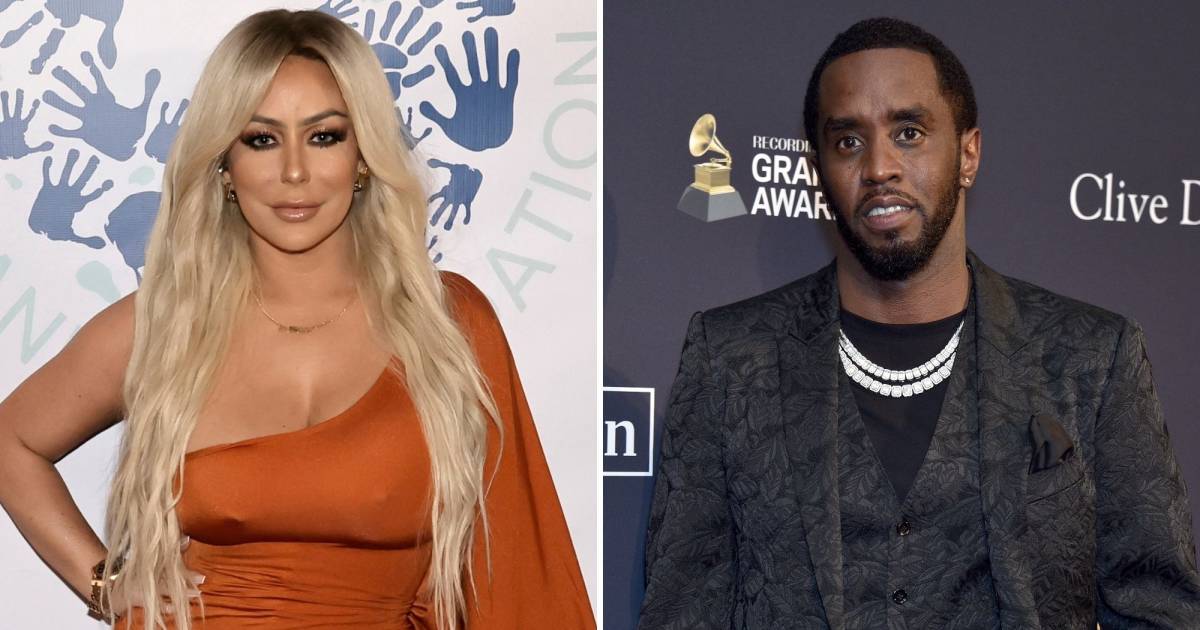
Aubrey O’Day Has Entered Her ‘Diddy’s Prison Has Thai Massages’ Era
The former Danity Kane singer took aim at reports of Sean Combs’ alleged high-roller jail setup — and delivered one extremely online punchline about whiskey, pizza, Instagram and baby oil.
Aubrey O’Day is not letting Sean “Diddy” Combs enjoy a quiet prison era — or, at least, she is not letting the alleged amenities go unmocked.
During an interview with TMZ on Monday, October 5, the former Danity Kane singer was asked about reports that Combs had been living unusually comfortably behind bars. Her response arrived with the polished timing of someone who has spent years watching the music industry turn chaos into content.
“He is enjoying it, huh,” O’Day quipped.
Then she offered her imagined room-service menu: “He’s got whiskey, pizza, pasta, and Thai massages. He’s got Instagram.”
And because this is the Diddy news cycle, no joke was going to exit the building without a baby-oil reference. O’Day added that Combs was involved in “freak-offs” behind bars and said, “I’m sure they’re giving him plenty of baby oil.”
The alleged prison lifestyle is now its own celebrity subplot
O’Day’s comments came after an NBC News report alleged that Combs had spent thousands of dollars a month maintaining a high-roller lifestyle while incarcerated. According to the report, people were allegedly cooking and cleaning for him, making his bed, doing his laundry and providing Chinese-style massages.
That is a spectacularly glossy image to attach to prison, which is precisely why the story has taken on a life of its own. The question of Combs’ day-to-day conditions has become a strange side plot to the much larger criminal case: part celebrity scandal, part luxury-service exposé, part internet improv exercise.
Combs’ spokesperson pushed back on the framing, telling Us Weekly that the rapper is focused on serving his sentence and awaiting the court’s decision on his appeal. The spokesperson also said the media’s fascination with the “mundane detail” of Combs’ prison life had become its own spectacle, adding that the team would not respond to every sarcastic remark or treat jokes and recycled allegations as news.
That statement did not exactly lower the temperature. TMZ later reported that Combs was returning to solitary confinement at FCI Fort Dix in New Jersey after the alleged pampered stay drew attention.
O’Day and Diddy have a long, complicated pop-culture history
O’Day is not a random commentator parachuting into the story for a viral sound bite. Combs brought her into Danity Kane during the third season of Making the Band, the reality competition series that turned the construction of a girl group into a full-contact spectator sport.
Danity Kane became one of the most recognizable acts to emerge from the show, with O’Day, Dawn Richard, Shannon Bex, Aundrea Fimbres and D. Woods forming the group’s best-known lineup. The band’s relationship with Combs was never exactly a tranquil workplace sitcom. O’Day was eventually fired from Danity Kane in 2008, and years later she continued to speak publicly about her experience under his leadership.
In the 2025 Netflix documentary Sean Combs: The Reckoning, O’Day alleged that Combs sent her sexually explicit emails, including images of his penis. She said she “absolutely felt” that she had been fired for not participating sexually. Combs has denied those allegations.
That history gives her latest comments a particular edge. O’Day is not simply making a joke about a celebrity in the news; she is taking a public swipe at a former boss whose influence helped launch her career and whose behavior she has described as deeply troubling. The result is less “random celebrity reaction” and more “former employee has thoughts about the executive’s unexpected resort package.”
The joke lands because the whole saga is already surreal
Combs was arrested in September 2024 and charged with sex trafficking, racketeering conspiracy and transportation to engage in prostitution. He pleaded not guilty and denied the charges. The source reports that he was later convicted on two counts of transportation for prostitution and acquitted of other charges, receiving a four-year sentence in September 2025.
O’Day had already reacted publicly to the verdict, sharing an Instagram video of CNN journalists revealing the outcome. In the clip, she said the result made her “physically ill” and that she felt like she was going to vomit. After his sentencing, she issued a warning to aspiring artists, framing her experience as a cautionary reminder about the power imbalance between young performers and the people controlling their careers.
She has also addressed an allegation featured in the Netflix documentary that she was sexually assaulted in 2005. O’Day said she had no recollection of the alleged incident and told CBS Mornings that she wanted to understand whether the person making the claim had accurately identified her. Combs’ spokesperson categorically denied the allegation and said he had never sexually assaulted anyone.
So when O’Day jokes about whiskey, Thai massages and baby oil, the punchline arrives with years of context attached. It is funny in the sharp, bleak way celebrity commentary can be funny when the person speaking has already spent a long time trying to explain what it was like inside the machine.
There is also something unmistakably 2025 about the spectacle: a major criminal case, a prison-luxury report, a former reality-TV star turned outspoken critic, and Instagram somehow appearing on the alleged amenities list. The internet has spent months turning every new detail of the Combs saga into a new episode. O’Day simply supplied the most meme-ready episode title yet.
Whether the alleged perks were as extravagant as reported remains contested by Combs’ team. But the cultural image is already locked in: Diddy behind bars, apparently surrounded by pasta, massages and social media access, while Aubrey O’Day stands outside the frame asking the only question the group chat was always going to ask.
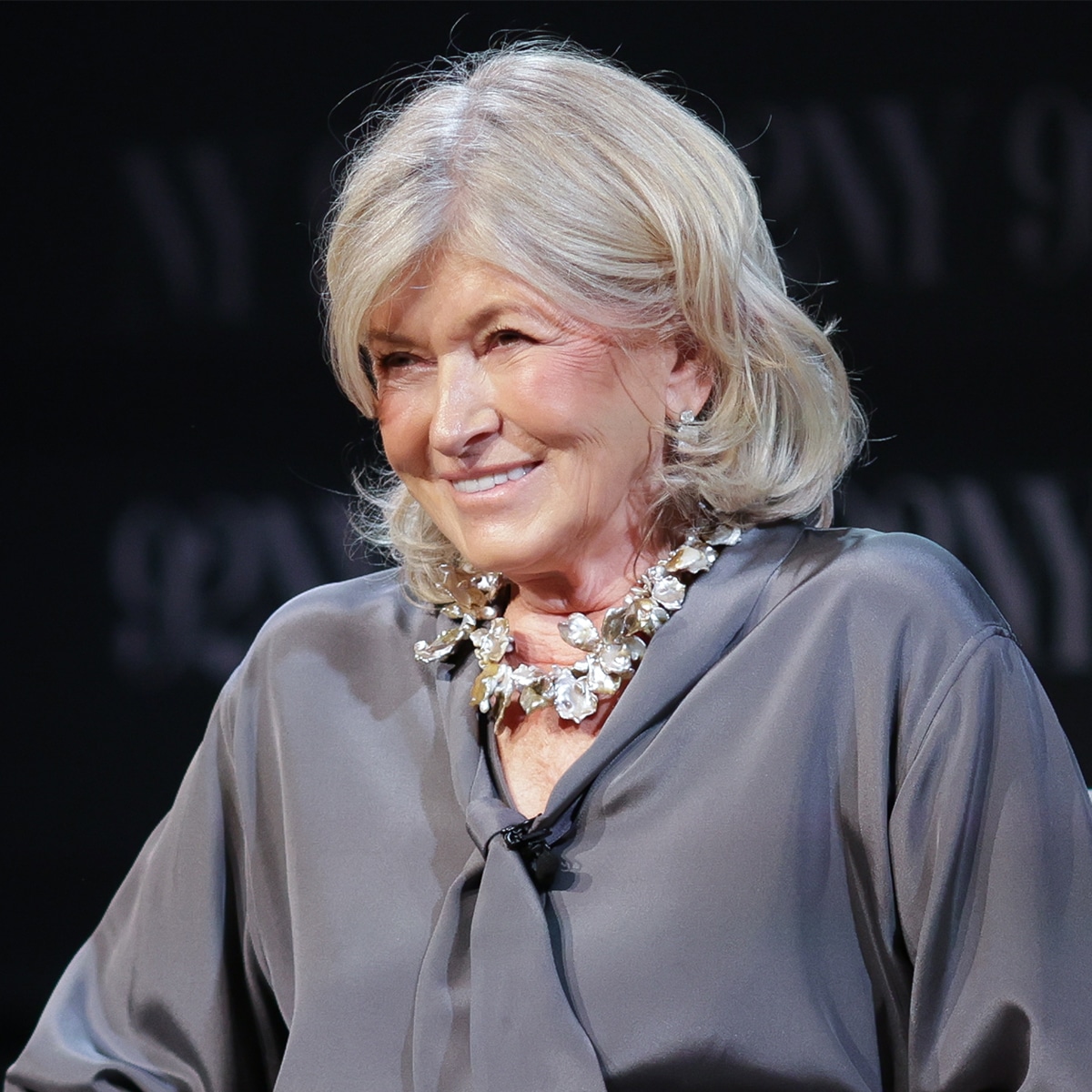
Martha Stewart Was Making $65 Million a Year From Kmart, Which Is the Most Martha Stewart Sentence Ever
Before influencer gifting, there was Martha Stewart turning dish towels, cookware and home goods into a royalty empire big enough to bankroll an entire media universe.
Martha Stewart did not merely have a Kmart collaboration. She had a Kmart empire.
During an appearance on the Other People’s Business MasterClass podcast, Stewart casually revealed that her Martha Stewart Everyday deal with the retailer once generated $65 million a year in royalties. Not $65 million in sales. Not $65 million in one especially blessed holiday quarter. Royalties. Her cut.
“I was clearing $65 million a year in royalties,” Stewart said, explaining that the brand was selling close to $2 billion worth of merchandise. “That’s a lot of money.” It is also a lot of money to say in the same tone one might use to discuss a successful batch of lemon bars.
The Kmart deal was not a side hustle. It was the engine.
The revelation rewrites the mental picture of Stewart’s 1990s business life. This was not a lifestyle celebrity attaching her name to a few tasteful products and collecting a check. The Kmart arrangement became the financial machinery behind everything else: her magazine, her broader business development and the polished domestic universe she was building piece by piece.
Stewart described the royalties as funding “my whole development of my magazine and the whole business.” In other words, the beige-and-sage Martha Stewart world was not just aesthetically coherent. It was exceptionally well capitalized.
That is the part of the story that feels especially delicious now. Before creators were turning link-in-bio recommendations into affiliate revenue, Stewart had already figured out the most powerful version of personal branding: make people want your taste, then give them an affordable way to buy it.
Martha Stewart Everyday translated her authority into the mass market. The woman who could make a table setting feel like a moral achievement was suddenly selling the components at Kmart. The strategy was simple, but the scale was enormous: if shoppers could not live like Martha, they could at least buy the Martha-approved towels, sheets, cookware and seasonal decorations.
She went from physically exhausted caterer to royalty machine.
Stewart was also candid about the less glamorous chapter before the big retail money. Before Kmart, she said, she was grossing a little more than $1 million from her catering business. That sounds enormous until she adds the crucial detail: she was “killing myself physically,” while also carrying the cost of a large staff.
That distinction is the difference between being famous for working hard and building a business that works without requiring your body to be everywhere at once. Catering paid her. Licensing scaled her.
Stewart’s career has always depended on making labor look effortless: the perfect pie crust, the immaculate garden, the party that appears to have assembled itself while everyone else was asleep. Her financial story follows the same blueprint. First came the punishing hands-on work. Then came the system that allowed her name, taste and standards to travel without her personally chopping every onion.
There is something almost comically on-brand about her describing a massive royalty haul as “an amazing thing” and then immediately using it to explain business infrastructure. Even her money story arrives arranged on a serving platter.
The royalty era is apparently over. Long live the fashion-show wardrobe.
Stewart also offered a blunt assessment of the current celebrity economy: the royalty rates are not what they used to be. She said deals now can pay around 3 percent of wholesale, with companies offering smaller and smaller percentages.
That is a particularly Martha way to describe the modern creator economy. The old model was: build a brand, license the brand, collect a percentage of everything sold. The new model is often: attend the event, post the product, accept a gift bag large enough to require its own luggage.
Stewart knows this because she participates in it. She said she can be invited to a fashion show and receive $40,000 worth of clothes simply for showing up. “That’s a lot of money,” she noted. “Just to show up.” Then came the line that tells you she has no intention of pretending this is a hardship: “I love that gig.”
Honestly, same. If a fashion house wants to send Martha Stewart $40,000 worth of clothes, the correct response is not a think piece. It is a tasteful thank-you note and perhaps a very well-lit Instagram carousel.
The contrast is striking. In the 1990s, Stewart’s name could generate tens of millions in direct royalties through a mass retail deal. Today, even a celebrity of her stature may be compensated through clothes, access and visibility rather than a giant percentage of product sales. The money has not vanished; it has become more diffuse, more performative and much easier to disguise as a glamorous afternoon.
Martha’s real flex is that she made domesticity look like an asset class.
Celebrity pay stories usually focus on actors’ movie salaries, television contracts or reality-show checks. Stewart’s number is more revealing because it comes from something less traditionally flashy: household goods.
She built an empire around the idea that domestic life could be elevated, monetized and made aspirational without losing its practical edge. Then she attached that idea to products people could actually put in their homes. The genius was not simply getting paid to endorse a lifestyle. It was turning the lifestyle itself into an enormous shelf of merchandise.
That $65 million annual figure is therefore more than a wild celebrity payday. It is a snapshot of the moment when a personality became a retail ecosystem. Martha was not just selling a brand. She was selling the feeling that your home, your dinner party and your holiday table could be brought under control with the right purchase.
And now, decades later, she is explaining the whole mechanism with the calm confidence of someone who has already done the math, paid the staff and found a better way to arrange the flowers.