
Holland Taylor Walked Away From Her ‘Two and a Half Men’ Contract—and the Paycheck Was the Point
After six seasons as Evelyn Harper, Taylor stopped letting the hit sitcom decide when she was available. The reason was simple: the money never caught up with the Emmy nominations.
There is a particular kind of television injustice that only becomes visible years later, once the reruns have been syndicated into eternity and everyone involved has had time to say the quiet part out loud. Holland Taylor has just supplied one of those sentences.
The actress, who played the glossy, acid-tongued Evelyn Harper on Two and a Half Men, has revealed why she stopped being a regular contract player after six seasons: the show wanted her presence, but apparently not badly enough to pay for it properly.
“They never paid me very well on that show,” Taylor said on the Oct. 21 episode of Alchemy with Anthony Mason. Her blunt assessment was followed by the kind of comparison that makes an old sitcom suddenly feel like a workplace drama: she was being paid what she had made on a series roughly eight years earlier. Taylor also said she received four Emmy nominations during her run and never got a raise, despite the fact that raises were, in her words, something productions “usually do.”
So when her six-year contract ended, she declined to renew it. Not with a dramatic walkout, not with a public feud, and not by pretending the money did not matter. She simply told the show she would return when she wanted to—and only if the schedule worked for her.
The contract ended. The Evelyn Harper energy did not.
“I stopped being under contract,” Taylor explained. “So, in other words, they would say, ‘Can you do a guest appearance at the end of March?’ And I would say, ‘No, I cannot.’”
That arrangement gave her something television contracts do not always offer performers: an actual no. Taylor said she only came back when she wanted to, while acknowledging the obvious reason the producers expected her to remain available. She was not a random guest star drifting through the Harper family orbit. She was Evelyn, the boys’ mother, a character whose arrival could turn any room into a luxury-grade emotional ambush.
The producers, she said, were “astonished” by her decision. They also apparently assumed she was negotiating. Taylor recalled being told, “We can’t pay you any more money.” Her response was gloriously unsentimental: “You could actually pay me the cost of this building, but don’t bother because I don’t want to continue on under contract.”
That is not a salary negotiation. That is a woman declining to participate in a ritual she has already seen through.
Hollywood loves a hit—until it has to share the money
Two and a Half Men was not a tiny cult comedy where everyone was nobly scraping by for the art. It was a major CBS sitcom built around Charlie Sheen’s Charlie Harper, Jon Cryer’s Alan Harper and Angus T. Jones’ Jake. Taylor appeared throughout all 12 seasons, anchoring the family architecture as Evelyn, an elegant, manipulative mother who treated affection like a transaction and criticism like a hobby.
Her performance was one of the show’s most dependable pleasures. Charlie and Alan could bicker, implode and make terrible decisions, but Evelyn’s arrival usually sharpened the entire episode. She was not merely “the mom.” She was the show’s reminder that the brothers’ dysfunction had a source, a history and excellent taste in clothes.
Taylor’s account lands differently because the show’s history is so closely associated with enormous personalities and enormous paydays. Sheen’s exit in 2011, after public struggles with substance abuse and a very public clash with executive producer Chuck Lorre, became one of television’s defining celebrity meltdowns. The series then brought in Ashton Kutcher as billionaire Walden Schmidt, killed off Charlie Harper and continued for four more seasons.
In the middle of all that noise was Taylor, a veteran performer whose contribution was less likely to generate tabloid headlines but was essential to the show’s chemistry. Four Emmy nominations did not translate into a raise. The sitcom machine kept running, and the person playing one of its sharpest instruments decided she no longer wanted a permanent seat inside it.
She did not leave the show. She left the obligation.
The distinction matters. Taylor did not slam the door on Two and a Half Men. She left the contract and agreed to “visit the show occasionally,” as she put it. That choice let her preserve the character without allowing the production to treat her availability as an unlimited subscription.
It also makes her story feel unexpectedly modern. The celebrity conversation is now full of performers rethinking the old bargain: constant access in exchange for prestige, visibility or the vague promise that the next negotiation will be better. Taylor’s version is cleaner. If the work was worth doing, she would do it. If it was not worth the terms, she would not.
There is no grand revenge fantasy here, which somehow makes it more satisfying. She did not need Evelyn Harper to disappear in a blaze of publicity. She did not need to announce that the show had lost its soul. She just stopped being contractually available and let the production figure out how much it valued the person it kept asking for.
That is particularly striking in retrospect because Taylor remained part of the show all the way through its 2015 finale, while the cast around her shifted dramatically. Jones left before the series ended after pursuing a religious path, then returned for the finale. Kutcher replaced Sheen as the central male star. Conchata Ferrell’s Berta remained a fan favorite until her death in 2020. Melanie Lynskey’s Rose escalated from strange neighbor to one of the sitcom’s most unhinged long-game characters. Through every phase, Evelyn remained recognizable: polished, mercenary and impossible to embarrass.
Perhaps that is why Taylor’s explanation feels so perfectly in character without being a performance. Evelyn would absolutely look at a lucrative but disrespectful arrangement, calculate the insult, and decide she had better things to do.
The best part is that Taylor knew exactly what she was worth
Taylor is now 83, with a career that includes The Practice, Legally Blonde, The Morning Show, The Chair, Hollywood and a long list of roles that have made her one of the most recognizable character actors working in Hollywood. She has also been in a relationship with Sarah Paulson since 2015, another public chapter that has never required Taylor to flatten herself into a conventional celebrity narrative.
Her Two and a Half Men story belongs to that same category of Taylor candor: elegant, direct and slightly lethal. She loved “a lot about that show,” she said, but added that the producers were “not full of courtesies.” The phrase is almost more devastating than a full-scale accusation. It suggests not one spectacular offense, but an atmosphere—small dismissals, stale assumptions, the expectation that a respected actress would be grateful enough not to ask for more.
Instead, she asked once, heard the answer and changed the arrangement.
In an industry that often treats staying as proof of loyalty and leaving as proof of failure, Taylor’s exit reads as something much more interesting: leverage without theatrics. The sitcom got Evelyn Harper when she felt like coming back. Holland Taylor got her time back. And somewhere, an old contract is probably still wondering how the mother of Charlie and Alan managed to have the final word.
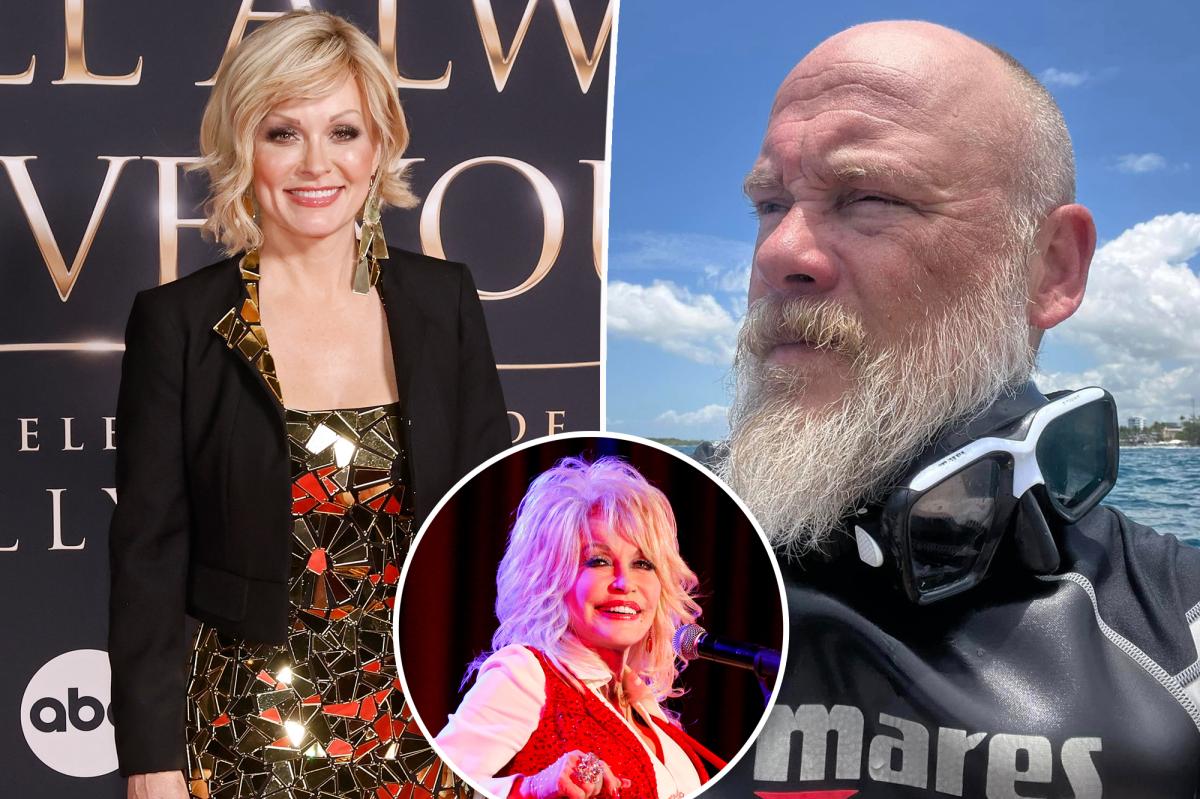
Dolly Parton’s Family Drama Has Gone Full Country-Gothic: A Security Feud, a CMA Snub and a $450 Million Legacy
Behind the tributes and rhinestones, a legal fight involving Dolly’s former head of security is splitting relatives — and turning her carefully protected family world into the loudest story in Nashville.
Dolly Parton’s posthumous era was supposed to be all rhinestones, reverence and the sort of tearful country tributes that make everyone briefly text their mother. Instead, the Dolly Cinematic Universe has acquired a new, deeply uncomfortable subplot: a family feud wrapped inside a legal battle over the singer’s businesses, estate and legacy.
According to Page Six, Parton’s $450 million fortune and sprawling business empire have become the backdrop for an increasingly bitter dispute involving Bryan Seaver, her nephew and former head of security. The conflict has pulled in longtime business manager Danny Nozell, several relatives, a handful of allegedly threatening messages and — because this is Dolly Parton’s family, apparently even grief comes with a red carpet — a disputed invitation to a major tribute show.
The story is messy, emotional and unusually intimate for a family that has spent decades keeping its private machinery out of public view. Dolly built an image around generosity, warmth and an almost supernatural ability to make everyone feel like they were sitting at her kitchen table. Now, the people closest to that table appear to be choosing sides.
The family split hiding behind the Dolly brand
A Page Six source claimed that some Parton relatives are not firmly aligned with Seaver, even though “publicly, most are defending him.” The source also alleged that Dolly had begun to worry Seaver was becoming too powerful after years handling her security, though those claims have not been publicly substantiated by Parton herself.
That alleged tension surfaced in miniature on social media. Danielle Parton, Dolly’s niece and the newly announced official brand ambassador for the estate, posted a video titled “crazy dad story.” When a commenter tried to connect her father to Seaver, Danielle replied: “If we’re gonna be friends, you will not be comparing Bryan Seaver to my daddy.”
It was not a formal family statement. It was not a press conference. It was one of those pointed little internet exchanges that takes roughly eight seconds to type and then acquires the dramatic weight of a courthouse filing. But the wording was enough to send the message that the family dynamic is not as uniformly united as the public-facing Dolly brand might suggest.
That distinction matters. Families surrounding major celebrity estates often become part of the story only when something breaks: a will, a business dispute, a suspiciously absent relative. Dolly’s relatives have generally stayed behind the curtain, helping preserve the singer’s famously homespun image. The current battle is dragging that curtain into the spotlight.
Then came the CMA tribute snub
Seaver added another layer of public drama this week when he said he and his children were not invited to a CMA tribute show honoring his aunt. In a Facebook post, he wrote that the rest of his family had been invited and that he and his children had been told not to attend.
He did not say which family members, if any, made that decision. But the optics were brutal: a major televised celebration of Dolly’s music, a room filled with country royalty and family-adjacent sentiment, and one close relative publicly announcing that he was outside the velvet rope.
That kind of exclusion lands differently when the person announcing it was also the one who previously shared the news of Dolly’s death. It creates an almost operatic contrast between public mourning and private fracture — the world singing “I Will Always Love You” while relatives are apparently working out who gets an invitation.
Seaver’s attorneys have pushed back on the legal fight, telling Page Six that the case was launched while he and his loved ones were grieving. They argued that the text messages cited in the dispute were misleading and taken out of context, a claim that places the conflict firmly in the gray zone between family pain, business warfare and competing narratives.
The lawsuit that turned private tension into public spectacle
In September, Nozell filed a lawsuit and sought a restraining order against Seaver shortly after firing him as head of security. The filing alleged that Seaver used his claimed military-contractor experience, access to weapons and capacity for violence while demanding money. Nozell also claimed that employees became afraid to go into the office because of threatening texts.
Those are serious allegations, and Seaver’s side has disputed the way the messages were presented. Page Six reported that the filing included screenshots of messages in which Seaver allegedly threatened to expose or sabotage business relationships connected to Dolly’s companies. Another previous report alleged that he intimidated staff at Dolly’s SongTeller Hotel and the Life of Many Colors Museum.
Seaver’s attorneys characterized the material as incomplete and hurtful to their client and his family. Meanwhile, a separate source previously told Page Six that Nozell may have his own agenda, alleging that he wants the family removed from the business picture and hopes to transform Dolly’s home into a Graceland-style attraction. That claim is also disputed territory, but it shows how quickly the fight has expanded beyond one employee’s dismissal.
Everyone in this story appears to be arguing over the same thing: who gets to decide what Dolly Parton’s legacy looks like when Dolly is no longer there to decide it herself.
Dolly’s greatest hit is now the family brand
That may be the most unsettling part of the drama. Dolly’s legacy is not just a number attached to an estate. It is an ecosystem of songs, theme-park businesses, hospitality, museums, charitable work and carefully managed nostalgia. Her name is a global emotional asset, and every person connected to it has a reason to believe they are protecting something precious — or controlling something valuable.
That is why a family comment, a Facebook post and a court filing now feel like chapters in the same saga. One side sees loyalty and mourning. Another sees intimidation and overreach. The public sees a beloved icon’s inner circle turning into a pressure cooker almost immediately after her death.
The next hearing is scheduled for Nov. 3, according to Page Six. Until then, the family’s public silence may be doing more talking than any official statement. Dolly spent her career making complicated things look easy: big emotions, big business, big hair, big dreams. The people left behind are discovering that preserving the Dolly Parton brand may be much harder than singing it.
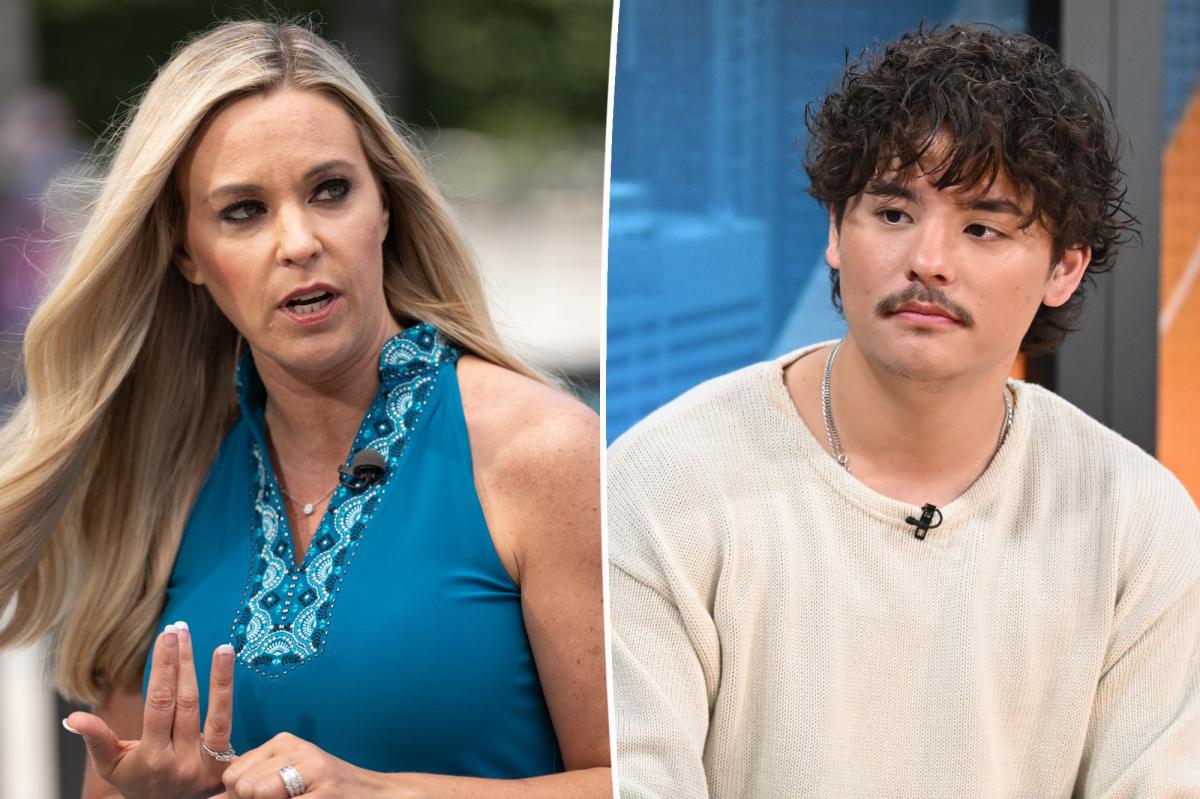
The Gosselin Family’s Reality-TV Nightmare Just Got a New Witness
A former nanny is backing Collin Gosselin’s allegations against Kate, describing a house manual, a haunting red spoon and a family dynamic she says she could no longer stomach.
The Gosselin family drama has entered its red-plastic-spoon era — and somehow, it is even darker than the matching outfits and chore charts that made the family famous.
A former nanny who worked for Kate and Jon Gosselin is speaking out in support of Collin Gosselin, who has described an allegedly violent and emotionally damaging childhood in his new memoir, In the Shadow of Eight: Surviving the Reality of My Childhood. In an interview with People published Friday, Ashley H., who asked that her last name not be used, claimed Kate “110% abused” Collin and said she witnessed the mother of eight treat him differently from his siblings.
“It’s hard to almost put into words the specific hate that she had towards Collin,” Ashley told the outlet, alleging that she saw Kate grab him “many, many times.” Page Six reported that Ashley also claimed Kate dragged Collin by the ear “all the time,” allegedly pulling him out of a kitchen chair.
Those claims echo what Collin, now 22, said in a Page Six interview earlier this month while promoting his memoir. He alleged that Kate once dragged him by the ear so forcefully that he went to school with a swollen ear. His book, released Oct. 13, portrays his childhood as “dark” and “violent,” according to Page Six.
The house manual was apparently its own character
Ashley said she worked for the Gosselin family as a house cleaner and fill-in nanny in her 20s, during the period when the Pennsylvania family was becoming one of reality television’s most recognizable — and most scrutinized — households.
Her account focuses not only on Collin, but on the tightly controlled atmosphere she says surrounded all eight children. Ashley told People that Kate maintained a “house manual” for staff, including a rule against taking pictures of the children. She also alleged that the home had to look “un-lived-in” at all times, with toys and everyday clutter kept out of sight.
The details are bizarrely specific in the way that makes a household rulebook feel less like a list of chores and more like a governing constitution. Ashley said she was expected to run a toothpick along the edges of the refrigerator during her weekly and biweekly cleaning. She also claimed the children were limited to one or two school outfits per week to avoid creating too much laundry.
“She wouldn’t let the kids do anything,” Ashley said, alleging that there were never toys or personal items left out. She described Kate’s interactions with the children as “robotic” rather than loving and claimed Kate made it clear which children were favored and which were not.
That description lands differently now than it did during the family’s peak television years. Jon & Kate Plus 8 sold viewers an image of organized chaos: two parents, a set of twins, a set of sextuplets and a Pennsylvania house constantly on the brink of collapse under the weight of laundry, lunches and camera crews. The show’s appeal was its domestic excess. Ashley’s allegations suggest that, behind the staged family routines, the home may have felt less like a messy family space and more like a tightly managed production set.
Then there was the spoon
The most haunting detail in Ashley’s account is also the most unsettlingly ordinary: a large red plastic spoon.
Ashley said she found the spoon in a drawer and asked the children what it was for. According to her, they told her it was “the spoon mommy uses when she gets mad.” Ashley said the moment stayed with her and ultimately prompted her to quit.
“That red spoon has haunted me for a long time,” she said.
Ashley claimed she contacted Children and Youth Services for Berks County, Pennsylvania, after leaving the job because the situation had taken an emotional toll. She also said she was not the only person to contact authorities. Page Six said it had not received an immediate response from Kate’s representatives or from the county agency regarding Ashley’s claims.
It is a detail that has instantly become the grim shorthand for this latest chapter of the Gosselin saga. Reality television once made the family’s daily logistics feel like entertainment; now, the smallest household object is being described as part of a much more disturbing story. That contrast is precisely why the allegations are resonating online.
Kate is answering in the language of the internet
Kate has pushed back publicly, but not through a long sit-down interview or a carefully staged television appearance. Instead, her response has arrived in TikTok comments — the modern celebrity crisis-management suite, apparently located beneath a ring light.
In response to a TikTok comment Thursday, Kate wrote, “I know who I am and my kids know who I truly am and to me, that’s all that matters.” She also “liked” a comment claiming that Collin would regret speaking out and alleging that he had been encouraged by “dysfunctional and mentally ill people.”
Earlier, Kate pushed back against the allegations in another TikTok comment, writing, “Rational, logical [people] or anyone who has dealt with mental illness, understands what’s going on here.” She has not publicly accepted Ashley’s account, and neither she nor Collin’s representatives have offered a shared version of events.
Jon Gosselin, meanwhile, has defended Collin. He has said his son is “not mentally ill” and claimed he may have grounds to sue Kate over the alleged abuse of their children. The former couple’s public split has long been one of reality TV’s most combustible storylines, but the current conflict is no longer about a custody fight playing out in tabloids. It is now a dispute over the childhood memories of children who grew up while millions of people watched.
The family story keeps being rewritten
Collin’s memoir has already reopened old questions about what viewers were shown, what they missed and how much access reality television should ever have to a family’s private life. The Gosselins became famous by turning the pressures of parenting into episodic entertainment. Years later, their adult children are telling versions of that experience that do not fit neatly into a nostalgic rerun.
Ashley’s allegations do not arrive in isolation: they follow Collin’s memoir and his Page Six interview, and they come as Kate and Jon continue to offer sharply opposing accounts of their family history. But they do add a new voice — an adult former staff member who says she was close enough to observe the household and disturbed enough by what she claims to have seen that she left and contacted authorities.
That is why this story has landed with such force. It is not merely another Gosselin family feud, another social-media jab or another round of parents and children disagreeing in public. It is a former insider describing a house where, she alleges, the children’s lives were controlled down to the refrigerator seams and school outfits — while one son was singled out for treatment she characterizes as abusive.
Kate says her children know who she truly is. Collin is asking the public to hear who he says he was. And now, a former nanny is stepping into the argument with a story about a red spoon that has apparently been waiting years to become the most infamous prop in the Gosselin family archive.