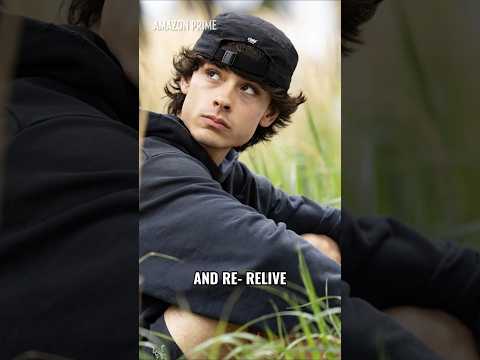
Jacob Whiteduck-Lavoie Wants More Love Triangles on Sterling Point
Jacob Whiteduck-Lavoie apparently believes Sterling Point could use a little more romantic turbulence. Us Weekly reports that the reality personality wants Season 2 to feature additional love triangles, a request that would put complicated feelings and competing loyalties closer to the center of the show.
That is an appetite for drama, not confirmation that any particular triangle is already forming. The available report does not identify the people involved, reveal whether any cast members are actually caught between partners, or say that the series has officially committed to the idea. For now, Whiteduck-Lavoie’s comment is best read as a wishlist for the next season rather than a spoiler.
Still, it is a revealing wish. Love triangles are reality television’s most efficient chaos machine: they create shifting alliances, force public choices and give every conversation the potential to become a referendum on loyalty. A season built around them would have plenty of built-in tension, provided the relationships feel real enough to matter and not merely arranged for maximum camera-time discomfort.
There is also a subtle difference between wanting more romantic conflict and promising to deliver it. Whiteduck-Lavoie may be signaling the kind of storytelling he thinks would keep viewers invested, but the report offers no production details or confirmed storyline. Until the cast, format or episodes provide something firmer, the interesting part is the pitch itself: someone associated with Sterling Point is openly asking for higher emotional stakes.
In other words, Season 2 has a drama brief before it has a confirmed triangle. Whether that becomes genuine relationship fallout or simply a tantalizing reality-TV suggestion remains unresolved.

Sandra Bullock’s Shoulder Tattoo May Carry a Personal Tribute
Sandra Bullock has debuted a tattoo on her shoulder, and the placement is already inviting the kind of celebrity decoding usually reserved for cryptic captions and suspiciously meaningful jewelry. According to Us Weekly, the tattoo may be connected to Bryan Randall, adding a personal layer to what might otherwise be a simple style reveal.
That “may” is doing important work here. The report points to a possible tribute, but the supplied coverage does not establish that Bullock has explained the design, identified its meaning, or confirmed that Randall is the inspiration. There is no verified message from Bullock in the material provided that turns the theory into fact.
The appeal of the story is obvious: tattoos are permanent, intimate and unusually easy for the public to treat as evidence. A new shoulder design can be fashion, remembrance, a private symbol or simply something the wearer liked. Without the tattoo’s details or Bullock’s own explanation, assigning a definitive backstory would be more fan fiction than reporting.
Still, the possible Randall connection gives the image emotional weight. Bullock’s personal life has long attracted attention precisely because she tends to keep it away from the daily celebrity content machine. When a visible detail does surface, even a small one, it becomes a rare opening into a part of her world she generally controls closely.
For now, this is a tantalizing clue rather than a confirmed memorial. The most responsible read is also the most interesting one: Bullock chose to show new ink, observers noticed the timing and symbolism, and the meaning remains hers to disclose—or keep entirely private. Until she does, the tattoo belongs in the category of intriguing possibilities, not settled celebrity lore.

Delilah Belle Hamlin Lands TMZ’s Cheeky Photo Spotlight
Delilah Belle Hamlin is getting the full tabloid treatment, with TMZ making her physique the headline of a new photo-driven feature. The item centers on revealing images of the model and actress, presenting her as the latest celebrity subject for a very specific kind of internet attention: glamorous, provocative and engineered to invite a second look.
That distinction matters. This is not a reported feud, a relationship reveal or a career announcement. The appeal is visual, with the coverage built around Hamlin’s appearance and the cheeky framing of the photos. In the crowded celebrity-content economy, that can be enough to become a mini-event, especially when the subject already carries name recognition through modeling, acting and her famous family.
TMZ’s presentation is deliberately playful, but the underlying formula is familiar: take a striking celebrity image, give it a wink-heavy label and let the audience decide whether it is fashion, thirst trap or simply a star having fun with the camera. Hamlin’s public image has long lived at that intersection, where polished glamour and social-media-era self-display overlap.
There is also a useful bit of gossip-world context here: a provocative photo feature can generate attention without carrying the weight of a larger narrative. Readers may speculate about where the images came from or what they are meant to signal, but the supplied coverage does not establish a new romance, a personal dispute or any broader development around Hamlin. The safe read is the simplest one—the photos are the story.
For BAD GOSS, that makes this a classic social lane item: high visual appeal, low plot, and exactly the kind of celebrity moment that can dominate a scrolling session for a few minutes. TMZ is the sole outlet identified in this story cluster, so we are treating the photo spotlight as credible coverage while keeping the larger meaning firmly in the “don’t write a screenplay around it” category.