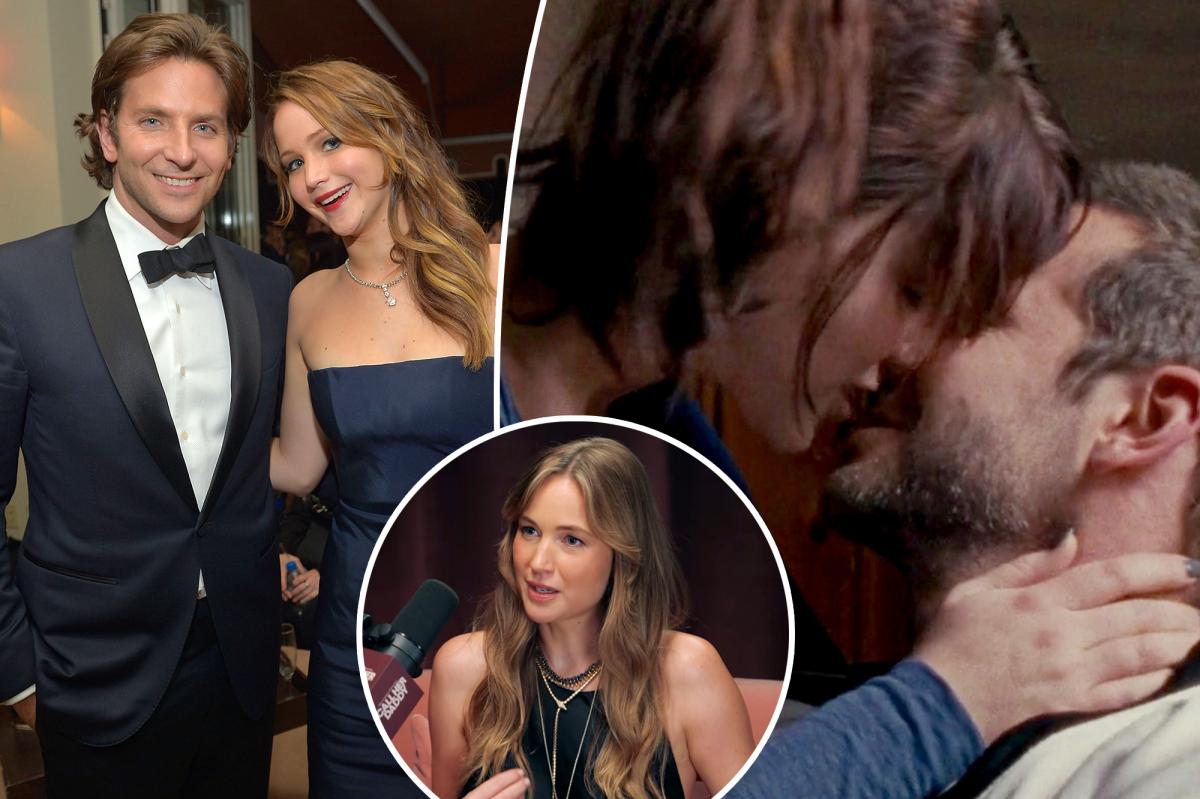
Jennifer Lawrence Asked Bradley Cooper If He Was Sick of Kissing Her. His Face Apparently Said: Please Stop Talking
The Silver Linings Playbook stars have made four films together, but Lawrence’s most unforgettable behind-the-scenes moment may be the time she talked herself out of a perfectly good movie kiss.
Jennifer Lawrence has never been especially interested in pretending to be chill. Give her a red carpet, a talk show chair or an awards-season microphone and eventually the polished celebrity surface cracks open to reveal the same person who might overshare, panic, make a joke at exactly the wrong moment and then narrate the entire disaster for everyone’s benefit.
So naturally, one of her favorite Silver Linings Playbook memories involves a passionate movie kiss, a major Hollywood leading man and a question so awkward it seems to have arrived in the room wearing orthopedic shoes.
“I said, ‘Aren’t you so sick of kissing?’ And he didn’t like that,” Lawrence recalled during an appearance on Alex Cooper’s Call Her Daddy podcast. The kiss in question was the “big makeout session” at the end of the 2012 film, in which Lawrence played Tiffany Maxwell opposite Bradley Cooper’s Pat Solitano.
She quickly softened the story, adding that Cooper “laughed” afterward. But Lawrence described the interaction as one of those tiny social catastrophes where you can feel the conversation leaving your body before you have any chance to retrieve it.
The kiss was cinematic. The follow-up was aggressively not.
In Silver Linings Playbook, the kiss is supposed to land as the emotional payoff: two damaged, impulsive people finally allowing themselves a little romantic certainty. In real life, Lawrence apparently followed the moment with the verbal equivalent of stepping on a rake.
“It was one of those moments where you’re like, ‘Right?’ And the other person’s like, ‘Oh,’” she said.
That “Oh” is doing a lot of work. It is the sound of a man who has just been handed an unexpected customer-service survey during a makeout session. It is also the sound of every person who has ever tried to be funny while flirting and immediately realized they have turned the mood into a panel discussion.
Lawrence’s comment was not exactly a grand romantic declaration, but that is what makes it so recognizably her. The actor has built a public persona around being candid, funny and just self-aware enough to know when she has made things worse. She does not tell the story like a scandal. She tells it like a memory she has replayed enough times to understand that the joke was funny in her head, then became a small hostage situation once spoken aloud.
Bradley Cooper was still “the biggest celebrity” in the room
Lawrence also admitted she was nervous when she first met Cooper on the set. At the time, she was already a serious actor, but Cooper had the particular gravitational pull of a man who had just become globally famous as the charming, chaotic face of The Hangover.
“He was in The Hangover. He was the biggest celebrity I think I ever met at that time,” she said.
Her reaction, according to Lawrence, was essentially: watch this. Hold my beer.
That dynamic helps explain why their chemistry in Silver Linings Playbook felt so alive. The film was not built around traditional movie-star smoothness. Tiffany and Pat are messy, defensive and emotionally overclocked. They talk too much, react too quickly and keep trying to turn vulnerability into a competition. Lawrence and Cooper’s scenes worked because neither performer seemed afraid of letting the other look ridiculous.
Lawrence’s off-camera story has the same energy. She was nervous, tried to project confidence and then blurted out something that made the air briefly leave the room. It is less “forbidden Hollywood tension” than “two charismatic people discovering that chemistry does not prevent conversational free fall.”
She was also bluffing about the dancing
The kissing confession was not Lawrence’s only admission of professional fraudulence on the podcast. She said she pretended to be confident in her dancing during the film, even though she believed her moves were terrible.
“If you put a gun to my head while we were shooting, I would’ve been like, ‘I’m really, really good. I’m an amazing dancer,’” she joked.
That confidence apparently had to be repaired in postproduction. Lawrence explained that she recorded additional dialogue for a scene to clarify that her character was not necessarily a gifted dancer, just someone who enjoyed dancing. The line became a kind of narrative emergency exit: no, Tiffany is not bad at this; she is joyfully committed to it. There is a difference.
It is also a very Lawrence admission because it turns an acting trick into a confession about ego. Most actors would prefer the legend that they arrived on set naturally capable of everything. Lawrence’s version is more entertaining: she was bluffing, the bluff became part of the character and then the movie quietly explained the bluff for her.
The gamble paid off. Silver Linings Playbook earned more than $236 million worldwide, received eight Oscar nominations and won Lawrence the Academy Award for Best Actress. She has said she did not expect the film to become such a phenomenon, admitting that actors rarely know what will connect with audiences unless they are making a built-in event like The Hunger Games.
“I felt like the whole time like I don’t get it. Like, what is this movie about?” she recalled.
That uncertainty now feels almost charmingly absurd. The movie was about grief, mental health, family pressure, obsessive behavior and the terrifying possibility of letting another person see you clearly. It was also about dancing badly, kissing under pressure and trying not to say the first thing that pops into your head. Lawrence understood at least one of those subjects intimately.
Their friendship kept getting sequels
The awkward kiss conversation did not end Lawrence and Cooper’s working relationship. Quite the opposite: the pair reunited for American Hustle in 2013, Serena in 2014 and Joy in 2015. Four films together is a substantial cinematic relationship, especially when the first one gives you an Oscar, a cultural moment and a story about accidentally heckling your costar during a romantic scene.
Lawrence has previously spoken warmly about their partnership, saying she pushed for Cooper to join Serena and that she thought of him whenever she considered a male role. She called him “the best” and said she loved working with him. Cooper, in turn, praised her as a professional and an actor, saying he learned from her.
There is no need to manufacture a secret romance around that history. The actual story is better: two major actors found a rhythm onscreen, kept choosing to work together and accumulated the kind of affectionate backstage anecdotes that make a long creative friendship feel real. One of them can deliver an Oscar-winning performance and still panic after a kiss because she asked the least seductive follow-up question imaginable.
Somewhere, the fictional Tiffany and Pat are still dancing toward their happy ending. Somewhere else, Lawrence is still insisting she is an amazing dancer. And Bradley Cooper, presumably, has had enough time to recover from being asked whether he is tired of kissing.
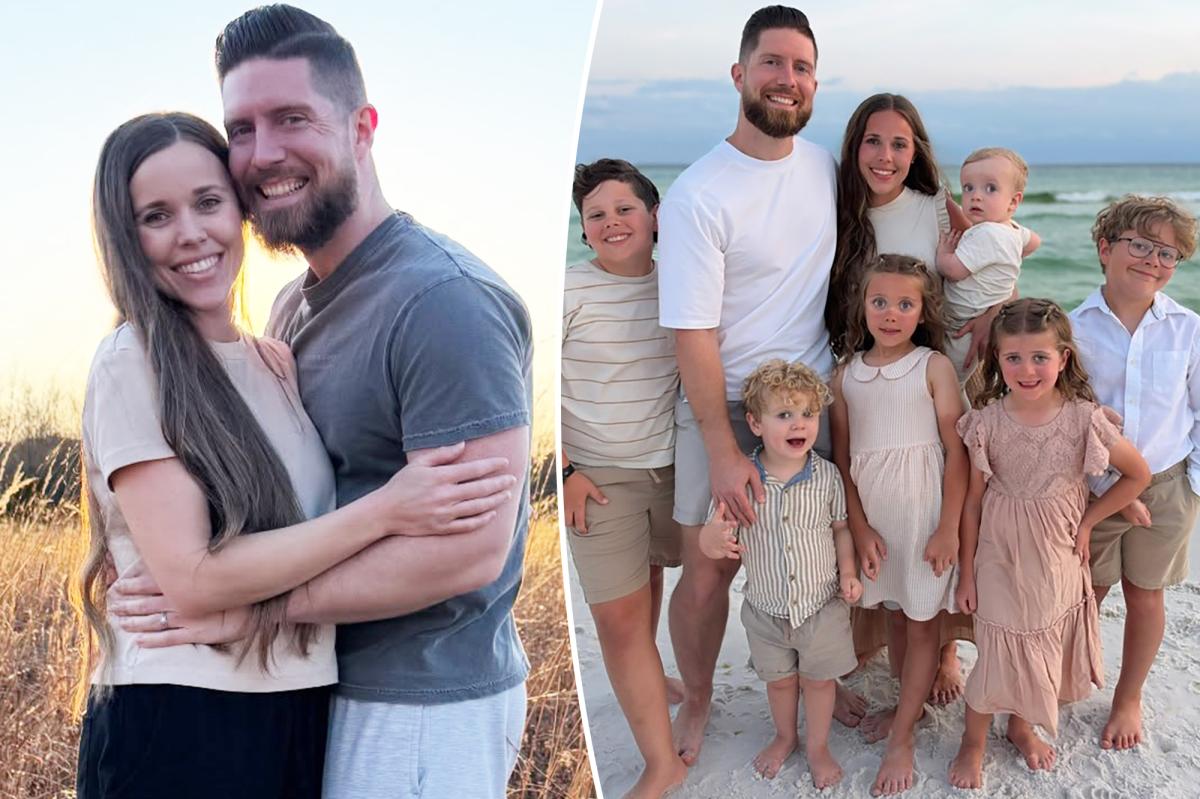
Jessa Duggar Is Pregnant With Baby No. 7 — and Her Husband Sounds, Respectfully, Swamped
The former “19 Kids and Counting” star announced she is six weeks along on the “Unplanned Podcast,” where she and Ben Seewald also discussed baby fever, family logistics and the very real Ford Transit era.
Jessa Duggar has entered her seventh-baby era, and she did it in the most Jessa Duggar way possible: casually, mid-podcast, with a little nausea and a husband who immediately started talking about finances.
The former 19 Kids and Counting star revealed Wednesday on the Unplanned Podcast that she and Ben Seewald are expecting their seventh child. Duggar, 33, said she is six weeks pregnant and “a little queasy but not too bad,” which is a remarkably breezy way to announce that your household is about to become even more crowded.
Seewald, 31, joined her for the announcement, telling podcast listeners they were the first outside the family to hear the news. The couple had apparently kept the pregnancy within their family circle until the episode, giving the reveal the low-key intimacy of a family group chat suddenly becoming public programming.
Baby No. 7 was apparently always lurking
Duggar and Seewald already have six children: Spurgeon, 10, Henry, 9, Ivy, 7, Fern, 5, George, 2, and Edward, 1. They married in 2014 after getting together in 2013, and welcomed their first child the following year. Their family has since grown at a pace that makes the phrase “family expansion” sound like a polite euphemism for reorganizing an entire floor plan.
According to Duggar, the idea of a seventh child was not exactly a shocking plot twist inside the marriage. She admitted that she “always” gets baby fever “way too soon” after giving birth and was the one who suggested they try for another. Her reported pitch was simple: “We should have a No. 7.” Seewald’s response, as relayed by Duggar, was essentially: all right.
That exchange is the whole Jessa-and-Ben dynamic in miniature: one person gets swept up in the possibility of another baby, while the other appears to process the practical consequences in real time. The couple said they are taking things “one at a time” and do not have a maximum number of children in mind. Still, Duggar noted that seven once felt like it might be their magic number when they first got together.
Ben Seewald has entered the logistics chat
The romantic math of a large family is one thing. The seating arrangement is another.
During the podcast, Seewald confessed that he feels “swamped” by the responsibilities of raising a big family. He also mentioned worrying about finances and whether he is investing enough time in each child. It was a strikingly unvarnished moment in an announcement that could otherwise have been all soft-focus joy and carefully chosen baby language.
There is also now a Ford Transit involved. The couple upgraded from their minivan because, as Seewald explained, the family had become too packed in. That is not merely a vehicle upgrade; it is a milestone. Somewhere between child number six and child number seven, the family crossed from “large” into “we need to discuss fleet management.”
And yet the practical anxiety did not appear to change the answer. Duggar wanted another baby, Seewald agreed, and now the family is preparing to add one more passenger to a life already organized around school, schedules, siblings and the constant choreography of getting everyone from one place to another.
The miscarriage history gives the announcement extra weight
Duggar also referenced the couple’s two previous miscarriages while discussing the pregnancy. She did not present the announcement as a perfectly smooth journey, and that history makes the early timing feel especially personal. At six weeks, the news is still very new, which may explain why the couple shared it first in conversation rather than with a glossy social-media rollout.
The pair have not yet posted about the pregnancy on their own social-media accounts. For a family whose life has been documented publicly for years, that restraint is notable. The announcement arrived through a podcast, not a matching Instagram carousel, not a dramatic black-and-white sonogram photo, and not a caption engineered to make the comments section cry on command.
Instead, listeners got Duggar talking about feeling queasy, Seewald talking about being overwhelmed and both of them acknowledging that the family’s future is still being figured out one child at a time. It is less polished than a formal announcement, but arguably more revealing.
There is already another Duggar pregnancy in the mix
Jessa is not the only Counting On alum currently expecting. Her sister Joy-Anna Duggar revealed in September that she and husband Austin Forsyth are expecting their fourth child. Joy-Anna is 28, according to Page Six, meaning the Duggar pregnancy news is arriving in something close to a family relay: one sister announces, then another steps forward with an even bigger number.
The Duggars first became famous through TLC’s 19 Kids and Counting, which turned their enormous family into a pop-culture spectacle and later spun several of the older children into Counting On. Jessa has remained one of the more recognizable adult figures from that television universe, even as the family’s public story has become more complicated and individual members have moved into their own marriages, careers and households.
Her latest announcement is therefore both extremely on-brand and strangely intimate. A seventh child is hardly a plot twist for someone raised in a family of 19 children, but the details make this particular reveal feel grounded: the early queasiness, the two miscarriages, the baby fever, the lack of a fixed “maximum,” and a father already wondering how to divide his time fairly.
So congratulations are in order — and perhaps a second congratulations to the Ford Transit, which has just become one of the most important supporting characters in the Seewald family story.
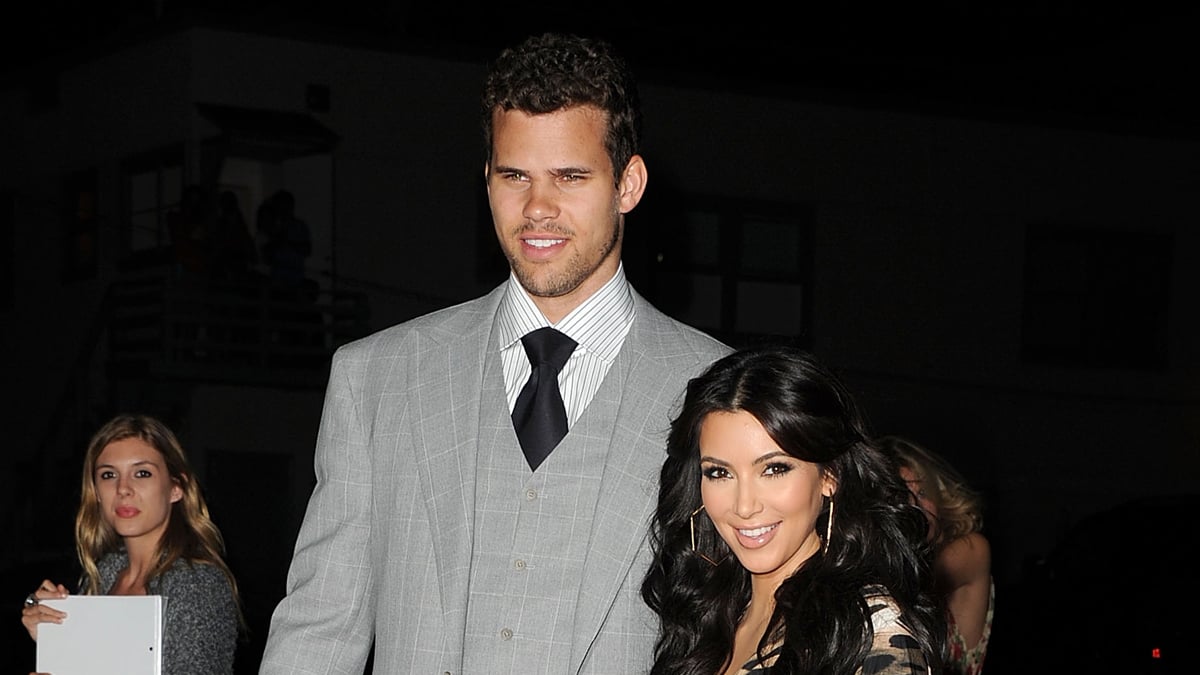
Kim Kardashian Says She Knew Kris Humphries Was Wrong for Her—Then Got Married Anyway
In a new book, Kim revisits the 72-day marriage she nearly escaped, blaming cold feet, cameras and the terrifying prospect of becoming “the runaway bride.”
Kim Kardashian has finally put a sharper sentence around one of the strangest decisions in her very public romantic history: she says she knew, deep down, that marrying Kris Humphries was wrong before she walked down the aisle.
Not “the relationship got complicated.” Not “we grew apart.” Kim’s explanation, as quoted in Citizen Kim: The Woman Who Created the Future, is much more uncomfortable—and much more revealing. She says she “knew it before we were married in my soul” that Humphries was not the right person for her. Then she married him anyway.
The result was the Kardashian marriage that became a cultural punchline almost before the wedding flowers had wilted: a lavish August 20, 2011 ceremony followed by Kim filing for divorce just 72 days later, on October 31. Fifteen years on, the story still has a particularly modern sting. The relationship was not merely happening in public. It was happening under production lights, inside a family entertainment machine, with every hesitation threatening to become its own episode.
The runaway-bride panic was louder than her gut
Kim’s reason for going through with the wedding was not that she suddenly became convinced Humphries was her forever person. It was that canceling seemed likely to create an even bigger spectacle.
“I just thought, ‘Well, it’s cold feet,’” she explained. “But your gut, your soul, is always right.” Then came the calculation that now feels painfully familiar to anyone who has watched a celebrity relationship turn into content: “They’re filming for a show, and if I bail now, they’re going to call me ‘the runaway bride’ and it will be an even bigger thing.”
That is the brutal little engine inside this story. Kim was not only deciding whether to marry a man. She was deciding whether she could survive the narrative that would replace the wedding if she didn’t. Calling off the ceremony might have been the honest choice, but in the Kardashian universe, honesty does not necessarily make a story disappear. It can make the story bigger, louder and harder to control.
So the wedding happened. The cameras kept rolling. And a decision made to avoid one humiliating headline produced a much longer-running one.
A wedding built for a television era
The Humphries marriage arrived at a moment when Kim’s personal life and professional life were almost impossible to separate. Keeping Up with the Kardashians had transformed family milestones into serialized entertainment, and Kim was no longer simply dating in public. She was learning how to manage the emotional cost of turning private uncertainty into a public event.
That pressure is what gives her new explanation its bite. “Cold feet” is a familiar phrase, almost a socially approved way to dismiss panic before a wedding. But Kim now frames it as a misread of something more fundamental: her gut had already made the decision, and she tried to negotiate with it because the consequences of leaving looked too dramatic.
There is also a very Kardashian contradiction at work here. The family became famous for being unusually candid about conflict, romance and family judgment, yet Kim’s account suggests that the performance of certainty can become its own trap. Once the wedding was planned, filmed and publicly anticipated, backing out would not have been a quiet act of self-preservation. It would have become a character turn.
And “runaway bride” is not a neutral label. It turns a woman’s refusal to proceed into a spectacle of panic, failure or instability. Kim’s fear was not only that people would know the marriage was ending. It was that the act of protecting herself would become the most embarrassing thing anyone knew about her.
Kris Jenner saw the problem before the ceremony
The new account also includes Kris Jenner’s memory of the rehearsal period. Jenner said she knew Kim was unhappy and approached her before the wedding at a house in Montecito, California. The setting sounds almost aggressively cinematic: beautiful house, open windows, Robin Thicke rehearsing songs on the dance floor, and a mother trying to interrupt the production long enough to ask whether her daughter really wanted to continue.
Jenner recalled telling Kim, “If you want to cancel the wedding, just get out of here and I’ll figure it out.” That detail matters because it complicates the easiest version of the story. Kim was not entirely alone with her doubts. According to Jenner, someone close to her noticed. Someone even offered an exit.
But an available exit is not always an emotionally usable one. Kim had already imagined the coverage, the judgment and the inevitable “what happened?” cycle. A mother can open the door; she cannot make the public consequences vanish. Kim stayed, and the wedding became the very public event she had hoped to avoid by not leaving.
There is something almost tragically on-brand about the scene: a family famous for turning chaos into television encountering a moment when television may have made chaos harder to stop.
The apology came years after the headline
The marriage ended quickly, but the cultural afterlife did not. Humphries became shorthand for a wedding that moved faster than the relationship could support, while Kim carried the image of someone who had staged an enormous romantic promise and then abandoned it almost immediately.
During a Keeping Up with the Kardashians reunion special in 2021, Kim acknowledged that she owed Humphries an apology for how she handled the split. That admission did not erase the 72 days, and it did not rewrite the hurt attached to the breakup. It did, however, show a more reflective Kim than the one who had once tried to outrun the “runaway bride” label by completing the ceremony.
Her latest comments make the timeline feel less like a sudden collapse and more like a decision delayed by fear. The marriage was brief; the hesitation came first. The most startling part is not that Kim’s instincts were right. It is that she says she knew they were right, heard her mother offer an escape, and still let the wedding proceed because the optics of stopping felt worse than the consequences of continuing.
That is why this old Kardashian saga keeps finding new life. It is not just about a celebrity marriage that lasted 72 days. It is about what happens when the event has become bigger than the people inside it—and when the fear of becoming a story overwhelms the courage to end one before it begins.