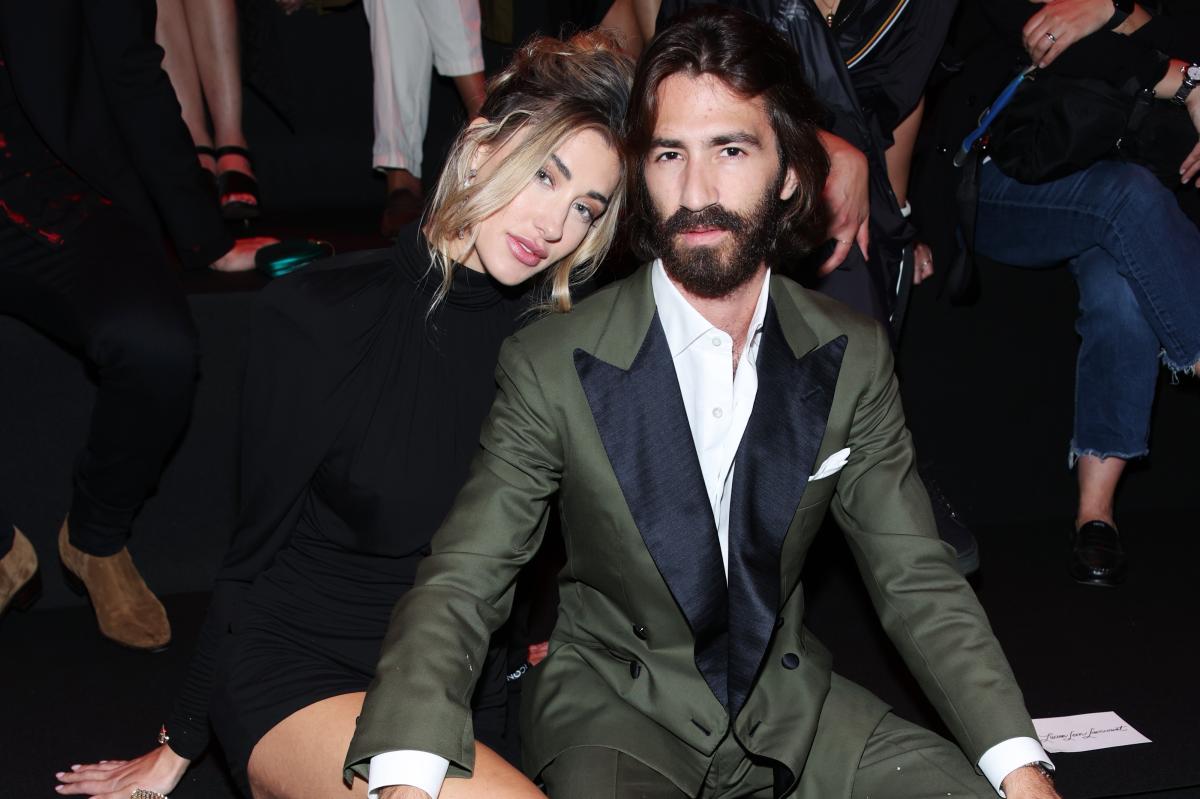
Jessica Serfaty Has One Message for Her Ray-Ban Heir Ex: Absolutely Not Pregnant
The model and actress is shutting down rumors that she and Leonardo Maria Del Vecchio rekindled their romance — while pointing back to a much darker alleged smear campaign.
Jessica Serfaty would like the internet to stop planning her imaginary baby shower.
After rumors began circulating that the model and actress had reunited with her ex-fiancé, Ray-Ban heir Leonardo Maria Del Vecchio, and were expecting a child, Serfaty gave Page Six a response so emphatic it practically arrived wearing a siren: “Not pregnant. Most definitely not with Leo.”
That is not a soft launch. That is a relationship demolition derby in one sentence.
The pregnancy story reportedly began with an Italian journalist in August before migrating through social media and Reddit, where celebrity speculation goes to develop a second life and lose all adult supervision. Serfaty claims the rumor came from Del Vecchio himself, telling Page Six: “[Those are] rumors straight from Leo. What a lovely guy.”
Neither Serfaty nor Del Vecchio has announced a reconciliation, and her comments make clear that, whatever the rumor mill was selling, she is not buying.
This Is Not Their First Publicly Messy Chapter
Serfaty and Del Vecchio were together from 2023 to 2024, becoming one of those glossy international pairings that seemed custom-built for paparazzi lenses: an American model and actress, an Italian billionaire heir, glamorous locations, and enough family fortune to make an ordinary breakup feel like a corporate restructuring.
They were engaged when the relationship took a sharply darker turn. In an Instagram Live in July 2024, Serfaty accused Del Vecchio of hitting her and said the alleged incident left her with a bleeding head. She later recanted the allegation. This October, however, she told The New York Times that she had been pressured to do so and maintained that Del Vecchio had hit her.
Those claims are disputed and have not been resolved here. But they explain why a rumor about the pair quietly getting back together would land less like a romantic plot twist and more like someone reopening a sealed file.
Serfaty’s latest comments arrive amid a broader set of allegations about online attacks aimed at her. The New York Times reported that audio recordings allegedly captured crisis communications operative Jed Wallace discussing efforts to increase the visibility of websites portraying Serfaty as a “hooker, liar and a prostitute.” The Times reported that Del Vecchio allegedly paid Wallace for the smear effort in 2024. Del Vecchio and his representatives did not respond to the publication’s requests for comment, according to Page Six.
The Internet Got a Pregnancy Rumor. Serfaty Got a Pattern.
For everyone else, the pregnancy rumor was a salacious little cloud drifting over celebrity social media. For Serfaty, it appears to sit inside a much larger pattern of claims about her being pushed online.
She told The Times that she contacted police in 2024 after discovering an AirTag in her car. The Hollywood Reporter later unearthed a voice memo in which Wallace allegedly discussed the tracking device and claimed he knew police had not found one, saying, “My guys were there,” apparently referring to contacts within the Los Angeles Police Department.
Again, those are reported allegations, not a neatly tied television finale. But the context gives Serfaty’s response to the pregnancy rumor a very different temperature. She is not merely correcting a tabloid detail. She is suggesting that the rumor belongs to the same digital ecosystem that has been trying, in her telling, to define her publicly before she can define herself.
And that is the uniquely modern horror of a breakup involving famous people: the relationship ends, but the content strategy continues. Suddenly every anonymous account, suspicious headline and oddly confident Reddit post feels like it could be part of a larger conversation — or part of someone trying to control the conversation.
Meanwhile, Leo’s Life Is Already a Full Season of Television
Del Vecchio is not exactly living in a low-drama corner of the news cycle.
The 31-year-old heir recently stepped down as EssilorLuxottica’s chief strategy officer and Ray-Ban president to pursue new ventures. He remains caught in a family battle over control of the eyewear empire, including a reported attempt to secure family backing for loans tied to buying out two siblings for roughly $11.2 billion. The plan did not receive that backing, according to Page Six.
His personal history is just as densely plotted. Del Vecchio married Anna Castellini Baldissera in a civil ceremony in Milan in 2021 and held a religious wedding in Saint-Tropez in 2022. The marriage ended in divorce the following year. He also has a baby named Bianca with model and influencer Sara Soldati, and announced an engagement to Kornelia Ski in February, though the pair now appear to have gone their separate ways.
Then came a bombshell interview in which Del Vecchio discussed his struggles with drugs, his strained relationship with his late father and his claim that he had slept with more than 2,000 women. In other words, the man’s biography currently has enough subplots to require a writers’ room.
Against that backdrop, the rumor that he and Serfaty had reunited did not simply suggest a rekindled romance. It proposed that two people whose previous relationship ended amid serious public accusations had somehow wandered back into each other’s arms — possibly while the family fortune, an alleged smear operation and multiple other romantic storylines were all still in motion.
Serfaty Is Not Letting the Rumor Pick the Ending
Serfaty, who appeared on “America’s Next Top Model” and played lawyer Sloan Petersen on “Days of Our Lives,” has spent years in the familiar celebrity pressure cooker: visible enough to attract fascination, but often discussed through the lens of whoever she is dating.
Her latest statement flips that arrangement. The rumor may have tried to cast her as a returning fiancée and expectant mother. Her answer was blunt, specific and impossible to mistake: no baby, no Leo, no reunion.
It is also a reminder that social-media gossip is not harmless just because it arrives in a soft-focus format. A pregnancy rumor can look like frivolous celebrity chatter until it is attached to an ex, a disputed history and allegations of an organized campaign to damage someone’s reputation.
So, for now, the rose-colored glasses are off. The internet can keep refreshing, Italian journalists can keep speculating and Reddit can keep doing what Reddit does. Serfaty has supplied the only update she wants attached to her name: she is not pregnant, and she is most definitely not with Leo.

Kris Jenner Has Entered Her Luxury-Family-Drama Era
Ferragamo’s holiday campaign casts the original momager as a cinematic director — because who better to stage-manage love, legacy and a room full of beautiful people?
Kris Jenner has spent decades making family feel like a full-time production. Now Ferragamo is giving her the director’s chair.
The reality-TV mastermind is the face of the Italian fashion house’s 2026 holiday campaign, “The Joy of Loving,” a cinematic series built around families, siblings, partners and chosen families. Jenner appears as an imagined director conducting screen tests, interviewing the people who make up the campaign’s ensemble and, naturally, turning emotional connection into something sleek enough for a luxury ad.
It is an extremely Kris role: part host, part producer, part casting director, part woman who absolutely knows where everyone is supposed to stand.
Who better to direct a family spectacle?
Ferragamo’s campaign does not simply place Jenner in front of a logo and call it a holiday moment. It folds her public persona into the creative concept. In the ads, she plays a director introducing the audience to a series of real-life relationships, from siblings and parent-child duos to artistic partnerships and a person-and-dog pairing.
The participants include the Womack Sisters, “Twin Peaks” actress Joan Chen and her daughter Audrey Hui, model Paloma Elsesser and her brother Sage, and the band Bar Italia with London-based stylist Ch’lita. Acting coach Nancy Banks appears with her son Benny Buckley, while Sofia Testino arrives with her dog Syko.
That lineup gives the campaign a broader idea of family than the traditional holiday-card setup. There is blood family, creative family, chosen family and the kind of four-legged family member who probably gets better lighting than most humans. Jenner’s job is to move between all of those relationships, asking questions and presenting them as portraits of attachment rather than just polished fashion tableaux.
For Ferragamo, that framing also lets the brand borrow some of Jenner’s most recognizable cultural currency: the ability to make family dynamics feel like an event. She is not merely famous for being related to famous people. She has built an entire visual language around the family as institution, content machine and luxury ecosystem.
The momager meets the “Shoemaker to the Stars”
The campaign is also designed as a conversation with Ferragamo’s history. The brand points back to founder Salvatore Ferragamo’s Hollywood clientele, which included Marilyn Monroe, Audrey Hepburn, Judy Garland, Greta Garbo, Joan Crawford, Sophia Loren and Lauren Bacall.
That list is not subtle. Ferragamo is reminding everyone that its relationship with celebrity began long before celebrities became their own media companies, beauty lines, streaming franchises and social feeds. The old “Shoemaker to the Stars” mythology gets a modern update in Jenner, a woman who has made the management of fame look like an art form in its own right.
There is a neat generational handoff happening here. Ferragamo dressed the stars; Jenner helped turn the star family into the format. One built glamour around Hollywood’s leading women. The other helped make domestic life, sibling chemistry and carefully timed appearances part of the celebrity product.
Creative director Maximilian Davis told WWD that Ferragamo is “all about family,” adding that he thinks about how collections can be worn across generations and how beloved pieces can be held onto and passed down. Jenner is a particularly pointed face for that idea. Her public image is inseparable from inheritance: not just clothes and accessories, but names, instincts, contacts, camera awareness and the ability to turn a personal milestone into a global conversation.
Holiday dressing, but make it a production
The campaign’s title, “The Joy of Loving,” has the soft-focus warmth of a holiday card. Jenner’s presence gives it a little more voltage. She brings the sense that affection can be sincere and still have a run-of-show.
That tension is what makes the casting work. Jenner has spent years at the center of a family brand where intimacy is both lived experience and public spectacle. A Ferragamo campaign about love could have gone sugary very quickly. Putting her in the role of director adds structure, wit and a hint of backstage intrigue. These are not just people standing together in expensive clothes; they are being introduced, framed and ushered into the story by someone who understands how a relationship becomes a moment.
The creative team behind the campaign includes director Clara Cullen, photographer Ilya Lipkin and stylist Miyako Bellizzi. Jenner also appears in short documentary interviews and presents the screen tests, giving the project a format that sits somewhere between fashion film, family portrait and celebrity conversation.
That hybrid feels particularly suited to the current moment. The most effective fashion campaigns increasingly want to be more than still images. They want a premise, a cast and enough personality to travel through social feeds. Jenner supplies the instant recognition; the screen-test concept supplies the repeatable format. Every new pair or group becomes another small episode in the larger Ferragamo universe.
And yes, the timing is very Kris
The campaign arrives just after the new season of The Kardashians kicked off on Hulu on Oct. 8, putting Jenner back into the family conversation at precisely the moment Ferragamo is asking her to preside over one.
That timing makes the campaign feel less like a random luxury appointment and more like a particularly elegant extension of the Jenner calendar. On Hulu, viewers get the family as serialized entertainment. In Ferragamo’s holiday world, they get the family — and families beyond it — as a cinematic study in connection, style and legacy.
It is also a reminder that Jenner’s most durable talent is not simply staying famous. It is moving between formats without losing the character people came to see. Reality television, fashion campaigns, social media, red carpets, business meetings: the setting changes, but the essential performance remains recognizable. Kris enters, assesses the room, finds the story and makes sure everyone looks good while telling it.
For a holiday campaign about love, Ferragamo could have chosen a conventional sentimental figure. Instead, it chose the woman who made family logistics look glamorous and emotional management look like executive production. The result is less “cozy fireside gathering” and more “the director is ready for your close-up.” Honestly, that is the holiday spirit we can work with.
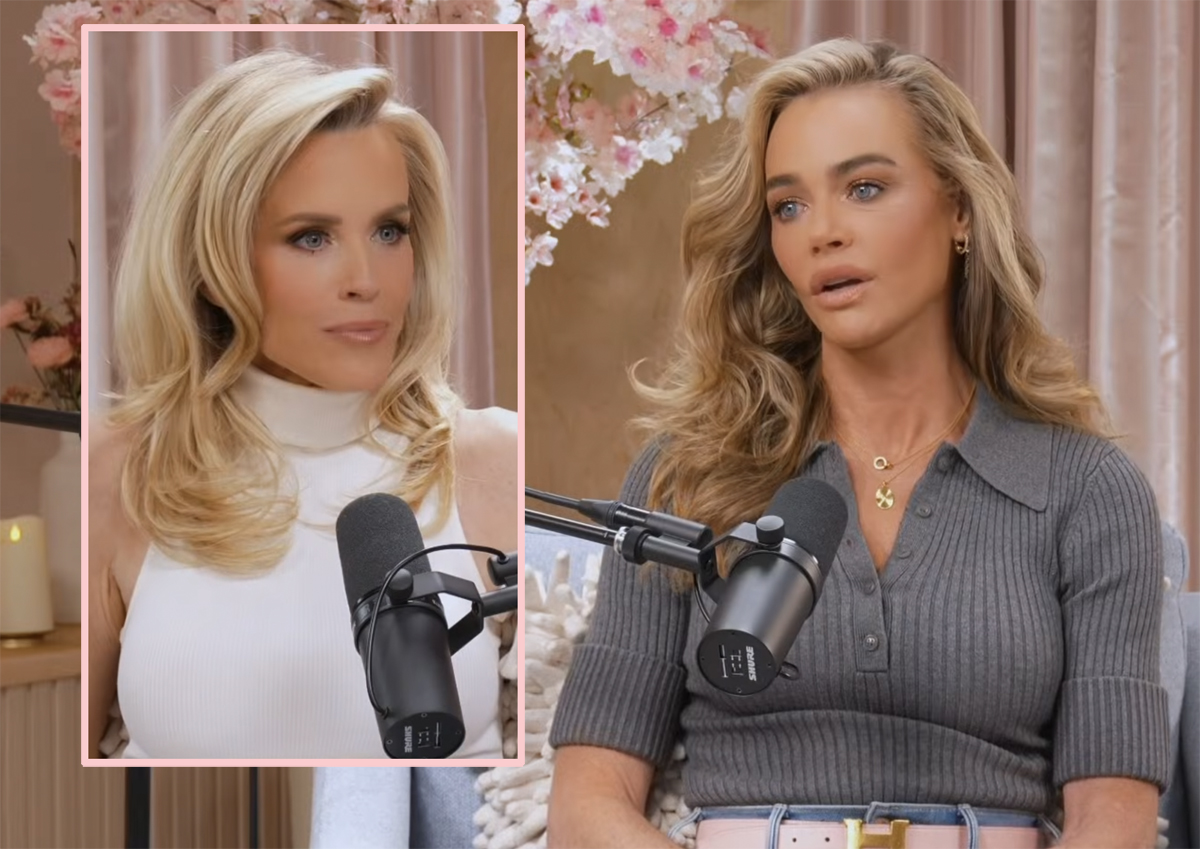
Denise Richards Says Her Marriage Had a Hidden Surveillance Problem — and She’s Done Waiting to Talk
On Jenny McCarthy’s podcast, Richards described alleged monitoring, deleted evidence and a home life that became increasingly frightening. Aaron Phypers denies accusations of physical abuse.
Denise Richards is done waiting for the clean, convenient ending.
Appearing on The Jenny McCarthy Wahlberg Show this week, the actor and reality-TV veteran spoke at length about her marriage to Aaron Phypers, describing an allegedly controlling relationship that, in her telling, extended far beyond explosive arguments. Richards said she believes Phypers monitored her communications, accessed her devices and deleted material from her phone that she wanted to preserve.
It is a disturbing new chapter in a breakup that was already playing out in court, in the tabloids and across the Bravo-adjacent universe of celebrity relationship drama. But Richards’ account was not delivered like a headline stunt. She spoke about shame, self-doubt and the particularly disorienting experience of being viewed as a strong woman who, in her words, still found herself in an abusive relationship.
“There’s layers,” she told McCarthy, explaining why she had once been reluctant to discuss the marriage publicly. That may be the most revealing part of the conversation: not the glamorous celebrity packaging around it, but Richards’ insistence that public confidence does not make someone immune to private fear.
The alleged surveillance was the part that changed the story
Richards said she texted another man near the end of the relationship while trying to leave, but stressed that she was not dating him, had never seen him and was not intimate with him. According to Richards, Phypers had access to every text message because she says he had been surveilling her for roughly two years without her knowledge.
In her telling, the discovery came during the divorce process and immediately became part of the relationship’s power struggle. Richards suggested Phypers treated the messages as a way to recast her as the person at fault: someone who could be made into “the bad guy.”
That detail gives the story its modern nightmare quality. This is not merely a celebrity divorce with competing narratives and a suspiciously timed podcast appearance. It is a claim about the intimate infrastructure of a relationship: phones, texts, tracking and the possibility that a private conversation was never private at all.
Richards also said Phypers sometimes took her devices and deleted things he did not want her to have. While discussing the importance of documenting abuse, including photographing bruises, she said she emailed images to an old account because she feared material stored on her phone could disappear. She further alleged that he was technologically savvy and had placed tracking-related material on her devices.
Those are Richards’ allegations, not established findings in the source account. Phypers denies accusations of physical abuse. Still, the allegations help explain why Richards described the relationship as difficult to leave and difficult to narrate: even the tools people are told to use for safety and documentation can feel compromised.
The marriage had already moved from private pain to public court fight
Richards and Phypers met in 2017 and married in 2018. Phypers filed for divorce in 2025, but the divorce had not been finalized at the time of the report. Richards currently has a restraining order against him, and he faces criminal charges connected to alleged domestic-violence incidents involving her in 2022.
The legal timeline matters because Richards’ interview landed in the middle of an unresolved process, not after every document had been filed and every dispute had been neatly labeled. She said she had planned to wait until everything was over before speaking, then changed her mind because she does not know when “over” will arrive.
That impatience is understandable. Celebrity breakups are usually expected to obey a familiar script: a tasteful statement, a few coordinated sightings, a period of suspiciously radiant solo outfits, then perhaps a podcast appearance once the lawyers are finished. Richards’ version is messier and more painful. She is talking while the situation is still active, while the legal questions remain live and while the public is still inclined to turn a complicated relationship into a simple villain-and-victim narrative.
She also described an alleged pattern in which verbal abuse began before Phypers’ family moved into the home, followed by an apology and a period when things improved, before another physical incident allegedly occurred. Richards said the situation became “horrendous” after his family moved in and recalled screaming for help after she said he locked her in a bedroom.
Neither the emotional volatility nor the presence of other people in the house offers an easy answer to the question survivors are so often asked: Why didn’t someone intervene? Richards said she wondered the same thing in the moment.
Richards is speaking to the woman who thinks she should have known better
Richards has spent decades being publicly coded as unflappable. She was a Bond girl, a sitcom regular, a reality-TV personality and the kind of celebrity whose life has been consumed by cameras from multiple angles. That history can create a strange illusion of protection, as if professional confidence should automatically translate into private control.
On McCarthy’s show, Richards pushed directly against that idea. She said she felt “deep pain” and regret about the relationship, but also talked about the shame of asking how she could have allowed this to happen when she considers herself a strong woman. The question is familiar, cruel and almost always aimed at the wrong person.
Her decision to discuss surveillance and deleted evidence also widens the conversation beyond the most visible moments of abuse. A relationship can become frightening through monitoring, isolation, intimidation and digital intrusion long before a dramatic public incident forces anyone else to pay attention. Richards’ account reflects that creeping quality: the sense that control can hide inside ordinary technology until a phone stops feeling like a phone and starts feeling like a witness that someone else owns.
There is no tidy finale here, and Richards is not pretending there is. She is speaking while the divorce remains unresolved, while Phypers contests the physical-abuse allegations and while the courts continue to handle the legal matters. What she does seem to want is for someone listening to recognize the pattern before it becomes a headline in their own life.
For anyone experiencing domestic violence, support is available through the National Domestic Violence Hotline at 800-799-7233, by texting START to 88788, or at thehotline.org. Richards’ interview may be celebrity news, but the warning at its center is painfully ordinary: strength does not make someone surveillance-proof, shame-proof or safe from being manipulated by a person they once trusted.