Kelly Clarkson Wanted to Buy a Magic Bird. Brooklyn’s Art of Play Says It Was Glued to the Wall
The singer’s Pretty Woman-style shopping complaint has taken a wonderfully surreal turn, with the store revealing that the object at the center of the drama was a mechanical bird named Molly — and ending its statement with a Kelly Clarkson lyric.
There are few things more gloriously internet than a celebrity shopping dispute escalating into a miniature public-relations drama about a singing mechanical bird.
Kelly Clarkson’s complaint about a Brooklyn store has now taken a turn that feels less like Pretty Woman and more like The Twilight Zone, with Art of Play revealing that the item she wanted to buy was not a handbag, a lamp or some mysterious piece of design-world bait. It was “Molly,” a one-of-a-kind mechanical bird that sings, dances and moves back and forth when someone turns her crank.
The catch: Molly is permanently attached to the wall. She was never for sale.
Enter Molly, the unlikely star of the scandal
According to Art of Play’s statement, Clarkson visited the Brooklyn shop with several purchases in mind and asked about buying Molly. The store says the bird is part of the magic shows held at the location and is not an item customers can simply take home, no matter how famous, wealthy or determined they are.
That detail adds a bizarre new prop to an already cinematic story. Clarkson had described the interaction as a modern-day Pretty Woman moment, saying she felt an employee treated her as if she could not afford what she wanted and offered to find her something comparable instead. The comparison instantly gave the incident a familiar Hollywood shape: star enters boutique, staff makes an assumption, star leaves insulted, the internet reaches for Julia Roberts gifs.
But Molly complicates the scene. If the object in question is a wall-mounted mechanical bird used in live magic shows, then the store’s explanation accounts for why it could not be sold. It does not, as Art of Play itself acknowledges, settle how the conversation felt or exactly what was said. Those are two separate dramas: one about availability, the other about attitude.
And that split is precisely why the story has legs. The internet loves a dispute with a clean villain, but this one has arrived carrying a tiny crank-operated bird and refusing to stay in its lane.
The store’s statement knows exactly what kind of story this is
Art of Play’s response was not a dry retail clarification. It was a full statement from a small business suddenly caught in the blast radius of a celebrity post, and the shop made sure to frame itself as both overwhelmed and open to repair.
“Imagine our surprise when our small local business was suddenly attacked by 8 million people who have never visited our store,” the business wrote, describing the attention as overwhelming. The store said it welcomes people who are browsing as well as those who intend to buy, thanked customers for their support and expressed hope that the situation could eventually be resolved with Clarkson.
That is a smart bit of crisis language, but the shop could not resist one final flourish. It closed by invoking Clarkson’s own hit: “What doesn’t kill you makes you stronger.” It is the sort of line that is technically conciliatory, faintly pointed and perfectly engineered to be screenshotted.
There is something deliciously old-school about the whole exchange. A celebrity names a business online. The business responds with a statement. Customers rally. The store posts testimonials. Everyone waits to see whether the two sides will continue speaking through social media or eventually have a normal conversation in a room with no comment section.
Art of Play also shared footage of Molly in action, captioning the bird “the bird in question.” That phrase does a lot of work. It transforms a potentially tense dispute into a piece of visual comedy while inviting everyone to inspect the alleged object of desire for themselves. Molly, apparently, is now the most famous non-purchasable bird in Brooklyn.
A very Kelly Clarkson kind of pop-culture mess
Clarkson is an unusually recognizable figure to place at the center of this kind of story. She is not merely a pop star with a fan base; she is a daytime television host, a familiar celebrity personality and someone whose public image has long depended on a direct, conversational quality. When she says a shopping experience made her feel judged, the anecdote lands less like a distant celebrity complaint and more like the kind of story someone tells after coming home from an infuriating errand.
That accessibility is part of what made the original post travel. The details were instantly legible: an expensive-looking store, an employee allegedly making an assumption, the indignity of being redirected toward something “comparable,” and a famous woman recognizing the scene as a version of a movie everyone knows. It was a luxury-shopping story with the emotional logic of a customer-service rant.
Now the store has supplied a detail so strange it threatens to eclipse the original grievance. Molly is not just an object; she is a character. She has a name, a performance and a fixed position in the establishment. She cannot be placed in a shopping bag. She cannot be ordered in another color. She is, in the most literal sense, attached to the experience.
Neither Clarkson’s account of the interaction nor the store’s explanation of Molly’s status makes the other disappear. A shop can have an item that is unavailable, and a customer can still feel dismissed by the way that information is delivered. That ambiguity is less satisfying than a tidy winner, but it is also what makes the exchange feel recognizable. Retail awkwardness rarely arrives with a narrator explaining who was right.
For now, the public drama has a cast of three: Kelly Clarkson, Art of Play and Molly, the dancing bird who never asked to become a celebrity. The singer has not publicly responded to the shop’s statement in the material available here. Art of Play, meanwhile, appears to be leaning into the absurdity, using Clarkson’s own lyric as a closing wink while showing the world exactly why Molly is staying put.
Somewhere, a mechanical bird is singing and dancing on a Brooklyn wall. Somewhere else, thousands of people are debating whether a celebrity was patronized, whether a small business got dragged too hard and whether anyone has ever wanted anything more intensely after being told it was not for sale. Molly may not be leaving the shop, but she has already made quite an exit.
Meghan Markle and Malala’s Claridge’s Tea Date Was Actually a Very On-Brand Power Move
The Duchess of Sussex turned a low-key London catch-up with Malala Yousafzai into a jam-and-tea partnership supporting girls’ education — just as she and Prince Harry settle back into the UK spotlight.
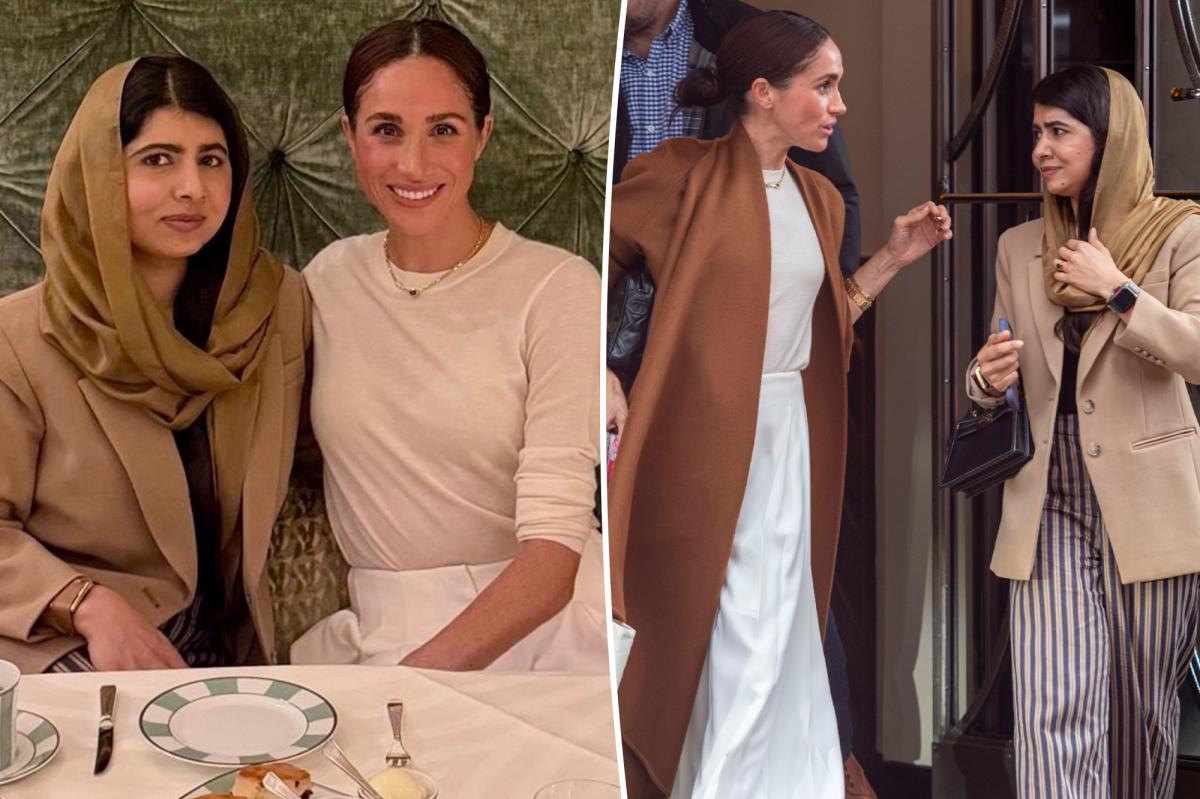
Meghan Markle and Malala Yousafzai did not simply meet for tea. They met for tea, scones, a serious conversation about girls’ education and the kind of polished philanthropic reveal that makes the phrase “girls’ night out” sound like it has a communications team.
The Duchess of Sussex disclosed Sunday that her low-key London get-together with Yousafzai at Claridge’s was tied to a new collaboration between her lifestyle brand, As Ever, and the Malala Fund. Markle said 100% of net proceeds from the company’s jams and teas would support the organization’s work to help ensure that girls have access to free, safe and quality education.
“When we support the girls of today, we empower the women of tomorrow. Access to education is the key to unlocking this,” Markle wrote in an Instagram post featuring two photos of the pair enjoying tea together. The caption had the unmistakable energy of a soft launch, except the product being introduced was not a new romance or a limited-edition handbag. It was a philanthropic partnership with one of the most recognizable education advocates on the planet.
And yes, there was still jam.
The tea date that quietly became a headline
Markle and Yousafzai were spotted leaving the Mayfair hotel on Oct. 8, with an eagle-eyed observer capturing them seated across from each other in conversation. The outing was initially just a discreet celebrity sighting: two globally known women, one extremely famous hotel and enough tea-service glamour to make a normal catch-up look like a diplomatic summit.
Then Markle explained the reason for the meeting. “Tea for Two has never felt so good,” she wrote, directing followers to As Ever’s website.
It is a neat bit of social storytelling. First comes the mysterious public sighting. Then comes the elegant photo carousel. Then the purpose: a partnership that connects Markle’s consumer-facing brand to Yousafzai’s long-running education campaign. The whole thing moves from “Who are they meeting?” to “Oh, that’s what this was about” without ever losing the celebrity sparkle.
Yousafzai, 29, is not a random high-profile name attached to a lifestyle drop. The Nobel Peace Prize winner has spent years advocating for girls’ education through the Malala Fund, which works to remove barriers preventing girls from attending school. Markle’s announcement places As Ever’s latest offering inside that larger mission, rather than presenting the collaboration as a standard celebrity product moment.
They already had a shared history
This was not the first time Markle and Yousafzai had connected. The two previously appeared in a virtual conversation hosted by the Malala Fund in 2020, discussing the International Day of the Girl, obstacles to girls’ education and the impact of the COVID-19 pandemic on students.
After that conversation, Yousafzai said the pair were “on the same page” about the importance of girls having access to education, adding that “when girls have access to education, everyone wins.” Their London meeting gives that earlier conversation a more tangible follow-up — and gives Markle’s brand a cause with a clear emotional and cultural center.
There is also something deliciously specific about the setting. Claridge’s is not a beige hotel conference room. It is old-school Mayfair polish: tea trays, marble, famous guests and the fantasy that any casual afternoon could become a major society item. Markle and Yousafzai leaving together offered exactly the sort of visual that travels quickly online, even before anyone knew the business reason behind it.
In other words, the location did some of the storytelling for them. This was not a warehouse launch or a stiff charity panel. It was two women having what looked like an intimate conversation in one of London’s most recognizable hotels — then revealing that the conversation had a much bigger destination.
Meghan and Harry are back in the London conversation
The timing is doing plenty of work, too. According to Page Six, Markle and Prince Harry have returned to the UK with their children, Prince Archie and Princess Lilibet, after moving back at the end of August. The couple’s relocation has reportedly been connected to wanting to be closer to Harry’s father, King Charles III, who is battling cancer, and to helping their children build relationships with family.
Their return has been notably quieter than the couple’s most headline-heavy years. They have only been seen a few times, including a reported lunch outing to a local pub. That scarcity makes each public appearance feel more loaded. A regular walk or restaurant visit becomes a sighting. A dinner with a Nobel laureate becomes an international social moment. A jam announcement becomes part of the ongoing question of what Meghan and Harry’s life in Britain looks like now.
The London setting also gives Markle’s public image a slightly different backdrop. Her relationship with the UK has been complicated, heavily scrutinized and impossible to separate from the royal family drama that followed her marriage to Harry. But this appearance was not about a palace balcony, a royal event or a family photograph. It was Markle on her own terms, in a luxury London institution, alongside a globally respected activist, discussing a cause she has supported publicly before.
That distinction matters. The Duchess of Sussex is still operating in the orbit of the royal story, but she is not waiting for the royal story to provide the occasion.
The jam is the point — and also not quite the point
As Ever has always occupied an interesting space in Markle’s celebrity ecosystem. It is lifestyle branding with the intimacy of a personal recommendation: pantry goods, pretty packaging and the promise that your kitchen might feel a little more California-meets-Cotswolds if you buy the right jar.
This partnership gives the line something beyond aspirational domesticity. The products are still the products, but the purchase is being linked directly to the Malala Fund’s work. That allows Markle to keep the polished, highly shareable world of As Ever while attaching it to a mission that is larger, more serious and instantly legible.
It is also the rare celebrity collaboration where the most interesting detail is not whether the packaging is cute. It is the choreography: a private-looking meeting, a familiar London setting, a delayed explanation and a cause with global stakes. Fans who had been curious about the Claridge’s sighting got their answer, and the answer came wrapped in tea, scones and a very carefully placed jam jar.
Meghan and Malala’s afternoon was not a scandal, a feud or a romantic hard launch. It was something increasingly valuable in the celebrity news cycle: a public moment with enough glamour to become gossip, enough history to feel meaningful and just enough mystery to make everyone click before the tea had even cooled.
Sydney Sweeney’s New Novig Ad Says the Quiet Part Out Loud — in White Underwear
After backlash over her sports-betting campaign, the Euphoria star is doubling down with footballs, a pair of logo panties and one extremely unapologetic punchline.
Sydney Sweeney has looked at the backlash, considered the discourse, and apparently decided it needed better lighting.
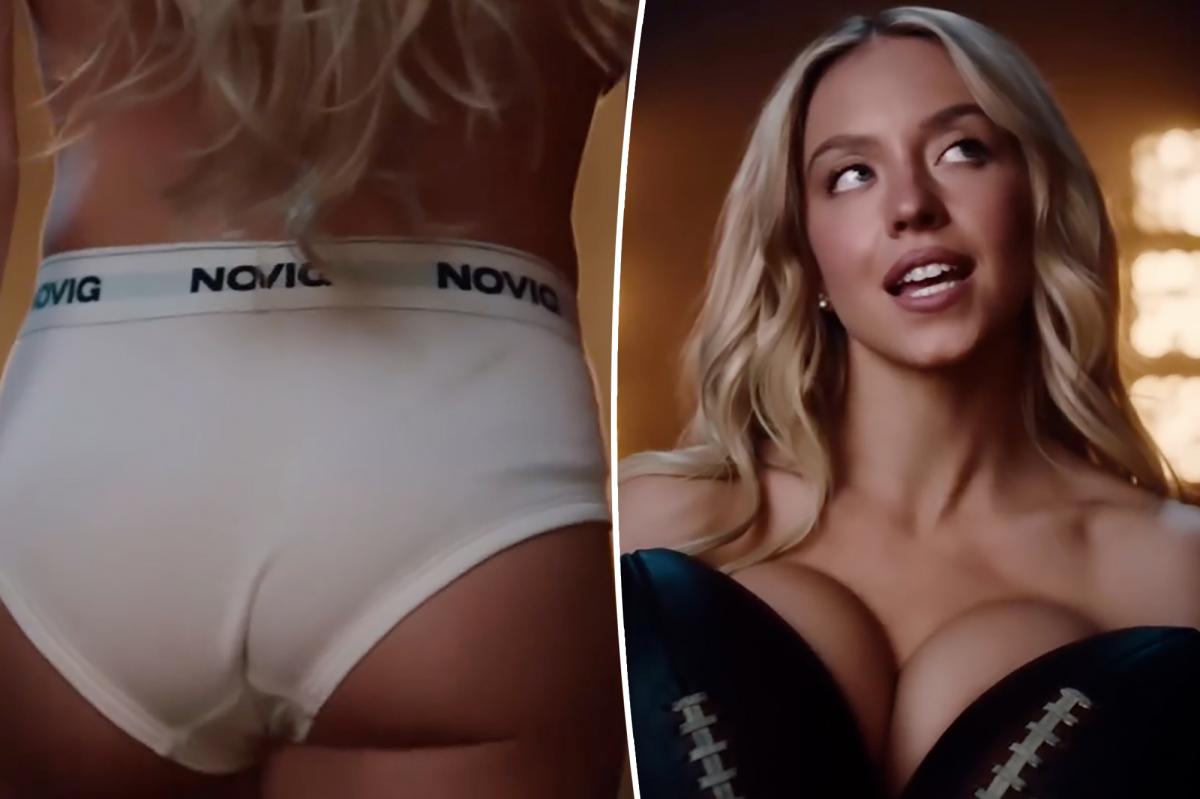
The actress is back in another Novig ad, and this time the campaign is making absolutely no attempt to sneak past the conversation. Sweeney appears wearing only white underwear emblazoned with the sports-prediction app’s logo, while two footballs do the strategic covering that television standards departments have been training for since the dawn of broadcast television.
“There are grown men making spreadsheets to bet on what color underwear I’m wearing,” she says in the ad. “I mean, I’m flattered?”
It is not a retreat. It is a sequel with better punchlines.
The backlash got a wardrobe change
Novig’s first Sweeney campaign drew criticism last month for using the actress’s appearance to sell a sports-prediction and trading app. Critics argued that the ads sexualized female athletes and reduced women’s relationship with sports to physical appearance, rather than competition, skill or fandom.
That criticism did not send Sweeney quietly into a brand-safe beige corner. Instead, she posted even more stripped-down images from the campaign on Instagram, then shared images of athletes including Serena Williams, Ronda Rousey, Karl-Anthony Towns and Jason Kelce who had appeared without clothing for ESPN’s Body Issue.
The message, as presented by the campaign, was clear enough: nudity in sports imagery is not automatically unserious or insulting. The complication is that the Novig ads are not editorial portraits of athletes. They are selling a betting product, and the question hanging over the whole thing is whether the campaign is celebrating sports culture, borrowing its visual language, or simply using Sweeney’s star power to get people to stop scrolling.
Now the new spot has stepped directly into that argument, wearing nothing but branded underwear and a pair of props with laces.
“Novig is… just sports”
The ad’s joke is built around the strange specificity of sports-betting culture. Sweeney says there are people tracking the color of her underwear, someone “sitting in a bathroom stall and betting their 401k on a w–re,” and then contrasts that with people who trade on sports.
“Novig is… just sports,” she concludes.
That line is doing a lot of work. It is part defense, part provocation and part wink at the idea that the internet will turn literally anything into a market. Sweeney is not pretending the campaign has been misunderstood. She is acknowledging exactly why people are talking about it and then making the conversation part of the advertisement.
It is a classic attention-economy move: if the original ad was accused of making women’s sports about men’s gaze, the follow-up makes the gaze itself the punchline. Whether that feels clever or calculated probably depends on how much patience one has for a celebrity appearing in branded underwear while explaining prediction markets.
Either way, the campaign has achieved the one thing advertising departments crave and most brand launches never get: a second act. The first ad created backlash. The second ad is about the backlash. Somewhere, a marketing executive is whispering “engagement” into a crystal champagne flute.
Fans are in on the bit — and Sharon Stone is not
According to Page Six, the new spot received plenty of supportive comments from fans, including one predicting that Sweeney was about to “piss them off again.” Another commenter wrote, “I love this! And I love all the Jealous Girls, yelling when they see another new Spot,” while a third joked, “I think Sydney loves being hated.”
That reaction captures Sweeney’s current celebrity weather. She has become unusually good at turning the internet’s arguments into another piece of the look. The campaign’s provocations are not being presented as unfortunate side effects; they are part of the personality. Sweeney, 29, is playing the role of the woman who knows exactly what everyone is going to say and has already prepared the next outfit.
But not everyone sees the joke as harmless. Her Euphoria co-star Sharon Stone recently criticized the ads, telling People that Sweeney needed to take responsibility for her actions. Stone said her own role was to support women who had become champions in women’s sports, adding, “We can’t denigrate women’s sports to get men’s attention so they can gamble.”
That is the serious question underneath all the footballs: Is the ad reclaiming a familiar kind of sexualized imagery, or is it simply repackaging that imagery for a male-heavy betting audience? Sweeney’s response has been to lean into the visual language even harder. Stone’s response is that the visual language is the problem.
Both positions are now part of the campaign, which is probably the most modern thing about it.
The Sydney Sweeney strategy: never let the internet finish the sentence
Sweeney’s recent public image has been shaped by a talent for making herself impossible to discuss in only one register. She can be the glamorous movie star, the Euphoria alum, the face of a provocative campaign and the person posting a response before the criticism has fully cooled down.
The Novig ads are especially combustible because they borrow from several familiar celebrity ingredients at once: lingerie, sports, gambling, internet thirst and the carefully staged illusion of spontaneity. The white panties are not just underwear; they are merchandise. The footballs are not just footballs; they are a visual gag. The line about grown men making spreadsheets is not just dialogue; it is a direct address to the people who have already turned the campaign into a group chat topic.
And Sweeney understands that a defensive celebrity statement would have killed the mood. There is no solemn paragraph about being misunderstood here. There is no attempt to make the ad sound educational. There is just a smirk, a pair of footballs and the suggestion that if the internet insists on making her body part of the conversation, she can at least write the next line.
That does not settle the argument over the campaign’s relationship to women’s sports. It does explain why the campaign keeps moving. Every complaint gives the next ad a new opening. Every joke becomes another caption. Every round of outrage supplies the brand with a fresh excuse to put Sweeney back in front of the camera.
So yes, Sydney Sweeney has doubled down. The new Novig ad is not asking anyone to stop looking. It is asking whether they can keep up.