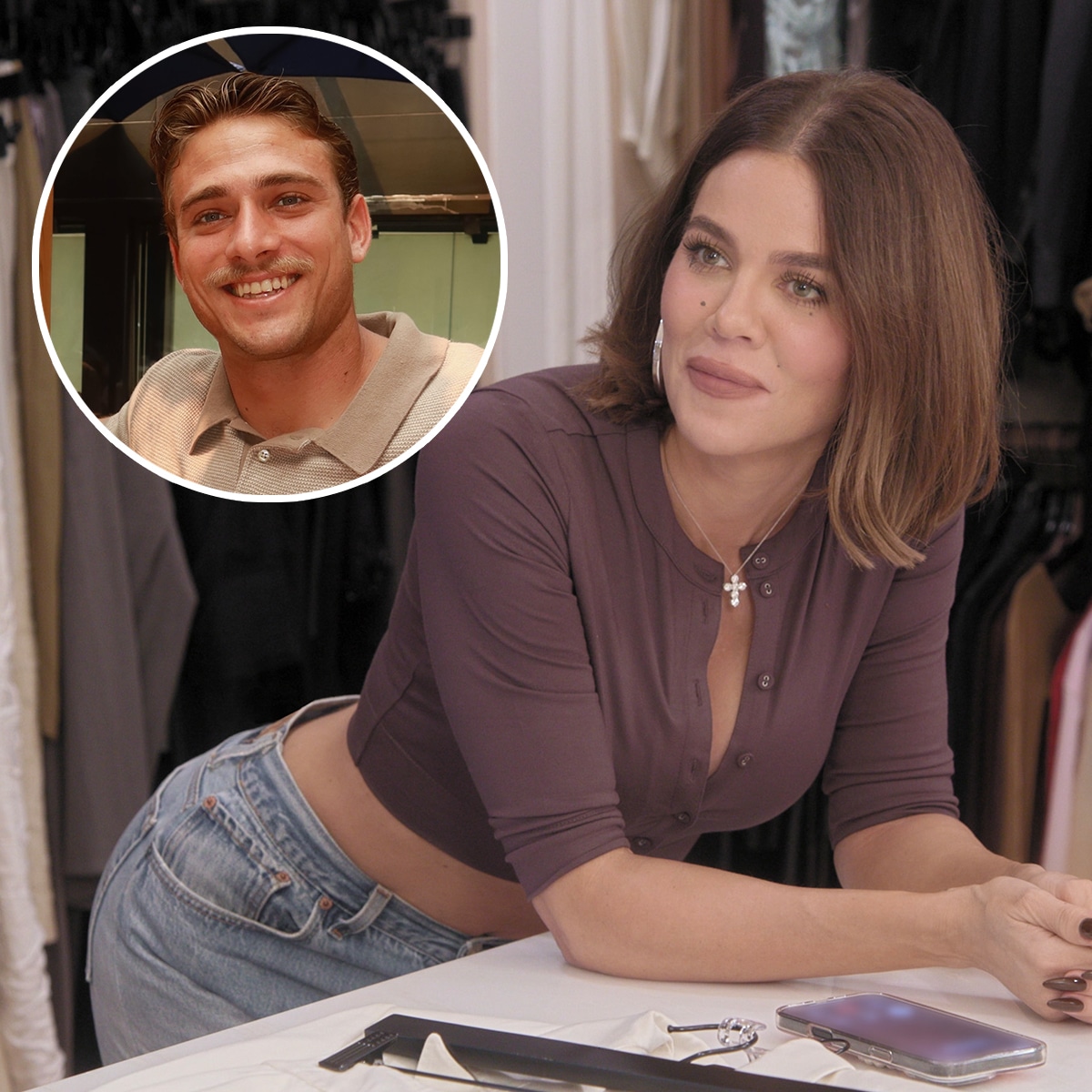
Khloé Kardashian Roasted Her Flirty Teacher Fling on TV. He Came Prepared.
A year after Khloé’s sweet Instagram comment turned one high school teacher into a Kardashian-adjacent headline, Jacob Myers-Norys answered The Kardashians with coffee, deadpan silence and one extremely fair point.
There are two kinds of people who get publicly dragged by a Kardashian: the ones who disappear into the algorithm, and the ones who turn the humiliation into content.
Jacob Myers-Norys, a high school teacher whose Instagram flirtation with Khloé Kardashian briefly became one of the internet’s favorite celebrity side plots, has chosen the second path. Nearly a year after Khloé left a playful comment under one of his posts, the exchange resurfaced on The Kardashians—and Jacob responded with the calm, exhausted dignity of a man who has been roasted by teenagers for a living.
In other words: he may not have gotten the date, but he absolutely got the episode.
The comment that escaped into the Kardashian industrial complex
The original moment was almost aggressively wholesome. Jacob had highlighted some of his best qualities on Instagram and captioned the post with a wish that a woman would ask him how his day was. Khloé, apparently interpreting the invitation literally, commented: “How was your day?”
That was it. No candlelit dinner. No secret yacht. No dramatic soft launch from a restaurant booth. Just a famous woman responding to a man’s extremely online suggestion with the exact question he had requested.
But the internet does not believe in leaving a harmless flirtation at harmless. The interaction took off, and Khloé later described it as going “like wildfire.” What looked to her like a cute, innocent exchange apparently looked to Jacob like a door opening. According to Khloé, he followed up repeatedly, sending messages that included “Just shooting my shot once again” and saying he would love to meet and talk about how her day was.
By the time the moment landed in the season eight premiere of The Kardashians, it had transformed from a tiny Instagram exchange into a full confessional segment. This is the Kardashian gift: taking a digital crumb and giving it a wardrobe, a soundtrack and a subplot.
Khloé brought the screenshots. Jacob brought the mug.
Khloé’s version of events was that the comment had been “innocent,” not an invitation to start planning a future together. “Do I think I’m gonna go and marry this young man? Absolutely not,” she said, setting the boundaries with the gentle bluntness of someone who knows a sentence is about to become a meme.
She also said she had around 15 unanswered direct messages from Jacob, then read several of them aloud on camera. The tone was less “forbidden romance” and more “one person thought this was a conversation, while the other person realized it was a comment section.”
Then came the name joke. Khloé pointed out that Jacob’s social handle uses “Yacob” and told him to “get a J.” It was a small tease, but on a Kardashian show, small teases tend to arrive with production polish and a built-in audience of millions.
Jacob’s answer, posted to TikTok on Oct. 9, was beautifully low-effort in the most high-performing way possible. He drank from a coffee mug, stared into the camera and let a sarcastic audio clip do the emotional labor. The text over the video read: “When they try to roast and embarrass me on The Kardashians, but I get roasted by high schoolers every single day.”
That is not the response of a man spiraling over a celebrity rejection. That is the response of a man who understands his lane, knows his audience and has clearly survived a staff meeting with teenagers before 8 a.m.
His caption made the victory lap even cleaner: “Hey, at least I can say I made it onto The Kardashians.” Correct. The Kardashian cinematic universe has room for exes, billionaires, professional athletes, musicians, beauty moguls and—at least briefly—a teacher with a flirtatious caption. Jacob got his cameo and managed to keep his sense of humor intact.
The flirtation was never really about the date
What makes this little saga stick is the mismatch in scale. For Khloé, it was a passing comment she described as wholesome. For Jacob, it became an unexpected brush with one of reality television’s most recognizable families. For the internet, it was a perfect miniature of modern celebrity: a public figure says something lightly playful, a stranger answers with enthusiasm, and suddenly everyone is discussing the etiquette of a direct message that was never going to become a relationship.
Khloé’s public romantic history also gives the scene a little extra context. She has spent years navigating the particularly exhausting celebrity phenomenon in which any interaction with a man can be treated as a possible reconciliation, soft launch or emergency relationship update. Her on-and-off history with Tristan Thompson has repeatedly pulled her into speculation she has called “tiring,” even as the two continue co-parenting their children.
So when Khloé insists that a comment was only a comment, she is speaking from an ecosystem where casual warmth can instantly be upgraded into a storyline. Her joke about Jacob’s messages was sharp, but the larger point was familiar: an online moment can feel much more consequential once thousands of people decide it means something.
Jacob, meanwhile, seems to have understood the assignment better than most people who wander into Kardashian orbit. He didn’t pretend the exchange was a great romance. He didn’t act wounded by the punchline. He simply made the joke about his own job, where getting roasted is apparently part of the daily curriculum, and accepted the most realistic consolation prize available: screen time.
There is something almost charming about how little this story needs to become. No breakup announcement. No suspicious vacation. No matching tattoos. No blurry nightclub sighting being analyzed by a panel of internet detectives. Just a flirty Instagram comment, a batch of unanswered messages, a televised roast and a teacher with a coffee mug refusing to look devastated on command.
Khloé may have wanted everyone to calm down, but Jacob’s TikTok gave the moment a second life. The original interaction belonged to the comment section. The sequel belongs to him.
And honestly, “I made it onto The Kardashians” is a better ending than most people get from shooting their shot.
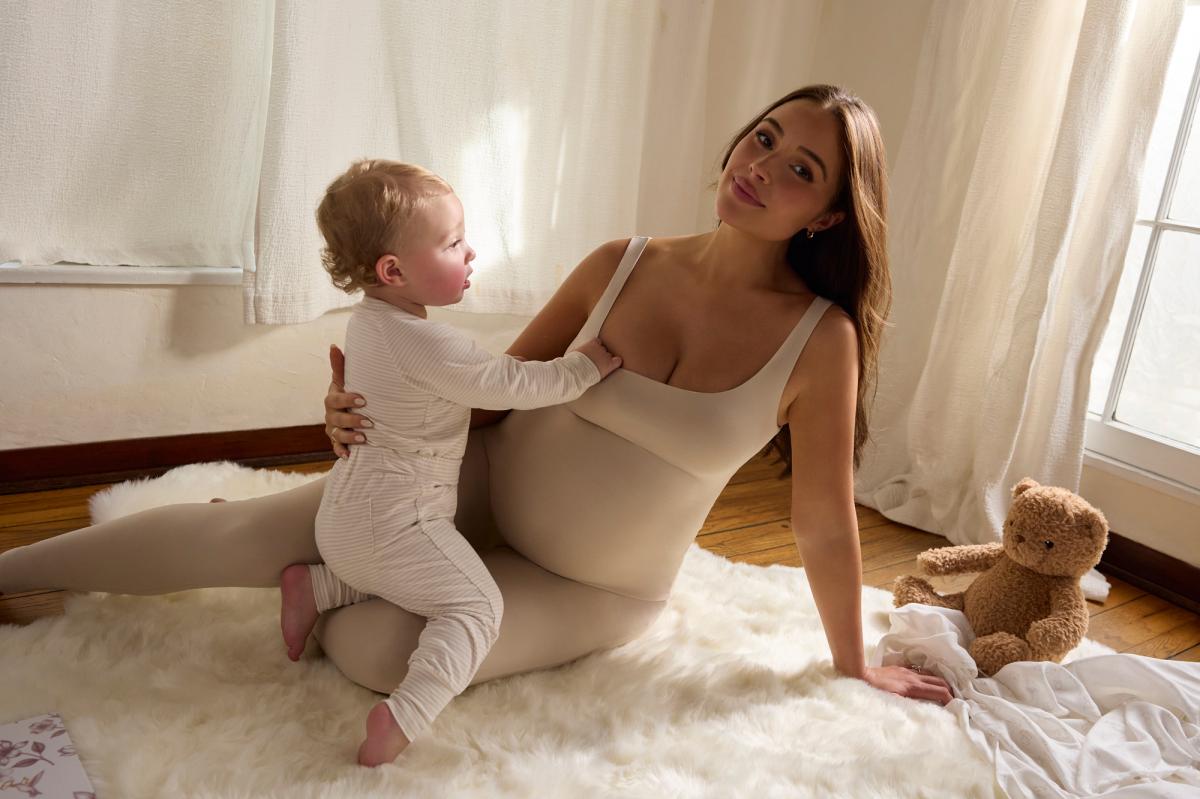
Olivia Culpo Is Bringing the Flameless Candles Back to the Delivery Room
The model’s famously overpacked hospital bag is getting a sequel — because apparently childbirth still needs mood lighting, comfort objects and a little WAG-level production design.
Olivia Culpo is about to give birth again, and she is refusing to leave the flameless candles behind.
The model, 34, is expecting her second child with husband Christian McCaffrey in the next few weeks, and she has already made one crucial decision: the hospital bag that went viral during her first pregnancy is coming back in full. Same comfort-first philosophy. Same over-the-top packing energy. Same tiny battery-powered flickering flames, apparently still ready for their close-up.
“I don’t think I’ll change too much because I actually used everything I brought last time,” Culpo told Page Six Style. “Yes, this means I’ll be bringing back the flameless flickering candles!”
Some people bring a phone charger. Olivia Culpo brings ambiance.
The hospital bag has entered its sequel era
Culpo’s first hospital bag became a minor pop-culture event last year because it looked less like a last-minute grab before labor and more like a luxury wellness retreat with a birth plan. Among the essentials were flameless candles, which sparked controversy and gave the internet one of those irresistible celebrity debates: Is this wildly unnecessary, or is everyone else simply under-accessorizing childbirth?
Culpo’s answer is clear. She used the things she packed, loved having them there and sees no reason to reinvent the experience just because there is another baby on the way. “I’m such a creature of comfort,” she said, adding that she “really did love having every single thing” she brought for her last delivery.
It is a very Olivia Culpo approach to maternity: practical in theory, highly curated in execution. There is no shame in wanting comfort during labor, but Culpo’s version comes with a visual identity. Even the hospital bag has a mood board.
And, honestly, the return of the candles is the kind of detail celebrity pregnancy coverage was made for. It is specific, slightly absurd, easy to picture and just divisive enough to make people text a friend. The internet can debate epidurals, birth plans and hospital snacks forever. The real question is whether the delivery room needs the lighting to be “cozy.”
Her maternity wardrobe is also refusing to phone it in
Culpo is not treating her second pregnancy as a reason to disappear into oversized sweats, either. She has teamed up with Bumpsuit on a collection of maternity and postpartum pieces that includes a unitard, a long-sleeved catsuit and a strapless gown.
Her philosophy is less “hide the bump” and more “dress the bump like it has somewhere to be.” Culpo said she has always loved embracing her pregnancy and wants her clothes to reflect pride in what her body can do. The pieces are designed to be comfortable and easy while still making the wearer feel pulled together, she explained.
That is the eternal maternity-style assignment: remain comfortable, retain a personality and somehow look like you meant to leave the house. Culpo’s answer is sleek, body-skimming and polished enough to suggest that pregnancy dressing does not have to mean surrendering your entire closet to elastic waistbands.
She also told Page Six Style that she has picked up “a few more tips and tricks” this time around, though her overall style has stayed consistent across both pregnancies. Translation: the second baby gets experience, but not necessarily a less coordinated wardrobe.
Welcome to the Culpo-McCaffrey family brand
Culpo’s pregnancy style push arrives alongside Picolette by Olivia Culpo, her Target-exclusive baby collection inspired by her 1-year-old daughter, Colette, whom she welcomed with McCaffrey last July.
The line includes blankets, toys, floral details and plenty of football-themed items — a nod to McCaffrey’s NFL career. There is even merchandise inspired by the family’s toy Goldendoodle, Oliver Sprinkles, a name so aggressively adorable it sounds like it was generated by a celebrity pet focus group.
Culpo said the collection grew out of her own experience as a mother and the things she wanted for her children. She also acknowledged that working while pregnant and raising a toddler “can definitely be a lot,” though she sees the brand and motherhood as closely connected.
That is the larger Culpo-McCaffrey picture right now: a model with a maternity line, a football star husband, a toddler, a dog with a better name than most human influencers and a hospital bag that has already achieved its own little celebrity status. The family’s public image is polished, but the details are just eccentric enough to keep it from feeling like one long sponsored beige nursery reveal.
The candle discourse is not over — and Culpo knows it
The appeal of Culpo’s hospital bag is not that it is relatable in the traditional sense. Most people are not packing a delivery-room atmosphere kit, and most hospitals are not being transformed into a boutique hotel suite for the arrival of Baby No. 2.
The appeal is that she is unapologetically specific. She knows what makes her feel comfortable, she has tested the system once and she is bringing the successful formula back. In a culture that treats every celebrity pregnancy as a new aesthetic era, Culpo’s commitment to the same flameless candles is almost refreshingly un-chaotic.
There will be no dramatic hospital-bag rebrand. No minimalist reset. No “this time I’m doing things completely differently” press tour. Just a pregnant woman who liked her little fake flames and intends to enjoy them again.
As Culpo prepares to become a mother of two, she is also selling the fantasy that the transition can include softness, style and a few deliberately chosen comforts. The fantasy may come with a $145 unitard, a $225 satin gown and battery-operated candles, but at least it knows exactly what it is.
Baby No. 2 has not arrived yet, but the nursery-to-hospital pipeline is already fully branded. Somewhere, a flameless candle is flickering bravely in anticipation.
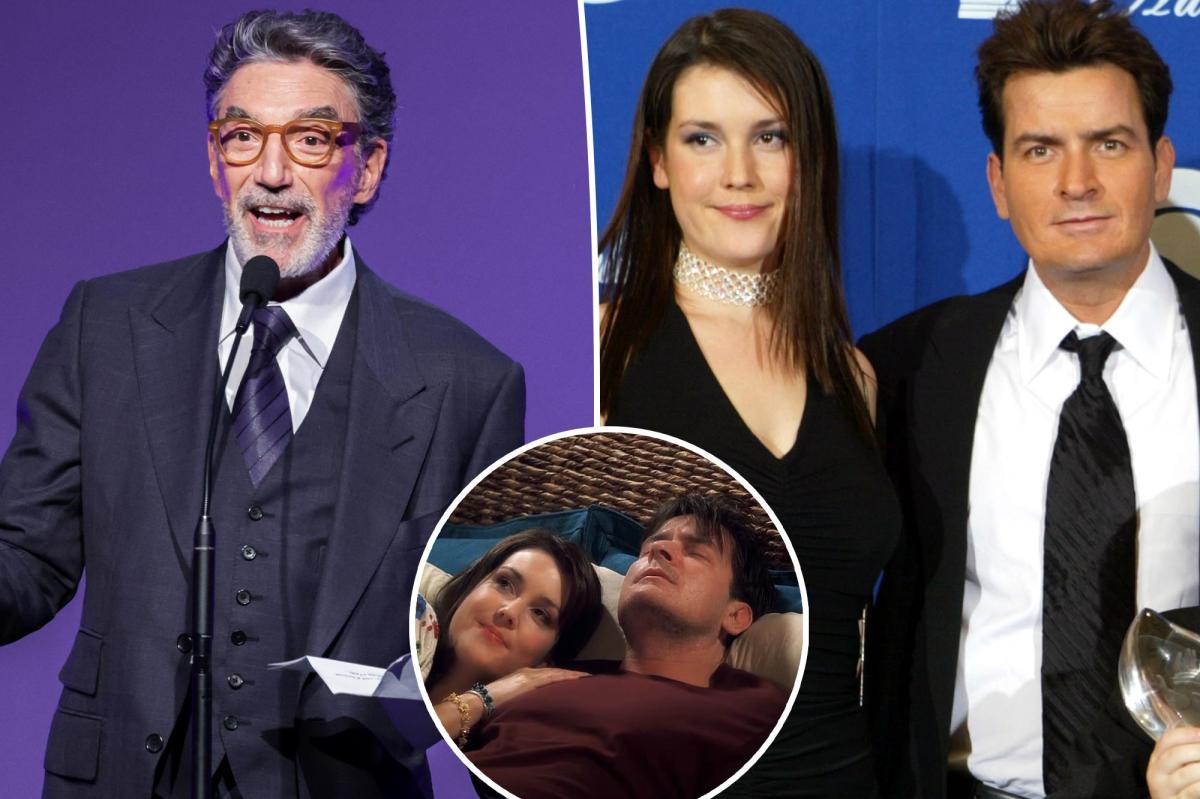
The ‘Two and a Half Men’ Finale Was Apparently a Full-Scale Charlie Sheen Stress Test
Chuck Lorre’s new memoir revisits the last days of the sitcom’s original run — and the moment Melanie Lynskey was reportedly left “terrified” on set.
Before celebrity chaos became a 24-hour livestream, there was Charlie Sheen on Two and a Half Men: a sitcom star, a ratings machine and, increasingly, the human equivalent of a blinking warning light.
Now Chuck Lorre, the show’s creator, is reopening that particularly glossy chapter of television history with a claim that lands somewhere between Hollywood memoir and behind-the-scenes horror story. In an excerpt from his upcoming book Sitcom, featured by Vanity Fair and reported by Page Six, Lorre says Melanie Lynskey became “terrified” while filming the last episode of the show’s original run with Sheen.
The scene was meant to be business as usual: Sheen playing womanizing, perpetually intoxicated bachelor Charlie Harper, Lynskey playing his neighbor Rose, the cheerfully unhinged romantic presence who had spent years orbiting his life. Instead, Lorre writes that Sheen could not remember his lines and had to use the furniture to stay upright.
“Melanie was terrified,” Lorre wrote, adding that it was clear to everyone that Sheen was in trouble. He says he ultimately had no choice but to shut down the show.
The sitcom machine finally hit the panic button
That image is jarring precisely because Two and a Half Men was built to make dysfunction look effortless. For eight seasons, Sheen’s Charlie Harper was allowed to turn hangovers, bad decisions and serial romantic misconduct into a dependable punchline. The series’ engine was repetition: Charlie misbehaves, Alan suffers, the women react, the audience laughs, and the furniture — presumably — stays where it is.
But Lorre’s account describes the moment when the performance apparently stopped reading as a comic persona and started alarming the people around him. According to the memoir excerpt, the cast and crew spent the show’s final season in a “constant state of anxiety,” filming Friday night episodes and worrying about what might happen before Sheen returned to work the following Tuesday.
There was an especially grim rhythm to the production calendar. Lorre wrote that every two weeks the cast had a full week off, creating a ten-day stretch in which, as he put it, Sheen’s life and the lives of those around him felt at risk. The contrast is almost absurdly Hollywood: a hit sitcom with a four-day workweek, and an entire production quietly counting the days until its leading man came back intact.
Reps for Sheen and Lynskey did not immediately respond to Page Six’s requests for comment. Lorre’s description is his account of what happened on set, presented in a memoir arriving after the fact. Still, the detail about Lynskey is the kind of sentence that instantly changes how viewers remember the show’s old rhythm. Rose was supposed to be the unpredictable one. Suddenly, the unpredictable force in the room was the man she was chasing.
Sheen’s public implosion became television history
Sheen’s exit from Two and a Half Men in 2011 was not a normal sitcom recasting. It was a pop-culture detonation. The actor had become a tabloid fixture amid reports of erratic public behavior and substance abuse, including the widely publicized 2010 incident at New York’s Plaza Hotel. Then came the spectacular public collapse of his relationship with Lorre, complete with insults aimed at the producer and Sheen’s now-famous “winning” era.
The show was put on hiatus and never returned with Sheen. Ashton Kutcher eventually joined the cast, taking over the series after the original star’s departure, but the chemistry — and the cultural weather — had changed. The original version of Two and a Half Men had been sold as a polished network comedy about a messy man. By the end, viewers were watching a real-life mess leak through the sitcom’s walls.
That is why Lorre’s memoir timing feels so potent. This is not merely another story about a difficult production or a famous actor missing his marks. It is a return to the exact point where the early-2010s celebrity machine stopped being able to package Sheen’s behavior as just another chapter in the Charlie Harper brand.
The show had already made his lifestyle part of the product. Sheen’s off-screen spiral made the joke feel less like fiction and more like a troubling extension of the marketing strategy. The line between character and star, always blurry in celebrity culture, practically disappeared.
And then, somehow, came the reunion
The strangest twist is that Lorre and Sheen eventually found their way back to the same professional universe. In a 2023 interview with Variety, Lorre said he had repaired the relationship and cast Sheen in his Max comedy series Bookie.
Lorre said he was nervous when they began speaking again, but that the friendship they once had returned almost immediately. He described the reconciliation as healing and said Sheen was willing to make fun of himself. At the table read, Lorre recalled, the two men hugged.
That reunion gives the memoir excerpt an extra layer of uncomfortable nostalgia. Lorre is not writing from the position of someone who simply cut Sheen out of his life and moved on. He worked with him for 170 episodes, later welcomed him back, and has publicly acknowledged both the damage and the affection threaded through their history.
It is a very modern celebrity contradiction: someone can be a beloved collaborator, a ratings phenomenon, a source of genuine fear and, years later, a person you decide is worth trying to understand again. Hollywood loves a comeback, but it loves a complicated comeback even more.
For Lynskey, the story lands differently. Her Rose was one of the show’s most memorable recurring characters, a deceptively sunny oddball whose fixation on Charlie made her part of the sitcom’s comic architecture. Lorre’s account places her in a scene where the joke apparently evaporated — and where the actor playing the eccentric neighbor was the person reacting like the only adult in the room.
Years after the show’s finale, that may be the detail people text each other: not that Charlie Harper was chaotic — everyone knew that — but that the production eventually reached a point where even the sitcom’s scripted chaos could no longer contain the real thing.