
Kris Jenner Has One Message for Kim Kardashian’s Biographer: “He Can F**k Off”
A single phrase in Citizen Kim has turned The Kardashians into a family therapy session, with Kris defending her legacy, Kim backing her up and Kourtney weighing in.
Kris Jenner does not do casual disagreement. She does not send a polite email, sleep on it or quietly let a questionable sentence drift into the cultural atmosphere. When a biographer suggested there might be childhood trauma somewhere in the Kardashian family story, Kris did what Kris does best: she grabbed the narrative by the collar and told it exactly where it could go.
“He can f**k off!” she told Kim Kardashian on a new episode of The Kardashians, according to Perez Hilton, after learning that Jonathan Van Meter’s authorized biography, Citizen Kim: The Woman Who Created The Future, includes the idea that Kim may have some childhood trauma she does not fully recognize.
That is not a small objection. That is Kris Jenner treating three loaded words like an attempted hostile takeover of the family brand.
The sentence that sent Kris over the edge
Van Meter spent years following Kim and interviewing members of her family and wider circle for the book. His portrait apparently leaves room for a familiar psychological reading: that the person who built an empire from family fame, personal reinvention and relentless forward motion might also have unresolved pain from growing up.
Kris wants no part of that interpretation. In the episode, she tells Kim to make sure the book does not say anything about her childhood trauma because, in Kris’s view, there was none. Kim agrees with her mother, while Van Meter, as described in the episode, believes Kim simply does not see it.
That disagreement is doing a lot of work. It is not just about whether one family had a difficult childhood. It is about who gets to define the family’s past when the family has spent decades turning that past into public mythology.
Kris’s version is direct: she worked hard, she raised her children and she did not create a home filled with some hidden “deep, dark trauma.” Her joke about the closure of Toys “R” Us is classic Kardashian tone management: take an emotionally charged subject, make it funny, and refuse to let anyone else set the mood.
But beneath the punchline is a very serious concern for Kris. “My legacy is my children,” she says in the episode. That makes the biographer’s interpretation feel, to her, less like literary analysis and more like an accusation aimed at the one thing she considers her life’s work.
Kim says there was nothing to unpack
Kim’s agreement matters because this is her childhood being interpreted. She is not being presented as a reluctant subject fighting an uncomfortable biography; she appears in the scene backing her mother’s position that there was no trauma to explain.
That dynamic is quintessential Kardashian television. A potentially thorny family disagreement arrives prepackaged as a conversation between mother and daughter, but the emotional stakes are bigger than the scene’s neat conclusion. Kim’s public identity has always been built around control: control of her image, her businesses, her legal ambitions, her family role and, increasingly, the story of how she became the person she is.
A biographer’s job is to look for patterns. A Kardashian’s job, at least in the family’s own storytelling economy, is to decide which patterns get turned into a storyline. Those goals were always going to collide eventually.
Van Meter’s interpretation does not have to be accepted by Kim or Kris to become dramatically interesting. In fact, the refusal is the story. The family has made vulnerability a highly managed form of entertainment, but Kris is drawing a line around the word “trauma” with both hands. She is willing to discuss ambition, divorce, fame, pressure and the work of raising famous children. She is not willing to have her motherhood reframed through an interpretation she says is offensive.
Kourtney, unexpectedly, is on Team Kris
Then comes the family member viewers might expect to complicate everything: Kourtney Kardashian.
According to Perez Hilton, Kourtney tells producers there was no “deep, dark trauma” in the family’s childhood and says she understands why Kris is angry. That is notable because Kourtney has often occupied the role of Kardashian family truth-teller, the sibling most willing to criticize the machine from inside it.
If Kourtney had challenged Kris, the scene would have become another chapter in the family’s long-running arguments about control, emotional boundaries and the costs of being raised in public. Instead, she backs the matriarch. The family may disagree about almost everything, but on this particular piece of its origin story, the sisters appear aligned.
It also gives Kris’s reaction a different texture. She is not standing alone against an entire family that sees the past differently. Kim agrees with her. Kourtney agrees with her. The pushback is coming from the biographer’s reading, not from an internal revolt.
Still, the intensity of Kris’s response guarantees that the phrase will follow the book. The more firmly she rejects the idea, the more fascinating the collision becomes between the family’s official self-understanding and an outsider’s attempt to interpret it.
The Kardashian family story is now a contested text
Citizen Kim arrives in an unusual position. It is an authorized biography, which means the family opened the door to the project, but authorization does not mean every interpretation gets a family seal of approval. Kris’s reaction makes that distinction impossible to miss.
The Kardashians have spent years showing viewers how they want to be seen: fiercely loyal, relentlessly ambitious, occasionally chaotic and determined to turn every crisis into content. But a book can linger over the pauses that television moves past. It can ask what a family’s patterns mean, not simply how the family explains them.
That is where Kris gets protective. She is not merely defending a memory; she is defending authorship. If her legacy is her children, then the story of their childhood is part of the monument. She wants that story to say she worked hard and gave them a happy upbringing. Van Meter’s suggestion introduces ambiguity, and ambiguity is the one thing Kris Jenner has never allowed to remain unbranded for long.
Whether readers see Van Meter’s interpretation as insightful, overreaching or simply beside the point, Kris has already supplied the book’s most headline-ready line. The family may not agree that there was trauma to unpack, but they have now turned the question into must-see television.
Somewhere, a publishing team is watching the episode and realizing that the phrase “he can f**k off” is doing excellent work for book discovery. Kris Jenner may reject the premise, but she has made the conversation impossible to ignore.

Xochitl Gomez Got the Marvel Dream — Then Hollywood Put Her in a Holding Pattern
The America Chavez star says joining the MCU opened one enormous door and quietly closed several smaller ones. Now she’s talking indie movies, impossible schedules and a very intriguing Florence Pugh team-up.
Being cast in the Marvel Cinematic Universe is supposed to be the ultimate Hollywood cheat code. You get the superhero suit, the franchise-sized spotlight and a character who can theoretically reappear whenever the studio wants to make the timeline more complicated. Then, apparently, you discover the less glamorous part: everyone else starts treating you like a scheduling problem with cheekbones.
Xochitl Gomez, who played America Chavez in 2022’s Doctor Strange in the Multiverse of Madness, says the MCU boost came with an unexpected career asterisk. In a new interview with Bustle, the 20-year-old actress revealed that she had difficulty getting new roles after joining Marvel because casting teams worried she was “too expensive” or might be unavailable if the franchise called her back.
“Guys…” is the most emotionally accurate response to being told that one giant job has made every other job harder to get.
The superhero role that became a Hollywood warning label
Gomez described the experience as “a gift and a curse,” which is the kind of phrase that sounds polished until you remember what it actually means: the role gave her visibility, but it also made people hesitate. She said she wanted to do “cool indie movies” and asked for the chance to prove she could exist outside the Marvel machine.
That tension is familiar in franchise culture, where an actor can be famous enough to carry a character across multiple films but somehow not available enough to play a complicated human being in a smaller one. A superhero role is meant to expand the map. For Gomez, it sounds like the map briefly narrowed to one very expensive cinematic universe.
Her comments also land differently because America Chavez arrived with the kind of fan attention that can turn a young performer into a symbol before she has had room to become an actor in public. Gomez joined the MCU as a teenager, stepping into a major studio production alongside stars she had looked up to. She told Bustle that joining the franchise was “scary and frightening,” even as she recognized the privilege of working inside something so enormous.
That is the part of the superhero bargain nobody puts on the poster. The character may be young, but the expectations are not. Every line becomes canon-adjacent. Every choice gets assessed against years of comic-book history, fan theory and studio planning. And if you are 14 years old, you are somehow expected to understand the mythology, the machinery and the politics of a billion-dollar production while also figuring out how to play the scene.
America Chavez was already carrying the franchise pressure
Gomez said she was a huge fan of Doctor Strange and understood that viewers expected a particular version of the character. But that devotion made the job harder, not easier. She recalled pushing back when scripts changed, saying, “Wait, the character wouldn’t do something like that.”
It is a revealing detail because it makes the familiar Marvel script chaos feel less like a quirky production anecdote and more like an impossible assignment. The actor is asked to protect the character. The script is being revised around her. The studio has a larger plan. Fans have their own version of who America Chavez should be. And somewhere in the middle is a teenager trying to keep the character emotionally coherent.
Gomez framed the franchise’s appeal clearly: there is a “literal map” of what people expect, and audiences appreciate the work when an actor studies it. But that map can also become a maze. America is not just a girl learning to control her powers; she is a piece on a much larger board, which means her choices can be shaped by future films that may not even have been fully settled yet.
That may be why Gomez’s comments about America’s next chapter feel more interesting than a standard “I’d love to return” quote. She said the character was left at an intriguing point, having finally begun to understand her powers and what she is capable of. She also wants to see more of America’s friendship with Wong, played by Benedict Wong, describing the two as “buddy-buddy.”
The phrase is charmingly low-stakes for a character whose power set involves punching star-shaped portals through the multiverse. After all the cosmic danger, perhaps America deserves a buddy comedy.
Her Avengers answer was pure Marvel-era ambiguity
Asked whether she could appear in the upcoming Avengers: Doomsday, Gomez offered an answer that was both funny and deeply on-brand for the franchise: “Well, they own the rights to my image, so it’s possible.”
She appeared to be referring to the possibility of being included through existing footage from Doctor Strange in the Multiverse of Madness, rather than announcing a formal return. Which is to say: Marvel remains the one place where a non-answer can still sound like a portal has opened.
Gomez has also been rumored to return as America in Avengers: Secret Wars and a possible Young Avengers project, though neither has been confirmed. Her own answer leaves the door open without pretending she has the key. That is probably the only sensible way to discuss an MCU future when the studio’s plans can change, scripts can be rewritten and an actor’s image may apparently have a life of its own.
There is one collaboration Gomez is much more direct about wanting. She said she would love to share a scene with Florence Pugh, who plays Yelena Belova, even if she did not say anything. “I would love to watch her process,” Gomez said, praising Pugh’s choices as “solid, clear, and good.”
That is not just a fan-casting fantasy; it is a genuinely smart pairing. America’s wide-eyed multiverse energy next to Yelena’s dry, emotionally armored chaos could produce the exact kind of Marvel chemistry the franchise needs when the cosmic stakes start becoming background noise. One is still learning what her powers mean. The other has made weaponized deadpan into a survival skill. Put them in a room and let the scene breathe.
The next role may matter more than the next cameo
For now, Gomez is lending her voice to the animated The Cat in the Hat, which is in theaters. But the more compelling story is what she wants after the superhero breakthrough: not simply another enormous franchise appearance, but the freedom to take smaller, stranger, more actor-driven work.
Hollywood loves to call a young performer “the next big thing,” then gets nervous when that performer wants to be several things at once. Gomez’s frustration is that familiar contradiction in miniature. Marvel made her recognizable. It also made some people wonder whether she would be available, affordable or sufficiently detached from the next installment to risk hiring her for anything else.
Her America Chavez future may still involve another Avengers movie, a Young Avengers project or, in the most Marvel answer imaginable, a piece of recycled footage summoned from the multiverse. But the role Gomez seems most eager to play now is not “the next superhero.” It is simply an actor with options.
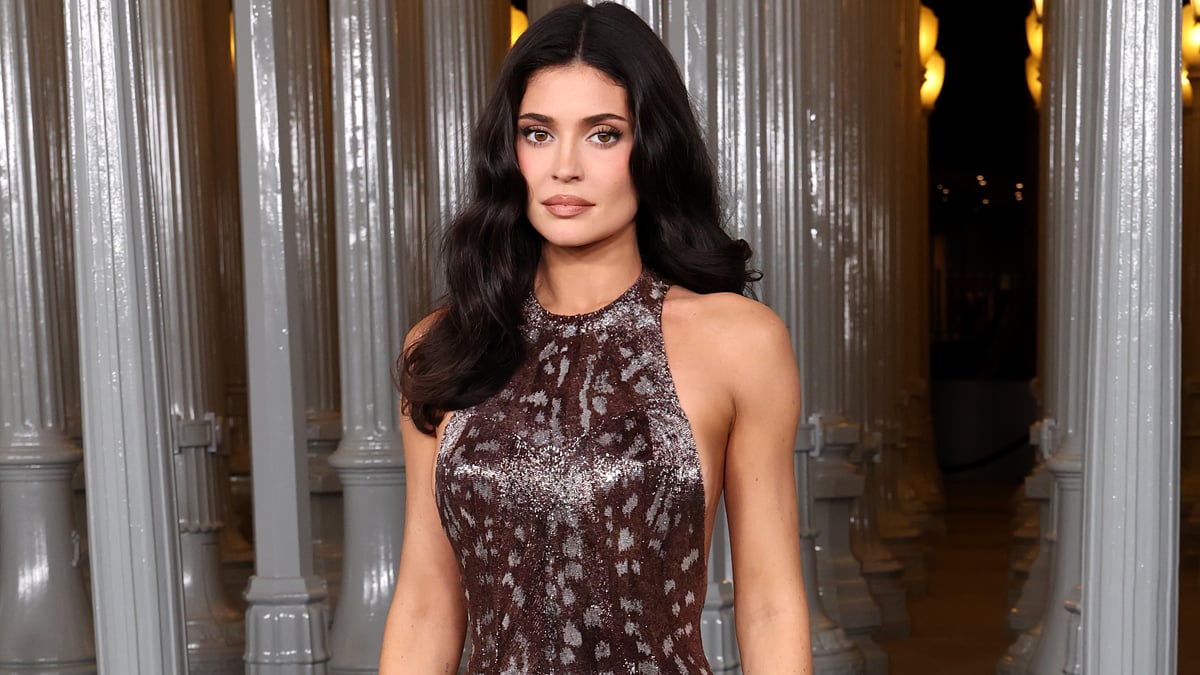
Kylie Jenner’s Household Lawsuit Story Just Took a Dark Turn
A former housekeeper alleges she was locked in a closet, hit with pepper spray and bitten by a dog — while Kylie’s attorney calls the case “meritless.”
Kylie Jenner’s private household has become the setting for a very public legal pileup. The latest lawsuit, filed by former housekeeper Dinora Carolina Cabria Amaya, contains allegations so startling they sound engineered for the most chaotic episode of a reality show that has already spent years turning luxury, family tension and domestic spectacle into prime-time entertainment.
According to the complaint, Amaya says she was locked inside one of Jenner’s closets, accidentally pepper-sprayed in the face and bitten by a dog while working at the cosmetics mogul’s California residences. She is suing Jenner and two members of her staff, Laura Dooley and Itzel Sibrian, over claims that include retaliation, disability discrimination, wrongful termination and labor violations.
Jenner’s attorney, Michael Rhodes, has called the claims “meritless.” Amaya’s lawyer, Della Shaker, says her clients are prepared to litigate the facts. Neither side is treating this as a quiet employment dispute, which is perhaps the least surprising detail in a story involving one of the most photographed families on earth.
The alleged closet incident is the detail everyone will be talking about
Amaya worked for Jenner from March 2025 until her firing in February 2026, according to the complaint. She says the alleged incidents took place across her time working at multiple homes in California, including one in which she claims she was trapped in a closet while Dooley laughed and mocked her.
The complaint says Amaya could not get the information she needed to leave and suffered a panic attack. That is the kind of allegation that instantly changes the temperature of a celebrity labor case. It is not merely about workload, scheduling or a disputed termination; it presents a picture of a workplace where a domestic worker says she felt physically confined and humiliated.
Amaya also alleges that an unsecured pepper-spray canister discharged into her eyes during an incident in September 2025. The following month, she says, a dog bit her while she was cleaning a doghouse. The complaint does not identify who owned the dog, and the filing does not establish that the alleged events occurred as described. But together, the details create an unusually vivid account of the risks Amaya says she faced while working inside a celebrity household.
Her suit further alleges that complaints about those injuries were followed by treatment designed to make her job harder. The complaint characterizes the alleged conduct as an effort to make her “quit,” rather than formally terminate her.
This is not the first former staffer to sue
The lawsuit arrives after a run of legal claims from people who previously worked for Jenner. Just Jared reports that it is the fourth lawsuit brought against the reality star by a former member of her household staff in the past seven months.
In April, a former housekeeper sued and accused Jenner’s staff of discrimination. In June, a former chef filed a lawsuit claiming that an “intense” workload contributed to a miscarriage. Those cases are separate from Amaya’s, and their allegations have not been resolved here. But their timing gives the latest complaint a larger context: this is no longer one former employee making one set of accusations in isolation.
For Jenner, whose public image is built around immaculate spaces, controlled visuals and the frictionless fantasy of billionaire life, household lawsuits are an especially awkward kind of publicity. The brand sells polish. Employment complaints are about what happens outside the camera frame, in the service corridors and behind the doors that make the polished life possible.
That contrast is what makes the story travel. A celebrity can survive a bad outfit, a clumsy launch or an overly filtered vacation photo. Allegations from multiple former staffers touch something more intimate: the machinery required to maintain the celebrity lifestyle in the first place.
The lawyers are already fighting in public
Rhodes says the cases are being handled by the same attorney and argues that the lawyer is using publicity to pursue an “unwarranted payday.” He said Jenner and her team would not be intimidated and planned to defend the cases vigorously.
Shaker answered that she wants to “litigate the facts, not trade insults.” She also said her clients are prepared with evidence rather than publicity stunts, and accused the defense of trying to intimidate or silence them.
That exchange gives the lawsuit its second headline: not just a former housekeeper describing an alleged closet lock-in and dog bite, but two legal teams openly battling over whether the public discussion itself is part of the strategy. Jenner’s side says the claims are an attempt to extract money through attention. Amaya’s side says the response is meant to shut down clients who are willing to speak.
For now, the public has the complaint, the competing statements and a timeline that places Amaya’s alleged incidents between September and October 2025, followed by her termination in February 2026 and the filing of the lawsuit on November 5. The court process will determine what can be proven. Until then, the most consequential fact is that the claims are no longer confined to a private workplace dispute: they have landed squarely in the Kardashian-Jenner media universe, where every locked door, luxury residence and carefully managed statement becomes part of the story.