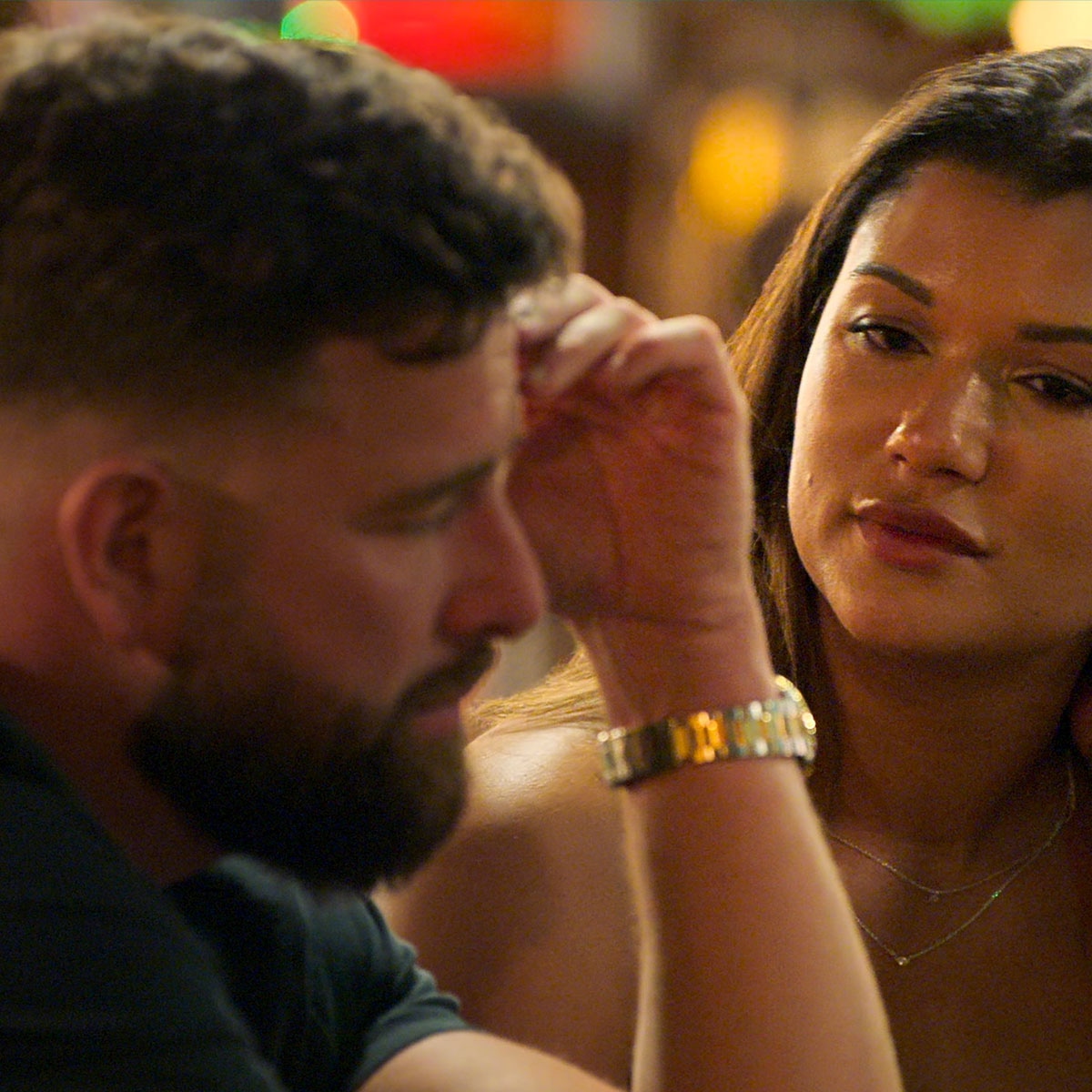
Love Is Blind’s Rob Feeley Finally Explains His Very Public Netflix Spiral
The Season 11 star says an unaired conversation with pod ex Diana Perrone, filming pressure and a bad mindset sent him into a full-on “crash out” — even though he insists his real priority was fiancée Michaella Giorgio.
Rob Feeley would like to clarify one thing about his Love Is Blind meltdown: in his mind, the problem was not that he still had unfinished business with Diana Perrone. The problem was that Netflix sat him down with her anyway.
That distinction is doing a lot of work.
The Season 11 star has finally unpacked the conversation that viewers barely saw before he detonated at a cast mixer, loudly predicting that he was about to be “cancelled” and accusing the show of turning the whole thing into something “crazy.” His explanation, delivered in an interview with E! News, is part relationship defense, part production critique and part brutally candid admission that he simply did not handle the pressure well.
In other words: the man has entered his post-show accountability era, but he is still explaining it with the energy of someone who would like to file an appeal against the entire concept of a group date.
He says the Diana conversation was a setup he did not need
Before the chaos, Rob arrived at the St. Patrick’s Day party with Michaella, the woman he had chosen after meeting her in the pods. Diana, meanwhile, was a former pod connection. Rob told E! that he did not think he needed to sit down with her at all.
“When I go in with Michaella, I don’t need to see another girl,” he said. “I don’t need to see these people. I don’t need to have a conversation with Diana. We ended in the pods respectfully.”
His argument is straightforward: he had moved on, he was there with his fiancée and the show’s insistence on engineering a reunion felt inappropriate. Rob said his reaction was about respecting Michaella rather than hiding some secret feeling for Diana. “It wasn’t anything where I had something specific to say to Diana,” he explained. “It was more respecting Michaella than it was anything else.”
But Love Is Blind is not exactly a program built around leaving old romantic threads neatly folded in a drawer. The pods may promise emotional intimacy without seeing the other person, but once everyone is out in the world, the format turns those former connections into social explosives. A cast party without a pod ex would be a gathering. A cast party with one is television.
The conversation between Rob and Diana was largely unaired, which left viewers with the aftermath rather than the spark. What they did see was Rob spiraling in real time, insisting Netflix was going to manipulate the situation and shouting, “I’m going down in this thing as the biggest piece of s–t.” That is not the controlled, romantic hero edit. That is a man watching the edit happen in his head and trying to fight it before it exists.
The “crash out” was bigger than one awkward table
Rob says the sit-down with Diana was only one trigger in a much larger pressure cooker. After filming, he described the experience as “so immense” that he did not know how to process it. He also referenced “some other things” he was dealing with at the time, while making clear he did not want to use them as an excuse.
“I probably wasn’t in the right mindset going in,” he told E!. “Not a crutch by any means, but I tried to look past that. And when it came down to it, I just felt like maybe this isn’t for me.”
That assessment tracks with the season’s two-part collapse. First came the group mixer, where his unease over the Diana conversation boiled over. Then, at a bar with friends, another argument reportedly sent him further into panic about how he would be portrayed. The result was a spectacular reality-TV contradiction: Rob was furious at the possibility of being edited as a villain, while behaving in precisely the kind of heightened, chaotic way that makes a villain edit irresistible.
He now says he “cracked.” Not metaphorically, not as a grand statement about the show, but as a fairly plain description of losing control under cameras, cast dynamics and the pressure of having every bad moment become permanent entertainment.
There is a particular cruelty to Love Is Blind’s setup. Contestants are asked to make life-sized decisions in a compressed, artificial environment, then immediately tested by parties, exes, family members, alcohol, wedding deadlines and the omnipresent knowledge that millions of people will eventually pause-frame their facial expressions. The experiment wants spontaneous vulnerability, but the audience also wants composure. Rob delivered the first and spectacularly failed at the second.
After the breakup, Rob went aggressively offline — in spirit
Rob and Michaella ultimately split after his public outbursts and other uncomfortable moments in their relationship. Michaella said she loved him but could not marry him “under any circumstances.” That sentence landed with the finality of a door being closed, locked and then gently checked one more time.
Rob’s response since filming has been a self-improvement regimen with the intensity of a man trying to out-schedule his own Netflix episode. He told E! that he spent 50 days focusing on himself, with “no drinks, just work,” followed by 75 days of eating right and skipping cheat meals. He also said he pursued therapy and cold plunges.
Cold plunges are, of course, the natural enemy of a televised emotional breakdown. Somewhere between the ice bath and the meal prep, Rob appears to have arrived at the conclusion that the most useful person to blame is himself.
“I acted not in character,” he said of his time on the show. “That’s not really who I am. Those couple scenes weren’t who I am. I don’t want to blame production. I don’t want to blame anybody but myself.”
That does not erase what viewers watched, and it does not transform the Diana conversation into a non-event. It does, however, make the story more interesting than a simple “reality star says bad edit” complaint. Rob is acknowledging the machinery while also admitting that the machinery did not create every reaction. The setup may have been engineered, the conversation may have been mostly left on the cutting-room floor, but the crash-out belonged to him.
And that is why this particular Love Is Blind moment keeps sticking. The show offered a familiar reality-TV question — was the contestant misunderstood, manipulated or simply messy? Rob’s answer is unusually unsatisfying and therefore unusually believable: all three pressures may have been in the room, but he still lost his temper in front of the cameras.
He wanted Michaella to know he had chosen her. He wanted Netflix not to turn a minor interaction into a relationship-threatening spectacle. He wanted control over a story that had already escaped him. Instead, he gave the season one of its most memorable spirals — and now, months later, he is trying to explain why the man viewers saw was not the man he recognizes.
Reality television loves a redemption tour. It loves a crash even more. Rob, for now, is attempting both at once.
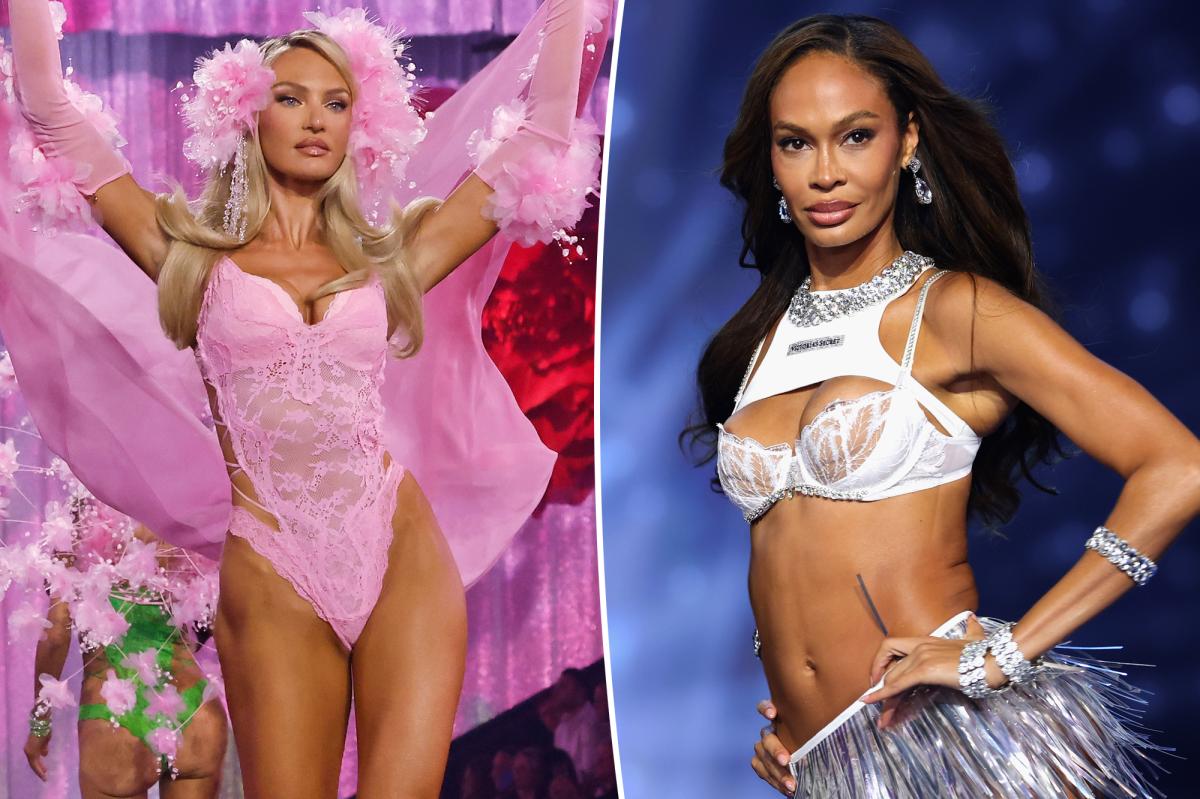
The Victoria’s Secret Show Had a Backstage No-Fly Zone for Joan Smalls and Candice Swanepoel
A 15-year friendship, one very famous quarterback and a “Summer House” reference have turned fashion’s prettiest fallout into the messiest story in the room.
Victoria’s Secret has always understood the power of a beautiful woman walking into a room and making everyone else look twice. This year, apparently, the real runway was the backstage seating chart.
According to Page Six, Joan Smalls and Candice Swanepoel were kept apart behind the scenes at the Victoria’s Secret Fashion Show in Los Angeles on Oct. 18, after the longtime friends’ relationship reportedly collapsed around Tom Brady. The source told the outlet that everyone involved with the production knew Smalls would not go near Swanepoel, which would explain the conspicuous absence of a single photo showing the former best friends together.
That is a remarkable amount of logistical energy to spend avoiding one person at a fashion show, but this is not a casual acquaintance situation. Smalls and Swanepoel had reportedly been inseparable for roughly 15 years, appearing together at fashion weeks, galas and red carpets with the easy familiarity of women who have survived the same industry, the same flashbulbs and probably several thousand pairs of uncomfortable shoes.
From fashion-family closeness to full runway frost
The friendship rupture became public in the days after the show, when Smalls responded to an online question about whether she and Swanepoel were still friends by calling her a “backstabber.” The comment was later deleted and captured by DeuxMoi, but the internet, as ever, had already put it in a glass case.
Smalls then appeared to widen the blast radius. In another now-deleted comment, she wrote that there was “no girl code,” adding that the alleged “disrespect and carelessness” had left her feeling that there was no way back. She also referred to 15 years of friendship and accused the other side of minimizing her feelings. Neither model has publicly offered a full account of the dispute, while Swanepoel’s representative emphasized that she has always been private about her personal life.
That makes the visual silence at the Victoria’s Secret show feel louder. The show was designed for reunion energy: familiar Angels, famous faces, backstage glamour and the kind of controlled chaos that usually produces endless candid content. Instead, according to the source, the two women occupied separate orbits. No matching selfies. No affectionate backstage check-in. No “so happy to be here with my girl” caption. Just two major models moving through the same glittering machine as if the other had been edited out.
Enter Tom Brady, wearing the world’s most expensive friendship complication
The alleged fracture centers on Brady, which is a very Tom Brady-shaped development. Page Six reports that Smalls and the retired football star first met at Michael Rubin’s star-studded Fourth of July party in 2024 and that they dated casually, on and off, for almost a year. The outlet’s sources previously said Swanepoel encouraged Smalls to end the relationship.
Then the emotional geometry reportedly changed. Page Six says Swanepoel supported Smalls when she was upset by rumors about Brady appearing cozy with influencer Alix Earle at a New Year’s celebration in St. Barts. The source claims Swanepoel later met Brady through someone in the fashion world and that the two have been together since May. Brady’s representatives did not comment to Page Six, and the women’s representatives did not provide a response to the latest story.
That timeline is exactly the sort of thing that turns a private friendship problem into public entertainment: one friend has the quarterback, the other friend has the history, and everyone else has a group chat. The alleged issue is not simply that Brady entered the picture. It is the sequence of confidences, advice and apparent romantic overlap that makes the story feel less like a standard celebrity breakup and more like a friendship getting trapped inside a dating timeline.
Joan’s “Summer House” reference was not subtle
Smalls did not leave the internet with only one word to decode. In response to a post about the drama, she reportedly wrote: “Two words: ‘SUMMER HOUSE!’”
For Bravo viewers, the reference landed immediately. The most recent season of Summer House featured Amanda Batula and Ciara Miller’s friendship imploding after Amanda began secretly dating Ciara’s ex, West Wilson. Smalls’ comparison transformed a fashion-world falling-out into a reality-TV morality play, complete with betrayal, competing loyalties and the question no one wants to answer in public: whose side are you on?
Page Six says Smalls has been telling friends to pick a side. That detail, if accurate, makes the whole situation feel even less like a discreet disagreement and more like a social ecosystem under pressure. A 15-year friendship does not disappear cleanly; it leaves mutual friends, shared memories, old photos and a thousand people wondering whether liking one Instagram post now counts as a declaration.
There is also something particularly combustible about the “girl code” framing. Celebrity women are routinely expected to be endlessly supportive of one another, even while their personal lives are treated as public sport. Here, Smalls appears to be saying that the friendship broke not over an abstract principle, but over a specific failure of loyalty at a moment when loyalty mattered.
The fashion world’s most awkward photo opportunity
Swanepoel’s representative previously told Page Six that Candice respects the pair’s longstanding history and remains focused on raising her two sons. Swanepoel shares her children with ex-fiancé Hermann Nicoli. Brady has three children: two with ex-wife Gisele Bündchen and one with actress Bridget Moynahan. Smalls does not have children.
Those details matter because this is not happening in a vacuum of anonymous party people. Brady’s dating life has long drawn attention, especially after his marriage to Bündchen, herself a former Victoria’s Secret Angel. Swanepoel is now being linked to a man whose personal history already includes one of the most famous model relationships in the world. Add Smalls’ reported connection to him and the friendship fallout becomes catnip for anyone who enjoys a glamorous social circle suddenly behaving like a Bravo cast.
And then there is the show itself. Victoria’s Secret gave the public the perfect setting for the alleged cold war: a room full of cameras, former intimates and highly trained professionals pretending everything is heavenly. The backstage split may have been carefully managed, but the public fallout was not. A deleted “backstabber” comment, a “no girl code” message and a “Summer House” invocation did what a runway finale could not: they made the real drama impossible to miss.
For now, Swanepoel is keeping her side private, Smalls’ posts are disappearing from view, and the two women are apparently continuing to share a fashion universe without sharing a frame. In celebrity terms, that is not closure. That is merely the next event where everyone will be watching the seating chart.
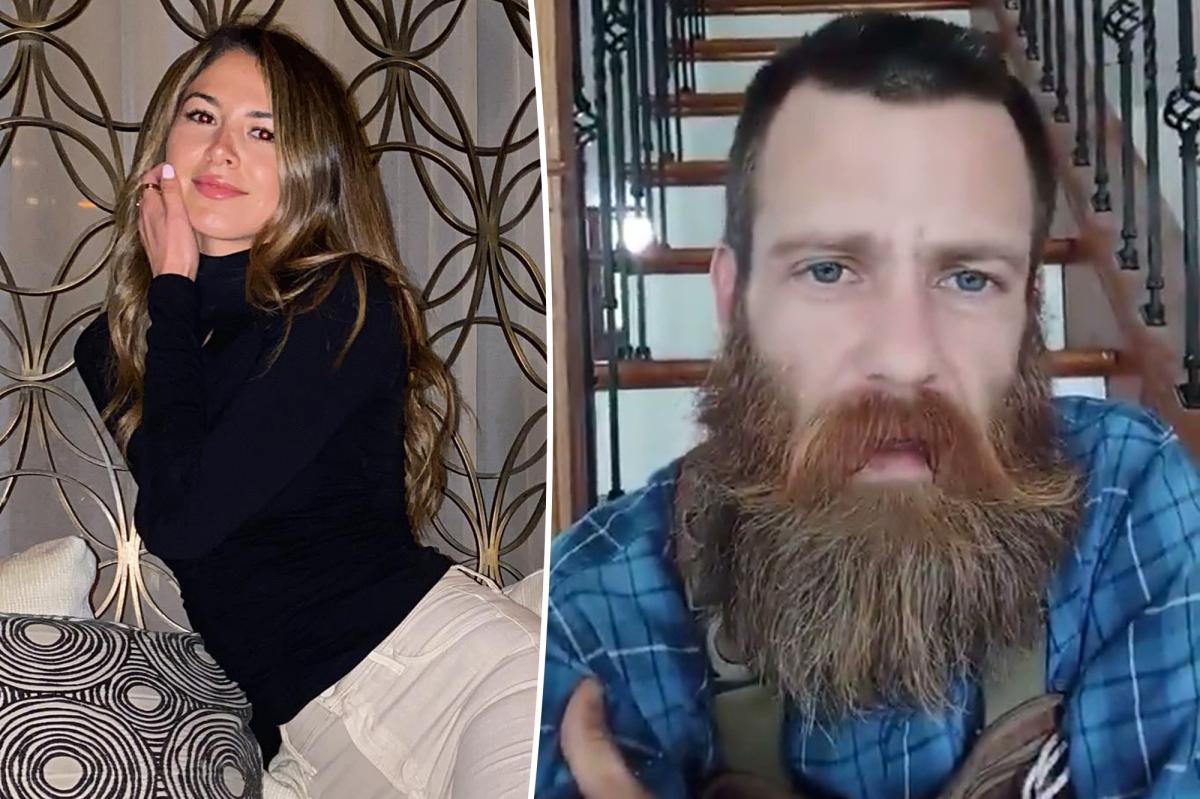
The Most Unexpected $2,000 Donation on the Internet Belongs to Sergey Brin’s Girlfriend
Gerelyn Gilbert-Soto just became the top donor to former child star Bug Hall’s controversial GoFundMe—and somehow this is the least predictable crossover in celebrity culture.
Celebrity culture has officially entered its “wait, how do these people know each other?” era. The latest episode stars Gerelyn Gilbert-Soto, the wellness influencer and outspoken conservative better known in glossy society coverage as Sergey Brin’s girlfriend, and Brandon “Bug” Hall, the former child actor who played Alfalfa in 1994’s The Little Rascals.
According to Page Six, Gilbert-Soto donated $2,000 to Hall’s controversial GoFundMe, making her the fundraiser’s top donor and covering its original goal in one sleek, wildly unexpected transfer. Hall launched the appeal last Thursday, less than a month before he and his wife are expected to welcome their sixth child. The campaign has since raised more than $23,000.
There are celebrity donations, and then there are celebrity-adjacent donations that feel like someone accidentally opened the wrong group chat. This one has everything: a billionaire’s glamorous partner, a former child star living off the grid, a growing family, conservative politics, and the kind of internet discourse that turns a $2,000 contribution into a full cultural event.
A Met Gala orbit meets rural Arkansas
Gilbert-Soto, 32, has been dating Google co-founder Brin, 53, since 2023. The pair have appeared together at high-profile events, including the Met Gala in New York, placing Gilbert-Soto firmly in the luxury-fashion-and-billionaire-social-calendar universe.
Hall, 41, is operating in a dramatically different lane. After leaving Hollywood in 2020, he has described a life built around rural living, faith, family and self-sufficiency. In January, he told the Daily Mail that he had taken a “vow of poverty” and was living off the grid as “a radical Catholic extremist.” His GoFundMe says his family is moving to rural Arkansas and needs help with a handful of basic expenses, including phone service, propane for their camper and an unexpected electric hookup fee.
That contrast is what gives the donation its particular sparkle. On one side: one of the most photographed women in the orbit of one of the world’s richest men. On the other: Alfalfa, now asking strangers to help keep the lights on while building a farm and preparing for baby number six. It is not a pairing anyone would have predicted from a red-carpet seating chart.
Hall’s answer to the “get a job” crowd was extremely Hall
The GoFundMe became controversial almost immediately, with critics questioning why Hall was asking for money while preparing to welcome another child. On X, one user reportedly told him to “get a real job” and stop getting his wife pregnant if he could not afford it.
Hall’s response was not a carefully lawyered statement about financial hardship. It was: “I’m going to keep impregnating my wife 👍.”
When another critic suggested that he move to a small town, put his skills to work and get a job like everyone else, Hall replied, “Nah. I’m busy building a farm and feeding my family and community 👍.”
The thumbs-up emojis are doing a lot of work there. Hall’s public posture is less “please understand my circumstances” and more “I have selected my lifestyle, and I will be aggressively continuing it.” His fundraiser description similarly frames the appeal as an exception to a long-held principle.
“It’s now six years since I self-cancelled, and I have avoided doing one of these in all that time,” he wrote, according to Page Six. “I always said this was my choice, and so I didn’t want to offload the glorious burden of it unless there was no other choice. Well here we are.”
Then came the billionaire-girlfriend plot twist
Gilbert-Soto’s donation adds a new layer to a story that was already catnip for the internet. She is not simply a private donor with no public profile; she is a recognizable figure in conservative social circles and the partner of Brin, whose political history has traditionally read as more left-leaning.
That contrast has become part of Gilbert-Soto’s public image. President Trump called her a “really wonderful MAGA girlfriend” at a White House dinner in September 2025, according to Page Six. In May, she told the Free Press that she had not pushed Brin to the political right.
“The Democrats red-pilled him. I didn’t have to do anything,” she said. “He has a mind of his own. If I could control him, I’d be married with a baby right now.”
She also said she would not date someone who had not already “moved over” politically. It is a quote that has helped define the Gilbert-Soto-Brin pairing as both romantic relationship and ongoing public fascination: glamorous, ideologically loaded and impossible to separate from the question of what, exactly, happens at home after the cameras leave.
Now her name is attached to a fundraiser launched by a former Hollywood child star whose worldview and lifestyle are equally public. Neither Gilbert-Soto nor Brin has publicly commented on the donation in the Page Six report, and there is no indication that Brin himself contributed. The money came from Gilbert-Soto, whose personal politics and public associations make the gesture feel intentional without requiring anyone to turn it into a grand manifesto.
The internet’s favorite genre: unlikely people helping unlikely people
Hall’s campaign has already blown past its initial $2,000 target, which means Gilbert-Soto’s donation is no longer the whole story financially. But it remains the detail most likely to make people stop scrolling. The original goal has been met, the fundraiser is now overfunded, and the conversation has moved from “Will this work?” to “Why is this particular person the top donor?”
That question is the entire appeal. Celebrity news is no longer just about who wore what or who was seen leaving where. It is also about unexpected social proximity: the wellness influencer at the billionaire’s side appearing in the same narrative as a former child star building a farm in Arkansas; the Met Gala orbit intersecting with a GoFundMe page; the polished Instagram world colliding with propane bills and camper electricity.
Hall may be best known as Alfalfa, but his adult public life has become a very different kind of spectacle. He has made his rejection of Hollywood, conventional employment and mainstream expectations part of his identity. Gilbert-Soto, meanwhile, has made her relationship, politics and proximity to power part of hers.
So yes, the donation is $2,000. In the economy of celebrity, that is not exactly a king’s ransom. But as a plot point? It is priceless. Somewhere between the Met Gala and rural Arkansas, the social map got redrawn—and Alfalfa just found himself with a very glamorous new footnote.