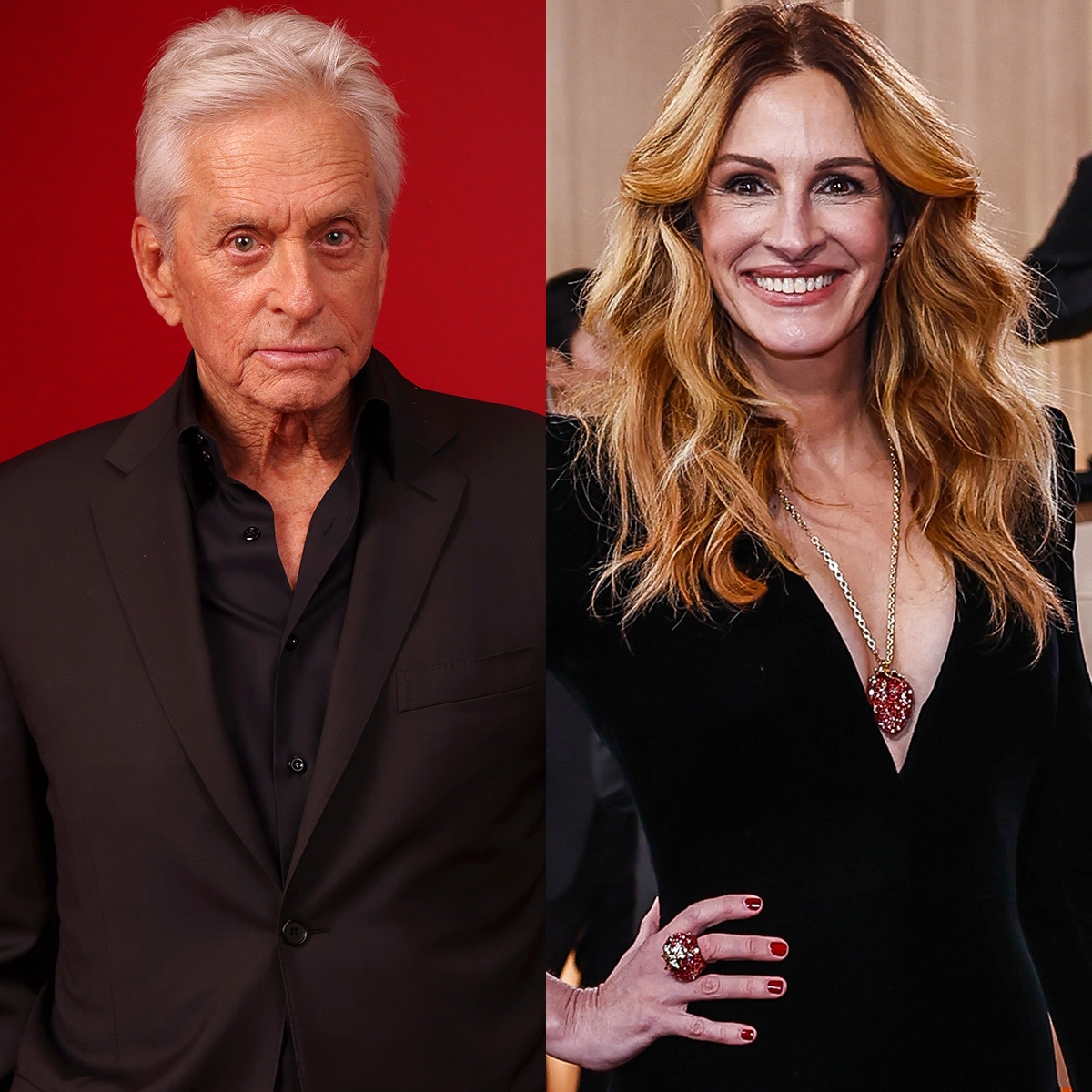
Michael Douglas’ Golden Globes Blowup With Julia Roberts Was Peak Old Hollywood Chaos
In his new memoir, the Wall Street star revisits the night a drunken bar-side confrontation nearly derailed Flatliners — then admits Julia Roberts forgave him just enough to finish the movie.
There are tense celebrity encounters, and then there is Michael Douglas telling Julia Roberts to take her Golden Globe and put it somewhere anatomically unprintable.
In his new memoir, One Hell of a Ride, the actor and producer revisits a Golden Globes party in the early 1990s where a supposedly innocent moment involving Roberts and his then-13-year-old son, Cameron, spiraled into one of those very Hollywood arguments that begins beside a bar and ends with an entire movie hanging in the balance.
Douglas says he was working as a producer on Flatliners, the 1990 supernatural thriller starring Roberts and Kiefer Sutherland, when he saw Roberts with his son. According to the passage quoted by E! News, Roberts had her arm around Cameron and was “kind of nuzzling him.” Douglas, who shares Cameron with ex-wife Diandra Luker, wrote that his son looked “stunned” in the moment — while also acknowledging the crucial detail that he was “pretty drunk.”
What followed was less a carefully calibrated parental intervention than a full-volume Hollywood detonation. “Take your hands off my son and take that Golden Globe and stick it where the sun don’t shine,” Douglas recalled saying.
The Morning After Was Worse Than the Party
The bar-side confrontation might have remained a fuzzy awards-season anecdote if Douglas’ producing partner had not called him the next morning. That was when, he says, the consequences arrived with daylight and a hangover: Douglas realized he had potentially picked a fight with one of the most in-demand young actresses in the business while actively making a film with her.
Roberts had won her first Golden Globe in 1990 for her supporting role in Steel Magnolias. By the time of the incident, she was already Hollywood’s reigning combination of megawatt smile, box-office pull and apparently very little patience for anyone making a dinner-party scene around her trophy.
Douglas writes that he sent roses, then apologized to Roberts in person — with Sutherland, her fiancé at the time, also present. The apology apparently did enough to keep the production moving, but not enough to restore the friendship. “Luckily, they forgave me enough to get through that and finish the picture,” Douglas writes. “I remained friends with Kiefer. Julia, not so much.”
That final sentence has the immaculate sting of a man who knows exactly where the story lands. Not “we laughed about it later.” Not “all was forgiven.” Just: the movie got made, Sutherland stayed in his orbit, and Roberts apparently filed the evening under people I can work with but do not need at brunch.
Flatliners Was Already a Pressure Cooker
The timing makes the story especially juicy. Flatliners was not some disposable weekend shoot. The film put Roberts alongside Sutherland, Kevin Bacon, William Baldwin and Oliver Platt in a glossy, high-concept thriller about medical students experimenting with near-death experiences. It was exactly the kind of star-packed project where everyone’s professional relationships mattered — and where one ugly party moment could follow a production back to set.
Roberts and Sutherland were also one of the era’s most visible young Hollywood couples. Their engagement ended before their planned 1991 wedding, but at the time of Douglas’ confrontation, Sutherland was still Roberts’ fiancé and her co-star. Douglas’ account places the apology in front of him, turning an already awkward exchange into something with the social geometry of a particularly brutal dinner party: offended producer, famous actress, protective fiancé, flowers on the way.
The memoir version is also pure Douglas: candid, self-incriminating and extremely aware that the anecdote sounds worse when recited sober. He does not present himself as the hero of the story. He presents himself as a successful older Hollywood figure who got drunk, misread a moment and then had to repair the damage before an expensive film collapsed into personal fallout.
Then There’s the Kathleen Turner Chapter
The Roberts story is only one of the memoir’s major Hollywood confessions. Douglas also writes about his affair with Kathleen Turner during the making of 1984’s Romancing the Stone, while he was still married to Luker.
According to E! News’ account of the book, the relationship ended after Luker visited the set with their son. Douglas says the sight of his family changed his priorities, though he also admits that returning to his marriage did not repair what had already broken. “I did it for Cameron, but we shouldn’t have gotten back together,” he writes. “After that first split it was never the same between us ever again.”
That confession gives the Roberts episode a larger place in Douglas’ memoir. These are not polished stories about a career spent gliding from one glamorous room to the next. They are stories about famous people behaving badly, making choices under pressure and then discovering that charm is not always a universal solvent.
Douglas and Turner eventually worked together again on 1985’s The Jewel of the Nile, the sequel to Romancing the Stone. He says they rebuilt their professional relationship by revising the script together, trading pages, negotiating lines and laughing at scenes. In his telling, the collaboration helped them reach “solid ground” again — a much tidier ending than the Roberts situation, where the professional bridge survived but the personal one apparently never fully reopened.
And that may be the most revealing detail in the whole Golden Globes story. Hollywood loves a comeback, a reconciliation and a glamorous forgiveness arc. But sometimes the final act is simply two stars finishing the movie, collecting the paycheck and never becoming friends again. Julia Roberts did not need to turn the incident into a public feud for it to become legendary. Michael Douglas has now done that part for her, decades later, with a memoir, a memorable insult and one very expensive bouquet of roses.
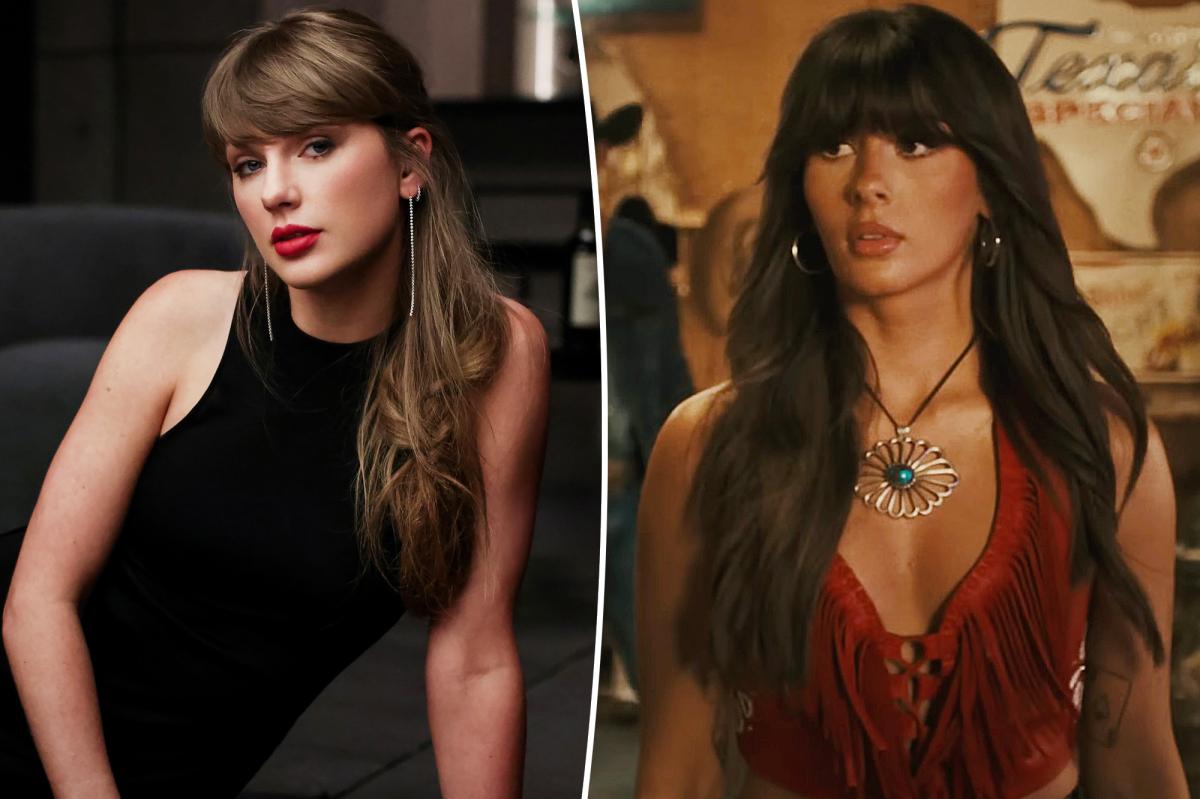
Taylor Swift Just Ended Ella Langley’s 24-Week Billboard Reign — and Took Over the Entire Top Five
“Patient Zero” has dethroned “Choosin’ Texas,” giving Swift her 16th Hot 100 No. 1 while Langley’s historic run moves into a very different chapter.
There are chart toppers, and then there are chart toppers who arrive with a marching band, four songs in the top five and Taylor Swift attached to the headline. On Monday, Swift’s “Patient Zero” knocked Ella Langley’s “Choosin’ Texas” out of the No. 1 spot on the Billboard Hot 100, ending Langley’s extraordinary 24-week reign at the summit.
It is the kind of pop-cultural handoff that feels almost too perfectly scripted: a rising country star spends nearly half a year ruling the biggest singles chart in America, breaks a Mariah Carey record, becomes a target for public commentary and then gets displaced by the industry’s most chart-literate superstar just days after Swift releases a new project.
Langley’s song has not disappeared. “Choosin’ Texas” sits at No. 2, which is less a collapse than a glamorous relocation. But the shift puts two very different kinds of celebrity machinery in the same frame: Langley’s viral, hard-earned country breakout versus Swift’s blockbuster album-cycle gravity. The chart, as ever, has chosen violence.
Swift didn’t just take the crown — she took the room
“Patient Zero,” released Sept. 25, is Swift’s 16th song to reach No. 1 on the Hot 100. That places her behind only The Beatles, with 20 No. 1s, and Carey, with 19. In other words, this is not merely another Swift song doing very well. It is another notch in a chart history that has already made her one of the most dominant singles artists of her generation.
And because subtlety has never been the governing principle of a Swift rollout, “Patient Zero” is joined in the top five by three other tracks from The Life of a Showgirl: The Encore: “Cleveland!,” “Babylon” and “Pink Clouding.” Swift has effectively turned the summit into a group project, leaving Langley’s “Choosin’ Texas” as the lone non-Swift song in the top five.
That makes the moment more than a simple No. 1 swap. Langley’s record-breaking song has been pushed from the center of the conversation by an entire Swiftian ecosystem. It is the difference between winning the restaurant and discovering that Taylor has booked every table upstairs.
Ella Langley’s record was already a pop-country plot twist
Before Swift arrived with a new No. 1, Langley’s “Choosin’ Texas” had its own astonishing storyline. The song reached the top of the Hot 100 in February and stayed there for 24 weeks, surpassing Carey’s “All I Want for Christmas Is You,” which had spent 22 weeks at No. 1.
For a 27-year-old country singer still establishing herself in the wider mainstream, that is the sort of milestone that can instantly rearrange a career. It also made Langley part of a conversation that rarely leaves much oxygen for anyone involved: what happens when a relatively new star becomes suddenly, unavoidably huge?
When she celebrated the achievement in an Instagram video on Sept. 22, Langley said she was speechless and could not “find the words to help explain what’s going on in my brain today.” She thanked listeners for loving the song and for listening to it, a notably grounded response to a milestone that would make most people start speaking exclusively in superlatives.
But the attention came with a sharper edge. Days later, during a concert in Columbus, Ohio, Langley addressed the people she said had been “picking on” her after she broke Carey’s record. She told the crowd that she had never had more opinions directed at her than she had over the past year, citing criticism of “the way I look, the way I speak, the way I dress.”
Langley also admitted she did not know whether she was “strong enough” to handle the scrutiny. Then she delivered the line that gave the whole moment its emotional spine: “the girl that they’re kind of picking on is the girl that got me where I’m sitting here today.” She said she was proud of that girl, even as the commentary around her grew louder.
The Swift effect is less feud, more weather system
There is no indication that Swift and Langley are feuding, and this is not a diss-track situation disguised as a chart update. The drama is structural, not personal. Swift released a song that debuted at No. 1, while Langley’s record-breaking run met the most powerful chart force in modern pop at full speed.
Still, the timing gives the moment a deliciously theatrical quality. Langley had only just entered the record books by passing Carey, a singer who also happens to be one of Swift’s closest statistical rivals. Then Swift arrived and moved her into second place. For Langley, it is a historic achievement with a tiny asterisk-shaped shadow: the record lasted 24 weeks, but the post-record victory lap lasted about two weeks before the chart changed outfits.
That is the particular cruelty of celebrity milestones. The public wants the breakthrough, the record, the emotional speech and the triumphant photograph. Then it immediately wants the next plot point. In Langley’s case, the next plot point is not failure. It is being No. 2 behind Taylor Swift while still holding a song that spent 24 weeks at No. 1 — which is a very specific kind of humiliation only the Billboard era can manufacture.
It also makes “Choosin’ Texas” feel bigger, not smaller. The song’s run now has a clean beginning, a record-breaking middle and a Swift-shaped ending. That is a complete pop narrative, and Langley has already shown that she knows how to inhabit it: grateful when the moment is hers, candid when the backlash arrives and stubbornly protective of the person she was before the numbers got enormous.
As for Swift, “Patient Zero” gives her another No. 1, another chart milestone and another week in which the industry is forced to discuss her placement in pop history. The only question is whether Langley’s song will remain the story after being dethroned — or whether this is simply the beginning of its second act.
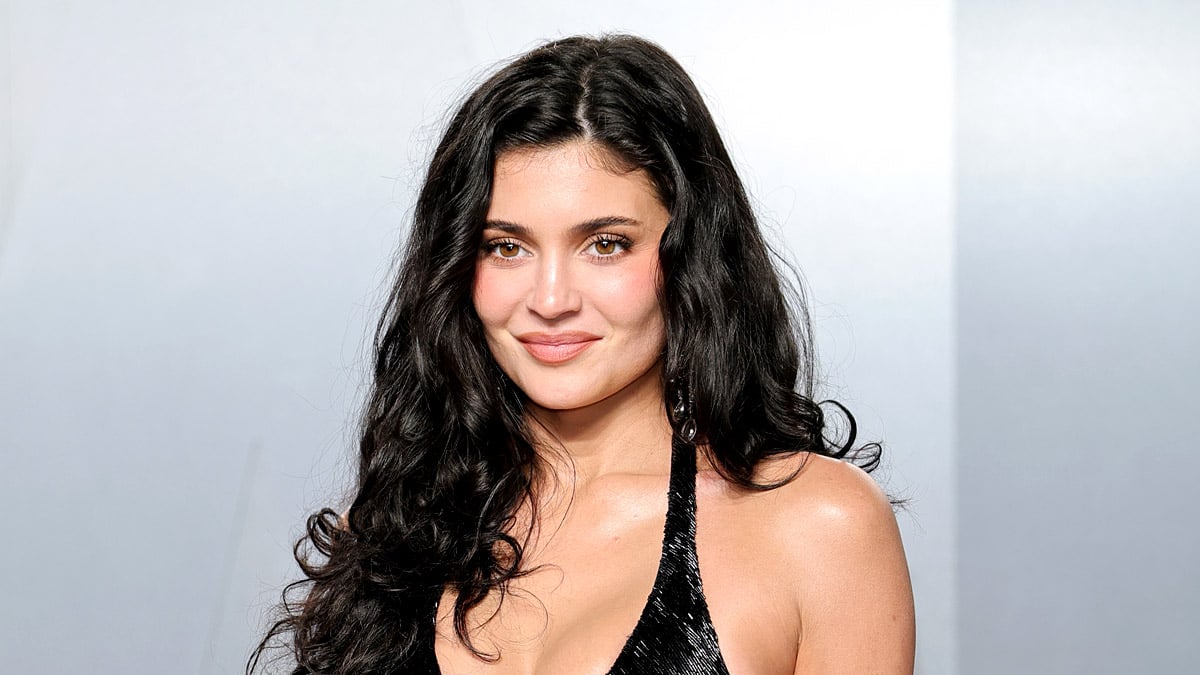
Kylie Jenner Is About to Get Murdered at Her Own Bachelorette Weekend — With Kim Kardashian Calling the Shots
Kylie’s first real scripted lead is a Hulu thriller about a bride found dead in a pool, and her executive producer just happens to be her sister Kim.
Kylie Jenner is getting married, murdered and sent to Hulu — at least in her first major scripted acting role.
The reality star and beauty mogul is set to lead Bachelorette Weekend, an upcoming thriller drama series for the streamer. The setup is exactly the kind of glossy nightmare that knows how to find its audience: a bachelorette trip goes violently wrong, the bride is found dead in the pool, and every one of her closest girlfriends becomes a suspect.
And because this is the Kardashian-Jenner universe, the project comes with a very specific twist behind the camera. Kylie’s executive producer is Kim Kardashian, who reportedly thought of her sister for the part after the script landed with her as a possible producing project.
That makes this less of a random celebrity acting detour and more of a carefully arranged family handoff: Kim sees the vehicle, Kylie takes the wheel, and Hulu gets a murder mystery starring one of the most recognizable women on the planet.
The bride is dead, but Kylie is only getting started
Bachelorette Weekend is based on an upcoming novel by Flora Collins, developed through Lauren Oliver’s company StoryGiants. Oliver, known for young adult books including Panic, Before I Fall and the Delirium trilogy, is writing the television adaptation.
The series is built around a familiar but deliciously combustible question: what happened during the weekend before the bride died? Kylie’s character is described as the “North Star” of the show, with the story piecing together the events that led to the murder.
That phrasing suggests Kylie’s role is not simply a glamorous opening-scene victim who disappears beneath the surface of a swimming pool. The bride sits at the center of the mystery, and the series will reportedly orbit the relationships, resentments and secrets surrounding her final weekend. The audience knows the destination. The fun is in watching the group drive there together while pretending everything is fine.
It is also a smart first character for Jenner. She does not have to enter the acting world playing an anonymous detective, a tortured artist or some aggressively serious prestige-drama heroine. She gets a high-gloss part that naturally connects to the image audiences already associate with her: beauty, luxury, weddings, social performance and a life lived under constant observation.
Then the story gets to turn all of that shine into suspense.
Kim Kardashian saw the Kylie-shaped starring vehicle
Kim is not just attached as a famous sibling with an executive producer credit. According to Deadline, the script was sent to her as a potential project to produce, and she felt it was a strong starring vehicle for Kylie before passing it along to her sister. Both then came on board.
That detail is the real pop-culture hook. Kim is not merely producing a show in which Kylie happens to appear; she reportedly identified the role as something designed for Kylie. In the Kardashian-Jenner family business, that kind of instinct has always mattered. They understand the difference between a celebrity cameo and a format that turns celebrity into the engine of the story.
Kim also has a first-look deal with 20th Television, which operates under the same parent company as Hulu. The series has received a straight-to-series order from the streamer, giving the project a direct runway rather than leaving it stranded in the endless development swamp where many celebrity-led ideas quietly go to die.
There is an obvious family-machine reading here, but it is not necessarily a dismissive one. Kim has spent years converting personal visibility into television, fashion, beauty and legal-drama momentum. Kylie has built a beauty empire and remained one of the family’s most visually magnetic figures. Putting Kylie at the center of a thriller, with Kim shaping the project from the producing side, is a very on-brand attempt to turn that shared fluency in attention into a scripted franchise.
From playing Kylie to playing the woman everyone suspects
Jenner has appeared as versions of herself in films including The Moment and Ocean’s Eight, but Bachelorette Weekend marks her first time taking on a character rather than simply occupying her own celebrity orbit.
That distinction matters. Playing yourself in a glossy ensemble film requires a certain kind of screen presence, but playing a bride whose death controls an entire mystery asks for something more slippery. Kylie will have to exist in flashbacks, in other people’s memories and inside the contradictions of a group that may love her, resent her or know more about her death than they are willing to admit.
The project also arrives after Jenner recently addressed backlash over being described as a “self-made” billionaire, a debate that has followed her since Forbes famously scrutinized the label. That conversation is not part of the series’ plot, but it is part of the public character she brings into the role: someone whose life has been endlessly packaged, interpreted and debated before she ever enters a room.
Which makes a murder mystery particularly fitting. In Bachelorette Weekend, the bride is not just a person; she is the center of a social ecosystem. Everyone has a version of her. Everyone may have a reason to lie. And everyone is trapped inside the story of who she was supposed to be.
There is plenty of room for the show to play with the contrast between Jenner’s real-world image and the darker machinery of the plot. Her public persona is rooted in polished beauty and controlled visibility. The series appears to be offering the messier version: the woman behind the perfect weekend, the bride whose relationships may not be as sweet as the photos suggest, and the central figure who can haunt the entire story even after she is gone.
For now, the show is still arriving before the book it is based on. Flora Collins’ novel has not yet been published, so the television adaptation is getting out ahead of the source material. That gives Hulu a chance to introduce the mystery in a screen-first way, with Jenner’s casting helping define the project before readers have their own version of the bride in mind.
The big question is not whether Kylie can look convincing at a bachelorette party. She has spent her adult life surrounded by luxury, cameras and people intensely invested in her next move. The question is whether she can make a fictional woman feel unknowable once the cameras stop behaving like cameras and start behaving like witnesses.
Either way, Kim has found her sister a role with built-in headlines, a dead bride, a suspicious friend group and a pool full of unanswered questions. That is not a quiet acting debut. That is a Kardashian-Jenner entrance.