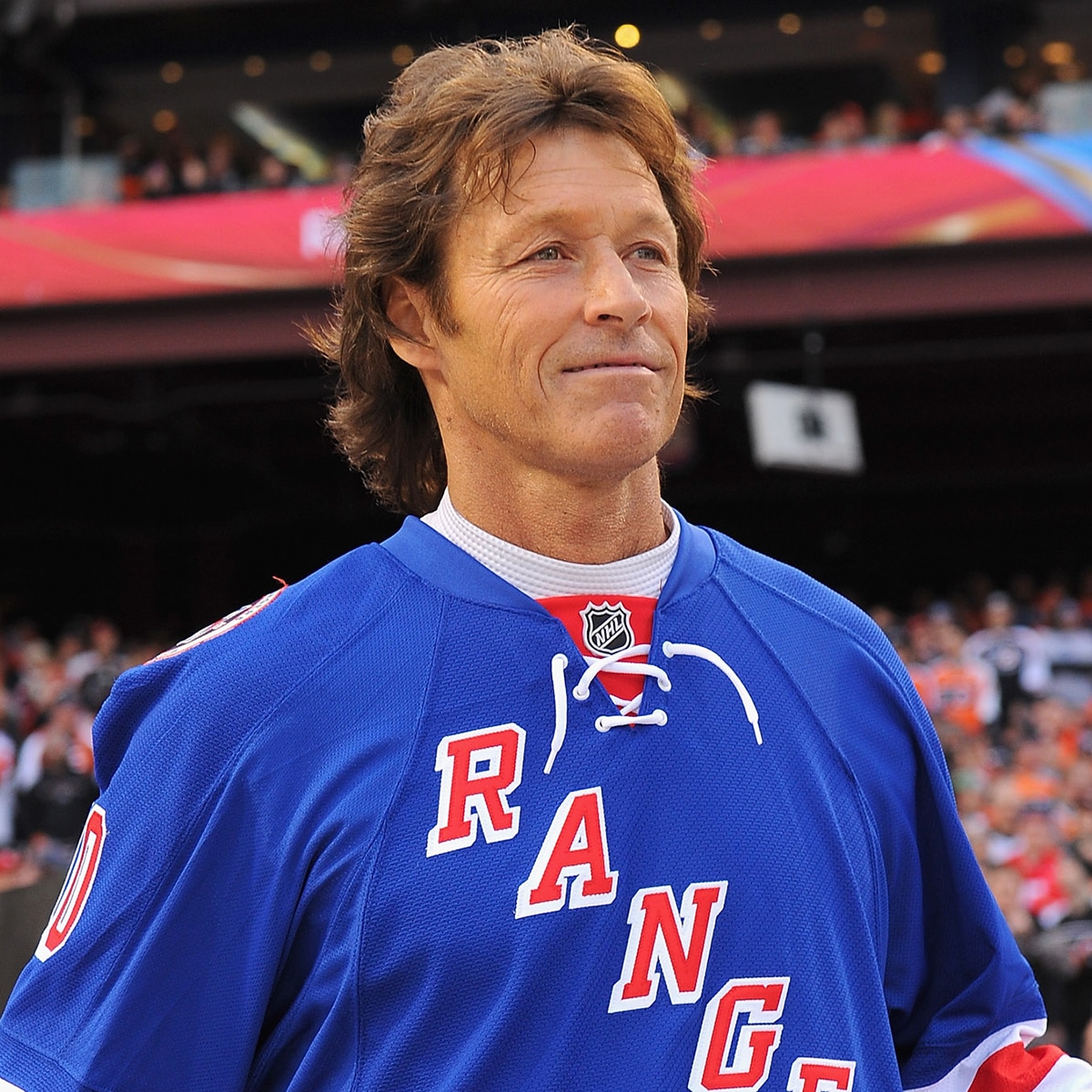
Ron Duguay, Hockey’s Original Heartthrob and Sarah Palin’s Boyfriend, Dies at 69
The former New York Rangers star spent 12 NHL seasons turning speed, hair and pure charisma into a career that moved easily from Madison Square Garden to magazine covers — and, later, into a four-year romance with Palin.
Ron Duguay was never just another name on a hockey lineup. He was the guy whose hair arrived before he did, the center whose skating style made Madison Square Garden feel briefly like a rock concert, and the player who understood — long before the age of personal branding — that charisma could travel far beyond the rink.
Duguay died Oct. 22 at 69 after a two-year battle with colon cancer, his loved ones announced on social media. Sarah Palin, his girlfriend of four years, shared the news with a message that was intimate, spiritual and unmistakably heartbroken: “It’s with a shattered heart, but also deep peace knowing Ron is with Jesus now. He fought so hard. Love never ends.”
That relationship gave Duguay’s later years a fresh tabloid shimmer, but the story of his appeal started decades earlier, when he was a young Canadian hockey player with movie-star looks and a flair for making the ice his runway.
The hair, the speed, the legend
Born in Ontario, Duguay was drafted by the New York Rangers in 1977 at age 20. Over 12 NHL seasons, he played for the Rangers, Detroit Red Wings, Pittsburgh Penguins and Los Angeles Kings, collecting 340 points. Those numbers place him 25th among the NHL’s all-time scorers and 34th in points, a reminder that the legend was not built on style alone.
But style was absolutely part of the package. Duguay became famous for the long hair flowing behind him as he tore down the ice, a look so distinctive that it became inseparable from his public identity. In 1980, he appeared on the cover of Interview magazine — a placement that said as much about his cultural charge as his hockey credentials. He was not merely being discussed by fans; he was being pulled into the wider celebrity ecosystem.
There was a glam-rock quality to Duguay’s image, but it was paired with the credibility of a serious professional athlete. He could be sold as a heartthrob without being reduced to one, and he seemed unusually comfortable with the attention. In an era when sports stars were often expected to keep their personal style safely inside the lines, Duguay made the lines part of the show.
That visibility also followed him when the NHL became less welcoming. After he was traded to the Red Wings in 1983, Duguay told The New York Times that he suspected Rangers coach Herb Brooks disapproved of his lifestyle off the ice. “He got his way,” Duguay said at the time. “I wasn’t shocked, because there’s been so much talk about it, but I was very disappointed.”
From the Garden to the broadcast booth
Duguay continued playing after leaving the NHL, spending time in the minor leagues and in Europe before ending his professional hockey career in 1989. He then coached in the minor leagues for four seasons, but retirement from the ice did not mean retirement from the Rangers universe.
From 2007 to 2018, he covered his beloved team on MSG Network, returning to the organization and city that had made him a star. For longtime Rangers fans, he was no longer simply the player with the flying hair. He was part of the franchise’s living memory — a former heartthrob who had become a familiar, affectionate presence around the team.
“The fans of Ranger Nation are the best in the NHL and are what makes NYC so special to me,” Duguay told the New York Post in 2018. “They welcomed me with open arms when I came here as a 20-year-old kid and have continued to do so ever since.”
He also spoke about giving back to the community and described the Rangers organization and its fans as his family for more than 40 years. That loyalty was returned after his death, when the team called him “one of the most popular players in franchise history.”
“Ron’s signature skating style — with his hair flowing as he moved down the ice — captivated The Garden Faithful,” the Rangers said in a statement shared to X. The team also praised his skill, tenacity and charisma, a neat summary of why Duguay remained memorable long after his final game.
A romance that put a modern spotlight on an old-school star
Duguay’s relationship with Palin brought him back into the celebrity conversation in a way that felt distinctly 2020s: not through a comeback season or a glossy profile, but through the collision of two recognizable public lives. Palin, the former Alaska governor and one-time vice presidential candidate, had her own intensely scrutinized history in American politics and pop culture. Duguay had the sports mythology, the vintage heartthrob aura and decades of New York celebrity behind him.
The pair had been together for four years before his death. Their relationship made sense as a modern odd couple only if you forgot that celebrity has always been built from unlikely overlaps: politics and hockey, television and old fame, public controversy and private affection. Duguay’s appeal was never limited to a box score, and Palin’s life has never existed outside the public gaze.
Still, Palin’s message makes clear that the relationship was not simply a late-career headline. Her words described a deep personal loss, while the phrase “Love never ends” gave the announcement the emotional finality of a goodbye rather than a publicity moment.
Duguay was also a father to two daughters with his ex-wife Robin Bobo and a son with his ex-wife Kim Alexis. His public life moved through several distinct eras — NHL star, magazine cover fixture, coach, broadcaster, community figure and romantic partner — without losing the signature quality that first made people look twice.
The kind of fame that keeps skating
There are athletes whose careers are remembered through statistics, and there are athletes whose images survive as cultural snapshots. Duguay belonged to both categories. The points mattered. The teams mattered. But so did the hair, the swagger, the sense that he understood the entertainment value of being unmistakably himself.
That is why his death resonated beyond hockey. Rangers fans lost one of their most charismatic players. The hockey world lost a familiar personality. And the broader celebrity audience lost a man whose life had already crossed several lanes of public fascination before landing in a love story with Palin.
His legacy is not tidy, and it does not need to be. It is fast skates and flowing hair, a Garden crowd, an Interview cover, a complicated moment in hockey history, years spent speaking to fans from the broadcast booth and, finally, a four-year romance remembered through a devastating farewell.
Ron Duguay knew how to make an entrance. Long after the final whistle, he remained impossible to mistake for anyone else.
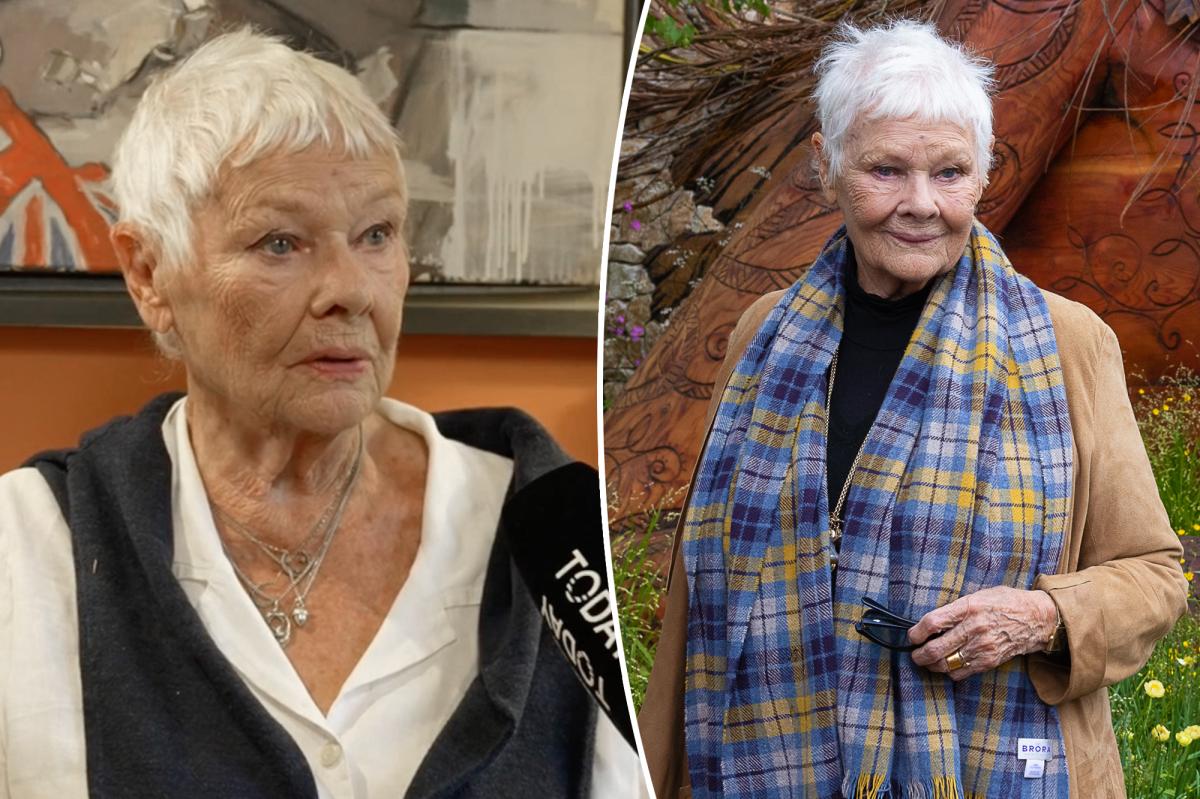
Judi Dench Says the Curtain Has Fallen on Acting — But She Still Refuses to Retire
At 91, the Oscar winner is facing the cruelest plot twist of her career: worsening vision has made stage and screen work impossible, even as she remains gloriously unwilling to be treated like a finished story.
Judi Dench has spent her career making grand entrances, devastating exits and turning even the smallest line reading into an event. Now, at 91, she is confronting the one role no actor gets to rehearse: what happens when the work you built your life around is no longer physically possible?
Speaking on BBC Radio 4’s Today program Thursday, Dench said her deteriorating eyesight means she can no longer perform onstage or onscreen. “I can’t be on stage,” she said. “I can’t do a play any more. I can’t do a film any more. I can’t read any more.”
It is a brutal update, especially because Dench has spent the past several weeks making it clear that she has no interest in being quietly filed under “retired.” The woman may be losing her sight, but she has not lost her appetite for a fight with the English language, the entertainment industry or anybody asking whether she ought to put her feet up.
The heartbreak is in the ordinary details
Dench told host Emma Barnett that she could not see Barnett’s face at all during their conversation. She also described the disorienting social moments that come with severe vision loss: approaching the wrong people, nearly hugging strangers and apologizing once she realizes she has mistaken them for someone else.
“I go up to lots of the wrong people and give them an almost hug and say, ‘Oh sorry, didn’t realize,’” Dench said.
That detail lands harder than any red-carpet announcement ever could because it makes the condition feel immediate rather than abstract. This is not simply an actor saying she has stepped away from filming. It is Dench navigating a world that has become visually unreliable, where a familiar face can disappear and a harmless social gesture can suddenly turn awkward.
She also spoke about the summer landscape around her, recalling that people told her the bluebells had been “absolutely sensational.” Dench could not see them. “But I know what my trees look like,” she said, adding that some of what she experiences now comes from memory and from what she can hopefully still make out.
That may be the most Judi Dench sentence imaginable: lyrical, practical and faintly indignant that nature has failed to provide adequate accommodations.
She has been fighting this reality for years
Dench was diagnosed with age-related macular degeneration in 2012, the same condition her mother, Eleanora Olave Dench, also experienced. In 2023, she described the diagnosis to the Mirror as “the most terrible shock to the system” and spoke candidly about how difficult it was to become dependent on other people.
In a 2025 ITV appearance, she explained that she could no longer attend events alone because she might walk into something. The condition has not arrived as a sudden plot twist; it has been a slow, infuriating rewrite of the way she moves through public life.
That makes her recent refusal to accept the word “retirement” feel less like a contradiction and more like a declaration of personality. Earlier this month, Dench objected to questions about when she would stop working and bristled at being labeled a “national treasure.” She said she wanted to banish the words “retire,” “vintage” and “old.”
“When are you going to retire?” is apparently the sort of question that can still make a woman who has played queens, spies, grieving mothers and Shakespearean heroines reach for the verbal equivalent of a sharpened umbrella.
The woman who refuses to become a monument
Dench’s public image has always contained a charming contradiction. She is treated as an institution — an Oscar winner, a Tony winner, a Golden Globe winner, a defining figure of British performance — yet she has never behaved like a statue.
She has brought mischievous energy to everything from James Bond’s M to Shakespeare in Love, where roughly eight minutes of screen time earned her an Academy Award. She has been regal without being remote, authoritative without losing the ability to be gloriously silly. Even her bluntest comments carry the sense that she is refusing to let prestige turn her into furniture.
So when Dench says she wants to be like Newton Blick, who died in his dressing room after a performance, the sentiment is not hard to understand. She has also joked that she wants to be one of those women who throw themselves out of planes at 100. The point is not that she is denying her age or ignoring her health. The point is that she refuses to let aging become the only interesting thing about her.
And yet her latest comments draw a painful line under what that resistance can and cannot accomplish. Determination cannot restore a script that cannot be read. Memory can help an actor hold onto trees, voices and rhythms, but it cannot fully replace sight. Dench’s will remains ferocious; the work, for now, has become inaccessible.
A final performance, without the performance
There is a particularly cruel irony in an actor losing access to text. Dench’s career has been built on language: Shakespeare, Noël Coward, Bond banter, romantic comedy, tragedy, the elegant precision of a raised eyebrow followed by exactly the right word.
Now she says she cannot read. That is not merely a professional inconvenience. It cuts into the private machinery of her craft — the preparation, the memorization, the quiet ritual of meeting a page and turning it into something alive.
Still, Dench’s latest interview does not sound like a farewell speech. It sounds like a woman describing a devastating limitation while refusing to offer the audience the tidy emotional ending it may be expecting. She cannot act anymore, she says. She cannot read anymore. But she is still speaking with the same unmistakable force, still making the sentence crackle, still declining to sit politely inside the category assigned to her.
The curtain may have fallen on her stage and screen career. Judi Dench, inconveniently and wonderfully, is still very much in the building.
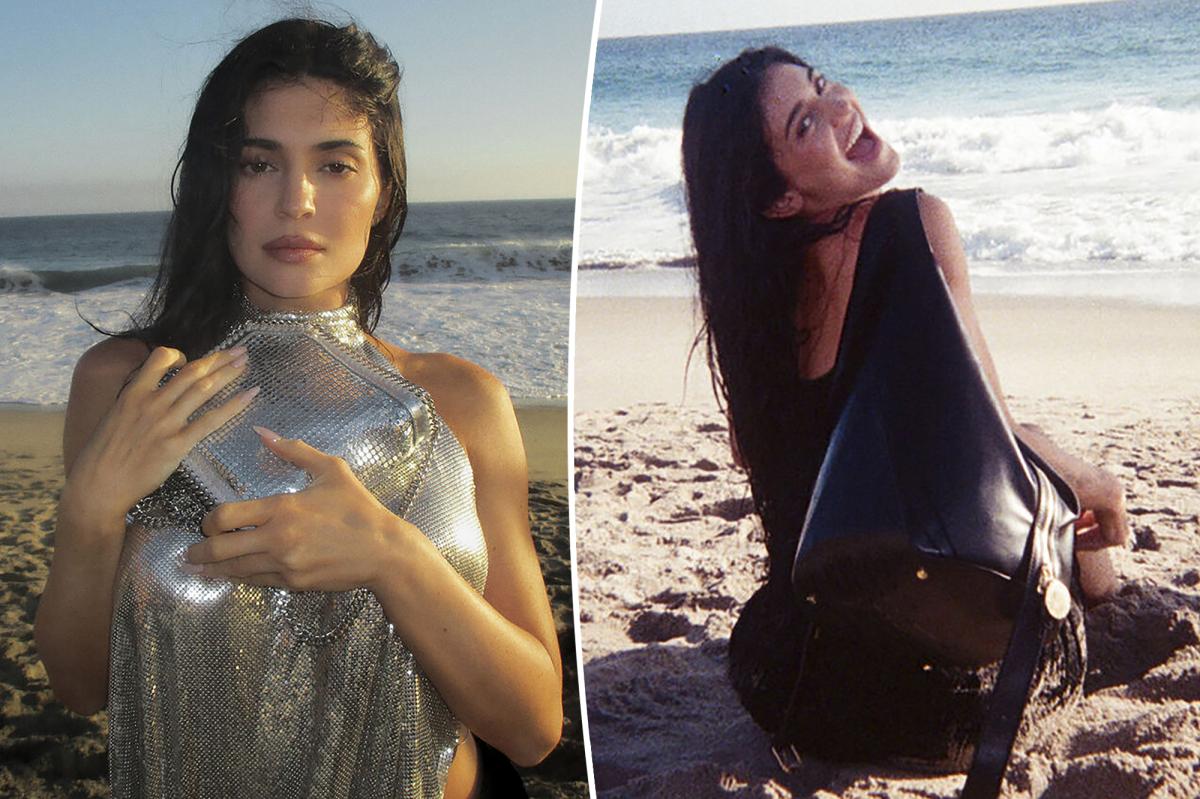
Kylie Jenner Has Entered Her Horse-Girl High-Fashion Era
Fresh from the Victoria’s Secret runway in a $50 million Fantasy Bra, Kylie is trading lingerie bombshell for sunset beaches, lace, chainmail and one extremely photogenic black horse.
Kylie Jenner is having the kind of week that feels less like a calendar and more like a carefully lit cinematic universe. On Sunday night, she walked in her first Victoria’s Secret Fashion Show wearing the $50 million Fantasy Bra. Now she has surfaced on a beach at sunset, dripping in Stella McCartney and splashing around beside a trained black horse.
Subtle? Absolutely not. Effective? Also absolutely not subtle.
The 29-year-old makeup mogul is the new face of Stella McCartney, starring in the house’s “Wild Horses” campaign alongside still images and a short film directed by Gia Coppola. The visual is peak fashion fantasy: Kylie, a beautiful animal, a dramatic coastline and clothes that appear to have been designed for the exact moment when a beauty billionaire decides she would like to look both untouchable and spiritually connected to nature.
From Fantasy Bra to wild horse
The timing gives the campaign its extra sparkle. Kylie has gone from one of the most conspicuous lingerie moments of the year to a campaign built around softness, freedom and the sort of expensive outdoorsiness that says, “I could be at the beach,” while wearing a $1,990 caped minidress.
That dress is one of several looks Jenner models for the campaign, alongside a delicate lace-paneled camisole priced at $1,575 and a chainmail halter top that costs $1,990. The pieces are glamorous without being designed to disappear into the scenery. Kylie is not exactly blending in with the sand. She is bringing her own weather system.
In the film, titled “Wild Horses,” the horse is meant to be more than a beautiful accessory. Stella McCartney described the project as “an ode to the power, sensitivity and freedom of the horse,” while framing the campaign around the brand’s longstanding advocacy for animal welfare and protection. The house has also positioned the horse as a recurring symbol in its visual identity, from archival collections through its winter 2026 runway.
That makes Kylie’s casting an interesting piece of fashion-pop choreography. She is associated with highly polished, highly controlled glamour: lip kits, body-conscious dressing, camera-ready entrances and a social feed that has helped turn personal style into a full-time entertainment category. McCartney’s pitch is to drop that contemporary bombshell into something more elemental.
Or, in the brand’s own language, to take “an icon of contemporary femininity and unapologetic glamour” out of the expected and immerse her in the raw beauty of the natural world. It is a sentence that knows exactly what it is doing. So does the picture.
The Jenner sisters and the horse motif
There is also a little family déjà vu hiding in the campaign. Kylie is not the first Jenner to be paired with horses for Stella McCartney. For the brand’s winter 2023 campaign, Kendall Jenner posed in the Camargue Salt Flats in France, surrounded by white Camargue horses.
Kendall’s version leaned into the vast, almost mythic landscape. At the time, she said, “Humans and horses have been reliable partners throughout history, and that mutual trust over time is probably why our connection is so powerful.” Kylie’s shoot takes the same basic idea and gives it a darker, more romantic gloss: black horse, sunset beach, lace, metal and a little more bombshell energy.
It is a very Jenner move to turn a brand tradition into a family visual language. Kendall got the windswept equestrian art film. Kylie gets the after-dark version, as if she has arrived at the same fashion pasture but brought better lighting and a more expensive night-out top.
The repetition also makes the campaign feel less like a random celebrity pairing and more like a deliberate continuation. Stella McCartney has a horse story. The Jenners now have a horse story. Somewhere, a mood board is feeling extremely validated.
Kylie’s runway-to-campaign expansion
Although Kylie has spent years at the center of fashion conversation, she has been dipping more visibly into modeling rather than simply attending the shows or appearing in front-row photographs. She previously walked for Coperni and has posed for campaigns including Skims and Alo.
That distinction matters. Kylie has never needed a runway or fashion campaign to be famous; fame arrived first, loudly, and then became part of the product. But these appearances let her play with a different kind of celebrity language. The question is no longer only whether Kylie can sell a lip product or dominate a red carpet. It is whether she can inhabit the visual grammar of a luxury fashion house without looking like she wandered in from a sponsored selfie.
So far, the answer is being staged as yes, with a horse in the background for emphasis.
Her Victoria’s Secret appearance and this Stella McCartney campaign also create a neat one-two punch. One is maximalist lingerie spectacle, complete with a Fantasy Bra whose reported value is designed to make the number itself go viral. The other is editorial fantasy, where the glamour is softened by sand, water and animal symbolism. Together, they present Kylie as both commercial supernova and fashion-world muse.
That is a lot of range for one week, especially when the range is being served in lace, chainmail and a cape.
Why this particular image works
The internet does not need another celebrity standing in front of a neutral wall wearing a recognizable label. It needs a scene. Kylie and the horse provide one instantly. There is contrast in every direction: human polish against animal power, delicate fabric against wet sand, contemporary celebrity against a symbol with centuries of cultural baggage.
And, crucially, the horse does not feel like a random prop pasted into the frame. McCartney’s animal-welfare positioning gives the pairing a clear fashion-house logic, while Gia Coppola’s direction adds the kind of cinematic sheen that makes a campaign feel closer to a short film than an ad break.
Kylie, meanwhile, is doing what she does best: making a visual feel like an event. She does not need to explain the image. She simply appears in it, looking expensive beside a horse at golden hour, and lets everyone else debate whether this is a high-fashion reinvention or just the most glamorous possible way to go outside.
Either way, the message is clear. Kylie Jenner’s week began with a fantasy bra and ended in the wild. The horse got the symbolism. Kylie got another fashion notch. Everyone else got a new screensaver.