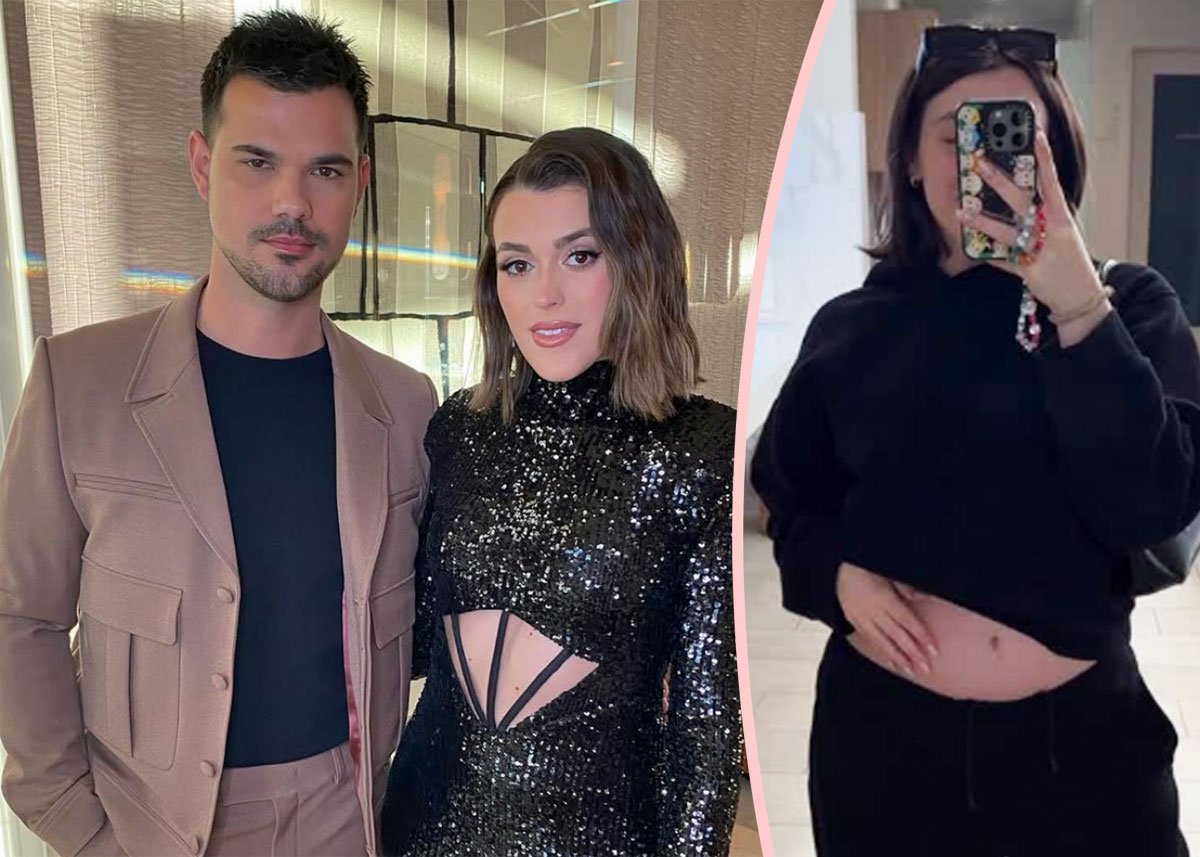
Taylor Lautner and Tay Lautner Welcome Baby Lennon—and the Name Is Peak Soft-Launch Chic
The Twilight star and his wife have introduced their first child with a sweet Instagram announcement, a very cute nickname and one refreshingly honest pregnancy callback.
Taylor Lautner and Tay Lautner have officially entered their Lenny era.
The couple announced the arrival of their first child together, a baby girl named Lennon Taylor, in a sweet Instagram post shared by Tay. The caption is the kind of low-key celebrity birth announcement that knows exactly how much is enough: “One week loving our sweet little Lenny,” followed by a white heart, her full name, a pink bow and her birth date, September 16, 2026.
There is no overproduced magazine cover, no dramatic paragraph about destiny, no attempt to turn a newborn into a lifestyle brand before she has even had a chance to exist. Just Lennon Taylor Lautner, a very charming nickname and a little family announcement that immediately made the internet’s collective auntie instincts kick in.
And yes, “Lenny” is doing a lot of work here. Lennon Taylor is polished and slightly rock-star, while Lenny is warm, tiny and instantly memorable. It is the rare celebrity baby name that feels both considered and genuinely usable. The full name has a little Hollywood gloss; the nickname sounds like someone who will eventually have excellent sunglasses.
Meet Lenny, the Lautners’ newest headline-maker
For Taylor Lautner, the announcement marks a new chapter after years of being permanently associated with one of the most intense pop-culture phenomena of the 2000s. The actor became globally recognizable through the Twilight films, where his role as Jacob Black made him a fixture of the franchise’s Team Edward-versus-Team Jacob wars. That was the era of screaming fans, red-carpet flashbulbs and every friendship being analyzed like it might contain a supernatural love triangle.
Now the biggest Lautner news is considerably softer: a baby girl, a pink bow emoji and the sort of caption that makes “dad” feel less like a public-relations update and more like a real-life identity shift.
Tay’s announcement keeps the focus on the family without oversharing. The post does not turn Lennon into content with a full biography attached. It simply gives followers the name, the nickname and the milestone. In celebrity terms, that restraint is practically its own form of glamour.
The couple’s choice to share the news after a week also gives the moment a gentle feeling of privacy. They did not rush to post from the hospital or narrate every second of the arrival. Instead, they waited until they had spent a little time with their daughter, then opened the door just enough for everyone else to say congratulations.
That pregnancy confession now hits differently
The announcement also lands after Tay spoke candidly about pregnancy on The Squeeze podcast in May. She described having a meltdown and admitting, “I don’t think I like being pregnant,” before acknowledging that the statement might sound horrible but explaining that she was not enjoying the things that came along with it.
It was an unusually honest way to talk about a life stage that celebrity culture often packages in a haze of glowing skin, dreamy maternity photos and suspiciously serene captions. Pregnancy is frequently presented as a beautiful transformation with excellent lighting. Tay’s comments cut through that script without pretending the experience had to be either wholly magical or wholly miserable.
That context gives the baby announcement a little more emotional texture. The post is celebratory, but it does not erase the reality that getting to this point may have been physically and emotionally complicated. Someone can dislike pregnancy and still be thrilled to meet their baby. Someone can be relieved that it is over and deeply in love with what came next. Those feelings are not in competition, despite the internet’s longstanding obsession with making every major life event look perfectly coherent.
Now, the caption’s “one week loving our sweet little Lenny” reads as a tiny, happy exhale. The difficult part of pregnancy has become the beginning of a different kind of exhaustion: newborn time, where a week can feel like a month and a month can apparently be summarized by one white heart.
The name, the timing and the very modern celebrity birth post
There is also something pleasingly precise about the timing. Lennon was born on September 16, and Tay’s announcement arrived on September 23—exactly one week later. The post gives the occasion a clean little calendar stamp while keeping the tone intimate. No vague “our world changed forever” language was required. The date says enough.
Even the birth-season detail has a built-in personality. Lennon arrived during Virgo season, which may or may not mean anything about her future organizational habits, but it does give the announcement a tiny extra layer of internet-friendly lore. Celebrity babies are born into a world that will eventually assign them a zodiac sign, a style identity and perhaps a front-row fashion reputation before they can hold up their own head. For now, she gets a bow emoji and a nickname.
The photo itself is described in the announcement as adorable, and the post shared by Tay Lautner keeps the visual side of the reveal just as sweet as the caption. There is no need to manufacture a larger spectacle around it. The appeal is the simplicity: Taylor and Tay are parents, Lennon is here, and the family is celebrating her first week.
It is also a reminder that soft launches have evolved. In celebrity culture, a relationship can be introduced through a suspicious carousel, a hand appearing at the edge of a vacation photo or a birthday caption with one particularly loaded heart emoji. A baby announcement is the hard launch—but the Lautners have delivered it with the same controlled intimacy that makes social media feel personal even when millions of people are watching.
So congratulations to Taylor and Tay, and welcome to Lennon Taylor Lautner, who already has a stylish full name, a perfect nickname and a birth announcement that managed to be both public and genuinely sweet. The Lautners may be keeping the details close, but they have shared the part everyone wanted: Lenny is here, and she is very loved.

Anne Hathaway Says Verity’s Most Unhinged Sex Scene Was Non-Negotiable
The headboard stays. The biting stays. Dakota Johnson, Josh Hartnett and Anne Hathaway are bringing Colleen Hoover’s fever-dream thriller to the big screen exactly where it gets weird.
Somewhere in the Amazon MGM Studios production office, there is apparently a small graveyard of wooden headboard fragments. Anne Hathaway has seen it. Josh Hartnett has seen it. Dakota Johnson may have personally contributed to it. And if you have read Colleen Hoover’s Verity, you already know why.
In a joint interview with E! News, Hathaway revealed that the upcoming film adaptation kept one of the novel’s most bizarrely specific moments intact: the scene in which Lowen Ashleigh bites a headboard to muffle the sound of her orgasm. Not a toned-down version. Not a tasteful cutaway. The headboard bit is staying in the movie, because apparently there are some literary details Hollywood can change only at its own peril.
“There’re certain things, like, Verity can be a brunette, but we can’t mess up the headboard bit,” Hathaway said. “We have to get that right, because it’s too specific and unusual.”
That sentence is the entire Verity experience in miniature: glossy, lurid, slightly deranged and very confident that the strangest thing in the room deserves top billing.
The headboard has entered the chat
For anyone who missed the 2018 novel’s particular brand of domestic nightmare, Verity follows Lowen, a struggling writer hired to finish the bestselling series of Verity Crawford, a famous author left comatose after a car accident. Lowen moves into the Crawford family home, where she finds Verity’s unfinished autobiography and begins uncovering secrets that are considerably more alarming than the average writer’s block.
She also becomes romantically involved with Verity’s husband, Jeremy Crawford, which is where the headboard makes its unforgettable entrance. In the book, Jeremy performs oral sex on Lowen while she attempts to keep quiet by biting the wood. The detail is so oddly concrete that it has become one of the novel’s signature moments—not necessarily because it is romantic, but because it feels like the kind of thing you would tell a friend about with the urgent tone usually reserved for airport scandals.
Hartnett, who plays Jeremy, did not have to leave his own dental signature on the props. He did, however, see the evidence of his costars’ labor. “I remember going through the prop table at one point and seeing like a series of different pieces of the headboard with different bites on them,” he said, teasing Johnson and Hathaway that they “must have sat there for a while” biting each prop.
Hathaway’s response to the whole ordeal was wonderfully matter-of-fact: “I never thought I’d bite a headboard on camera in my life, but that was just a Tuesday.” It is hard to imagine a more Hathaway sentence—part glamorous movie-star anecdote, part exhausted office update.
Hollywood can change the hair. Not the chaos.
The funny thing about adaptations is that fans will forgive a lot until you alter the one detail they have mentally highlighted, underlined and discussed in a group chat. Hathaway knows that the film cannot reproduce every reader’s private image of the Crawford estate, the characters or the novel’s atmosphere. But some changes are more combustible than others.
“The house might not look exactly the way in your head when you read the book,” she said. “For a lot of people, Verity is a blonde. So, you just kind of hope that people will go with your version of it and let it be its own thing.”
That is the adaptation bargain: the blonde can become a brunette, the imagined house can acquire an entirely new staircase, and the sleepwalking sequence can be reduced to a fragment. But once you have promised the audience the headboard, you had better deliver the headboard.
Johnson explained that only a snippet of Lowen’s sleepwalking made the final cut, despite the production shooting more elaborate material, including moments in which Lowen ends up outside. Her reasoning was blunt and sensible: “It’s just not necessarily that interesting to watch someone sleepwalk.” A disturbing paragraph can thrive in a book. On screen, someone wandering around unconscious for several minutes risks becoming an expensive screensaver.
The headboard, by contrast, has built-in cinematic stakes. It is physical, absurd and instantly legible. It also tells you everything about the movie’s tone: this is a psychological romantic thriller, yes, but one that is not above letting a piece of furniture become a supporting character.
Anne, Dakota and Josh are a very glossy nightmare
The cast is doing some unusually elegant heavy lifting here. Hathaway plays Verity Crawford, the bestselling author whose body is unresponsive but whose influence hangs over the house like a perfume no one can identify. Johnson plays Lowen, the outsider pulled into the family’s secrets. Hartnett plays Jeremy, the husband at the center of the emotional and erotic triangle.
All three are also producers on the film, giving the adaptation a little more creative ownership than a standard star vehicle. Hathaway and director Michael Showalter previously worked together on The Idea of You, while Johnson’s production company TeaTime Pictures grew out of her interest in finding and developing material with the same immersive pull she looks for as a reader.
Johnson has described her reading habits as a willingness to “fall down the rabbit hole every time,” and Verity is very much a rabbit hole with expensive lighting. Its appeal is not simply the mystery of whether Verity’s writings are true. It is the sensation that every new discovery makes the house feel more intimate, more glamorous and less safe.
That combination may explain why the cast announcement generated such immediate enthusiasm from Hoover’s audience. When Johnson’s casting was revealed in December 2024, fans were, in E!’s memorable phrasing, “fifty shades of tickled pink.” Hoover later called her excitement about the cast “an understatement.” The author is also involved as a producer, alongside Hathaway, Johnson, Showalter and others.
The movie is keeping the spirit—and the splinters
Filming took place from January through March 2025, with Hathaway and Hartnett photographed working on scenes in Queens. Hathaway was later seen in a semi-sheer white dress, matching belt, sunglasses and leopard-print heels; Hartnett wore a navy suit in one sequence and a bow tie in another. Elsewhere, the pair were photographed smiling and running while Hathaway carried his jacket, which sounds less like a thriller setup than a very expensive argument at a wedding.
Hathaway said the first audience response brought relief to the team, particularly because they felt viewers understood what they were trying to preserve. “They thought that we got the spirit of the book correct,” she said.
That spirit, judging by the details the cast chose to discuss, is not solemn literary prestige. It is the deliciously unstable feeling that a beautiful house may contain a terrible secret, a manuscript may be a confession or a trap, and a sex scene may require multiple sacrificial props.
Verity is scheduled to arrive in theaters Oct. 2, 2026. Until then, the central question is not whether the film will recreate every image readers carried from the book. It is whether audiences will accept Hathaway as a brunette, survive the Crawford estate and recognize the exact moment when a headboard becomes plot.
One thing is clear: Hollywood may rearrange the furniture. It may streamline the sleepwalking. It may ask everyone to adjust their mental picture of Verity Crawford. But the woodwork has been warned.
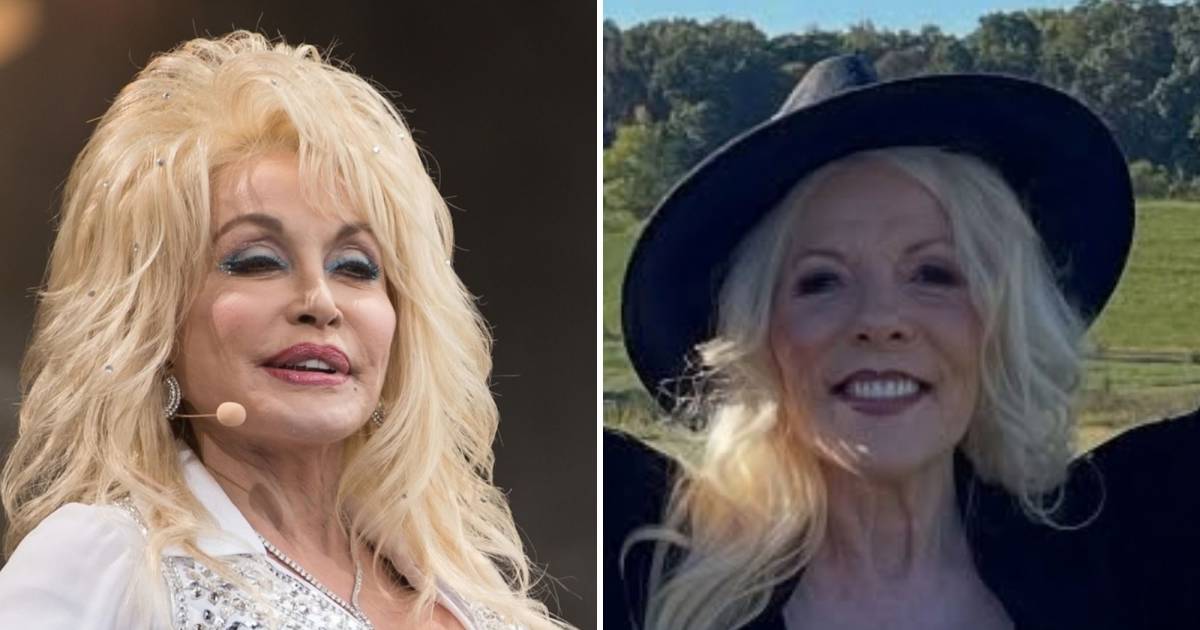
Dolly Parton’s Family Feud Rumors Just Got a Wild New Chapter
Her sister Freida says the Parton/Owens family is not fighting over Dolly’s estate — even as a bitter security dispute has exploded into court filings, alleged threats and a very public family fracture.
Dolly Parton’s family is insisting there is no family feud, which is exactly the kind of sentence that tends to make everyone lean closer to the screen.
On Wednesday, Dolly’s younger sister Freida Parton addressed rumors that the Parton/Owens family had begun fighting over the country icon’s estate. Her message was brief, affectionate and very carefully worded: “There is no feud within our family. No one among the Parton/Owens family is fighting over Dolly’s estate.”
Then she added, “We all love Bryan, just as we love each other. I love you all!!”
The Bryan in question is Bryan Seaver, Dolly’s nephew and the former head of security for her properties. His abrupt removal from the role has turned an already emotional period into a full-blown celebrity-family saga, complete with corporate power struggles, angry statements, court documents and alleged messages so dramatic they sound like they were written for a prestige television finale.
The timing is what made everyone start talking
Seaver was fired last week by the executors overseeing Dolly’s estate, according to Us Weekly. His security company, SAPS, said Seaver and his team were given notice on September 16 that their services were no longer needed at Dolly’s Nashville home, museum and warehouse. A new security staff was brought in immediately.
That would already be a startling change after more than two decades of family-linked protection. But the timing made it feel especially jarring: Seaver had been chosen by Dolly to announce her death to the public just weeks earlier.
Seaver’s mother is Dolly’s sister Cassie Parton, and his family connection to Dolly was not merely ceremonial. His father, Larry, had reportedly held the security role before him. In the emotional video announcing Dolly’s death, Seaver spoke as someone carrying both a professional responsibility and a deeply personal loss.
“As her head of security for more than two decades,” he said in the video posted to Dolly’s official Instagram account, “I have imagined the heaviness of this moment but haven’t truly felt it until now.”
He described the moment as an honor mixed with “absolute pride and great sadness,” and spoke of Dolly being reunited with her late husband, Carl Dean, along with her parents and others who had died before her.
It is a particularly strange Hollywood aftershock: a trusted relative becomes the public voice of the family one minute, then is suddenly removed from the family’s properties the next. That whiplash is the engine behind the feud rumors Freida is now trying to shut down.
Then came the court filing
The dispute escalated when She’s Alive, LLC — the organization Dolly appointed to oversee her business interests after her death — asked a court to issue a restraining order against Seaver.
In the filing, Dolly’s manager Danny Nozell and fellow executors alleged that Seaver had threatened to use his “self-proclaimed military-contractor experience, access to weapons and capacity for violence” to pressure the estate into meeting his financial demands.
The filing described a series of alleged text messages in which Seaver identified himself as an international arms dealer and mercenary, promised retaliation and threatened to launch a podcast aimed at damaging Dolly’s brand partnerships. Other messages, as quoted in the court documents, included references to guns, swords, vengeance and “warfare.”
That is a lot of language to land in the middle of a family grieving one of the most beloved figures in country music history. It also explains why the phrase “family feud” suddenly started circulating, even though the underlying conflict appears to involve estate leadership, security work and a dispute between Seaver and the people now running Dolly’s business affairs.
A spokesperson for SAPS said the company was “dismayed by the unexpected and, so far, unexplained actions” taken by those in charge of the estate. The spokesperson also said the company remained committed to protecting Dolly’s family and accused others of acting in bad faith and trying to profit from her life.
That statement made the situation sound less like a quiet personnel change and more like a battle over who gets to define Dolly’s legacy — and who gets to stand guard over it.
Seaver says the messages were “rage-talk”
Seaver has denied directly threatening Nozell or anyone connected to She’s Alive, LLC. In a statement to TMZ, he described himself as a career soldier, military contractor and security professional, while insisting that the messages cited in the lawsuit were not threats.
He said he was speaking privately with Nozell, whom he considered a friend, and characterized their exchanges as “two guys having rage-talk and crying on the phone together while we were grieving.”
Seaver also said his most explosive comments were aimed at specific business partners he believed had mistreated or intimidated Dolly, rather than at the people currently managing her estate. He said he stood by those comments.
That explanation has only added another layer to the story. The alleged messages, the court filing and the public statements all point to serious anger, but the people involved are describing that anger in radically different ways: as intimidation, as private venting, as loyalty to Dolly and as a fight over who betrayed whom.
Meanwhile, Freida’s statement is trying to pull the family back from the cliff. Her post does not deny that the dispute exists. It denies that the family is fighting over Dolly’s money and insists that affection for Seaver remains intact.
That distinction matters. Families can love each other and still disagree spectacularly over business, security, access and control. In the celebrity world, where every private rupture gets dragged into public view, “there is no feud” can sometimes mean there is no permanent break — not that everyone is enjoying a peaceful group chat.
Dolly’s public image has always been built around warmth, loyalty and family. She made kinship part of her mythology long before the current generation turned family dynamics into content. Her siblings, nieces and nephews have appeared in the orbit of her career, while her businesses and philanthropic projects expanded into an empire that required layers of management.
Now, after her death, that carefully protected world is being reorganized in real time. The person who announced her passing has lost his security position. The estate’s executors are seeking court protection. A security company is accusing those executors of acting in bad faith. And Dolly’s sister is asking the public not to mistake a brutal internal dispute for a family war.
For fans, it is an uncomfortable sequel to a beloved star’s farewell: Dolly may be gone, but the battle over who protects her name, her properties and her legacy is only getting louder.