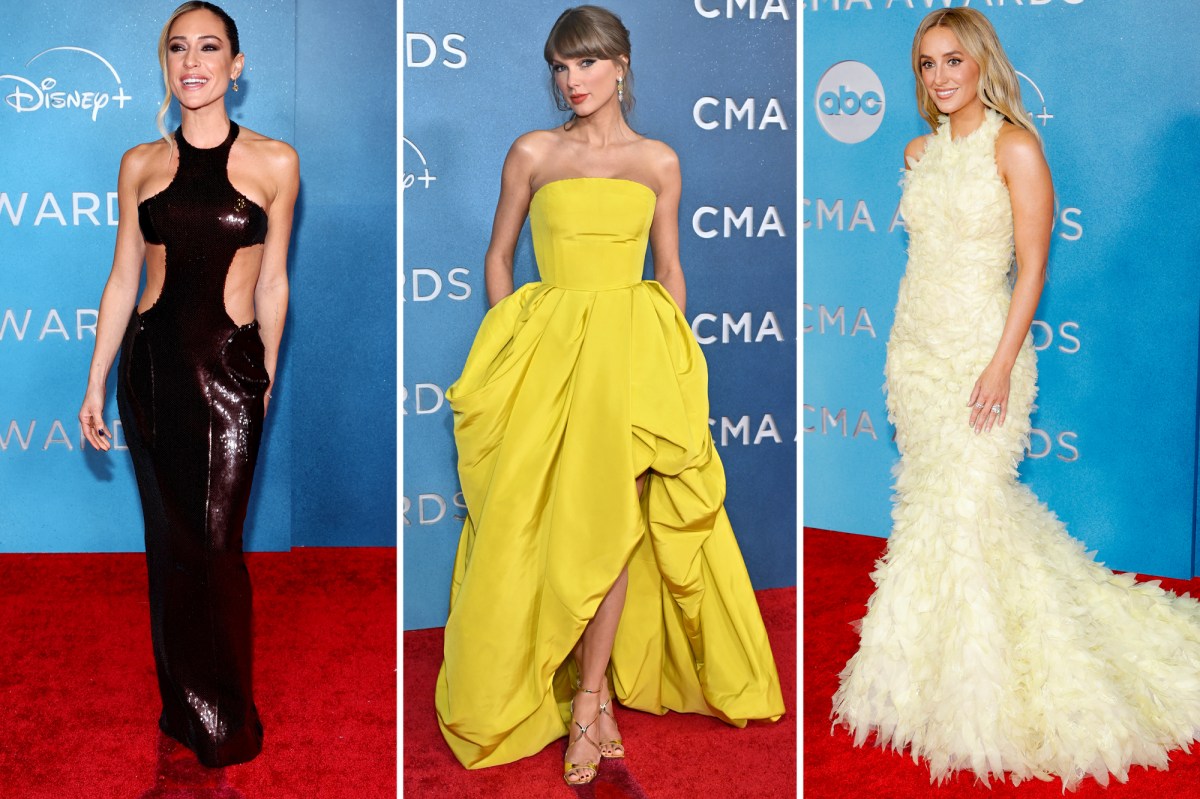
Taylor Swift Walked Into the CMAs and Turned the Red Carpet Into a Pop-Country Power Move
The 60th annual CMA Awards had country royalty, reality-TV chaos and one extremely loud fashion headline: Taylor Swift.
The country music red carpet has always had its own weather system. There is the rhinestone pressure, the big-hair humidity, the occasional reality-TV storm front and, every so often, a pop megastar who changes the entire forecast simply by showing up.
At the 60th annual CMA Awards, that megastar was Taylor Swift.
Page Six’s red-carpet gallery puts Swift at the top of the marquee, with four separate images devoted to her before the carousel moves through Lainey Wilson, Tucker Wetmore, The Red Clay Strays and a parade of country stars, television personalities and familiar Nashville faces. No, this is not a subtle placement. The gallery is effectively saying: country music’s biggest night had its own headliner, and then Taylor arrived to make the entrance feel like an event inside the event.
The Taylor effect has officially entered its country era
Swift appearing at the CMAs is the kind of celebrity collision that makes people sit up even when nobody is pretending it came out of nowhere. Her relationship with country music is part of her origin story, not a random genre detour. Before the stadiums, the record-breaking tours and the global pop machinery, there was a teenage Taylor with a guitar and a Nashville dream. Her early career was built in the country ecosystem, even as her sound gradually expanded beyond its borders.
That history gives a CMA appearance a different charge than a standard awards-show walk. Swift is not merely visiting another celebrity’s party. She is returning to a room that helped establish the first version of her public identity — now as one of the most famous people on the planet.
That is the deliciously strange part of celebrity chronology: the same person can be both the hometown girl and the global spectacle. At the CMAs, Swift brings the scale of the latter while carrying the mythology of the former. The red carpet gets a little more electric because everyone knows there is a before and after to her story.
The gallery reflects that imbalance. Lainey Wilson, one of country’s biggest modern stars, is listed alongside Swift, as are Tucker Wetmore and The Red Clay Strays. But Swift receives four entries before the rest of the carpet gets its turn. In celebrity language, that is not just attendance. That is editorial gravity.
Country glam, reality-TV crossover and a very Nashville guest list
The fun of this carpet is that it does not stay neatly inside the country-music family tree. Alongside performers and musicians are Kristin Cavallari, Lisa Barlow, Madison LeCroy and Salley Carson — names that bring reality-TV recognition into an awards-night environment traditionally associated with Nashville polish.
That mix matters because red carpets are no longer just about identifying who is nominated. They are social maps. They show which worlds are touching, which audiences are being invited in and which celebrities understand that a photo opportunity can travel much farther than an awards telecast.
Cavallari arrives with the long-running visibility of a reality-TV veteran who knows how to make an event feel bigger simply by being photographed at it. Barlow brings the Bravo effect, where even a formal carpet can carry the possibility of a confessional, a feud or a group-chat postmortem. LeCroy and Carson add another layer of reality-TV familiarity to a lineup that already has plenty of built-in name recognition.
None of this means the CMA carpet has abandoned country music. Quite the opposite. It means country’s celebrity ecosystem is now broad enough to include the people who orbit the music, the people who amplify it and the people who can turn an outfit gallery into a conversation well beyond Nashville.
That is why the lineup feels more interesting than a simple parade of nominees. Will Bundy and Lauren Watkins appear together in the gallery, while the list also includes MacKenzie Porter, Willow Avalon, Jessi Alexander, Harper Grace, Danielle Parton, Conner Smith and Karley Scott Collins. The carpet is doing what red carpets do best: compressing several different versions of fame into one very glossy hallway.
The real red-carpet headline is the pecking order
There is a temptation to treat awards-show fashion as a sequence of isolated outfits: star arrives, camera flashes, next star arrives. But the more revealing story is often the order of attention. Who gets the opening frame? Who is photographed repeatedly? Who is used to define the mood of the night?
Here, Swift is the unmistakable opening statement. Wilson is the country anchor. The rest of the gallery expands outward from there, moving through rising performers, established names, reality personalities and social-friendly faces. It is a useful snapshot of how modern fame works: prestige, nostalgia, crossover appeal and algorithmic recognizability all sharing the same carpet.
Swift’s four-image presence also captures something specific about her current celebrity language. She does not need a dramatic announcement to make an appearance feel significant. A carpet moment can do the work. The mere fact of being photographed at a particular event becomes its own little chapter, especially when the event connects to a formative part of her career.
That is the part fans will likely linger over: not only what Swift wore, but what the appearance says about the rooms she can still command. She can walk into the CMAs as a former country newcomer, a current pop institution or both at once. Every version is recognizable, and every version makes the photo more loaded than a normal red-carpet snap.
The 2026 CMA carpet, then, is not just a fashion gallery. It is a hierarchy lesson with excellent lighting. Taylor Swift gets the opening burst of attention, Lainey Wilson supplies the country-star authority, and the reality-TV contingent ensures the guest list has enough crossover voltage to keep the night moving outside the broadcast.
That is how a red carpet becomes a social event instead of a queue: one giant pop return to her old neighborhood, a country crowd dressed for its biggest night and just enough Bravo-adjacent energy to make the photo dump feel like it could become a group chat argument by breakfast.
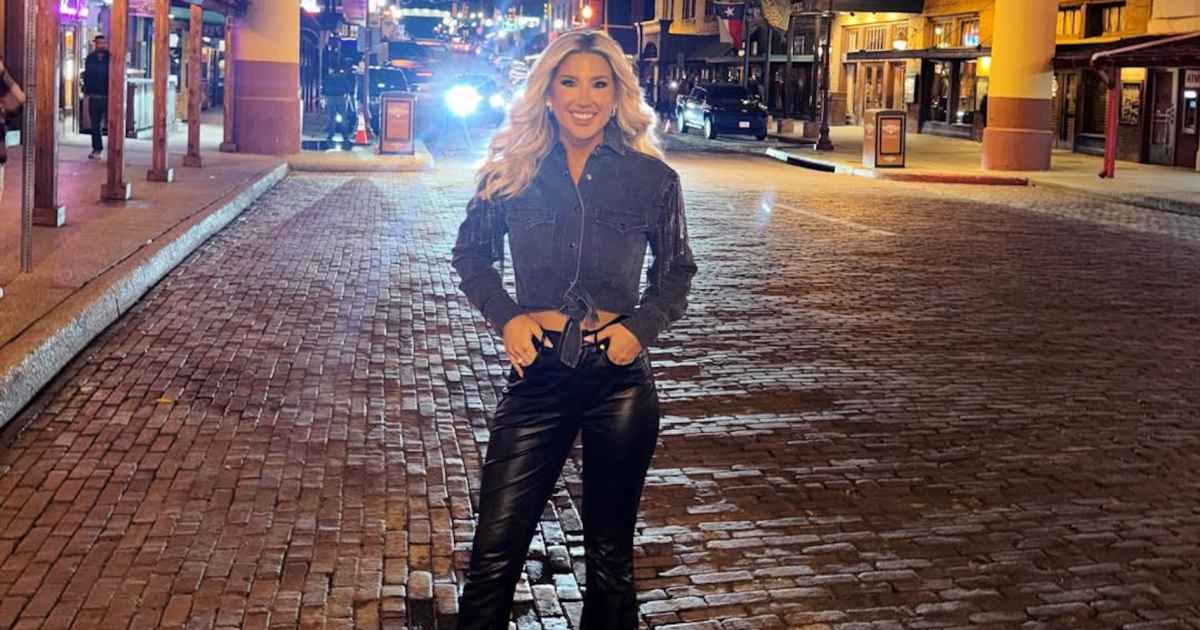
Savannah Chrisley’s Baby Has Arrived in the Middle of a Very Chrisley Family Argument
The pregnant reality star says she found a pediatrician willing to treat her unvaccinated newborn — and even Todd Chrisley had thoughts.
Savannah Chrisley is expecting her first baby, but apparently the little boy is already being introduced to the family business: public debate.
On the latest episode of her Unlocked podcast, the 29-year-old reality star said she does not plan to vaccinate her son immediately after birth. “I am not, but again, that is my choice,” she said, framing the decision as a personal one rather than a permanent declaration about her child’s entire medical future.
That distinction is doing a lot of work. Chrisley is not presenting a neatly packaged parenting philosophy so much as opening the door to the kind of conversation that instantly turns a celebrity pregnancy into a national group chat. Her baby has not even arrived, and his anticipated vaccination schedule is already a headline, a family talking point and a political Rorschach test.
The baby is coming, and the discourse got there first
Chrisley announced in October that she was pregnant with her first child with husband Jason Galanis. The couple, according to Us Weekly, had been together since 2025 and secretly married in the Cayman Islands over the summer, amid the pregnancy. It is a very modern celebrity rollout: private wedding, public baby news, podcast disclosures and a family member ready with commentary before the nursery is finished.
On her podcast, Chrisley explained that she specifically sought out a pediatrician who would accept her baby regardless of his vaccination status. She said the doctor told her that “75 percent” of the practice’s patients do not vaccinate, and described a more staggered approach in which some parents wait until their children reach certain milestones or until travel and outbreaks change the calculation.
Chrisley also said she was not making a decision for every stage of her son’s life. “That’s not to say, ‘OK, I’m never going to do this,’” she said, objecting to the feeling that parents must agree to an immediate, one-size-fits-all plan the moment a baby is born.
That is the emotional center of her argument: not necessarily certainty, but control. Chrisley wants the decision to belong to her and Galanis, not to a hospital checklist, an online mob or a pediatrician who will drop them as patients if they decline a recommended shot. She said that, in her experience, finding a doctor willing to work with that choice was itself part of preparing for motherhood.
Enter Todd Chrisley, naturally
There was no chance this conversation would stay between Savannah, her husband and the pediatrician. Todd Chrisley, father of six and professional family commentator, initially pushed back.
On his own podcast, Chrisley Confessions 2.0, Todd recalled that he vaccinated all of his children. But even he acknowledged that his own parenting record was not exactly an airtight argument. “I don’t think that me using the fact that I vaccinated all of my children is actually a raving review over the way some of my kids have acted,” he said.
That is perhaps the most Chrisley sentence ever spoken: a vaccination debate, immediately rerouted through a roast of the family’s behavior. The patriarch can disagree with his daughter while still managing to make the disagreement about the famously chaotic Chrisley family ecosystem.
He has since said he respects Savannah’s decision, adding that people should be able to exercise their choices. Then, because this is Todd Chrisley and not a calm parenting forum, he turned the moment into a mini bipartisan sermon. Democrats, he suggested, should appreciate choice and acceptance; Republicans should appreciate a Christian woman following her values. His conclusion: Savannah should be “covered in the blood of both parties.”
It is an extremely Todd solution to a highly combustible issue: combine family loyalty, religion and American political identity until everyone is technically included and nobody can accuse you of having made the conversation less dramatic.
Pregnancy, privacy and the Chrisley content machine
Chrisley’s vaccination decision lands in a pregnancy storyline that has already been unusually public. After revealing the news, she wrote a public letter to her unborn son, calling him her “sweet thumb-sucking baby” and insisting that he was not “a headline,” “a controversy” or a reflection of anyone else’s past mistakes or opinions.
That line now reads less like a sentimental pregnancy caption and more like a preview of the exact situation she is navigating. The baby is being introduced to the world through a family history that comes with its own built-in noise: reality television, legal and personal turmoil, outspoken parents, political arguments and an audience accustomed to treating every Chrisley statement as an invitation.
Chrisley’s choice is also arriving at a particularly charged moment in public health conversations. The Centers for Disease Control and Prevention states that routine childhood vaccines are safe and effective against infectious diseases including measles, chickenpox and hepatitis B. The Pan American Health Organization has announced that the United States lost its measles-elimination status after 26 years, a setback reported alongside renewed national arguments over vaccine policy.
Chrisley did not present herself as a medical expert, and she did not say she had ruled out vaccines forever. She described a personal plan, a preferred doctor and a refusal to be shamed. Those are different things, even if the internet tends to blend them together before lunch.
The first Chrisley grandbaby is already a storyline
There is something revealing about the family’s split-screen response. Savannah wants autonomy. Todd wants to make clear that he vaccinated his children, then wants to make clear that he supports his daughter, then wants to make clear that both political parties can somehow claim the moment. The baby, meanwhile, has become a symbol before he has a name, a face or a birth announcement.
That is the peculiar economy of celebrity pregnancy in 2025: the bump is personal, but the conversation is public; the choices are intimate, but the commentary arrives in podcast form. For Chrisley, motherhood is being documented in real time, complete with a secret wedding, a forthcoming son, a carefully chosen pediatrician and a father who cannot resist adding a closing argument.
Her position may continue to change. She has left room for that herself. But for now, Savannah Chrisley is making one thing clear: she intends to parent on her own terms, even if those terms become the loudest thing in the room before her baby ever gets there.
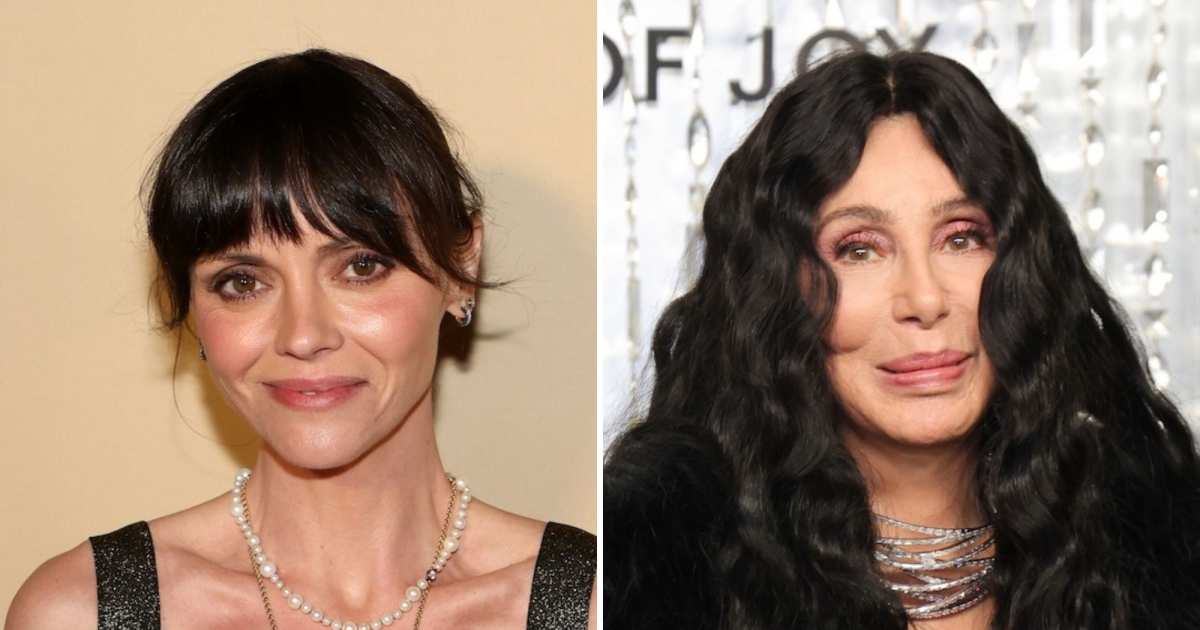
Christina Ricci Says Cher Still Holds a Grudge Over One Very ’90s Voicemail
The Mermaids reunion we deserve is apparently one phone call away — if Cher ever decides to answer.
Some Hollywood friendships fade gently into the background. Others remain suspended in amber, preserved inside one unanswered voicemail from the late ’90s. Christina Ricci’s friendship with Cher appears to belong firmly to the second category.
Appearing on Watch What Happens Live With Andy Cohen, Ricci was asked about her relationship with her former Mermaids costar. Her answer was not the breezy “we still text sometimes” response one might expect from a beloved mother-daughter pairing in a nostalgic ’90s classic.
“I’m not [still in touch]. Unfortunately, she’s still mad at me, she holds a grudge,” Ricci said.
And just like that, a decades-old celebrity friendship became the kind of story you immediately send to the group chat with the words: Wait, what happened between Cher and Christina Ricci?
The feud, as Ricci tells it, began with a magazine interview
Ricci said the trouble started when she was 19 and participated in a joint magazine interview with Cher. According to Ricci, Cher said “all these things that were not that amazing” about her during the conversation.
That alone might have been enough to create a very understandable young-star panic. But Ricci said Cher later left her a voicemail explaining that journalists were always trying to get the worst out of people and apologizing for how the comments had landed. Ricci, still 19, did not call her back.
There it is: the tiny hinge on which the entire emotional door apparently swung shut. Cher believed she had reached out to explain herself. Ricci, young and hurt, let the message sit. Decades later, Ricci says Cher remains upset that she never returned the call.
Andy Cohen, visibly stunned by the plot development, pointed out that Ricci had spoken warmly about Cher on the show before. He then summarized the apparent problem: Cher was mad because Ricci did not return the message.
“Yes,” Ricci agreed.
It is an almost comically simple misunderstanding, except for the fact that it involves two famous people, one intimidating pop icon and enough time for several generations of iPhones to come and go. The emotional architecture is pure old Hollywood: a young actress, a misinterpreted interview, a voicemail, a silence that becomes a legend.
Ricci still sounds completely enchanted by Cher
The striking part of Ricci’s story is that there is no scorched-earth energy here. She did not arrive on the couch to drag Cher. If anything, she seemed determined to explain why Cher’s anger made sense from Cher’s point of view.
Ricci said she could absolutely imagine being Cher and thinking, essentially, “I’m going to call this young person and explain to her that they misquoted me,” only to receive no response. She even acknowledged the audacity of her own teenage silence.
“I would be so pissed,” Ricci said. “I get it.”
That is the difference between a celebrity feud and a celebrity postmortem. Ricci’s version does not ask us to choose sides so much as marvel at the bizarre fragility of relationships formed under studio lights. One person thought she was protecting the other. The other thought she had been insulted. Then nobody managed to reset the conversation.
Ricci turned to the camera with a message for her former costar: “Love you, Cher, I love you so much.”
Which is both touching and, in its own way, an open invitation. Cher, the line is active. The voicemail saga can still end. Someone just has to pick up.
Mermaids was more than a movie to Ricci
The story lands because Mermaids was not merely one credit among many in Ricci’s career. It was her film debut, and the movie placed her opposite Cher while Winona Ryder played her older sister, Charlotte Flax. Ricci played Kate, the daughter of Cher’s free-spirited Rachel, in a film that has remained a durable piece of ’90s pop culture.
Ricci has previously described Cher as a major source of support on the set. In a 1999 interview with Rolling Stone, Ricci recalled that Cher’s early encouragement helped her land the role after six auditions. She also said she would hide in Cher’s trailer to avoid doing schoolwork because her tutor was too intimidated to knock on the door.
That detail makes the current story even better. This was not a casual professional pairing where two actors exchanged polite greetings between takes. Ricci was a child star who had found a protective, glamorous adult figure in the middle of a complicated production. Cher, in Ricci’s telling, took her under her wing.
Ricci revisited that dynamic in a 2024 interview with Entertainment Weekly, saying Cher understood that a young performer might not know what was happening behind the scenes — power struggles, tensions or other issues — and could mistakenly assume everything was her fault. Ricci said Cher did not want her to feel insecure.
So the alleged grudge is hovering over a genuinely affectionate history. Ricci’s memories of Cher are not being rewritten as fake or foolish. They remain warm, even while one old hurt continues to sit between them like an unopened message.
A Cher-Christina Ricci reunion would break the internet
There is an obvious temptation here to imagine the reunion special: Cher in a spectacular outfit, Ricci laughing nervously, Andy Cohen asking the question everyone is thinking and a producer quietly checking whether the segment can accommodate a surprise video call.
But the appeal is not just nostalgia. It is the specificity of the conflict. Celebrity estrangements usually arrive wrapped in dramatic language — betrayal, disrespect, boundaries, irreconcilable differences. This one apparently began with an interview that went sideways and a voicemail from a famous woman to a teenager who did not call back.
That is not a scandal. It is more recognizable than that. It is the strange little human error that becomes impossible to correct because too much time passes and both people build a story around the silence.
Ricci has apparently tried reaching out since then and said she received “radio silence.” Cher has not publicly responded to Ricci’s account in the source material. For now, the Mermaids mother-daughter bond exists in a particularly modern form: preserved through interviews, old memories and one extremely consequential missed connection.
Still, Ricci’s final message was unmistakable. She adores Cher. She understands why Cher was angry. And she would clearly like the door reopened.
All Cher has to do is leave a voicemail. This time, Christina Ricci might actually call back.