Taylor Swift Wore Her New Song’s Date-Night Top Before She Even Announced It
The black lace Staud cami from Taylor Swift’s “Patient Zero” cover art already had a Travis Kelce-era cameo — and naturally, Swifties are looking at the outfit like it might be plotting something.
Taylor Swift has announced a new song, dropped three pieces of cover art and reminded the internet that, in her universe, a black lace top can have a full supporting role.
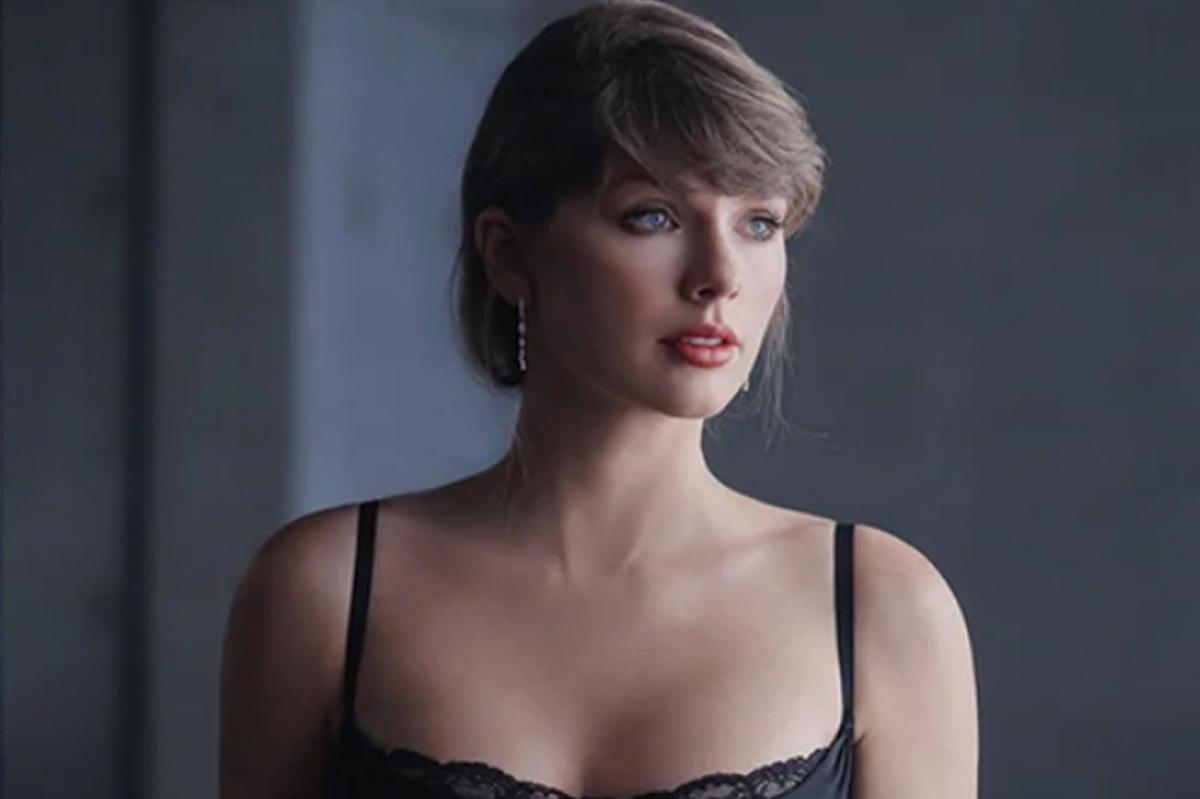
On Tuesday, Swift revealed that “Patient Zero” will arrive September 25, sharing one of three single covers on Instagram and writing that she had been “impatiently waiting” to tell fans. The image is sleek, shadowy and deliberately unbothered: Swift in profile, looking like she knows exactly how many group chats are about to lose their minds.
But the most immediately clickable detail is not the song title or the release date. It is the top.
On the cover, Swift wears a black lace Staud Evangeline Silk Top, a draped cami with a date-night silhouette and a $325 price tag. The top is pretty, a little dangerous and polished enough to pass through a restaurant reservation desk without looking like it tried too hard. More importantly, Swift has worn it before — during a London night out with Travis Kelce in May.
The top already had a London love-story cameo
For that earlier appearance, Swift paired the Staud cami with a matching Fleur du Mal skirt, a Toteme leather coat, a Rabanne bag and Celine sandals. It was the kind of outfit that says “romantic evening” while maintaining the logistical discipline of a woman who knows there will be photographers outside.
Now the same top has been promoted from stylish date-night supporting player to single-cover lead. Is that an Easter egg? Page Six wisely notes that calling the garment itself a clue may be a stretch. But stretching is practically a fan pastime at this point, particularly when Swift repeats an item in a new era and the item has already appeared during a public night out with her now-husband.
The fun is not necessarily in pretending the top contains a secret message. The fun is in watching Swift’s wardrobe acquire continuity. A look that once belonged to an evening in London can be pulled back into the story months later, given a new pose, a new mood and a much larger audience. In Swift’s hands, clothes do not merely complete an outfit. They can be rerun, recast and quietly upgraded into mythology.
Swift’s favorite fashion trick is making a palette feel suspicious
This is also not the first time Staud has appeared near a Swift music tease. Ahead of her contribution to the “Toy Story 5” soundtrack, she stepped out in New York wearing a blue-and-white striped Staud midi dress with a yellow Lady Dior bag, Christian Louboutin sandals and her signature red lipstick.
The combination echoed the red, blue and yellow palette associated with the animated franchise. It was not exactly a hard launch from the outfit itself, but it was visually legible enough to send the internet into its preferred state: delighted, over-caffeinated pattern recognition.
That is Swift’s particular fashion magic trick. She does not need every look to be a coded dispatch. She only needs the styling to be specific. A striped dress, a yellow bag, a red lip. A black lace cami that reappears from a London date night on the cover of a surprise single. The details are strong enough to invite interpretation without requiring a corkboard and several hours of sleep deprivation.
And the Staud top is an especially effective choice because it occupies the exact middle ground Swift has made her own in recent years: romantic but not fussy, glamorous but wearable, sultry without turning the entire look into a performance of seduction. It is the sort of piece that can go from dinner to a cover shoot simply by changing the lighting and adding a little narrative pressure.
“Patient Zero” arrived with maximum Swift efficiency
The song announcement itself was classic Swift-era event planning. She did not spend weeks slowly warming up the room with a conventional rollout. Instead, she appeared with a title, a release date, pre-orders open for 24 hours and three covers ready to be examined from every angle.
Fans were quick to react to the surprise, and the announcement became one of Page Six’s most-shared stories, with the related coverage drawing significantly more attention than the shopping angle alone. That makes sense: the top is cute, but the larger appeal is the collision of a new Taylor Swift song with the possibility that an old outfit has just been pulled back into the spotlight for a reason.
There is also something deliciously efficient about using one garment twice. Swift gets the romance of a remembered look and the visual freshness of a new image, while fans get an entirely new object of fascination. It is sustainable fashion, but make it pop-star semiotics.
Neither Swift nor Kelce has said that the Staud top is meant to signal anything about “Patient Zero.” It may simply be a favorite piece that photographed beautifully. That explanation is less explosive, but it is also part of the appeal: sometimes the internet does not need a confirmed clue. It needs a good top, a suspiciously perfect timeline and a superstar who understands that people will notice everything.
The real Swiftie luxury is looking casually unforgettable
The Evangeline Silk Top is currently listed at $325, which places it in the category of aspirational date-night dressing rather than an accidental checkout add-on. Still, the styling blueprint is easy to understand. Pair a draped black cami with a slim skirt or tailored trousers, add a coat with enough structure to make the lingerie-inspired texture feel intentional, then keep the accessories sharp and the lipstick decisive.
In other words: do not dress like you are waiting for a music video to happen. Dress like you have somewhere to be after the music video wraps.
That may be why this particular Swift outfit is already doing more cultural work than a standard single-cover look. It connects the new release to a recognizable public chapter — London, Kelce, date night, the polished private-life theater of the Swift-Kelce era — without needing to explain itself. The top has a past, the song has a future and the internet is thrilled to stand in the middle, staring at both.
“Patient Zero” arrives September 25. Until then, Swifties have three covers to inspect, one black lace top to overanalyze and approximately 72 hours to decide whether a cami can be an Easter egg. History suggests they will find a way.
Jessica Lange Is Bringing the Entire AHS Cinematic Universe With Her
The horror anthology’s original grande dame agreed to return for Season 13 on one gloriously demanding condition: let her play all four of her old characters — plus a mysterious fifth.
Jessica Lange is not returning to American Horror Story for a polite little cameo, a melancholy hallway appearance or one of those Ryan Murphy moments where a beloved former star materializes long enough to make the internet yell and then disappears into the fog.
She is apparently bringing the whole department store.
Lange revealed on Live with Kelly and Mark that she agreed to return for Season 13 only after securing the right to reprise all four of the characters she has played across the anthology series. Not one. Not two. All four. And, because apparently four Jessicas are not enough Jessica, she also teased a fifth “mystery character.”
That is less a comeback than a hostile takeover of the AHS universe — and honestly, the show has been waiting for someone with the authority to do it.
The condition was very Jessica Lange
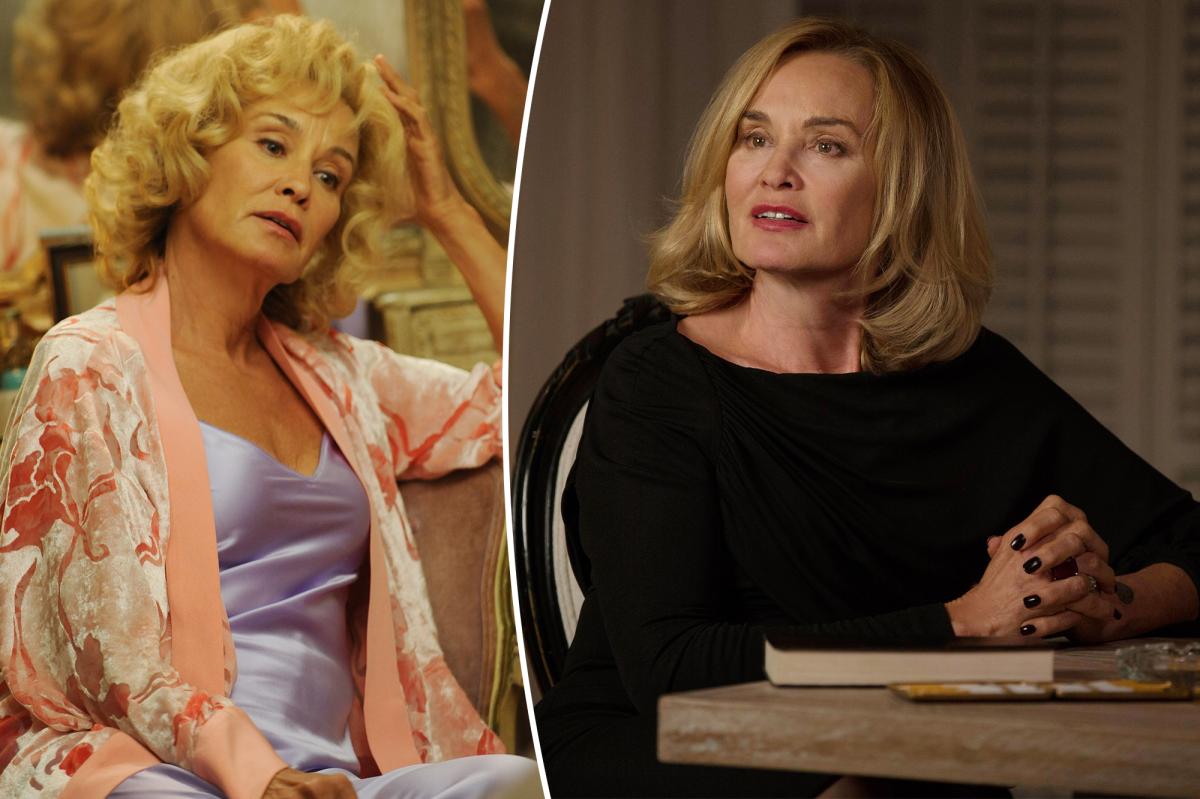
According to Lange, Murphy initially approached her about returning as Constance Langdon, the poisonous, perfectly coiffed mother at the center of Season 1’s Murder House. Constance was Lange’s first major AHS role and remains one of the series’ most indelible creations: part Southern gothic monster, part grieving mother, part woman who could turn a conversation into a hostage situation without raising her voice.
“Ryan Murphy talked me into coming back,” Lange said, explaining that she told him, “I’ll come back if I can [play] all four characters.”
It is a spectacularly on-brand demand. Lange has never treated American Horror Story as a standard television job where an actor clocks in, learns a new name and moves on. Her characters have always arrived with their own weather systems. Constance had venom. Sister Jude had repression, fury and a habit. Fiona Goode had supreme-witch arrogance and the kind of wardrobe that made immortality look like a reasonable career goal. Elsa Mars had glamour, ambition and a German accent wrapped around a carnival full of trauma.
Why choose between them when you can have the deluxe package?
Yes, Sister Jude is involved — but leave the habit at home
Mark Consuelos, who appeared in Season 2’s Asylum as patient Spivey, immediately asked the question any longtime viewer would have asked: What about Sister Jude?
Lange confirmed that the former nun is part of the return, but not in the way viewers may remember her. Sister Jude appears later in the season as a patient at the institution, after having institutionalized herself. Lange also clarified that she would not be wearing the habit.
That detail matters because Sister Jude’s habit was never just a costume. It was armor, status symbol and visual shorthand for a woman trying to control every room she entered. Seeing her outside it — stripped of the authority she once wielded — gives the character a particularly sharp kind of AHS afterlife. The show loves a fall from power, especially when it can dress the fall in period clothes and fluorescent institutional lighting.
Consuelos’ presence makes the exchange even more delightfully circular. He was there in Asylum, Lange is returning to Sister Jude, and the two were able to talk about that season from opposite sides of its grim psychiatric-hospital ecosystem. It is the kind of reunion that feels designed to make the audience pause the television and start naming everyone who might walk through the next door.
From Constance to Fiona to Elsa: the Lange hall of fame
Lange first played Constance in “Murder House,” then returned to the role in a guest appearance during Season 8’s “Apocalypse.” In Season 3, she transformed into Fiona Goode, the Supreme witch whose power was matched only by her appetite for luxury, revenge and being the most interesting person in the room.
Season 4 gave her Elsa Mars, a German expatriate and freak-show manager whose grand dreams and ugly compromises made Freak Show feel like a particularly bruising backstage musical. Those three characters alone represent the strange flexibility of the anthology format: Lange could be a suburban nightmare in one season, a supernatural diva in another and a doomed impresario in the next.
Sister Jude completed the quartet, and the roles remain distinct enough that the prospect of Lange playing all of them at once sounds less like stunt casting than a one-woman repertory company. The real question is not whether she can disappear into each character. She already has. It is how the season will let them coexist without turning into a haunted version of a Lange family reunion.
Lange said her experience returning was “great,” adding that she liked all four characters and found it fun to play them again. That may be the most persuasive reason for the comeback. This is not just Murphy excavating an old favorite because Season 13 needs a recognizable face. Lange sounds like she actually wanted the creative challenge of revisiting the women who helped define the show’s first era.
And then Murphy added a musical number
Murphy previously offered another piece of the bargain in August, revealing that Lange’s condition for returning included a musical number. His pitch was a “greatest hits season” built around the horror symbolism of the number 13, and he said he knew he could only do it with Lange.
She said yes — as long as she got the number.
Of course she did. Lange’s AHS characters have always been theatrical, even when the series was being at its most grotesque. Constance delivered her cruelty like a monologue. Fiona treated witchcraft as a lifestyle brand. Elsa literally built her life around performance. A musical number is not a detour from the Lange mythology; it is the logical next room in the mansion.
The bigger tease is the fifth character, which Lange described as “kind of a mystery character.” When Kelly Ripa asked whether the surprise might point toward a Season 14 return, Lange shut that down with a simple “No!”
So the current shape of Season 13 is clear enough to be tantalizing: familiar faces, four returning Lange creations, one unknown Lange creation and at least one musical number. The anthology is calling it a season, but Lange appears to be treating it as a takeover bid.
And if American Horror Story wants to make its thirteenth season feel like a greatest-hits album, there is no more glamorous way to do it than letting Jessica Lange sing, scheme, haunt, hex and emotionally devastate her way through the entire catalog.
Kat Dennings Had One Brilliant Condition for a ‘2 Broke Girls’ Bra Scene: Pay Me More
Fifteen years after the sitcom premiered, Dennings is revisiting the moment she told Michael Patrick King that a scene of her and Beth Behrs in bras was not worth the money.
Kat Dennings has finally explained why one very specific 2 Broke Girls scene never made it to the screen — and honestly, the negotiation was more compelling than anything that could have happened in those bras.
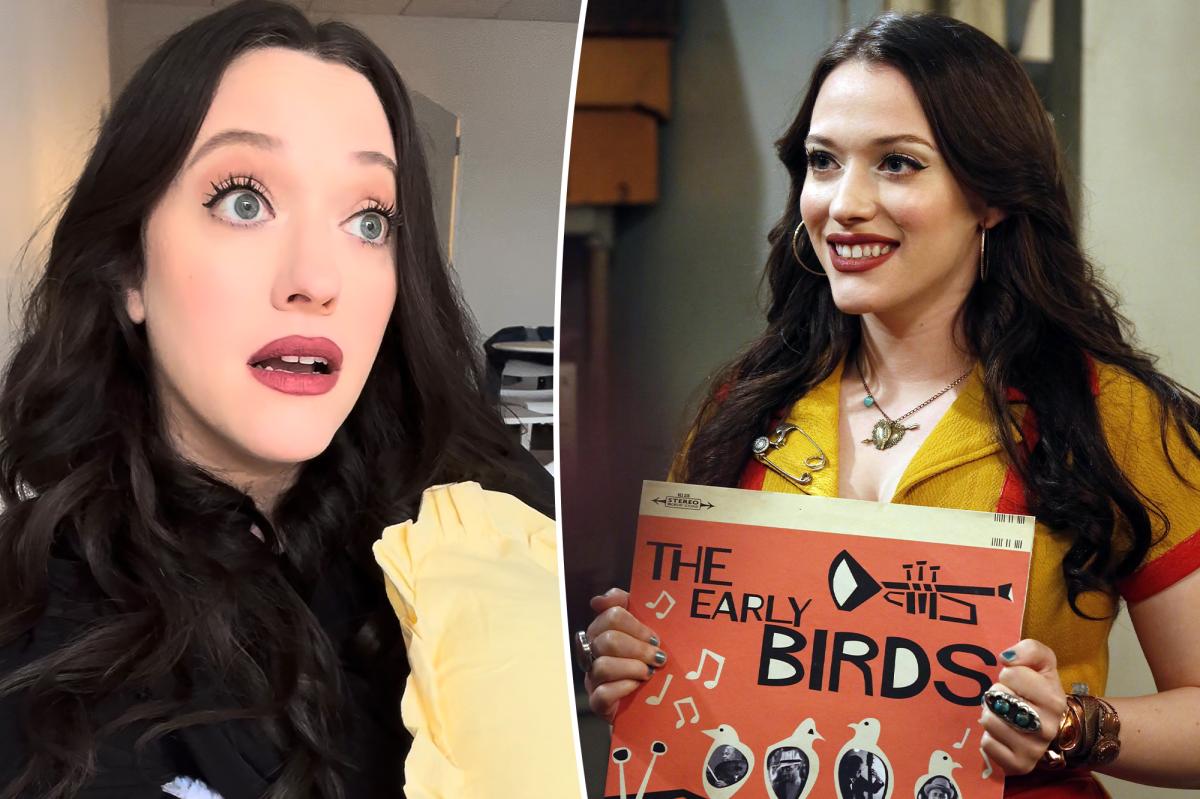
In a TikTok revisiting her time on the CBS sitcom with co-star Beth Behrs, Dennings recalled a scene from the show’s first or second season in which Max and Caroline were supposed to be “just wearing bras” while running around their apartment. The actress remembered sitting through the table read, considering the assignment, and deciding that the costume was not giving what the paycheck needed to give.
So she went to showrunner Michael Patrick King with a request: remove the scene or put the characters in clothes. According to Dennings, King told her, “No I mean, this is the scene.” Her answer was immediate and devastatingly practical: “You don’t pay me enough for a bra scene.”
The scene was subsequently removed. Somewhere, a network standards department is still staring into the middle distance.
The sitcom scene that met its match
Dennings’ story lands because it is not really about a bra scene. It is about the strange math of early-career Hollywood, when an actor can be famous enough to carry a hit show but still feel too replaceable to say no. She said she did not have “a lot of pull” at the time and felt young and lucky to be on a successful series.
That combination — visible, valuable and still expected to be grateful — defined a lot of television in the 2010s. 2 Broke Girls was a genuine ratings machine when it premiered in 2011, pulling in nearly 20 million viewers. Dennings and Behrs played two Brooklyn roommates working at a diner while attempting to build a cupcake business, with Max’s deadpan sexual humor and Caroline’s polished disaster energy driving the show.
It was also a series built around the visual contrast between its stars: Max’s hard-edged, black-clad cynicism against Caroline’s wealthy-girl-turned-waitress aesthetic. That made the proposed underwear scene feel less like a random wardrobe choice and more like one of those familiar television moments where women’s bodies are treated as an automatic punchline, accessory or ratings strategy.
Dennings did not present the anecdote as a grand Hollywood rebellion. In fact, she undercut it herself, saying, “Never underestimate yourself, is the moral of the story,” before adding, “And they weren’t paying me enough, although I don’t think anyone could.” That last line is the real star: funny, blunt and just self-aware enough to make the entire exchange feel like a sitcom scene that wrote itself.
Fifteen years later, the joke has a different afterlife
The timing is doing plenty of work here. 2 Broke Girls premiered 15 years ago, and Dennings recently marked the anniversary on Instagram with a caption that read, “Beth and I both left with PTSD but also money so that’s nice!” It is a very Kat Dennings way to revisit a beloved but complicated chapter: toss a grenade, add a cash joke, keep walking.
The show aired for six seasons and more than 130 episodes, making Max and Caroline fixtures of the early-2010s sitcom landscape. For fans, the anniversary has reopened the familiar question of what it was actually like to make a comedy whose humor was often broad, raunchy and aggressively committed to the bit.
Dennings’ bra-scene story adds a new wrinkle to that nostalgia. The episode apparently survived without the gag, the show survived without the gag, and television history remained tragically free of one more scene involving sitcom characters sprinting through an apartment in their underwear. The absence is now the punchline.
It also fits with the way Dennings has spoken about Hollywood since then. In a 2025 interview with People, she recalled asking her manager how an audition had gone and being told that the casting team thought she was not pretty enough and was fat. That memory makes her old “you don’t pay me enough” line feel less like a one-off quip and more like a boundary emerging in real time.
There is a particular kind of celebrity anecdote that gets better with age because the star has gained enough distance to say what they could not say in the room. Dennings was not the highest-paid actor in the industry when she made that request. She was not claiming total control. She was simply identifying one thing she did not want to do and naming the price she believed would make it worth doing.
Max Black would have approved
That is why the anecdote feels so perfectly tailored to Dennings’ 2 Broke Girls persona. Max Black’s entire worldview was built on refusing to be impressed by the system, the rich people, the bad dates or the indignities of service work. Off camera, Dennings appears to have brought a similarly clean line to a scene that asked her to perform exposure without enough compensation attached.
And, crucially, she told the story with Beth Behrs in the frame — the co-star who would have been in the scene with her and who remains part of the show’s emotional shorthand. This is not a solo rewrite of history. It is two former sitcom roommates opening the vault and finding one missing pair of outfits.
The moment has the satisfying shape of a celebrity story people actually want to send to a friend: a recognizable star, a famous show, a behind-the-scenes detail, and one sentence that doubles as a punchline and a labor negotiation. “You don’t pay me enough for a bra scene” is not just a refusal. It is a complete compensation philosophy.
Fifteen years on, 2 Broke Girls is still being remembered for its jokes, its diner uniforms and its aggressively chaotic friendship. But Dennings’ deleted scene may be the most revealing one of all. It never aired, yet it says plenty about who got to decide what women were asked to wear, how much their discomfort was worth and what happened when an actress decided the answer was: absolutely not for that number.