The Cast of ‘Nobody Wants This’ Has Entered Its Most Awkward Season Yet
Tovah Feldshuh says there is no feud behind the Netflix hit’s political divide—but when your TV family’s real-life opinions collide over Israel and Palestine, “just keep it professional” becomes its own kind of drama.
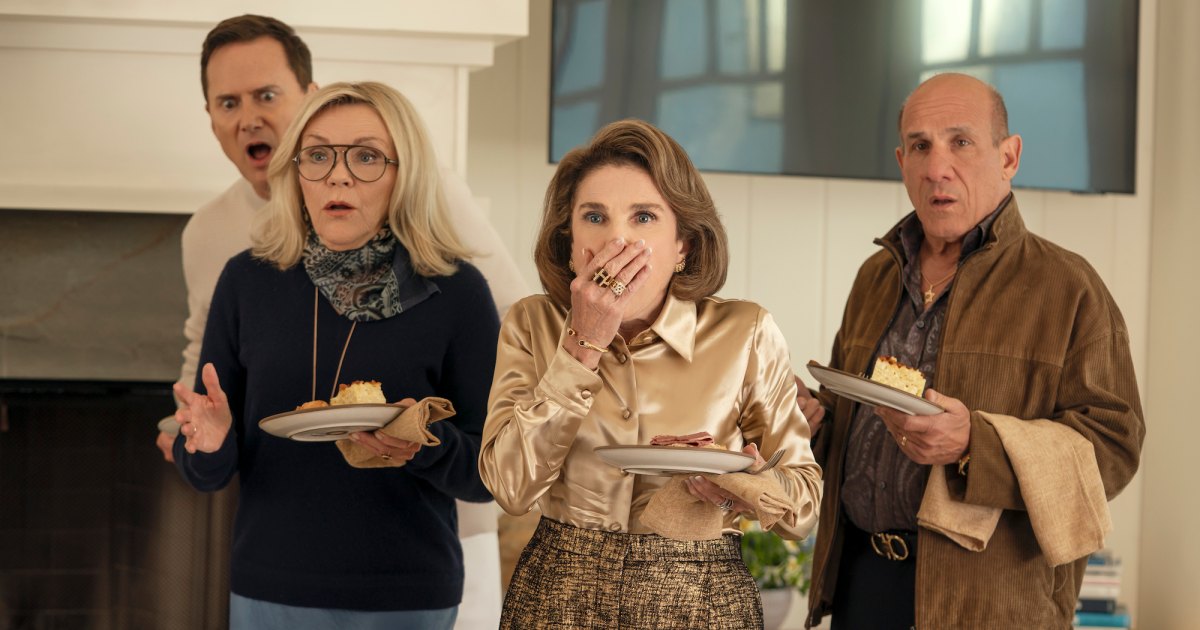
Nobody Wants This was built to make religious disagreement look charming. The Netflix rom-com takes an interfaith relationship, adds a podcast, a rabbi, a skeptical family and enough chemistry to make every dinner-table argument feel one good lighting package away from a wedding montage. Off camera, though, the show’s central fault line has become considerably less cute.
Tovah Feldshuh, who plays Bina—the mother of Adam Brody’s rabbi character, Noah—has addressed speculation that the cast is feuding over the Israel-Palestine conflict. Her message was not exactly “we’re all best friends,” but it was designed to draw a firm line between political disagreement and workplace warfare.
“Tensions are NOT RISING. Profound differences of opinion are,” Feldshuh wrote on Threads, adding that nobody should conflate the two and that the subject would not be brought onto the set. She also made clear that she still deeply enjoys filming the series and hopes it returns for a fourth season.
That is a very Hollywood way of saying: the group chat may be complicated, but call time is call time.
The awkwardness started with Adam Brody speaking plainly
The conversation intensified after Brody, whose career resurgence as the warm, soulful Rabbi Noah has made him one of the internet’s favorite late-blooming crushes, spoke publicly about the war in a September interview with GQ. Brody said he had discussed the issue privately but had not said much publicly. Then he offered a direct position: he described the situation as genocide and said he wanted a free Palestine.
For a performer playing a rabbi in one of Netflix’s most popular romantic comedies, that statement immediately landed in a complicated place. The show is not a political drama, but its premise is inseparable from Jewish identity, religious tradition and the question of how much family and community should shape an intimate relationship. Brody’s public comments inevitably pulled real-world politics into the orbit of a series that had previously been marketed as a fizzy, opposites-attract love story.
There is also the visual dissonance. One minute Brody is being edited into TikToks as the internet’s ideal fictional boyfriend; the next, viewers are parsing his political language and comparing it with statements from people connected to the show. The same character who says something devastatingly romantic over brunch now arrives with a discourse cycle attached.
Tovah Feldshuh is not offering a gentle disagreement
Feldshuh’s own position is sharply different. In an interview with the New York Post, she pushed back on the idea that Israel’s actions should be described as genocide, calling that accusation “wild” and invoking Adolf Hitler’s playbook. She said the continued existence of Israel was crucial to the well-being of the democratic and free world, while also saying that her responsibility on set was to be kind and do her job.
Feldshuh did not name Brody in that interview. She also emphasized that political conversations had not taken place on the set of Nobody Wants This. Her Threads post appeared to address the growing assumption that different public positions must automatically translate into hostility behind the scenes.
But the distinction she is making—deep disagreement without rising tension—is exactly what makes the story feel so Hollywood and so human. People can work together, smile for promotional photos and still hold views about a devastating global crisis that would make a casual dinner conversation impossible. Professional harmony does not require ideological harmony. It requires, among other things, knowing when not to turn the craft-services table into a televised panel discussion.
The show was already carrying a lot of cultural weight
This did not arrive in a vacuum. Before the third season premiered, creator Erin Foster was already answering criticism that the series relied on stereotypical depictions of Jewish people. Foster defended the show’s portrayal, telling the Los Angeles Times that she believed audiences needed positive Jewish stories, particularly in the current climate.
That context helps explain why the cast’s disagreement has become more combustible than a standard celebrity political split. Nobody Wants This is not simply a workplace sitcom with actors who disagree about the news. It is a series whose entire emotional engine is built around Jewish identity, religious continuity and the tension between personal desire and communal expectations. Even when the plot is focused on whether Joanne and Noah can make it through another family function, viewers are being asked to think about who gets to define Jewish life—and who gets to tell those stories.
Foster’s defense of the show and Feldshuh’s comments exist alongside Brody’s public stance, creating an unusually visible triangle of disagreement around a series that thrives on the idea that love can survive uncomfortable conversations. The irony is almost too neat: the show’s real-life conversation is now testing the very premise its characters keep trying to sell.
“Keep it professional” is not the same as “nothing happened”
Feldshuh’s statement does not describe a cast meltdown, and there is no basis in the source material for turning the situation into one. Neither does it erase the fact that members of the show’s orbit have publicly expressed profoundly different views. Fans are connecting those dots because the cast’s fictional world makes the subject feel especially loaded—not because every disagreement automatically becomes a feud.
It is also worth noting what Feldshuh actually chose to defend. She did not pretend that everyone agrees. She did not claim the political divide was imaginary. Instead, she insisted that disagreement should not be translated into workplace tension and said she still wants to return if the show is renewed for a fourth season. That is less a denial of difference than a plea for compartmentalization.
And, frankly, compartmentalization is one of the great hidden skills of the entertainment industry. Actors have spent decades promoting love stories with people they barely know, playing siblings while privately disagreeing and selling “family chemistry” in junkets that began before coffee. The machinery of television runs on the belief that performers can enter a shared fictional universe without sharing a worldview.
Whether audiences can make the same separation is another question. For some viewers, Brody’s stance will deepen their investment in him. For others, Feldshuh’s comments will feel like the more familiar position. Some will simply want the show’s romance without importing the entire geopolitical crisis into every scene. The internet, naturally, would prefer all three reactions at once, preferably in a split-screen edit set to a yearning pop song.
For now, the public story is not that Nobody Wants This has collapsed into a cast war. It is that a glossy romantic comedy has become a surprisingly visible meeting point for competing views about identity, Israel and Palestine, representation and the limits of on-set professionalism. Feldshuh says the differences are profound but the tensions are not rising. That may be the most honest kind of celebrity statement: careful, controlled and still just dramatic enough to keep everyone watching.
The ‘Casper’ Ending That Nearly Stole Devon Sawa From an Entire Generation
Before he asked Christina Ricci, “Can I keep you?”, Sawa was almost cut from the movie entirely — and the ghost story’s teenage crush lore is messier than expected.
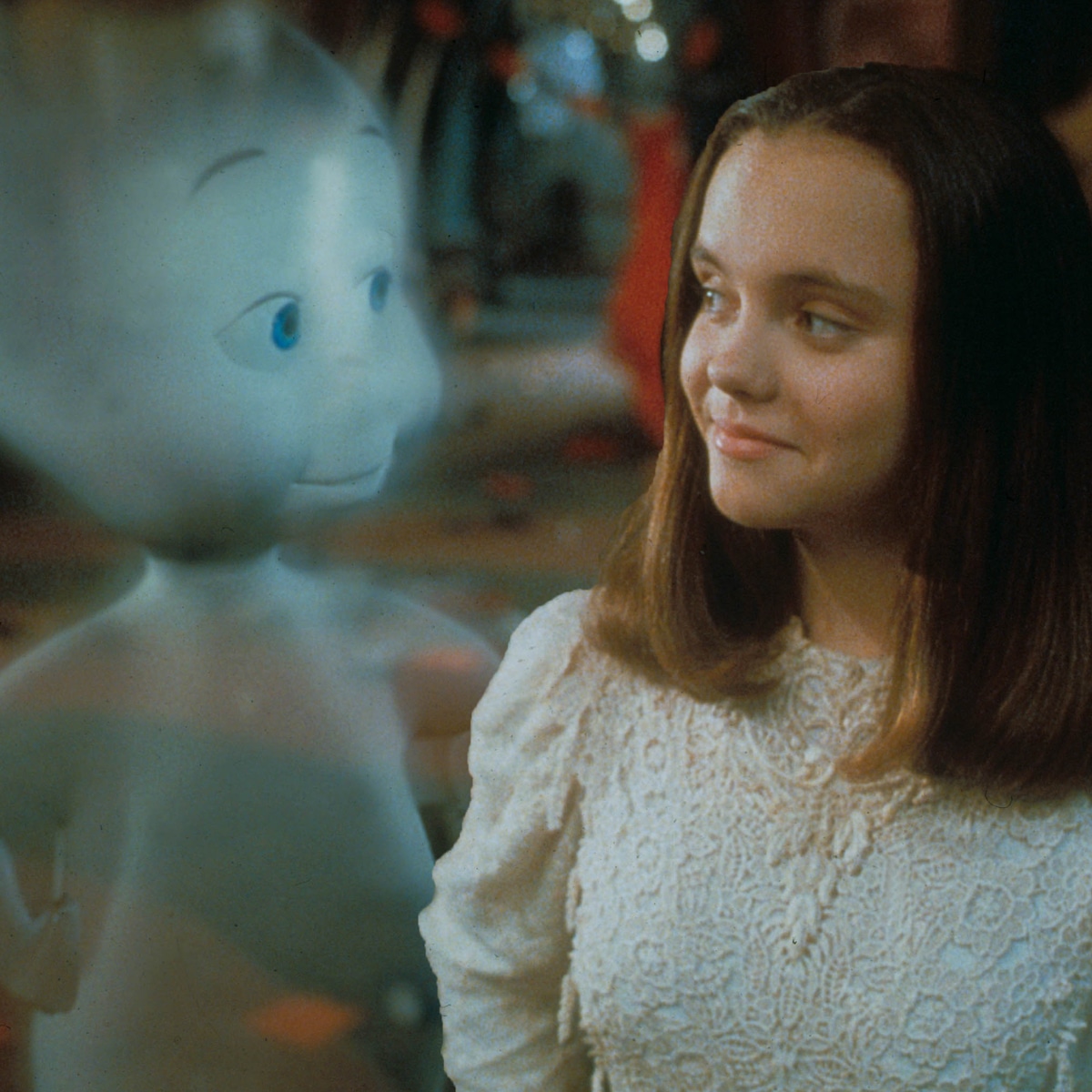
There are movie moments that belong to cinema, and then there are movie moments that belong to the nervous system of an entire generation. Devon Sawa appearing at the end of Casper, blinking into human form and asking Christina Ricci’s Kat Harvey, “Can I keep you?”, is firmly in the second category.
It lasts only a few seconds. The special effects are extremely 1995. The hair is doing a lot. And yet the scene landed with the force of a cultural event, transforming a friendly cartoon ghost into a teenage heartthrob just before the credits rolled.
The wild part? That reveal almost never happened.
According to the behind-the-scenes history revisited by E! News, the original version of the film ended without Casper becoming human at all. The movie’s entire soft-focus finale — the slow dance, the transformation, the Sawa entrance, the line that launched a thousand sleepover conversations — was added later, after a young J.J. Abrams was brought in to write an alternate ending.
Somewhere in an alternate universe, Casper ends with a ghostly goodbye and nobody spends the next several decades remembering exactly where they were when Devon Sawa walked down those stairs.
The ghost was almost denied his human form
When Casper arrived in 1995, it was already attempting something fairly ambitious: making a computer-generated character the lead of a major studio movie. The film cost a reported $55 million and ultimately grossed around $300 million, while Bill Pullman played the widowed Dr. James Harvey and a 14-year-old Ricci anchored the story as his daughter, Kat.
But the movie changed considerably on its way to theaters. Alex Proyas, who would go on to direct The Crow and Dark City, was initially attached before leaving over creative differences. First-time feature director Brad Silberling then took over. Casper’s comic-book origins were also replaced with a sadder movie backstory: he had died as a boy from pneumonia after playing outside in the cold, leaving his inventor father devastated.
That melancholy setup needed an emotional release, and the solution was apparently: give the ghost a beautiful human teenager for approximately one minute.
Sawa told E! News that Abrams wrote the alternate ending in 1994. Once it was approved, a nationwide casting call went out. Sawa sent in a VHS audition tape and booked the role a week later. He had already appeared in films including Little Giants, but the brief Casper appearance became a defining piece of his teen-star mythology.
It was also a remarkably efficient piece of casting. The audience spent most of the movie hearing Casper voiced by Malachi Pearson and watching the character move through an entirely digital body. Then, suddenly, there was Sawa: alive, charming, and delivering a line so gentle it somehow became a full-blown cultural imprint.
Christina Ricci had already clocked him
The Sawa-Ricci chemistry was not a one-film fluke. The two had also played love interests in Now & Then, another 1995 release, and Ricci helped connect Sawa to that role. Sawa told E! News that they got along during the limited time he spent working on Casper, and that Ricci remembered him when the casting process for Scott Wormer began.
He also admitted to Vulture that he found Ricci intimidating when they first met. She had, in his words, a little bit of an “I’m the boss around here” vibe, though he said she warmed up quickly and that they clicked as friends.
Which brings us to the long-running bit of Casper lore that makes the whole thing feel even more like a mid-’90s teen movie than it already does: the alleged on-set contest for Sawa’s attention.
Thora Birch later suggested there had been a little competition among the young stars of Now & Then, with Ricci ultimately winning the supposed crush sweepstakes. Sawa, for his part, denied knowing anything about it. He told E! News that he was around 14 at the time and thought all four girls were lovely.
That is perhaps the most believable response possible from a teenage boy who was suddenly surrounded by future stars, filmed a ghostly romantic scene, and then had the internet decide there must be a secret hierarchy of school-age crushes behind the scenes.
The kiss was the beginning of the Devon Sawa phenomenon
Before Casper, Sawa was a working child actor. After it, he became the face of a very specific kind of ’90s fantasy: sweet, slightly haunted, impossibly photogenic, and available for just long enough to leave an impression.
The movie did not even give him much screen time. Sawa reportedly worked only a day or two, although he spent roughly two weeks around the production. That economy made the appearance more powerful, not less. He was not there long enough to become ordinary. He materialized, delivered the line, kissed Kat, and disappeared back into the teen-movie atmosphere.
The moment also worked because the film had spent its entire runtime building toward a goodbye. Casper wants to know what it feels like to be alive; Kat wants the ghost she befriended to have a chance at a normal life. The transformation is sentimental, but it is also gloriously abrupt. One minute you are watching an animated ghost. The next, a young Devon Sawa is standing in front of you like the film has just opened a portal to the cover of a mall magazine.
Even the production’s other almost-moments have the same chaotic ’90s energy. Steven Spielberg helped produce the film and reportedly persuaded Mel Gibson and Clint Eastwood to make quick cameos by promising he would appear in the same scene. Spielberg’s cameo was later cut, with Silberling saying Spielberg was relieved because he was nervous about acting. A planned Ghostly Trio musical number was also scrapped, as was a scene featuring Zelda Rubinstein reprising her Poltergeist role and yelling, “Go toward the light!”
Somewhere between the deleted Spielberg cameo, the abandoned musical number, and the original ghost-only ending, Casper kept shedding ideas until it found the one that mattered most: put Devon Sawa in a white suit, let him kiss Christina Ricci, and make the whole thing feel like a supernatural prom.
Thirty years later, the ghost still has unfinished business
The film’s afterlife has been almost as busy as Casper’s. A direct-to-video sequel introduced Wendy the Good Little Witch, played by an 11-year-old Hilary Duff, after the character had been left out of the original movie because the studio did not want to buy the rights. A planned live-action follow-up directed by Simon Wells was later canceled, with the disappointing performance of the direct-to-video sequels and Ricci’s reservations about returning among the factors cited.
Sawa himself has never seemed entirely opposed to reopening the haunted house. In 2017, he tweeted that he was ready to return for another Casper, addressing Universal with the kind of eager, slightly ridiculous pitch the internet tends to reward: “Hello Universal, ya it’s me Devon…. Sawa… Sawa with an S.”
Ricci has also revisited the movie through the eyes of her own family. She once showed it to her young son, who began asking questions about her “best friend, the ghost” and her childhood. The confusion was apparently adorable and slightly alarming, which feels right. Casper is a children’s movie with grief, ghosts, dead parents, an abandoned mansion, and one of the most memorable teenage makeovers in pop culture.
Maybe that is why the ending refuses to fade. It is not simply the scene where Casper becomes human. It is the scene where a modest family fantasy accidentally turns into a Devon Sawa event — a tiny, shimmering piece of ’90s magic that still makes people text, “Wait, do you remember how hot he was in Casper?”
The Goonies 2 Has Entered Its Grim ‘Nothing’ Era
Martha Plimpton just delivered the most brutally honest update yet on Hollywood’s long-rumored sequel — and it is not exactly giving treasure map.
Goonies say never die. Movie sequels, apparently, can spend decades haunting the entertainment industry before quietly evaporating into the mist.
Martha Plimpton, who played sharp-tongued Stef Steinbrenner in 1985’s The Goonies, has now given the beloved adventure movie’s long-rumored follow-up the kind of update that instantly kills a group chat: “The Goonies 2” is “never gonna happen.”
Plimpton made the declaration to Page Six while promoting Season 2 of FX’s The Lowdown, and her explanation was almost more devastating than the headline. “I hear something, and then nothing,” she said. “And then every single person wants to know, and I hear the same answer. It’s nothing.”
That is not a glamorous Hollywood non-answer. That is the sound of a sequel being trapped in an endless email thread with no one willing to hit send.
The sequel rumor has been doing a full pirate-ship loop
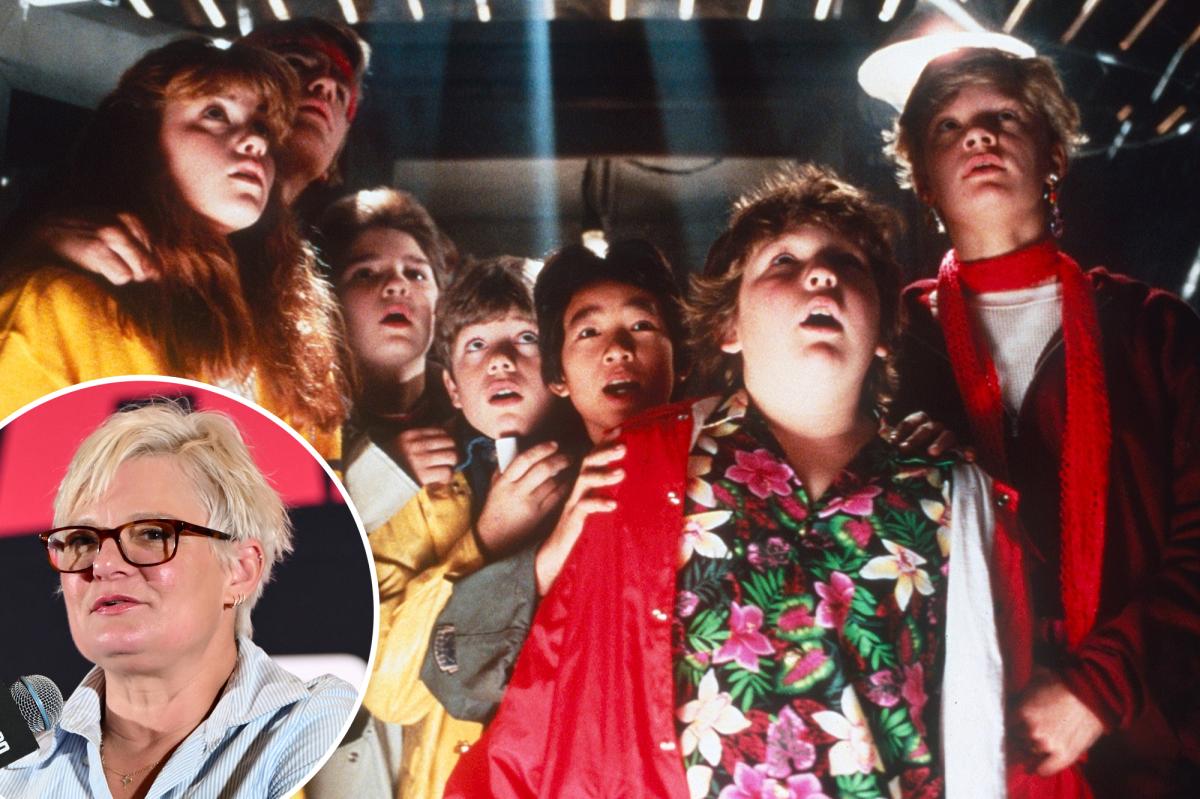
The idea of returning to Astoria, Oregon, with the grown-up Goonies has been floating around for years. The original film, based on a story by Steven Spielberg, followed a group of kids searching for hidden treasure while trying to save their homes from foreclosure. It arrived in 1985 with Plimpton, Sean Astin, Josh Brolin, Corey Feldman, Ke Huy Quan, Kerri Green and Jeff Cohen in the ensemble — a cast that has since become a particularly potent piece of Gen X and millennial emotional infrastructure.
In 2020, during a virtual reunion hosted by Josh Gad, Spielberg said there had been “a lot of conversations” about a follow-up. But he also explained why the project kept getting stuck in the mud: every few years, the team came up with an idea, only to decide it “doesn’t hold water.” The original had set a difficult standard for the genre, Spielberg said, and the creative challenge was finding anything better than the movie they made in the ’80s.
That sounded less like a closed door than a very Spielberg-shaped crack of light. Hollywood heard “maybe.” Fans heard “start making the T-shirts.”
Then, in February 2025, Variety reported that a sequel was in the works, with Spielberg producing. Later that year, writer Potsy Ponciroli told fans at the Venice Film Festival that he had submitted a “well-received” first draft and that the project was moving in the right direction.
For a brief, shining moment, the Goonies rumor machine had a map.
Ke Huy Quan was ready. Josh Brolin was cautiously sentimental.
Ke Huy Quan, whose Data remains one of the most beloved gadget geniuses in movie history, told Variety that he would “love” for a sequel to happen. Corey Feldman was similarly enthusiastic, arguing that the cast should get back together while everyone was still looking good — and alive. His phrasing was playful, but it captured the slightly surreal reality of the situation: the children from the original movie are now adults with decades of careers, families, awards, reinventions and Hollywood history between them.
Brolin was more emotionally complicated about the idea. In August 2025, he told Entertainment Tonight that he hoped the project would happen because the filming experience had been so great and because the movie had been embraced “generation after generation.” That is exactly the kind of affectionate, legacy-minded sentiment that sends a studio into development mode.
But Brolin also admitted he had “trepidation” because he did not want a sequel to taint his memory of the original. Then he joked that a late-in-life follow-up might involve the Goonies showing up with walkers, only to fall off a cliff because they could not see very well.
It was a very Josh Brolin way to describe the central sequel problem: nostalgia is gorgeous until somebody tries to put it under fluorescent lighting.
Hollywood loves a legacy sequel. The Goonies may be too beloved to risk.
The pressure around The Goonies 2 has never been simply “can they make another adventure?” It is “can they recreate the emotional weather of a movie that became a childhood landmark for multiple generations?” Those are wildly different assignments.
A legacy sequel can bring back the faces people remember, but it cannot recreate the age at which audiences first saw them. The original Goonies were kids with bikes, walkie-talkies and the absolute conviction that a treasure map could save the day. Their world felt huge because they were small. A new installment would have to decide whether to follow the original characters as adults, center their children, or attempt some delicate combination of both.
Each option comes with its own danger. Adult Goonies could feel like a corporate reunion special. A younger cast could make the originals feel like ceremonial cameos in their own movie. And a direct remake of the original’s scrappy adventure energy would invite comparisons no filmmaker could control.
Spielberg’s earlier comments suggested that the creative problem was not a lack of affection. Everyone involved clearly understands why people want to go back. The problem is that “people want to go back” is not, by itself, a plot.
Plimpton’s update lands hard because it cuts through years of hopeful language: conversations, ideas, drafts, momentum, hopes, trepidation. After all that, she says the answer she keeps hearing is still “nothing.”
Neither the studio nor the other cast members has publicly announced that the sequel is officially dead in the water in the source of this report. But Plimpton’s blunt assessment is the least treasure-hunt-coded update the project has received yet. No mysterious cavern. No booby trap. No last-second key. Just a beloved movie star saying that the rumor keeps resurfacing and then disappearing again.
Maybe that is where The Goonies 2 belongs: not in theaters, but in the permanent Hollywood afterlife of projects that are forever “moving in the right direction.” The original can remain exactly where it is — full of danger, friendship, pirate gold and kids who had no idea they were making a movie people would still be begging to revisit forty years later.
Goonies never say die. But according to Martha Plimpton, their sequel may want to stop talking about it.