The ‘Heated Rivalry’ Fandom Has Found Hudson Williams’ Girlfriend — and She’s Drawing the Line
Katelyn Larson welcomed fans who love her tattoos. She did not welcome appointments that turn her studio into a Hudson Williams interrogation room.
Celebrity fandom has always had a slightly alarming relationship with the concept of a boundary. But there is something especially surreal about turning a tattoo appointment into a backstage pass to somebody else’s love life.
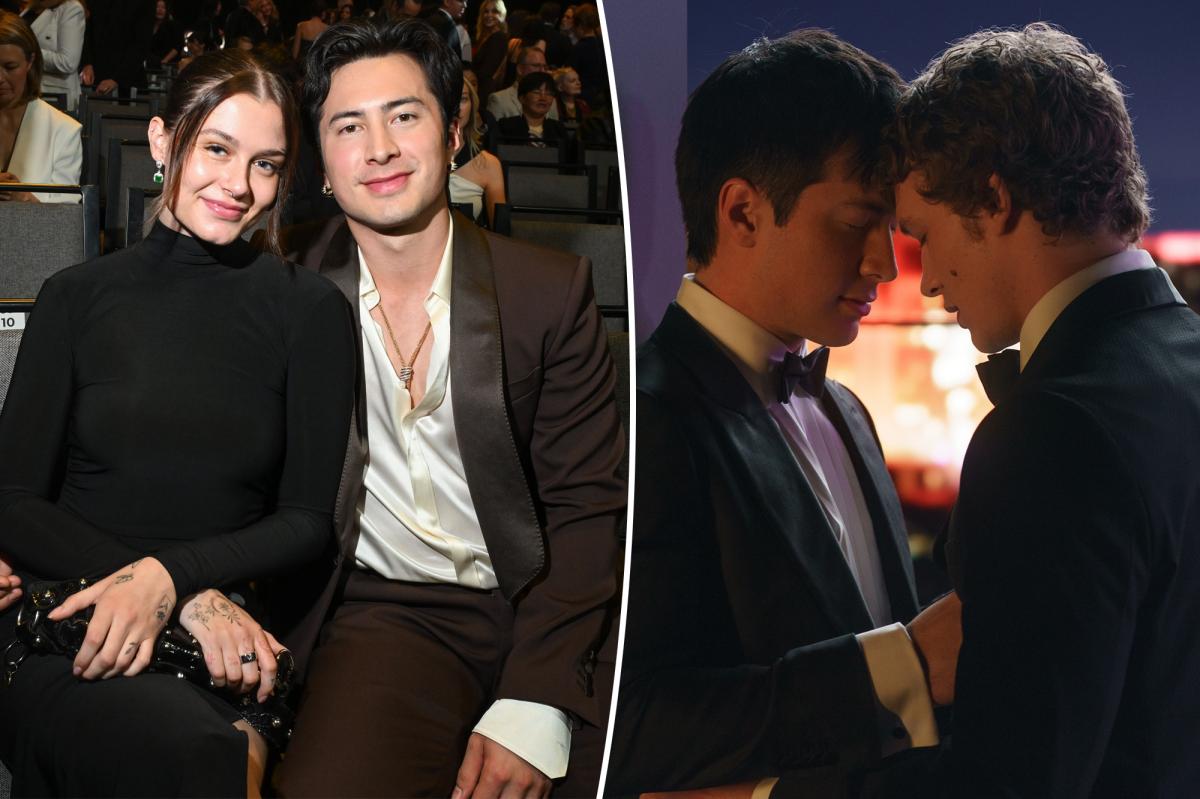
That, according to Katelyn Larson, is exactly what has been happening at her Canadian tattoo studio since her longtime boyfriend, Hudson Williams, became one of television’s newest heartthrobs on Netflix’s hockey drama Heated Rivalry.
Larson addressed the situation in a heated Instagram Stories post, asking fans who book with her solely because of her connection to Williams to “please stop.” The distinction mattered to her: loving her work is welcome. Arriving with questions about the actor, their relationship or her personal life is not.
The tattoo studio is not a Hudson Williams fan convention
“Obviously a lot of you have found the studio because of a certain show and that’s more than okay,” Larson wrote, according to Page Six. “This is where I draw a very hard line: booking an appointment with me or anyone else purely because of the connection to the show crosses a huge territory.”
That line got even sharper when she described what happens once some of those fans arrive. She said visitors have asked her coworkers questions about her and Williams, behavior she called “hugely uncomfortable for everyone.”
There is a particular kind of modern celebrity weirdness in this: the person being pursued is not even the famous person. Larson is not playing Williams’ love interest on-screen, appearing in a steamy promotional campaign or making a living from being adjacent to the show’s romance. She is a working tattoo artist whose relationship became newly interesting after her boyfriend was cast opposite Connor Storrie in a buzzy series.
Her message was firm, but not exactly anti-fan. Larson made clear that anyone who follows her or another artist because they genuinely like the art is welcome to book an appointment and “get some cool tattoos.” The problem is using the appointment as an excuse to fish for information.
From private girlfriend to accidental fandom character
Williams and Larson had been together for years before his sudden rise to fame. That timeline is doing a lot of work here. She did not enter his life as a celebrity partner; celebrity arrived around them, bringing with it the familiar internet urge to turn a real relationship into bonus content.
The couple made their red-carpet debut at the Vanity Fair Oscar Party in March, posing affectionately together. It was a glamorous public introduction, but not necessarily an invitation to know everything. Williams has previously said Larson prefers to stay out of the spotlight and does not want to be “perceived,” a phrase that has only become more relatable as the internet continues to perceive everybody at maximum volume.
Then came the public affection that made the relationship feel even more legible to fans. Last month, Williams shared a birthday tribute to Larson on Instagram Stories, writing that he had loved people “for a day, for a week and some for years” but would love her “until I die.” He called her his “person.” It was tender, poetic and very much the kind of rare celebrity relationship post that sends the internet zooming in for emotional subtext.
But a birthday tribute is not a press kit. A red carpet is not a permanent access pass. And a girlfriend’s tattoo studio is definitely not a designated location for fans to conduct relationship research.
The “Heated Rivalry” effect is bigger than the screen
Williams’ visibility has changed quickly because Heated Rivalry is not simply another television credit. His on-screen romance with Storrie has made the pair a major talking point among viewers, turning every interview, appearance and social-media detail into potential fandom material.
That kind of attention can be flattering right up until it starts spilling into the lives of people who did not sign up to be part of the show’s mythology. Williams may be the face fans recognize, but Larson is suddenly being treated as a source, a clue and, apparently, a person who might answer questions while holding a tattoo machine.
It is also a reminder that the “real” relationship behind a fan-favorite on-screen pairing tends to become its own subplot. Viewers can enjoy Williams and Storrie’s chemistry in the series while still being curious about Williams’ off-screen life. The trouble begins when curiosity starts behaving like entitlement.
Larson’s post did not accuse every new client of bad intentions. She separated genuine interest in tattoo artistry from what sounds like a more invasive pattern: appointments booked for access, coworkers questioned for gossip and a private relationship treated as studio entertainment.
A soft-launch culture with very hard limits
For years, celebrity couples have played a careful game with visibility. There are soft launches, hard launches, blurry vacation photos, matching outfits and the strategically timed birthday caption. Fans are encouraged to notice, but the people involved still get to decide how much of themselves they are offering.
Williams and Larson have offered glimpses: a red carpet appearance, affectionate photos and his unusually open words about her. Larson, meanwhile, has remained comparatively private. That contrast is part of what made the relationship compelling, but it should also have made the boundary obvious.
Instead, the attention appears to have followed her into the workplace. Her statement was a request to restore the separation between the public part of Williams’ life and the private part of hers. She closed “with peace and love,” but the message itself was not vague: appreciate the art, book because you want the art and stop treating the studio like a hotline for Heated Rivalry intel.
There is a lesson here for every fandom currently convinced that one more question, one more follow, one more visit or one more comment will unlock the secret meaning of a celebrity’s relationship. Sometimes the most revealing thing a famous person’s partner can say is that they would rather not be part of the plot.
Todd Tucker’s Kandi Burruss Divorce Gets Dark, Messy and Very On-Camera
The former RHOA couple’s split is now a two-sided television event: Todd is unpacking loneliness, therapy and one explosive incident, while Kandi is pushing back on his decision to revisit their private life.
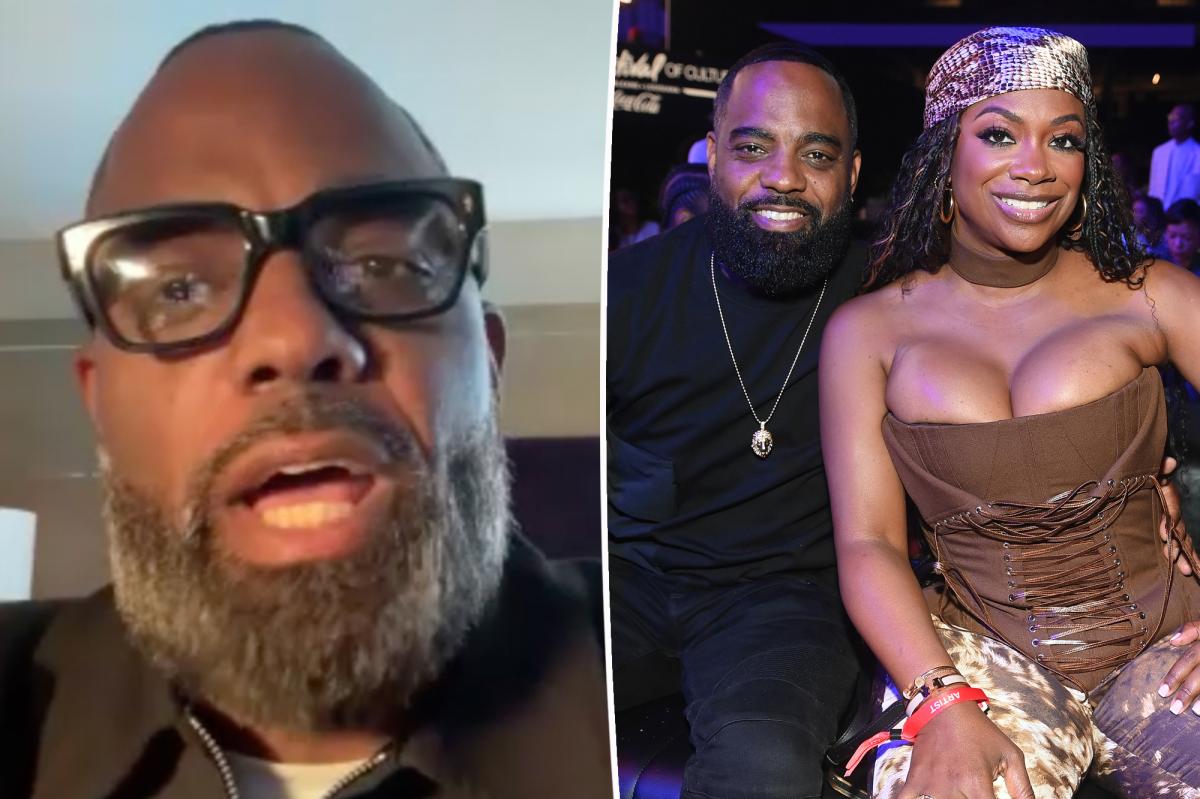
Todd Tucker is not exactly fading into the darkness. He says that is the plan. After more than a decade of being labeled, analyzed and occasionally dragged across “The Real Housewives of Atlanta,” Tucker now wants to tell his side of the breakup from inside a guesthouse, with a forthcoming docuseries, a new film and a divorce narrative that has already become its own Bravo-adjacent limited series.
In a candid interview with Page Six, Tucker described his separation from Kandi Burruss as lonely, disorienting and, at points, frighteningly dark. The former couple’s 11-year marriage has ended, but the public conversation is still very much alive — complete with an intimate confession, a dispute over who made their sex life public first, a mysterious “incident” involving another woman and the continuing gravitational pull of Mama Joyce.
In other words: this is not a quiet uncoupling. This is a reality-TV marriage trying to exit the stage while still holding a microphone.
The guesthouse, the gun and the moment he “snapped out of it”
Tucker, 53, said he stayed in the guesthouse during the separation while Burruss, 50, their children and the rest of the family were next door. That physical arrangement became an emotional trap: a big house, a lot of alone time and nobody he felt he could really lean on.
“What did I just do? What just happened? Did I lose my family?” he recalled asking himself. He also reiterated a painful confession featured in his upcoming docuseries, “Til Divorce Do Us Part”: during some of those moments, he said, “I looked at my gun.”
Tucker said he then thought about his children and “snapped out of it,” reminding himself that he had a family to see through. He told Page Six that he has been going to church and is planning to find a therapist as he works on rebuilding himself and becoming the best father and co-parent he can be.
The disclosure is heavy, but Tucker framed it as part of a larger message to men about speaking before isolation turns into crisis. He said men carry too much internally and urged them to talk to a therapist or find another way to get what they are holding inside “out.” The docuseries, he suggested, is his version of doing exactly that.
If you or someone you know is in crisis, call or text 988 in the United States and Canada to reach the Suicide & Crisis Lifeline.
Then came the threesome trailer — and Kandi’s very public objection
The split might have remained a familiar reality-TV divorce story if the first trailer for “Til Divorce Do Us Part” had not included a conversation about the couple’s sex life. In the preview, Peter Thomas asks Tucker whether the threesome talk is “for real for real.” Tucker replies that it happened and says it was part of “most of” their marriage.
Burruss pushed back publicly, accusing her ex of sensationalizing their sex life to stretch his “five minutes of fame.” Her point was simple: whatever consensually happened between them as husband and wife was private.
Tucker’s counterargument is the sort of reality-TV paradox that can keep a reunion couch heated for three seasons. He says he was not revealing a secret or naming anyone; he was answering a question about a subject Burruss had discussed throughout her 14 seasons on “RHOA,” on her adult-themed talk show “Kandi Koated Nights” and through her Bedroom Kandi sex-toy line.
“How private is it?” Tucker asked rhetorically, arguing that Burruss had already made the topic part of their public story. He also said she had spoken about threesomes without consulting him and that he had generally been a good sport about it.
That does not make the disagreement disappear. It does explain why the fight feels so specifically theirs: both built public identities around being candid, sexually frank and camera-ready, and now they are disagreeing over who gets to decide when the camera should stop rolling.
The “incident,” the flowers and the Mama Joyce aftershock
Tucker remained vague about the event that led Burruss to pull the plug on the marriage, saying only that it involved another woman and that he would elaborate in the docuseries. His description of the aftermath was less “grand romantic gesture” and more “this marriage needs professional intervention.”
Friends reportedly told him to buy flowers. Tucker said he felt the situation was bigger than flowers, so he arranged for them to go to therapy. In his telling, the two were confronting both an immediate rupture and the larger relationship problems underneath it.
He said he felt Burruss wanted him to fix the pain of the moment before addressing the broader issues, while he wanted to deal with the relationship as a whole. When he sensed she was no longer willing to fight for the marriage, he decided that if she wanted a divorce, he should give her one.
There is still tenderness in the way he talks about it. Tucker said he made vows to stay with Burruss forever and would have stayed, but he also accepts that some things are not meant to last forever. The pair share 10-year-old Ace and 6-year-old Blaze, while each also has an adult daughter from a previous relationship: Kaela Tucker, 30, and Riley Burruss, 24.
He insisted that he and Burruss remain capable of co-parenting even when they are angry or hurt. The family logistics, at least in public, are being handled with a familiar celebrity-parenting compromise: put the feelings aside for the kids, then return to the internet to discuss them later.
Tucker also said reality TV played a part in the marriage’s collapse. That is hardly a shocking admission for a couple whose relationship began in the orbit of “RHOA,” especially since Tucker famously left his job as a producer on the show so he could date Burruss without a professional conflict. Their romance was never separate from the machinery that made them visible.
He further reflected on the pressure he felt from Burruss’ mother, Joyce “Mama Joyce” Jones, a famously critical presence in the couple’s “Housewives” history. Tucker said he had spent years trying to prove himself to someone who did not like him and now feels a weight lifted from his shoulders with that relationship no longer an active part of his life.
A divorce, a docuseries and one last public statement
“Til Divorce Do Us Part” is being positioned as Tucker’s chance to speak after years of feeling that the public had already decided who he was. He says he wants men to see themselves in the conversations with his friends, several of whom have appeared on “RHOA,” and understand that silence is not the same thing as strength.
He is also hosting a double-feature premiere of the docuseries and his new film, “Don’t Bring Your Man to Atlanta,” during an AMC Theaters weekend takeover next month. That is a very Todd Tucker solution to a very Todd Tucker problem: process the divorce, make content about the divorce, premiere the content and then announce that you are done talking.
He has said that after telling his side, he plans to focus on his movies and other projects and “fade into the darkness.” But the first trailer has already ensured that the darkness comes with a rollout schedule, a premiere event and at least one argument with his ex-wife waiting in the comments.
For now, Tucker says he is not ready to date. He needs time to get himself together before he can be a good man for someone else. That may be the least reality-TV answer in this entire saga — and possibly the most sensible one.
Taylor Swift’s ‘Patient Zero’ Era Has Arrived With a Midnight Drop, Sold-Out CDs and One Very Strategic Shirt
The new single lands September 25, but Taylor has already turned its rollout into a 24-hour shopping sprint.
Taylor Swift is back in the marketplace, and naturally, she has brought a countdown, a loaded title, collector’s editions and a shirt that is already doing supporting-act work.
Her new single, “Patient Zero,” arrives at the stroke of midnight ET on Friday, September 25. Until then, fans can pre-order the digital download for 99 cents, with the track set to appear in their download folder as soon as it drops. It is a small purchase with an unusually theatrical runway: a few days of anticipation, one carefully timed Instagram announcement and the familiar Swiftian promise that this is not merely a song release. It is an event with a checkout button.
Swift announced the single on Tuesday, September 22, writing that she had been “impatiently waiting” to share it. The post came with the title, the release date and a limited window to order through her website. Twenty-four hours is not an eternity, especially in the world of pop merchandising, where missing a deadline can turn a casual purchase into a tiny personal tragedy.
The title is doing a lot of work
“Patient Zero” is an instantly conversational title because it sounds less like a standard pop single and more like the beginning of a conspiracy board. It suggests origin, contagion, discovery and blame without explaining itself. Is the song about the first person to know something? The first person to cause something? The person everyone else is suddenly talking about? Swift has not supplied that meaning yet, which is precisely why the phrase has room to expand in the public imagination before the music even arrives.
That ambiguity is useful. A title like “Patient Zero” can sit comfortably in several Taylor Swift registers at once: dramatic enough for a lyric, clinical enough to feel a little sinister, and blunt enough to look good on a product page. It is the kind of phrase that makes people want context immediately, then rewards them for waiting three more days.
The timing also gives the single a clean little burst of suspense. The announcement landed Tuesday; the song arrives Friday. That is long enough for anticipation to build but short enough to keep the rollout from becoming background noise. The release is not floating somewhere in the distant future. It is sitting on the calendar, staring back.
Welcome to the 24-hour merch window
The digital download is the simplest part of the offer: 99 cents, available to pre-order, delivered when the single goes live. But Swift’s website has also framed the release as a collector’s moment. Two of the three CD collector’s editions had already sold out by the time Just Jared reported on the rollout, with the remaining editions listed at $3.99 each.
That is a remarkably efficient piece of pop-star economics. The digital track gives everyone an easy entry point. The CDs turn the same song into a limited object. The short ordering window adds urgency. None of these items needs to be expensive to feel important; the point is that they occupy different emotional shelves. One is the song. One is the keepsake. One is the thing you bought because you were online at exactly the right time.
Swift has long understood that a release can be consumed in multiple formats without changing its central product. “Patient Zero” is a file, a physical collectible and a visual package before many listeners have heard a note. The song may ultimately be the reason people show up, but the anticipation has already been given its own wardrobe.
And yes, the shirt is part of the plot
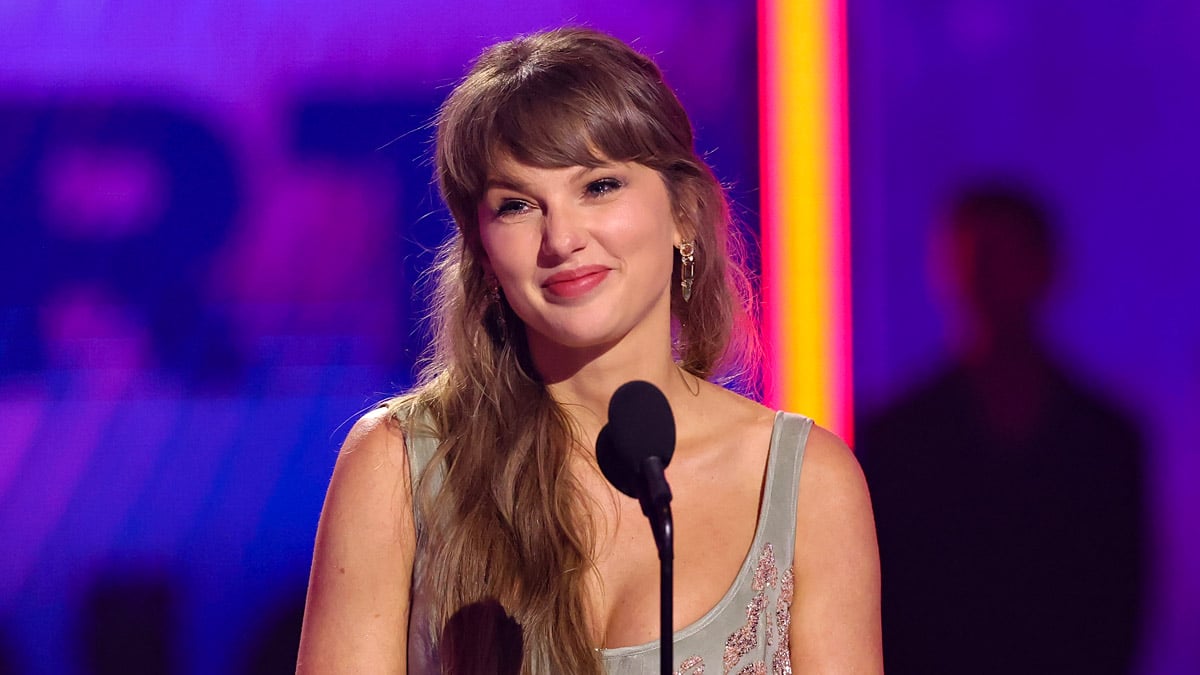
The acoustic artwork features Swift wearing a top that is also available for purchase. This is where the rollout moves from music merchandise into full-pop-star styling: the outfit is not simply something she wore for the image. It is another doorway into the era.
That detail is almost comically on-brand for the current celebrity economy. Fans are not only invited to listen to the new song; they can dress like the version of Swift who announced it. The distance between artwork and storefront has collapsed completely. See a shirt, want the shirt, wear the shirt while listening to the song at midnight. The look becomes part of the ritual.
It also gives the release a tactile hook before the single has established its sound. We do not yet know what “Patient Zero” sounds like from the information available here, but we do know the visual language is already being sold: acoustic artwork, a recognizable top and a title that feels engineered to provoke questions.
Friday night now has a soundtrack
There is no complicated release-day scavenger hunt required. Pre-order the track, wait for midnight ET and let the song arrive. The streamlined setup makes the surrounding frenzy feel even more deliberate. Swift has built a small pop-culture appointment around one song, then added just enough scarcity to make the appointment feel personal.
For a superstar of Swift’s scale, even a 99-cent download can become a miniature social occasion. The song is not being introduced with a vague “coming soon.” It has a precise hour, a finite merch window and a title people can debate before they have the chorus. “Patient Zero” has not even landed yet, and already it is behaving like a headline.
That is the trick of this rollout: the music is still the main event, but the waiting has been packaged beautifully. By Friday, the digital file will be available to anyone who wants it. Until then, Taylor Swift has given the internet three days to stare at a phrase, panic-buy a CD and decide whether they need the shirt.