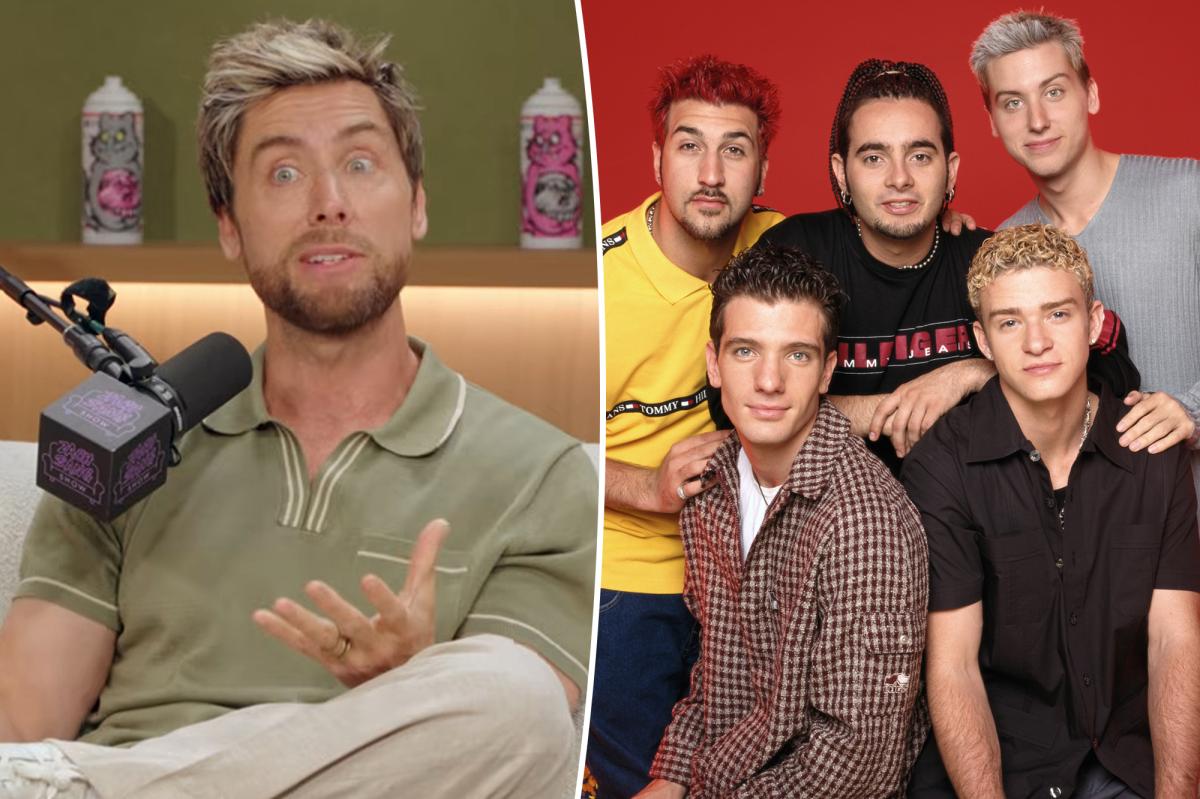
The *NSYNC Millions Were Apparently a Myth: Lance Bass Says His First Check Was Just $10,000
The boy-band economy was less private jet, more $35-a-day allowance — and Bass says the people cashing in were not the five men singing “Bye Bye Bye.”
There are few pop-culture images more aggressively associated with money than *NSYNC at the turn of the millennium. The matching outfits. The stadium tours. The number one albums. The merchandise flying off shelves while five impossibly famous men became the faces of an entire teen-pop economy.
So it is fairly jarring to hear Lance Bass say that, behind the choreography and the screaming fans, the band’s personal finances were giving “school trip spending money.”
During Thursday’s episode of The Zach Sang Show, Bass claimed that he received a per diem of just $35 a day while *NSYNC was rising to global fame. He also said the group’s first check arrived only after years of success — and was for $10,000.
“Our first check was $10,000,” Bass recalled, saying it came after “years of number one albums” and “sellout tours.” The alleged explanation from the people around the band was brutal in its simplicity: “You should be grateful for that. You’ve been working for free for two, three years now.”
Famous, yes. Rich, apparently not so much.
Bass, now 47, was not describing a mildly disappointing royalty statement. He was describing the financial reality of being one-fifth of one of the biggest acts on the planet — a group whose songs were everywhere, whose videos dominated television and whose branded merchandise became its own cultural weather system.
“I don’t know how many millions I made off of merchandise because merchandise was insane,” he said. But the money he personally saw from *NSYNC, he claimed, was “hardly at all.”
That distinction is the entire plot twist. The band could be making millions around him without the band members themselves becoming millionaires. It is the kind of revelation that makes the glossy machinery of late-’90s pop look suddenly less like a fantasy and more like an extremely successful corporate arrangement in which the talent was apparently the last department to get paid.
“People think I’m so filthy rich from *NSYNC, but no,” Bass insisted. “Not at all.” He said he did well after the group went on hiatus in 2002 and is proud of what he built afterward, but that the major payday did not happen during the band’s imperial phase.
In other words: the fame was immediate, the money was complicated, and the financial afterglow was apparently not automatic.
The Lou Pearlman factor makes the story even darker
Bass attributed the imbalance to the record label and Lou Pearlman, the late manager and creator of the Trans Continental organization that helped launch *NSYNC. “The label” and Pearlman, Bass claimed, “made a f–k ton.”
Pearlman was later jailed after being convicted of money laundering, bankruptcy fraud and conspiracy, and died in prison in 2016. His name has long been tied to one of pop music’s most notorious business scandals, which makes Bass’s account land with an especially unpleasant aftertaste: the group’s public image was all sparkle, while the back-end story was allegedly governed by contracts, deductions and people with considerably more control.
Bass said he no longer carries resentment, but he did not pretend the arrangement was fair. “Everyone kept saying, ‘You’re young, you’re young,’” he recalled. “Well, who cares if you’re young? You still need to make a living and set yourself up for the future.”
That is the line that cuts through the nostalgia. The standard defense of young stars is that they are inexperienced, lucky to be there and surrounded by adults who know better. Bass’s point is that youth may explain why someone signs a bad deal; it does not make the consequences less real. And a career built around a finite window of fame is exactly the kind of career where money should matter early, not only after the screaming stops.
“We were famous, but we were not rich”
This is not the first time Bass has punctured the fantasy that *NSYNC’s success translated neatly into personal wealth. During a 2023 appearance on SiriusXM’s The Jess Cagle Show, he said, “We were famous, but we were not rich.” He also said he made “way more money after *NSYNC than I did during *NSYNC.”
That earlier comment now reads less like a surprising aside and more like the opening chapter of a story he has been telling for years: the band’s cultural value was enormous, but the individual members’ financial reward allegedly lagged far behind it.
Bass has also made clear that he does not view the entire experience as a mistake. He said being part of *NSYNC changed his life and trajectory, and that the group’s support system helped keep the five members grounded. Justin Timberlake, JC Chasez, Chris Kirkpatrick, Joey Fatone and Bass were, in his telling, more than a manufactured pop product; they were also four “brothers” navigating an absurd level of attention together.
That affection is what makes the money story more complicated than a simple scandal headline. Bass is not saying the band was worthless to him. He is saying the people profiting from its value were not necessarily the people performing it.
And that is why the $35-a-day detail is so sticky. It is absurdly small beside the scale of *NSYNC’s fame, but it also makes the whole era suddenly legible. The group was selling a dream of limitless wealth while its members were allegedly being told to be grateful for pocket money and a first check that arrived years too late.
The image of *NSYNC remains glossy: silver suits, synchronized choreography, “Bye Bye Bye” and a cultural footprint that still refuses to leave. Bass’s version adds the unglamorous caption underneath: being the product is not the same as owning the profit.

Alexia Umansky Finally Told Mauricio the Secret She Carried Into ‘Special Forces’
Seven years after she says she was sexually assaulted by someone she trusted, Kyle Richards and Mauricio Umansky’s daughter opened up to her father on camera — and changed the emotional temperature of the Fox reality hit.
Reality television usually treats family secrets like luxury accessories: brought out at the exact moment they can do the most damage, preferably beneath flattering lighting and with a castmate nearby to gasp. Alexia Umansky’s revelation on Special Forces: World’s Toughest Test landed differently. It was not a bombshell deployed for maximum chaos. It was a daughter deciding, after seven years of silence, that her father could finally know what had happened to her.
During Thursday’s episode, Alexia, 30, told the show’s directing staff that she had joined the Fox competition partly to prove her courage “after what happened” to her. When pressed to explain, she said she had been on a trip with friends seven years earlier, had been put to bed after drinking too much and woke up with the understanding that something had happened while she was unable to consent.
“I didn’t even have the power or consciousness to say no,” Alexia said. “I felt completely objectified, and I had a lot of pain and anger because of that.”
The Secret Wasn’t a Plot Twist — It Was Hers
Alexia said she never told her family that she had been sexually assaulted. In a confessional, she explained that bringing other people into the experience would make it “not just yours” anymore. That sentence may be the most revealing part of the entire scene: not because it solves anything, but because it captures the strange private mathematics of trauma. Silence can feel like control, even when it is also exhausting.
She said that, at the one-year mark, she decided happiness was a choice and tried to put the experience away. “But it still hurts,” she added.
That tension — the polished family, the public life, the old wound kept carefully out of frame — is exactly the kind of emotional collision reality television is usually accused of manufacturing. Here, the circumstances were already there. Alexia did not need to be pushed into a headline; the headline arrived because she chose to speak.
Her decision also complicated the show’s usual macho survival-show packaging. Special Forces is built around recruits being shouted at, exhausted and stripped of their celebrity armor by former military personnel. The format promises humiliation as transformation. Alexia’s story introduced a different kind of strength, one that had nothing to do with obstacle courses or physical pain: telling the people she loved what she had survived, after years of deciding they were better off not knowing.
Mauricio Got the News in Front of Everyone
Alexia eventually told her father, Mauricio Umansky, in front of the other recruits. “You don’t know this,” she said. “I was taken advantage of by a friend.” She told him that keeping the information from her family was not about wanting them to remain distant, but about protecting them from the pain of it.
Mauricio appeared confused by that instinct. For a parent, the idea that a child has been carrying something devastating alone can be its own kind of heartbreak — especially when the child is no longer a child, but a 30-year-old adult who has spent years managing the fallout privately.
He told Alexia he loved her. Fellow recruit Candace Cameron Bure thanked her for sharing the story, while Maxim Naumov called the revelation “so f—ing powerful,” according to People. The scene’s emotional center was not a dramatic confrontation or a neatly packaged family healing moment. It was the awkward, painful beginning of a conversation Alexia had once decided she did not want to have.
There is no tidy reality-TV ending here. Mauricio could not retroactively protect her. Alexia could not unlive the night she described. And the show could not transform a traumatic experience into a triumphant little lesson simply because the cameras were running. What it could capture was a family member hearing something life-changing and trying, in real time, to respond with love.
The Richards-Umansky Family’s Public Life Makes the Private Reveal Hit Harder
Alexia is the daughter of Kyle Richards and Mauricio Umansky, a pair whose marriage, separation and still-evolving family dynamic have played out under an unusually bright pop-culture spotlight. The former couple also share daughters Sophia, 26, and Portia, 18. Richards is additionally mother to Farrah Aldjufrie, 37, from her previous marriage to Guraish Aldjufrie.
That family history matters because Alexia’s silence existed inside a family already accustomed to public conversations about private life. Kyle has spent years on The Real Housewives of Beverly Hills, where marriage strain, sibling tension and emotional disclosures are not background details; they are the show. Mauricio, meanwhile, has become a recognizable reality figure in his own right through Buying Beverly Hills and Special Forces.
Before the season aired, Kyle told Page Six’s Virtual Reali-Tea that she was “not happy” about Alexia joining the competition. Her first reaction, she joked, was, “I’m going to kill you, Mauricio.” But beneath the joke was a mother’s fear. Kyle said she was worried about Alexia and did not like that her daughter had been “sucked into” the show.
That concern now reads with an added layer. Kyle was worried about a punishing television experience; Alexia was also carrying a story her parents had never heard. The family’s public narrative has always been crowded with cameras, but this was something Alexia had kept entirely for herself.
The Moment Changes What ‘Strong’ Looks Like on the Show
Special Forces likes to make celebrity vulnerability physical. Contestants cry in the desert, panic in the water and collapse under pressure while instructors bark commands. Alexia’s disclosure quietly rejects the idea that courage has to look like endurance performed for an audience.
She had already been living with the consequences of what happened. The show did not make her brave. It gave her a setting in which bravery could take a different form — saying the words out loud, letting her father hear them and allowing the people around her to respond.
Fans will inevitably discuss the timing, because the entire premise of reality television is timing. Why share this now? Why on this show? Why in front of Mauricio and the other recruits? But Alexia’s own explanation is simpler and more human: she had not been ready before. Now, she was.
That is the part worth holding onto. Not the spectacle of a famous family receiving painful news on camera, and not the temptation to turn Alexia’s experience into another chapter in the Richards-Umansky saga. The striking thing is that, after seven years of protecting everyone else from her pain, Alexia finally decided she did not have to carry it alone.
If you or someone you know is affected by sexual assault, the National Sexual Assault Hotline is available at 1-800-656-HOPE (4673).
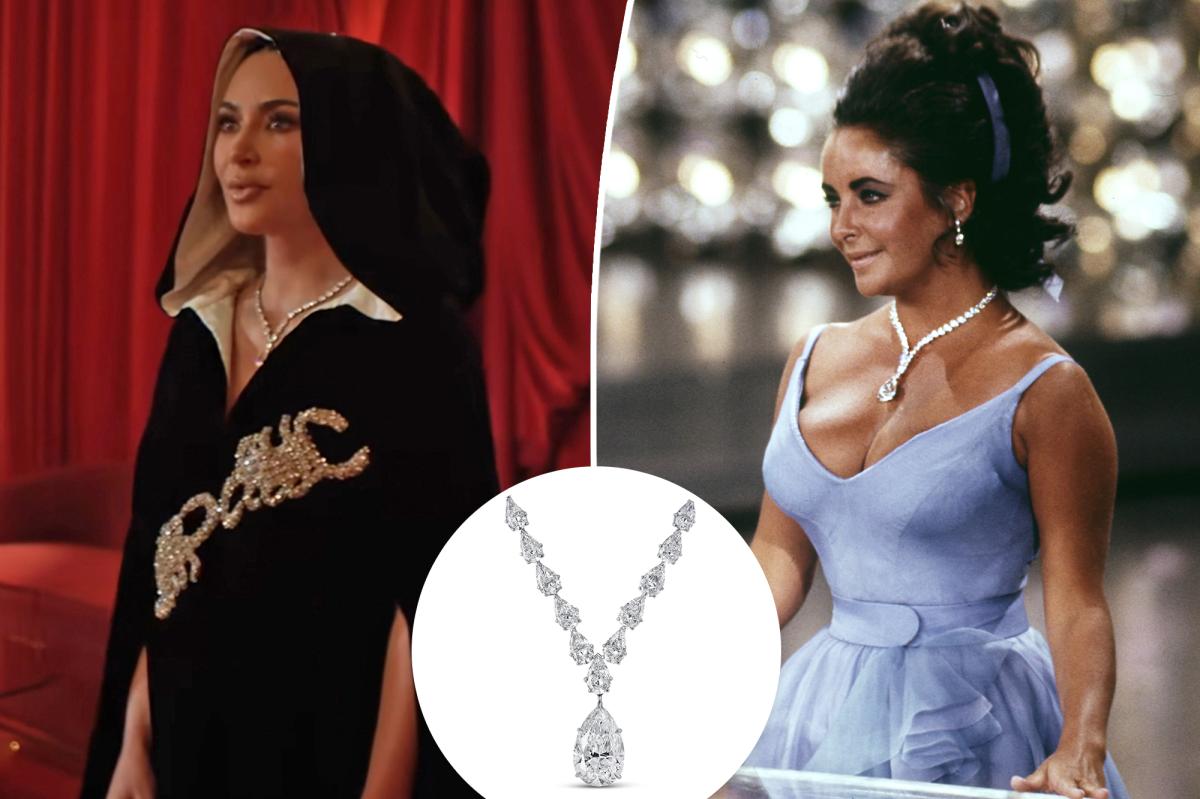
Kim Kardashian Just Turned Elizabeth Taylor’s Most Extra Look Into a $2.7 Million Courtroom Fantasy
For the Season 2 trailer of “All’s Fair,” Kardashian borrows Taylor’s velvet Scorpio-cape drama, stacks on Leviev diamonds and keeps her long-running obsession with Hollywood’s original jewelry maximalist sparkling.
Kim Kardashian has never been accused of dressing like she is trying to disappear. But in the Season 2 trailer for Hulu’s All’s Fair, she is not merely wearing diamonds. She is summoning Elizabeth Taylor, the patron saint of glamorous excess, complicated romance and jewelry that arrives with its own security detail.
As divorce lawyer Allura Grant, Kardashian appears in a velvet scorpion cape and more than $2.7 million worth of Leviev jewels: a $1.55 million Savona necklace and $1.2 million Aveline drop earrings. The effect is part courtroom power dressing, part old-Hollywood séance, part “your honor, my client would like to introduce this 14-carat center stone.”
It is a particularly on-brand tribute for Kardashian, whose relationship with Taylor has been building for more than a decade. She interviewed the actress for Harper’s Bazaar in 2011, shortly before Taylor died at 79, and later fronted the docuseries Elizabeth Taylor: Rebel Superstar. Now she is taking that fascination from documentary subject to full-scale costume fantasy.
The cape has history, and it is gloriously dramatic
The look Kardashian recreates traces back to one of Taylor’s most theatrical entrances. In 1969, Taylor wore the original Tiziani Roma velvet scorpion cape to Princess Grace’s 40th birthday party in Monaco, a Scorpio-themed celebration for the royal. Taylor, a Taurus by birth, was apparently still willing to dress like the evening’s zodiac mascot if the cape was good enough.
She paired the original look with the Taylor-Burton Diamond, a 69.42-carat pear-shaped stone purchased by Taylor and Richard Burton that same year for $1.05 million. Burton commissioned a custom necklace for the diamond, which Taylor later wore to the 1970 Academy Awards with a lavender Edith Head gown.
That is the kind of fashion history Kardashian understands instinctively: not just a pretty dress, but a whole mythology attached to it. The cape is not simply velvet. It is Monaco, Princess Grace, Richard Burton, a diamond with a hyphenated surname and the particular electricity of a woman who knows everyone in the room is already looking at her.
Allura Grant gets the Kardashian-era upgrade
For All’s Fair, the homage is less museum reproduction than luxury remix. Kardashian’s Allura wears Leviev’s Savona necklace, set with 44.71 carats of pear-shaped natural diamonds, including a 14-carat center stone. The matching Aveline earrings bring another 18.08 carats to the party.
The necklace also comes with a very current bit of celebrity wardrobe lore: Mariah Carey wore it while promoting merchandise for the 25th anniversary of her 2001 film and soundtrack Glitter. So before it landed around Kardashian’s neck, the piece had already been working overtime in the service of diva culture.
That crossover is delicious. Carey wearing the necklace for a Glitter anniversary is one kind of pop spectacle; Kardashian wearing it as a fictional divorce attorney channeling Taylor is another. The jewel is doing what the best celebrity jewelry always does: carrying one star’s aura into another star’s storyline.
And this is not even Allura’s first brush with Taylor’s jewelry box. In Season 1, her husband surprises her with a ring from Taylor’s personal collection, making the actress’s jewels part of the character’s emotional world as well as her visual identity. In Allura’s universe, Elizabeth Taylor is not just an icon on a mood board. She is practically a luxury supernatural force.
Kim and Elizabeth Taylor have been circling each other for years
Kardashian’s Taylor fixation has never felt random. During their 2011 interview, Kardashian asked which of Taylor’s famous diamonds meant the most to her. Taylor’s answer was perfectly suited to a woman whose jewelry had become inseparable from her love stories: “Size does matter, but so does the size of the emotion behind it.”
That line gives the All’s Fair trailer an extra shimmer. The diamonds are enormous, yes, but Kardashian is also borrowing Taylor’s entire language of adornment. The jewels signal romance, status, danger and emotional weather all at once. They are not background accessories. They are plot.
Kardashian moved even closer to that world in July 2025, when she walked Balenciaga’s couture show in Paris wearing Taylor’s Mike Todd diamond earrings. Todd, Taylor’s third husband, gave her the earrings as a gift in 1957; jeweler Lorraine Schwartz later acquired them at Christie’s for $374,500. Kardashian’s appearance placed her in a very specific lineage of celebrity women using inherited glamour as a kind of armor.
There is also a neat contrast between the women’s public images. Taylor’s jewels were famously tangled up with husbands, gifts and grand romantic gestures. Kardashian, playing a divorce lawyer, gets to wear the same visual language from the other side of the marriage war room. The diamonds remain extravagant, but the fantasy has shifted: this time, the woman in the jewels may be the one negotiating who gets to keep them.
Nothing says television event like a diamond with a backstory
The Taylor-Burton Diamond itself had enough drama to qualify as a supporting character. According to Taylor’s 2002 memoir, My Love Affair With Jewelry, the stone was flown to the South of France for the Monaco party alongside two guards carrying machine guns. That is not an accessory. That is a security operation with a pear shape.
Recreating the cape without that exact diamond is probably the more practical choice, but it does not make the moment feel smaller. Kardashian’s Leviev necklace gives the scene a contemporary gloss while preserving the essential Taylor principle: if the jewelry does not make everyone briefly reconsider their own financial decisions, it may not be enough.
All’s Fair Season 2 premieres with three episodes on Nov. 4 on Hulu. Until then, the trailer has already delivered the show’s clearest promise: legal drama, expensive feelings and Kim Kardashian dressed as if every divorce settlement might end with a red carpet at the Oscars.