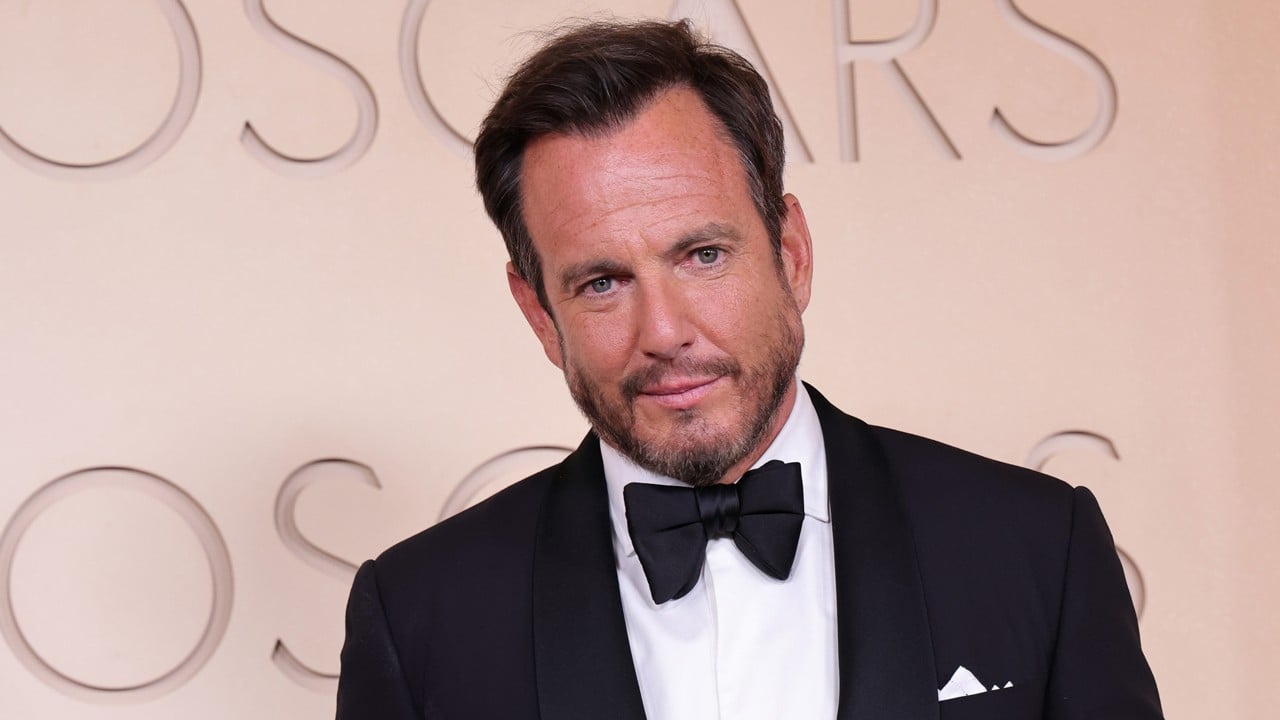
Will Arnett Is ‘Very, Very Happy’—and Finally Letting His SmartLess Co-Hosts Wonder About His Love Life
The actor offered a rare update on his relationship status, while People identified his new girlfriend as fashion entrepreneur Emma Marciano.
Will Arnett has entered his “I’m happy, please stop trying to make me reveal the plot” era.
On the latest episode of SmartLess, Arnett gave Jason Bateman and Sean Hayes the kind of personal update that instantly turns a celebrity podcast into a group-chat event. Asked by Bateman for an “update on your love life and domestic life,” the 56-year-old actor said things were going “really well.” When his co-hosts began pressing him to “talk about secrets,” Arnett knew exactly where the ambush was headed.
“Both of you know exactly what’s happening and I’m not gonna walk into your trap,” he said.
That was the tease. The actual reveal was softer, and somehow more interesting: Arnett said he was “very happy, very, very happy” and that “things are going great.” In other words, no dramatic hard launch, no couple selfie, no suspiciously coordinated vacation carousel—just a famously funny man trying to answer a question without handing two professional improvisers an entire season of material.
The new relationship has a name
People identified Arnett’s new girlfriend as Emma Marciano, who co-founded the fashion label Mimchik. She is also the daughter of Guess founder Maurice Marciano, giving this particular celebrity pairing a pleasingly glossy intersection of Hollywood, fashion and family-business lore.
Arnett did not name Marciano during the SmartLess episode, and neither does the source report include a public relationship announcement from the couple. But his comments arrive with the unmistakable energy of someone who is no longer interested in pretending the question is off-limits. He may not be ready to provide a synchronized Instagram debut, but he is apparently willing to say the emotional equivalent of: yes, there is something, and yes, it is going well.
That distinction matters in an era when celebrity relationships often arrive fully packaged: soft-launch hand photos, paparazzi-friendly dinners, birthday tributes with suspiciously intimate captions. Arnett went in the opposite direction. His relationship update was conversational, slightly evasive and delivered among friends who know precisely how much to push before the bit becomes a headline.
Will Arnett is done trying to predict the next five years
Bateman followed up by asking where Arnett sees the relationship being in five years. It was a very SmartLess question—part sincere curiosity, part trapdoor.
Arnett’s answer was less rom-com prophecy than hard-earned perspective. “If I f****** knew what five years…” he began, explaining that at 56 he has learned to let go of his ideas about how life is supposed to unfold. Over the last two years especially, he said, he has been trying to deal with “what’s in front of me,” rather than attempting to control every curve in the road.
He also said he has been trying to lay down “a great foundation,” surround himself with great people and do personal work so that whatever comes his way, he can handle it better than he has historically.
It is a surprisingly grounded answer from a man whose public persona has long been built on a different kind of confidence: the silky voice, the deadpan delivery, the gleeful arrogance of Gob Bluth and a comic instinct for making self-importance look ridiculous. On the podcast, though, Arnett sounded less like the man preparing a grand romantic forecast and more like someone who has learned that the most luxurious relationship status is simply being okay with the present.
A new chapter after a very public romantic history
Marciano is reportedly Arnett’s first publicly linked partner since his relationship with model Carolyn Murphy, which ended earlier this year after less than a year together. Before Murphy, Arnett was in a five-year relationship with Alessandra Brawn. The former couple quietly split in 2024 and remain committed co-parents to their five-year-old son, Denny, according to People.
Arnett also shares two older sons, Archie, 16, and Abel, 14, with Amy Poehler. The pair were married for more than 10 years before divorcing, and their long-running reputation as one of comedy’s most beloved former couples has remained part of Arnett’s public story—even as both have moved forward in their personal lives.
That history gives his latest update a little more texture. This is not Arnett treating romance like a public-relations rollout. It is a man with children, a well-established career and enough life experience to know that “where will this be in five years?” is both an ordinary question and an impossible one. His answer was not a promise. It was a mood: happy now, trying to be thoughtful, and refusing to let the future bully the present.
Of course, Bateman and Hayes were never going to let him off that easily. The whole charm of SmartLess is the way its hosts turn friendship into interrogation, then disguise the interrogation as casual conversation. Arnett managed to keep the specifics mostly under wraps while still giving listeners exactly what they wanted: confirmation that his love life is active, optimism is intact and his co-hosts know enough to make him nervous.
For now, the Marciano-Arnett chapter is staying low-key. No red-carpet declaration, no matching captions, no cinematic airport embrace required. Just Will Arnett, sounding genuinely pleased, declining to spill the secret and accidentally making the secret much more interesting.
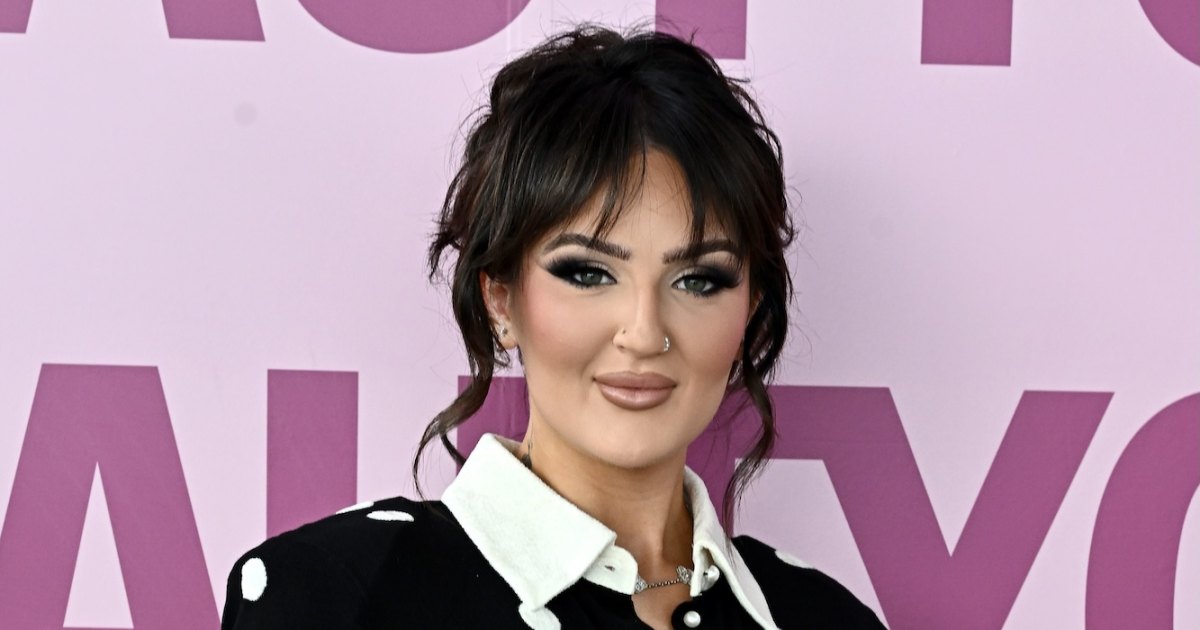
Mikayla Nogueira Is Done Letting the Internet Turn One Bad Photo Into a Beauty Trial
The beauty influencer fired back at Photoshop accusations with a side-by-side of her own — and called out the cruel little ritual of comparing someone’s worst angle with their best one.
There is a special kind of internet cruelty reserved for beauty influencers: the belief that every flattering image is a confession and every unflattering one is a prosecution.
Mikayla Nogueira has officially had enough of the courtroom drama. The 28-year-old beauty creator addressed a wave of Photoshop and filter accusations in a TikTok, saying she was “sick and tired” of people dissecting her face across different photos and treating ordinary changes in lighting, angle and expression like proof of deception.
Her frustration was not subtle. Nor was it particularly polished. Nogueira did not deliver a soft, brand-safe statement about embracing authenticity. She went straight at the people comparing what she described as “the worst possible snapshot” of her with “the best possible snapshot” and then using that contrast to accuse her of misleading her audience.
That is the part of this whole online ritual that feels especially deranged. A person can look different under a ring light, at an event, on a front-facing camera or in a candid frame — and somehow the internet still expects a single, permanent, universally flattering face to emerge from all of it.
The side-by-side that started the latest spiral
In the video, Nogueira showed a comparison between herself in front of a ring light and herself at an event. She said the images had been circulating in videos that accused her of using face-altering or skin-blurring filters to deceive her audience.
Her response was to show additional unedited images from what she said was the “same exact day,” arguing that they showed her looking like the same person across different settings. She also explained the part that should not require a congressional hearing: yes, she films with a light. As she put it, “Every beauty influencer uses light.”
That admission is hardly the bombshell some corners of the internet want it to be. Beauty content is built around illumination. Ring lights are practically part of the uniform, alongside makeup brushes, product shelves and the ability to say “you guys” before describing a lip liner. Lighting can smooth shadows, sharpen features and make skin appear more even without automatically transforming someone into a different human being.
But social media loves a before-and-after, especially when the “before” is a photo caught in a split second and the “after” is a carefully framed beauty shot. The format is irresistible because it pretends to offer clarity. In reality, it often just turns a normal visual difference into a morality play.
“The problem is you”
Nogueira’s sharpest line was also her simplest: “The problem is you.”
She directed that criticism at the person who created the comparison, saying they knew about her insecurities and struggles with self-esteem. According to Nogueira, the creator also liked comments piling onto the discussion, which made the episode feel less like a neutral question about filters and more like an invitation for a crowd to pick apart her appearance.
That distinction matters. There is a difference between asking how beauty creators present themselves online and turning one woman’s face into public property. The first conversation can be useful, particularly when young viewers are learning how much of social media is styled, lit and edited. The second is just a roast disguised as media literacy.
Nogueira said she had not planned to discuss the subject again because she had already defended herself “so many times.” She felt pushed back into the conversation, she explained, after people began discussing how the side-by-side images might affect young girls and their body image.
That argument is the internet’s favorite pressure point: accuse a creator of harming young women, then use that accusation to justify scrutinizing her in even more humiliating detail. It is a neat little trap. If she ignores the claims, people call the silence suspicious. If she responds, the response becomes another episode in the content cycle.
The beauty influencer paradox is officially exhausted
Nogueira also pushed back on the idea that she is promoting an impossible beauty standard. She said she does not use beauty mode, does not filter her videos and has repeatedly shown different angles of herself, including her side profile and images taken with the back camera instead of the more forgiving front camera.
Her argument was not that she looks identical in every photograph. It was almost the opposite: of course she looks different. Everyone does. The fantasy that a real person should remain visually consistent across lenses, lighting conditions and split-second expressions is itself an impossible standard.
Then Nogueira made the conversation even more uncomfortable by saying she believes some of the attention comes from people viewing her as a “non-attractive beauty influencer.” She described herself as a “non-attractive individual” who nevertheless made it in the beauty world, and wondered whether jealousy played a role in the accusations.
It was a raw thing to say, and not exactly the kind of line that disappears neatly into a caption. But it captured the bizarre double bind around women who build careers by talking about beauty. They are expected to look aspirational but relatable, polished but “real,” glamorous but not intimidating, transformed but never accused of transforming too much.
If they look perfect, they are allegedly hiding something. If they look tired, someone turns it into a gotcha. If their weight changes, the comments become a medical investigation. The audience demands authenticity while aggressively punishing any visible evidence that a person has a face capable of changing.
Her followers were less interested in the prosecution
In the comments, Nogueira’s followers largely backed her. One person pointed out that everyone looks different from different angles. Another said they look different in every photo. A third told her she was beautiful from every angle.
That support does not erase the ugliness of the conversation, but it does suggest that the internet is not one giant unified mob. The loudest posts are often the meanest ones, and the algorithm can make a nasty comparison feel like a national referendum when it is really just a particularly shareable form of nitpicking.
Nogueira ended by saying she was “done” with the accusations and insisting that she had done nothing wrong. The statement had the weary energy of someone closing a group chat after explaining the same point for the fifth time.
And maybe that is the real story here. Not whether a ring light is flattering — it is. Not whether photos can be edited — obviously. The more revealing question is why the internet keeps demanding that beauty creators prove they are ordinary while simultaneously refusing to let them be ordinary in peace.
A bad angle is not a scandal. A good angle is not a felony. Sometimes a face is simply a face, caught under different lights, while thousands of strangers decide whether they prefer the lighting.

Will Reeve Thought the Lump Would Go Away. Then His Whole Year Changed
The ABC News correspondent, 34, kept his cancer diagnosis private while undergoing multiple surgeries and chemotherapy—and credits his wife with pushing him to get the scan that changed everything.
Will Reeve noticed something was wrong in the shower and did what an alarming number of otherwise healthy people do: he talked himself out of taking it seriously.
“At some point in April, I noticed something was off in the shower,” the ABC News correspondent, 34, told People in an interview published Tuesday. He felt a tender lump on his testicle, but assumed it was temporary. “I was concerned, but figured that it would pass,” he said. “As is common for young, healthy men like myself, I assumed it was nothing or that it would go away.”
It didn’t. Weeks later, the lump was still there. The person who finally made the situation impossible to ignore was Reeve’s wife, Amanda Dublin Reeve, who urged him to get an ultrasound. That scan revealed a mass, launching a brutal medical year that Reeve had kept almost entirely out of public view.
The scan turned a vague worry into a life-altering conversation
Reeve learned quickly that this was not a situation doctors could casually biopsy. As he explained to People, a mass in that area generally cannot be biopsied because of the risk of spreading cancerous cells through the needle. Instead, he was told he would need an orchiectomy—the removal of the affected testicle.
The surgery happened 10 days later. Reeve said he was less consumed by the idea of losing an essential part of his body than by the unknowns surrounding the operation itself. That detail gives his story its unnerving realism: sometimes the biggest fear is not the headline diagnosis, but the sequence of unfamiliar rooms, procedures and decisions that follows it.
The pathology showed that 95 percent of his condition was embryonal carcinoma, a rare form of testicular cancer involving abnormal germ cells—the cells that eventually mature into sperm. The diagnosis was only the beginning. On June 10, Reeve underwent a six-hour operation to remove dozens of lymph nodes from his abdomen. Three tested positive for cancer.
“I realized that this was going to be a longer journey than I had anticipated,” he said.
The private fight behind the polished TV correspondent
Reeve then completed two rounds of chemotherapy, while also dealing with a string of symptoms that included bone pain, ringing in his ears, constant headaches, night sweats and blood clots. He did not turn the ordeal into a running social-media storyline or drip-feed the public a series of carefully lit hospital updates. Instead, he kept the diagnosis private and revealed it Tuesday on Good Morning America, after being declared cancer-free on Sept. 8.
That silence feels notable for someone whose family history is already part of the public imagination. Reeve is the son of Christopher Reeve, the actor and Superman star who died at 52 in 2004, and Dana Reeve, who died of lung cancer in 2006. He has spoken publicly before about his parents and the complicated inheritance of being born into a famous family, but this was a different kind of disclosure: not a story about legacy, grief or Hollywood mythology, but about a very personal health scare arriving in the middle of an adult life that looked, from the outside, firmly in motion.
Reeve also discussed using cold-capping during chemotherapy, a method he credits with helping him keep his hair. It is an especially revealing detail because it shows how much of the experience involved managing the visible and invisible versions of illness at the same time. On television, he could continue to look recognizably like himself. Behind that continuity was surgery, chemotherapy and the effort to understand what came next.
A newlywed future suddenly included fertility decisions
The diagnosis also collided with a future Reeve and Dublin had only recently begun building together. The couple got engaged in November 2024 and married in January at Miami’s Rubell Museum, surrounded by friends and family.
Before treatment, Reeve banked sperm so that he and Dublin could pursue in vitro fertilization as they try to start a family in the future. It is an intensely practical decision, but also an emotionally loaded one: a wedding, a cancer diagnosis and conversations about parenthood now sit in the same chapter of their lives.
His wife’s role in the story is equally clear. Reeve may have dismissed the lump as something that would disappear, but Dublin pushed him toward the appointment that found the mass. The glamorous newlywed narrative—museum wedding, famous family, television career—was interrupted by a reminder that the person closest to you may be the one who notices when denial has started doing the talking.
Reeve’s disclosure is not a celebrity wellness post or a neatly packaged comeback. It is a story about a symptom that seemed easy to minimize, a diagnosis that moved fast, and a 34-year-old who went from “probably nothing” to major surgery and chemotherapy in a matter of weeks. He is now cancer-free, but the experience has left him with a message that is less flashy than a red-carpet reveal and far more useful: a small change that lingers deserves attention, even when you feel young, healthy and very sure it will go away.