
Will Reeve Turned His Cancer Reveal Into a Mission — With His Wife, His Future Family and Three Men Still in the Fight at the Center
The “GMA” correspondent opened up about the testicular cancer he kept private, the tender lump he nearly dismissed and the fear that his loved ones were putting their lives on hold for him.
Will Reeve did not arrive on “Good Morning America” looking for a sympathy segment. He arrived with a mission, a stack of difficult memories and the kind of sentence that makes a morning show suddenly feel much quieter: he had been through testicular cancer, multiple surgeries and chemotherapy, and now, he said, the diagnosis was “in the rearview mirror.”
That was the headline. The more revealing part was what came after.
At 34, Reeve admitted he had worried about becoming a burden to the people closest to him — especially the loved ones who kept “dropping everything” to be with him. He spoke about the fear with an apology that was less polished than the usual television update and much more human: “I’m so sorry to all of my loved ones who are dropping everything to be with me throughout this whole thing.”
It was not a glossy celebrity health reveal built around a dramatic comeback entrance. It was a man trying to explain what illness does to the people standing beside the hospital bed, too.
The lump he nearly talked himself out of noticing
Reeve revealed the private battle Tuesday on “GMA,” after first telling viewers “right off the top” that he was okay. In an interview with People published the same day, he explained how the whole ordeal began: in April, he noticed a tender lump while showering.
His first instinct was familiar to anyone who has ever tried to negotiate with a worrying symptom. He thought it might pass. He assumed it was nothing. As he put it, he figured it would go away — a particularly dangerous kind of optimism when you are young, healthy and not expecting your body to deliver a plot twist before breakfast.
Weeks later, the lump was still there. Reeve went for an ultrasound at the urging of his wife, Amanda Dubin, whom he married in January. The scan revealed a mass, and the diagnosis that followed turned his private life into a treatment schedule of surgeries and chemotherapy.
There is a reason this part of the story lands so hard. Reeve was not describing some obvious crisis that arrived with a siren attached. He was describing something easy to minimize, followed by the slow realization that “probably nothing” had become something that could not be ignored.
His wife was in the story before the cameras were
Dubin has appeared beside Reeve in the images shared around his update, including a hospital selfie and a 2025 Instagram upload. But the important detail is not the photo-op version of support. It is that she pushed him to get the lump checked when he was still hoping it would disappear on its own.
By the time Reeve spoke publicly, the couple had been married for only a few months. That timing could have turned the segment into a tidy “newlywed health scare” narrative, but Reeve’s comments were more complicated than that. He talked about guilt, dependence and the uncomfortable feeling that the people you love are rearranging their lives around your illness.
Then came the future-facing moment. During the interview, Reeve told Kevin Spies, a man diagnosed at 31 who later became a father during his own cancer journey: “You are what I hope to be soon.”
That line quietly shifted the conversation from survival to possibility. Reeve was not only looking backward at the surgeries and chemotherapy. He was looking toward the life he still wants — including fatherhood — while acknowledging the medical and emotional questions that can accompany a testicular cancer diagnosis.
The “GMA” segment got surprisingly candid about fertility
Reeve’s interview with three men at different stages of testicular cancer was designed to destigmatize the disease, but it did not arrive wrapped in solemnity from start to finish. The group also joked about doctors recommending that patients visit a sperm bank immediately after diagnosis.
Speaking to Will Sette, who was diagnosed at 14 and is now 19, Reeve cracked, “If there’s ever a time to go [to a] sperm bank, it’s probably when you’re 14.” It was an awkward subject made slightly less intimidating by a joke — the kind of moment that acknowledges how surreal the conversation can feel, particularly for young men suddenly being asked to think about fertility while processing cancer.
Spies offered the more emotional counterpoint. He became a father to two sons during his cancer journey and spoke gratefully about modern medicine and the fact that he was able to have children despite the diagnosis. Reeve’s response — that Spies represented what he hoped to be soon — made the segment personal without turning it into a performance of inspirational perfection.
The men were not presented as identical versions of the same story. Spies was diagnosed at 31. McCluskey was diagnosed at 28. Sette was diagnosed at 14. Reeve used those different timelines to make the point that testicular cancer does not belong to one age bracket, one personality or one kind of life.
“It’s a mission for you right now”
By Wednesday, Reeve was back in the “GMA” studio, doing his job and talking about the men he had interviewed as well as his own recovery. He thanked his colleagues, his family and everyone who had reached out. Robin Roberts, who knows something about turning a public platform into a source of purpose, told him: “It’s a mission for you right now. It’s your message.”
That may be the cleanest way to understand why Reeve chose to speak now. The diagnosis was no longer an active secret, and he had already described the treatments as “a slog.” But he did not treat being cancer-free as the end of the conversation. He used the visibility of a national morning show to discuss the symptom he nearly dismissed, the people who carried him through treatment and the awkward subjects — fertility, fear and dependence — that men are often encouraged to keep private.
There is nothing especially glamorous about a cancer story, and Reeve did not try to make one. The striking part was the lack of a victory-lap pose. He was grateful, relieved and clearly still processing what had happened. He was also thinking about his wife, the men he had met and the family he hopes to build.
For once, “in the rearview mirror” did not mean the story was over. It meant Reeve could finally turn around and talk about the road.
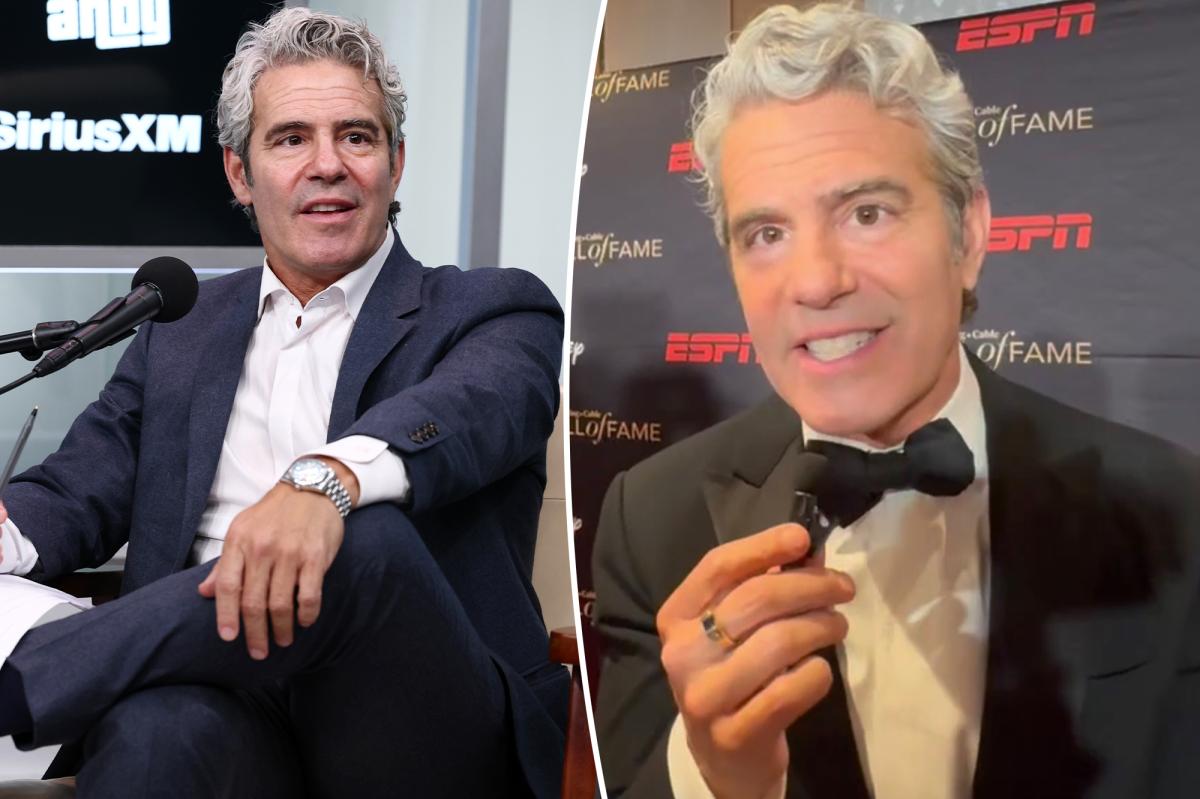
Andy Cohen Has Entered His Babysitter Pay Wars Era — and Jeff Lewis Is Not Letting Him Off Easy
The Bravo boss says he checked the going rate with friends after admitting he pays $30 an hour. Then his boyfriend got asked about moving in. Suddenly, the babysitter drama had a subplot.
Andy Cohen has hosted enough reunions to know that the smallest detail can become the whole storyline. This week, that detail was $30 an hour.
The “Watch What Happens Live” host is defending the rate he pays his babysitter after his friend Jeff Lewis called it “cheap” on SiriusXM’s Andy Cohen Live. Cohen, who pays $70 for roughly two hours and 15 minutes of childcare for his two children, initially sounded confident that the number was perfectly reasonable. Then the conversation followed him from the radio to a red carpet, where Page Six asked whether he was feeling like a “cheapskate.”
“I wasn’t till we started talking about it on the radio. You’re making me feel like one,” Cohen said at the Broadcasting + Cable Hall of Fame Awards on Sept. 29, according to Page Six. He added that he had checked with his friends about what they pay and found the amounts comparable — though he also planned to ask more people about the going rate.
Which is how a man being honored for his career in television wound up in a public cost-of-childcare audit led by Jeff Lewis.
Jeff Lewis Has Questions, Naturally
Lewis did not approach the issue as a neutral labor economist. He approached it as Jeff Lewis, a man who has made an art form out of telling friends when they are being cheap.
“Cheap to me, especially from someone with your money,” Lewis told Cohen during Monday’s radio conversation. Lewis said he pays $37 an hour for a babysitter to watch his 9-year-old daughter, Monroe, whom he shares with his ex, Gage Edward. Cohen countered that he had paid his sitter $70 for the evening, based on the two-hour-and-15-minute stretch.
Lewis’s own calculation was more generous: he said he probably would have given the sitter $100 for two hours and two children. The difference is not exactly a scandal, but it is an irresistible Bravo-world argument because nobody involved is pretending this is only about arithmetic. It is about taste, class, parenting, friendship and the particular confidence of wealthy people comparing notes in public.
Cohen has two children: son Ben, 7, whom he welcomed via surrogate in 2019, and daughter Lucy Eve, 4, born in 2022. A babysitter looking after two young children is not a background prop in that setup; the entire conversation turns on what the work is worth. But Cohen’s “I checked with my friends” defense also has the faintly comic energy of a celebrity group chat suddenly becoming a wage board.
And because this is Andy Cohen, the discussion did not stay in one lane. The host is both a parent and a television executive with a very visible social circle, so the babysitting rate instantly became another piece of Bravo-adjacent personality theater: Lewis as the blunt friend, Cohen as the mildly wounded rich guy, and everyone else invited to decide which one sounds more ridiculous.
The Real Twist Was Standing Beside Him
Cohen was not alone at the gala. He brought his boyfriend, finance executive Kevin Sobieski, as his plus-one. The pair have been dating since meeting at a Fourth of July party in 2025, and Cohen offered a concise status update: “Everything’s good.”
That might have been the end of the relationship portion of the evening if Cohen had not appeared surprised when asked whether they had moved in together.
“One step at a time!” he admonished.
It was a very Cohen response: warm enough to suggest the relationship is going well, firm enough to close the door on a more dramatic headline. Still, the timing gave the night an accidental two-act structure. First, Cohen is asked to defend what he pays the person caring for his children. Then he is asked whether the man accompanying him has moved into his home. In both cases, the answer was essentially: let’s not rush this.
The difference is that Cohen seems willing to solicit outside opinions about babysitting rates, while the cohabitation question hit a boundary. He will canvass his friends on hourly childcare. He will not, apparently, let the red carpet turn his relationship timeline into a group project.
Andy Cohen’s Week in Public Negotiations
The episode lands at an especially Cohen-specific intersection: family life, celebrity friendship and the soft-launch language of an established relationship. Sobieski is not being introduced as a mystery man; Cohen brought him as his date. But “Everything’s good” and “one step at a time” keep the romance in that polished middle zone where it is public without becoming a press release.
That may be why the babysitter debate has legs. The hourly rate is the headline, but the fun is in the portrait around it. Cohen is a father of two, a veteran broadcaster, a Bravo institution and someone whose friends are comfortable enough to roast him on air. He can be honored at a Hall of Fame gala and still spend the next day explaining whether $30 an hour makes him a cheapskate.
He is also preparing to release Andy’s Bravo Scrapbook on Oct. 20, a book featuring personal photos from the past two decades. So even while Cohen is being celebrated for the big public arc of his career, the tiny domestic details are doing what tiny domestic details always do: stealing the scene.
Maybe $30 an hour is fair. Maybe Lewis’s $37 is closer to the going rate. Maybe the real luxury is having enough famous friends to conduct an informal survey before breakfast. Cohen has not conceded that he is cheap, but he has agreed to keep checking. In Bravo terms, that is not a resolution. It is a season-two renewal.
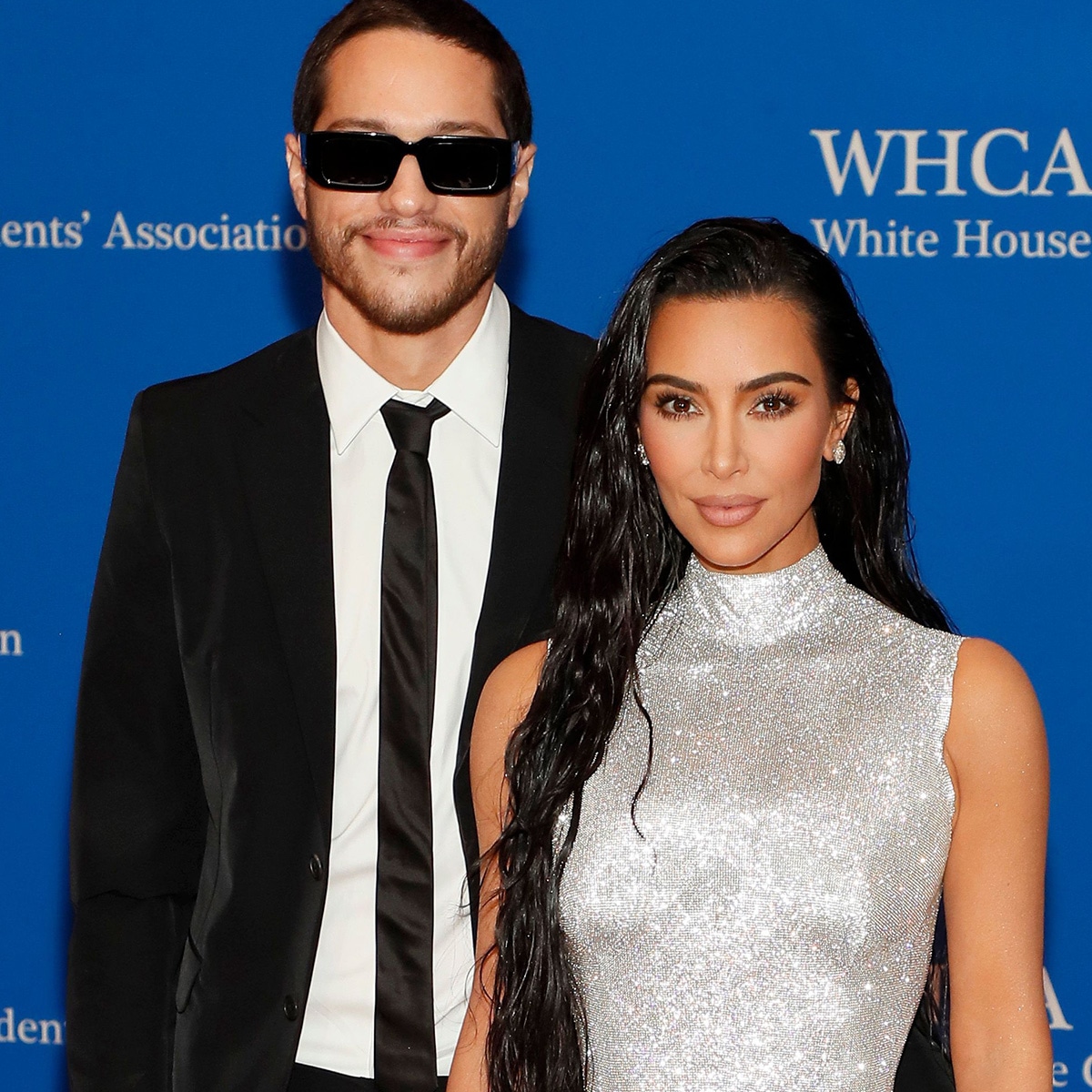
Pete Davidson Says He “Cleared the Path” for Kim Kardashian’s Post-Kanye Dating Life
Four years after their breakup, Davidson is looking back on the Kim-Kanye chaos with surprising tenderness, a little gallows humor and absolutely no interest in pretending it was normal.
Pete Davidson has a theory about his place in Kim Kardashian’s romantic history: he took the first hit.
Four years after he and Kardashian ended their nine-month relationship, the comedian is revisiting the era when their romance became a full-contact spectator sport—complete with paparazzi, security details, social-media warfare and an ex-husband who turned Davidson into a claymation kidnapping victim.
Speaking to Variety in an interview published Sept. 30, Davidson made it clear that there is no lingering Kardashian frostiness. “We’re cool,” he said, adding that he has “a lot of love” for his former girlfriend. Then, with the particular blend of self-deprecation and emotional intelligence that has become his signature, he offered a postmortem on the relationship, the circus around it and the role he believes he played in Kardashian’s future dating life.
“I like to think I got that one out of the way for her,” Davidson said of the backlash from Kanye “Ye” West. “Whoever that guy was going to be was gonna get it. I cleared the path for her to get back into the dating pool.”
The Kardashian relationship was never exactly a quiet one
Davidson and Kardashian first connected after she hosted Saturday Night Live in October 2021, where the two shared a now-famous sketch involving a magic carpet, a genie and a kiss that sent the internet into immediate overdrive. Their relationship soon moved beyond the show, and Kardashian became the first person to date West after their split.
That timing mattered. Kardashian was not simply entering a new relationship; she was doing it in public while still navigating the fallout from her divorce and West’s escalating online attacks. Davidson, meanwhile, was stepping into a family whose level of fame makes ordinary celebrity seem almost quaint. He said he found the Kardashian family’s certainty about their lifestyle attractive at first.
“That’s a really tough atmosphere if you’re not game,” Davidson told Variety. “One of the things I love about Kim and that whole family is they’re like, ‘This is what we do.’ I found that very attractive and mature.”
It is a telling description. Kardashian’s world is not merely famous; it is operational. There are cameras, security teams, schedules, stylists, brand obligations and an entire family ecosystem that has spent decades converting personal life into public narrative. Davidson, who has been candid about mental-health struggles and his sobriety journey, said the attention eventually became difficult to absorb.
“The craze of that lifestyle—being followed everywhere, having security and looking over your shoulder—for a guy with mental stuff, and at the time drug problems, was a little too much for me,” he said.
Then came the part nobody could pretend was normal
The relationship’s most volatile backdrop was West, who shares four children with Kardashian. According to Davidson, the online hostility was especially destabilizing because it collided with struggles he had already discussed publicly.
West’s attacks included repeated online messages and a music video for “Eazy” that depicted a clay version of Davidson being kidnapped and beheaded. Davidson recalled feeling that West was effectively telling him to kill himself, despite Davidson’s openness about his mental-health history.
“What tripped me out is I was super open about mental stuff—everyone knows this about me—and it’s like he was [saying], ‘Kill yourself,’” Davidson said. “And he did push me.”
That period produced one of the strangest celebrity feuds of the 2020s: Kardashian’s new boyfriend versus her estranged husband, with the whole thing unfolding in public and frequently dragging their children, their co-parenting situation and their enormous audiences into the frame. Davidson was a willing participant in the joke machine at times, but his comments suggest the experience was far less entertaining from inside the blast radius.
Still, he did not describe West with simple villain-edit certainty. Davidson acknowledged West’s own public pressures, the death of his mother and his mental-health struggles, while admitting he could not understand what it felt like to be someone with that level of influence.
“I’m not one-one-millionth as talented or influential or powerful as that dude,” Davidson said, “but I have dealt with a fraction of what he’s had to deal with public-wise—and that’ll do it.”
That empathy does not erase what Davidson says happened. It does, however, make the story more complicated than the usual celebrity breakup revenge arc. Davidson is describing a painful situation without pretending he has no idea why the person at its center might behave badly. Hollywood loves a clean hero and villain. Pete Davidson, predictably, seems more comfortable in the messy middle.
Kim has moved on—and Pete is apparently fine with it
Kardashian and Davidson ultimately decided they were better as friends, and their relationship has settled into the rarest post-breakup category in celebrity culture: genuinely cordial, with no obvious need to stage-manage the cordiality.
Davidson is now a father to nine-month-old daughter Scottie Rose Hewitt Davidson with former girlfriend Elsie Hewitt. Kardashian, meanwhile, is dating Formula 1 champion Lewis Hamilton, according to E! News. The romantic plot has moved forward, but Davidson’s remarks show that the old relationship has not been rewritten as a mistake.
He still speaks warmly about Kardashian and her family, even while admitting that their lifestyle was not ultimately sustainable for him. The distinction matters. Celebrity breakups are often packaged as either secret bitterness or effortless friendship. Davidson is offering something more recognizable: affection without a desire to reunite, gratitude mixed with relief, and a clear understanding that loving someone does not mean wanting their entire world back.
His “cleared the path” joke also lands because it captures the bizarre emotional math of dating Kardashian. The person who comes after her is not just dating a woman; they are entering a franchise, a family mythology and a relationship history that is already being watched by millions. Davidson became the first post-West boyfriend, absorbed an extraordinary amount of public hostility and eventually exited with his relationship with Kardashian intact.
That is not exactly a peaceful romance. It is more like surviving a very glamorous natural disaster and later sending a friendly birthday text to the weather system.
And while Kardashian’s current chapter appears to be Hamilton-shaped, Davidson’s version of the story is notably free of jealousy. He is not hinting at a reconciliation, baiting his ex or pretending the past did not happen. He is simply saying that he loved her, the experience was intense, the atmosphere around it was brutal—and, somehow, they are still good.
In the celebrity breakup economy, that may be the closest thing to a happy ending.