
Bethenny Frankel’s Ex-Husband Update Is the Least Friendly “We’re Fine” in New York
Years after a two-year marriage became a decade-long legal saga, the RHONY alum says she and Jason Hoppy “both exist on this earth” — which is not exactly a Hallmark card.
Bethenny Frankel has offered the kind of co-parenting update that makes “we’re on good terms” sound like an ambitious fantasy.
Appearing on the September 29 episode of Benny Blanco’s Friends Keep Secrets podcast, the Real Housewives of New York City alum gave a status report on her relationship with ex-husband Jason Hoppy. Her answer was less “we’ve found peace” and more “the ceasefire is holding, technically.”
“Not exactly” friendly, Frankel said when asked where the two stand now. Then came the line destined to live forever in the museum of brutally minimalist celebrity diplomacy: “We do both exist on this earth, so that’s positive.”
It is bleak, funny and extremely Bethenny — a sentence that manages to acknowledge another person’s existence while declining to make any claims about emotional warmth, holiday-card exchanges or spontaneous brunches.
A Two-Year Marriage, a Ten-Year War
Frankel, 55, and Hoppy, 56, married in 2010 and split in 2012. What followed was not a tidy reality-TV breakup where the exes trade a few pointed confessionals, unfollow each other and move on to separate branded margarita empires.
Their divorce became a prolonged and bitter legal battle, including a custody fight over their daughter, Bryn. The pair reached a custody agreement in 2014, but their divorce was not finalized until 2021 — nearly a decade after the marriage itself ended.
Frankel described the experience on the podcast as “torture” and “traumatic,” calling the proceedings anything but a routine split. “Ten years on a two-year marriage,” she said, capturing the strange math of a relationship that ended quickly on paper but continued to occupy an enormous amount of legal and emotional real estate.
That timeline is what gives her latest update its particular charge. This is not an ex-couple still working through the ordinary awkwardness of shared friend groups or one unfortunate vacation photo. This is a former marriage whose afterlife lasted dramatically longer than the marriage, with custody and conflict keeping the connection active long after romance disappeared.
“We Both Exist” Is the New Co-Parenting Chic
Frankel’s language is striking because it refuses the polished celebrity vocabulary usually deployed around exes. There is no “we’re in a great place,” no “we’re better as friends,” no cheerful suggestion that the pain has been transformed into a beautiful blended-family journey.
Instead, there is existence. Earth. Positive, apparently.
It sounds like a joke, but it also reflects the reality of a relationship that has been difficult for years. Not every former couple gets a redemption arc. Sometimes the mature outcome is not friendship; it is distance, boundaries and a shared understanding that the person will remain in your orbit because your child is there.
Frankel said the past year has been “strained” and “challenging,” without offering a glossy explanation or pretending that time has automatically made everything comfortable. That may be the most revealing part of the update. Celebrity culture loves the idea that enough healing, therapy, matching family pajamas and a well-lit podcast appearance can turn any ugly chapter into a lesson. Frankel is offering something messier: a relationship that remains unresolved in feeling while still functioning in reality.
The Custody Battle That Still Defines the Story
Frankel called the custody battle the “horrible, horrendous, worst of my life,” but said it was worth enduring because of her bond with Bryn, now 16. She spoke warmly about the moments when they watch something together, laugh and connect, describing her daughter as her best friend.
Then she added the bittersweet complication: they are now on “different paths” and their relationship can feel “almost like a roommate in a way.”
That is another very un-branded description of motherhood. It is affectionate without being sentimental, intimate without pretending that a teenager and her mother occupy the same emotional zip code. Frankel compared them to “Thelma and Louise,” while acknowledging that they are in “totally different chapters” and respect each other’s chapters.
The juxtaposition matters. Frankel can describe her connection with Bryn as loving and deeply meaningful while also admitting that parenting a 16-year-old is not a permanent sleepover with your favorite person. The dynamic is changing, and she is naming that change instead of forcing it into a tidy “my mini-me” narrative.
A New Romance, an Old Shadow
The timing adds one more layer to the conversation: Frankel recently hard launched a new boyfriend on Instagram. The podcast appearance therefore lands at an interesting moment in her public life, with a new relationship entering the frame while the old one remains emotionally and legally significant.
That does not mean the two events are connected, and Frankel did not present them that way. But celebrity relationships rarely arrive in a vacuum. A new romance can make an old chapter look finished from the outside, even when the practical and emotional threads are still there — especially when a child, a custody history and years of legal conflict remain part of the story.
Frankel’s update is not a reconciliation tease. It is not a secret-friendship reveal or a sudden “we’ve both grown so much” announcement. It is closer to an anti-fairytale: the marriage ended, the divorce eventually ended, the parenting relationship continues, and the exes are still not exactly friendly.
For anyone expecting a grand peace treaty, “we do both exist on this earth” is admittedly a low bar. But after a decade-long divorce saga, low-drama logistics may be the closest thing to luxury. Bethenny Frankel is not selling closure. She is reporting the weather from a very specific emotional climate: cloudy, strained, occasionally survivable, with no chance of a matching Christmas card.
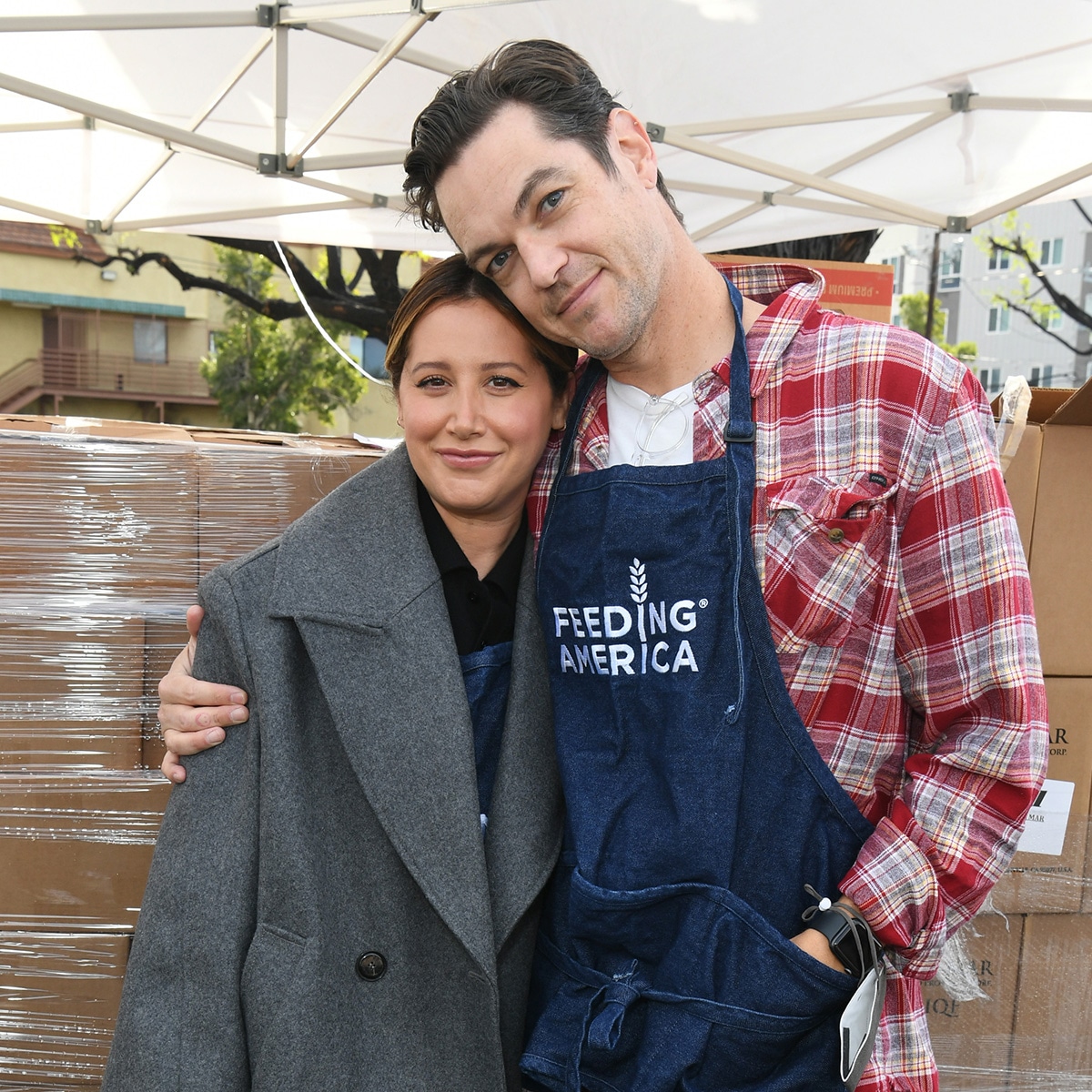
Ashley Tisdale Says Postpartum Depression Made Her Want to Divorce Christopher French
The former High School Musical star opened up about the year her marriage felt impossible—and why French’s calm became a lifeline instead of a plot twist.
Ashley Tisdale is giving the phrase “new-parent fog” a much more honest meaning. On her husband Christopher French’s Recovering podcast, the former High School Musical star revealed that postpartum depression after the birth of their first daughter put such intense pressure on their marriage that she tried to divorce French “so many times.”
It is a startling sentence, especially from a couple who have spent more than a decade presenting a relatively low-drama version of celebrity marriage. Tisdale and French married in 2014, welcomed daughter Jupiter in 2020 and now also share a younger daughter, Emerson. But the story she told on the Sept. 30 episode was not about a relationship collapsing under fame. It was about a mother experiencing a hormonal and psychological crisis she did not yet have language for—and a husband watching the person he loved become unreachable.
“You dealt with a lot of that and we had difficulty during that first year,” Tisdale told French. “I tried to divorce you so many times. But you’re so grounded and calm and knew to just let it blow over.”
The part nobody had properly named
Tisdale said she believed she was prepared for motherhood because she had already worked through anxiety and felt equipped to handle the emotional demands of having a child. Then postpartum depression arrived and made all her carefully collected coping tools feel useless.
“I was so proud of myself for dealing with the anxiety stuff and being like, ‘OK, now I am ready to have a child because I feel like I’m equipped emotionally to be able to do that,’” she said. “But then I got hit with postpartum depression which is really hormonal and all the tools that I learned and knew to use, you can’t use.”
That distinction matters. Anxiety had given Tisdale a familiar set of warning signs and strategies. Postpartum depression, as she described it, changed the entire operating system. She recalled becoming overwhelmed in ordinary situations, including nearly having a panic attack while sitting in traffic. The symptoms were intense, but she said no one diagnosed her at the time.
The diagnosis eventually came from her doctor after the symptoms began to clear around Jupiter’s second birthday. Tisdale remembered the moment with a mix of relief and disbelief: “I remember feeling so much better when the two-year birthday came and she was like, ‘Oh, you had postpartum depression.’ I was like, ‘What? How did you not know to tell me this?’”
There is an especially cruel timing to that realization. By the time she had a name for what had happened, she was already emerging from it. The experience had been real for years, but the explanation arrived late, like a label mailed after the package had already been opened.
French saw the mood shifts up close
French’s account made the story even more intimate. He remembered Tisdale being loving and happy with their newborn one moment, then experiencing what he described as an abrupt, total mood change minutes later.
“Everything had changed,” he recalled. He described watching her lie on the floor and cry in pain, while he felt helpless to fix what was happening. His role became less about solving the problem and more about making the stressful mechanics of life with a newborn slightly easier so Tisdale could get through the crisis.
That is not the glamorous version of a celebrity marriage, and thank God for that. There is no polished anniversary caption here, no carefully arranged couple photo pretending parenthood is just matching pajamas and a well-lit nursery. There is a partner admitting that he could not make the depression disappear, and a woman acknowledging that her own mind had made the marriage feel like an emergency exit.
Tisdale’s comments also make clear that the divorce talk was part of the illness and the strain surrounding it—not a report that the couple is currently separating. French’s calm, in her telling, helped keep those moments from becoming permanent decisions. Neither partner framed the period as easy, but both described it as something they lived through together.
The second time came with a different script
Tisdale said her postpartum experience after welcoming her second child was not as severe. “It’s pretty cool doing it again and not having that experience,” she said, calling the first episode the hardest part of becoming a mother.
That contrast is quietly huge. The arrival of another baby did not simply repeat the first chapter. Tisdale knew more about what she had experienced, had a clearer history to bring to her doctors and family, and was no longer encountering the same symptoms as a nameless personal failure. The second time did not erase what happened after Jupiter, but it gave her a different vantage point on it.
For a public figure whose early career was built on bright, tightly choreographed teen fantasy, Tisdale has become increasingly candid about the unchoreographed parts of adulthood. She has spoken publicly about anxiety before, but this conversation lands differently because it places mental health inside the architecture of a marriage and a family. The headline is the divorce confession. The substance is the delayed diagnosis, the panic, the confusion and the way postpartum depression can make someone feel estranged from the life they thought they wanted.
It also complicates the internet’s favorite relationship shorthand. A marriage can be loving and still be under enormous pressure. A partner can be supportive and still be unable to rescue someone from a medical condition. A mother can adore her child and still feel lost after giving birth. None of those truths cancel the others out.
Tisdale and French’s story is compelling because it refuses the tidy version. There was a baby, a marriage, a mental-health crisis and a long stretch before anyone named it. There were moments when Tisdale wanted out, moments when French could only stay steady, and eventually a clearer understanding of what had been happening.
Celebrity culture usually turns marriage trouble into spectacle: suspicious unfollows, courthouse sightings, a breakup statement with the emotional temperature of a corporate memo. Tisdale offered something messier and more useful. Sometimes the dramatic sentence is not “we’re over.” Sometimes it is “I tried to divorce you because I was sick, and you waited for me to find my way back.”

Raven-Symoné Has Entered Her Diaper Era—and Her Wife Is Fully on Board
On Tea Time, the Disney alum gave period care a wildly personal makeover: disposable diapers, saggy jeans, a baby T-shirt and a whole lot of Rugrats energy.
Raven-Symoné has never been especially interested in behaving like a normal celebrity. Why offer a polished little lifestyle anecdote when you can announce, with complete conviction, that you wear a disposable diaper during your period and sometimes pair it with a baby T-shirt and a pacifier?
That was the wonderfully strange dispatch from a recent episode of Tea Time, the podcast Raven hosts with her wife, Miranda Pearman-Maday. The conversation began with period care and quickly swerved into what can only be described as Raven’s private domestic cinematic universe: saggy jeans, “diaper booty,” a little Rugrats homage and a spouse who can apparently tell what is happening from the sound of her walk.
“What I’m obsessed with are diapers,” Raven said. “I am obsessed with the menstrual cycle diaper.”
There are celebrity overshares, and then there are celebrity overshares that arrive with such specific visual details you can practically see the sitcom cold open. Raven, who is 40, made clear that this is not a one-off experiment or a desperate late-night solution. She described it as her preferred way to handle her period now that her cycles have changed and she no longer wants to keep “sticking things inside” to manage her flow.
Raven’s period-care philosophy is comfort first, dignity optional
Raven said she is “not getting the same types of periods” she had when she was younger. The pain, she explained, has moved to different areas of her body, and the cues have changed. Her answer was not a sleek new wellness routine or an expensive celebrity-approved product. It was the humble diaper: easy to wear, apparently reliable, and roomy enough to accommodate what she called the “ebbs and flows” of her cycle.
“I’m just able to wear a diaper throughout the day,” she said, before adding the accessories. “With a little baby T-shirt and a binky in my mouth and run around the house—shoutout Rugrats—I’m thriving.”
It is a very Raven solution. The former Disney Channel star built her career on characters who made eccentricity look like a superpower, from That’s So Raven’s psychic teenager trying to survive high school to The Cheetah Girls’ musical maximalism. Even her most adult disclosures arrive with a layer of cartoon logic and theatrical commitment. She is not merely dealing with a period; she is apparently staging a one-woman, grown-up nursery production in the living room.
There is also a practical point buried beneath the punchline. Period products have long been treated as something women should conceal, endure quietly or discuss only in carefully sanitized language. Raven’s approach is the opposite: if a product is comfortable and does the job, why should the packaging determine whether it is considered acceptable? The joke is loud, but the basic idea is straightforward. Bodies change. Products change. Personal preferences are personal.
Miranda Pearman-Maday has seen the whole production
The funniest part of the story may be that Raven is not living this diaper life alone. Miranda has front-row access, and she offered commentary with the calm specificity of someone who has long since accepted that this is simply part of marriage.
“That booty is poppin’ in a whole different way,” Miranda said.
She went on to describe the unmistakable sound of a baby walking and said Raven has “diaper booty as a full-grown female.” Raven, meanwhile, suggested that Miranda can recognize the situation immediately. If she sees her wife strutting around the house in the diaper, Miranda knows: Raven is on her period. Understood.
That exchange turns the whole thing from a solo overshare into a relationship bit. There is no embarrassment, no faux shock and no attempt to pretend the other person has not noticed. Miranda is not being asked to admire a glamorous transformation; she is being asked to acknowledge a very specific household uniform. Her response is essentially: yes, I see the diaper. Yes, I know what it means. Carry on.
Miranda also floated the possibility that the look could be “some inner child work” for Raven. That is the sort of phrase that could have sent the conversation into a serious therapy podcast direction, but Raven kept it breezy. The baby T-shirt, pacifier and Rugrats reference read less like a solemn psychological breakthrough than a private ritual with excellent comedic timing.
The grown-up diaper market is waiting for its celebrity moment
Raven did make one serious request during the conversation: if there is a diaper company making products for adults, she is interested. She and Miranda mentioned brands, and Raven contrasted the diaper’s capacity with cloth options she had already tried and found insufficient.
Then came the image that will linger: “There’s nothing like wearing a pair of saggy jeans and like my diaper sagging instead of my Calvins.”
It is hard to imagine a more Raven-Symoné sentence. It has fashion, underwear, bodily function and a faintly chaotic styling directive all in one. Somewhere, a comfortwear brand is staring at that line and wondering whether “diaper booty” can be made into a campaign without losing the joke.
The bigger cultural shift is that period care keeps escaping the bathroom cabinet. Celebrities have talked openly about cramps, cycle changes, hormone fluctuations and the absurd logistics of maintaining a public-facing life while your body is doing whatever it wants. Raven’s version is simply more flamboyant—and considerably less interested in pretending that adulthood means abandoning every childish comfort.
She is also not presenting this as a universal commandment. Her message was essentially: this works for me, everyone should think outside the box, and perhaps the adult-diaper industry should call. That is different from turning one person’s preference into a prescription. Raven is sharing a method, a costume and a household joke, not issuing a new law of menstruation.
Still, it is impossible not to admire the commitment. Plenty of people spend their periods negotiating with waistbands, emergency supplies and the fantasy of being left alone. Raven has chosen a diaper, a baby T-shirt, a pacifier and the emotional support of Rugrats. She is not hiding the inconvenience. She has given it a costume change.
And if her wife’s account is anything to go by, the look has a signature sound.