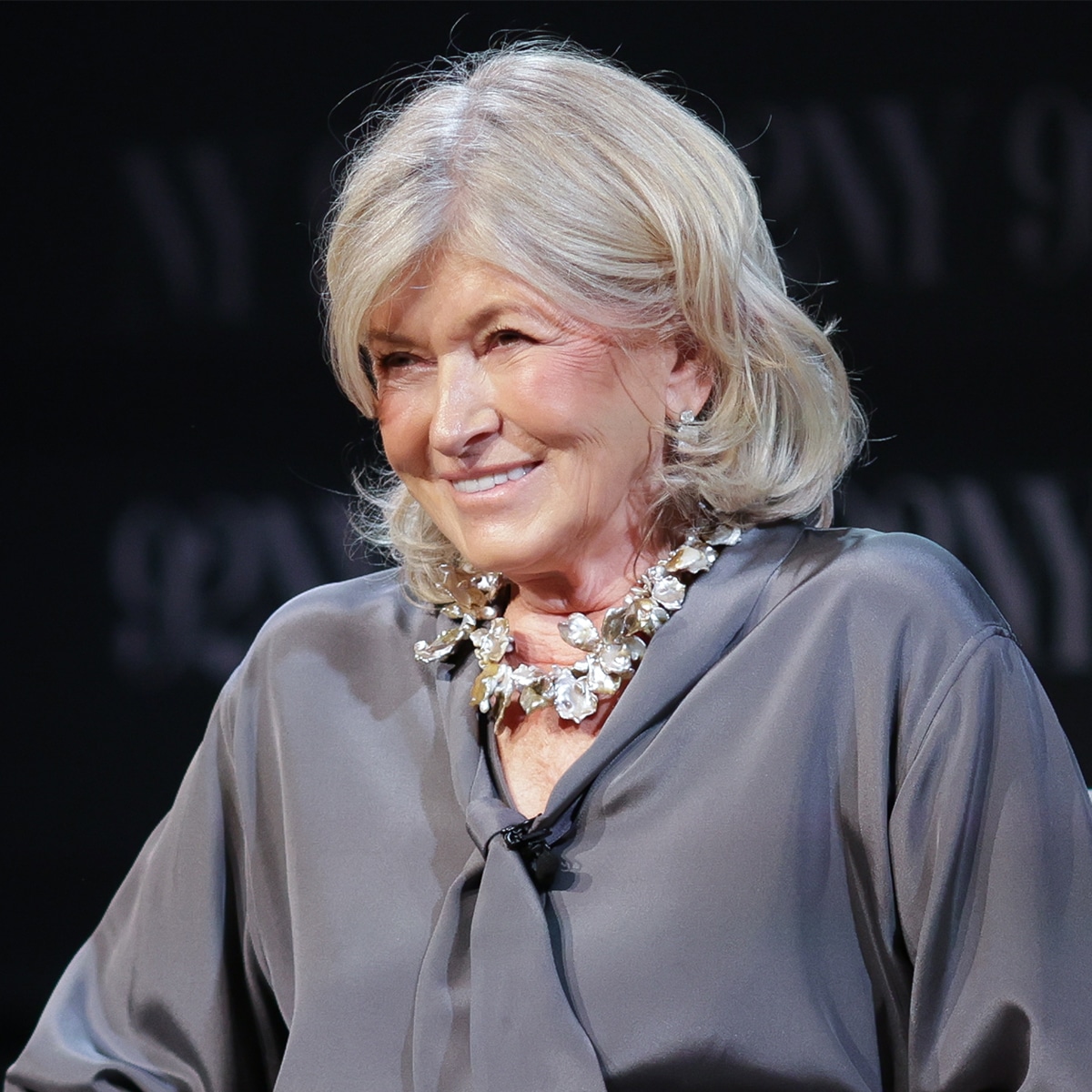
Martha Stewart Was Making $65 Million a Year From Kmart, Which Is the Most Martha Stewart Sentence Ever
Before influencer gifting, there was Martha Stewart turning dish towels, cookware and home goods into a royalty empire big enough to bankroll an entire media universe.
Martha Stewart did not merely have a Kmart collaboration. She had a Kmart empire.
During an appearance on the Other People’s Business MasterClass podcast, Stewart casually revealed that her Martha Stewart Everyday deal with the retailer once generated $65 million a year in royalties. Not $65 million in sales. Not $65 million in one especially blessed holiday quarter. Royalties. Her cut.
“I was clearing $65 million a year in royalties,” Stewart said, explaining that the brand was selling close to $2 billion worth of merchandise. “That’s a lot of money.” It is also a lot of money to say in the same tone one might use to discuss a successful batch of lemon bars.
The Kmart deal was not a side hustle. It was the engine.
The revelation rewrites the mental picture of Stewart’s 1990s business life. This was not a lifestyle celebrity attaching her name to a few tasteful products and collecting a check. The Kmart arrangement became the financial machinery behind everything else: her magazine, her broader business development and the polished domestic universe she was building piece by piece.
Stewart described the royalties as funding “my whole development of my magazine and the whole business.” In other words, the beige-and-sage Martha Stewart world was not just aesthetically coherent. It was exceptionally well capitalized.
That is the part of the story that feels especially delicious now. Before creators were turning link-in-bio recommendations into affiliate revenue, Stewart had already figured out the most powerful version of personal branding: make people want your taste, then give them an affordable way to buy it.
Martha Stewart Everyday translated her authority into the mass market. The woman who could make a table setting feel like a moral achievement was suddenly selling the components at Kmart. The strategy was simple, but the scale was enormous: if shoppers could not live like Martha, they could at least buy the Martha-approved towels, sheets, cookware and seasonal decorations.
She went from physically exhausted caterer to royalty machine.
Stewart was also candid about the less glamorous chapter before the big retail money. Before Kmart, she said, she was grossing a little more than $1 million from her catering business. That sounds enormous until she adds the crucial detail: she was “killing myself physically,” while also carrying the cost of a large staff.
That distinction is the difference between being famous for working hard and building a business that works without requiring your body to be everywhere at once. Catering paid her. Licensing scaled her.
Stewart’s career has always depended on making labor look effortless: the perfect pie crust, the immaculate garden, the party that appears to have assembled itself while everyone else was asleep. Her financial story follows the same blueprint. First came the punishing hands-on work. Then came the system that allowed her name, taste and standards to travel without her personally chopping every onion.
There is something almost comically on-brand about her describing a massive royalty haul as “an amazing thing” and then immediately using it to explain business infrastructure. Even her money story arrives arranged on a serving platter.
The royalty era is apparently over. Long live the fashion-show wardrobe.
Stewart also offered a blunt assessment of the current celebrity economy: the royalty rates are not what they used to be. She said deals now can pay around 3 percent of wholesale, with companies offering smaller and smaller percentages.
That is a particularly Martha way to describe the modern creator economy. The old model was: build a brand, license the brand, collect a percentage of everything sold. The new model is often: attend the event, post the product, accept a gift bag large enough to require its own luggage.
Stewart knows this because she participates in it. She said she can be invited to a fashion show and receive $40,000 worth of clothes simply for showing up. “That’s a lot of money,” she noted. “Just to show up.” Then came the line that tells you she has no intention of pretending this is a hardship: “I love that gig.”
Honestly, same. If a fashion house wants to send Martha Stewart $40,000 worth of clothes, the correct response is not a think piece. It is a tasteful thank-you note and perhaps a very well-lit Instagram carousel.
The contrast is striking. In the 1990s, Stewart’s name could generate tens of millions in direct royalties through a mass retail deal. Today, even a celebrity of her stature may be compensated through clothes, access and visibility rather than a giant percentage of product sales. The money has not vanished; it has become more diffuse, more performative and much easier to disguise as a glamorous afternoon.
Martha’s real flex is that she made domesticity look like an asset class.
Celebrity pay stories usually focus on actors’ movie salaries, television contracts or reality-show checks. Stewart’s number is more revealing because it comes from something less traditionally flashy: household goods.
She built an empire around the idea that domestic life could be elevated, monetized and made aspirational without losing its practical edge. Then she attached that idea to products people could actually put in their homes. The genius was not simply getting paid to endorse a lifestyle. It was turning the lifestyle itself into an enormous shelf of merchandise.
That $65 million annual figure is therefore more than a wild celebrity payday. It is a snapshot of the moment when a personality became a retail ecosystem. Martha was not just selling a brand. She was selling the feeling that your home, your dinner party and your holiday table could be brought under control with the right purchase.
And now, decades later, she is explaining the whole mechanism with the calm confidence of someone who has already done the math, paid the staff and found a better way to arrange the flowers.

Michael Douglas’ Golden Globes Blowup With Julia Roberts Was Peak Old Hollywood Chaos
In his new memoir, the Wall Street star revisits the night a drunken bar-side confrontation nearly derailed Flatliners — then admits Julia Roberts forgave him just enough to finish the movie.
There are tense celebrity encounters, and then there is Michael Douglas telling Julia Roberts to take her Golden Globe and put it somewhere anatomically unprintable.
In his new memoir, One Hell of a Ride, the actor and producer revisits a Golden Globes party in the early 1990s where a supposedly innocent moment involving Roberts and his then-13-year-old son, Cameron, spiraled into one of those very Hollywood arguments that begins beside a bar and ends with an entire movie hanging in the balance.
Douglas says he was working as a producer on Flatliners, the 1990 supernatural thriller starring Roberts and Kiefer Sutherland, when he saw Roberts with his son. According to the passage quoted by E! News, Roberts had her arm around Cameron and was “kind of nuzzling him.” Douglas, who shares Cameron with ex-wife Diandra Luker, wrote that his son looked “stunned” in the moment — while also acknowledging the crucial detail that he was “pretty drunk.”
What followed was less a carefully calibrated parental intervention than a full-volume Hollywood detonation. “Take your hands off my son and take that Golden Globe and stick it where the sun don’t shine,” Douglas recalled saying.
The Morning After Was Worse Than the Party
The bar-side confrontation might have remained a fuzzy awards-season anecdote if Douglas’ producing partner had not called him the next morning. That was when, he says, the consequences arrived with daylight and a hangover: Douglas realized he had potentially picked a fight with one of the most in-demand young actresses in the business while actively making a film with her.
Roberts had won her first Golden Globe in 1990 for her supporting role in Steel Magnolias. By the time of the incident, she was already Hollywood’s reigning combination of megawatt smile, box-office pull and apparently very little patience for anyone making a dinner-party scene around her trophy.
Douglas writes that he sent roses, then apologized to Roberts in person — with Sutherland, her fiancé at the time, also present. The apology apparently did enough to keep the production moving, but not enough to restore the friendship. “Luckily, they forgave me enough to get through that and finish the picture,” Douglas writes. “I remained friends with Kiefer. Julia, not so much.”
That final sentence has the immaculate sting of a man who knows exactly where the story lands. Not “we laughed about it later.” Not “all was forgiven.” Just: the movie got made, Sutherland stayed in his orbit, and Roberts apparently filed the evening under people I can work with but do not need at brunch.
Flatliners Was Already a Pressure Cooker
The timing makes the story especially juicy. Flatliners was not some disposable weekend shoot. The film put Roberts alongside Sutherland, Kevin Bacon, William Baldwin and Oliver Platt in a glossy, high-concept thriller about medical students experimenting with near-death experiences. It was exactly the kind of star-packed project where everyone’s professional relationships mattered — and where one ugly party moment could follow a production back to set.
Roberts and Sutherland were also one of the era’s most visible young Hollywood couples. Their engagement ended before their planned 1991 wedding, but at the time of Douglas’ confrontation, Sutherland was still Roberts’ fiancé and her co-star. Douglas’ account places the apology in front of him, turning an already awkward exchange into something with the social geometry of a particularly brutal dinner party: offended producer, famous actress, protective fiancé, flowers on the way.
The memoir version is also pure Douglas: candid, self-incriminating and extremely aware that the anecdote sounds worse when recited sober. He does not present himself as the hero of the story. He presents himself as a successful older Hollywood figure who got drunk, misread a moment and then had to repair the damage before an expensive film collapsed into personal fallout.
Then There’s the Kathleen Turner Chapter
The Roberts story is only one of the memoir’s major Hollywood confessions. Douglas also writes about his affair with Kathleen Turner during the making of 1984’s Romancing the Stone, while he was still married to Luker.
According to E! News’ account of the book, the relationship ended after Luker visited the set with their son. Douglas says the sight of his family changed his priorities, though he also admits that returning to his marriage did not repair what had already broken. “I did it for Cameron, but we shouldn’t have gotten back together,” he writes. “After that first split it was never the same between us ever again.”
That confession gives the Roberts episode a larger place in Douglas’ memoir. These are not polished stories about a career spent gliding from one glamorous room to the next. They are stories about famous people behaving badly, making choices under pressure and then discovering that charm is not always a universal solvent.
Douglas and Turner eventually worked together again on 1985’s The Jewel of the Nile, the sequel to Romancing the Stone. He says they rebuilt their professional relationship by revising the script together, trading pages, negotiating lines and laughing at scenes. In his telling, the collaboration helped them reach “solid ground” again — a much tidier ending than the Roberts situation, where the professional bridge survived but the personal one apparently never fully reopened.
And that may be the most revealing detail in the whole Golden Globes story. Hollywood loves a comeback, a reconciliation and a glamorous forgiveness arc. But sometimes the final act is simply two stars finishing the movie, collecting the paycheck and never becoming friends again. Julia Roberts did not need to turn the incident into a public feud for it to become legendary. Michael Douglas has now done that part for her, decades later, with a memoir, a memorable insult and one very expensive bouquet of roses.

Taylor Swift Just Ended Ella Langley’s 24-Week Billboard Reign — and Took Over the Entire Top Five
“Patient Zero” has dethroned “Choosin’ Texas,” giving Swift her 16th Hot 100 No. 1 while Langley’s historic run moves into a very different chapter.
There are chart toppers, and then there are chart toppers who arrive with a marching band, four songs in the top five and Taylor Swift attached to the headline. On Monday, Swift’s “Patient Zero” knocked Ella Langley’s “Choosin’ Texas” out of the No. 1 spot on the Billboard Hot 100, ending Langley’s extraordinary 24-week reign at the summit.
It is the kind of pop-cultural handoff that feels almost too perfectly scripted: a rising country star spends nearly half a year ruling the biggest singles chart in America, breaks a Mariah Carey record, becomes a target for public commentary and then gets displaced by the industry’s most chart-literate superstar just days after Swift releases a new project.
Langley’s song has not disappeared. “Choosin’ Texas” sits at No. 2, which is less a collapse than a glamorous relocation. But the shift puts two very different kinds of celebrity machinery in the same frame: Langley’s viral, hard-earned country breakout versus Swift’s blockbuster album-cycle gravity. The chart, as ever, has chosen violence.
Swift didn’t just take the crown — she took the room
“Patient Zero,” released Sept. 25, is Swift’s 16th song to reach No. 1 on the Hot 100. That places her behind only The Beatles, with 20 No. 1s, and Carey, with 19. In other words, this is not merely another Swift song doing very well. It is another notch in a chart history that has already made her one of the most dominant singles artists of her generation.
And because subtlety has never been the governing principle of a Swift rollout, “Patient Zero” is joined in the top five by three other tracks from The Life of a Showgirl: The Encore: “Cleveland!,” “Babylon” and “Pink Clouding.” Swift has effectively turned the summit into a group project, leaving Langley’s “Choosin’ Texas” as the lone non-Swift song in the top five.
That makes the moment more than a simple No. 1 swap. Langley’s record-breaking song has been pushed from the center of the conversation by an entire Swiftian ecosystem. It is the difference between winning the restaurant and discovering that Taylor has booked every table upstairs.
Ella Langley’s record was already a pop-country plot twist
Before Swift arrived with a new No. 1, Langley’s “Choosin’ Texas” had its own astonishing storyline. The song reached the top of the Hot 100 in February and stayed there for 24 weeks, surpassing Carey’s “All I Want for Christmas Is You,” which had spent 22 weeks at No. 1.
For a 27-year-old country singer still establishing herself in the wider mainstream, that is the sort of milestone that can instantly rearrange a career. It also made Langley part of a conversation that rarely leaves much oxygen for anyone involved: what happens when a relatively new star becomes suddenly, unavoidably huge?
When she celebrated the achievement in an Instagram video on Sept. 22, Langley said she was speechless and could not “find the words to help explain what’s going on in my brain today.” She thanked listeners for loving the song and for listening to it, a notably grounded response to a milestone that would make most people start speaking exclusively in superlatives.
But the attention came with a sharper edge. Days later, during a concert in Columbus, Ohio, Langley addressed the people she said had been “picking on” her after she broke Carey’s record. She told the crowd that she had never had more opinions directed at her than she had over the past year, citing criticism of “the way I look, the way I speak, the way I dress.”
Langley also admitted she did not know whether she was “strong enough” to handle the scrutiny. Then she delivered the line that gave the whole moment its emotional spine: “the girl that they’re kind of picking on is the girl that got me where I’m sitting here today.” She said she was proud of that girl, even as the commentary around her grew louder.
The Swift effect is less feud, more weather system
There is no indication that Swift and Langley are feuding, and this is not a diss-track situation disguised as a chart update. The drama is structural, not personal. Swift released a song that debuted at No. 1, while Langley’s record-breaking run met the most powerful chart force in modern pop at full speed.
Still, the timing gives the moment a deliciously theatrical quality. Langley had only just entered the record books by passing Carey, a singer who also happens to be one of Swift’s closest statistical rivals. Then Swift arrived and moved her into second place. For Langley, it is a historic achievement with a tiny asterisk-shaped shadow: the record lasted 24 weeks, but the post-record victory lap lasted about two weeks before the chart changed outfits.
That is the particular cruelty of celebrity milestones. The public wants the breakthrough, the record, the emotional speech and the triumphant photograph. Then it immediately wants the next plot point. In Langley’s case, the next plot point is not failure. It is being No. 2 behind Taylor Swift while still holding a song that spent 24 weeks at No. 1 — which is a very specific kind of humiliation only the Billboard era can manufacture.
It also makes “Choosin’ Texas” feel bigger, not smaller. The song’s run now has a clean beginning, a record-breaking middle and a Swift-shaped ending. That is a complete pop narrative, and Langley has already shown that she knows how to inhabit it: grateful when the moment is hers, candid when the backlash arrives and stubbornly protective of the person she was before the numbers got enormous.
As for Swift, “Patient Zero” gives her another No. 1, another chart milestone and another week in which the industry is forced to discuss her placement in pop history. The only question is whether Langley’s song will remain the story after being dethroned — or whether this is simply the beginning of its second act.