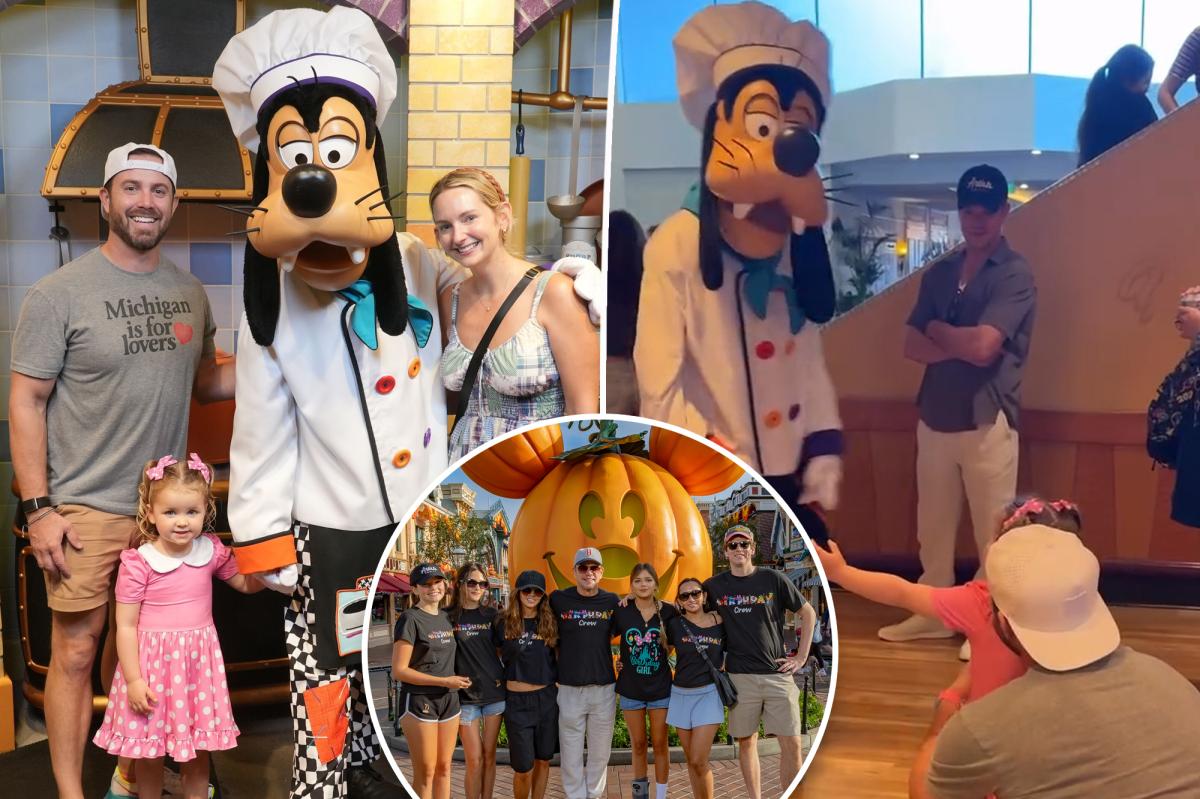
Matt Damon’s Disneyland Disguise Couldn’t Hide the Goofy Moment
Matt Damon apparently wanted the Disneyland experience without the full celebrity-sighting circus. According to Page Six, the Oscar-winning actor went incognito at the theme park and still ended up part of a memorable moment with Goofy.
That is the particular magic of trying to disappear at Disneyland: the setting is built for spectacle, and even a low-profile visit can become its own little piece of entertainment. Damon’s reported appearance lands in the sweet spot between celebrity secrecy and public silliness—an A-list actor attempting to blend in, only to be folded into the park’s relentlessly cheerful machinery.
The Goofy encounter is the hook here, not some grand Hollywood revelation. There is no reported premiere, feud, relationship announcement or career bombshell attached to the outing. It is a small, playful celebrity sighting, which is precisely why it works. Damon is one of those stars whose fame is enormous but whose public image is generally less devoted to constant spectacle, so an incognito theme-park appearance feels more amusing than promotional.
It also offers a reminder that “incognito” is a relative term when you are a major movie star visiting one of the most recognizable tourist destinations in the world. A disguise may reduce attention, but it cannot fully erase the novelty of seeing a famous actor in a place where the entire day is designed around character encounters and camera-ready memories.
Page Six is the only source in this story cluster, and the available report does not provide enough detail to reconstruct exactly how Damon concealed his identity or what prompted the Goofy moment. For now, the appeal is refreshingly uncomplicated: one famous actor, one cartoon favorite and a public appearance that sounds far more playful than calculated.

Bradley Carter Teases Leva Bonaparte’s Southern Hospitality Dynamic
Bradley Carter appears to be inviting questions about his relationship with Southern Hospitality boss Leva Bonaparte—and, naturally, the internet would like a full transcript, a seating chart and possibly security footage.
According to Us Weekly, Carter hinted at the cast’s dynamic with Bonaparte. That is the entire hook: a suggestion that there is something worth decoding, without a clear explanation of whether the tension is professional, personal, friendly or simply the usual reality-TV friction that comes with cameras, nightlife and a very watchable ensemble.
That ambiguity is doing plenty of work here. Bonaparte is not just another face in the cast; she is closely tied to the show’s restaurant-world setup, which gives any cast interaction with her extra weight. Carter’s comments, as characterized in the available report, put the spotlight on how the group relates to her—but stop short of establishing a specific conflict, alliance or romance.
For viewers, the tease matters because Southern Hospitality thrives on shifting loyalties and workplace chemistry. A cast member hinting at an off-camera or on-camera dynamic can easily become a storyline once the group starts discussing it openly. But a hint is still a hint. There is no responsibly confirmed detail here that lets us label the situation a feud, a friendship or anything more dramatic.
With only Us Weekly carrying this piece of the story in the supplied coverage, the smart move is to keep the champagne chilled and the conclusions modest. Carter may know exactly what he meant; the rest of us have, for now, a tantalizingly incomplete clue about Bonaparte’s place in the cast’s social weather.

Jessie James Decker Says She’s Removing Her Large Implants
Jessie James Decker is ready to make a major change to the body feature she says has defined her silhouette for years. Page Six reports that Decker is removing her breast implants, explaining that they have been so large for so long, she is unsure what is underneath them now.
Her comment is striking because it is less a glossy celebrity reveal than a surprisingly blunt admission about body image. Implants can become part of a person’s public presentation, especially when styling, red-carpet fashion and social media all reward a recognizable shape. Decker’s remark cuts through that polished packaging: after years of living with an augmented figure, she says the natural version of her body feels unfamiliar.
There is no indication in the supplied report that the procedure has already happened. The coverage also does not provide a specific date, medical reason, surgical plan or recovery timeline. That distinction matters. This is a reported decision and personal explanation, not a medical update with details about her care.
Still, the choice carries a revealing celebrity-gossip hook. Decker is not simply changing a wardrobe or switching up a beauty look; she is questioning a long-standing part of her public image. Removing implants can mean navigating a different relationship with clothing, photographs and the expectations attached to a familiar body type. That tension is what makes her wording land harder than a standard announcement about a cosmetic adjustment.
For Decker, the most telling phrase may be the simplest one: she does not know what she has underneath it all. It turns an elective personal decision into a larger comment about how easily an altered appearance can become the version everyone—including the person living in it—comes to recognize. Page Six is currently the sole source in this story cluster, so the specifics remain limited, but the underlying message is clear enough: Decker wants to find out what her own body looks like without the extra architecture.