Chad Lowe Steps Back Into Public Life at a Very Famous Family Wedding
Nearly two weeks after the death of his 13-year-old daughter Fiona, Lowe attended nephew Matthew’s Santa Barbara ceremony with his wife and daughters.
Chad Lowe’s return to the public eye did not come with a red carpet, a speech or a carefully staged social-media statement. It came from a wedding seating chart.
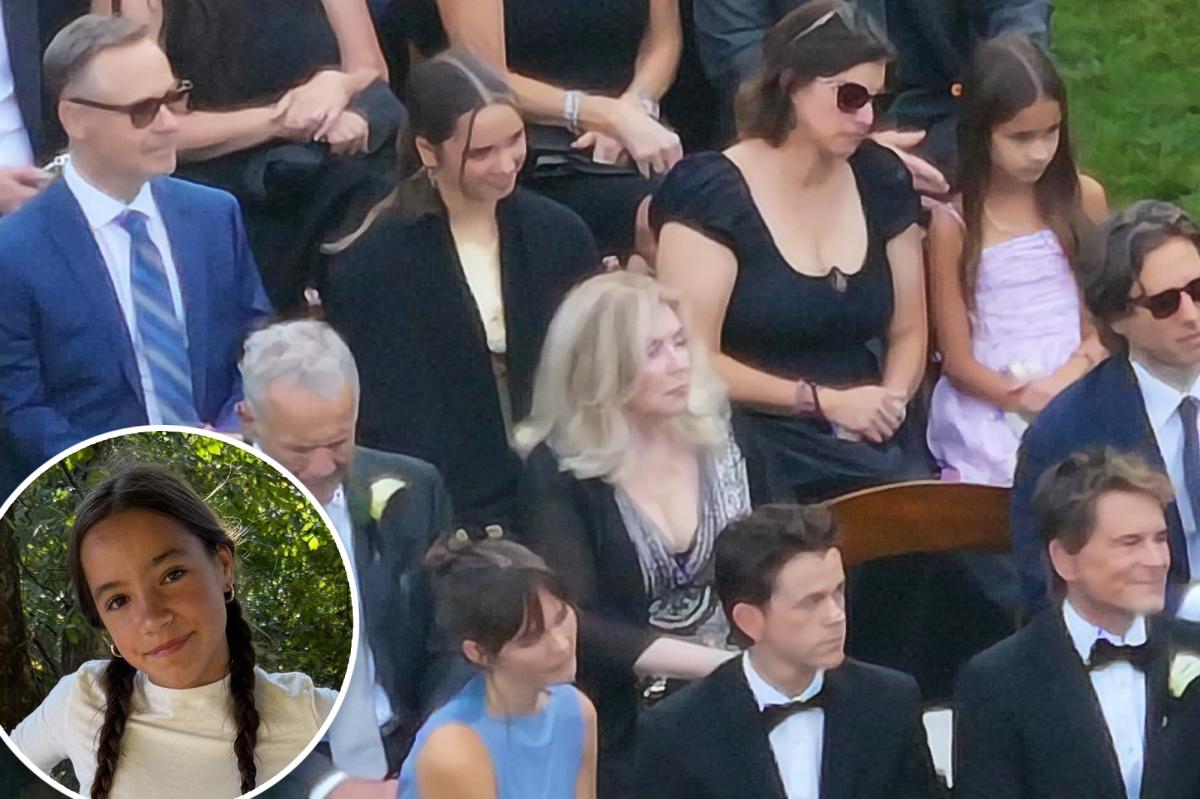
Nearly two weeks after the death of his 13-year-old daughter Fiona, the “Life Goes On” actor attended his nephew Matthew Lowe’s wedding in Santa Barbara with his wife, Kim Painter, and their daughters, Mabel, 17, and Nixie, 10. The family’s appearance was their first public outing since Fiona’s death, according to Page Six, which obtained exclusive photos from the ceremony.
There is something especially striking about the setting: a glossy, celebrity-packed wedding, the kind of event that usually exists to generate champagne-fueled photos and a few days of social chatter. But for the Lowe family, the occasion arrived in the shadow of an enormous private loss. They showed up anyway, together.
A family wedding, with the emotional weather turned completely upside down
Matthew, the son of Chad’s older brother Rob Lowe, married Emily Markus on Saturday. Chad was photographed in a blue suit with a matching tie, seated beside Mabel, Painter and Nixie. Mabel wore a sleeveless cream dress before adding a black jacket, while Nixie wore pink. Painter chose a black dress.
The visual language of a wedding is usually uncomplicated: bright clothes, happy faces, everyone arranged to celebrate the couple at the center of the room. Here, the details landed differently. Chad’s family sat two rows behind Rob, who attended with his wife, Sheryl Berkoff, and their other son, John Owen Lowe. On Chad’s other side was Chris Pratt, an unexpected bit of Hollywood geometry in a moment that was plainly about family.
That proximity is the sort of detail celebrity coverage loves, but the real story is less about who sat next to whom than about the family occupying those seats. A public appearance after a devastating loss can look deceptively ordinary from a distance: a suit, a dress, a ceremony, a group photograph. The ordinary part is often the point. Life does not pause its calendar just because a family’s world has been rearranged.
Inside a wedding with an unusually famous guest list
Matthew and Emily’s ceremony drew a lineup that could have doubled as a studio lot lunch: Gwyneth Paltrow officiated, while Cameron Diaz, Adam Levine, Katy Perry, Zoe Saldaña and Maria Shriver were among the guests. Saldaña attended with her husband, Marco Perego-Saldaña, and Paltrow was seen with her husband, Brad Falchuk.
The celebrity density gave the wedding an extra layer of spectacle, but it also made Chad Lowe’s appearance more visible than it might have been at a less photographed gathering. A private family milestone became a public image almost immediately, with the Lowe family’s presence carrying far more emotional weight than the usual celebrity-wedding fashion roundup.
There was no public statement from Chad at the event described in the report, and no suggestion that he intended the wedding to become a platform for discussing Fiona’s death. Sometimes the most revealing public appearance is the one that does not try to explain itself.
The family’s words about Fiona
Fiona died by suicide on Sept. 29. In a statement to Page Six, her family said they were “deeply heartbroken” and asked for prayers and privacy. They described Fiona as “the light of our lives” and said her passing was devastating for the entire family.
Mabel later shared a tribute to her younger sister on Instagram, writing that she loved Fiona, wished her short time here had been easier and hoped her mind was at ease. She also promised to honor Fiona and keep her memory alive.
Those words make the Santa Barbara appearance feel less like a return to business as usual than a family showing up for one another during an impossible stretch. It was Matthew’s wedding, and the day belonged to him and Emily. But the Lowe family arrived carrying a grief that could not be edited out of the frame.
That tension is familiar in celebrity culture, where a single photograph can be asked to communicate an entire emotional universe. A family can attend a wedding and still be shattered. A teenager can wear a cream dress and still be mourning her sister. A father can put on a suit without that suit meaning he is fine. Public visibility is not the same thing as public recovery.
A quiet appearance in a very loud Hollywood moment
The Lowe family has long been one of Hollywood’s most recognizable dynasties, but this was not a glossy reunion or a nostalgic red-carpet cameo. It was a gathering marked by joy for one family member and grief for another. That is what made the appearance resonate: not because it offered a neat emotional conclusion, but because it refused one.
Matthew and Emily’s wedding still had the glamorous ingredients: Santa Barbara, famous guests, a movie-star officiant and a packed family seating chart. Yet alongside all that sparkle was the unmistakable reality of a family navigating a loss that happened only days earlier. The Lowe family did not make a spectacle of that pain. They simply appeared together.
For celebrity culture, where every outing is often treated as a message, the message here is necessarily modest. Chad Lowe, Kim Painter, Mabel and Nixie attended a family wedding. They stood beside Rob Lowe and the rest of their family. They witnessed Matthew marry Emily. And they did so while grieving Fiona.
If you or someone you know is struggling with suicidal thoughts, call or text 988 in the United States and Canada for the Suicide & Crisis Lifeline, or contact local emergency services. Support is available 24/7.
Rob Lowe’s Son Just Had the Most Hollywood Wedding Guest List Imaginable
Gwyneth Paltrow officiated, Katy Perry and Adam Levine arrived with their pop-star orbit, and Cameron Diaz, Zoe Saldaña, Chris Pratt and the Schwarzenegger family turned Matthew Lowe and Emily Markus’ Santa Barbara wedding into a full celebrity crossover episode.
Some celebrity weddings are private enough to make the public feel personally rejected. Others seem to understand the assignment: assemble a glamorous guest list, let the cameras catch a few excellent outfits, and turn the whole thing into a small-scale Hollywood festival.
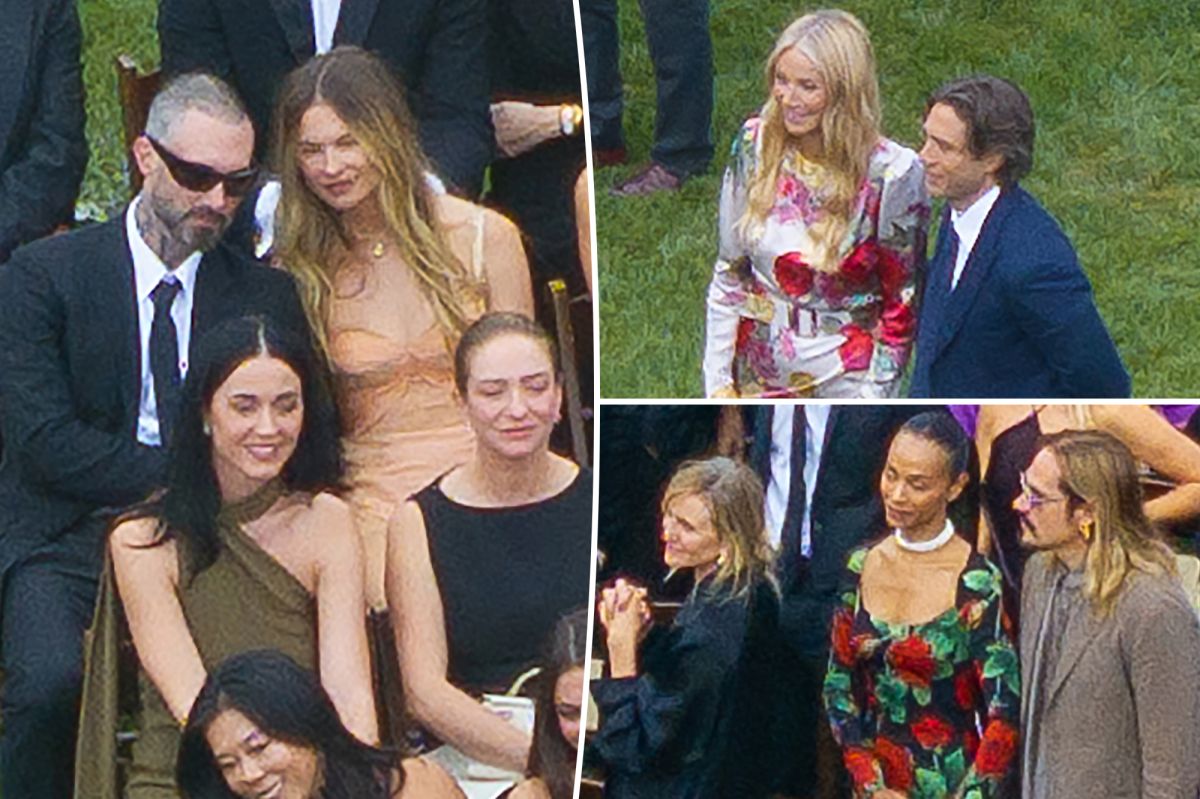
Matthew Lowe and Emily Markus’ Santa Barbara wedding belongs firmly in the second category. The son of Rob Lowe and Sheryl Berkoff married amid a guest list so densely populated with recognizable faces that the ceremony could have doubled as a particularly elegant seating chart for the entertainment industry. Gwyneth Paltrow officiated. Cameron Diaz appeared with Zoe Saldaña and Marco Perego-Saldaña. Katy Perry, Adam Levine and Behati Prinsloo made the same frame. Chris Pratt showed up with the Lowe family. The Schwarzeneggers arrived in force.
It was less “celebrity guests attend a wedding” and more “Hollywood’s most efficient group chat finally met in person.”
Gwyneth Paltrow Wasn’t Just a Guest
The most immediately delightful detail is Paltrow’s role in the ceremony. Page Six’s gallery shows her with the newlyweds, identifying her as the officiant rather than merely another famous person in a well-cut outfit. That gives the wedding a little extra sparkle: the Oscar winner, wellness empress and professional purveyor of tasteful intimacy was apparently entrusted with guiding the couple through the main event.
Paltrow also attended with her husband, Brad Falchuk, and appeared in another photograph with Rob and Sheryl Lowe. The images place her comfortably inside the family’s inner circle, not hovering at the edge of the celebrity seating section waiting for a photo opportunity. In the world of famous-people weddings, that distinction matters. There is a difference between receiving an invitation and being handed the microphone.
And naturally, Paltrow’s presence gives the occasion a very specific flavor: polished, well-connected, faintly aspirational and just self-aware enough to make the internet wonder who else was on the wedding-weekend contact sheet.
The Guest List Was Basically a Hollywood Family Tree
Rob Lowe and Sheryl Berkoff were pictured together, while John Owen Lowe joined his parents, brother Matthew and the wider family. Chad Lowe was also photographed with the group, alongside Chris Pratt. That single family shot manages to connect several generations of Hollywood visibility: Rob Lowe’s enduring leading-man status, Chad Lowe’s acting legacy, John Owen’s newer digital-era celebrity and Pratt’s blockbuster presence.
It is an unusually neat snapshot of how fame gets inherited, extended and folded into friendship circles. Matthew’s wedding was a family event, but the family in question happens to include people whose faces are instantly legible to millions of strangers.
Maria Shriver appeared in burgundy alongside several of her children, including Christina Schwarzenegger, Christopher Schwarzenegger and Patrick Schwarzenegger, who was pictured with his wife, Abby Champion. That group brings another unmistakable Hollywood dynasty into the frame without anyone needing to explain the family connections. The guest list starts to look like a live-action map of Los Angeles social history: Lowe, Schwarzenegger, Paltrow, Diaz, Saldaña and the rest, all gathered for one personal milestone.
It is the kind of event where a person could spend the entire cocktail hour saying, “Wait, is that…?” and still miss three other famous people walking past.
Cameron Diaz, Zoe Saldaña and the Art of the Celebrity Group Shot
One of the strongest images from the gallery features Cameron Diaz with Zoe Saldaña and Marco Perego-Saldaña. The composition has the clean, almost editorial quality of a luxury campaign, except the occasion is a wedding and the accessories are presumably someone’s emotional support plus-one.
Diaz’s appearance is the sort of thing that makes any celebrity gathering feel more significant. She has maintained a relatively selective public profile, so even a straightforward wedding photograph can become a social-media event when she is in the frame. Saldaña, meanwhile, brings her own blockbuster gravity, and Perego-Saldaña adds to the impression that this was not a random collection of famous invitees but a genuinely overlapping social world.
There is no need to manufacture drama around that picture. The visual is enough: three major presences, dressed for a beautiful California celebration, looking like the wedding’s unofficial best-dressed committee.
Katy Perry and Adam Levine Made It a Pop-Star Affair
Then came the pop-star corner of the guest list. Perry, Levine and Behati Prinsloo were photographed together, instantly upgrading the evening from “actors and family friends” to “someone is definitely controlling the playlist.”
Perry and Levine are both familiar faces at high-profile celebrations, but seeing them with Prinsloo gives the moment a more social, less red-carpet quality. This is not a performance photo or a staged promotional appearance. It is the appealingly ordinary spectacle of famous people attending another famous person’s life event, dressed up and standing close enough to suggest that the wedding had its own internal celebrity geography.
That geography is what makes the gallery so irresistible. There is Rob Lowe’s family, Paltrow and Falchuk’s orbit, the Diaz-Saldaña grouping, the Schwarzenegger contingent and the Perry-Levine-Prinsloo pop enclave. Each photo opens another door into the same party.
And that is the real appeal of Matthew Lowe and Emily Markus’ wedding: not a scandal, not a hard launch, not a suspicious red-carpet interaction, but the rare celebrity gathering where the guest list itself becomes the plot. The newlyweds may have been the reason everyone assembled, yet the photographs reveal a whole constellation of famous friendships and family ties orbiting the day.
In an era when celebrity events are often engineered for maximum visibility, this one feels charmingly old-school in the best way. A beautiful California wedding, a stacked guest list, a family full of recognizable names and Gwyneth Paltrow doing the officiating: Hollywood remains undefeated at making somebody else’s special day feel like must-see television.
Kelly Clarkson Wanted to Buy a Magic Bird. Brooklyn’s Art of Play Says It Was Glued to the Wall
The singer’s Pretty Woman-style shopping complaint has taken a wonderfully surreal turn, with the store revealing that the object at the center of the drama was a mechanical bird named Molly — and ending its statement with a Kelly Clarkson lyric.
There are few things more gloriously internet than a celebrity shopping dispute escalating into a miniature public-relations drama about a singing mechanical bird.
Kelly Clarkson’s complaint about a Brooklyn store has now taken a turn that feels less like Pretty Woman and more like The Twilight Zone, with Art of Play revealing that the item she wanted to buy was not a handbag, a lamp or some mysterious piece of design-world bait. It was “Molly,” a one-of-a-kind mechanical bird that sings, dances and moves back and forth when someone turns her crank.
The catch: Molly is permanently attached to the wall. She was never for sale.
Enter Molly, the unlikely star of the scandal
According to Art of Play’s statement, Clarkson visited the Brooklyn shop with several purchases in mind and asked about buying Molly. The store says the bird is part of the magic shows held at the location and is not an item customers can simply take home, no matter how famous, wealthy or determined they are.
That detail adds a bizarre new prop to an already cinematic story. Clarkson had described the interaction as a modern-day Pretty Woman moment, saying she felt an employee treated her as if she could not afford what she wanted and offered to find her something comparable instead. The comparison instantly gave the incident a familiar Hollywood shape: star enters boutique, staff makes an assumption, star leaves insulted, the internet reaches for Julia Roberts gifs.
But Molly complicates the scene. If the object in question is a wall-mounted mechanical bird used in live magic shows, then the store’s explanation accounts for why it could not be sold. It does not, as Art of Play itself acknowledges, settle how the conversation felt or exactly what was said. Those are two separate dramas: one about availability, the other about attitude.
And that split is precisely why the story has legs. The internet loves a dispute with a clean villain, but this one has arrived carrying a tiny crank-operated bird and refusing to stay in its lane.
The store’s statement knows exactly what kind of story this is
Art of Play’s response was not a dry retail clarification. It was a full statement from a small business suddenly caught in the blast radius of a celebrity post, and the shop made sure to frame itself as both overwhelmed and open to repair.
“Imagine our surprise when our small local business was suddenly attacked by 8 million people who have never visited our store,” the business wrote, describing the attention as overwhelming. The store said it welcomes people who are browsing as well as those who intend to buy, thanked customers for their support and expressed hope that the situation could eventually be resolved with Clarkson.
That is a smart bit of crisis language, but the shop could not resist one final flourish. It closed by invoking Clarkson’s own hit: “What doesn’t kill you makes you stronger.” It is the sort of line that is technically conciliatory, faintly pointed and perfectly engineered to be screenshotted.
There is something deliciously old-school about the whole exchange. A celebrity names a business online. The business responds with a statement. Customers rally. The store posts testimonials. Everyone waits to see whether the two sides will continue speaking through social media or eventually have a normal conversation in a room with no comment section.
Art of Play also shared footage of Molly in action, captioning the bird “the bird in question.” That phrase does a lot of work. It transforms a potentially tense dispute into a piece of visual comedy while inviting everyone to inspect the alleged object of desire for themselves. Molly, apparently, is now the most famous non-purchasable bird in Brooklyn.
A very Kelly Clarkson kind of pop-culture mess
Clarkson is an unusually recognizable figure to place at the center of this kind of story. She is not merely a pop star with a fan base; she is a daytime television host, a familiar celebrity personality and someone whose public image has long depended on a direct, conversational quality. When she says a shopping experience made her feel judged, the anecdote lands less like a distant celebrity complaint and more like the kind of story someone tells after coming home from an infuriating errand.
That accessibility is part of what made the original post travel. The details were instantly legible: an expensive-looking store, an employee allegedly making an assumption, the indignity of being redirected toward something “comparable,” and a famous woman recognizing the scene as a version of a movie everyone knows. It was a luxury-shopping story with the emotional logic of a customer-service rant.
Now the store has supplied a detail so strange it threatens to eclipse the original grievance. Molly is not just an object; she is a character. She has a name, a performance and a fixed position in the establishment. She cannot be placed in a shopping bag. She cannot be ordered in another color. She is, in the most literal sense, attached to the experience.
Neither Clarkson’s account of the interaction nor the store’s explanation of Molly’s status makes the other disappear. A shop can have an item that is unavailable, and a customer can still feel dismissed by the way that information is delivered. That ambiguity is less satisfying than a tidy winner, but it is also what makes the exchange feel recognizable. Retail awkwardness rarely arrives with a narrator explaining who was right.
For now, the public drama has a cast of three: Kelly Clarkson, Art of Play and Molly, the dancing bird who never asked to become a celebrity. The singer has not publicly responded to the shop’s statement in the material available here. Art of Play, meanwhile, appears to be leaning into the absurdity, using Clarkson’s own lyric as a closing wink while showing the world exactly why Molly is staying put.
Somewhere, a mechanical bird is singing and dancing on a Brooklyn wall. Somewhere else, thousands of people are debating whether a celebrity was patronized, whether a small business got dragged too hard and whether anyone has ever wanted anything more intensely after being told it was not for sale. Molly may not be leaving the shop, but she has already made quite an exit.